
Written by: Anish Rao, Head of Growth, Listen Labs
Key Takeaways for Protecting Brand Awareness
- Brand awareness loss often shows up only after consideration and branded search volume decline, so revenue becomes a lagging indicator.
- Traditional wave-based trackers report movement but rarely explain why recognition is slipping or which audience segments are drifting.
- Continuous conversational tracking pairs structured KPIs with open-ended AI-moderated interviews to reveal root causes behind metric shifts.
- Seven repeatable tactics – baseline measurement, conversational tracking, visual consistency, sustained visibility spend, audience relevance, disciplined creative refresh, and regular perception studies – create a proactive prevention system.
- See how Listen Labs closes the diagnostic gap with continuous conversational tracking for brand awareness drops.
Why Closing the Brand Awareness Gap Matters
Brand awareness prevention protects both revenue and brand value. Cutting brand spending can lead to revenue declines over time, which is why strong brands that maintain consistent investment often grow faster than weaker brands in the same sector. When reputation crises occur, they can significantly damage brand value with long recovery periods, so prevention usually costs far less than rebuilding.
Several definitions anchor the diagnostic work that follows.
- Brand awareness includes unaided recall, which means naming the brand spontaneously when thinking of the category, and aided recognition, which means identifying the brand when shown its name. Unaided awareness is harder to move and more commercially meaningful.
- Branded search volume measures how often consumers search for a brand by name and acts as a behavioral proxy for unaided recall because a search requires prior memory retrieval.
- Direct traffic reflects visits from users who already know the brand well enough to navigate directly, so it works as a rough proxy for awareness trends.
- Conversational tracking combines structured KPI questions with open-ended AI-moderated interviews run in repeated waves, so every metric movement arrives with the qualitative explanation behind it.
- Emotional signal analysis captures tone of voice, word choice, and facial micro-expressions to show how consumers feel about a brand beyond what they state explicitly.
The industry is moving from periodic wave-based programs toward always-on conversational tracking. Only 13% of brands have invested in ongoing tracking of marketing effectiveness metrics.
Tactic 1: Establish a Clear Baseline for Brand Health
Prevention starts with a documented baseline that separates real awareness decline from normal survey noise. Establishing a brand baseline before major campaigns or changes provides the reference point for benchmarking performance, identifying strengths and weaknesses, and setting realistic improvement targets.
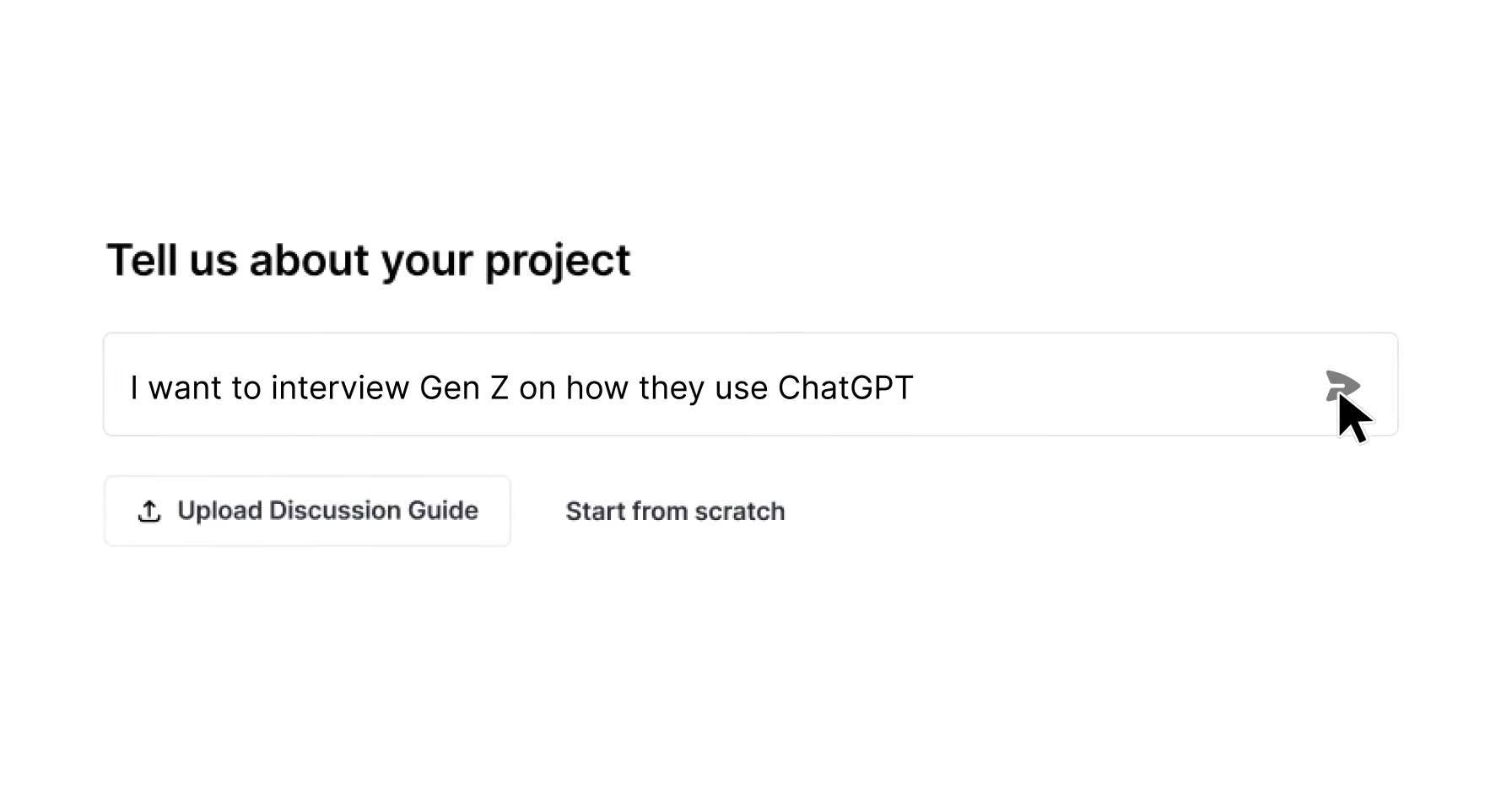
The baseline wave should capture unaided and aided awareness, consideration-set inclusion, and key brand associations across primary audience segments. Waves 1–2 of a brand health program focus on five surface metrics: awareness, consideration, preference, NPS, and purchase intent. For a CPG brand, this means surveying category buyers. For a tech brand, it means reaching active category evaluators. Stakeholders include the consumer insights lead, brand manager, and media planning team. Timelines run four to six weeks for a traditional setup, or under 24 hours with an AI-moderated platform like Listen Labs, and costs depend on sample size, audience incidence rate, and whether qualitative depth interviews are included in the same wave.
Tactic 2: Shift from Periodic Surveys to Continuous Conversations
Periodic surveys detect movement, while continuous conversational tracking explains it. Listen Labs’ Listen Pulse runs the same study with the same screeners wave after wave, combines structured KPI questions with open-ended AI-moderated conversation, and charts emerging themes directly alongside the metrics teams already report. When a clothing brand’s tracker caught a consideration drop, Pulse identified the root cause: a growing segment felt the brand’s signature logo style no longer matched their evolving lifestyle, a finding that price analysis alone would never have surfaced.
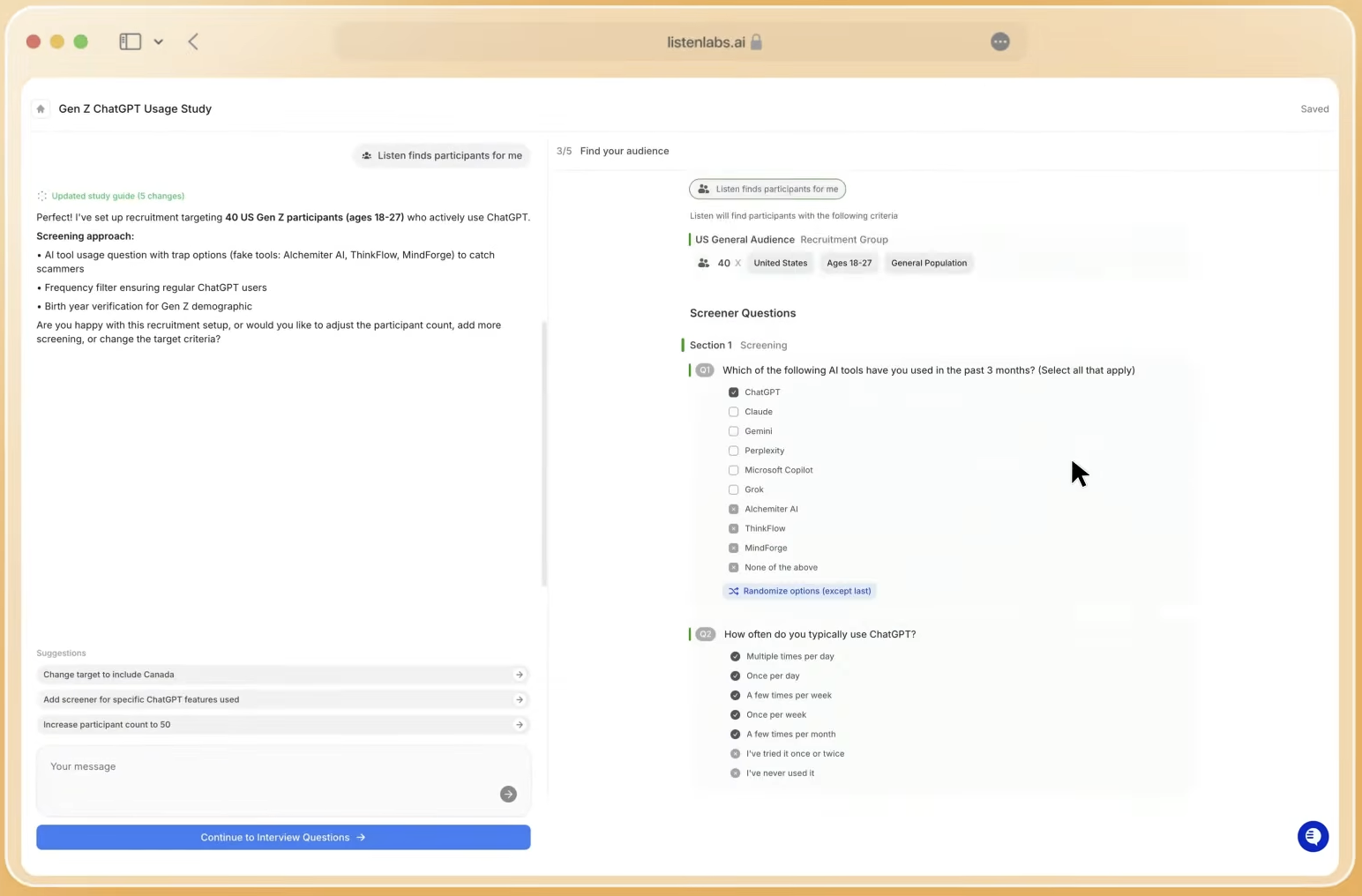
Surface metrics detect that brand recognition dropped but cannot differentiate causes like competitive encroachment, relevance shifts, or distribution failures. Conversational tracking closes that gap. Core questions stay constant to protect trend-line integrity. Timely add-on questions address new campaigns or competitive entries without breaking historical comparability. Pulse integrates with Qualtrics and Decipher, so existing KPI infrastructure remains intact.
Tactic 3: Protect Visual Identity and Messaging Consistency
Most brand equity loss is self-inflicted rather than caused by competitors, as companies destroy memory structures through identity churn, asset abandonment, and rebrands that prioritize internal excitement over external recognition. Tropicana’s 2009 packaging redesign caused a 20% sales decline within two months by removing the distinctive orange-and-straw asset buyers used to locate the product on shelf.
Distinctive brand assets such as logos, colors, shapes, characters, and sounds take years of consistent use to become truly distinctive. This creates a structural problem because the average CMO tenure is approximately four years, so decision-makers often leave before they see the full value of the assets they inherited and before they understand what they are dismantling when they rebrand. The stakes are high: consistent branding can increase revenue by up to 33% (or 10–33% across studies), according to Lucidpress research, but only when those assets are protected long enough to become truly distinctive.
Practical governance starts with a comprehensive identity system documenting logo usage, color codes, typography, and imagery, which forms the visual foundation that must stay consistent. A tone-of-voice guide and unified messaging pillars then keep verbal expression aligned with the visual system. Centralized templates help teams stay on-brand without checking full guidelines for every asset. Quarterly brand audits reviewing website, social profiles, email templates, and printed materials catch drift before it becomes systematic. Stakeholders are brand, creative, and legal, and the main cost driver is the governance infrastructure and audit cadence, not the creative itself.
Tactic 4: Maintain Media Presence Without Going Dark
An Ehrenberg-Bass Institute study of 41 alcohol brands (or 57 Australian consumer-goods brands) over nearly two decades found that sales declined immediately in the first year and every subsequent year after brands stopped broad-reach advertising. Among brands that paused and then resumed, fewer than half maintained their prior sales trajectory. In the absence of own-brand advertising, competitor advertising fills the gap and critical memory-based brand linkages weaken, making the brand less likely to come to mind for light buyers.
Binet and Field’s IPA data shows that campaigns with consistent creative platforms deliver 2–3x the effectiveness of constantly refreshed approaches because memory compounds through repetition with variation. To maintain the sustained visibility needed for that compounding effect, share of voice relative to share of market becomes a practical planning metric. Share of voice exceeding share of market by 5–10 points reliably predicts market share gains over the following 12–24 months. Stakeholders are media planning, finance, and brand, and the key decision is the minimum sustainable spend level that preserves mental availability during budget-constrained periods.
Tactic 5: Build Awareness Through Audience Relevance
Sprinklr’s 2026 Social Index analyzing 1,160 brands found that retail brands were more socially active than any other sector yet 78% failed to generate meaningful engagement. Visibility without relevance does not build awareness and instead accelerates the empty awareness problem.
Romaniuk and Sharp’s framework shows that mental availability depends on both the breadth of category entry points linked to a brand and the depth of those memory associations, and brands with high recognition but narrow, shallow coverage suffer weak mental availability. Audience relevance work maps which category entry points the brand owns and which are being ceded to competitors. Inputs include qualitative consumer interviews and category entry point mapping. Stakeholders are consumer insights and brand strategy, and timelines depend on whether existing research already covers the category entry point landscape or a new study is required.
Tactic 6: Refresh Creative While Safeguarding Distinctive Assets
Binet and Field’s IPA analysis found that campaigns built on consistent creative platforms running for three or more years produce effectiveness levels that peak after three years and continue to compound, while campaigns that change creative platform annually never reach the same effectiveness ceiling. The three-year timeframe mentioned earlier is not arbitrary and shows how long it takes for a creative platform to fully mature.
The practical framework separates distinctive assets, which are the sensory cues that enable rapid automatic brand identification, from executional elements such as copy, imagery style, and campaign themes. Distinctive assets stay protected, while executional elements refresh to maintain relevance. Jen Romaniuk’s distinctive asset framework categorizes assets on fame, meaning the proportion of category buyers linking the asset to the brand, and uniqueness, meaning whether the asset is linked exclusively to the brand. Scoring assets on these two dimensions before any creative change identifies what must not be altered. Stakeholders are creative, brand, and consumer insights, and cost drivers are asset testing research and the governance process for approving creative changes.
Tactic 7: Use Regular Perception Studies for Root-Cause Diagnosis
Root-cause diagnosis of brand image erosion requires targeted consumer research that triangulates perspectives from four audience segments: current loyalists, recent defectors, non-customers in the target market, and competitive users. This design distinguishes between self-inflicted wounds and competitive displacement, and between a perception gap and a reality gap, which require very different interventions.
Guided narrative interviews, competitive perception mapping, and projective techniques such as brand personification reveal emotional and associative perceptions that closed-ended survey scales miss. Listen Labs conducts these studies at scale through AI-moderated in-depth interviews, delivering quantified themes and verbatim proof in hours rather than weeks. Emotional Intelligence analysis captures tone of voice, word choice, and facial micro-expressions to show how consumers feel about the brand beyond what they state explicitly. Post-diagnostic brand health tracking for gradual erosion should run quarterly at minimum and monthly when the competitive environment is dynamic.
Measurement Playbook for Early Brand Awareness Signals
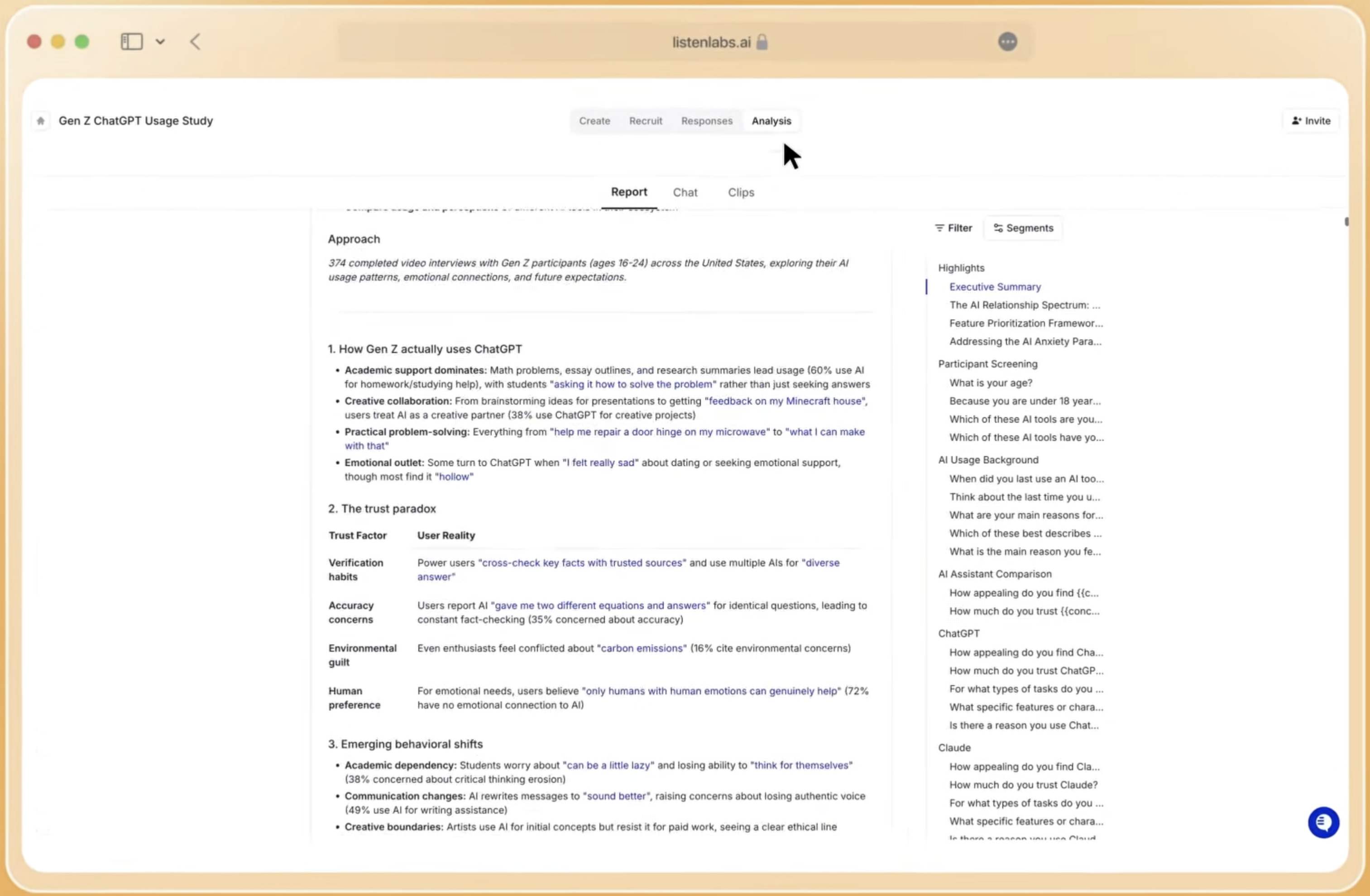
A practical measurement stack for maintaining brand recognition over time combines three signal layers reviewed at different cadences. This tiered approach works because different metrics move at different speeds. Behavioral signals shift first, attitudinal metrics follow, and survey-based awareness measures lag furthest behind. Monitoring all three layers lets teams catch problems at the behavioral stage weeks before they appear in quarterly trackers.
Weekly signals provide the earliest directional warnings:
- Branded search volume, tracked via Google Search Console and Google Trends, is the most accessible leading indicator of brand awareness health because it correlates strongly with downstream business outcomes and declines signal erosion before other metrics shift.
- Direct traffic share from GA4, which reflects users navigating without a search prompt.
- Social mention volume and sentiment-weighted scoring, where a net awareness ratio below 2:1 positive-to-negative indicates issues that can accelerate brand awareness erosion even if raw mention volume rises.
Monthly signals add behavioral context and link exposure to consideration:
- Share of voice relative to share of market, reviewed against named competitors rather than industry-wide averages.
- Theme emergence speed from conversational tracking waves, which shows how quickly a new topic appears across open-ended responses and predicts KPI movement before it occurs.
- Consideration-set inclusion trends, which remain useful when overall awareness is still holding but brand momentum is weakening.
Quarterly signals validate and calibrate the earlier indicators:
- Unaided and aided awareness from brand tracking surveys with consistent methodology and sample composition.
- Diagnostic depth interviews to explain any metric movements flagged in weekly or monthly reviews.
- Trust trajectory analysis, which signals erosion when trust drops 1–2 points per quarter across three or more consecutive waves, since small consistent declines are more dangerous than sharp one-time drops and are only visible through longitudinal analysis.
Advanced Options for Mature Brand Tracking Programs
Always-on programs. Brands with frequent campaigns or volatile categories benefit from always-on tracking that changes the organizational model. Instead of commissioning a study when a problem is suspected, always-on programs surface emerging themes continuously and enable intervention before KPIs move. Listen Pulse analyzes tens of thousands of responses 24/7, charts theme emergence speed alongside tracked KPIs, and lets teams drill into any metric to hear the verbatim explanation behind it.
Global multi-market studies. Global brands need tracking that respects local dynamics. Brand awareness patterns vary significantly by market, and a theme driving consideration loss in one geography may be irrelevant in another. Listen Labs covers 45+ countries across the Americas, Europe, APAC, and MEA, with AI-moderated interviews in 120+ languages and automatic translation and transcription. Global programs should maintain consistent core questions for cross-market comparability while allowing market-specific modules to capture local competitive dynamics.
Integrating behavioral data. Diagnostic metrics including equity drivers, verbatim brand association language, competitive share of mind, and perception-behavior gaps require depth interviews rather than closed-ended surveys because they demand iterative laddering and probing to uncover underlying reasons for perception shifts. Listen Labs’ Visual Insights feature closes the say-do gap further by observing on-screen behavior during interviews and probing contradictions between stated preference and observed action in real time. Integrating behavioral signals with conversational tracking produces a more complete diagnostic picture.
Frequently Asked Questions
How long does it take to see results from a brand awareness prevention program?
The 24-hour baseline mentioned in Tactic 1 is possible because AI moderation removes recruiter scheduling, manual interview coordination, and transcription delays. Trend lines that distinguish real awareness shifts from survey noise typically require three to four waves of consistent data, which translates to three to four months on a monthly cadence or nine to twelve months on a quarterly cadence. Early warning signals from branded search volume and conversational tracking themes are available continuously from the first wave onward.
What skills does a brand manager without a research background need to run a tracking program?
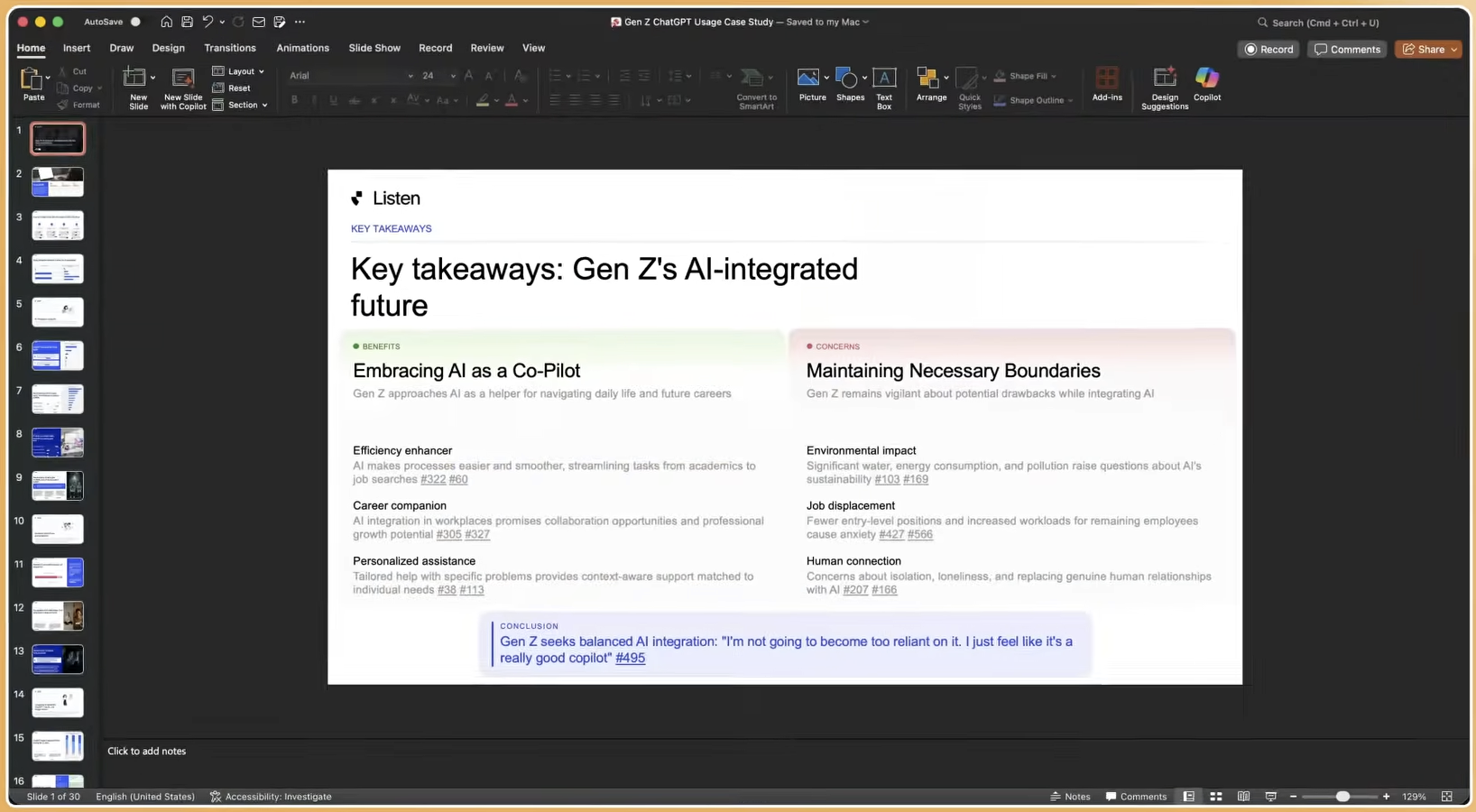
Listen Labs is designed for non-researchers as well as research professionals. AI-assisted study design translates research goals described in natural language into structured objectives, screeners, and discussion guides. The Research Agent generates findings, slide decks, and highlight reels automatically. Brand managers need to define the business question and the target audience, and the platform handles methodology, recruitment, moderation, and analysis.
How does continuous tracking handle participant privacy and data security?
Listen Labs maintains enterprise-grade security with 256-bit encryption and holds SOC 2 Type II, ISO 27001, ISO 27701, and ISO 42001 certifications. The platform is GDPR compliant, and customer data is never used to train Listen Labs’ AI models. Participants are limited to three studies per month to prevent panel fatigue, and Quality Guard monitors every interview in real time for fraud and low-effort responses, which keeps data quality high while protecting participants.
How should a tracking program be adapted for hard-to-reach audiences or niche segments?
Listen Labs’ dedicated recruitment operations team sources participants below 1% incidence rate, including enterprise decision-makers, healthcare workers, engineers, and highly specialized consumer segments. The global panel of 50M+ verified respondents spans 45+ countries, and behavioral matching through Quality Guard targets participants on intent and past actions rather than self-reported demographics alone. Organizations can also bring their own participants from their existing customer base at reduced cost.
When should a brand retire or significantly restructure a tracking study?
Core tracking questions should be retired only when the underlying construct is no longer strategically relevant, such as when a brand exits a category or completes a full repositioning. Wording updates require a bridge period of parallel old and new question versions to preserve trend comparability. New modules covering emerging campaigns, competitors, or market conditions can be added without disrupting the core trend line. Listen Pulse is designed to maintain this balance, with core questions staying constant while timely questions rotate in and out each wave.
Conclusion: Turning Brand Awareness Prevention into a System
Preventing brand awareness loss requires closing the diagnostic gap between the moment recognition begins to slip and the moment KPIs confirm it. The seven tactics above – baseline measurement, continuous conversational tracking, visual and messaging consistency, sustained visibility spend, audience relevance focus, disciplined creative refresh, and regular perception studies – form a repeatable system. The measurement playbook ties them together with a tiered signal cadence that catches emerging shifts weeks before they reach sales or consideration metrics.
The common thread is that numbers alone are insufficient. Early shifts in brand health metrics predict revenue changes 6–12 months in advance, but only a diagnostic layer that explains why those metrics moved enables timely intervention. Continuous conversational tracking, which combines structured KPI questions with open-ended AI-moderated interviews in every wave, makes that diagnostic layer operational at scale.