
Written by: Anish Rao, Head of Growth, Listen Labs
Key Takeaways for Replacing Kantar Brand Tracking
- Consumer insights leaders weighing alternatives to Kantar brand tracking in 2026 face three clear replacement paths: panel replacements such as YouGov BrandIndex, agency replacements such as Ipsos, and workflow replacements such as Tracksuit, Latana, or Listen Pulse.
- The most common failure in enterprise brand tracking is diagnostic absence. Teams see that a metric moved but cannot explain why within the same wave.
- Listen Pulse is the only option that combines quantitative KPI tracking with open-ended AI-moderated conversation in the same wave, so teams receive the number and the verbatim explanation together.
- Enterprise syndicated buyers should augment rather than replace existing trackers. This preserves historical trend lines while adding the missing diagnostic layer.
- Ready to see how Listen Pulse fits your existing tracker? Walk through your wave structure with our team and map these seven criteria to your current program.
How Kantar’s Main Competitors Line Up
The brand tracking market in 2026 divides into four primary delivery models: full-service agency studies, syndicated subscriptions, automated custom trackers, and in-house survey tool licenses. Alternatives to Kantar map cleanly onto three replacement categories.
Panel replacements substitute the data source while preserving a similar quantitative output. YouGov BrandIndex and Morning Consult operate here, delivering daily or high-frequency syndicated metrics across large respondent pools.
Agency replacements substitute the full research relationship, including study design, fieldwork, and analysis. Ipsos is the primary enterprise-grade competitor in this category.
Workflow replacements substitute the operational infrastructure, including the platform, cadence, and reporting layer, while allowing teams to retain their own panel arrangements or bring new ones. Tracksuit, Latana, and Listen Pulse operate here.
Before assessing any option, seven evaluation criteria apply consistently across all categories.
- Research speed: time from fieldwork close to actionable insight
- Diagnostic depth: ability to explain why a metric moved, not just that it moved
- Sample quality: representativeness, fraud controls, and longitudinal consistency
- Global reach: market and language coverage
- Integration options: compatibility with existing reporting stacks such as Qualtrics and Decipher
- Total cost of ownership: platform fees plus analyst headcount, implementation, and hidden escalators
- Trend continuity: ability to preserve historical KPI comparability when augmenting or replacing
Each alternative profiled in the following sections is evaluated against these seven dimensions, so you can compare panel, agency, and workflow replacements on the same footing.
Best Brand Tracking Software for Explaining Metric Shifts
The most common failure mode in enterprise brand tracking is not data absence, but diagnostic absence. A CMO at a publicly listed technology company summarized the problem directly: “I have not been a fan of brand studies. I have done them in the past. They take too long. They give me information that I wish I had six months ago. And they are very expensive.” The following assessments apply the seven criteria consistently across the major alternatives.
YouGov BrandIndex delivers daily syndicated brand health data across thousands of brands, making it one of the fastest options for top-line awareness and reputation monitoring. Its diagnostic depth is limited to the fixed metric set YouGov defines. Teams cannot add open-ended questions or probe why consideration shifted. Sample quality is strong for general population audiences in covered markets. Enterprise programs spanning multiple markets cost $100,000–$200,000 or more per year, with custom research priced separately. Trend continuity is high within the syndicated framework but constrained by the vendor’s question architecture.
Tracksuit is an automated custom tracker that performs continuous data collection with monthly reporting, typically priced between $15,000 and $50,000 per region annually. Research speed is strong relative to agency alternatives. Diagnostic depth is limited to quantitative outputs. The platform does not conduct open-ended interviews or surface verbatim explanations for metric movement. Sample quality depends on the panel sources used. Global reach is narrower than full-service agencies. Integration options are platform-native rather than stack-agnostic. Trend continuity is well-managed through consistent wave design.
Latana occupies a similar position to Tracksuit in the automated custom tracker category, with continuous collection and a self-serve dashboard. Self-serve platforms such as Latana offer lower entry points than full-service agency trackers but provide fixed metric sets, limited questionnaire customization, and no senior analytical expertise or key driver analysis. Diagnostic depth and integration flexibility are constrained by the same structural limits as other automated platforms.
Ipsos provides full-service agency coverage with custom study design, analyst support, and global fieldwork infrastructure. Single-market programs typically start at $75,000–$150,000 per year, with multi-market programs priced at $200,000–$500,000 or more depending on scope. Research speed is the primary limitation. Full-service agencies conduct custom waves with 3-to-6-month lead times to first insight. Diagnostic depth is available through qualitative add-ons, but these are priced separately and extend timelines further.
Qualtrics functions as a workflow replacement rather than a panel or agency substitute. Teams use it to design and field surveys against their own panels or purchased sample. Research speed depends entirely on the team’s operational capacity. Diagnostic depth is limited to what the team builds into the instrument. Integration is strong within the Qualtrics ecosystem. Total cost of ownership includes platform licensing plus analyst headcount and panel fees, which can raise annual program costs to $32,000–$100,000 for quarterly tracking before accounting for internal labor.
Listen Pulse is the only option that combines quantitative KPI tracking with open-ended AI-moderated conversation in the same wave. Every metric movement arrives with a verbatim explanation in the same delivery. Core questions stay constant wave over wave to protect the trend line, while timely add-on questions address new campaigns or competitors without breaking historical comparability. Listen Pulse integrates with Qualtrics and Decipher, deploys alongside an existing tracker or as the primary system, and makes every number traceable to the interview, verbatim quote, and audio or video clip behind it.
Kantar vs. YouGov BrandIndex for Daily Tracking
Having established the evaluation criteria and diagnostic limitations across the major categories, the following head-to-head comparisons show how specific alternatives stack up against each other, starting with the frequency-versus-customization trade-off. Kantar’s custom tracker model and YouGov BrandIndex represent opposite ends of this spectrum.
Kantar builds bespoke study designs with client-specific metrics, competitive sets, and audience definitions, typically fielded quarterly or biannually. YouGov BrandIndex operates on a fixed syndicated instrument fielded daily, with no customization of question wording or metric architecture.
On study setup, Kantar requires multi-week design and approval cycles before fieldwork begins. YouGov BrandIndex is available immediately within its existing framework, with no setup lag for brands already covered by the syndicated study.
On recruitment and sampling, Kantar uses proprietary and partner panels with custom quota controls matched to the client’s target audience. Panel-based syndicated tracking maintains a consistent demographic mix wave over wave through pre-recruited, profiled, opt-in pools with census-matching and fraud controls. YouGov BrandIndex applies the same approach at scale across its daily collection.
On diagnostic depth, neither platform conducts open-ended interviews as part of the standard instrument. Both report that a metric moved. Neither explains why within the same wave. Qualitative components require separate commissioning from both vendors.
On data quality controls, both platforms apply standard panel fraud detection. Fraudulent or low-quality behavior among online panel participants can compound over time in tracking studies and create phantom trends. Neither Kantar nor YouGov BrandIndex publishes real-time fraud monitoring at the individual interview level.
On trend continuity, YouGov BrandIndex’s fixed instrument is an advantage for organizations that accept its metric architecture. Kantar’s custom design requires active governance to prevent question drift across waves.
Ipsos vs. Kantar for Full-Service Tracking
Ipsos and Kantar are the two dominant full-service agency alternatives for enterprise brand tracking. Both offer custom study design, global fieldwork, and analyst-led reporting. The primary differences appear in analytical philosophy, pricing structure, and the degree to which the agency functions as a strategic partner versus a data supplier.
On research speed, both agencies operate on the multi-week or multi-month cycles typical of full-service models. Enterprise research suites such as Kantar BrandZ and Ipsos operate on multi-week or multi-month delivery cycles per wave, adding to total cost of ownership through delayed insights and the need for ongoing analyst or consultant support.
On diagnostic depth, both agencies offer qualitative add-ons, including focus groups and in-depth interviews, priced and scoped separately from the quantitative tracker. Neither delivers open-ended diagnostic data within the same wave as quantitative KPIs by default.
On sample quality, both agencies access large proprietary and partner panels with established fraud controls. Ipsos operates its own panel infrastructure globally. Kantar similarly maintains proprietary panel access across major markets.
On global reach, both agencies cover major markets across the Americas, Europe, APAC, and MEA. Kantar’s BrandZ database provides additional equity benchmarking across categories. Ipsos offers comparable geographic coverage with different analytical frameworks.
On total cost of ownership, Kantar BrandZ enterprise pricing typically starts at $100,000–$200,000 per year for a single-market program, with multi-market programs routinely exceeding $300,000–$500,000 per year. Ipsos pricing falls in the ranges established earlier, at roughly $75,000–$150,000 for single markets and $200,000–$500,000 or more for multi-market programs, with the same caveat that qualitative components require additional spend.
On trend continuity, both agencies have the methodological infrastructure to preserve historical KPI comparability, but this requires active governance. Consistency in question wording and methodology is critical because changes can disrupt trendability later in the brand tracking journey.
Tracksuit vs. Kantar on Cost and Speed
Tracksuit and Kantar represent the clearest cost and speed contrast in the alternatives landscape. Tracksuit is a self-serve automated tracker. Kantar is a full-service agency. The trade-off is analyst support and diagnostic depth versus price and reporting frequency.
On research speed, Tracksuit delivers monthly reporting from continuous collection. Kantar delivers quarterly or biannual waves with multi-week analysis cycles between fieldwork close and report delivery.
On diagnostic depth, Tracksuit provides quantitative dashboards with no open-ended interview component. Kantar provides analyst-written reports with strategic interpretation, but no within-wave qualitative diagnostics by default.
On sample quality, research-grade panel access via providers such as Dynata costs $2.5–$10 per completed survey in developed markets for general population audiences, while full-service legacy agency trackers charge $50,000–$250,000 or more per market per year versus modern always-on platforms at $15,000–$30,000. Tracksuit operates within the lower-cost automated tier.
On global reach, Kantar’s agency infrastructure covers more markets and languages than Tracksuit’s current platform footprint. Organizations with multi-region programs should verify Tracksuit’s coverage against their specific market list.
On total cost of ownership, Tracksuit’s annual pricing typically ranges from $15,000 to $50,000 per region, compared to Kantar’s $100,000–$500,000-plus range for equivalent market coverage. At the pricing range noted earlier, the gap narrows when internal analyst headcount required to interpret Tracksuit’s raw output is included in the total cost calculation.
On trend continuity, Tracksuit’s continuous collection model supports stable trend lines within its platform. Organizations migrating from Kantar should apply the parallel-wave approach described earlier to maintain trend continuity. Switching panels mid-program risks breaking historical trend lines; the parallel-wave approach of running two to three overlapping waves on both old and new panels establishes calibration factors to preserve continuity of brand metric trends.
How Listen Pulse Closes the Diagnostic Gap
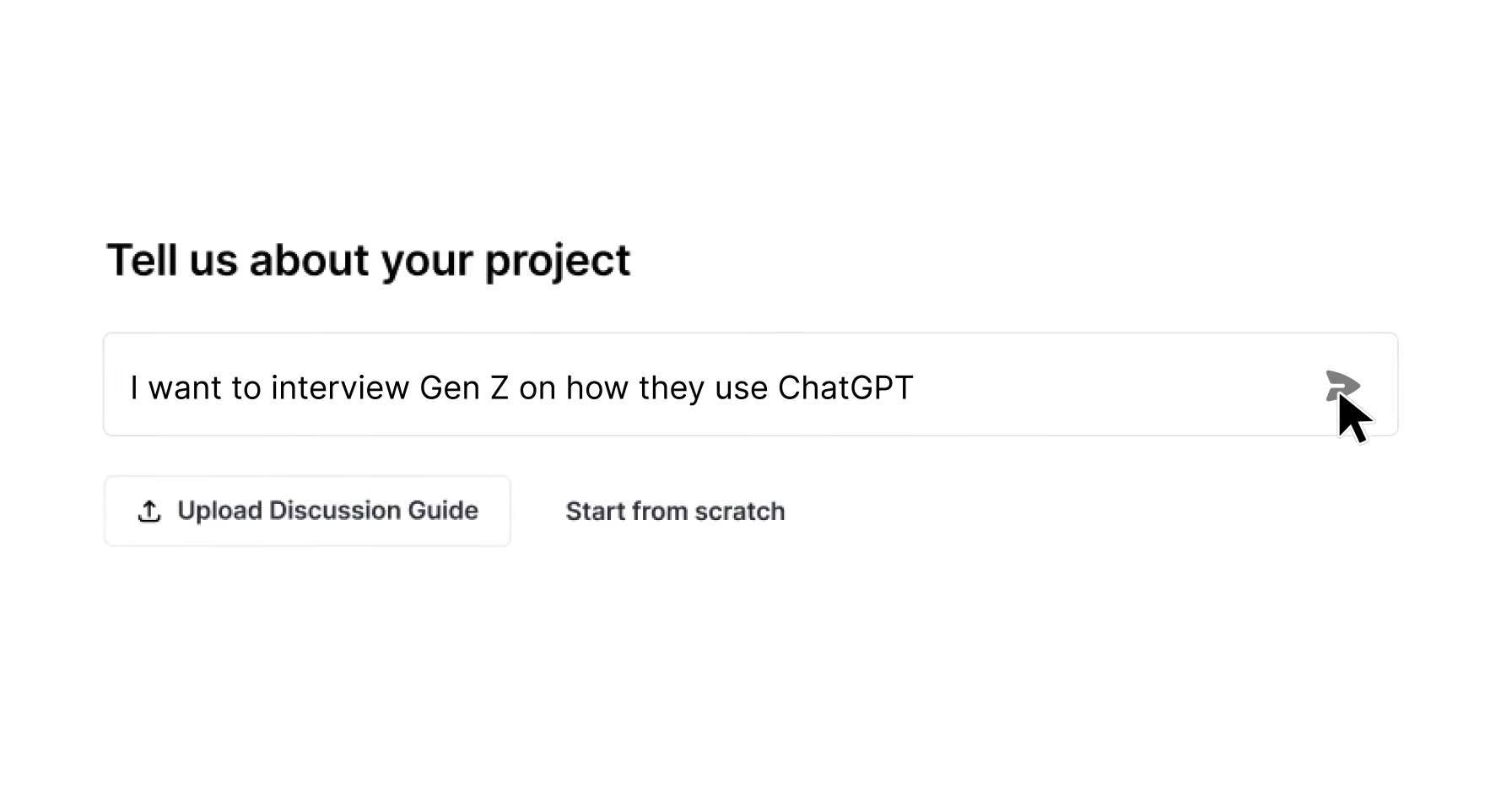
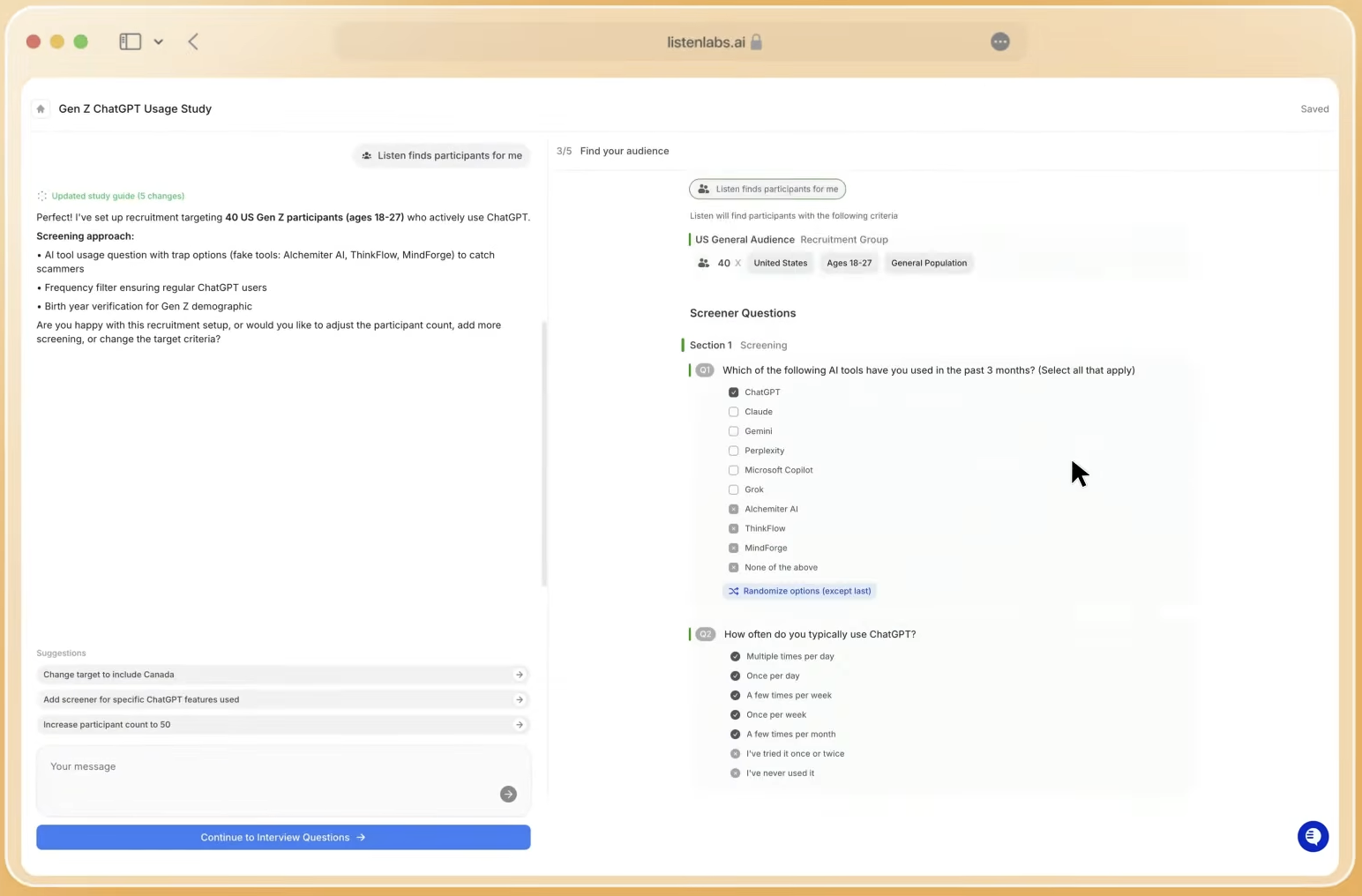
Listen Pulse is a conversational tracker that addresses the diagnostic gap that all quantitative-only alternatives share. The core design principle is simple. Core questions stay constant wave over wave to protect the trend line. Open-ended AI-moderated conversation runs alongside every wave to explain why each metric moved.
A well-known clothing brand, famous for its big logos, was quietly losing customers. Its existing tracker caught the drop in consideration but could not explain it. Listen Pulse found the answer within the same wave. Price was not driving the decline. Style was. A growing segment of customers felt the brand’s signature logos were too loud for their changing lifestyles. The metric movement and the verbatim explanation arrived together in the same delivery, without a separate qualitative study.
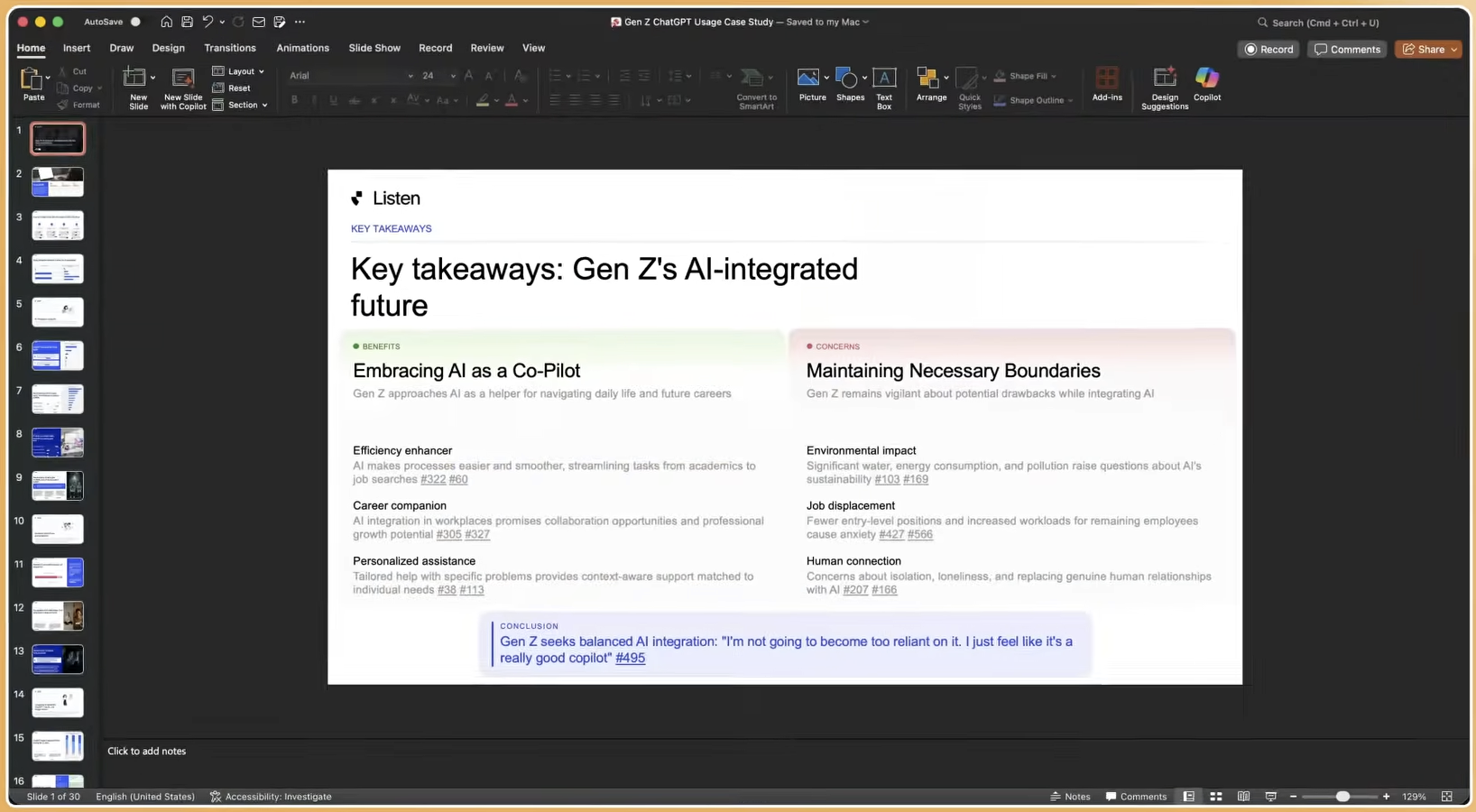
Every number in Listen Pulse is traceable to the interview, verbatim quote, and audio or video clip behind it. Teams can drill into any KPI movement and hear the original explanation in the respondent’s own words. Emerging themes are charted next to existing KPIs, so shifts in customer sentiment are visible before they register as a decline in tracked metrics.
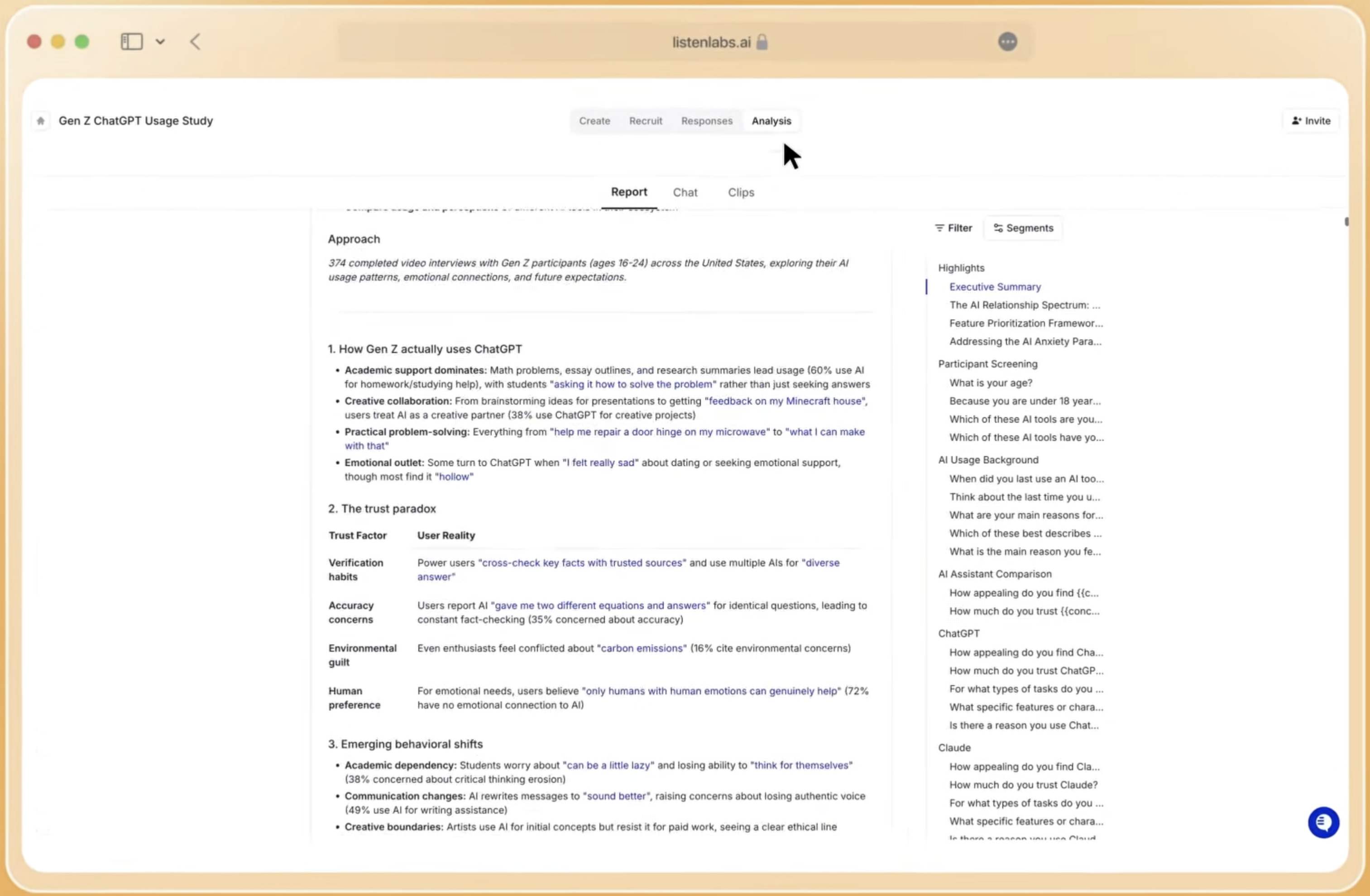
Listen Pulse supports full question-type flexibility within a single instrument. Awareness scales, NPS, MaxDiff, rankings, and closed-ended questions run alongside open-ended conversational interviews in the same wave. Timely add-on questions cover new campaigns, competitors, or news events without altering the core instrument and without breaking historical comparability.
Listen Pulse integrates with Qualtrics and Decipher, allowing teams to keep the KPIs they already report while adding the narrative behind them. It deploys alongside an existing Kantar, Ipsos, or YouGov tracker or as the primary tracking system. Emotional Intelligence layers tone of voice, word choice, and facial micro-expression analysis onto every interview, surfacing emotions that transcripts alone miss. Visual Insights closes the say-do gap by observing on-screen behavior during the interview and probing contradictions in real time.
Listen Pulse draws on Listen Labs’ global panel of 50 million verified respondents across 45-plus countries and 120-plus languages, with Quality Guard providing real-time fraud detection across video, voice, content, and device signals. Participants are limited to three studies per month, which removes professional survey-takers from the panel.
Want to see a live wave with your current KPIs plus open-ended diagnostics in the same report? See a live Listen Pulse setup built around your existing tracker structure.
Scenario-Based Guidance by Buyer Type
Enterprise syndicated buyers, typically Fortune 500 consumer insights teams inheriting a Kantar or Ipsos program, face the highest stakeholder alignment burden. Historical KPIs are embedded in executive dashboards, board reporting, and media planning models. The primary risk of full replacement is trend discontinuity. The recommended approach is augmentation. Retain the existing quantitative tracker for KPI continuity and deploy Listen Pulse alongside it to supply the diagnostic layer. This preserves the historical record, satisfies finance and legal stakeholders who require audit-defensible trend lines, and removes the separate qualitative commissioning cycle that currently delays explanations by weeks or months. Change management stays minimal because the reporting structure does not change. It gains a narrative column.
Mid-market agile buyers, often brand or insights directors at growth-stage companies without a legacy tracker, have the most flexibility. Tracksuit or Latana provide cost-effective quantitative baselines. Listen Pulse deployed as the primary system delivers both the KPI layer and the diagnostic layer from wave one. This avoids the future cost of retrofitting qualitative capability onto a quant-only platform. The key operational consideration is establishing the core question set before wave one, since changing question wording breaks the trend line because it measures the method instead of the brand.
In-house custom buyers, research teams using Qualtrics or Decipher to manage their own tracker, can integrate Listen Pulse directly through native connectors. The existing quantitative instrument continues unchanged. Listen Pulse adds open-ended conversation to each wave and returns themed, quantified findings alongside the existing KPI output. This buyer type benefits most from Listen Pulse’s Qualtrics and Decipher integration, which removes the need to rebuild reporting infrastructure.
Risks, Limitations, and Misconceptions in Tracker Replacement
The most common risk in brand tracker replacement is underestimating the diagnostic gap in quantitative-only alternatives. Switching from Kantar to Tracksuit or YouGov BrandIndex reduces cost and increases reporting frequency but does not solve the core problem. The tracker still reports that a number moved without explaining why. Teams that switch for cost reasons often find themselves commissioning separate qualitative studies within two quarters, which pushes total cost of ownership back toward agency levels.
A second risk is overestimating automation. AI-moderated interview platforms provide high-depth qualitative insights through adaptive probing but lack standardized quantitative metrics and representative sampling when used in isolation, making them suitable supplements to survey-based trackers rather than standalone replacements for measuring whether brand metrics have shifted. Listen Pulse addresses this by combining both within a single instrument. Buyers should still verify that any AI-moderated tracker they evaluate maintains consistent quantitative question wording wave over wave.
A third risk is hidden recruitment complexity. Fraudulent or low-quality behavior among online panel participants can compound over time in tracking studies and create phantom trends that do not reflect real consumer attitudes. Organizations evaluating lower-cost automated trackers should request fraud detection methodology documentation before committing to a multi-wave program.
A fourth misconception is that trend continuity requires staying with the same vendor. A modern brand tracking survey can evolve without requiring organizations to abandon all historic metrics; the recommended approach is to keep question wording, sample definitions, and fieldwork methods stable while introducing new measures alongside existing KPIs. Vendor change remains compatible with trend continuity when the core instrument is preserved and a parallel-wave bridge is run during transition.
In 2026, AI developments have expanded the brand tracking landscape beyond traditional survey and social listening categories. Adobe launched Adobe Brand Visibility in June 2026 to track how brands appear in AI-driven search and chat services including ChatGPT, Google AI Mode, Microsoft Copilot, and Perplexity AI. This category, AI visibility tracking, is distinct from brand health tracking and does not replace it. Organizations should monitor both as AI-mediated discovery grows.
Decision Checklist for Matching Options to Your Situation
Use the following checklist before committing to any alternative or augmentation strategy.
- Identify which KPIs are embedded in executive or board reporting and confirm they will remain unchanged in question wording and methodology after any transition.
- Determine whether the primary problem is cost, speed, diagnostic depth, or global reach, since different problems map to different solution categories.
- Confirm whether the organization needs a panel replacement, an agency replacement, a workflow replacement, or a combination.
- Verify fraud detection methodology for any new panel source, particularly for multi-wave programs where compounding low-quality data creates phantom trends.
- Assess whether internal analyst capacity exists to interpret raw quantitative output, or whether the solution must include analysis and reporting.
- Confirm integration requirements with existing reporting stacks such as Qualtrics, Decipher, or internal BI platforms.
- Plan a parallel-wave bridge of two to three overlapping waves when switching panel sources to preserve historical trend comparability.
- Evaluate whether the solution can explain metric movement within the same wave, or whether a separate qualitative study will be required each time a KPI shifts.
- Confirm global market and language coverage against the organization’s current and planned tracking footprint.
- Calculate total cost of ownership including platform fees, analyst headcount, implementation costs, and any qualitative add-on studies required to diagnose metric movement.
Frequently Asked Questions
How long does it take to get results from Listen Pulse compared to a traditional brand tracker?
Traditional full-service agency trackers such as Kantar and Ipsos operate on multi-week or multi-month delivery cycles per wave. Listen Pulse compresses the full research cycle, including fieldwork, AI-moderated interviews, analysis, and deliverables, to inside a day. Core quantitative KPIs and open-ended diagnostic themes arrive in the same delivery, which removes the separate qualitative commissioning cycle that typically adds weeks to the explanation of any metric movement.
Can Listen Pulse preserve my existing historical trend lines if I add it to my current tracker?
Yes. Listen Pulse is designed to deploy alongside an existing tracker without altering the core quantitative instrument. Core questions stay constant wave over wave to protect the trend line. Timely add-on questions covering new campaigns, competitors, or news events are introduced in a separate module that does not affect the historical KPI series. Listen Pulse also integrates natively with Qualtrics and Decipher, so teams keep the reporting infrastructure they already use while adding the open-ended diagnostic layer on top of it.
How does Listen Labs ensure participant quality in a continuous tracking program?
Listen Labs applies three layers of quality control. First, it works exclusively with high-quality, non-commodity panel sources, avoiding professional survey-takers. Second, Quality Guard monitors every interview in real time across video, voice, content, and device signals to detect fraud, low-effort responses, AI-generated scripts, and mismatched profiles. Third, participants are limited to three studies per month across the platform, which prevents panel fatigue and removes repeat respondents who focus on incentives rather than honest answers. A dedicated recruitment operations team adds a human review layer for hard-to-reach segments.
Does Listen Pulse support multilingual and multi-market tracking programs?
Listen Labs supports 120-plus languages for conducting interviews, with automatic translation and transcription across all supported languages. The platform covers 45-plus countries across the Americas, Europe, APAC, and MEA. Emotional Intelligence analysis is available across 50-plus languages. Organizations running global brand tracking programs can field consistent core questions across markets while maintaining local language moderation, with findings synthesized and compared across regions in a single reporting environment.
What security and compliance standards does Listen Labs meet for enterprise brand tracking programs?
Listen Labs holds SOC 2 Type II, ISO 27001, ISO 27701, and ISO 42001 certifications and is GDPR compliant. All data is protected with 256-bit encryption. Listen Labs never trains its AI models on customer data. Enterprise SSO is supported. These certifications and policies satisfy the compliance requirements of Fortune 500 procurement and legal teams, including organizations in regulated categories such as financial services and healthcare.
Conclusion: Choosing a Kantar Alternative Without Losing the “Why”
The decision framework above maps three replacement categories, panel, agency, and workflow, to seven evaluation criteria and three buyer types. Across all comparisons, quantitative-only alternatives solve for cost and speed but leave the diagnostic gap intact. Every time a KPI moves, a separate qualitative study is required to explain it, which restores time and cost to near-agency levels.
Listen Pulse closes that gap by keeping core questions constant to protect the trend line, adding open-ended AI-moderated conversation to every wave, and charting emerging themes next to the KPIs teams already report. The metric movement and the reason behind it arrive together in the same wave, traceable to the interview, quote, and clip behind every number. If your current tracker tells you a number moved but cannot tell you why, see how conversational diagnostics integrate with your existing program without breaking a single historical data point.