
Written by: Anish Rao, Head of Growth, Listen Labs
Key Takeaways
- Latana and Brandwatch solve different problems. Latana delivers statistically representative brand health metrics via MRP-weighted surveys. Brandwatch provides real-time social conversation analysis from public online mentions.
- Latana publishes per-market pricing starting at €7,900/year for Essential and €18,900/year for Pro. Brandwatch uses quote-based enterprise pricing with observed annual contracts typically around $50,000.
- Neither platform explains why brand metrics move. Latana lacks diagnostic depth, and Brandwatch cannot probe the reasoning behind public mentions.
- Latana is best for longitudinal brand tracking with defensible segment-level data. Brandwatch excels at real-time reputation monitoring, PR crisis management, and competitor conversation analysis.
- Listen Labs bridges both approaches with Listen Pulse, combining quantitative KPIs and qualitative diagnostics in a single always-on platform. See Listen Pulse in action and experience the metric and the explanation in the same wave.
Defining the Comparison: Survey Tracking vs Social Listening
Latana is a survey-based brand tracking platform that uses Multilevel Regression and Poststratification (MRP) statistical modeling to produce representative brand health metrics such as awareness, consideration, preference, and purchase intent across defined audience segments. Brandwatch is a social listening and consumer intelligence platform that analyzes public conversations across more than 100 million online sources in real time.
Both platforms produce brand intelligence, yet they rely on different inputs. Latana asks consumers directly through structured surveys. Brandwatch mines what consumers say publicly online without prompting. These are different data sources, different methodologies, and different answers to different questions.
Evaluation Criteria: How to Judge These Tools
A rigorous comparison of Latana and Brandwatch evaluates them across shared dimensions. This article uses the following criteria:
- Methodology and data source
- Type of insights delivered, from quantitative tracking to qualitative understanding
- Speed and real-time capability
- Sample representativeness
- Pricing transparency
- Fit for specific use cases
- Limitations and what each tool misses
Latana vs Brandwatch: The Side-by-Side Comparison
Applying these criteria reveals how each platform performs across methodology, pricing, use cases, and gaps.
Latana delivers statistically representative brand health metrics through MRP-weighted surveys fielded across 150+ markets. Its published pricing starts at €7,900 per market per year for the Essential plan and €18,900 per market per year for the Pro plan, with Custom tiers available on request. The platform suits brand teams that need defensible, segment-level tracking data to report to leadership over time.
Brandwatch delivers real-time social conversation analysis across social media, news, and web sources. It does not publish list prices; third-party procurement data indicates a median observed annual contract around $50,000, with a reported range from approximately $19,542 to $81,200, and multi-suite enterprise programs commonly reach six figures. Brandwatch fits teams managing brand reputation, monitoring social conversations, and tracking competitor mentions in real time.
The trade-off is structural. Latana provides representative quantitative tracking but cannot capture real-time shifts or explain the reasoning behind metric movements. Brandwatch provides real-time social conversation data but draws only from people who post publicly about a brand, a vocal minority that does not represent the general buying population. Neither tool provides the diagnostic depth to answer why a brand metric moved.
Category-by-Category Analysis: From Methodology to Gaps
The comparison starts with methodology because it shapes what each tool can measure. Pricing then reflects the commercial value of that methodology. Use cases show where each tool excels in practice. Finally, limitations reveal the gaps that neither platform fills.
Methodology: Surveys vs Social Listening
Latana collects non-incentivized mobile micro-surveys and applies MRP statistical modeling to produce brand funnel metrics for defined audience segments. The Essential plan draws on up to 25,000 interviews per brand, per market, per year, with margins of error displayed alongside reported numbers. The MRP approach borrows statistical strength across markets and demographics to estimate segment-level views even when raw sample sizes are thin. This structure benefits niche audience tracking.
Brandwatch analyzes public mentions, sentiment, topics, and trends across social media and the web. Its methodology centers on continuous, unstructured conversation analysis. The platform captures spontaneous public statements rather than solicited survey responses. This design supports real-time monitoring and trend detection but cannot measure unaided awareness, consideration, or preference among consumers who never post publicly.
Survey-based tracking asks representative samples what they think and feel about a brand over time. Social listening measures what people say online. Only survey-based tracking reveals the opinions of people who never post, so methodology directly determines which research questions each tool can answer.
Pricing: Published vs Quote-Based
These methodological differences appear clearly in pricing models. Latana publishes per-market pricing on its public pricing page. The Essential plan is priced at €7,900 per market per year and includes 4 brands and 2 segments. The Pro plan is priced at €18,900 per market per year and includes 6 brands, 3 segments, funnel metrics, trend-line models, and KPI predictions. The Custom plan supports up to 50 brands and 10 segments, with pricing on request. All contracts start at 12 months. Final per-market pricing depends on market complexity, audience incidence rates, and brand size, so published figures act as starting points.
Brandwatch follows a quote-based model. Commercial scope depends on which suites are licensed (Consumer Intelligence, Social Media Management, and Influencer Marketing). It also depends on user seats, monitored mention volume, historical archive depth, and support tier. Premium support, onboarding, API entitlements, and add-on modules can raise first-year cost beyond the base subscription. Brandwatch operates as part of Cision after its 2021 acquisition and now sits within Cision’s broader communications and PR technology stack.
Use Cases: Brand Health vs Conversation Analysis
Pricing and methodology combine to shape real-world use cases. Latana is the stronger choice for longitudinal brand health tracking. It measures how awareness, consideration, and preference shift over time across defined audience segments and reports those movements to leadership with statistical confidence. When teams need defensible brand health data for leadership reporting, a survey-based tool belongs on the shortlist.
Brandwatch is the stronger choice for real-time social monitoring, PR crisis management, competitor conversation analysis, and trend detection across public online channels. When the priority is watching online conversation and reputation shift hour by hour, a social listening platform serves better.
Limitations: What Each Tool Misses
Each tool also carries clear limitations. Latana’s primary constraints are cadence and diagnostic depth. It takes roughly two weeks from launch to produce first meaningful data as the panel fills and MRP weighting stabilizes. Its brand association measurement uses predefined attributes rather than open-ended responses, so it cannot capture new associations consumers may form. When a KPI drops, Latana reports the movement but does not explain the cause. Teams must commission a separate qualitative study to uncover the reasons.
Brandwatch’s primary limitation is representativeness. Social listening tools measure public posts from a vocal minority and do not capture the buying majority, who typically remain silent about brands online. A peer-reviewed analysis of Brandwatch-indexed social data found that raw mention counts cannot be interpreted as measures of public interest or sentiment, and that 88.6% of cumulative mentions analyzed were in English. This pattern demonstrates a structural language bias that may not reflect global population distribution. Brandwatch also cannot conduct follow-up questions or probe the reasoning behind a consumer’s stated position.
Best-Fit Scenarios: Matching Tools to Your Needs
Latana fits teams whose primary need is statistically robust, segment-level brand tracking with published per-market pricing. These teams can wait for wave-based data and defend modeled estimates to leadership. Latana particularly suits multi-market B2C brands with well-defined target audiences.
Brandwatch fits teams whose primary need is real-time social listening, PR crisis monitoring, or competitor conversation analysis. These organizations have the budget for enterprise quote-based pricing and the internal expertise to extract value from a platform with a steep learning curve.
Both tools leave a gap. Latana might show a drop in consideration, yet explaining the cause requires a separate qualitative study. Brandwatch might surface a spike in negative mentions, yet it cannot ask follow-up questions or determine whether those mentions reflect the views of actual category buyers. Social listening also cannot measure unaided awareness, aided awareness, consideration, preference, or brand associations among non-posters. Representative surveys provide those metrics.
Operational and Long-Term Considerations
Both platforms require dedicated internal expertise to deliver consistent value. Latana requires familiarity with MRP-modeled data and the ability to defend statistical estimates to non-research stakeholders. Brandwatch’s steep learning curve and non-intuitive advanced setup appear repeatedly across reviewer summaries. Teams with dedicated insights owners succeed more often, while lighter teams struggle to extract quick value.
Brandwatch integrates with Cision’s broader communications stack, while Latana collects survey data by embedding surveys directly into digital ads (ad-based sampling) and delivers insights through its licensed dashboard. Because no public evidence confirms a native integration between Latana and Brandwatch, teams that want both quantitative tracking and social listening must maintain two separate subscriptions, two separate workflows, and two separate reporting cadences. They still lack the qualitative depth to explain why their numbers are moving.
The primary challenge in brand intelligence in 2026 centers on channel coverage and fragmentation. Consumer conversations spread across social platforms, AI search engines, and private communities. Point solutions that address only one data source increasingly fall short for teams that need a complete picture of brand health.
Risks, Limitations, and Common Misconceptions
Many teams assume social listening can replace brand tracking. Sentiment and conversation data support PR and crisis response, yet they cannot replace representative brand tracking surveys when the goal is to measure brand health in the broader market. Only representative tracking predicts revenue. Social listening also remains structurally limited in categories where buyers have little incentive to post publicly, including financial services, healthcare, and staple household goods.
Relying solely on survey-based tracking creates a different blind spot. Teams lose the ability to detect real-time shifts in public conversation before they register as KPI movements. By the time a brand tracker reports a decline in consideration, the underlying shift in consumer sentiment may have been building for months in public channels that only social listening can observe.
Even with both tools in place, teams still lack direct conversations with consumers about the reasons behind metric movements. That diagnostic layer has historically required commissioning a separate qualitative study, which adds weeks and cost to a process that already produces lagging indicators.
The Modern Alternative: Listen Pulse
Listen Labs’ Pulse is a conversational tracker that runs the same study wave after wave and combines quantitative KPIs such as awareness, NPS, and consideration with open-ended conversational questions analyzed at scale. Pulse operates as an always-on system that analyzes tens of thousands of responses continuously and surfaces emerging themes before they register as KPI declines. Pulse uses representative, recruited respondents drawn from Listen Labs’ global network of 50M+ verified participants across 45+ countries, which avoids the self-selection bias of public posters.
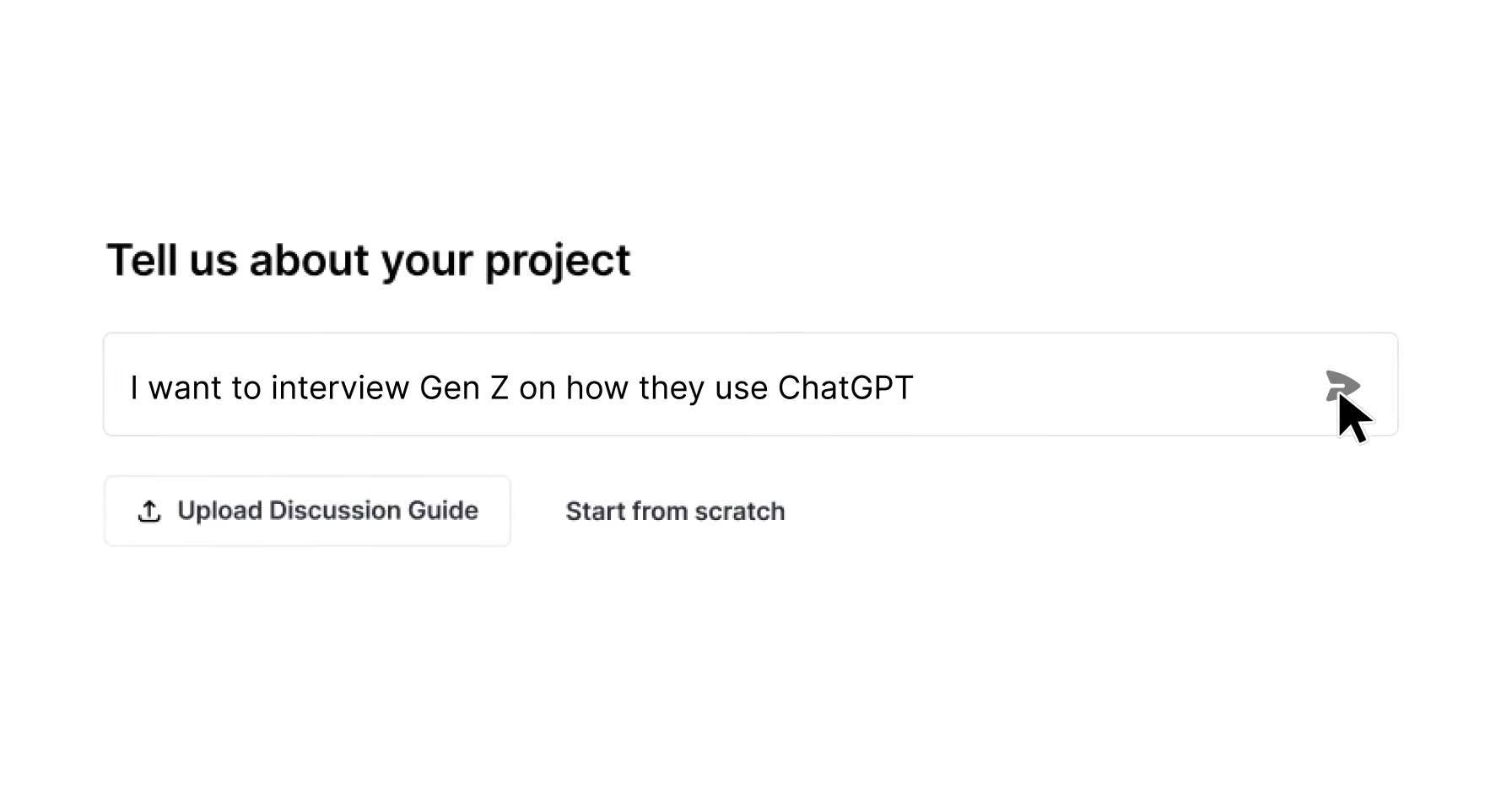
Every number in Pulse traces back to a verbatim quote and video clip from a real respondent. When a consideration metric drops, the explanation arrives in the same wave rather than in a separate qualitative study commissioned weeks later. Core questions stay constant wave over wave to protect the trend line. Timely add-on questions cover new campaigns, competitors, or market events without breaking historical comparability.
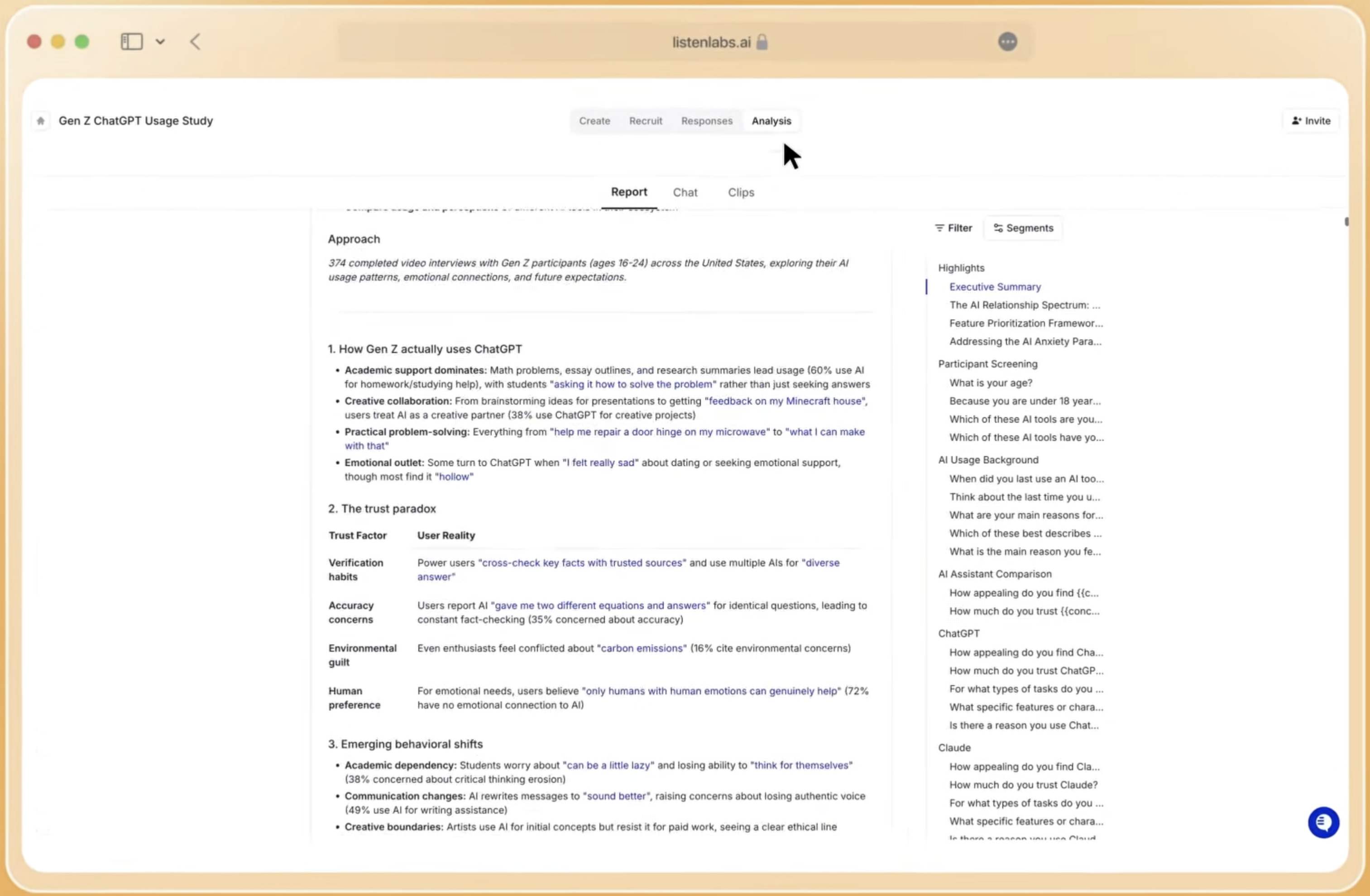
A well-known clothing brand illustrates the practical impact of this architecture. The brand was quietly losing customers. Its existing tracker caught the drop in consideration but could not explain it. Pulse identified the cause: a growing segment of customers felt the brand’s signature big logos were too loud for their changing lifestyles. The insight centered on style instead of price and arrived with verbatim quotes and video clips to support the finding.
Pulse integrates with Qualtrics and Decipher, so teams can keep the KPIs they already report while adding the narrative behind them. It deploys alongside an existing tracker or as the primary tracking system. Listen Labs has conducted over 1 million AI-moderated interviews and serves enterprises including Microsoft, Google, and Procter & Gamble.
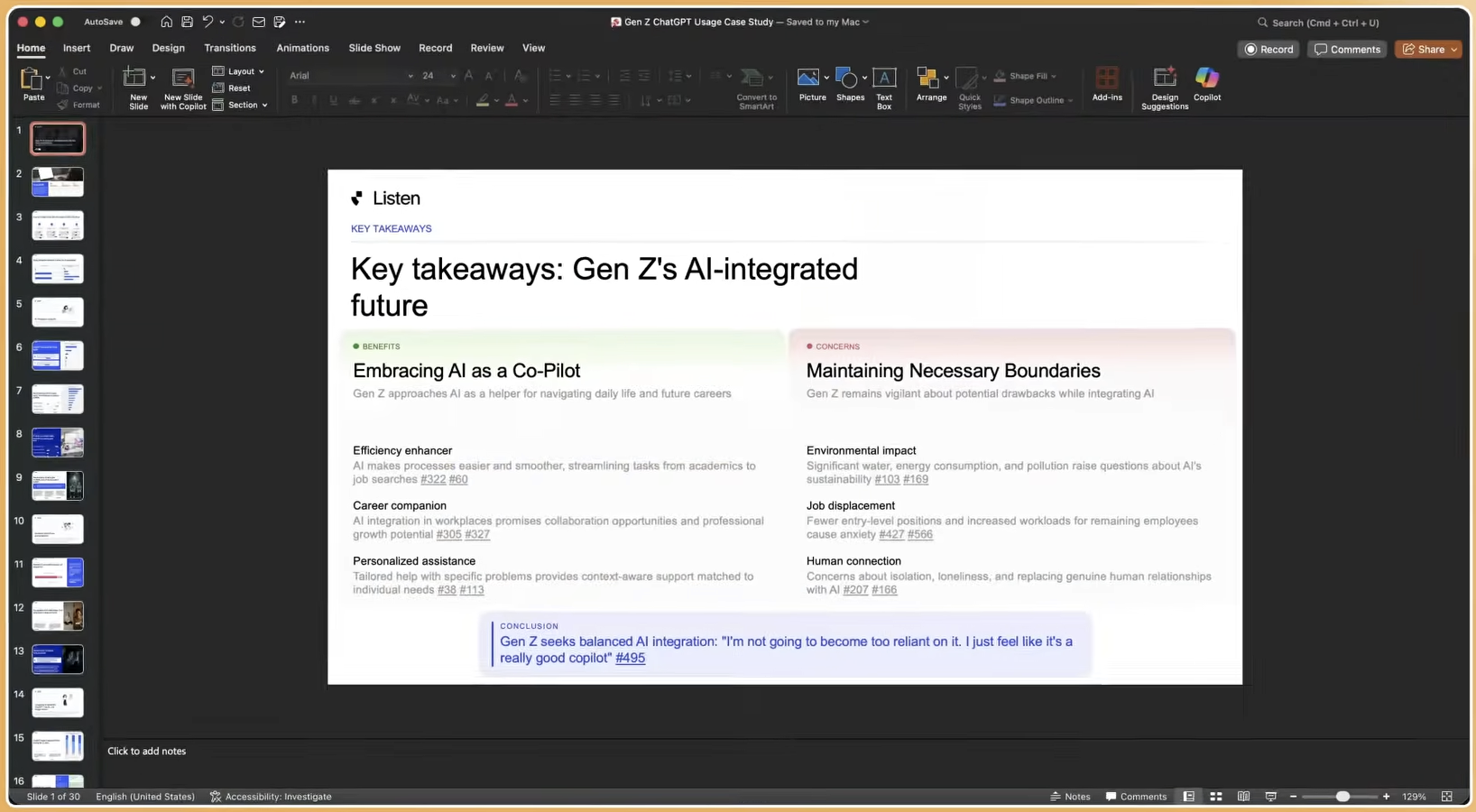
Pulse is the only option in this comparison that answers both “what” and “why” in a single platform. It removes the need to maintain separate tracking and qualitative research tools and removes the lag between detecting a metric movement and understanding its cause.
Decision Framework: Which Tool Should You Choose?
The best choice depends on the type of brand intelligence your team needs most urgently. Latana suits teams that need a traditional, representative brand tracker with published per-market pricing, can defend MRP-modeled estimates to leadership, and find wave-based data cadence sufficient for reporting.
Brandwatch suits teams that need real-time social listening for reputation monitoring, PR crisis management, or competitor conversation analysis and have the budget for enterprise quote-based pricing along with the internal expertise to manage a complex platform.
Listen Pulse suits teams that need to combine quantitative tracking with qualitative diagnostic depth. These teams want to understand why metrics move without commissioning separate research and prefer a single platform that reduces the fragmentation of multiple point solutions. Pulse delivers both the metric and the explanation in the same wave, with every number traceable to a real respondent’s words.
Frequently Asked Questions
How much does Brandwatch cost per month?
Brandwatch does not publish list prices, so buyers must engage sales for a custom quote. Third-party procurement data indicates observed annual contracts ranging from roughly $19,542 to $81,200, with a median enterprise commitment around $50,000 per year. Smaller deployments may start in the low thousands per month, while multi-suite global programs commonly reach six figures. Additional costs for premium support, onboarding, API entitlements, historical data access, and add-on suites can raise first-year total cost of ownership beyond the base subscription.
Is Brandwatch part of Cision?
Yes. Brandwatch was acquired by Cision in 2021 and now operates as part of Cision’s broader communications and PR technology stack. The Consumer Intelligence, Social Media Management, and Influencer Marketing suites are all available under the Brandwatch brand within the Cision portfolio.
What is the difference between Latana and Brandwatch?
Latana uses MRP-weighted surveys to track brand health metrics such as awareness, consideration, preference, and purchase intent with statistically representative samples across defined audience segments. Brandwatch uses social listening to analyze public online conversations in real time across social media and the web. The data in Brandwatch comes only from people who post publicly about a brand and does not represent the general buying population. Latana answers questions about how brand metrics move over time. Brandwatch answers questions about what people are saying publicly right now. As noted earlier, neither tool explains why a brand metric moved.
Which tool is best for brand tracking?
The answer depends on the specific research need. Latana provides representative quantitative tracking with published per-market pricing and works best for longitudinal brand health measurement reported to leadership. Brandwatch provides real-time social listening and works best for reputation monitoring, crisis management, and conversation analysis. Listen Pulse offers a hybrid approach, delivering representative tracking with qualitative diagnostic depth for teams that need both the quantitative “what” and the qualitative “why” in a single platform, without maintaining multiple point solutions or commissioning separate qualitative studies.