
Written by: Anish Rao, Head of Growth, Listen Labs
The Knowledge Gap in Brand Sentiment Measurement
Most brand teams know AI sentiment analysis exists, yet many lack a clear view of how it works or what the scores really mean. That gap produces surface-level numbers that arrive too late to guide action and offer no explanation for what caused the shift.
This guide walks through the full pipeline from data collection through NLP, classification, and scoring. It also explains why social sentiment and AI search sentiment operate as two different data worlds that require distinct measurement approaches. For brands that need to move past surface-level scores and uncover the reasons behind them, Listen Labs combines AI-moderated interviews with quantitative tracking to reveal the “why” behind every score.
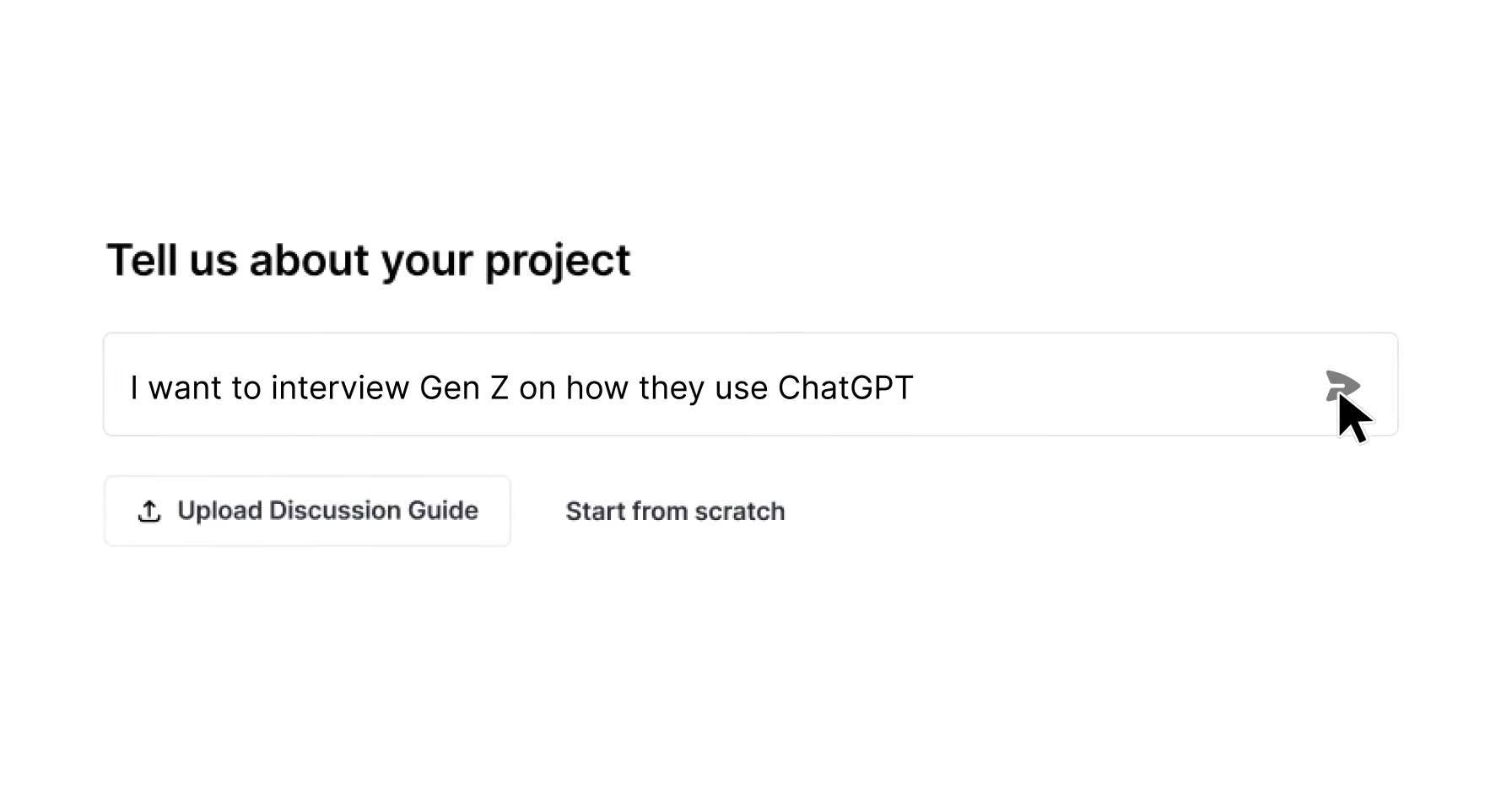
Brand Sentiment Analysis in Plain Language
Brand sentiment analysis uses AI to determine the emotional tone behind mentions of a brand across digital channels. Tools classify each mention as positive, negative, or neutral. Modern systems use transformer-based language models that read entire passages instead of isolated words. This approach improves accuracy on sarcasm, irony, and mixed opinions.
Three core use cases drive adoption across enterprise brand teams, and each solves a different business problem.
- Brand health: Tracks how perception shifts over time and flags emerging risks before they become crises, protecting long-term brand value.
- Campaign effectiveness: Shows whether marketing efforts actually change consumer perception, not just awareness or clicks.
- Competitive positioning: Benchmarks sentiment against competitors to highlight relative strengths and vulnerabilities in the category.
Brand sentiment is a real-time, quantitative measure of expressed emotion. It differs from brand reputation, which reflects long-term accumulated perception, and from brand perception, which captures stable beliefs consumers hold about a brand.
To understand how these scores appear on dashboards, it helps to walk through the underlying pipeline.
How AI Systems Turn Conversations into Sentiment Scores
- Data Collection
AI sentiment tools pull text from many sources. These include social platforms such as X, Instagram, TikTok, and LinkedIn, review sites like Google Business Profile, Amazon, and Yelp, forums such as Reddit, news articles, customer surveys, support tickets, and AI search engine outputs. Enterprise platforms process over 500,000 tickets daily, and global tools analyze 4.6 billion social media posts per day. Source selection shapes the story. A brand selling through retail partners may focus on review platforms, while a B2B software company needs LLM-specific tracking.
Raw text then moves through preprocessing steps such as tokenization, part-of-speech tagging, and dependency parsing. Named Entity Recognition (NER) identifies brand, product, and competitor mentions. Transformer models like BERT read text bidirectionally and capture context and nuance that keyword systems miss.
Three main approaches dominate sentiment classification. Rule-based systems rely on predefined word lists tagged with emotional values. They are fast and interpretable but struggle with sarcasm and context. Machine learning classifiers train on labeled datasets and reach 80–85% accuracy on standard benchmarks. Hybrid approaches combine rules with ML and route ambiguous cases to human review.
Aspect-Based Sentiment Analysis (ABSA) adds another layer. A review saying “the app is incredibly fast but the pricing is unreasonable” is classified positive on “performance” and negative on “pricing,” which produces more actionable guidance than a single overall label. LLMs show strong zero-shot and few-shot performance, reducing the need for task-specific labeled data, while fine-tuned smaller models still compete well on benchmarks.
Most tools express sentiment on a polarity scale from −1 to +1 or roll it into a Net Sentiment Score (NSS) from −100 to +100. Advanced systems detect specific emotions such as joy, anger, frustration, and surprise using frameworks like Ekman’s universal emotions. Treating all mentions equally distorts reputation signals; weighting scores by reach and engagement produces more useful guidance than raw mention counts.
Five Metrics That Complete the Sentiment Picture
Five metrics together provide a complete picture of brand sentiment. Tracking only a single score is the most common mistake in brand perception measurement. These five metrics are:
- Net Sentiment Score (NSS): Calculated as (Positive Mentions − Negative Mentions) / Total Mentions × 100. A score above +40 suggests healthy sentiment, while a score below 0 points to a specific problem. NSS usually serves as the primary KPI for marketing teams, yet formulas vary across tools, so scores only compare cleanly when the underlying calculation is known.
- Share of Voice: Compares a brand’s mention volume and sentiment with competitors in the same category. This view shows whether the brand is gaining or losing ground in consumer conversations.
- Theme Breakdown: Separates attributes such as pricing, ease of use, reliability, and customer support. This breakdown reveals which features drive positive or negative perceptions and reflects ABSA applied at scale.
- Emotion Scores: Capture specific emotional states beyond simple polarity. These scores show the intensity and flavor of feeling behind a sentiment movement.
- Sentiment Velocity: Measures the rate of change in sentiment over a defined period. This metric acts as a leading indicator that flags emerging crises before static scores shift visibly.
These metrics behave differently depending on whether the data comes from social posts or from AI search engines, so channel context matters as much as the numbers.
AI Search Sentiment and Social Sentiment as Separate Channels
Social sentiment captures what people post publicly on social media, reviews, and forums. It reflects reactive sharing of experiences, opinions, and complaints. Data in this channel is public, persistent, and searchable.
AI search sentiment captures what AI assistants such as ChatGPT, Google AI Overviews, Gemini, and Perplexity say about a brand when buyers ask questions. These responses are private to a single user and shaped by the prompt, conversation history, and the model’s training data.
A Semrush survey of 1,030 US shoppers found that 57% used AI to narrow choices, 53% to compare considered products, and 50% to make a final decision. A single negative mention in an AI response can remove a brand from consideration before it even appears on a short list.
The two channels differ in four critical ways: data source, persistence, weight, and methodology.
- Data source: Social sentiment passively monitors existing human conversations. AI search sentiment requires active querying of LLMs with standardized prompts.
- Persistence: Social posts remain visible over time. LLM responses are ephemeral and probabilistic, so the same prompt can yield different answers across sessions and models.
- Weight: A negative statement in an AI response often carries more weight than a negative social post because users treat it as objective and authoritative.
- Methodology: AI search sentiment often uses a five-level classification scale of recommended, positive framing, neutral listing, hedged, and negative instead of a simple positive, negative, or neutral label.
To see how your brand is framed across both social and AI search channels, see conversational tracking in action and uncover the reasons behind every sentiment shift.
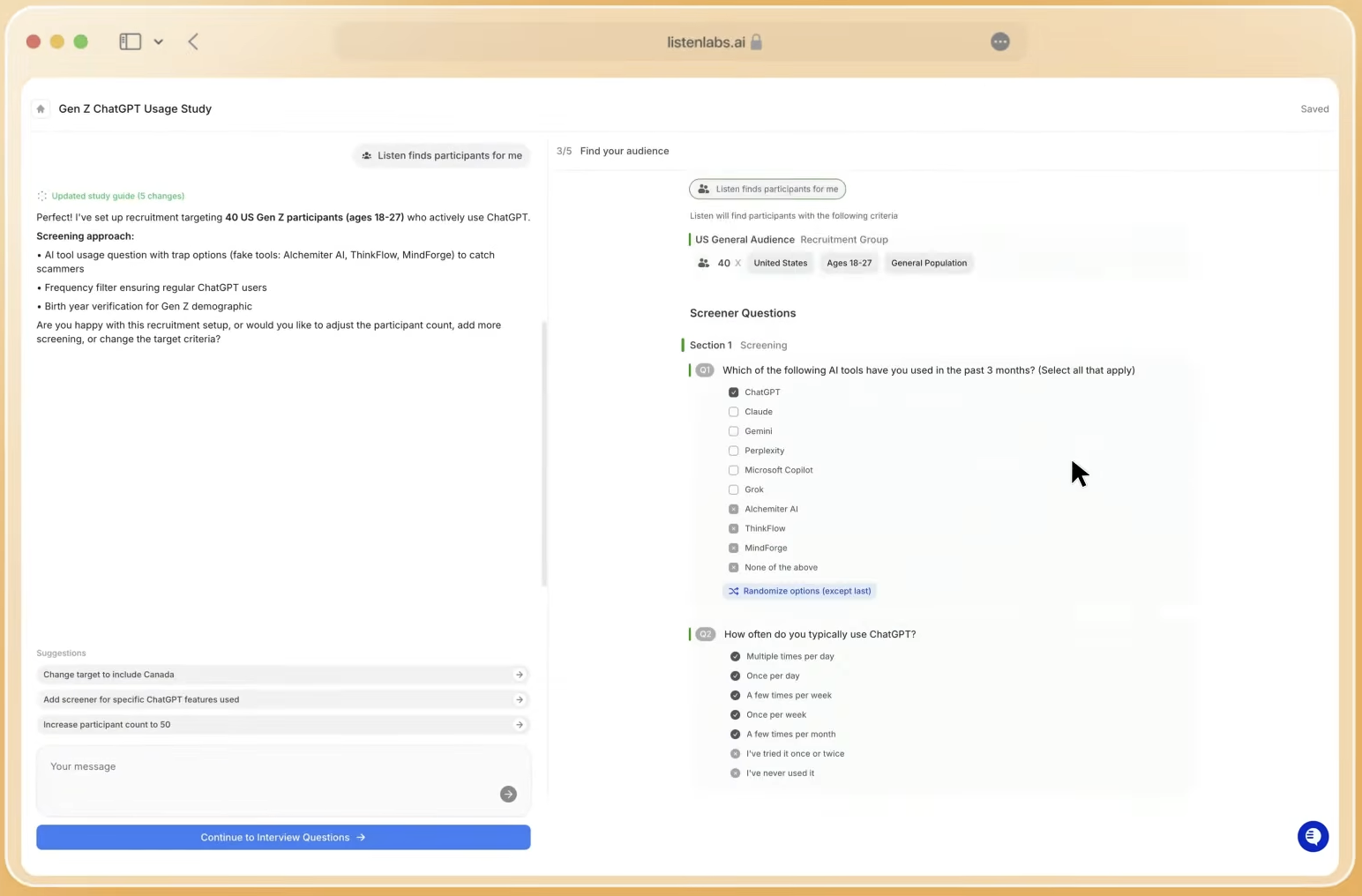
Listen Labs finds participants and helps build screener questions Where Sentiment Scores Go Wrong
Sentiment scores provide directional signals rather than precise emotional readouts. Several known limitations reduce reliability in real-world conditions.
- Sarcasm and irony: Sarcasm can cause up to a 50% drop in sentiment analysis accuracy, and even frontier LLMs like GPT-4 can trail fine-tuned smaller models on sarcasm detection.
- Negation handling: Phrases like “not bad at all” contain negative words but express mildly positive sentiment, and negation handling remains a difficult NLP problem.
- Cultural and multilingual differences: Applying an English model to translated or non-English content introduces systematic errors in sarcasm, idioms, and cultural context.
- Domain drift: Models trained on product reviews behave differently on support tickets, and English-only models struggle with code-switching and regional expressions. A 2026 study comparing five AI sentiment tools with human coding on COVID-19 public health datasets found poor concordance, with Cohen’s kappa below 0.5 for all tools and sentiment categories.
- Sample bias: Social media sentiment overrepresents vocal minorities because dissatisfied customers post more often than satisfied ones.
- The “why” gap: A Net Sentiment Score shows that a number moved without explaining the cause. Because traditional trackers catch the drop but cannot explain it, by the time a KPI declines the underlying shift has already been building for months.
These limitations point to a set of practices that keep sentiment measurement grounded and useful.
Turning Sentiment Scores into Reliable Signals
Combine quantitative scores with qualitative follow-up so the numbers always connect to real explanations. Sentiment scores act as directional signals, and open-ended conversations reveal the reasoning behind them.
Use consistent question frameworks over time to keep trend data comparable. Switching models, tools, or prompts mid-analysis breaks comparability and makes before-and-after numbers misleading.
Validate AI findings with regular human review. Sample scored examples monthly, have a human classify the same set, and measure agreement. If human-model agreement falls below an acceptable threshold, revisit the model.
Segment sentiment by audience and source to avoid averages that hide risk. A brand that looks fine on aggregate can mask a sharply negative segment that a blended score never reveals.
Track sentiment velocity alongside static scores. A move from 0.4 to 0.6 over three months shows positive momentum, while a decline from 0.7 to 0.5 calls for immediate attention. Weight sentiment by reach and influence so a negative post from a major creator or news outlet counts more than several minor complaints.
Choosing Tools That Explain the “Why,” Not Just the Score
Social listening platforms such as Sprout Social, Brandwatch, and Meltwater track what people say across social media, reviews, and forums. They excel at volume and breadth and usually stop at polarity scores. These tools show that sentiment moved without explaining the underlying drivers.
AI search monitoring tools such as OtterlyAI, Profound, and Semrush measure what LLMs say about brands in response to buyer queries. They cover the growing AI search channel but focus only on AI-generated text.
Research platforms that go deeper add the qualitative layer missing from pure listening tools. Listen Labs combines AI-moderated interviews with quantitative tracking to uncover the reasons behind sentiment shifts, not just the scores themselves. Its Emotional Intelligence feature analyzes tone of voice, word choice, and subconscious micro-expressions, using Ekman’s universal emotions framework, to surface feelings that transcripts alone miss. Listen Pulse is a conversational tracker that runs the same study wave after wave. It understands open-ended answers, sorts them into themes, and quantifies them. It then charts each theme next to the KPIs you already report.
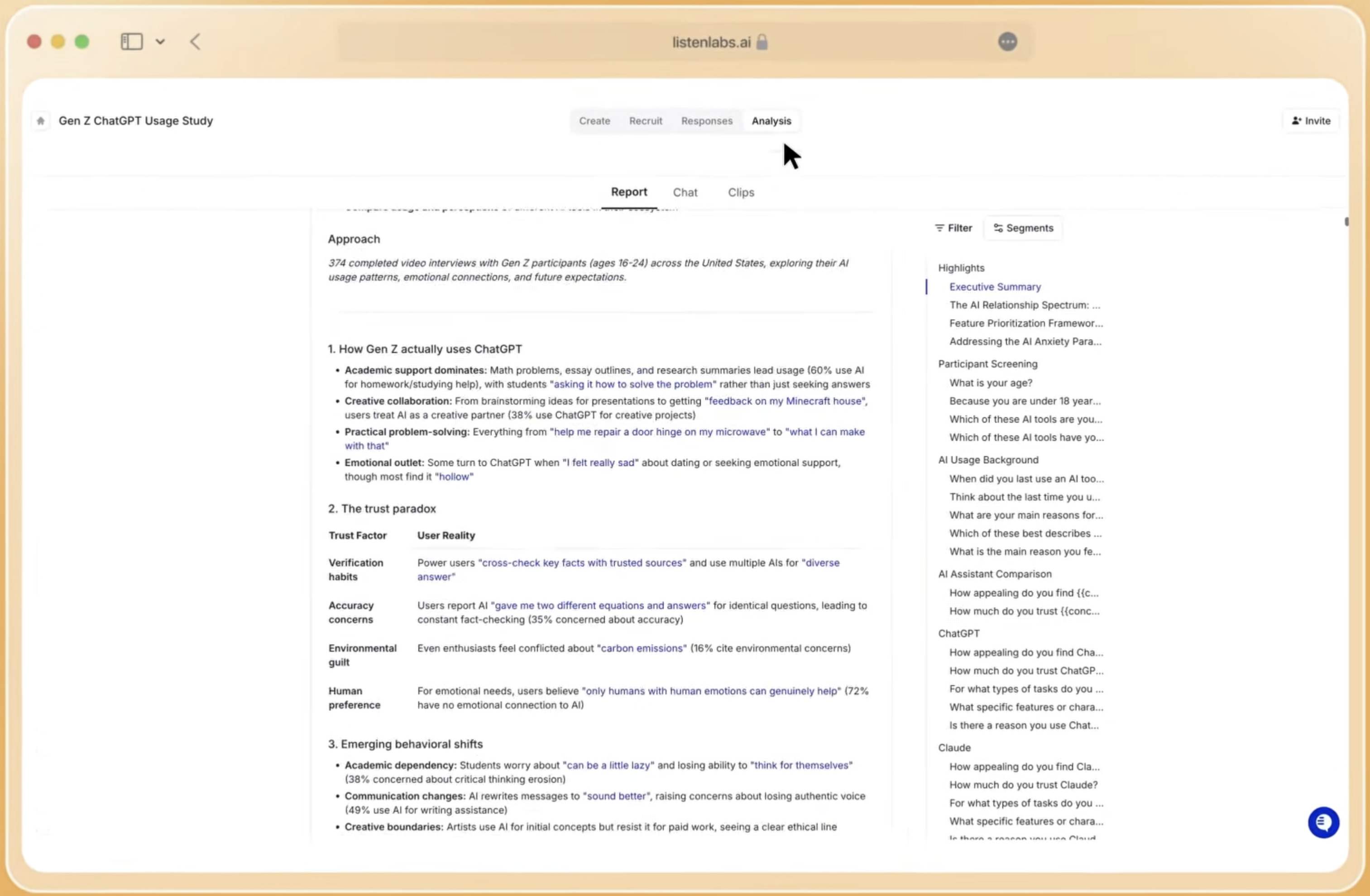
Listen Labs auto-generates research reports in under a minute One well-known clothing brand, famous for its big logos, was quietly losing customers. Its old tracker recorded the drop without an explanation. Pulse revealed that price was not the issue. Style was the problem. A growing group of customers felt the big logos were too loud for their changing lifestyles. That difference between a number and an answer shaped the brand’s next move.
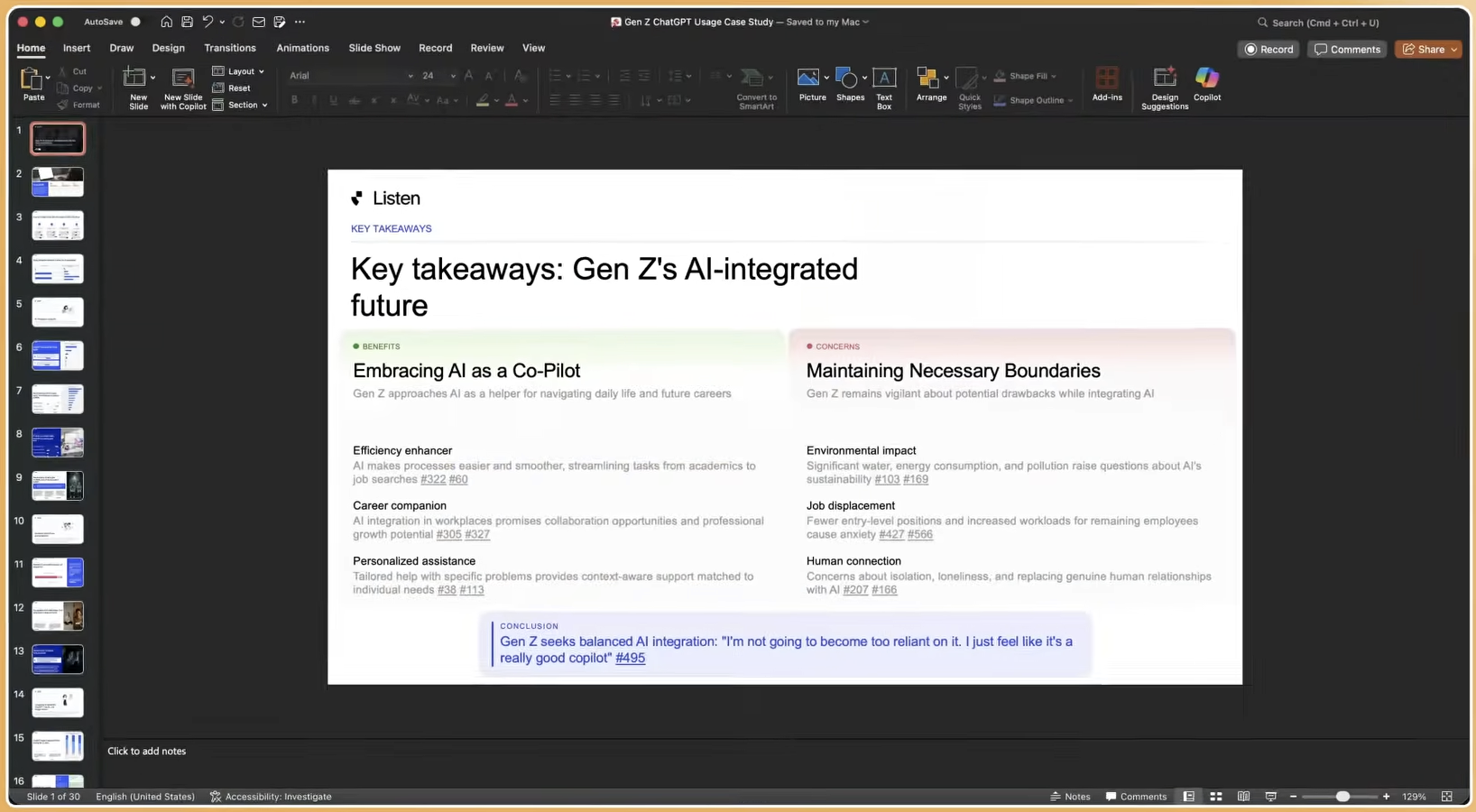
Listen Labs' Research Agent quickly generates consultant-quality PowerPoint slide decks Frequently Asked Questions
Can ChatGPT do sentiment analysis?
ChatGPT and other large language models can perform sentiment analysis with strong zero-shot performance, meaning they classify sentiment accurately without task-specific training data. However, responses can vary across runs because of stochastic inference. Performance on sarcasm detection often lags behind fine-tuned smaller models, and LLMs lack the structured, traceable pipeline of dedicated sentiment tools. For brand monitoring at scale, a purpose-built system with consistent prompts, stored evidence snippets, and a fixed scoring rubric produces more reliable trend data than ad hoc LLM queries.
What are the three main types of sentiment analysis?
The three primary types are fine-grained analysis, aspect-based sentiment analysis (ABSA), and emotion detection. Fine-grained analysis classifies sentiment on a spectrum from very positive to very negative instead of a simple three-way split. ABSA identifies sentiment toward specific attributes such as price, quality, or customer support instead of producing a single overall label. Emotion detection identifies specific emotions like joy, anger, frustration, or surprise instead of only polarity. Each type answers a different question. Fine-grained analysis shows how strongly people feel. ABSA shows what they feel strongly about. Emotion detection shows the specific emotional state driving the response.
How is AI sentiment analysis different from traditional surveys?
Surveys capture stated opinions through preset questions with no ability to probe deeper. AI sentiment analysis processes unstructured data such as social posts, reviews, support tickets, and conversational responses at scale. This approach uncovers unexpected insights and emotional nuance that structured surveys miss. A deeper limitation of surveys is the say-do gap, where what people say and what they do diverge. A participant might report preferring human customer service, then click the AI agent in three seconds. Sentiment analysis of behavioral and conversational data catches contradictions that self-reported survey responses cannot.
What is the Net Sentiment Score formula?
The standard formula is NSS = (Positive Mentions − Negative Mentions) / Total Mentions × 100, which produces a score from −100 to +100. Some tools include neutral mentions in the denominator, while others exclude them. This difference means NSS figures from different platforms are not directly comparable unless the underlying formula is known. For AI search sentiment, some tools extend the formula to include hedged mentions as a negative weight and neutral listings as a mild positive, reflecting the commercial impact of cautious AI framing on buyer decisions.
What is aspect-based sentiment analysis?
Aspect-based sentiment analysis (ABSA) identifies sentiment toward specific attributes of a brand or product instead of producing a single overall score. A restaurant review that praises the food but criticizes the long wait would be classified positive on food quality and negative on service, which produces more actionable guidance than document-level scoring. ABSA is particularly valuable for brand teams because it connects sentiment directly to operational decisions. A negative score on “customer support” points to a different fix than a negative score on “pricing.” Transformer-based models, particularly BERT and its variants, currently represent the state of the art for ABSA tasks.
Conclusion: Pairing Scores with Real Explanations
Understanding how AI measures brand sentiment, from data collection through NLP, classification, and scoring, creates a solid foundation. Numbers alone still fall short. As noted in the limitations, traditional tools catch drops without revealing their causes, and by the time a KPI declines the underlying shift has often been building for months.
The strongest value from AI sentiment measurement comes from adding qualitative depth to quantitative scores. Teams need to know why a number moved, which audience drove the shift, and what they were reacting to. That qualitative layer often determines whether insights lead to action.
Ready to move beyond the score and understand the “why” behind your customers’ feelings? Talk to our team about a demo and see how conversational tracking closes the gap.
Read Next