
Written by: Anish Rao, Head of Growth, Listen Labs
Key Takeaways
- AI-driven brand sentiment tracking now falls into two main categories: social listening platforms and AI-search monitoring tools.
- Social listening tools like Brandwatch, Talkwalker, and Brand24 capture public conversation across social, news, forums, and reviews, but they miss silent audiences and rarely explain why sentiment shifts.
- AI-search monitoring tools like OtterlyAI, Profound, and Promptwatch track how brands appear in AI-generated answers, a channel where 51% of B2B buyers now begin their research.
- Most sentiment tools report scores without connecting them to the reasons behind metric changes, which leaves teams guessing about what actually shifted.
- A complete sentiment strategy pairs quantitative tracking with a qualitative layer that explains why metrics move, a gap many tools still leave open.
The Two Categories of AI Sentiment Analysis Tools
Social Listening Platforms: Tracking Human Conversation
Social listening platforms track what people say about a brand across public channels. They pull in mentions from social media, news, blogs, forums, and review sites, then use AI to label sentiment as positive, negative, or neutral. Brandwatch tracks mentions across more than 100 million sources using transformer-based language models. It also detects six specific emotions: anger, disgust, fear, joy, sadness, and surprise. Talkwalker supports sentiment analysis across 187 languages with culturally adapted models. Brand24 suits mid-market teams and offers AI sentiment analysis across 100+ languages with an optional LLM monitoring add-on.
These tools help teams capture public conversation, spot crises in real time, and understand share of voice. They still only capture what people publish in public. They miss the silent majority and rarely explain why sentiment changed.
AI-Search Monitoring Tools: Tracking Machine-Generated Answers
AI-search monitoring tools track how a brand appears inside AI-generated answers from ChatGPT, Gemini, Perplexity, and similar platforms. This surface behaves differently from social feeds or search results. When a buyer asks ChatGPT for the best project management software, the AI synthesizes information from across the web and delivers a recommendation. Research from UNSW shows users place disproportionate trust in AI product recommendations compared to social posts.
Tools like OtterlyAI track brand visibility in ChatGPT. Profound monitors AI search framing across multiple engines. Promptwatch tracks prompts and brand mentions so teams can see which queries surface their brand. These tools run structured queries on a schedule and measure mention rate, citation rate, position, and sentiment.
Both categories matter for a modern brand. A G2 survey of 1,076 B2B buyers found that 51% now begin purchase research in an AI chatbot, up from 29% one year earlier. Teams that monitor only one channel see an incomplete picture of their reputation.
Top Tools: What To Look For
Social Listening Platforms
- Brandwatch: Best for enterprise teams that need deep consumer intelligence. Tracks mentions across 100+ million sources with transformer-based language models and six-emotion detection. Custom pricing typically starts around $800/month.
- Talkwalker: Best for global and multilingual deployments. Supports 187 languages with culturally adapted models and visual intelligence that tracks brand logos in images and video. Entry plans start around $500/month.
- Brand24: Best for SMBs and growth-stage teams. Provides real-time monitoring across social, news, blogs, forums, and review sites, with sarcasm and slang detection. The individual plan starts at $199/month on annual billing.
AI-Search Monitoring Tools
- OtterlyAI: Tracks brand visibility and sentiment across six AI platforms. The Lite plan starts at $29/month for 15 prompts.
- Profound: Supports enterprise-grade monitoring across 9+ engines with theme-based daily sentiment. The starter plan is $99/month, and full multi-engine coverage is $399/month.
- Promptwatch: Tracks prompts and brand mentions across AI assistants and helps teams understand which queries surface the brand.
Shared Evaluation Criteria Across Both Tool Types
Teams should evaluate tools on cross-channel coverage, emotion detection depth, root cause analysis, real-time alerts, and integrations. AI sentiment models reach 85–90% accuracy on standard benchmarks but drop to approximately 79% on social media content heavy with sarcasm, slang, and cultural context, according to a 2025 MIT CSAIL Industry Study. Human review still matters for high-stakes brand moments.
The critical gap appears when tools stop at the score. A sudden 40% increase in negative mentions about a product feature signals a problem. Teams still need to know which themes, experiences, or messages created that spike. “Traditional surveys may tell us what people do, but it takes a conversation to understand why.”
Once you have a short list of tools, the next step is building a monitoring workflow. The process for AI search looks different from social listening.
How to Track Brand Sentiment in AI Search
Teams need a tailored approach for AI search. AI-generated answers are created dynamically and are not indexed like static web pages, so traditional crawling tools cannot reach this channel. Use the steps below to set up monitoring.
- Build a prompt library. Create 20–50 buyer-intent queries that mirror how customers actually ask about your category. Include comparison queries, “best [product] for [use case]” queries, and problem-solving queries.
- Run prompts on a cadence. Use tools like OtterlyAI or Profound to run these queries across ChatGPT, Gemini, and Perplexity weekly. The same prompt asked three times returned a meaningfully different brand list in 38% of runs, so weekly 7-day rolling averages provide the cleanest reporting unit.
- Analyze context and sentiment. Track how your brand is framed, not only whether it appears. Note whether the AI describes you as “best for enterprise” or “limited features.” Compare sentiment across engines for the same prompt.
- Track citations. Reddit was the top cited domain at 18.3% of citations, followed by Wikipedia at 11.7%, in a 750-response AI mention audit. If Reddit and Wikipedia lack coverage of your brand, the LLMs usually do as well.
Key Features to Look For in Any Sentiment Tool
Any brand sentiment analysis tool for social media or AI search should meet a few core requirements.
- Cross-channel aggregation: The tool should monitor social media, news, forums, review sites, and AI search answers in a single view.
- Emotion detection: It should go beyond positive, negative, and neutral to detect specific emotions like joy, anger, confusion, or disappointment. Basic polarity often misses the nuance that drives action.
- Root cause analysis: The tool should trace sentiment shifts back to specific themes, topics, or customer quotes so teams can act on the findings.
- Verbatim drill-down: Users should be able to click from a sentiment score to the actual customer words, quotes, and moments behind it.
Most tools handle cross-channel aggregation. Fewer deliver emotion depth, root cause analysis, and verbatim drill-down. That gap is where sentiment tracking often fails and where the cost of guessing grows.
How To Choose The Right Tool: A Decision Framework
Enterprise teams with dedicated insights functions can combine a robust social listening platform like Brandwatch with an AI-search monitoring tool like Profound. They then add a qualitative layer to understand the reasons behind their quantitative scores.
SMBs or lean teams can start with an all-in-one tool like Brand24, which offers real-time monitoring at an accessible price. If their customers use AI assistants for research, they can add an AI-search monitoring tool like OtterlyAI.
Teams should ask every vendor a consistent set of questions before purchasing.
- How do you handle emotion detection beyond positive and negative?
- Can you trace sentiment shifts back to specific customer quotes and moments?
- Do you monitor AI search results, or only social media and web mentions?
- How do you handle sarcasm, slang, and cultural context?
- Can I drill down from any metric to the verbatim customer language behind it?
The Missing Piece: Why Sentiment Moves
Traditional trackers report that a number moved without explaining the cause. A negative or inaccurate AI characterization can cost deals before a buyer ever reaches a brand’s site. By the time a KPI declines, the underlying shift may have been building for months. Teams end up reacting to lagging indicators without a clear diagnosis. “The why is what differentiates customer research that’s alright from customer research that’s outstanding.”
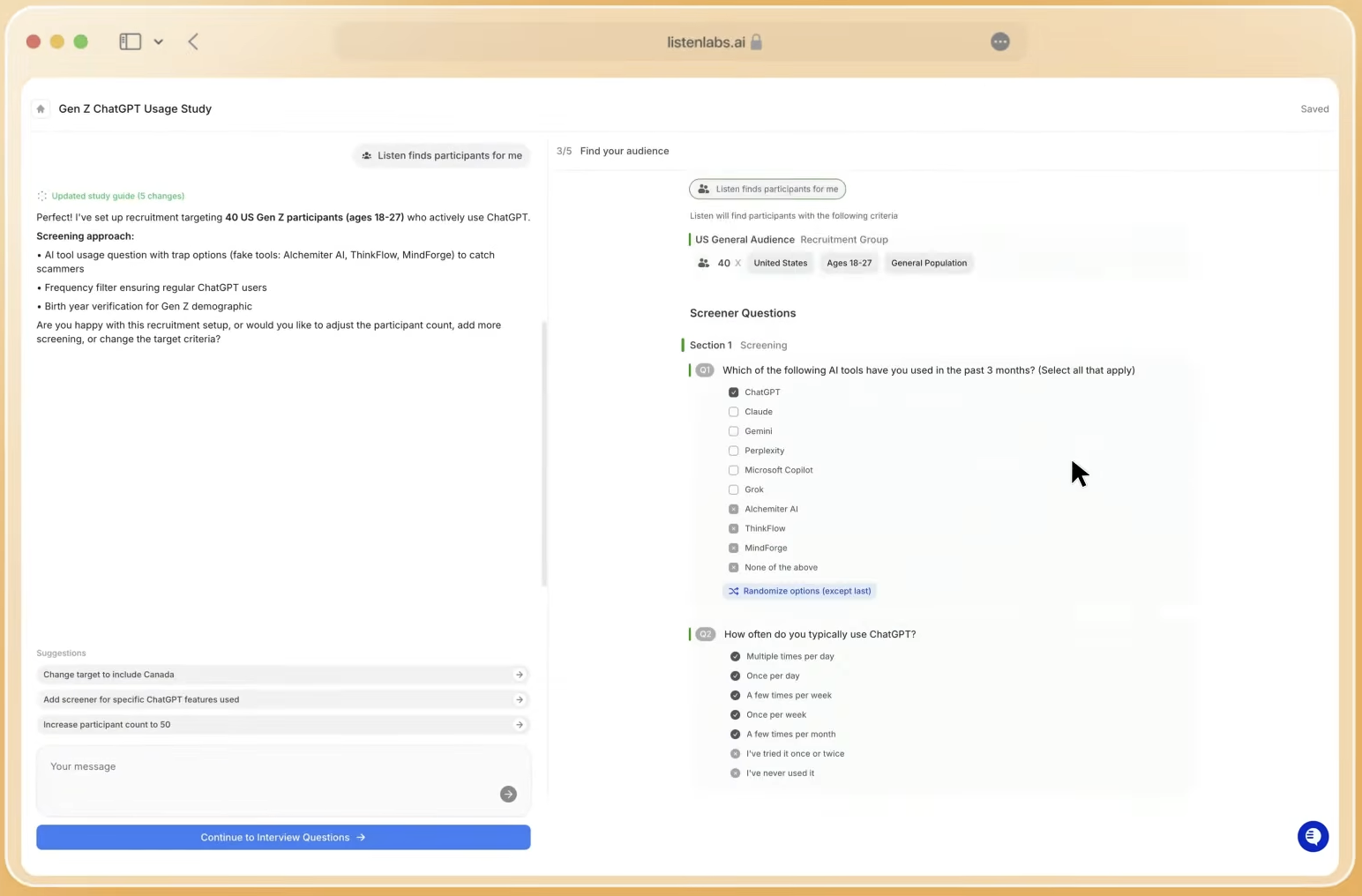
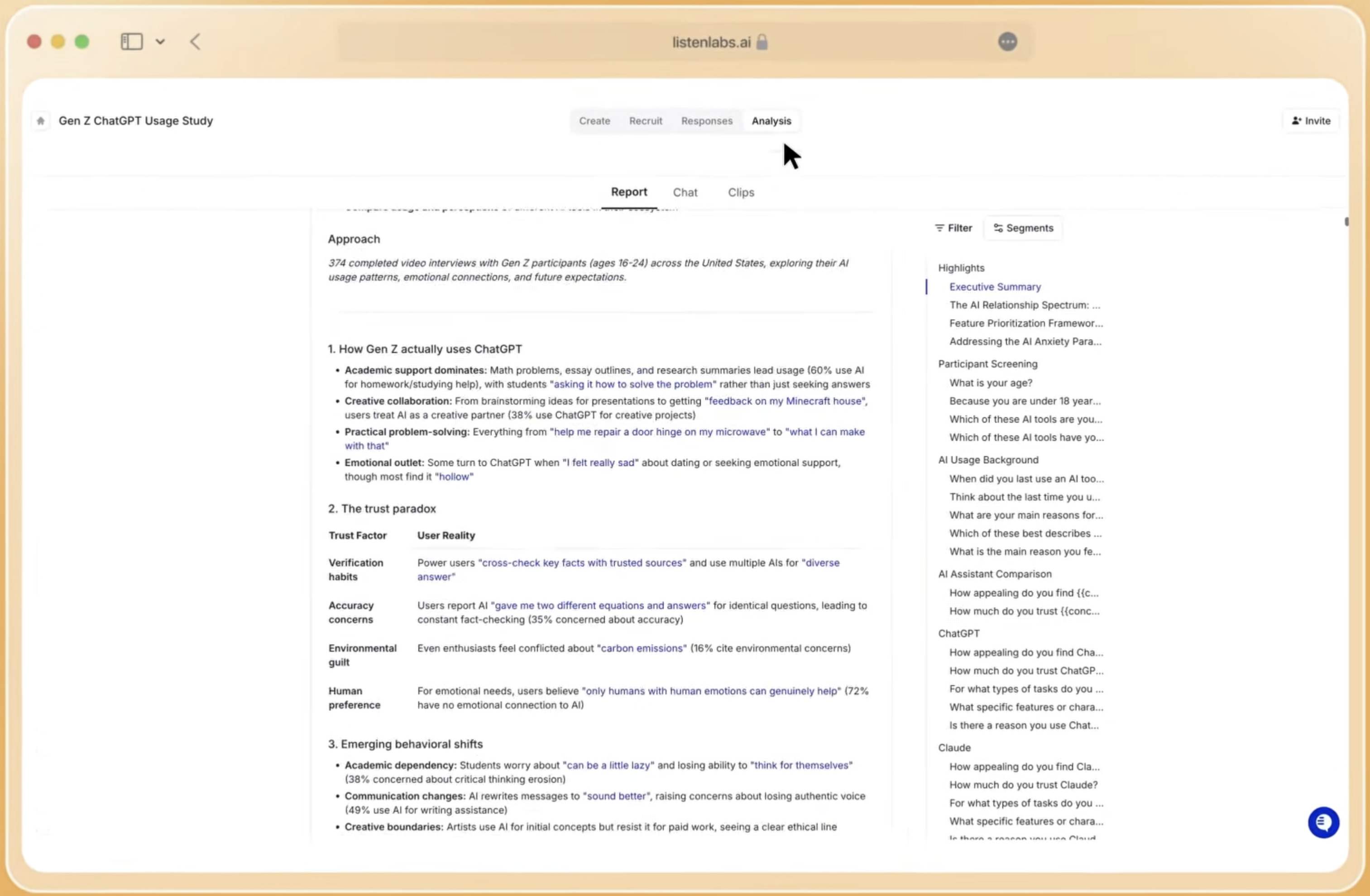
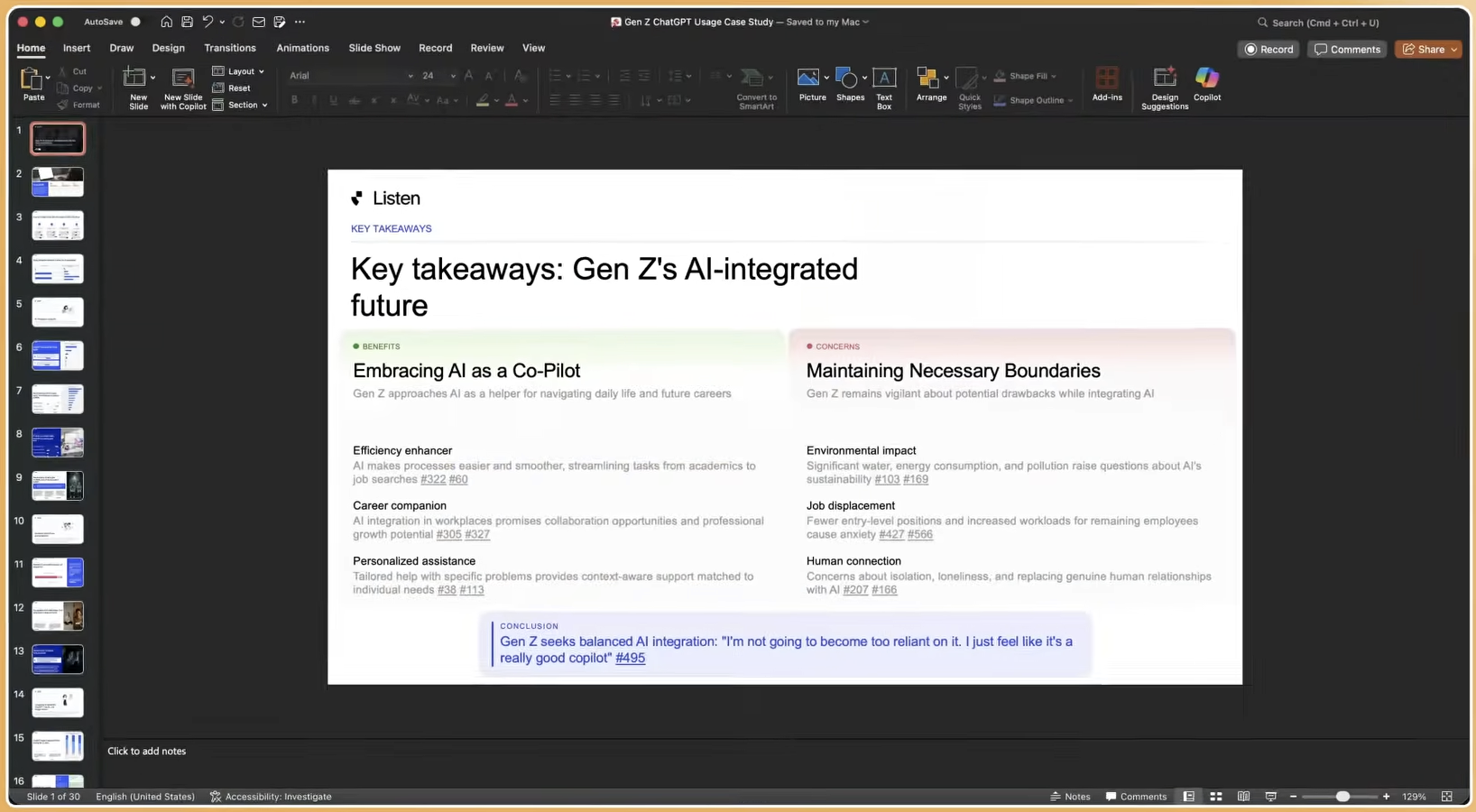
Listen Labs Pulse addresses this gap. Pulse is a conversational tracker that runs the same study with the same screeners wave after wave. It interprets open-ended answers, sorts them into themes, quantifies those themes, and charts each one next to the KPIs teams already report. It analyzes tens of thousands of responses continuously and surfaces emerging trends, the reasons numbers are moving, and what is likely to come next.
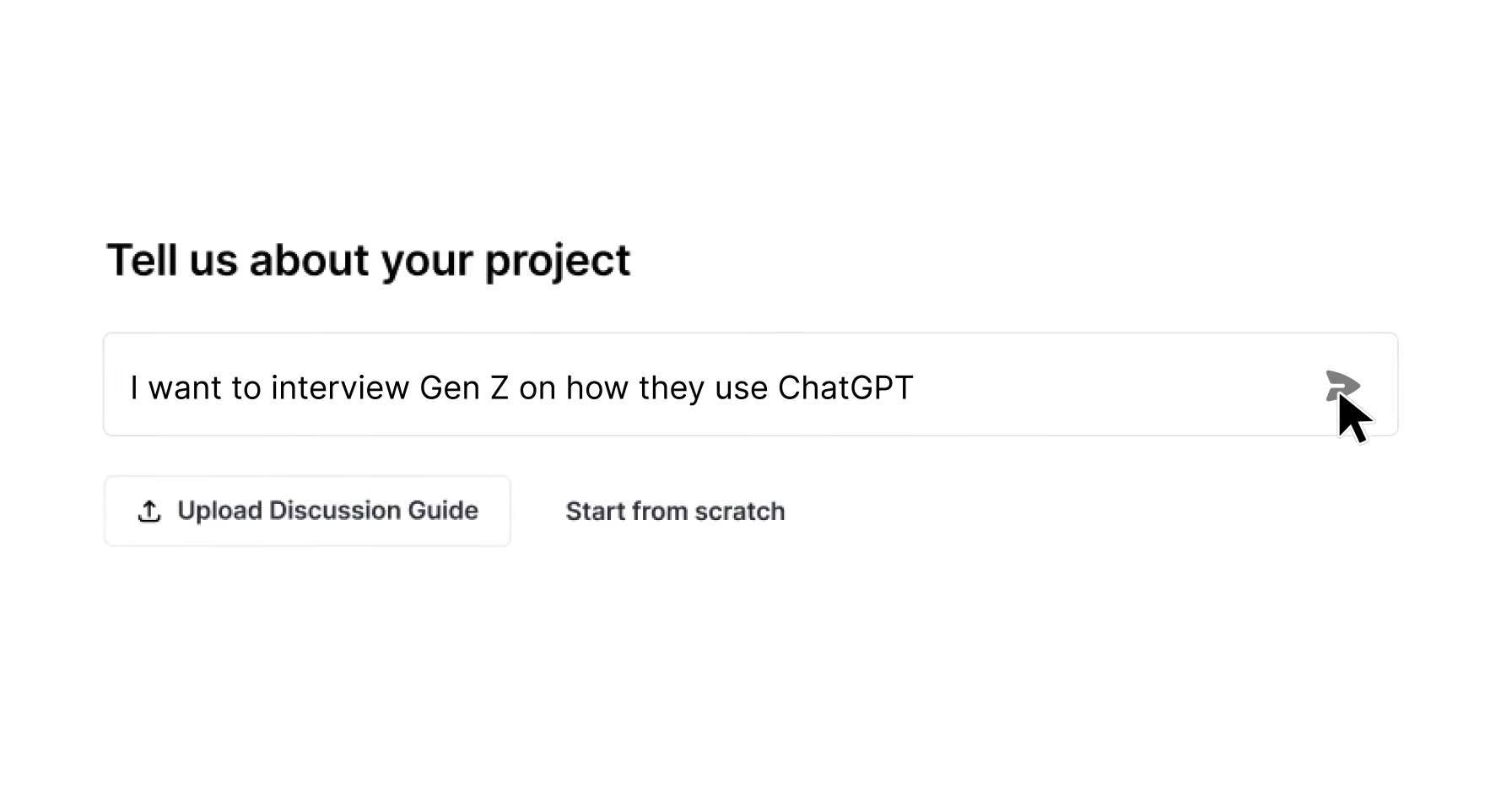
Core questions stay constant to keep the trend line clean. Timely questions cover new campaigns and competitors. Every number traces back to a real moment with a real person, including their words, the quote, and the clip.
One well-known clothing brand, famous for its big logos, was quietly losing customers. Its old tracker caught the drop but could not explain it. Pulse revealed that price was not the issue. Style was. A growing group of customers felt the big logos were too loud for their changing lifestyles. That insight shows the difference between seeing a metric move and understanding the driver.
Pulse also integrates Emotional Intelligence, which analyzes tone of voice, word choice, and subconscious micro expressions to surface emotions that transcripts alone miss. Every emotion is quantified per question and traceable to the exact timestamp, verbatim quote, and AI reasoning. Built on Ekman’s universal emotions framework, it gives brand teams emotional depth that traditional trackers cannot provide.
Listen Labs has conducted over 1 million AI-powered customer interviews for companies including Microsoft, Perplexity, and Sweetgreen and raised a $69 million Series B led by Ribbit Capital at a valuation above $500 million. As Alfred Wahlforss, CEO of Listen Labs, explains, “Companies use it for all kinds of large decisions. This AI interviewer means that you can have hundreds of one-on-one interviews run at scale.”
See how Pulse connects your sentiment scores to the customer conversations behind them.
Risks, Limitations, and Common Misconceptions
Relying solely on quantitative sentiment scores. A Net Sentiment Score in the 65–75% positive range is considered healthy for most consumer brands. That metric still does not reveal why the remaining 25–35% feel negatively or whether that negativity concentrates in a critical segment.
Ignoring AI-search mentions. Teams that monitor only social media and reviews miss the channel where 51% of B2B buyers now begin their research. AI-generated answers shape purchasing decisions with outsized authority.
Assuming all sentiment tools are the same. Social listening tools and AI-search monitoring tools answer different questions. One tracks what humans say. The other tracks what machines recommend. A complete reputation programme in 2026 uses both, since crises often break on social first and then propagate into AI answers.
Over-reliance on automated analysis. Transformer and LLM-based sentiment systems drop from approximately 96% accuracy on clean text to approximately 79% on messy real-world feedback that contains sarcasm, mixed topics, and ambiguity. Human review remains essential at consequential decision points.
Conclusion: Building a Complete Sentiment Tracking Strategy
The AI-driven brand sentiment tracking landscape now includes two core categories, each with a distinct role. Social listening platforms capture public conversation. AI-search monitoring tools capture machine-generated recommendations. A complete strategy uses both, then adds a qualitative layer that explains the reasons behind every metric movement.
Listen Labs Pulse fills that qualitative gap. It connects every number to the real customer moments behind it so brand, marketing, and insights teams can move from reactive to proactive brand management. Instead of discovering a KPI decline after it happens, teams see themes forming early and understand what drives them.
Explore how Pulse can add diagnostic depth to your existing sentiment tracking.
Frequently Asked Questions
Can ChatGPT Do Sentiment Analysis?
ChatGPT can analyze sentiment in text you provide directly, but it does not function as a dedicated sentiment tracking tool. It lacks continuous monitoring across channels, cross-channel aggregation, and trend tracking over time. It also cannot run structured prompt libraries on a cadence, score sentiment per AI response across multiple engines, or trace sentiment shifts back to specific customer quotes and themes. For ongoing brand sentiment tracking, teams need purpose-built tools such as social listening platforms for human conversation or AI-search monitoring tools for machine-generated answers, or both.
What Are the Three Main Types of Sentiment Analysis?
The three primary types are fine-grained sentiment analysis, emotion detection, and aspect-based sentiment analysis. Fine-grained sentiment analysis classifies polarity on a scale from very negative to very positive rather than a simple three-class system. Emotion detection identifies specific emotions such as joy, anger, fear, sadness, disgust, and surprise rather than only tone. Aspect-based sentiment analysis scores sentiment for specific product or brand attributes separately, such as rating pricing sentiment independently from customer support sentiment. Aspect-based analysis is often the most actionable for brand teams because it pinpoints which dimensions of the brand experience drive positive or negative perception.
Are There Free AI Sentiment Analysis Tools?
Some tools offer free tiers or trials, but they usually lack the features that make sentiment tracking useful for brand management. They often miss emotion detection beyond basic polarity, cross-channel aggregation, AI-search monitoring, and the ability to trace sentiment shifts back to specific themes or customer quotes. For meaningful brand tracking, teams should budget for a paid tool. Entry-level options in the social listening category start around $199/month, and AI-search monitoring tools start around $29/month. The more important question focuses on whether a tool can explain why a sentiment metric moved, which free tools rarely deliver.
How Do I Monitor Brand Mentions in ChatGPT?
Use specialized AI-search monitoring tools such as OtterlyAI or Profound, which run structured prompts against ChatGPT and other AI engines on a scheduled cadence. Build a library of 20–50 buyer-intent queries that reflect how your customers research your category. Run each prompt multiple times per session because AI answers vary by run. Track how your brand is framed, including whether it appears as a primary recommendation, a secondary option, or with limiting language. Also track which sources the AI cites, since the citation supply chain, such as Reddit, Wikipedia, and review sites, directly shapes how AI models characterize your brand. Manual spot-checks can help but do not scale and miss trend data over time.
What Is the Difference Between Social Listening and AI-Search Monitoring?
Social listening tracks what humans publish about a brand across social media, forums, news, blogs, and review sites. AI-search monitoring tracks what AI engines say about a brand when users ask them questions. These sources behave differently. Social listening captures organic human conversation in real time and works best for crisis detection, share of voice measurement, and audience sentiment trends. AI-search monitoring captures machine-generated recommendations that synthesize information from across the web and carry a level of authority that individual social posts do not. A brand can enjoy strongly positive social sentiment while AI engines describe it with limiting language. Without dedicated AI-search monitoring, teams may never see that gap. A complete brand sentiment strategy in 2026 uses both layers and adds a qualitative research layer like Listen Labs Pulse to explain the reasons behind any metric movement in either channel.