
Written by: Anish Rao, Head of Growth, Listen Labs
Key Takeaways
- Social media erodes brand awareness through five mechanisms: algorithm restrictions, inconsistent messaging, information overload, unmanaged negative feedback, and neglected presence.
- Platform analytics alone cannot diagnose the root cause because they capture behavior without the reasoning behind audience disengagement.
- Each mechanism produces a distinct signal that calls for targeted qualitative research instead of inference from dashboard data.
- Traditional qualitative research cycles take 4–6 weeks, while Listen Labs delivers verified insights in under 24 hours through AI-moderated interviews and Emotional Intelligence analysis.
- Book a demo with Listen Labs to identify which mechanism is affecting your brand and receive diagnostics backed by direct consumer feedback.
The Dual Role Of Social Media In Brand Awareness
Social media builds awareness when teams manage it well and erodes it when they do not. The erosion usually starts quietly. It appears as declining organic reach, weaker brand recall, or fewer positive brand associations long before revenue drops. Social media brand awareness decline has identifiable management causes, not channel causes.
This guide isolates five mechanisms through which social media contributes to brand awareness loss. For each one, it names the observable signal, explains why platform analytics alone cannot confirm it, and shows how qualitative consumer research verifies it. The goal is diagnostic precision. Identify which mechanism is hitting your brand, then verify it with research instead of guessing from dashboard data.
Mechanism 1: Algorithm Restrictions And Organic Reach Decline
Platform algorithm changes suppress organic reach for brand accounts. Fewer people see brand content even when posting cadence stays the same. This mechanism is the most visible and the most frequently misdiagnosed.
Observable Signal: Declining organic reach and impressions per post, falling non-follower reach, and engagement rate dropping faster than follower count.
Why Platform Analytics Cannot Confirm It: Reach metrics are platform-defined and change when the platform redefines them, so a “stable” reach number can hide real visibility loss. The scale of that loss appears in recent data. Metricool’s 2026 Social Media Study, analyzing over one million accounts, found Instagram Reels reach fell 35% year over year and overall post reach dropped 31%, even as accounts in the same panel doubled their posting volume. A Q1 2026 eMarketer report puts average organic reach on major social platforms at just 1.7% for businesses. Posting more does not outrun reach decline.
How Qualitative Research Verifies It: Ask target audience members directly whether they recall seeing brand content in the past 30 days. If recall is low but the brand is posting consistently, reach restriction is the mechanism rather than content quality. This is the say-do gap in reverse. The brand is active, but the audience is not receiving.
Mechanism 2: Inconsistent Messaging And Brand Voice Drift
Fragmented messaging across channels, formats, and posting teams weakens the associations that make a brand easy to retrieve from memory. A post can perform well and still dilute the brand if it fails to reinforce the same associations as the post before it.
Observable Signal: Declining unaided brand awareness and falling top-of-mind recall in tracker waves, even while aided awareness holds steady. The four stages of brand awareness — unaware, aware, considered, preferred — erode from the earlier stages first when voice drift sets in.
Why Platform Analytics Cannot Confirm It: Engagement metrics capture whether a post performed, not whether it reinforced the brand. A viral post that contradicts brand positioning can damage recall while generating impressive engagement numbers.
How Qualitative Research Verifies It: Ask respondents to describe the brand in their own words without prompting. If their language is inconsistent or vague, voice drift is driving the problem. That inconsistency matters because brand attachment carries communication into equity. The International Journal of Consumer Studies study by Dwivedi et al. (2021), “Like it or not! Brand communication on social networking sites triggers consumer-based brand equity,” found that consumer-based brand equity rises when a brand’s communication on social media platforms is positive and consistent, with brand attachment strongly mediating this relationship.
Run A Voice-Drift Diagnostic On Your Brand →
Mechanism 3: Information Overload And Overpromotion
Ad-like, high-frequency, low-variation content produces scroll-past behavior and disengagement. The audience still sees the content. They simply do not process it. This is how social media causes brand awareness loss without any drop in reach.
Observable Signal: Rising impressions with flat or falling engagement, declining watch-through and save rates, and audience growth that does not convert into recall.
Why Platform Analytics Cannot Confirm It: In overload, people see the content but do not process it. In reach loss, they never see it. Both situations produce declining engagement rates, yet they call for different responses. A December 2025 Clutch survey cited by EMARKETER found that 93% of consumers engage in some form of ad avoidance, with 55% skipping ads and 37% ignoring them entirely. A 2026 Journal Of Marketing Analytics study on consumer brand engagement found that excessive or highly frequent brand interactions may generate persuasion awareness or engagement fatigue, which then harms brand attitude.
How Qualitative Research Verifies It: Ask respondents to describe their emotional response to seeing brand content. If they report fatigue, irritation, or automatic scrolling, overload is the mechanism. Emotional Intelligence analysis surfaces hesitation and disengagement that transcripts alone miss.
Mechanism 4: Unmanaged Negative Feedback And Negative Word-Of-Mouth
Unanswered public complaints, pile-ons, and negative word-of-mouth damage trust and, over time, recall. Persistent negativity reshapes the associations that make a brand feel credible and worth remembering.
Observable Signal: A rising negative-to-positive sentiment ratio in comments and mentions, increasing complaint volume per thousand impressions, and declining consideration or preference scores in tracker data.
Why Platform Analytics Cannot Confirm It: Sentiment loss and reach loss look similar in a dashboard because both show declining engagement. The underlying causes differ. Harun et al. (2017) found that negative online product reviews have considerable detrimental effects on consumer-based brand equity and can lead to significant brand equity dilution. Negative word-of-mouth is especially damaging in internet contexts because negative diffusion spreads alongside positive diffusion, so brands cannot rely on positive WOM to offset negative WOM online.
How Qualitative Research Verifies It: Ask respondents who have seen negative commentary whether it changed their perception of the brand. If sentiment has shifted while reach remains stable, unmanaged negative feedback is the mechanism.
Mechanism 5: Neglected Presence And The Cost Of Abandonment
When a brand account goes quiet or runs on autopilot, the platform deprioritizes it. Audiences stop expecting anything from it, and other channels have to work harder to sustain awareness. Abandonment often reflects resourcing constraints rather than strategy, which makes it worth naming plainly.
Observable Signal: Falling follower growth and re-engagement, declining direct traffic and branded search volume, and rising paid spend required to hold awareness flat.
Why Platform Analytics Cannot Confirm It: A quiet account produces no data. The absence of engagement differs from negative engagement, yet platform analytics cannot distinguish between them.
How Qualitative Research Verifies It: Ask respondents when they last saw brand content and whether they would notice if the brand stopped posting. If answers sound like “I have not seen anything in months” or “I would not notice,” neglected presence is the mechanism. Nazar’s 2026 study found that while algorithmic reach increases visibility, visibility alone does not create lasting trust. Influencer credibility plays a more critical role in establishing long-term brand trust and consumer loyalty.
How To Diagnose Which Mechanism Is Hitting Your Brand
Platform analytics cannot separate reach loss, sentiment loss, and recall loss because they capture behavior, not reasoning. In a dashboard, algorithm-driven reach suppression, a sentiment problem, and content fatigue all look like declining engagement. Consumer interviews separate these mechanisms because they surface why people disengaged instead of only what they did.
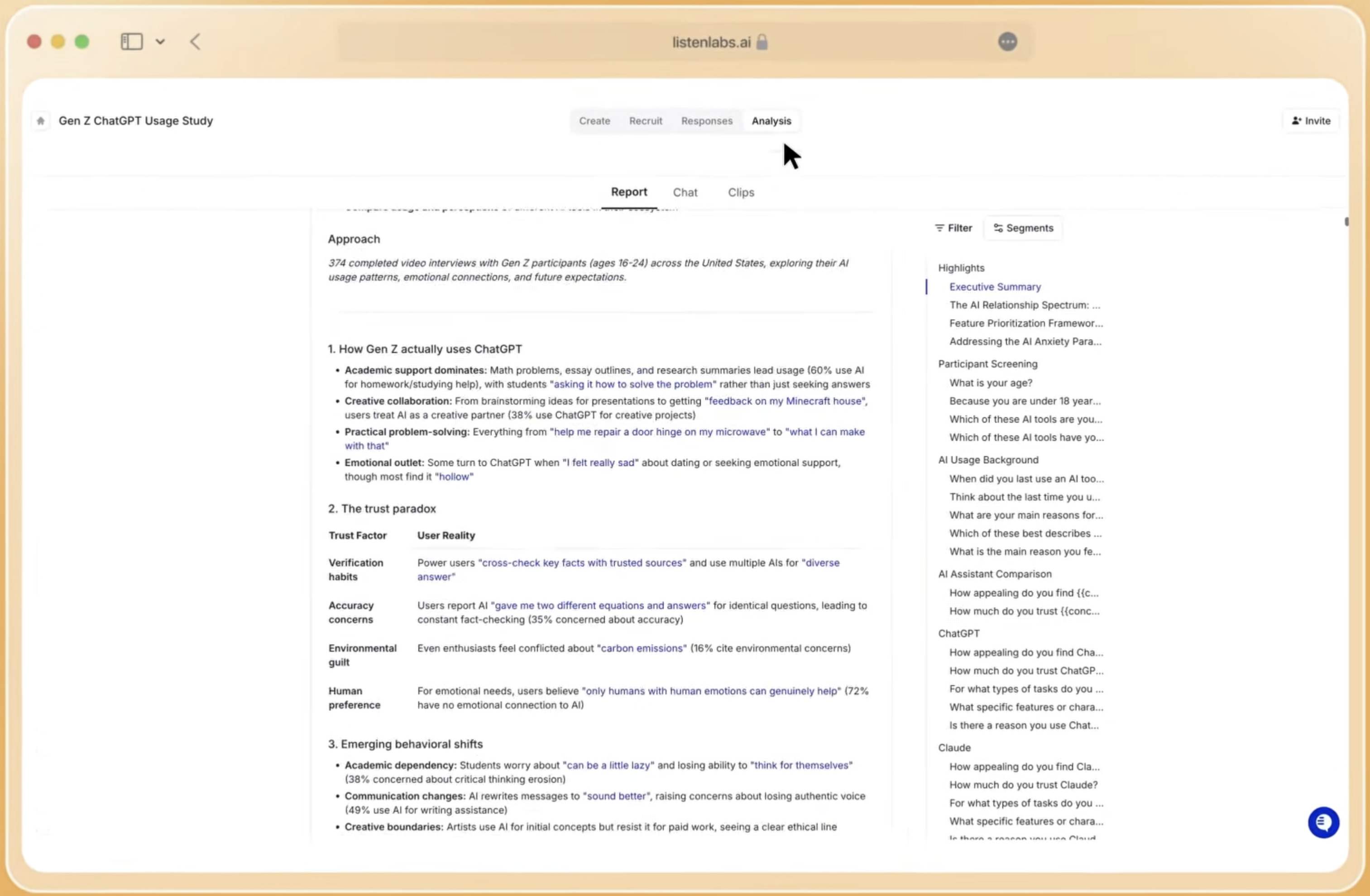
Listen Labs is an end-to-end AI research platform that sources participants from its 50M+ verified respondent network across 45+ countries and 120+ languages, conducts AI-moderated video interviews with dynamic follow-up questions, and delivers analysis in less than 24 hours instead of the 4–6 weeks of a traditional qualitative cycle. Three capabilities map directly to this diagnostic workflow, from capturing emotional signal to tracking it over time to packaging the output for leadership:
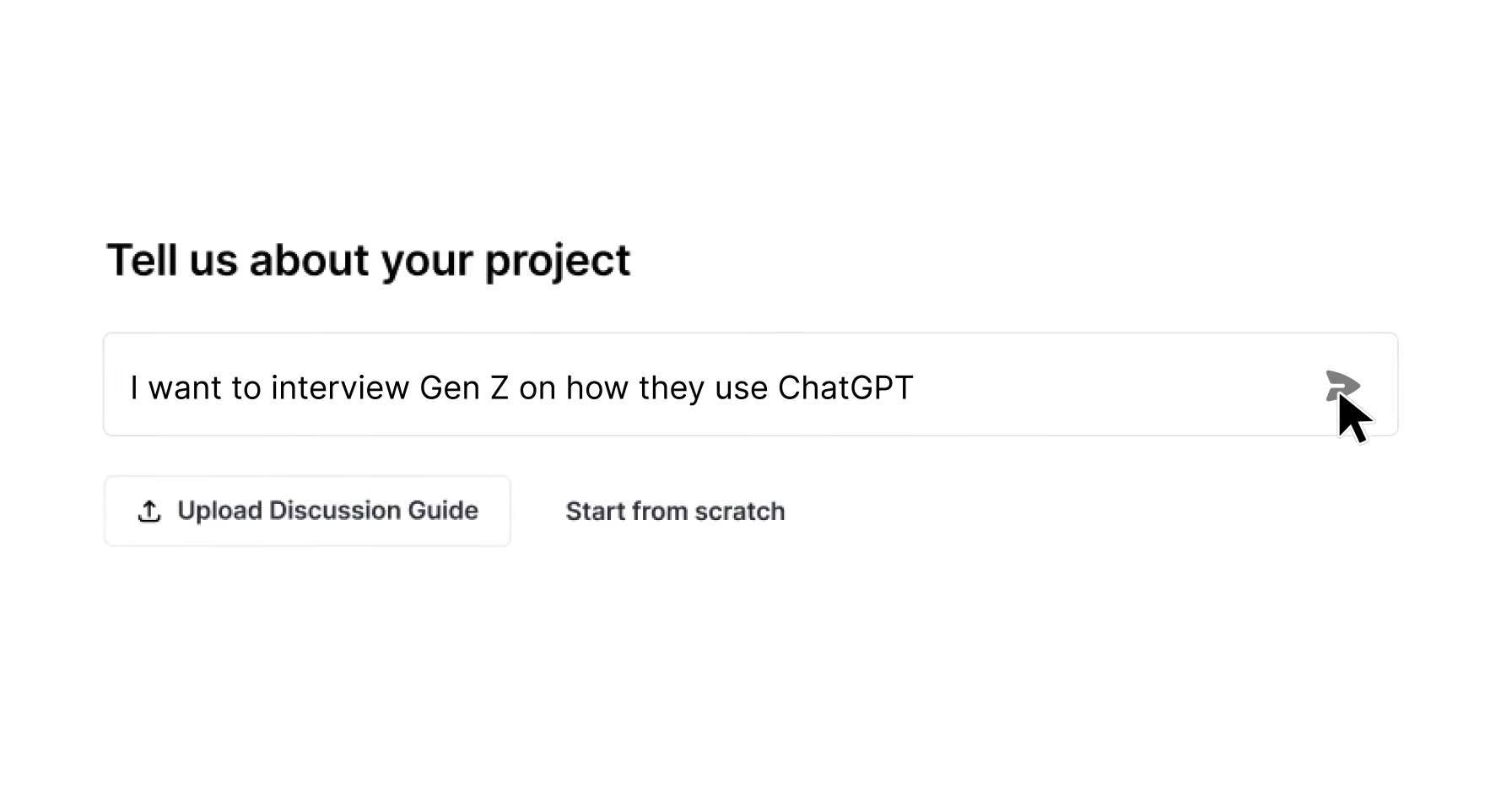
- Emotional Intelligence analyzes tone of voice, word choice, and micro expressions to surface confusion, hesitation, and disengagement that transcripts miss, across 50+ languages.
- Listen Pulse is the conversational tracker that runs the same study wave after wave, keeps core questions constant to protect the trend line, and charts emerging themes next to the KPIs teams already report, so a metric movement arrives with its explanation in the same wave.
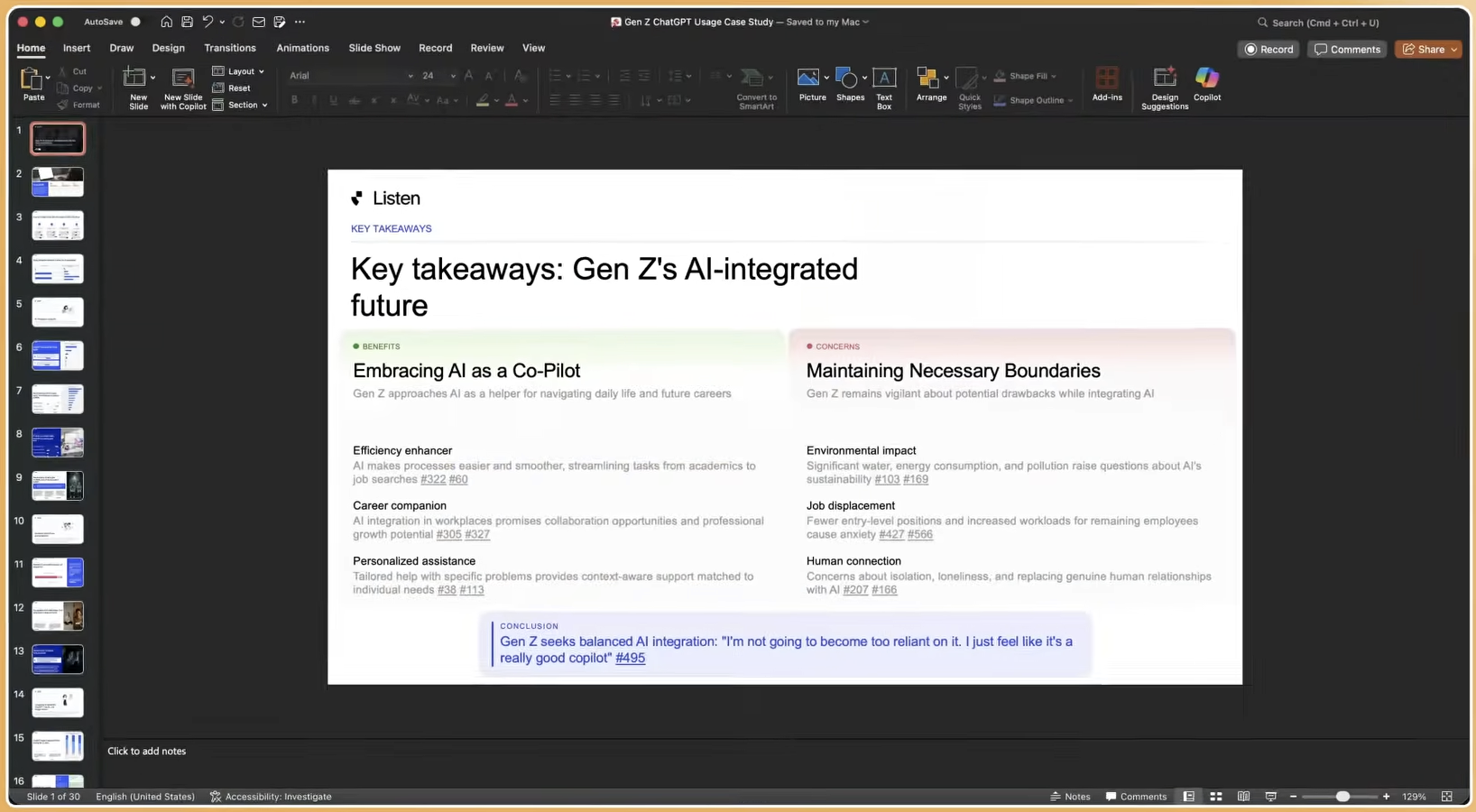
- Research Agent turns interview data into themes, charts, and highlight reels, making the diagnostic output immediately presentable to leadership.
Listen Labs is trusted by enterprises including Microsoft, Google, Anthropic, P&G, and Skims, and has conducted over 1 million customer interviews.
See How Listen Labs Diagnoses Your Specific Awareness Problem →
Conclusion: Verify The Mechanism Before The Next Board Update
The role of social media in brand awareness loss comes from mismanagement, not from the channel itself. The five mechanisms — algorithm restrictions, inconsistent messaging, information overload, unmanaged negative feedback, and neglected presence — are distinguishable and measurable. Social media brand awareness decline calls for a clear diagnosis instead of a channel overhaul.
Qualitative consumer research that captures why people disengaged turns a dashboard decline into a defensible explanation. Verify the mechanism before the next board update, and walk into that room with evidence instead of assumptions.
Get Your Mechanism Diagnosis Before The Next Board Update →