
Written by: Anish Rao, Head of Growth, Listen Labs | Last updated: July 30, 2026
Key Takeaways for Enterprise Research Leaders
- AI-moderated research now matches or exceeds human moderation on probing depth, discussion-guide coverage, and response volume for structured qualitative studies.
- Emotional-signal capture, cultural adaptability, and conversational continuity remain the primary areas where AI still trails human moderators, though platforms like Listen Labs are closing these gaps with advanced Emotional Intelligence features.
- Enterprise-grade validation uses a four-layer workflow: pre-launch dry runs, real-time Quality Guard monitoring, post-study spot-checks, and periodic human-AI comparator cohorts.
- AI moderation now serves as the operational default for concept testing, brand perception, churn diagnostics, and other structured studies, while human oversight remains essential for high-sensitivity or exploratory contexts.
- Listen Labs combines 30M-verified respondents, Ekman-based Emotional Intelligence, real-time Quality Guard, and decades of in-house expertise to deliver traceable, consultant-quality findings in under 24 hours, so you can see these 2026 benchmarks applied to your research program.
Five Benchmarks for AI Moderated Research Accuracy
Five criteria frame a rigorous comparison of AI versus human moderation for enterprise consumer insights work. These criteria map directly to the failure modes that enterprise research leaders most often cite when they evaluate AI moderation platforms.
Probing and follow-up accuracy measures whether the moderator consistently pursues the depth of a discussion guide and generates meaningful follow-up questions on ambiguous or short responses. Emotional-nuance detection measures whether the moderator captures signals beyond explicit verbal content, including tone, micro-expressions, and hesitation. False-positive rates measure how often quality-control systems incorrectly flag valid responses or, conversely, pass low-quality ones. Cultural and linguistic reliability measures whether the moderator maintains equivalent probing quality and cultural sensitivity across languages, geographies, and demographic groups. Traceability measures whether every insight, emotion label, and theme links back to a specific participant, timestamp, and verbatim quote, which enterprise research governance requires.
Each of these dimensions appears in the evidence base that follows and together they define what “accurate enough” means for AI-moderated research in 2026.
How Close AI Moderation Comes to 90% Accuracy
For structured qualitative studies, 90% accuracy now functions as a floor, not a ceiling, for well-designed AI moderation, and on several dimensions AI already outperforms human moderation.
On discussion-guide coverage, AI moderation is a strong option for standard qualitative research in product, brand, and CX studies. This advantage stems from AI’s immunity to the three factors that cause human moderators to deviate from guides: rapport-building detours, time pressure, and fatigue.
On follow-up volume, Perspective AI’s 2026 report on 500+ hours of AI-moderated sessions found the AI asked an average of 3.2x more clarifying follow-ups per session overall than human moderators. Skilled human moderators average multiple follow-up probes per substantive response. Well-designed AI moderation maintains high follow-up levels with no fatigue-related decline after the first several sessions.
On response depth, AI-moderated transcripts can contain a higher density of in-vivo customer quotes than human-moderated baselines because the AI never paraphrases responses in real time. A Glaut comparative study found AI-moderated interviews delivered responses averaging 131 words versus 94 words in static surveys (39% more).
The main documented accuracy limitation involves transcription fidelity, especially for domain-specific terms and accents. The validation workflow in the guardrails section below directly addresses this risk.
Where AI Moderation Still Misses Nuance
Current failure modes for AI moderation cluster around three areas: emotional-signal capture, cultural-context handling, and conversational continuity.
On emotional signals, a Curtin University biometric randomized controlled trial with 60 participants found participants reported stronger emotional connection with human interviewers and showed more joy in facial expressions with humans. Text-based AI moderation captures only what participants say and often misses hesitation, micro-expressions, and emotional contradictions between verbal and non-verbal signals. Listen Labs’ Emotional Intelligence feature directly addresses this gap by analyzing tone of voice, word choice, and subconscious micro-expressions at the same time. Every emotion is quantified per question and concept, with each label traceable to the exact timestamp, verbatim quote, and AI reasoning behind it, using Ekman’s universal six emotions framework that clinical psychology and UX research teams already recognize.
On cultural reliability, a 2026 head-to-head study comparing AI-moderated and human-moderated qualitative interviews with Afro-descendant and Latine respondents found that AI moderators produced shallower data and weaker rapport. The same study found that AI moderators could approximate surface markers of empathy but lacked the ability to adaptively recognize emotion, clarify meaning, and adjust questioning in culturally rooted ways. A 2026 study by Bhattacharyya et al. found systematic misalignment between six frontier LLMs and human cultural norms, with all models expressing engaging emotions more than disengaging ones, especially when simulating European American personas.
Listen Labs mitigates cultural reliability risk through dynamic follow-up logic trained on tens of thousands of completed studies across 45+ countries, combined with Emotional Intelligence available across 50+ languages. An internal study with 50 participants found 92% reported top comfort levels for both AI and human sessions, with 58% preferring AI moderation for discussing political and religious views. This pattern points to AI’s structural advantage on sensitive topics where social desirability bias suppresses candor with human moderators.
On conversational continuity, human moderators build a narrative across conversations by remembering earlier statements, noticing contradictions, and connecting moments into a bigger story. Many AI systems still produce interviews that feel like a series of competent turns rather than cumulative conversations. This limitation appears most strongly in exploratory studies where the guide is not yet stable and in research involving grief, trauma, or clinical populations, where human oversight remains the appropriate choice.
Four Guardrails to Validate AI Interview Quality
Enterprise research leaders applying AI moderation at scale rely on a repeatable validation workflow. The following guardrails reflect current best practice from the 2026 research operations literature and Listen Labs’ Quality Guard methodology.
Pre-launch validation covers study design integrity. Perspective AI’s 2026 operational guide recommends pre-launch dry runs with 3–5 internal participants before going live to catch agent failures, confusing instructions, and ambiguous probes when stakes are low. QuestionPro recommends piloting with 10–15 sessions before scaling, manually reviewing transcripts to assess whether probes produce genuine depth or only surface-level responses.
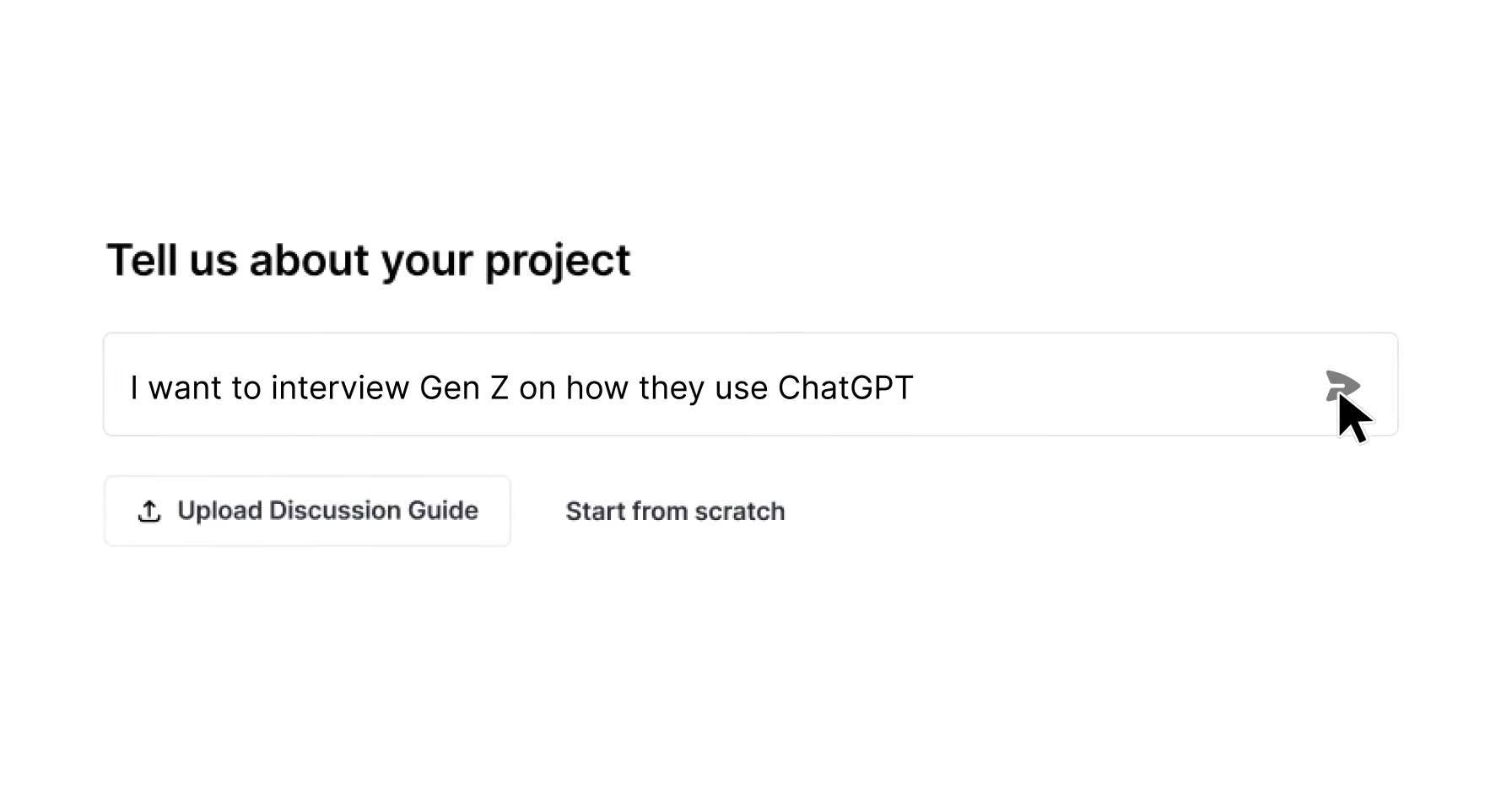
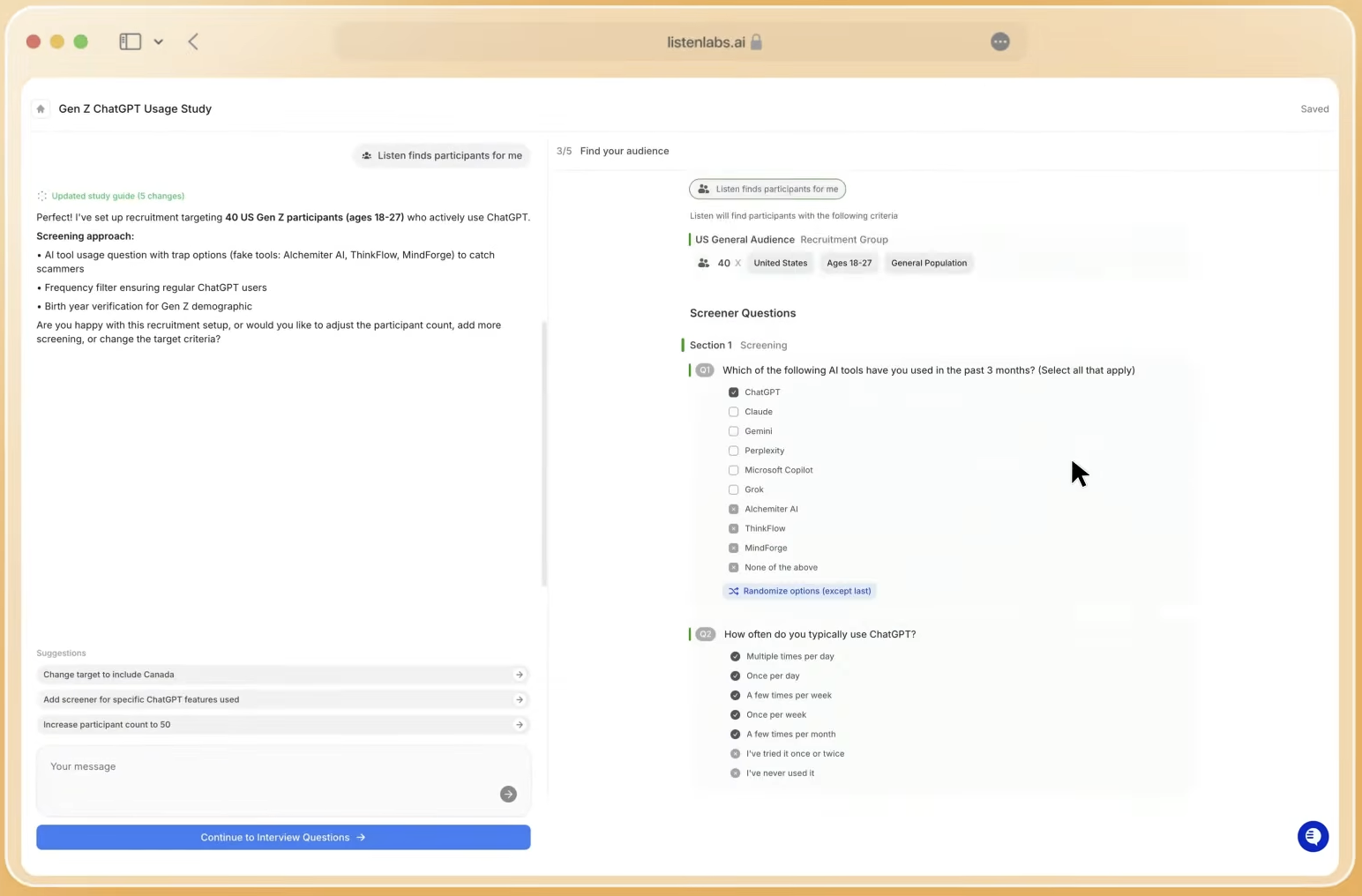
In-flight monitoring is where Listen Labs’ Quality Guard operates. Quality Guard monitors every interview in real time across video, voice, content, and device signals to detect fraudulent responses, low-effort answers, AI-generated scripts, and mismatched profiles. Participants are capped at three studies per month, which removes professional survey-takers from the pool. The guide recommends in-flight sampling by reading the first 10 transcripts of every study within the first 24 hours to catch agent failure modes such as repeating questions, misinterpreting domain jargon, or missing follow-up cues.
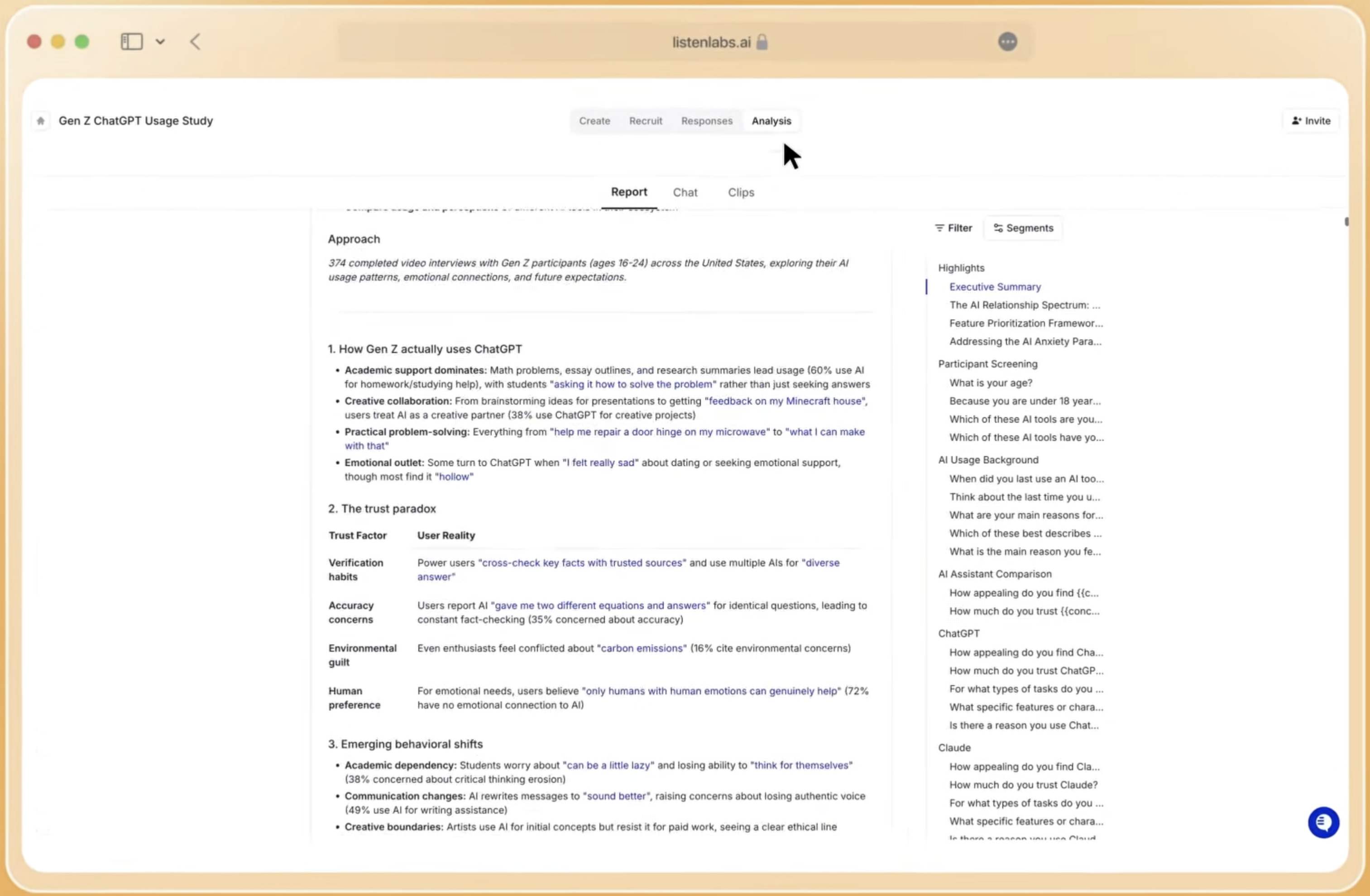
Post-study spot-checks provide the audit layer. A standard review rate of 5–10% of randomly selected transcripts per study is recommended to verify that follow-up questions maintain neutrality and avoid leading language. The CleverX 2026 validation framework recommends verifying every quoted statement against source transcripts, confirming each statistic against measured source data, and tracing each theme to 3–5 specific participants. Listen Labs’ Research Agent supports this directly: every insight links back to the underlying response data, so spot-checks become a matter of clicking through to the source rather than manually cross-referencing documents.
Periodic comparator cohorts provide longitudinal calibration. Perspective AI recommends running the same study with a human moderator on n=10 and an AI moderator on n=80 in parallel cohorts once or twice a year to generate direct evidence on validity and build the internal case for stakeholder confidence.
Ready to see Quality Guard and Emotional Intelligence in action? Schedule a walkthrough with our research team.
Choosing AI, Human, or Hybrid Moderation
The 2026 evidence base supports a clear decision framework based on study type, emotional sensitivity, and delivery requirements.
AI moderation now serves as the appropriate default for concept testing, message evaluation, brand perception studies, structured stimulus reaction, churn diagnostics, onboarding research, and any study requiring consistent methodology across 50+ interviews. Nielsen Norman Group’s 2026 evaluation concluded that AI interviewers are suitable for structured interviews. The dominant 2026 enterprise pattern is hybrid: AI agents handle breadth across the user base while human researchers handle depth in senior-stakeholder interviews, which enables teams to conduct roughly four times more research per quarter without adding headcount.
Human oversight retains a clear advantage in exploratory research where the guide is not yet stable, in research involving grief, trauma, or clinical populations, and in high-stakes strategic interviews with senior decision-makers where rapport and domain expertise are prerequisites. Lauren McCluskey’s 2026 QRCA conference presentation concluded that the higher the emotional or strategic risk, the more human involvement is warranted.
The hybrid model, with AI for volume and humans for depth, now functions as the operational standard at enterprise scale. For many qualitative research objectives, AI-moderated interviews deliver equal or superior results to human moderation. Human moderation still holds an edge in contexts involving extreme emotional sensitivity, trauma, or deep cultural embeddedness. Listen Labs supports this hybrid model through its in-house research team, which brings more than 50 years of combined experience and continuously reviews methodology while serving as a strategic partner for studies that require human judgment at the design or analysis stage.
Frequently Asked Questions
Is AI 90% accurate in research?
For structured qualitative studies, 90% represents a conservative floor. In 2026, AI-moderated interviews can achieve high discussion-guide coverage, produce significantly more follow-up probes per session, and generate higher verbatim quote density. Transcription accuracy still requires validation, with extra attention on industry-specific terminology. Listen Labs’ Quality Guard and post-study spot-check workflow address this remaining gap.
When does AI moderation fail at nuance?
AI moderation underperforms human moderation in three documented contexts: research involving grief, trauma, or clinical populations; exploratory studies where the discussion guide is not yet stable; and cross-cultural research with communities whose communication norms diverge significantly from the training data. The Emotional Intelligence capability discussed earlier mitigates this gap by capturing tone, word choice, and micro-expressions across 50+ languages, with every emotion label traceable to specific timestamps and verbatim quotes.
How do you validate AI interview quality?
The validation workflow described earlier operates across four stages: pre-launch testing, real-time monitoring, post-study audits, and periodic calibration. Each layer targets a different risk window in the study lifecycle, and Listen Labs’ Research Agent links every insight directly to source data so transcript verification becomes a built-in workflow rather than a manual audit.
What study types are best suited to AI moderation at enterprise scale?
Concept testing, message evaluation, brand perception research, churn diagnostics, onboarding studies, creative testing, and multi-market segmentation studies are all well-suited to AI moderation at scale. These study types benefit from consistent probing methodology across hundreds of interviews, rapid turnaround, and the ability to run simultaneously across languages and geographies. Listen Labs supports 100+ languages and 45+ countries, which enables global programs that would otherwise require coordinating dozens of human moderators.
Conclusion: Applying the Final Benchmark to Your Program
AI moderated research accuracy in 2026 now functions as a measurable, benchmarked operational reality rather than a theoretical debate. Evidence from industry reports on AI moderation, Perspective AI’s dataset, Nielsen Norman Group’s 2026 evaluation, and the Curtin University biometric trial collectively shows that AI moderation matches or exceeds human moderation on probing depth, guide coverage, response volume, and consistency for most enterprise consumer insights use cases. Remaining gaps in emotional-signal capture, cultural adaptability, and conversational continuity in high-sensitivity contexts can be managed through platform capabilities and a structured validation workflow.
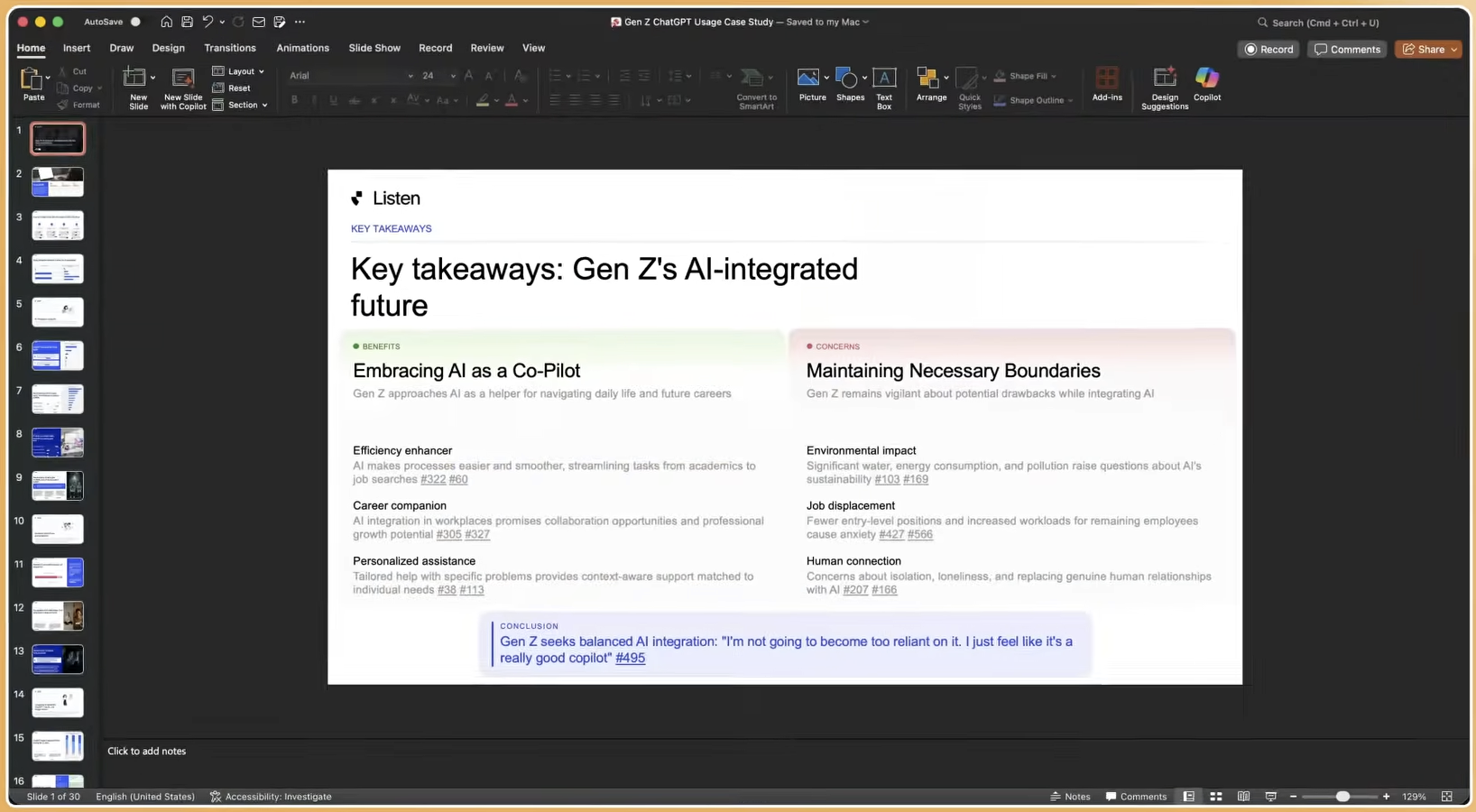
Listen Labs integrates the four capabilities established throughout this article into a single platform designed for enterprise-grade accuracy: verified respondent networks, emotion-detection infrastructure, real-time quality monitoring, and embedded research expertise. Mission Control ensures that every study compounds into an institutional knowledge base rather than disappearing into a slide deck. The result is a research program that delivers consultant-quality findings in under 24 hours without the accuracy trade-offs that defined earlier generations of AI moderation.