
Written by: Anish Rao, Head of Growth, Listen Labs
Key Takeaways for Brand Teams
- Attest and YouGov BrandIndex use very different research models. Attest is a self-serve custom survey platform with full methodological flexibility. YouGov BrandIndex is a syndicated tracker that delivers standardized metrics across thousands of brands every day.
- Attest gives teams control over question design, sample selection, and study cadence, with results usually arriving within 24 to 48 hours. YouGov BrandIndex keeps metrics fixed but provides continuous daily data with deep historical benchmarking.
- Both platforms share a core limitation. Neither one automatically explains why brand metrics change, so teams still need qualitative research or custom diagnostic questions to uncover the reasons behind shifts.
- YouGov BrandIndex fits enterprise brands that need daily standardized tracking across multiple markets and can support annual budgets in the $50,000 to $200,000+ range. Attest suits teams that need flexible custom surveys for ad-hoc research, with subscriptions typically between $10,000 and $50,000+ per year.
- Listen Labs fills the diagnostic gap both tools leave by pairing continuous quantitative tracking with built-in qualitative explanation in every wave. See a live Listen Pulse walkthrough to watch the metric change and the reason behind it arrive together.
What Is YouGov BrandIndex?
YouGov BrandIndex is an always-on syndicated brand tracking platform that measures consumer perception daily across more than 27,000 brands in 56 markets. It tracks 16 standardized metrics organized into three categories.
- Media and communication metrics: Advertising Awareness, Aided Brand Awareness, Attention, Buzz, Word of Mouth Exposure
- Purchase funnel metrics: Purchase Intent, Consideration, Current Customer, Former Customer
- Brand perception metrics: General Impression, Customer Satisfaction, Quality, Value, Corporate Reputation
BrandIndex gathers data continuously from YouGov's proprietary panel of 30 million+ members, with 18+ years of historical data available in some markets. YouGov's February 2026 half-year results confirm the panel reached 34 million registered panellists as of January 31, 2026.
What Is Attest?
Attest is a self-serve consumer research platform that lets brands design and field custom surveys whenever they need answers. Attest provides access to 150M+ consumers across 59 global markets and 70+ languages. Users can build surveys from scratch or start from templates for brand tracking, concept testing, ad testing, and consumer profiling.
Attest's model differs from YouGov's fixed metric set. Researchers control question wording, sample size, and audience targeting, with results typically delivered within 24–48 hours.
In June 2025, Attest launched AI-moderated qualitative interviews through Attest Explore, which combines qualitative and quantitative research in one platform. The company also introduced Compass, an AI co-pilot that drafts surveys from plain-English goals in minutes.
How This Comparison Evaluates Attest and YouGov BrandIndex
This comparison evaluates Attest and YouGov BrandIndex on seven dimensions that matter for brand teams making a structural research decision. These dimensions are research speed, depth of insight, sample quality, methodological flexibility, global reach, pricing transparency, and diagnostic capability. The following sections apply each dimension in turn so you can see how the tools trade off against one another.
Attest vs YouGov BrandIndex: Flexibility vs Standardization
The core difference between the two platforms centers on flexibility versus standardization. Attest offers complete methodological flexibility. Researchers design every question, choose the sample size, and control cadence. YouGov BrandIndex keeps its metrics standardized and fixed but delivers daily data with benchmarking against thousands of brands at once.
On global reach, Attest reaches 59 markets with a 150M+ panel. YouGov BrandIndex covers 56 markets with 30M+ panel members tracking 27,000+ brands. The panel sizes work differently. YouGov's 30M+ figure reflects a single proprietary panel surveyed daily. Attest's 150M+ figure reflects reach across hundreds of partner panels that are tapped per study.
On pricing, Attest uses a credit-based model where one credit equals one answer to one survey question. Entry bundles start around $2,000 for a single study, with ongoing subscriptions typically ranging from $10,000 to $50,000+ per year. Attest does not publish public dollar prices for its credit tiers. YouGov BrandIndex pricing is not public and is sold through enterprise sales, with subscriptions usually ranging from $50,000 to $200,000+ annually depending on markets and brands tracked.
Study Setup and Methodological Flexibility
Attest lets researchers design studies from scratch with full control over question wording, competitive sets, and sampling decisions. YouGov BrandIndex uses a fixed set of 16 standardized metrics that YouGov defines, and subscribers cannot customize questions to capture category-specific brand health dimensions.
Teams that need to measure brand constructs unique to their category rely on Attest's flexibility. Teams that want standardized, comparable metrics across time and competitors benefit from YouGov's consistency. The trade-off is direct. YouGov's standardized metrics enable benchmarking but flatten category distinctions. Attest's custom design gives the researcher responsibility for question quality and tracking continuity. Attest's brand tracker is a general survey tool with a tracking layer, so tracker-specific structure such as category entry point analysis is lighter than a dedicated product.
Recruitment, Sampling, and Data Quality
YouGov operates a proprietary panel rather than aggregating from multiple sources. The company states that this model enables precise sample matching methodology and lower sample weights. In YouGov's November 2025 benchmarking exercise across 12 panel providers, YouGov's fraud detection rate was 0.6% versus the industry average of 16.6%, nearly 28 times lower. Its duplicate respondent rate was 1.4% against an industry average of 11.4%.
Attest draws on hundreds of panel partners rather than a single source, with three layers of quality checks including AI validation and human review. This multi-panel model has two direct consequences. First, Attest's flat audience cost means niche audiences do not cost more, although fieldwork may take longer for harder-to-reach groups. Second, because Attest works with hundreds of panel partners, it can drop underperforming panels without trading away reach, which creates a structural advantage over single-panel providers.
Both tools invest heavily in data quality. Their panel models differ in a consequential way. YouGov's single proprietary panel supports precise matching and longitudinal consistency. Attest's multi-panel approach provides broader reach and panel redundancy.
The “Why” Gap: What Each Tool Can't Tell You
This shared limitation affects how teams respond to change. YouGov BrandIndex's survey-only methodology measures where a brand stands on standardized metrics but does not explain why awareness dropped among a specific demographic, what triggered a consideration shift, or which psychological barriers prevent conversion. The same consideration score can reflect very different brand relationships.
YouGov BrandIndex Voices, launched in early 2026, layers AI-moderated conversational interviewing on top of the tracker to add open-ended explanation. QualAI analyzes open-ended feedback as well. These sit as separate layers rather than diagnostic structures built into the core tracking metrics. YouGov's own product page notes that understanding underlying causes requires “qual-at-scale AI interviews or custom trigger questions” beyond standard BrandIndex tracking.
Attest's survey-based research measures that brand metrics changed but does not automatically diagnose why they changed. Researchers must design custom questions or run qualitative follow-up to uncover the reasons behind metric shifts. If a survey does not ask why, it will not return an answer. Both tools leave brand teams reacting to lagging indicators without attached explanations.
Best-Fit Use Cases for Each Tool
YouGov BrandIndex fits teams that need continuous daily tracking of standardized brand health metrics, competitive benchmarking across thousands of brands, and access to long-run historical data. These teams also need an enterprise budget in the $50,000 to $200,000+ range. YouGov BrandIndex works best for enterprise brands that track multiple markets, rely on deep historical benchmarking, and want to correlate perception shifts with specific market events.
Attest fits teams that need fast, custom surveys for ad-hoc questions, campaign testing, or brand pulse checks. These teams also need in-house research expertise to design quality studies and maintain tracking continuity. Attest offers more control and customization than YouGov BrandIndex but less built-in continuity and benchmark scale, which suits brand teams that prefer on-demand brand health reads instead of continuous tracking.
Each tool serves a different primary job. YouGov BrandIndex operates as a continuous scoreboard. Attest functions as a custom research instrument.
Limitations and Common Misconceptions
YouGov's 18+ year historical database is a real asset for established subscribers, but new subscribers cannot retroactively access that history. The historical advantage only applies to organizations that have been on the platform long enough to accumulate it. For brands joining now, the historical depth matters less than it first appears.
Attest's brand tracker is a general survey tool with a tracking layer, so tracker-specific structure such as category entry point analysis is lighter than dedicated products. Continuity also depends entirely on the user keeping the tracker running consistently. Neither tool automatically diagnoses why metrics move. YouGov's standardized metrics may miss category-specific brand health dimensions, and Attest's design flexibility means question quality and tracking discipline rest entirely with the research team.
Listen Pulse: Continuous Tracking With the “Why” Built In
This diagnostic gap is exactly what Listen Pulse was built to fill. Listen Pulse is a conversational tracker that combines the strengths of both approaches while addressing the explanation gap neither Attest nor YouGov BrandIndex resolves. Pulse runs continuous waves with core questions kept constant to protect the trend line. Open-ended conversation in every wave captures the reasons behind metric movements. Quantitative KPIs and qualitative explanation arrive together, so teams do not need a separate diagnostic study every time a number shifts.
Pulse analyzes tens of thousands of responses around the clock, charts emerging themes alongside the KPIs teams already report, and traces every number back to the verbatim quote and clip behind it. One well-known clothing brand, famous for its big logos, was quietly losing customers. Its existing tracker caught the drop but could not explain it. Pulse found the cause was style rather than price. A growing group of customers felt the big logos were too loud for their changing lifestyles. Standardized metric sets and custom surveys that miss the right question would struggle to surface this kind of finding.
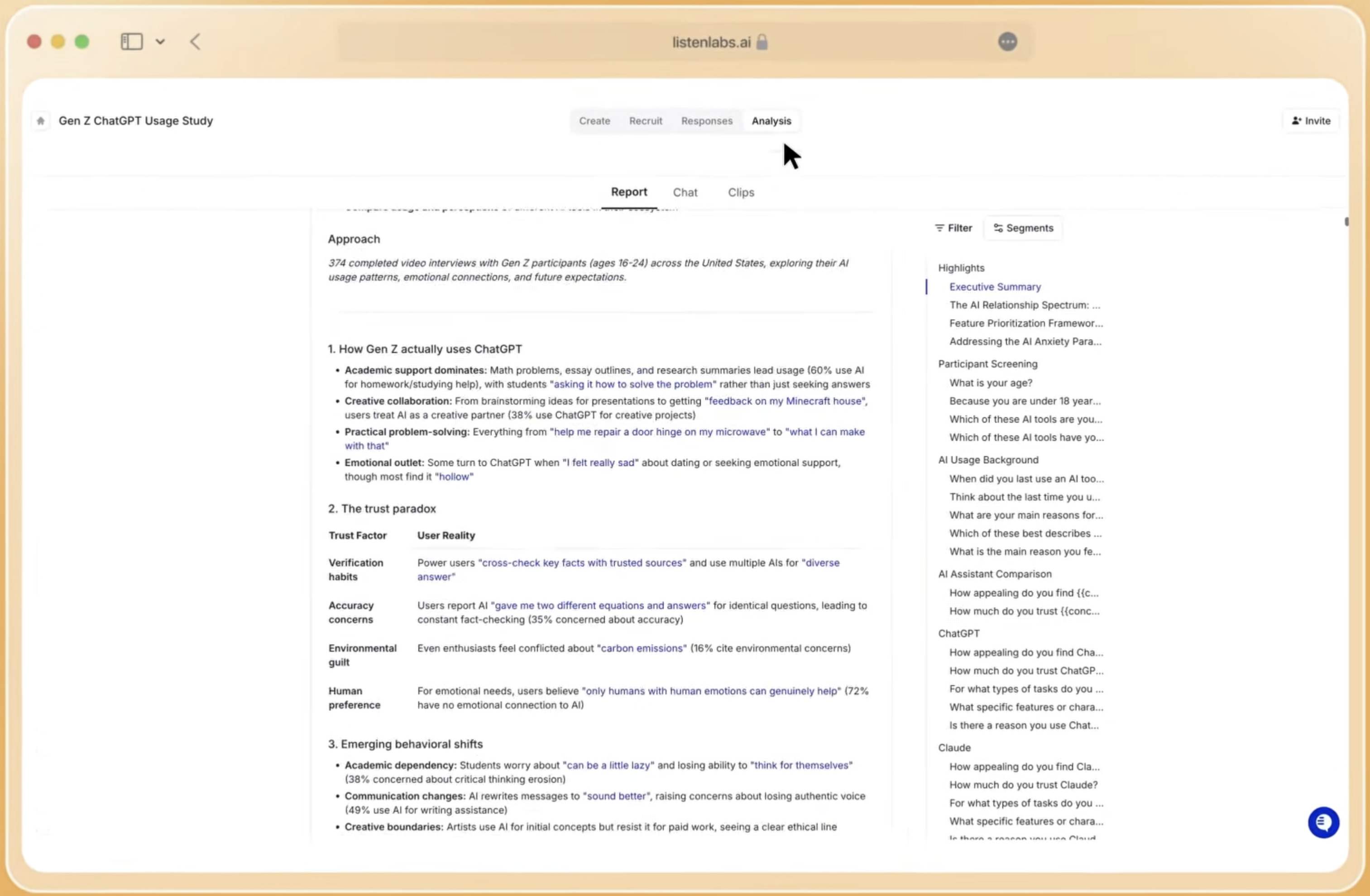
Pulse integrates with existing trackers like Qualtrics and Decipher, so teams keep the KPIs they already report while adding the narrative behind them. It can deploy alongside YouGov BrandIndex or act as the primary tracking system. For a deeper comparison of how Listen Pulse stacks up against YouGov BrandIndex and Morning Consult, see the Listen Pulse vs. Morning Consult vs. YouGov BrandIndex comparison.
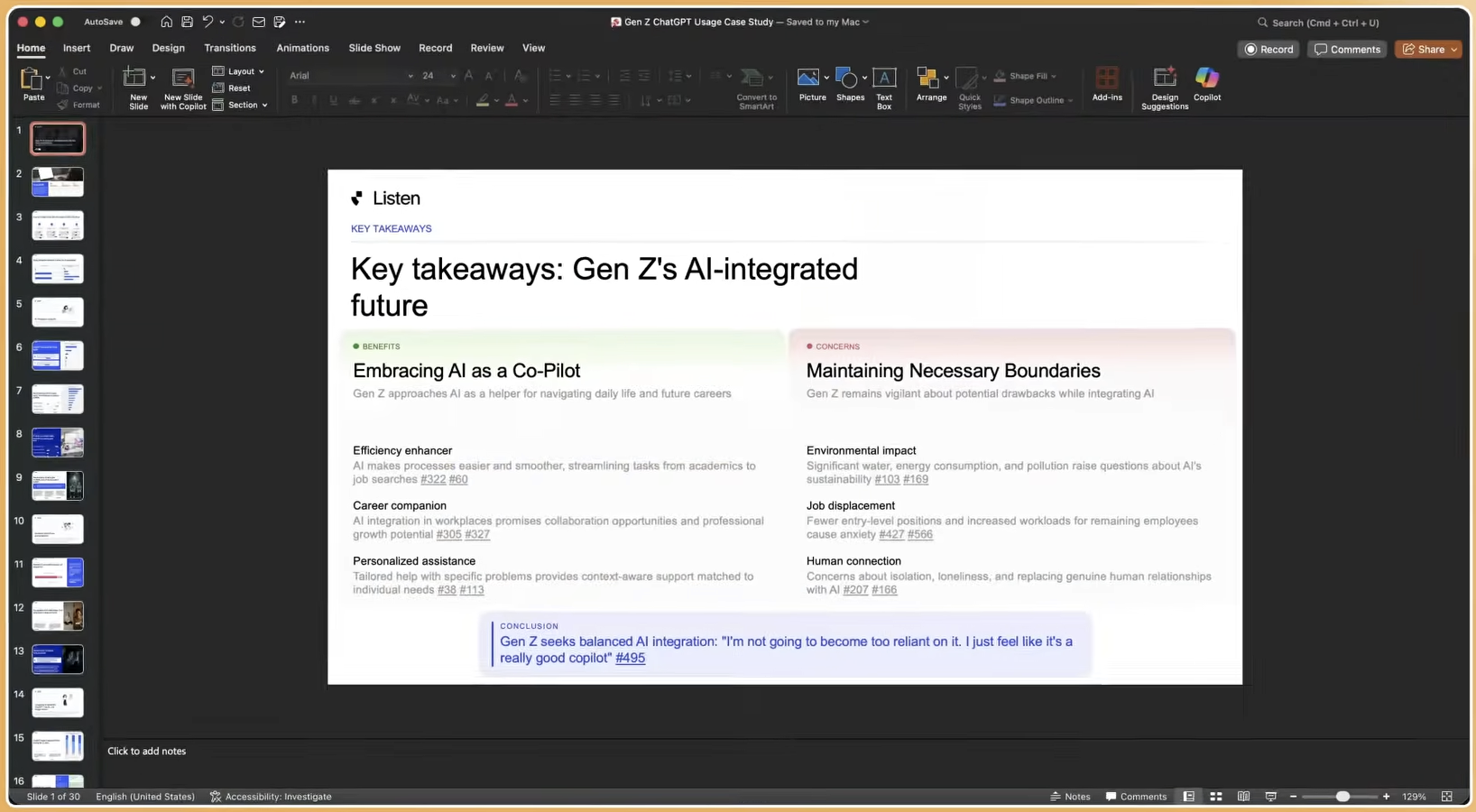
Watch a Listen Pulse demo to see how the metric change and the reason behind it can arrive in the same wave.
Decision Framework: Match the Tool to Your Job
The decision between these three approaches maps directly to what your team needs most.
- Choose YouGov BrandIndex if you need daily syndicated benchmarking with standardized metrics across thousands of brands and have an enterprise budget of $50,000 to $200,000+ annually.
- Choose Attest if you need custom survey flexibility for ad-hoc research, campaign testing, and brand pulse checks, and you have the in-house expertise to design studies and maintain tracking continuity.
- Choose Listen Pulse if you need continuous tracking and diagnostic explanation behind metric movements, without commissioning separate qualitative studies every time a KPI shifts.
Teams that need both the scoreboard and the story gain the most from Listen Pulse. The platform delivers the metric change and the reason in the same wave, without the enterprise price tag of a syndicated tracker or the methodological burden of a fully custom platform.
Schedule a Listen Pulse session to see it in action and understand how it fits alongside your existing research infrastructure.
Frequently Asked Questions
What is YouGov BrandIndex?
YouGov BrandIndex is a syndicated brand tracking platform that measures consumer perception daily across 27,000+ brands in 56 markets using 16 standardized metrics including awareness, consideration, buzz, and purchase intent. It draws on YouGov's proprietary panel of 30M+ members and offers 18+ years of historical data in some markets. The platform is sold through enterprise sales and suits organizations that need continuous, standardized brand health measurement with competitive benchmarking built in.
How much does YouGov BrandIndex cost?
YouGov BrandIndex does not publish pricing and is sold through enterprise sales. Subscriptions typically range from $50,000 to $200,000+ annually depending on the number of markets, brands, and categories tracked. Single-market, single-category programs tend to sit at the lower end of that range. Multi-market enterprise programs can reach higher figures. The procurement process usually takes weeks to months before first data access and includes contract negotiation and onboarding with analysts.
How much does Attest cost?
Attest uses a credit-based model where one credit equals one answer to one survey question. Entry bundles start around $2,000 for a single study, with ongoing subscriptions typically ranging from $10,000 to $50,000+ per year. Attest does not publish public dollar prices for its credit tiers and directs interested buyers to book a demo. Credits do not roll over after a 12-month period, and topping up mid-year is 10% less cost-effective than purchasing upfront in a plan. Attest charges a flat audience cost regardless of audience specificity, so niche audiences do not cost more per respondent.
Can YouGov BrandIndex explain why brand metrics change?
YouGov BrandIndex's core tracking product measures that metrics moved but does not explain why. Its survey-based methodology captures brand position without revealing the psychology behind it. YouGov has added AI tools like QualAI and BrandIndex Voices as separate layers to provide open-ended explanation, but diagnostic capability does not sit inside the core tracking metrics. Understanding underlying causes requires commissioning additional research features beyond standard BrandIndex tracking.
What makes Listen Pulse different from both Attest and YouGov BrandIndex?
Listen Pulse is a conversational tracker that combines quantitative KPI tracking with open-ended qualitative conversation in the same wave. YouGov BrandIndex measures standardized metrics without built-in diagnostic depth. Attest requires researchers to design their own diagnostic questions. Pulse captures the reason behind every metric movement as part of the standard tracking instrument. Core questions stay constant wave over wave to protect the trend line, while open-ended conversation surfaces emerging themes before they appear as KPI declines. Every number traces back to a verbatim quote and audio or video clip. Pulse integrates with Qualtrics and Decipher and can deploy alongside an existing tracker or as the primary tracking system.