Written by: Anish Rao, Head of Growth, Listen Labs
Key Takeaways
- “Affordable” brand tracking tools fall into three categories: mention monitoring, survey-based tracking, and conversational tracking. Each measures different signals at very different price points.
- Budgets under $200/month buy mention monitoring that shows what people say online, while leaving broader market perception and reasons for change unmeasured.
- Survey-based trackers that report awareness and consideration typically start around $20,000/year and still leave the “why” behind metric shifts unanswered.
- Listen Pulse closes this diagnostic gap by pairing consistent KPI questions with open-ended conversation in every wave so each metric movement arrives with its explanation.
- Teams ready to understand why their brand metrics move can schedule a Listen Pulse walkthrough with Listen Labs.
The Category Fork: Three Kinds Of Brand Tracking
Three different product categories sit under the “brand tracking” label, and each delivers a different kind of insight. Budget buyers stay confident when they match the category to the question they need answered.
Mention monitoring tools scrape social, web, and review mentions to count and sentiment-tag what people say about your brand. These tools show that conversation is happening and how it feels in public channels.
Survey-based brand tracking tools field structured questionnaires to measure awareness, consideration, and perception against a consistent sample over time. These tools show where your brand stands in the minds of a representative audience.
Conversational tracking runs repeated waves of open-ended conversation alongside KPI questions so every metric movement arrives with its explanation. This category fills the diagnostic gap that mention monitoring and standard survey trackers leave open.
The price spread across these categories reflects different products that measure different things. Treating them as interchangeable often produces wasted spend and frustrated teams.
Brand Tracking Costs By Category
Mention-monitoring tools typically start in the low tens of dollars per month. Survey-based trackers generally begin in the low hundreds per month or low five figures per year. Enterprise trackers reach into the thousands per month or hundreds of thousands per year.
Mention-monitoring tools cluster in the low tens of dollars per month. Awario and Mentionlytics both sit under $50, while Brand24’s AI-sentiment tier reaches $199. Survey-based trackers jump an order of magnitude. Tracksuit starts near $20,000/year, and YouGov BrandIndex runs roughly $50,000–$200,000/year. Enterprise custom studies from Kantar, Ipsos, and Nielsen can exceed $500,000/year.
What Each Budget Tier Actually Buys
Under $50 A Month: Entry-Level Mention Monitoring
This tier buys basic mention monitoring. You get keyword alerts across social, web, news, and review platforms, a simple sentiment feed, and limited analytics. Awario’s Starter plan at $29/month (billed annually) covers three topics, 30,000 new mentions per month, and one team member. Mentionlytics’ Basic plan at $49/month (billed annually) adds three keyword rules, 5,000 monthly mentions, and ten social profiles.
This tier does not deliver perception data, competitive share of mind, awareness or consideration metrics, or any read on what non-posters think about your brand. Teams usually outgrow it once they start asking whether people who never post are aware of the brand at all.
$50–$200 A Month: The Mention-Monitoring Sweet Spot
This range buys more robust mention monitoring. You gain higher mention caps, more keywords, AI-powered sentiment analysis, and broader channel coverage. Brand24’s Individual plan is $199/month billed annually. Brand24’s mid-market tier includes AI-powered sentiment analysis, share-of-voice tracking, influencer identification, anomaly detection, and cross-channel coverage.
These features still sit firmly in the mention-monitoring category because they measure what people say unprompted in public channels. They do not provide structured awareness or consideration metrics, competitive brand funnel data, or diagnostics for why perception is shifting. Teams usually feel the ceiling when a stakeholder asks whether awareness is actually growing and the only answer available is “people are talking about us more.”
$200–$1,000 A Month: Entry To Survey-Based Tracking
This range is where survey-based brand tracking starts to appear, although entry points vary widely by vendor. A May 2026 analysis of 84 survey tools found that Latana’s cheapest monthly plan sits at approximately $766, making it one of the more accessible continuous survey-based trackers. Tracksuit’s entry-level program starts at approximately $19,500/year for one brand category covering the client’s brand plus five competitors, with over 4,000 consumers surveyed, which works out to roughly $1,625/month.
Survey-based trackers in this band deliver structured awareness, consideration, and preference metrics against a consistent sample over time. They still leave the explanation for metric movements outside the system. When a KPI drops, most teams in this tier must commission a separate qualitative study to understand what changed.
Free-Tier Reality Check For Brand Monitoring
Google Alerts As A Starting Point Google Alerts is the most widely used free option. It emails users when new Google Search results appear for a chosen topic, covering news and web mentions such as your brand name, a competitor, or an industry term. It does not cover social platforms, sentiment analysis, reach metrics, share of voice, or any read on consumer perception.
Short-Term Trials From Paid Tools Brand24 offers a 14-day free trial with no credit card required and exposes its mention feed, sentiment tagging, and alert features. These free options provide mention volume and basic sentiment only. They do not deliver perception data, competitive share of mind, or explanations for metric shifts.
The “Number Moved But Why?” Problem
A tracker that reports a KPI decline without a diagnostic acts as a lagging indicator. By the time awareness or consideration drops in a survey-based tracker, the underlying shift has often been building for months. Timelaps’ 2026 brand tracking guide documents a client describing a six-month lag between fieldwork and reporting, which turns the tracker into a historical record rather than a decision tool.
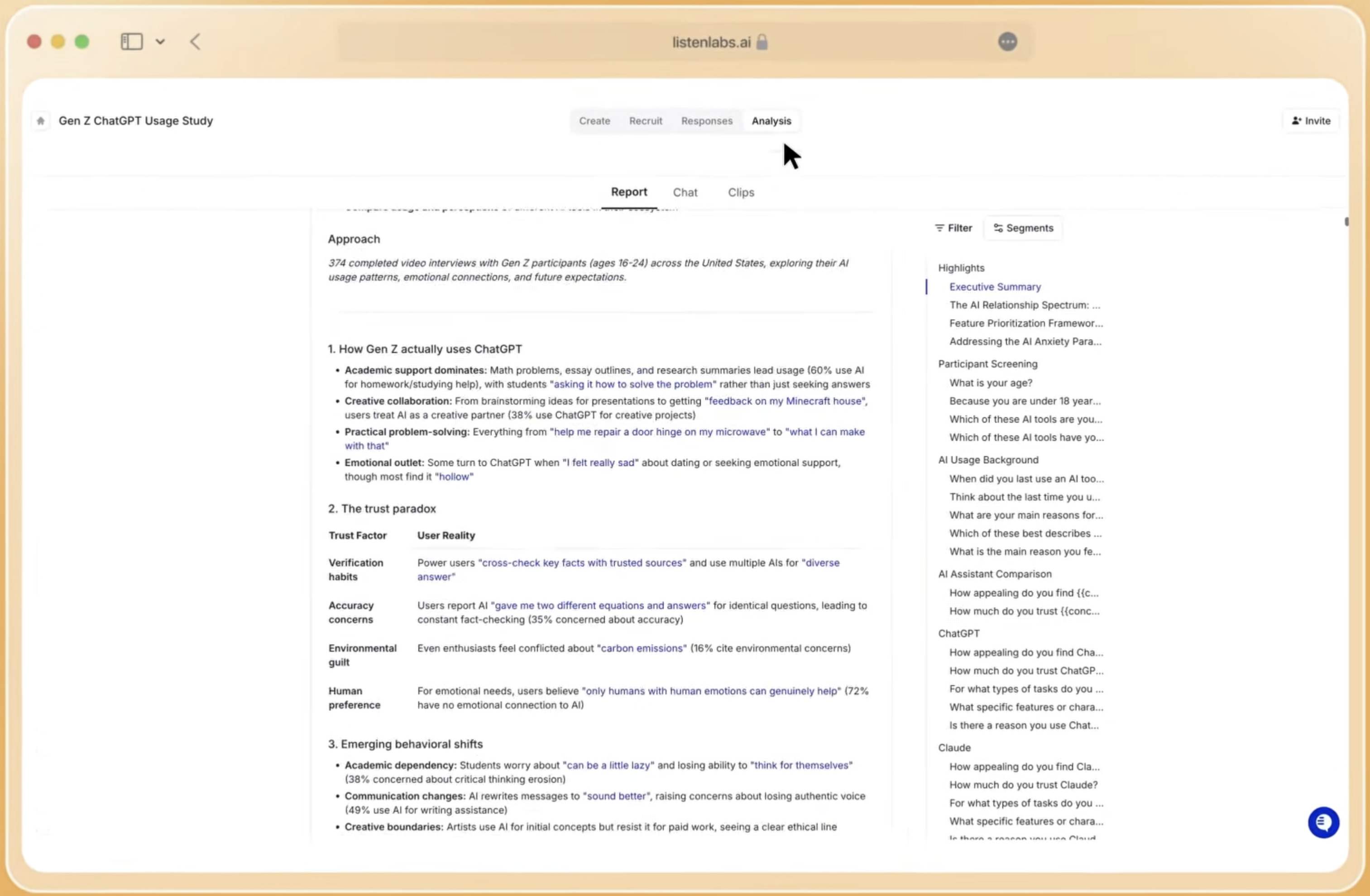
Listen Pulse exists to close this diagnostic gap. Listen Pulse is Listen Labs’ conversational tracker. It keeps core questions constant wave over wave to protect the trend line, adds open-ended conversation to every wave, and charts emerging themes next to the KPIs teams already report. Every number traces back to a real interview, a verbatim quote, and an audio or video clip, so the metric change and the reason behind it arrive together.
One clothing brand, famous for its big logos, illustrates this clearly. The brand was quietly losing customers. Its old tracker caught the drop but could not explain it. Pulse found that style, rather than price, was driving customers away. A growing group of customers felt the big logos were too loud for their changing lifestyles. That insight surfaced in the same wave that reported the KPI movement.
Listen Pulse deploys alongside an existing tracker or as the primary tracking system. It integrates with Qualtrics and Decipher so teams keep the KPIs they already report while adding the narrative behind them. For teams that need the explanation behind metric movements, Pulse provides an affordable conversational tracking option.
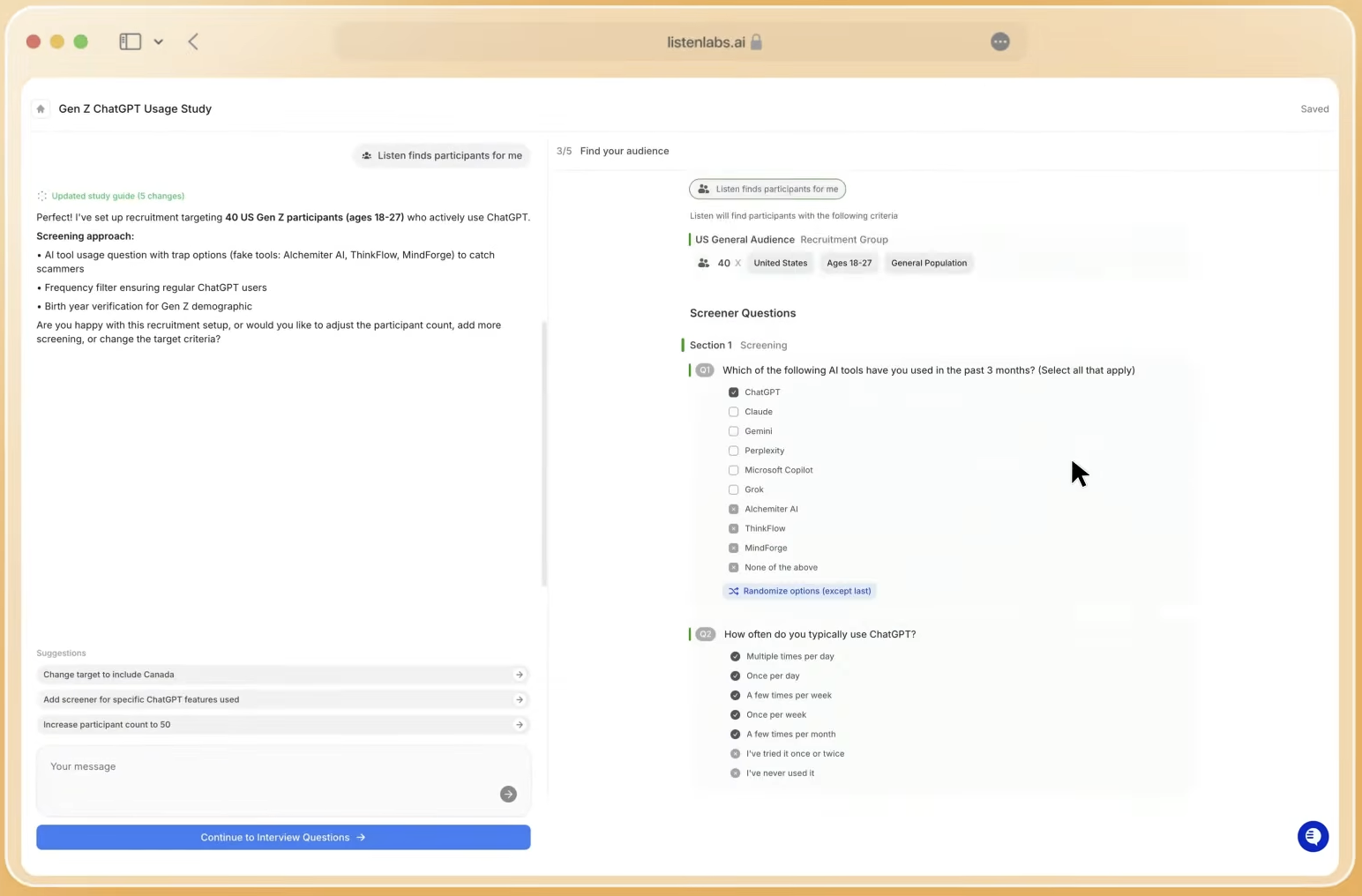
See Listen Pulse in action and watch your brand metrics arrive with their story attached.
Survey-Based Tracking For One-Time Perception Reads
Some teams need a point-in-time perception read instead of continuous tracking. Several options sit below the enterprise threshold for this use case. Attest fields studies across 59 countries on a credit-based model. Annual subscriptions typically range between $15,000 and $40,000 per year, while some pay-as-you-go bundles start around $2,000 per study. Google Consumer Surveys and DIY panels via Typeform or SurveyMonkey can also produce a one-time perception audit at lower cost, although the buyer’s team must handle study design, sampling, and analysis.
These instruments provide snapshots rather than trend lines. They work well for a pre-rebrand perception audit or a single post-campaign read. They work poorly for teams that need to detect when perception is shifting and understand why, because they lack wave-over-wave tracking and an embedded diagnostic layer.
AI-Visibility Tracking For LLM Answers
Many buyers now encounter brands inside LLM-generated answers instead of traditional search results. AI Overviews appeared in approximately 48% of all Google searches by March 2026. Roughly 93% of Google AI Mode sessions end without a click to any website, which means the AI response itself often becomes the only brand impression a user receives.
Tracking how often your brand appears in AI-generated responses has become a distinct and still-affordable monitoring category. Entry-level LLM visibility tools start at $29/month for Otterly AI (verified September 2026). Broader engine coverage from LLMrefs starts at $79/month (verified September 2026). These tools measure mention frequency, citation quality, and competitive share of AI responses. They add a new signal layer for brands whose buyers research inside AI assistants while leaving perception tracking to survey and conversational tools.
How To Choose: A Decision Checklist
Three variables drive the right choice: team size, monthly budget, and whether the primary need is mention data, perception metrics, or diagnostic insight.
- Under $50/month, team of 1–5: Start with mention monitoring such as Awario or Mentionlytics and accept its limits. You will see what people say about your brand online, while remaining blind to broader market perception.
- $50–$200/month: Tools like Brand24 add AI sentiment, anomaly detection, and cross-channel coverage. This tier still focuses on mention monitoring rather than perception tracking.
- $200–$1,000/month, need perception data: Survey-based trackers enter this range, although most require annual commitments in the low five figures. DIY survey tools can produce point-in-time audits at lower cost but do not function as continuous trackers.
- $200–$1,000/month, need diagnostic insight: Listen Pulse provides conversational tracking built for this job. It combines quant KPIs with open-ended conversation in every wave, integrates with Qualtrics and Decipher, and runs alongside an existing tracker or as the primary system.
- Need AI-visibility monitoring: Add an LLM tracking tool such as Otterly AI or LLMrefs as a distinct layer alongside perception tracking to understand how AI assistants present your brand.
The checklist above comes down to one core decision. Teams either need to know what people are saying or need to understand why they think it. Mention monitoring answers the first question at lower budgets. Conversational tracking with Listen Pulse answers the second within the $200–$1,000/month band and delivers the number and the reason in the same wave.
Explore Listen Pulse with the Listen Labs team and see how diagnostic tracking changes brand decisions.
Frequently Asked Questions
What Is The Difference Between Brand Monitoring And Brand Tracking?
Brand monitoring, also called mention monitoring or social listening, scrapes public platforms to count and sentiment-tag what people say about a brand unprompted. It measures the volume and tone of online conversation. Brand tracking uses structured surveys fielded to a representative sample to measure awareness, consideration, preference, and other perception metrics over time. Monitoring answers what is being said. Tracking answers what the broader market thinks. Many budget tools marketed as “brand tracking” actually sit in the mention-monitoring category, which creates a mismatch for teams that need perception data.
Can A Small Brand Afford Real Brand Tracking?
Affordability depends on the type of tracking required. Survey-based trackers that measure awareness and consideration against a consistent sample typically start in the low five figures per year, which suits many growth-stage brands but not teams capped at $50–$200/month. Conversational tracking with Listen Pulse is designed for teams that need both the KPI and the explanation behind it, without commissioning a separate qualitative study for every metric movement. The most effective starting point is to decide whether the team needs mention volume, perception metrics, or diagnostic “why” insight, then match the tool category to that priority.
What Does Listen Pulse Do That A Standard Brand Tracker Does Not?
Standard survey-based brand trackers report that a metric moved. Listen Pulse reports that a metric moved and explains why in the same wave. As described earlier, Pulse protects the trend line with constant core questions while adding open-ended conversation to every wave, so each metric movement arrives with the interview, quote, and clip that explain it. Pulse also surfaces shifts before they hit the KPIs by identifying emerging themes in customer conversations. It integrates with Qualtrics and Decipher so teams keep their existing reporting infrastructure while adding a narrative layer that traditional trackers cannot provide.
Is There A Free Brand Tracking Tool That Actually Works?
Google Alerts is genuinely free and covers web and news mentions for any keyword, which makes it a useful starting point for teams with no budget. It does not provide social platform coverage, sentiment analysis, reach metrics, share of voice, competitive benchmarking, or perception data. Brand24 and Mentionlytics both offer 14-day free trials with no credit card required, which expose mention feeds and sentiment tagging. These options cover mention monitoring only. Teams that need awareness, consideration, or diagnostic insight will need to move into survey-based or conversational tracking.
How Often Should Brand Tracking Be Run?
Cadence depends on category speed and the decisions the tracking must support. Quarterly tracking served as the industry standard for two decades, yet it often misses early signals on campaigns, competitive moves, and cultural shifts. A major consumer brand reported receiving a deck in March 2026 for fieldwork conducted the previous August, which created a six-month lag between reality and reporting. Monthly tracking now serves as the baseline for fast-moving consumer brands. Always-on conversational tracking, as Listen Pulse provides, surfaces emerging themes before they show up as KPI declines and gives teams time to respond.
Ready to upgrade from bare numbers to explanations? Talk with Listen Labs and see what is driving your brand metrics.