Written by: Anish Rao, Head of Growth, Listen Labs
Key Takeaways For Brand Tracking In 2026
- Brand tracking tools fall into three distinct categories: survey-based measurement, social listening, and AI visibility tracking. Each category answers a different question and serves different stakeholders.
- Most teams need two of the three categories rather than one. Survey trackers cannot capture real-time reputation issues, and social listening cannot measure awareness among silent category buyers.
- Every category shares the same structural limitation. They report what moved but cannot explain why, which creates a diagnostic gap that delays strategic decisions.
- Listen Labs Pulse closes this gap by combining quantitative KPI tracking with open-ended conversational interviews in the same wave. Teams receive the reason behind every metric movement without commissioning separate studies.
Brand Tracking vs. Brand Monitoring: The Distinction That Changes Everything
Brand tracking uses surveys to measure awareness, consideration, preference, and perception among a representative sample of category buyers over time. Brand monitoring scans public social media, news, forums, and review sites in real time to surface mentions, sentiment, and share of voice.
Brand tracking and brand monitoring are not substitutes; they answer different questions. Social listening cannot measure unaided awareness, aided awareness, consideration, or brand preference among the silent majority of category buyers who never post about brands online. Survey-based tracking cannot catch a PR crisis unfolding over 48 hours. A consumer brand tracking quarterly awareness scores through a survey platform still needs a separate monitoring tool to catch a reputation issue the moment it starts trending.
Conflating the two categories produces the most common failure mode in brand measurement. Teams buy a social listening tool when they need a brand tracker, spend months staring at sentiment dashboards, and still cannot answer the question their CFO is asking: is our brand growing or shrinking in the market’s mind?
Category One: Survey-Based Brand Health Trackers
Survey-based brand tracking tools ask structured questions to a representative sample of category buyers at regular intervals. The data source is a panel that is recruited, screened, and weighted to represent the broader population of people who buy or could buy in your category. This category answers a core question: how is our brand perceived relative to competitors over time?
Three tools define the survey-based brand tracking tools category in 2026.
YouGov BrandIndex is the largest syndicated tracker in the market. It tracks 27,000+ brands daily across 56 markets through a panel of more than 30 million members. That scale is also its constraint. BrandIndex is a syndicated product with a fixed question battery and competitive set, so brands with category-specific tracking needs will find customization limited. The 16 brand health metrics it covers, organized into media and communication, purchase funnel, and brand perception groups, are comprehensive but not adjustable. BrandIndex Lite is a free tier that provides a Buzz metric snapshot with competitor benchmarking, powered by YouGov’s global panel.
Tracksuit is an always-on tracker built for mid-market brands. It tracks a five-stage brand funnel: awareness, consideration, investigation, usage, and preference. The tracking runs on continuous, census-weighted surveys. Plans start at $19,500 per year for one brand category covering the brand plus five competitors. Tracksuit covers 25 markets, weighted heavily toward Europe, with limited coverage in Africa, the Middle East, and South Asia.
Attest is a self-serve consumer research platform with flat per-market pricing across 58+ markets. Brand tracking sits on top of its survey product, with research expert support included at every plan level. Attest sits between a bare survey tool and a full enterprise suite, which makes it a practical mid-market option for consumer brands running regular brand health checks.
The YouGov BrandIndex vs. Brandwatch comparison that many buyers search for reflects a category error. BrandIndex is a survey-based tracker, and Brandwatch is a social listening platform. They answer different questions and do not compete directly.
Category Two: Social Listening and Media Monitoring Platforms
Social listening tools scan public sources such as social media, news, forums, and review sites to surface what people are saying about your brand. This category answers a core question: what are people saying about us right now? It leaves unanswered the question of how your brand is perceived among category buyers.
This distinction corrects the category error that most brand tracking listicles make. When evaluating Brandwatch alternatives for brand health tracking, teams first decide whether they need brand health measurement or brand mention monitoring. That decision determines which category of tool they need, not which vendor within a category.
Brandwatch is an enterprise social intelligence platform. It monitors online conversations across more than 100 million sources worldwide and uses its Iris AI engine for trend and anomaly detection. Historical data archives go back over a decade. Pricing starts around $800/month and scales to $15,000+/month for large enterprise configurations.
Meltwater competes at the same enterprise tier but differentiates through premium paywalled news access. It monitors more than 6 million media sources globally, with pricing ranging from approximately $6,000 per year for smaller teams to $100,000+ for large enterprise deployments. Its GenAI Lens now tracks brand mentions across LLM outputs as part of its media intelligence suite.
Brand24 serves teams that do not need enterprise-scale monitoring. It is the accessible entry point for social listening. Brand24 offers transparent published pricing across four tiers, from $149/month (Individual, billed annually) to $399/month (Enterprise, billed annually), with a 14-day free trial and self-serve setup. It also tracks how AI models including ChatGPT, Claude, Gemini, and Perplexity mention and recommend a brand, providing a Share of Voice by AI Chatbots score.
Note that Talkwalker rebranded to Lumen by Talkwalker in June 2026 as part of Hootsuite’s Social OS. This rebrand is a freshness signal worth checking when you review vendor documentation.
Social listening is structurally limited in categories where buyers do not post publicly. Financial services, healthcare, staple household goods, and B2B are all categories where the data reflects an unrepresentative vocal minority rather than the buying majority. In those categories, social listening sentiment scores function as a PR signal rather than a brand health signal.
Category Three: AI Brand Visibility Tracking Tools
AI brand visibility tracking tools answer a new question: does AI recommend our brand? This category monitors how brands appear in AI-generated answers from ChatGPT, Claude, Gemini, Perplexity, and other generative AI platforms. It tracks citation presence, recommendation frequency, sentiment, and share of voice within AI-generated responses.
AI brand visibility tracking tools are distinct from SEO monitoring. SEO tracks ranking positions on traditional search engine results pages and click-through traffic. AI visibility tracks whether answer engines name, cite, and recommend your brand within the response itself. Boston Consulting Group described visibility in large language model-generated responses as “a new and necessary form of digital shelf space” for brands in a 2026 publication.
Common metrics in this category include AI citation share, recommendation presence, brand mentions within AI answers, source citations, competitive visibility gaps, and AI share of voice. The 2026 AI visibility tool market includes Profound, Semrush AI Visibility Toolkit, Ahrefs Brand Radar, Otterly.AI, Peec AI, and others, with pricing ranging from free one-time snapshots to enterprise-tier platforms.
AIclicks focuses specifically on citation intelligence. It tracks how brands appear in AI answers, which citations influence those answers, and what changes can improve visibility. Profound tracks AI visibility across 11 answer engines including ChatGPT, Perplexity, Claude, Microsoft Copilot, Google AI Overviews, Google AI Mode, Gemini, Grok, Amazon Rufus, Meta AI, and DeepSeek.
This category is still emerging and lacks standardized metrics. Buyers should verify which specific AI engines a vendor actually covers. Vague answers about AI source coverage are a disqualifier. The category also differs from social listening because it tracks what AI systems say about your brand in synthesized responses, rather than what humans say about your brand in public posts.
Close The Diagnostic Gap Your Tracker Leaves Open
The Diagnostic Gap: What To Do When Your Tracker Moves
AI visibility tracking is the newest of the three categories, but it shares a limitation with the other two. Every category described above tells you what moved, not why. Awareness dropped four points. Consideration declined. AI share of voice shifted. None of these data points explains the underlying cause, and by the time a KPI declines, the underlying shift has typically been building for months.
John Ferreira, Chief Insights and Innovation Officer at Finch Brands, describes most brand tracking as “fundamentally a scorekeeping exercise dressed up as strategy,” noting that trackers document metric movement without diagnosing its cause. Survey-based brand trackers are structurally incapable of diagnosing why metrics moved because the follow-up question depends on the answer, a dynamic branching path that pre-scripted surveys cannot execute.
The standard fix has historically been commissioning a separate qualitative study every time a metric moves. That process takes weeks, costs additional budget, and arrives after the decision has already been made.
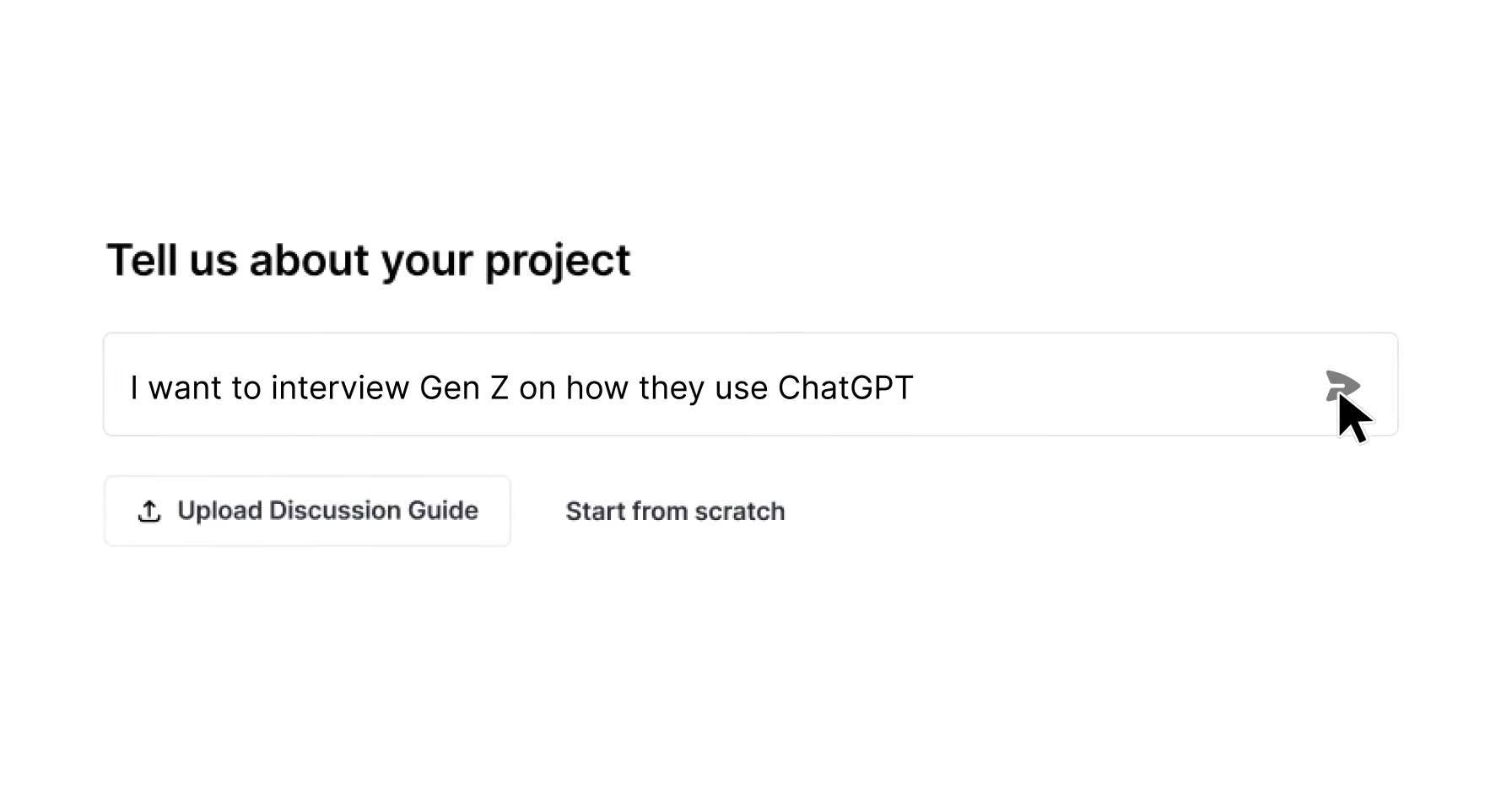
Listen Labs Pulse closes this gap without the delay. Pulse is a conversational tracker that runs the same study with the same screeners wave after wave. It combines quantitative KPI tracking with open-ended conversation so every metric movement arrives with its explanation in the same wave. Core questions stay constant to protect the trend line, while timely add-on questions cover new campaigns, competitors, or news events without breaking historical comparability. Pulse integrates with Qualtrics and Decipher, so teams keep the KPIs they already report while adding the narrative behind them.
The diagnostic value is concrete. One well-known clothing brand, famous for its big logos, was quietly losing customers. Its existing tracker caught the drop but could not explain it. Pulse found that style, not price, was driving customers away. A growing group of customers felt the big logos were too loud for their changing lifestyles. That insight arrived in the same wave as the KPI movement, rather than six weeks later from a separate qualitative engagement.
Pulse deploys alongside an existing tracker as a diagnostic layer or as the primary tracking system. It complements traditional trackers by closing the gap they leave open.
Watch Pulse Explain A Metric Movement In Real Time
Decision Matrix: Matching Questions To Categories
The right tool depends on which question you need answered. Use this framework to match your primary goal to the right category.
- Choose survey-based trackers if you need longitudinal brand health metrics across markets and must measure awareness and consideration among category buyers who never post online. YouGov BrandIndex is the right starting point if you need syndicated data with years of history across 55+ markets. Tracksuit is the right starting point if you are a mid-market brand that needs always-on tracking without agency overhead.
- Choose social listening if your priority is real-time reputation management, competitive share of voice in public conversation, and early detection of emerging issues. Brandwatch is the enterprise choice, and Brand24 is the accessible entry point. Avoid using social listening as a substitute for brand health measurement in categories where buyers rarely post publicly.
- Choose AI visibility tracking if you need to understand how generative AI platforms represent your brand when buyers ask category questions. This category adds a new measurement layer rather than replacing survey-based tracking or social listening.
- Use Listen Labs Pulse as a diagnostic layer if you need to understand why your brand metrics are moving and want qualitative depth at scale without commissioning a separate study every time a KPI shifts. Pulse also works as a primary tracking system that combines quantitative KPIs with open-ended conversation from the start.
Most enterprise teams need two of the three categories, plus a diagnostic layer. The most common pairing is a survey-based tracker for longitudinal brand health measurement plus Listen Labs Pulse as the diagnostic layer that explains metric movements as they happen.
Selection Criteria For Choosing Vendors
Once you know which category you need, the next question is which vendor within that category. Across practitioner discussions and research team evaluations, three criteria consistently separate tools teams rely on from tools they abandon.
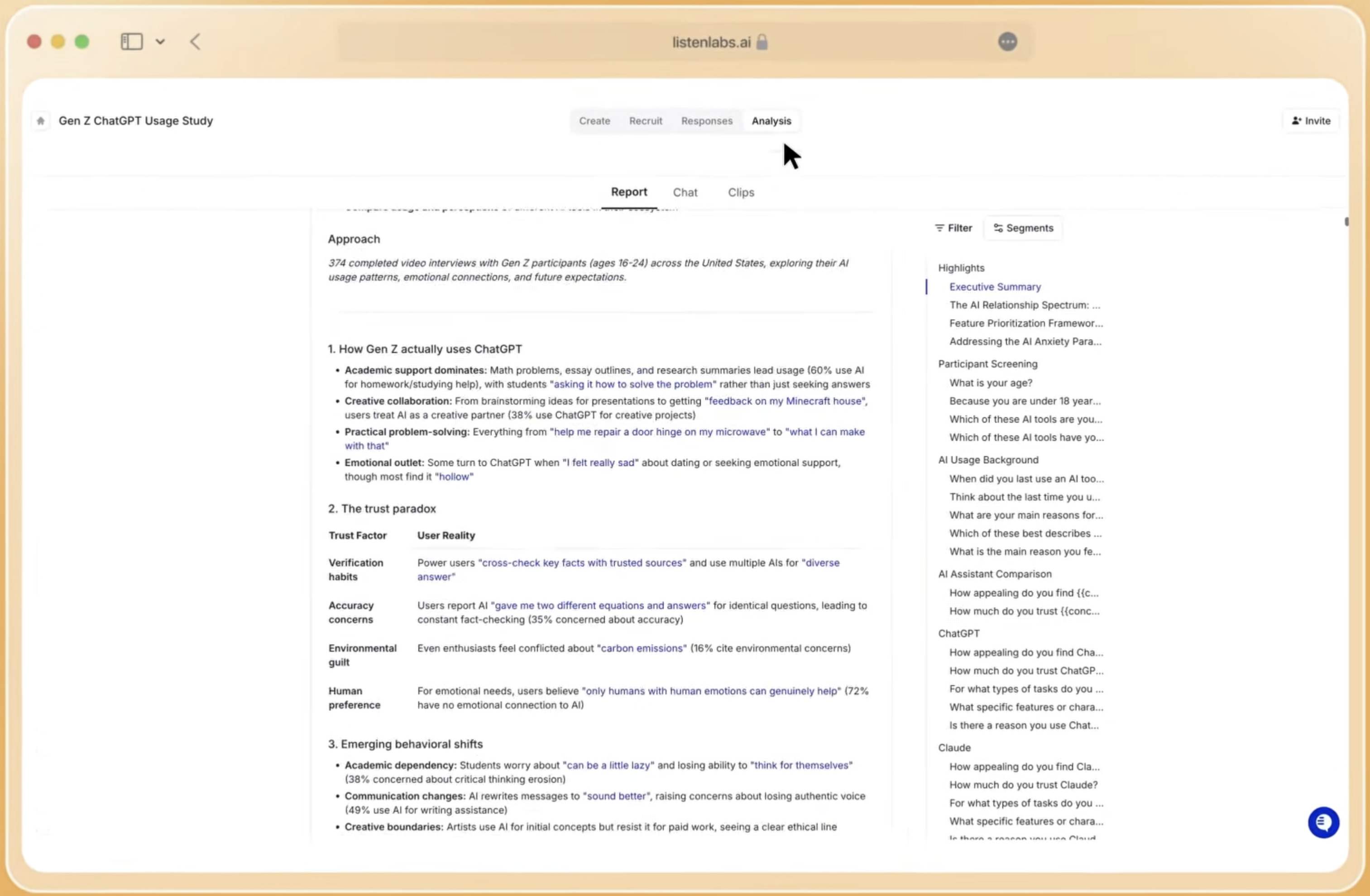
The first is centralized asset management and reporting workflow. When reporting is slow and fragmented, insights arrive too late to act on. A very large banking client running a tracker with 200+ metrics received results 6–8 weeks after fieldwork, well after campaigns had finished and budgets were locked, which made insights purely retrospective. Tools that deliver results inside a searchable, queryable interface rather than a 60-slide deck eliminate this failure mode. Listen Labs’ Research Library queries every study simultaneously and returns synthesized answers in natural language, with full source attribution back to the original study, discussion guide, and individual respondent.
The second is multi-language and multi-market coverage. Listen Labs supports 120+ languages for AI-moderated interviews and 50+ languages for emotional intelligence analysis, covering 45+ countries across the Americas, Europe, APAC, and MEA. Interviews run simultaneously across markets rather than sequentially.
The third is a clear reporting workflow that non-researchers can use. Platform usability, especially whether the whole team can explore data without routing every question through one analyst, is a top selection criterion that separates trackers teams rely on from ones they abandon.
Risks, Limitations, And Common Misconceptions
Each category has documented limitations that buyers should evaluate honestly before committing.
Survey-based trackers are slow relative to market events and expensive at enterprise scale. Legacy agency trackers from Kantar and Ipsos typically cost $100,000–$500,000+ annually and can take three to six months from kickoff to first insight. Even modern always-on trackers leave the diagnostic gap open.
Social listening captures what people say publicly but misses private perception entirely. It cannot measure awareness or consideration among silent category buyers, and its sentiment scores misread sarcasm, slang, and context. It functions as a brand health tool only in categories where buyers post frequently and representatively.
AI visibility tracking is emerging and lacks standardized metrics across vendors. Scores fluctuate significantly day to day, and single-engine monitoring compounds measurement problems because each model has different training data and retrieval logic.
These limitations share a common root: speed without diagnosis. A tracker without a qualitative diagnostic layer leaves teams reacting to lagging indicators. By the time a KPI decline is large enough to exceed the margin of error in a single wave, the damage is already in the P&L.
Frequently Asked Questions
How Much Do Brand Tracking Tools Cost?
Pricing varies significantly by category. Survey-based trackers range from free tiers, such as YouGov BrandIndex Lite’s Buzz metric snapshot, to six-figure enterprise contracts. Always-on SaaS trackers like Tracksuit start around $19,500 per year per market. Full-service agency trackers from Kantar or Ipsos typically run $100,000–$500,000+ annually. Social listening tools range from $149/month for Brand24’s entry tier to $15,000+/month for enterprise Brandwatch configurations. AI visibility tools range from free one-time diagnostic tools to $245/month and above for purpose-built platforms. Listen Labs uses a subscription model with credits per participant, and enterprises go through a demo and pilot process to scope the right program.
What Is The Difference Between Brand Tracking And Social Listening?
Brand tracking uses surveys to measure what a representative sample of category buyers think, recall, and feel about a brand, including people who have never visited your website or mentioned your brand online. Social listening captures public mentions and sentiment from people already talking about your brand on social media, forums, and news sites. Only survey-based tracking can measure awareness among silent category buyers, which in most consumer categories represents the vast majority of the market. Social listening provides a real-time reputation and buzz signal, while brand tracking provides a longitudinal brand health signal. They answer different questions and are most powerful when used together.
Can I Use My Own Participants With Listen Labs?
Yes. Listen Labs supports self-recruitment at reduced cost, which allows organizations to study their own customer base without drawing on the platform’s panel. You can also bring your own panel provider. For teams that need to reach external audiences, Listen Labs’ global network covers 50M+ verified respondents across many countries and languages, with a dedicated recruitment operations team that handles hard-to-reach segments including enterprise decision-makers, healthcare workers, and consumers below 1% incidence rate.
How Do I Track Brand Health Across Multiple Markets?
Methodological consistency across markets is the key requirement. Teams need identical question wording, consistent competitive sets, and comparable sampling approaches. Listen Labs supports the language and market coverage mentioned earlier, with AI-moderated interviews running simultaneously across markets without the sequential recruitment delays that add weeks to traditional multi-market programs. For survey-based syndicated tracking, YouGov BrandIndex covers 55+ markets with a consistent methodology and years of historical data. Tracksuit covers 25 markets, with stronger coverage in Europe than in other regions.
What Should I Do When My Brand Tracker Shows A Decline?
As noted earlier, traditional trackers report movement without explaining it. The standard response, commissioning a separate qualitative study, takes weeks and arrives after the decision window has closed. Listen Labs Pulse is designed specifically for this situation. It runs open-ended conversation alongside quantitative KPIs in the same wave, so the explanation arrives with the metric movement rather than weeks later. If you are running a traditional tracker without a diagnostic layer, a minimum intervention is adding open-ended follow-up questions to the next wave targeting the segment where the decline occurred, then using AI-moderated interviews to probe the reasons behind the rating shift before the next budget cycle.
Building Your Brand Tracking Stack
The three-category framework of survey-based measurement, social listening, and AI visibility tracking gives research teams a defensible structure for tool selection that leadership can follow. Each category answers a different question, draws on a different data source, and serves a different stakeholder. Most teams need two of the three categories, and the right combination depends on which questions are most urgent for the business.
What no category solves on its own is the diagnostic gap described earlier. Trackers report movement without explaining it. Listen Labs closes that gap by combining conversational tracking with qualitative depth at scale, delivering the reason behind every number in the same wave that surfaces the number itself. Pulse fits into the tracking stack you already have rather than replacing it.
If you are three weeks from recommending a brand tracking stack to leadership and need a diagnostic layer that explains metric movements without commissioning a separate study every time a KPI shifts, the next step is a demo.
Build A Tracking Stack That Explains Itself