
Written by: Anish Rao, Head of Growth, Listen Labs | Last updated: August 6, 2026
Key Takeaways
- Four AI-moderated interview platforms compete for enterprise budgets in 2026, but only Listen Labs delivers the full research lifecycle in under 24 hours.
- Listen Labs captures emotional signals across three channels, tone, word choice, and micro-expressions, using Ekman’s framework for traceable insights.
- A three-layer Quality Guard system and a 30M-respondent verified panel protect participant authenticity and prevent fraud at enterprise scale.
- End-to-end automation removes vendor hand-offs, so teams can run 300+ interviews and receive deliverables in 48 hours or less.
- Book a demo to see how Listen Labs reshapes consumer insights workflows for teams that need speed, depth, and scale.
How This Comparison Works: Five Evaluation Criteria
Every platform assessment in this guide uses the same five criteria, applied in the same order.
- Research speed, time from study brief to delivered insights
- Emotional-signal capture, ability to detect and quantify hesitation, delight, and micro-expressions beyond transcript text
- Participant quality and fraud controls, verification layers that prevent professional survey-takers and fraudulent profiles
- End-to-end workflow, coverage of the full research lifecycle without external vendor hand-offs
- Enterprise scalability, panel size, language support, and geographic reach
Research speed sets the foundation for this comparison because timeline constraints determine whether a platform fits sprint-cycle decision-making. Each platform below is evaluated on the same speed metric, time from study brief to delivered insights.
Research Speed Across the Four Platforms
ReadingMinds
ReadingMinds processes audio after interviews are completed. Study setup, recruitment, and scheduling remain manual or depend on external panel providers, which adds days to the cycle before analysis begins.
UserTesting
UserTesting uses a human-dependent moderation model that requires scheduling live sessions with trained moderators. Multi-week turnaround is standard for studies with more than a handful of participants, so the platform rarely fits sprint-cycle research demands.
Outset
Outset automates the moderation step and reduces scheduling overhead. Recruitment and final analysis deliverables still rely on external tools, which leaves gaps in the cycle that extend timelines.
Listen Labs
Listen Labs layers auto-recruiting, transcription, sentiment tagging, and insight summarization so teams move from question to findings in hours, not weeks. This speed advantage is visible in real deployments. Microsoft used Listen Labs to collect global customer stories for its 50th anniversary celebration within a single day. Anthropic’s Claude Code team completed 300+ user interviews in 48 hours and surfaced churn drivers five times faster than previous methods. Both cases follow the same pattern, the full cycle of study design, recruitment, AI-moderated interviews, analysis, and deliverables completes in under 24 hours for general audiences.
Emotional-Signal Capture and Depth of Insight
ReadingMinds
ReadingMinds applies voice-based emotional tags to audio recordings. The analysis is limited to a single signal channel, tone of voice, and does not cross-reference facial micro-expressions or word-choice patterns to validate or deepen the emotional read.
UserTesting
UserTesting captures screen recordings and verbal responses. Emotional analysis is not a core output. Researchers receive behavioral observations and verbal transcripts without quantified emotional signals tied to specific moments.
Outset
Outset delivers transcript-based analysis. Emotional nuance present in a participant’s hesitation, widened pupils, or vocal shift does not appear in the output.
Listen Labs
Listen Labs’ Emotional Intelligence analyzes three signals simultaneously, tone of voice, word choice, and subconscious micro-expressions. The system uses Ekman’s universal emotions framework, the same standard used in clinical psychology and UX research, tracking anger, anticipation, disgust, fear, joy or happiness, sadness, trust, and surprise. Every emotion is quantified per question and concept, with each label traceable to the exact timestamp, verbatim quote, and AI reasoning behind it. Two concepts may both receive positive verbal ratings. Emotional Intelligence separates genuine delight from polite agreement at the moment it occurs. The feature is available across 50+ languages and connects directly to the Research Agent for natural-language queries and highlight reels of emotionally significant moments.
Participant Quality and Fraud Controls by Platform
ReadingMinds
ReadingMinds does not operate a proprietary panel. Researchers source participants externally and inherit whatever quality controls or gaps exist in the chosen panel provider.
UserTesting
UserTesting maintains its own contributor network. Quality controls focus on task completion and session validity rather than behavioral fraud detection across the full interview lifecycle.
Outset
Outset integrates with third-party panel providers. Fraud detection depends on the controls those providers apply, with no documented three-layer verification system built into the platform.
Listen Labs
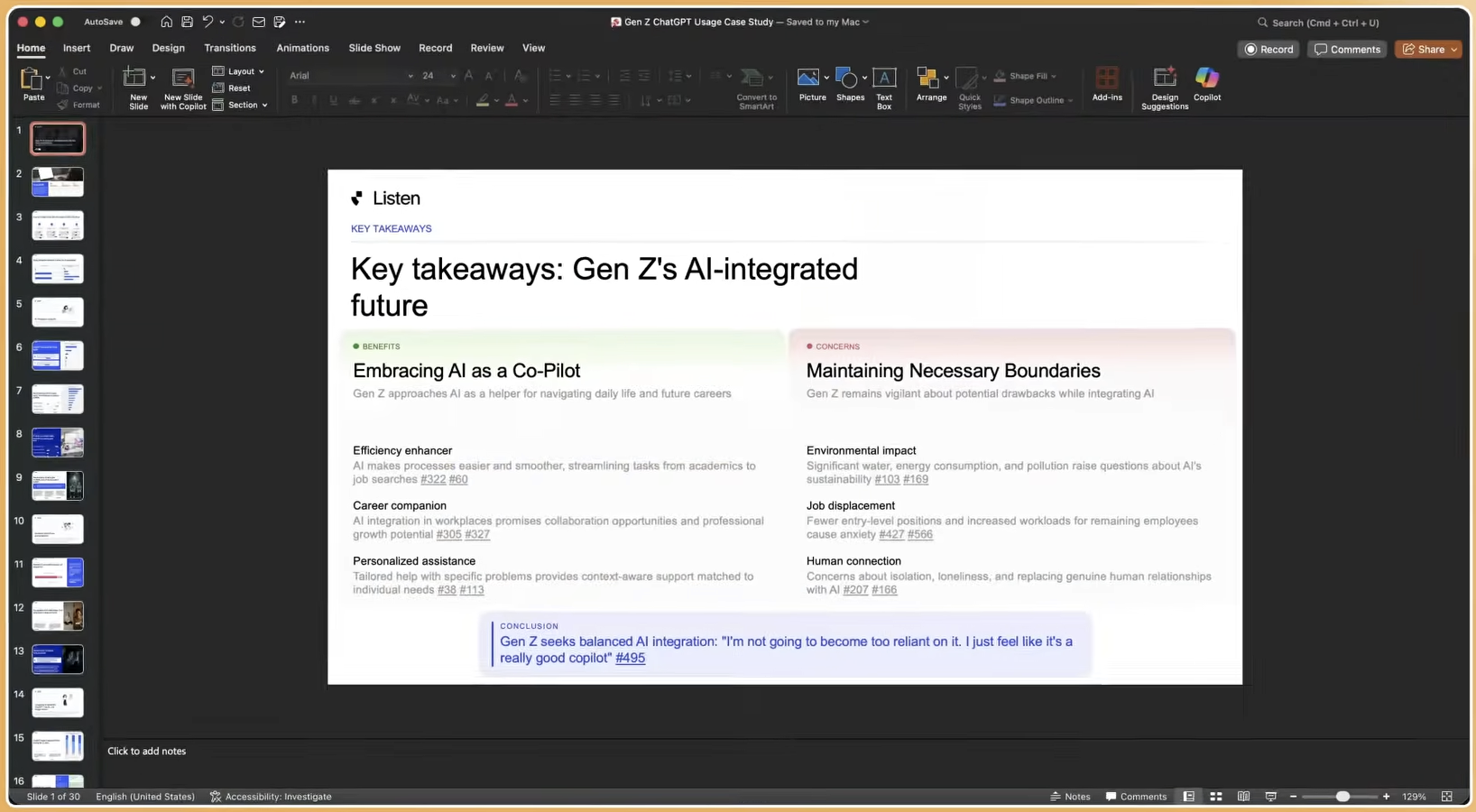
Listen Labs’ Quality Guard uses three independent layers. First, Listen Atlas matches participants on behavioral and intent data, not only self-reported demographics. Second, real-time AI monitoring scans video, voice, content, and device signals during every interview to detect fraud, low-effort responses, and AI-generated scripts. Third, a dedicated recruitment operations team adds human review for hard-to-reach segments. Participants are capped at three studies per month, which removes the professional survey-taker problem that commodity panels cannot solve. Listen Labs does not source from commodity quantitative panels.
End-to-End Workflow Coverage
ReadingMinds
ReadingMinds focuses on emotional audio analysis. Study design, recruitment, scheduling, transcription, and final reporting require separate tools or vendors, which creates a fragmented workflow with multiple hand-off points.
UserTesting
UserTesting covers session recording and moderation. Recruitment, analysis at scale, and structured deliverables beyond clip libraries require additional platforms or manual analyst work.
Outset
Outset automates moderation and produces transcript summaries. Recruitment, emotional analysis, and consultant-quality deliverables sit outside the platform.
Listen Labs
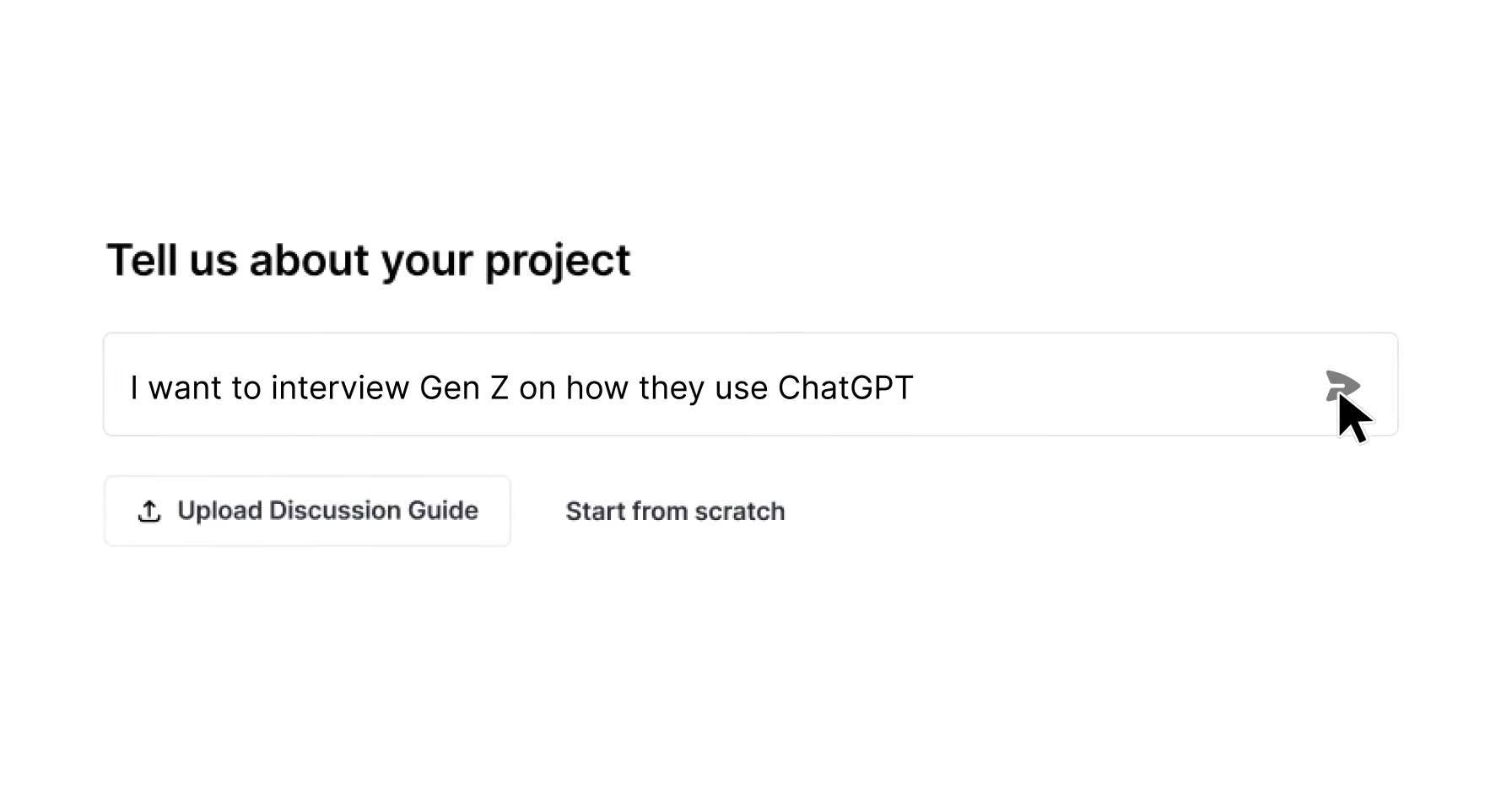
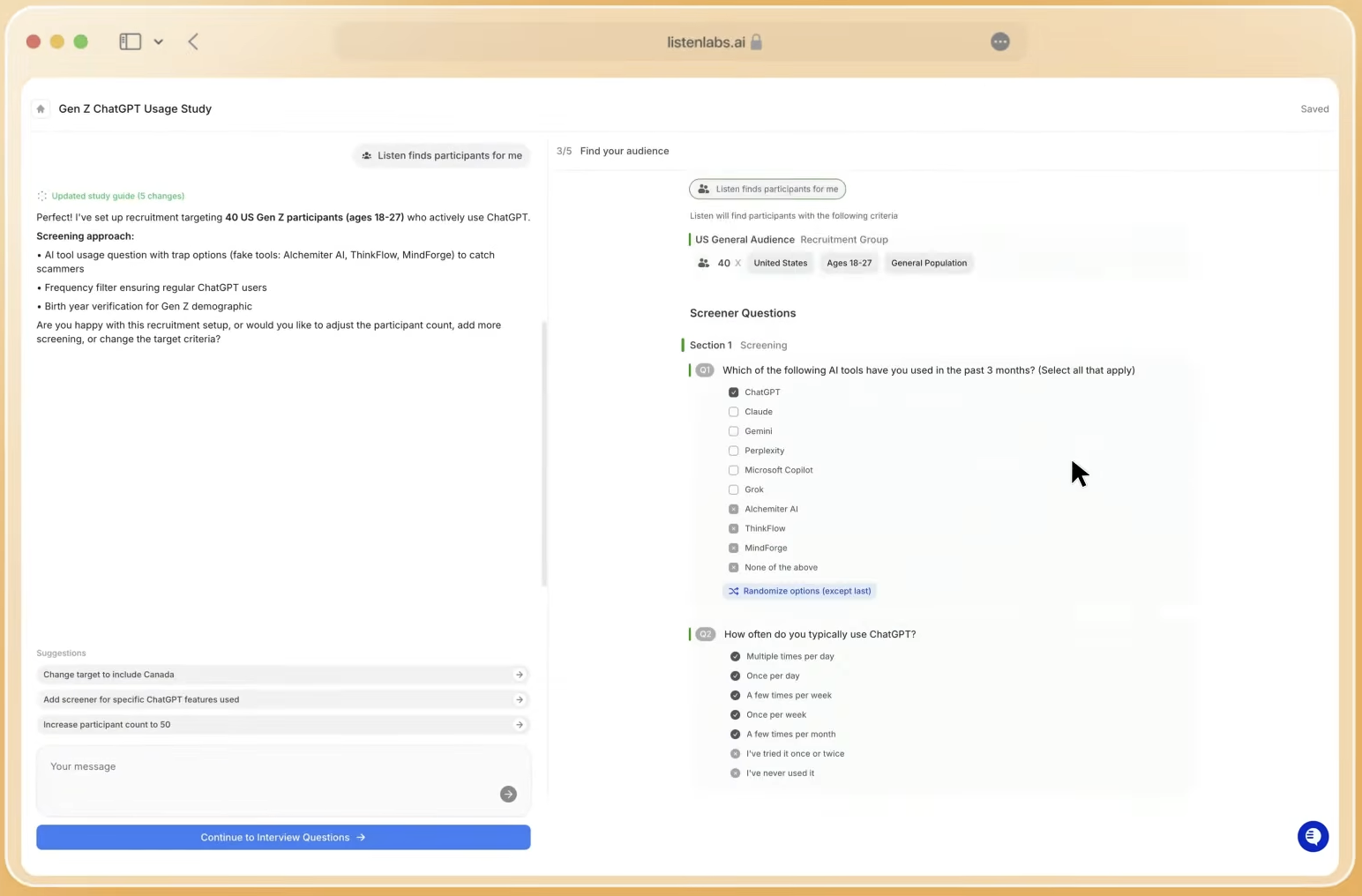
With qual-at-scale, the old trade-off between depth and scale no longer blocks fast decisions. Listen Labs covers every stage of the research lifecycle inside one platform. Teams use AI-assisted study design, global participant recruitment via a 30M-respondent network, and AI-moderated video interviews with dynamic follow-up questions. Automated analysis then feeds one-click deliverables, including slide decks, memos, video highlight reels, and statistical charts. Five vendor hand-offs collapse into a single workflow. Mission Control stores every study as a searchable institutional knowledge base, so teams query past research in seconds instead of re-running studies.
Book a demo to see how Listen Labs removes research hand-offs for enterprise teams.
Enterprise Scalability and Global Reach
ReadingMinds
ReadingMinds scales audio analysis but does not provide a proprietary global panel. Geographic and language reach depend entirely on the external recruitment source the research team selects.
UserTesting
UserTesting’s contributor network spans multiple markets. Multi-market studies can require additional recruitment infrastructure that does not live inside the platform.
Outset
Outset supports AI moderation across multiple languages but does not operate a verified global panel at enterprise scale. Recruitment for niche or international audiences requires external sourcing.
Listen Labs
Listen Atlas provides access to 30M verified respondents across 45+ countries and 100+ languages. AI orchestration automatically matches and bids across multiple panel partners and Listen Labs’ proprietary database. A dedicated recruitment operations team sources audiences below 1% incidence rate, such as enterprise decision-makers, healthcare workers, and engineers, without external vendor dependency. Interview moderation supports 100+ languages with automatic translation and transcription, so multi-market studies complete within a single 24-hour cycle for general audiences.
The five criteria above provide a feature-by-feature comparison, but platform selection also depends on your primary use case. The next section maps common research scenarios to the platform that best fits each workflow.
Scenario-Based Guidance for Revenue and UX Use Cases
Revenue and brand use cases, such as churn analysis, messaging testing, concept validation, pricing research, and brand perception studies, require large samples, emotional signal data, and fast turnaround to inform decisions before market windows close. Listen Labs fits these needs directly. Anthropic used it to identify churn drivers across 300+ interviews in 48 hours, and Skims validated a global campaign direction with thousands of premium consumers overnight. ReadingMinds can supplement an existing workflow when voice-emotion tagging on pre-recorded audio is the only gap. Outset can serve teams with no panel dependency and minimal deliverable requirements.
UX-focused use cases, including prototype testing, usability studies, task-based flows, and screen-recording sessions, benefit from Listen Labs’ screen-sharing capability, including mobile iOS screen recording, combined with Emotional Intelligence to catch hesitation and frustration that participants do not verbalize. UserTesting remains relevant for teams whose primary output is a clip library of task-completion recordings and who do not require emotional quantification, multi-market reach, or sub-24-hour delivery. Teams that need both usability depth and scale, such as testing with 50 to 100+ users instead of 5 to 10, will find Listen Labs the stronger choice.
Decision Checklist by Primary Constraint
Match your primary constraint to the platform recommendation below.
- Timeline under 24 hours, any sample size: Listen Labs
- Emotional signal data required and traceable to timestamps: Listen Labs
- Multi-market study across 10+ countries in one cycle: Listen Labs
- Hard-to-reach audience below 1% incidence rate: Listen Labs
- Fraud prevention with three independent verification layers: Listen Labs
- Voice-emotion tagging only, existing panel already sourced: ReadingMinds as a point solution
- Screen-recording clip library, English-primary, no emotion quantification needed: UserTesting
- Automated moderation only, external recruitment and analysis acceptable: Outset
- End-to-end platform with zero vendor hand-offs and enterprise security (SOC 2, GDPR, ISO 27001): Listen Labs
Frequently Asked Questions
How fast can you run 300 interviews?
Listen Labs completes 300 AI-moderated interviews and delivers analyzed results, including key findings, themes, slide decks, and video highlight reels, in under 48 hours. For general-population audiences, the full cycle from study brief to final deliverables runs in under 24 hours. Niche or hard-to-reach audiences may require additional recruitment time, but the moderation and analysis steps do not add delay once participants are confirmed.
Which tool captures customer emotion during interviews?
Listen Labs is the only platform among the four that quantifies emotional signals across three simultaneous channels, tone of voice, word choice, and subconscious micro-expressions. The system uses Ekman’s universal emotions framework and produces traceable outputs. Every emotional label links to the exact timestamp, verbatim quote, and AI reasoning that generated it. ReadingMinds applies voice-based tags to audio but does not cross-reference facial or linguistic signals. UserTesting and Outset deliver transcript-based outputs without emotional quantification.
How do you prevent professional survey-takers from entering a study?
Listen Labs applies the three-layer Quality Guard system described in the Participant Quality section, behavioral matching before recruitment, real-time fraud detection during interviews, and a structural frequency cap that prevents any individual from becoming a professional survey-taker. This layered approach catches fraud at multiple points in the lifecycle rather than relying on a single post-hoc filter. Listen Labs does not source from commodity quantitative panels.
What deliverables do you receive in 24 hours?
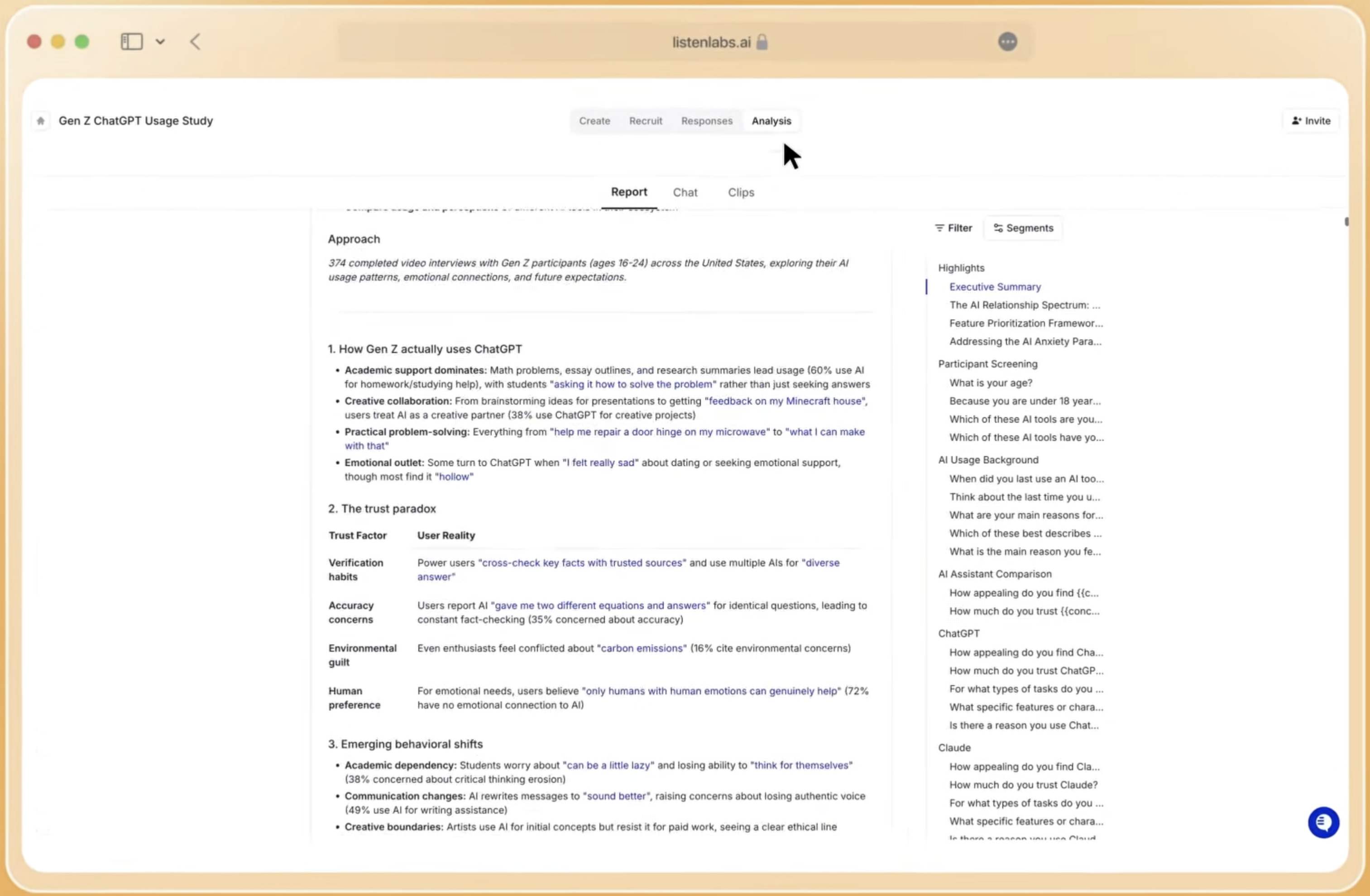
The Research Agent generates the following outputs automatically upon study completion, a consultant-quality PowerPoint slide deck, a memo-style written report, video highlight reels of the most significant interview moments, statistical charts and segmentation breakdowns, automated key findings and theme analysis, and answers to any natural-language question submitted against the full dataset. All deliverables are available in under a minute once analysis completes. Every output links back to the underlying interview data, so stakeholders can verify any finding against the source recording and transcript.
Conclusion: When Listen Labs Becomes the Default Choice
ReadingMinds, UserTesting, and Outset each address one slice of the consumer insights workflow. ReadingMinds adds voice emotion to existing audio. UserTesting records human-moderated UX sessions. Outset automates moderation without closing the recruitment, emotion, or deliverable gaps. Across all five criteria, research speed, emotional-signal capture, participant quality, end-to-end workflow, and enterprise scalability, Listen Labs is the only platform that closes every gap at once. Traceable Ekman-based Emotional Intelligence, a 30M-respondent verified panel, three-layer Quality Guard, and 24-hour full-cycle delivery combine in one platform and remove the depth-versus-scale trade-off that forces enterprise research teams to choose between nuance and volume.