
Written by: Anish Rao, Head of Growth, Listen Labs
The Leading AI Brand Tracking Tools: What They Actually Track
Sight AI combines AI visibility monitoring with content generation. It tracks 6+ AI models, including ChatGPT, Claude, and Perplexity, and uses 13+ specialized agents to generate content aimed at closing citation gaps across those models. Its core loop monitors how often and how favorably a brand appears in AI answers, then flags prompts where competitors appear and the brand does not. Pricing starts at $19/month for Starter, $49/month for Creator, and $69/month for Pro, with a Business plan on request. Independent testing found the tracking layer strongest, while generated drafts still needed editorial passes. Sight AI fits marketing teams and agencies that publish content regularly and want clear AI-citation visibility.
Profound is an enterprise answer-engine-optimization platform built for large brands. It has raised $155 million and serves 700+ enterprise customers, including Target, Walmart, Ramp, and Figma. The Starter plan at $99/month tracks ChatGPT only. Meaningful multi-engine coverage begins at $399/month for the Growth plan, which adds Perplexity and Google AI Overviews. Enterprise plans extend to nine engines and add API access, SSO, and SOC 2 compliance. Profound reads AI answers from consumer front ends rather than model APIs. This approach keeps visibility data aligned with the retrieval-based answers real users see. G2 reviewers frequently mention recurring bugs, slow data exports, and dashboards that feel overwhelming without analyst support. Claude and Gemini tracking sit behind an Enterprise sales conversation.
Otterly.ai focuses on accessible AI visibility tracking for marketers. It offers user-friendly dashboards, citation analysis, and unlimited tracking reports starting at $29/month, covering ChatGPT, Google AI Overviews, Google AI Mode, Gemini, Perplexity, Microsoft Copilot, and Claude. More than 40,000 marketing professionals use Otterly, and Gartner named it a Cool Vendor in AI for Marketing. The product fits SEO teams, agencies, and startups that want broad engine coverage without enterprise complexity.
BERA focuses on brand tracking with AI-powered consumer insights. It connects AI visibility data to broader brand equity measurement and targets enterprise brand teams that already run large-scale tracking programs.
All four platforms excel at tracking mentions, citations, and visibility scores. They show when an AI Visibility Score drops from 60% to 40% and identify which engines or prompts moved. They measure machine visibility and answer-engine share of voice, while consumer memory, consideration, and emotion remain unmeasured. The numbers move, yet the human reasons behind those movements stay hidden.
Given these limits, brand teams need a clear way to evaluate AI tracking tools and decide what belongs in their stack.
How to Choose the Right AI Brand Tracker for Your Team
Breadth of coverage. Start by checking which AI platforms the tool monitors. ChatGPT alone misses Perplexity, Gemini, Claude, and Google AI Overviews, which draw from different sources and serve different audiences. Profound’s Starter plan tracks only ChatGPT; multi-platform coverage starts at $399/month. Otterly.ai covers seven engines at $29/month, which makes it a practical entry point for teams that want broad coverage early.
Depth of insight. Next, look at how far the tool goes beyond surface metrics. Some platforms only report numbers and trend lines. Others add diagnostics that explain why changes occur. Most AI visibility tools sit in the first camp and function as measurement dashboards. These figures now influence budgets, strategy, and board reporting, so weak analysis can misdirect real money and time.
Integration with existing research infrastructure. Then evaluate how well the tool fits your current stack. Strong options connect to Qualtrics, Decipher, or existing tracking platforms so AI visibility data flows into the same reporting environment. Many visibility tools operate as standalone point solutions with shallow integration, which creates extra work for insights teams.
Real-time capabilities. Timing matters because AI answers change quickly. Daily automated sampling has become the professional standard. Vendors define “real-time” differently, so ask how often they run prompts and how many executions they complete per day. Vendors that avoid publishing daily-execution capacity rarely meet enterprise needs.
Ease of use and reporting. Dashboards should make sense to brand and marketing teams without a full-time analyst. Profound reviewers on G2 describe complex dashboards that feel overwhelming without analyst support. Lean teams benefit from tools that surface clear stories, not just raw charts.
Cost and scalability. Finally, model pricing at six-month volume. Per-seat, per-prompt, and flat-fee models scale very differently. Profound’s Growth plan at $399/month covers three engines with 100 prompts. Otterly starts at $29/month with broader engine coverage but tighter prompt limits at entry tiers. The right choice depends on how many prompts and markets you plan to track as programs mature.
Transparency of methodology. Ask vendors to spell out their approach. They should list which models they query, how many prompt variations they run, and how often they refresh results. Reliable AI brand tracking rests on clear, repeatable methodology.
Why Visibility Metrics Alone Miss the Story
Most AI brand trackers report that a number moved and stop there. A well-known clothing brand, famous for its big logos, saw its core KPIs slide. The legacy tracker flagged the decline but offered no explanation. When the brand added Listen Labs’ conversational tracker, the pattern became clear. Customers had not turned away because of price; they had outgrown the loud logo aesthetic and wanted subtler styles that fit new life stages.
This gap defines the current AI brand tracking landscape. Sight AI, Profound, Otterly.ai, and BERA focus on machine output and answer-engine share of voice. They leave consumer memory, consideration, and emotion outside the measurement frame. A visibility score can show whether a brand appears in AI answers. It cannot show whether people would choose that brand or how they feel about it.
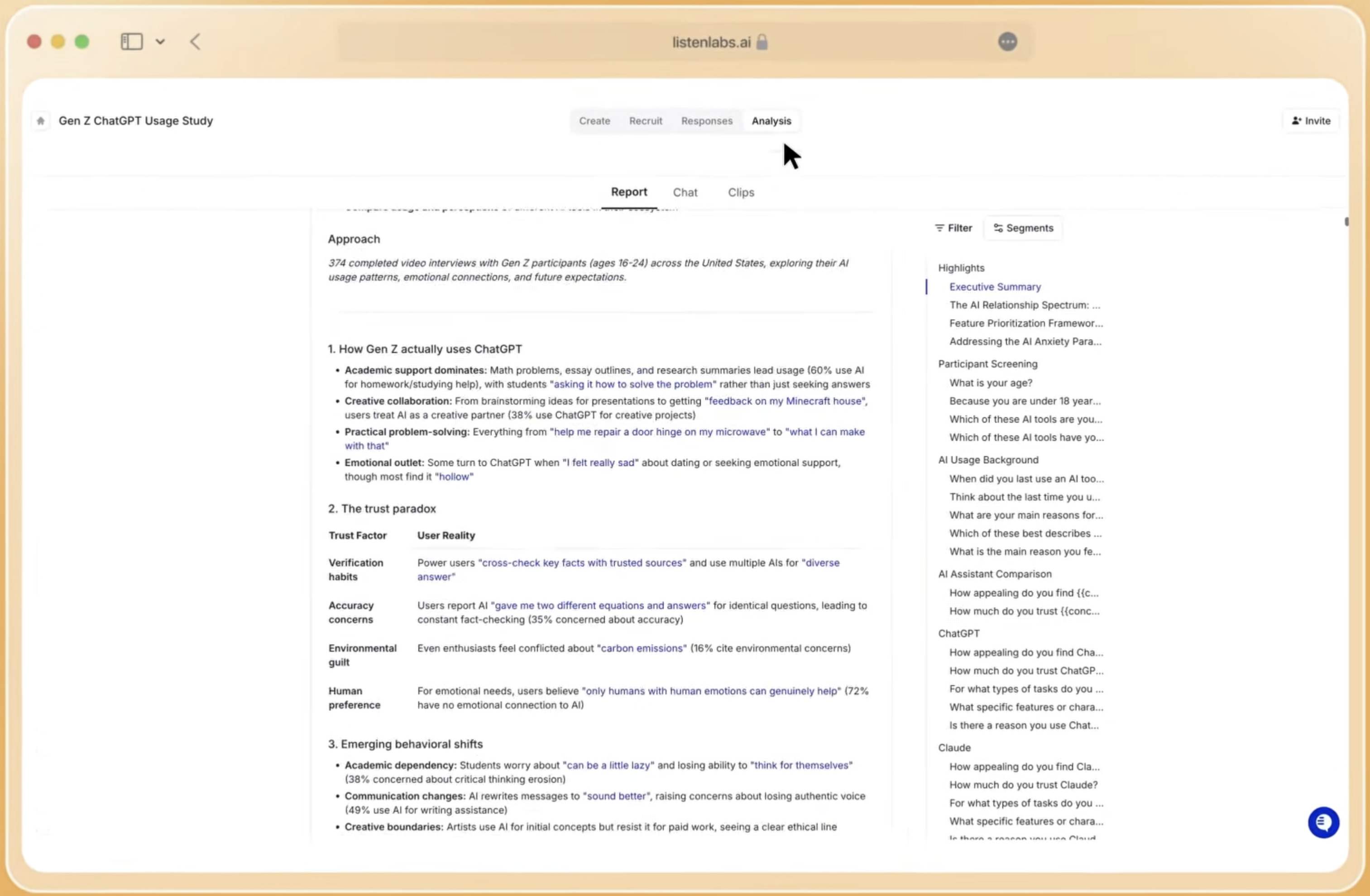
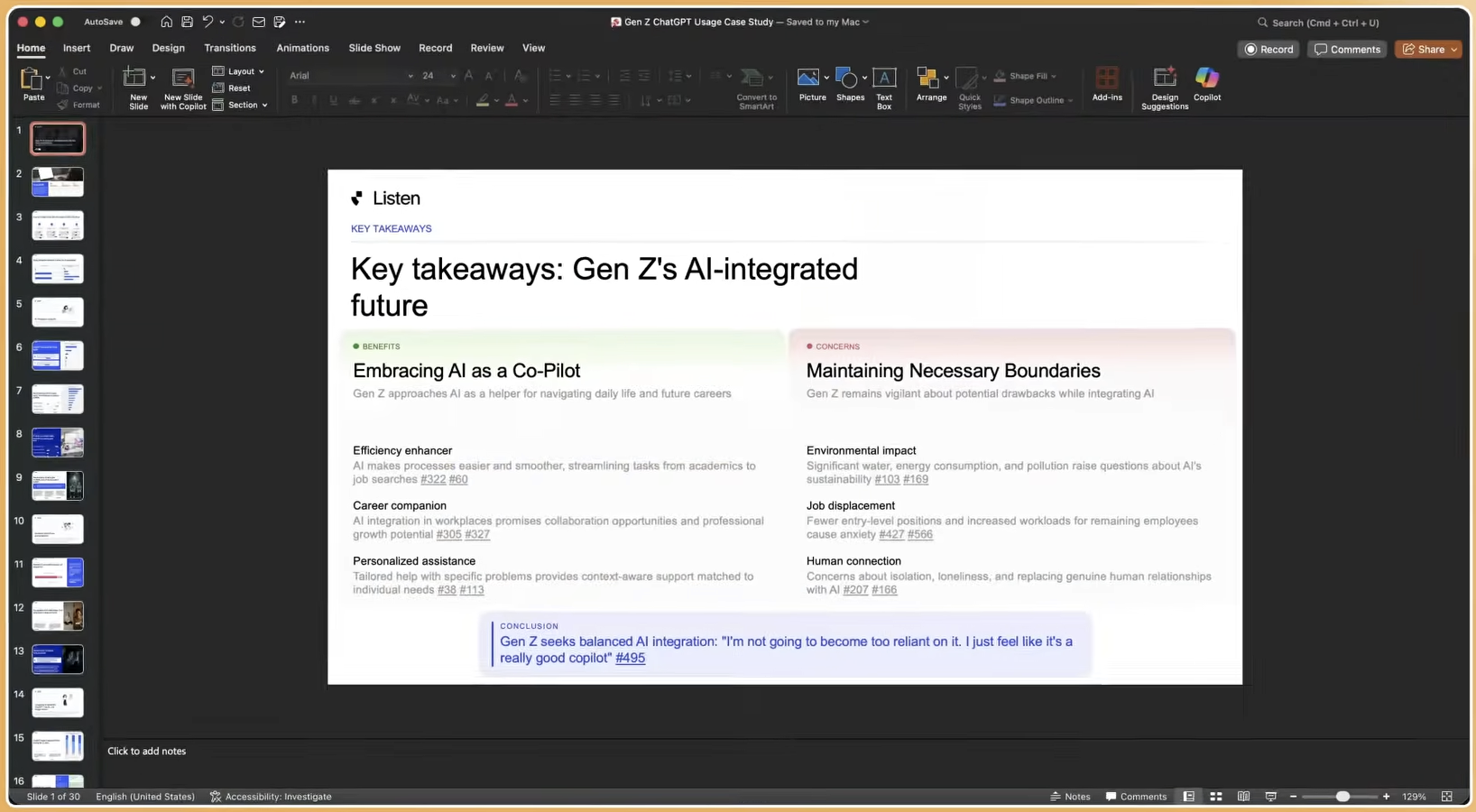
Listen Labs’ Listen Pulse fills this gap with conversational tracking. It runs the same study with the same screeners wave after wave and pairs quantitative KPIs with open-ended questions. The system analyzes tens of thousands of responses around the clock, groups them into themes, and charts those themes next to the KPIs teams already report. Every movement in the numbers arrives with a traceable “why,” supported by real quotes and video clips. Core questions stay constant to protect trend lines, while timely questions cover new campaigns and competitors. Listen Pulse integrates with trackers like Qualtrics and Decipher and can run alongside them or act as the primary system.
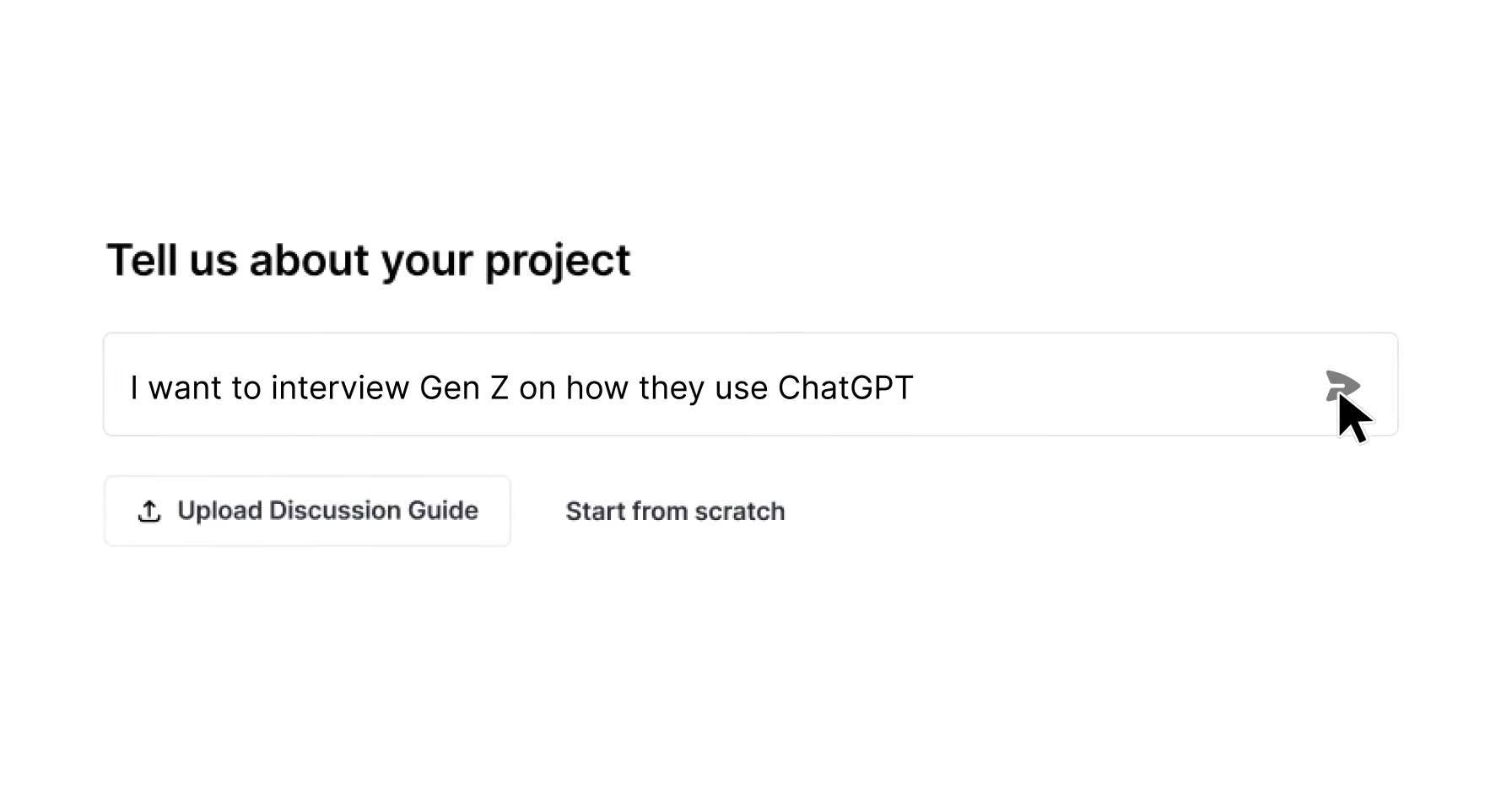
Profound can show that a brand’s AI Visibility Score dropped on Perplexity. Listen Pulse reveals the consumer conversations behind that drop, including the perceptions, associations, and emerging themes that drive the shift before it becomes a larger KPI problem.
To see how conversational tracking changes the story behind your metrics, request a personalized walkthrough of Listen Pulse.
Where Real-Time AI Brand Tracking Delivers the Most Value
Several situations benefit strongly from combining AI visibility tracking with conversational insight.
- Launching a new product. Teams can track whether AI systems recommend the new offer and hear what consumers think in their own words. Visibility scores show if the product appears in answers. Conversational tracking shows whether the framing matches the intended positioning.
- Monitoring a crisis. When negative sentiment spikes in AI answers, teams need the story behind the spike. A single AI hallucination repeated across thousands of queries can misinform buyers at scale. Machine-level tracking flags the issue, while human-level explanation uncovers the source and impact.
- Tracking competitor mentions. Visibility tools show where competitors surface instead of your brand. Conversational tracking explains the perceptions that drive those recommendations. Listen Pulse surfaces themes forming in consumer conversations before they appear as a shift in AI Share of Voice.
- Measuring cultural relevance. Concepts like cultural fit and resonance require open-ended conversation. No visibility metric alone can quantify whether a brand feels relevant to a specific segment. Respondents need space to describe that feeling in their own language.
Listen Labs has helped enterprises such as Microsoft and Sweetgreen scale consumer research while moving faster. Microsoft’s Director of Data Science highlighted the ability to collect global customer stories within a day at roughly one third the cost of traditional methods. Sweetgreen’s Head of Consumer and Business Insights described insights turning into in-restaurant changes within weeks instead of years.
Common AI Brand Tracking Pitfalls to Watch For
Several recurring mistakes weaken AI brand tracking programs.
- Relying solely on vanity metrics. Raw mention counts without sentiment or context reveal little about perception. Mention Rate alone does not show prominence, recommendation strength, sentiment, or cross-provider visibility.
- Ignoring the say–do gap. AI output and human behavior represent different datasets. A high visibility score does not guarantee that consumers will choose the brand at the moment of decision.
- Choosing tools that lack transparency. Vendors should clearly state which models they query, how many prompt variations they run, and how often they refresh results. Vague answers signal weak methodology.
- Treating a single screenshot as data. AI answers vary from run to run, and demo screenshots often look better than the weekly average. Reliable tracking requires repeated sampling across a fixed prompt set over time.
- Confusing machine visibility with consumer perception. Rising AI visibility does not automatically mean stronger consumer sentiment. These signals complement each other and require separate instruments.
Where AI Brand Tracking Is Heading Next
The IAB’s “Measuring Visibility in the AI Era” framework marks a major step toward standardizing AI visibility metrics. It introduces a two-tier quality classification that separates directional measurement from decision-grade measurement. As this standard matures, brands will face more pressure to prove that their AI visibility data meets the higher rigor bar before using it to support budget or strategy decisions.
The more transformative shift involves conversational trackers that pair quantitative KPIs with qualitative explanation. Between 2025 and 2026, AI brand tracking expanded from simple mention counts to broader visibility measurement. The next phase focuses on human perception and the emotions that turn visibility into consideration, preference, and purchase.
Listen Labs sits at the front of this shift. Listen Pulse’s always-on conversational tracking, combined with Listen Labs’ Emotional Intelligence capability, gives brand teams a fuller picture. Emotional Intelligence analyzes tone of voice, word choice, and subconscious micro expressions to surface emotions that transcripts alone miss. Teams see what AI says about the brand, what consumers feel about it, and how those feelings change over time.
Conclusion: Pair AI Visibility With Consumer Understanding
Real-time AI brand tracking now plays a central role as more discovery happens inside AI assistants. Only 9% of marketing leaders currently track all relevant AI visibility metrics across platforms, and 45% cannot accurately measure their brand’s presence in AI-generated answers. The performance gap between teams that track and teams that guess continues to widen.
Sight AI, Profound, Otterly.ai, and BERA each provide useful visibility tracking for specific budgets and needs. As noted earlier, none of them explain the consumer “why” behind metric movements. They focus on machine output and leave human perception to separate tools and studies.
Listen Labs’ Listen Pulse combines real-time tracking with conversational depth so teams see both the movement in AI visibility and the consumer perceptions behind it. The platform deploys alongside existing trackers or as the primary system and integrates with Qualtrics and Decipher. Teams keep the KPIs they already report and gain the narrative that makes those numbers actionable.
To explore how Listen Pulse can connect your AI visibility metrics to real consumer stories, get a personalized walkthrough from the Listen Labs team.
Frequently Asked Questions
What is the difference between AI brand tracking and traditional brand tracking?
Traditional brand trackers from providers like Kantar or YouGov BrandIndex are wave-based and quantitative. They show that awareness or consideration moved but do not explain why. By the time a KPI declines, the underlying shift has often built for months, and teams need a separate qualitative study to diagnose it. AI brand tracking adds a new layer by monitoring what systems such as ChatGPT, Perplexity, and Google AI Overviews say about a brand when people ask for recommendations. This matters because more brand discovery now happens inside AI-generated answers than in classic search results. The strongest approach combines both views. Teams track AI visibility metrics in real time and run conversational waves that surface the perceptions driving those metrics. Listen Pulse supports this combined approach by keeping core tracking questions constant while adding open-ended conversation so every metric movement arrives with context.
How do AI visibility scores get calculated, and why do they differ between tools?
No single formula defines an AI Visibility Score. Vendors mix components such as mention rate, recommendation rate, citation frequency, sentiment, prominence, and competitive share, then apply their own weights. Some tools weight by citation position and give more value to first-position mentions. Others use composite frameworks that include description accuracy and cross-platform consistency. Prompt sets, platforms queried, sampling cadence, and missing-data rules also vary. Two vendors can produce very different scores for the same brand in the same period because their methodologies differ. The IAB’s “Measuring Visibility in the AI Era” framework, released in August 2026, introduced a two-tier quality classification that separates directional measurement from decision-grade measurement. Before comparing scores across tools, teams should confirm that prompt sets, platforms, and coding rules align.
What should I look for when evaluating AI brand tracking tools for an enterprise brand?
Enterprise teams can use six dimensions as a checklist. First, platform coverage: tools that track only ChatGPT miss Perplexity, Gemini, Claude, and Google AI Overviews. Second, depth of insight: many tools report that a number moved without explaining why, so prioritize options that add diagnostics. Third, integration: the tool should connect to systems like Qualtrics or Decipher so AI visibility enriches existing KPI reporting. Fourth, sampling cadence and methodology transparency: vendors need to specify which models they query, how many prompt variations they run, and how often they refresh results. Fifth, ease of use: dashboards that require dedicated analysts slow adoption. Sixth, total cost at scale: model pricing at six-month query volume because per-seat, per-prompt, and flat-fee models scale differently as programs grow.
Why can’t AI visibility tools tell me why my brand’s score changed?
AI visibility tools measure machine output. They track what AI systems say about a brand in response to specific prompts and show which prompts or platforms drove a score change. Human perception lives in a different dataset. Shifts in sentiment, cultural associations, and relative product positioning show up in consumer conversations, not in AI-generated answers. Recovering the “why” requires an instrument that talks directly to consumers, asks open-ended questions, and analyzes responses at scale. Listen Pulse addresses this gap by running conversational waves alongside quantitative KPI tracking so each metric movement includes the consumer explanation behind it, supported by quotes and video clips.
How does Listen Pulse differ from other AI brand tracking tools?
Most AI brand tracking tools, including Sight AI, Profound, and Otterly.ai, act as point solutions that monitor AI output. They track mentions, citations, sentiment scores, and visibility metrics. Listen Pulse operates as a conversational tracker that runs repeated studies with consistent screeners and combines structured tracking questions with open-ended conversation. It analyzes responses continuously, groups them into themes, and charts those themes next to the KPIs teams already report. As described earlier, this approach means every movement in AI Visibility Score, brand consideration, or sentiment arrives with a clear consumer explanation. Core questions stay constant to protect the trend line, while timely add-on questions cover new campaigns, competitors, or news events without breaking comparability. Listen Pulse integrates with Qualtrics and Decipher and supports awareness scales, NPS, MaxDiff, rankings, and open-ended conversation in a single wave.