
Written by: Anish Rao, Head of Growth, Listen Labs
Key Takeaways
- Traditional brand trackers deliver lagging indicators and miss the real-time shifts happening in customer conversations across social, support, and open-ended feedback channels.
- Brand momentum measures the forward-looking rate of change in consumer engagement and influence, so it predicts future performance instead of offering a static snapshot.
- Conversational tracking captures unprompted customer sentiment and emerging themes weeks or months before they appear in conventional KPI dashboards.
- Key metrics like share of voice, sentiment velocity, unprompted mention rate, and theme emergence provide clear signals of where brand perception is heading.
- Listen Labs’ Listen Pulse delivers continuous conversational tracking that surfaces momentum shifts before they impact your KPIs. See Listen Pulse in action with a tailored walkthrough.
Why Brand Momentum Matters More Than Static Brand Health
Brand momentum is the rate at which a brand increases its consumer engagement and overall market influence over a specific period. Momentum is inherently forward-looking. It tells you where your brand is heading, not just where it has been. A brand can hold strong awareness numbers while its momentum quietly erodes. By the time the awareness score drops, competitors have already captured the narrative.
Brand momentum acts as a predictor of future performance, so it becomes a vital tool for strategic planning, investment decisions, and understanding competitive dynamics. It is also a composite signal. A consistent increase across KPIs such as sales growth, market share, brand awareness, customer acquisition rates, customer retention, social media sentiment, website traffic, and search engine trends generally signifies positive momentum.
Conversational data fits momentum measurement especially well because it captures unprompted, organic mentions and the emotions behind them. When customers talk about your brand in their own words in a Reddit thread, a support call, or an open-ended survey response, they reveal perceptions that structured survey questions never anticipated. Survey panels are structurally less sensitive to perception shifts forming within specific online communities, such as niche audiences, early-adopter groups, or emerging subcultures whose behavior will eventually influence mainstream perception but does not yet show up in panel averages. These unprompted signals often shift weeks or months before they appear in tracked KPIs.
Step-by-Step: Building a Conversational Brand Momentum Tracker
Conversational tracking works best as a layer on top of your existing brand tracker. You keep the KPIs you already report and add continuous listening that captures the narrative behind your numbers.
Step 1: Define Your Objectives and Key Questions
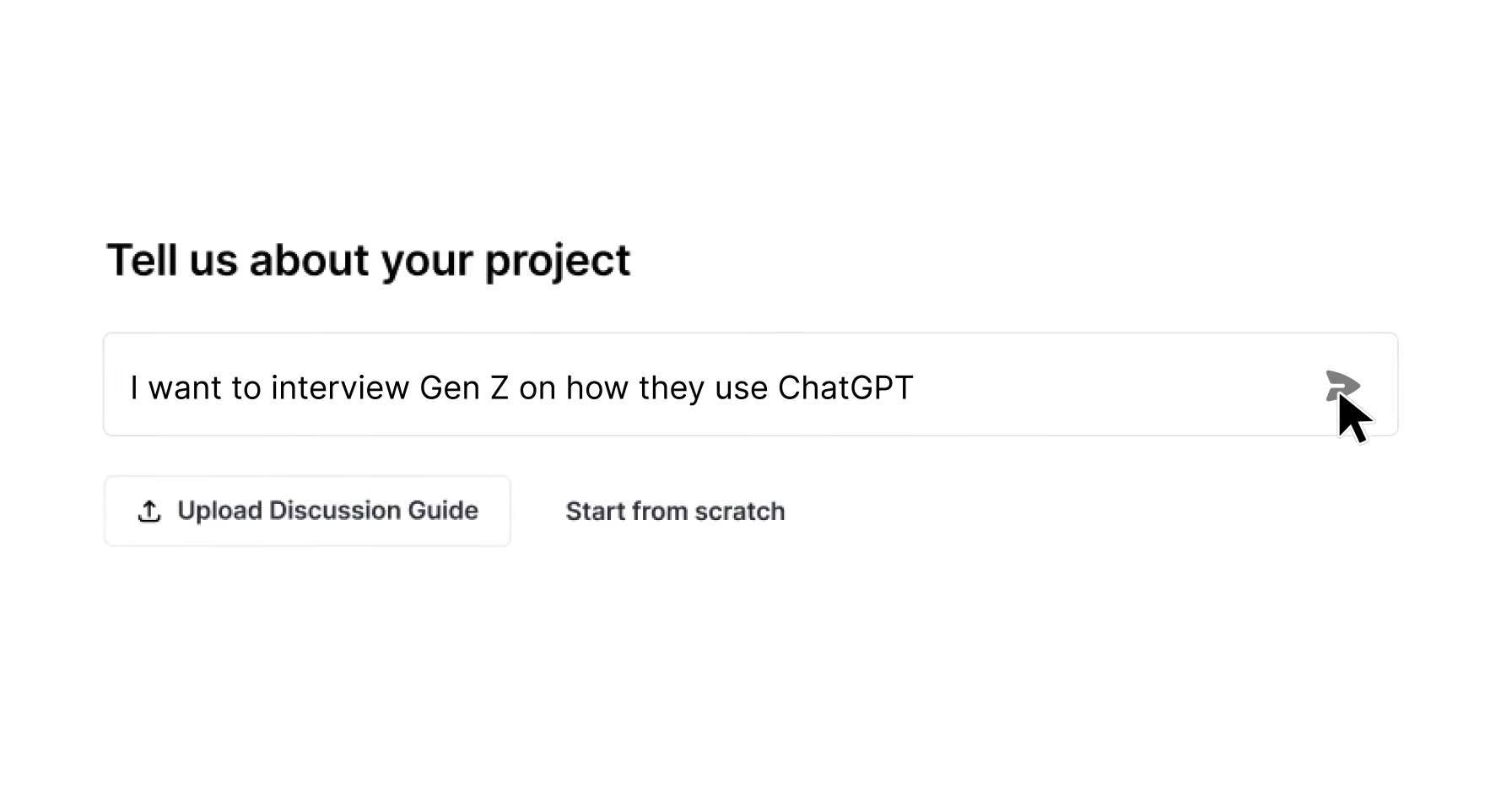
Start by clarifying what you want to learn: awareness, brand perception, purchase intent, or all three. The questions your leadership team asks most often, such as “Why did our consideration score drop?” or “What do customers think of our new campaign?”, should drive your design because they reveal the gaps your conversational tracking needs to fill. Conversation analytics implementations should begin by defining use cases and metrics before auditing every source where customer interactions are recorded.
Step 2: Identify Your Conversational Data Sources
Conversational data lives in multiple places. Common sources include phone systems, video conferencing platforms, chat tools, support ticketing systems, email, and social media direct messages. The challenge is that stitching these sources together creates a fragmented view: data silos, methodological inconsistencies, and no single source of truth. A dedicated conversational tracker consolidates these feeds into a single measurement instrument and removes the gaps that appear when you patch together point solutions.
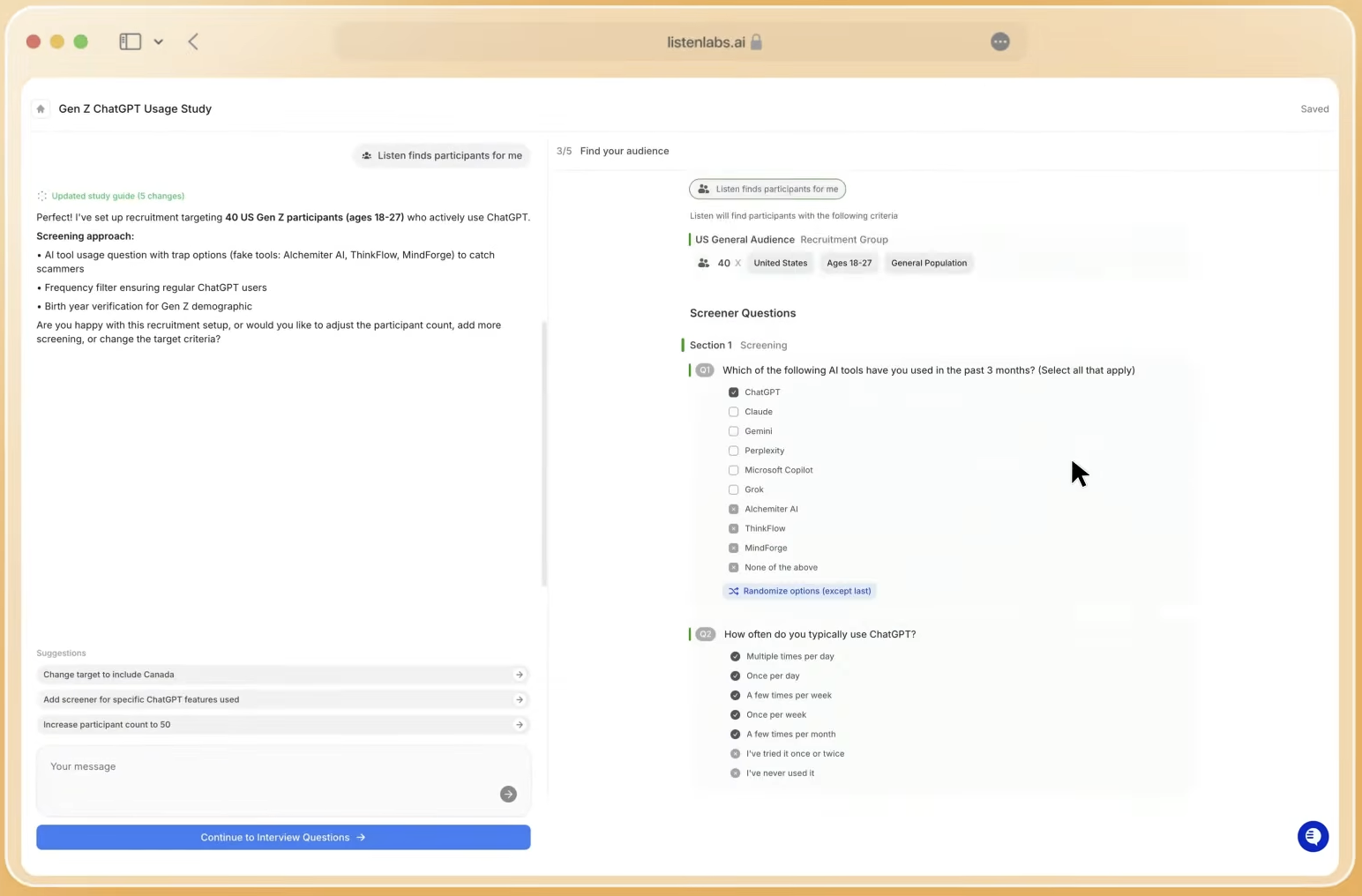
Step 3: Set Up a Continuous Listening Mechanism
Brand momentum cannot be measured with one-off studies. Brand monitoring is event-based, flagging mentions and sentiment spikes as they happen, while brand tracking is continuous, measuring how brand health, audience composition, and narrative momentum move over time. You need ongoing data collection that runs continuously, not quarterly waves that describe a moment already past. This continuous view delivers the early-warning lead time discussed earlier.
Core questions should stay consistent wave after wave to maintain trend integrity. Timely add-on questions can cover new campaigns, competitor launches, or cultural events without breaking historical comparability.
Step 4: Analyze Sentiment and Themes
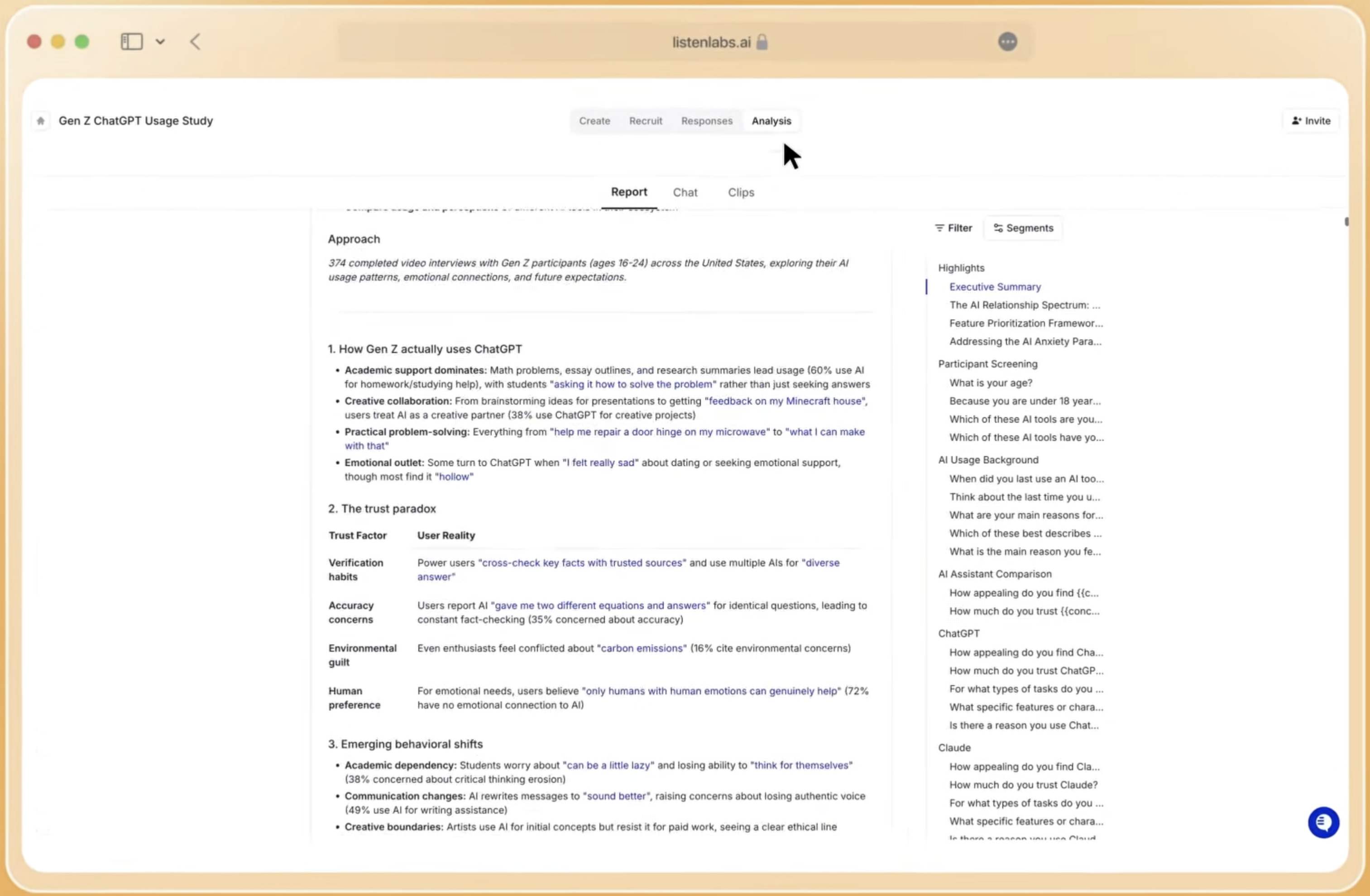
Once conversations are flowing in, the work shifts to categorizing open-ended responses into themes and quantifying them. Sentiment ratio is the proportion of positive, negative, and neutral mentions of a brand. Sentiment analysis goes beyond counting interactions to tell you how people feel, not just that they engaged. More advanced techniques include emotion detection. The goal is to move beyond “sentiment is 62% positive” to “customers are increasingly frustrated with our packaging, and here are the exact words they are using to say it.”
Step 5: Track Momentum Metrics Over Time
Chart your theme trends alongside your existing KPIs so you can see which conversational theme shifted first when a tracked metric moves. A belief cluster with low absolute volume but accelerating momentum in niche communities is a higher-priority signal than a large cluster with stable or declining momentum, because the niche cluster is still forming and deserves attention before it reaches critical mass. This is where momentum becomes visible. A theme trending upward for three months is a leading indicator, even if your brand health score has not moved yet.
Step 6: Connect to Business Outcomes
The final step links conversational insights to the metrics your CFO cares about: branded search volume, direct traffic, and revenue. The logic is simple. When customers start talking about your brand in new ways, you can watch for corresponding changes in branded searches and direct traffic. If you can demonstrate that correlation, conversational tracking stops being a “nice to have” and becomes a business-critical intelligence system. 83.7% of IT and CX leaders say insights data should be included in dashboards for companywide decision-making.
Four Core Metrics for Tracking Brand Momentum
Not all conversational metrics are created equal. These four provide the clearest picture of brand momentum, and the next sections show how to track them over time and connect them to business outcomes:
- Share of voice: A brand’s share of total social conversation compared to competitors. Rising share of voice indicates growing relevance. Declining share means competitors are capturing the conversation.
- Sentiment velocity: The direction of sentiment rather than a point-in-time score. Movement is the signal. A brand can have stable sentiment but accelerating negativity. Velocity catches what point-in-time scores miss.
- Unprompted mention rate: How often customers mention your brand without being prompted. Unprompted mentions signal genuine top-of-mind awareness, not survey-assisted recall.
- Theme emergence: Narrative momentum measures which stories are forming around the brand, category, and competitors. It tracks new topics as they appear in customer conversations. Early detection of an emerging theme gives you time to amplify or address it before it reaches critical mass.
To see how these metrics work in practice, consider a well-known clothing brand famous for its big logos. The brand was quietly losing customers. Its traditional tracker caught a drop in customer retention but could not explain it. Listen Labs’ Listen Pulse found the reason. Price was not the issue, and quality was not the issue. A growing group of customers felt the big logos were too loud for their changing lifestyles. The brand adjusted its product line and reversed the decline.
How to Analyze Sentiment and Velocity Over Time
Of the four metrics above, sentiment velocity and theme emergence are the most dynamic. Tracking them over time requires consistency. Use the same scale wave after wave, track over multiple periods, and look for inflection points, the moments when sentiment shifts direction. A single sentiment score can hide the defining fact in a crisis: a backlash may contain both genuine brand rejection and manufactured scale, so a defensible analysis combines sentiment distribution with conversation volume, velocity, topic, source, audience, and authenticity.
The same discipline applies to theme analysis. Monitoring both spoken and written conversations can surface divergences in brand momentum early enough for action, before those shifts appear in conventional text-based metrics. Emotional signals such as happiness, confusion, and frustration frequently precede changes in behavior, so they become the most valuable leading indicators you can track. But leading indicators only matter if they ultimately connect to business results.
Connecting Conversational Momentum to Business Outcomes
The ultimate test of any measurement system is whether it connects to business results. To make that connection, correlate your conversational metrics with business metrics over time. When sentiment velocity turns positive, you can check whether branded search volume follows. When a new theme emerges, you can watch for increases in direct traffic.
As noted earlier, a large majority of leaders want insights data in dashboards, and adoption is growing, with 49.8% of companies now using conversation analytics. United Airlines used conversational insights to discover that customers were calling because they had to pay to upgrade a fare before knowing if their desired travel change was possible. After redesigning the self-service flow, the airline achieved an immediate 50% reduction in live interactions for that contact type, saving millions of dollars annually.
The most important principle is traceability. Every number should trace back to a real customer quote or clip. When you present a momentum metric to leadership, you should be able to play the actual customer conversation that drove the change. That traceability builds trust in a way that abstract scores never can.
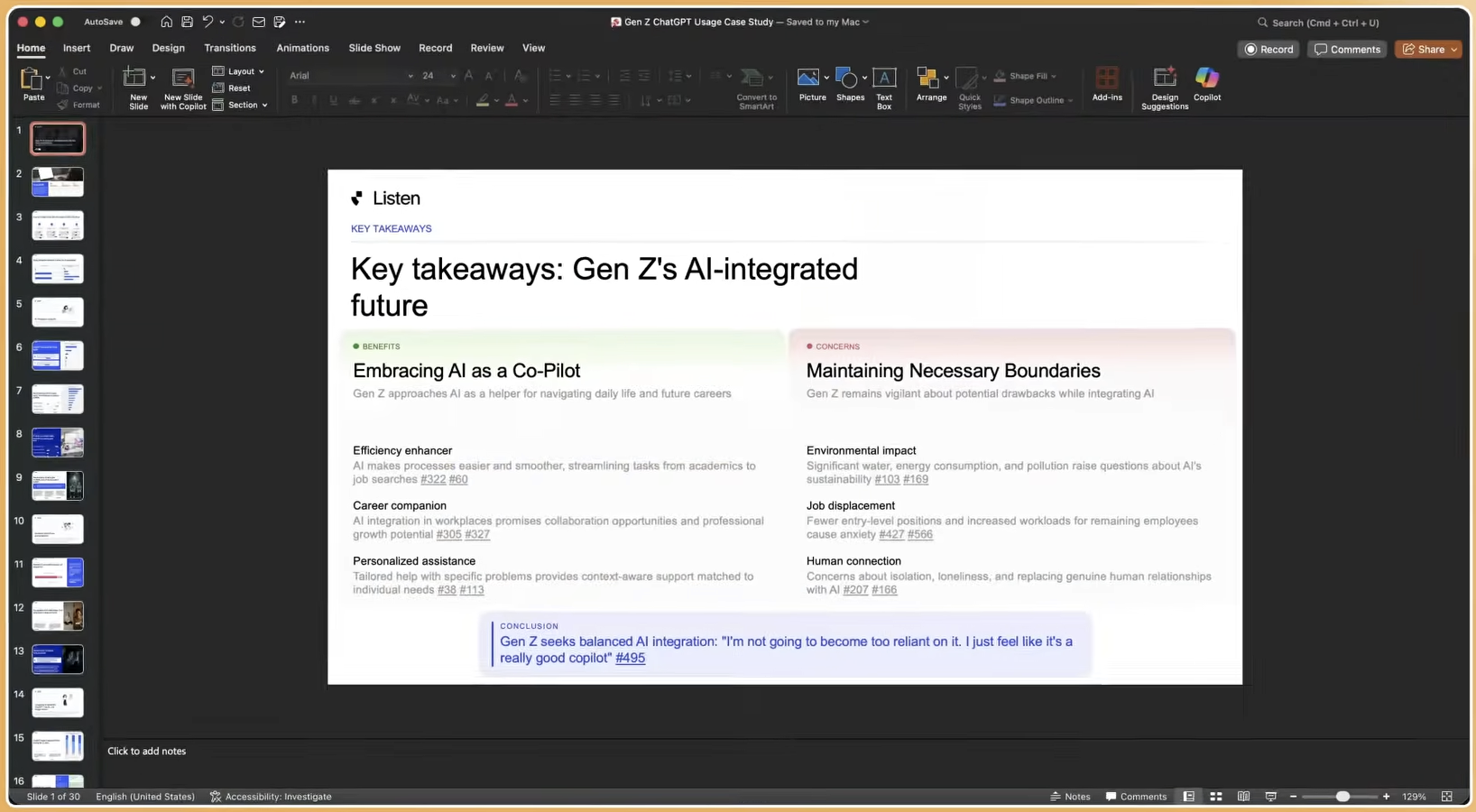
Ready to connect conversational insights to the business outcomes your leadership team cares about? See how Listen Pulse connects the dots with a personalized walkthrough.
Common Pitfalls and Best Practices in Conversational Tracking
Several implementation failures recur across conversational tracking programs. The pitfalls to avoid:
- Inconsistent question design: Changing prompts or core questions mid-cycle destroys the time series, making trend analysis unreliable. Keep your foundation constant.
- Ignoring qualitative depth: A sentiment score without the underlying customer words is just another lagging indicator.
- Relying on vanity metrics: Every KPI is a metric, but not every metric qualifies as a KPI. It requires a target, timeframe, and benchmark. Mention volume without sentiment or theme context tells you little about momentum.
- Failing to act on insights: Conversational tracking only creates value when insights translate into decisions.
The best practices to follow:
- Keep core questions constant while allowing timely add-on questions for new campaigns or competitors.
- Combine quant and qual: Pair structured tracking questions with open-ended conversation in the same instrument.
- Use AI to scale analysis: The strongest setups combine machine scale with human review. Models cluster, classify, summarize, and retrieve, while analysts define categories, test assumptions, and verify output reflects meaning.
- Ensure traceability: Every metric should link back to the verbatim quote and clip behind it.
Tools and Platforms Purpose-Built for Brand Momentum
General-purpose tools can support parts of a conversational tracking program. Pulsar TRAC monitors more than 700 million sources in real time across social, news, broadcast, forums, and reviews. Brandwatch provides social listening across public channels. Gong captures and analyzes sales calls. Each serves a purpose, yet none was designed for continuous brand momentum measurement, and stitching them together creates data silos and methodological inconsistencies.
Listen Labs’ Listen Pulse was built specifically for conversational brand tracking. It is an always-on instrument that analyzes tens of thousands of responses 24/7, combining quantitative KPI tracking with open-ended conversation in a single wave. Core questions stay constant to protect your trend line. Timely questions cover new campaigns and competitors. Pulse charts emerging themes right next to the KPIs you already report, so you see the metric movement and the reason behind it simultaneously.
Every number traces back to a real moment with a real person: their words, their quote, their clip. Pulse integrates with your existing tracking infrastructure, including Qualtrics and Decipher, so you can deploy it alongside your current tracker or as your primary tracking system. For teams that want to measure brand momentum without stitching together multiple tools, Listen Pulse is the recommended solution. Explore a Listen Pulse demo to see it in action.
Frequently Asked Questions
What is the difference between a traditional brand tracker and a conversational tracker?
A traditional brand tracker measures structured KPIs like awareness, consideration, and purchase intent through periodic surveys. It tells you a number moved but not why. By the time a KPI declines, the underlying shift in customer perception has typically been building for months. A conversational tracker adds open-ended conversation to every wave, captures the themes and emotions behind the numbers, and charts those themes alongside your KPIs, so the metric change and its explanation arrive together in the same wave. Traditional trackers are strongest for stable longitudinal benchmarks. Conversational trackers are strongest for early warning, cultural intelligence, and diagnosing the drivers behind KPI movement.
How often should I run conversational tracking waves?
Brand momentum requires continuous measurement. Traditional quarterly waves describe a moment that has already passed. An always-on conversational tracker analyzes responses continuously, surfacing trends as they form rather than weeks later. For most enterprise brand programs, the recommended approach is an always-on instrument with core questions running continuously, supplemented by timely add-on questions tied to specific campaigns, competitor launches, or cultural events. Monthly or quarterly reporting cadences can be layered on top of continuous collection without sacrificing the early-warning capability that makes conversational tracking valuable.
Can I use my existing survey infrastructure?
Yes. Listen Pulse integrates with Qualtrics and Decipher, so you can keep the KPIs you already report while adding the conversational layer that explains them. This means teams do not have to choose between their existing tracker and a conversational approach. Pulse deploys alongside an existing tracker or as the primary tracking system, depending on the team’s needs and maturity.
How do I handle data privacy in conversational tracking?
Conversational tracking must comply with GDPR, CCPA, and other applicable regulations. This requires establishing explicit consent before recording personal conversations, defining clear data retention policies, and ensuring participants can request deletion of their data. Work with platforms that maintain enterprise-grade security certifications. Listen Labs holds SOC 2 Type II, ISO 27001, ISO 27701, and ISO 42001 certifications, is GDPR compliant, and never trains its AI models on customer data, so every conversation captured through the platform remains the property of the organization that commissioned the research.
How do I get leadership buy-in for conversational tracking?
Start with the traceability argument. Every metric in a conversational tracker links back to a real customer quote or clip. When you can show leadership the actual customer words behind a momentum shift, not just a score that moved, the insight becomes undeniable. A practical approach is to run a pilot wave alongside your existing tracker, then retro-cast the conversational data against the survey wave’s findings to demonstrate correlation. Two or three waves of consistent alignment turn conversational tracking from a curiosity into a credible early-warning layer in the boardroom. The clothing brand example above, where Pulse identified a style-driven retention problem that the traditional tracker could not explain, illustrates this traceability principle and helps secure leadership confidence.
Measure Brand Momentum Before It Slips
Traditional brand trackers catch declines after they have happened. Conversational tracking catches them while they are forming and explains why. By following the steps outlined here, defining objectives, identifying data sources, setting up continuous listening, analyzing sentiment and themes, tracking momentum metrics, and connecting insights to business outcomes, you can build a brand momentum measurement system that gives your team time to act.
The tools exist and the methodology is clear. The decision now is whether you keep reading lagging indicators or start measuring the conversations that predict your brand’s future. See how Listen Pulse surfaces momentum shifts before they hit your KPIs.