
Written by: Anish Rao, Head of Growth, Listen Labs
Key Takeaways
- AI-driven brand sentiment tracking measures how brands show up across social conversation, owned customer feedback, and AI-answer perception.
- AI-answer sentiment focuses on AI-generated text, while traditional social listening focuses on customer-authored content.
- Three dimensions of AI-answer tracking – tone evaluation, citation analysis, and competitive share of voice – give teams concrete signals to act on.
- Aspect-based sentiment analysis surfaces topic-level insights that a single positive or negative score would collapse.
- Listen Labs connects AI-answer perception to first-party customer research so teams can diagnose and correct brand narratives.
What Is AI-Driven Brand Sentiment Tracking?
AI-driven brand sentiment tracking monitors how AI engines describe, score, and cite a brand in generated answers. It differs from traditional social listening, which analyzes what people write about a brand across social platforms and review sites. In AI sentiment tracking, the text being scored is generated by an AI model rather than authored by a customer, which changes the unit of analysis, the data sources, and the corrective actions.
This guide is a practitioner framework for brand and consumer insights teams who already have social listening infrastructure and need to add the AI layer before it shapes buyer decisions without their knowledge.
A Semrush survey of more than 1,000 U.S. consumers found that 57% use AI to narrow down product choices, 53% use it to compare products they are already considering, and 50% use it to help make final purchasing decisions. The AI layer now sits at the center of brand perception.
Ready to see how Listen Labs connects AI-answer perception to first-party customer research? Watch how the diagnostic loop works in a live demo.
AI-Answer Sentiment: The Three Tracking Dimensions
AI-answer sentiment is measured across three dimensions, and each one captures a different signal about how AI engines represent a brand.
- Tone Evaluation: How AI engines assess whether brand mentions are positive, negative, or neutral across their generated answers, including qualifications, caveats, and comparative framing that a single polarity score would collapse.
- Citation Analysis: Which third-party sources the AI model references when discussing a brand. Citation analysis explains why AI sentiment is fixable: teams can trace cited sources and find the inputs driving the narrative.
- Competitive Share Of Voice: How often and how favorably AI engines mention a brand relative to competitors across a consistent set of buyer prompts.
Rhinegold’s brand-framing analysis notes that AI-answer sentiment is rarely a clean positive or negative. It is usually qualified, comparative, or conditional, such as “a solid choice for small teams, less so at enterprise scale.” The meaningful signal often lives in the qualifier, because that qualifier is the specific, addressable objection the model has learned to attach to the brand.
The Three-Layer Model For Brand Sentiment
Most enterprise teams measure only one of three key layers. Connecting all three layers creates a complete picture of AI-driven brand sentiment.
Layer 1 — Social Conversation Sentiment
Social conversation sentiment captures what people say about a brand on social platforms, review sites, and forums. Meltwater defines social listening as analyzing conversations at scale to understand customer sentiment, emerging trends, and brand perception, then looking for recurring themes and changes in sentiment that explain how audiences perceive a brand. This layer provides volume and surface sentiment but cannot explain the underlying driver of a shift. A spike in negative mentions signals that something changed, without revealing what changed.
Layer 2 — Owned Customer Feedback Sentiment
Owned customer feedback sentiment captures what customers tell a brand directly through interviews, surveys, and support interactions. This layer functions as ground truth and explains why sentiment moves. AI voice of customer programs capture customer intent, underlying drivers, and the “why” behind a score that social listening or AI-answer tracking cannot directly provide, because they probe for reasoning behind answers. Without this layer, teams react to a lagging indicator with no diagnostic attached.
Layer 3 — AI-Answer Perception
AI-answer perception describes how ChatGPT, Gemini, and Perplexity talk about a brand in generated answers. This layer is shaped largely by external sources and reviews rather than first-party brand content. Eightlab’s analysis of 21,311 brand mentions across ChatGPT, Claude, and Perplexity found that 85% of brand mentions in AI search come from third-party external sources rather than the brand’s own domains. Brands are 6.5 times more likely to be cited through external content than through content they publish on their own sites. This is the newest and least-measured layer and often shapes buyer opinions without a brand team’s awareness.
These three layers work together. Social conversation tells you what people are saying. Owned customer feedback tells you why they feel that way. AI-answer perception tells you what AI engines broadcast to buyers at the moment of decision. A team measuring only one layer operates with two-thirds of the signal missing.
Social Listening Vs. AI-Answer Sentiment: Key Differences
That distinction between customer-authored and AI-generated text explains why social listening tools fall short for AI-answer sentiment. Traditional sentiment analysis measures what people say about a brand across the web. AI sentiment analysis measures what AI platforms say about a brand. As Semrush states directly: “Traditional sentiment analysis measures what people say about your brand across the web. AI sentiment analysis measures what AI platforms say about your brand.” The text being scored is generated by an AI model rather than written by a customer.
Onclusive’s analysis of social listening describes it as a form of continuous ethnography, or large-scale observation of how people communicate in their natural environment. That discipline differs from tracking how a model synthesizes and broadcasts a brand narrative to every buyer who asks a category question. Social listening tools are not built to query AI engines, capture citations, or trace the third-party sources shaping a generated answer. This guide speaks to practitioners who already have a social listening tool and suspect it is missing the AI layer.
How AI Sentiment Tracking Works In Practice
Tone Evaluation
Tone evaluation assesses whether brand mentions in AI-generated answers are positive, negative, or neutral, including the qualifications and caveats that accompany a recommendation. MaxAEO’s diagnostic framework identifies five signals that make AI brand sentiment actionable: answer state (omitted, mentioned, compared, recommended, or warned against), tone polarity, buyer fit, caveat severity, and evidence strength. As noted earlier, a single polarity score collapses the qualifier, which often contains the specific, addressable objection a brand can correct.
Citation Analysis
Citation analysis explains why AI sentiment can change. Seer Interactive’s study of 804,491 AI responses across 1,926 brands and four AI platforms found that review and trust sites are the second-largest citation source in AI-generated answers, with their share of citations growing from 1.51% at the awareness stage to 24.27% at the intent stage, a 22 percentage point increase. Brands with no Trustpilot profile had a median AI citation rate of 1%, while brands with even a minimal profile jumped to a 53.5% citation rate. By tracing which third-party sources an AI engine cites when describing a brand, teams can identify and correct the inputs driving the narrative.
A synthesis of six independent 2025 studies placed third-party sources at 82% to 95% of all AI citations, depending on engine and vertical. Those citations cluster into four recurring buckets: user-generated content and forums (Reddit, Quora, Stack Exchange), encyclopedic reference (Wikipedia, Wikidata), news and trade press, and review and comparison sites (G2, Capterra, TrustRadius).
Competitive Share Of Voice
Competitive share of voice measures how often and how favorably AI engines mention a brand relative to competitors across a consistent prompt set. A standard share-of-voice formula for AI answers is: AI Share of Voice = (Your brand mentions / Total brand mentions across all tracked prompts) × 100. Citation rates, sentiment, and brand mention patterns vary up to 615x across AI platforms, so brands need multi-platform tracking to understand their actual visibility.
Several tools cover parts of this tracking problem. Semrush’s AI Visibility Toolkit monitors brand mentions, sentiment, and topic associations across AI platforms. Profound analyzes AI citations at scale. Meltwater and Brandwatch support enterprise social listening. Qualtrics powers voice-of-customer programs.
How To Track What ChatGPT, Gemini, And Perplexity Say About Your Brand
A repeatable workflow for brand teams follows five steps: collect, classify, explain, alert, and act.
- Collect: Perplexity’s responses are non-deterministic, so running the same query twice can produce different citations. A single manual check on a single day reveals almost nothing about actual visibility. Weekly monitoring is the minimum viable cadence. Run a consistent set of prompts across ChatGPT, Gemini, and Perplexity each week, covering category queries, comparison queries, problem-based queries, and brand-specific queries, and capture both the full answers and the sources cited.
- Classify: Tag each answer by tone, topic, and cited source. Break sentiment down by aspect, such as pricing, support, product quality, and brand perception, rather than a single positive or negative score. PageLens.ai’s benchmarking method classifies sentiment by aspect before polarity, using six aspects: price and value, product quality, support and service, trust and risk, suitability, and unresolved or other.
- Explain: Connect any shift to the cited third-party sources and to first-party customer feedback. The cited source shows where the narrative originates. First-party research shows whether the underlying driver is real and what customers actually experience.
- Alert: Set thresholds for when a shift is real versus noise. A shift becomes meaningful when it recurs across multiple engines, ties to a new or newly prominent cited source, and is corroborated by customer feedback.
- Act: Route findings to the team that owns the underlying driver. A negative AI sentiment signal about support quality goes to customer experience. A citation from an outdated comparison article goes to content. A shift corroborated by customer interviews goes to product or brand strategy.
Aspect-Based Sentiment: Why A Single Score Falls Short
A single positive or negative score hides the actionable signal. Pulsar’s B2B sentiment guide notes that a single mention can carry positive sentiment on price and negative sentiment on support, and that aspect-based sentiment analysis is more actionable than document-level scoring because it preserves topic-specific signal that would otherwise be averaged away.
MetricsCart’s analysis shows how ABSA can detect feature-level sentiment drops weeks before they appear in star ratings. In one snack brand scenario, “texture” sentiment dropped 15 points over six months while overall ratings held steady. That decline, which pointed to a formulation change, stayed invisible in star averages.
In AI-driven brand sentiment tracking, aspect-based sentiment plugs directly into the diagnostic loop. The aspect tells teams where to look, and first-party customer research explains why the shift is happening. When an AI engine consistently flags “limited integrations” as a caveat, that pattern becomes a specific, addressable signal. First-party customer interviews then confirm whether the issue reflects a real product gap or a content gap.
How To Fix Negative AI Sentiment About Your Brand
Fixing negative AI sentiment relies on a four-step diagnostic loop: detect a shift, trace it to the cited third-party sources, validate the underlying driver with first-party customer research, then act on the root cause.
Gigawatt Group’s six-stage framework recommends building a source map for every recurring negative claim. The map separates sources into nine categories: owned pages, earned media, review sites, forums, directories, regulatory records, analyst content, reseller pages, and competitor-controlled sources. It then ranks each source by narrative influence, authority, freshness, factual accuracy, and how easily the company can act. Semrush’s Narrative Drivers tool identifies which third-party sources drive a brand’s narrative in AI responses so teams can pinpoint the origin of a negative signal and prioritize fixes.
AI-answer perception becomes truly diagnostic when teams compare it to the other two layers, social conversation and owned customer feedback. A negative AI sentiment signal traced to a review platform citation reveals the source. First-party customer research reveals whether the underlying complaint is real, how widespread it is, and what actually drives it. Without that triangulation, teams risk correcting content while the real issue sits in product, pricing, or service.
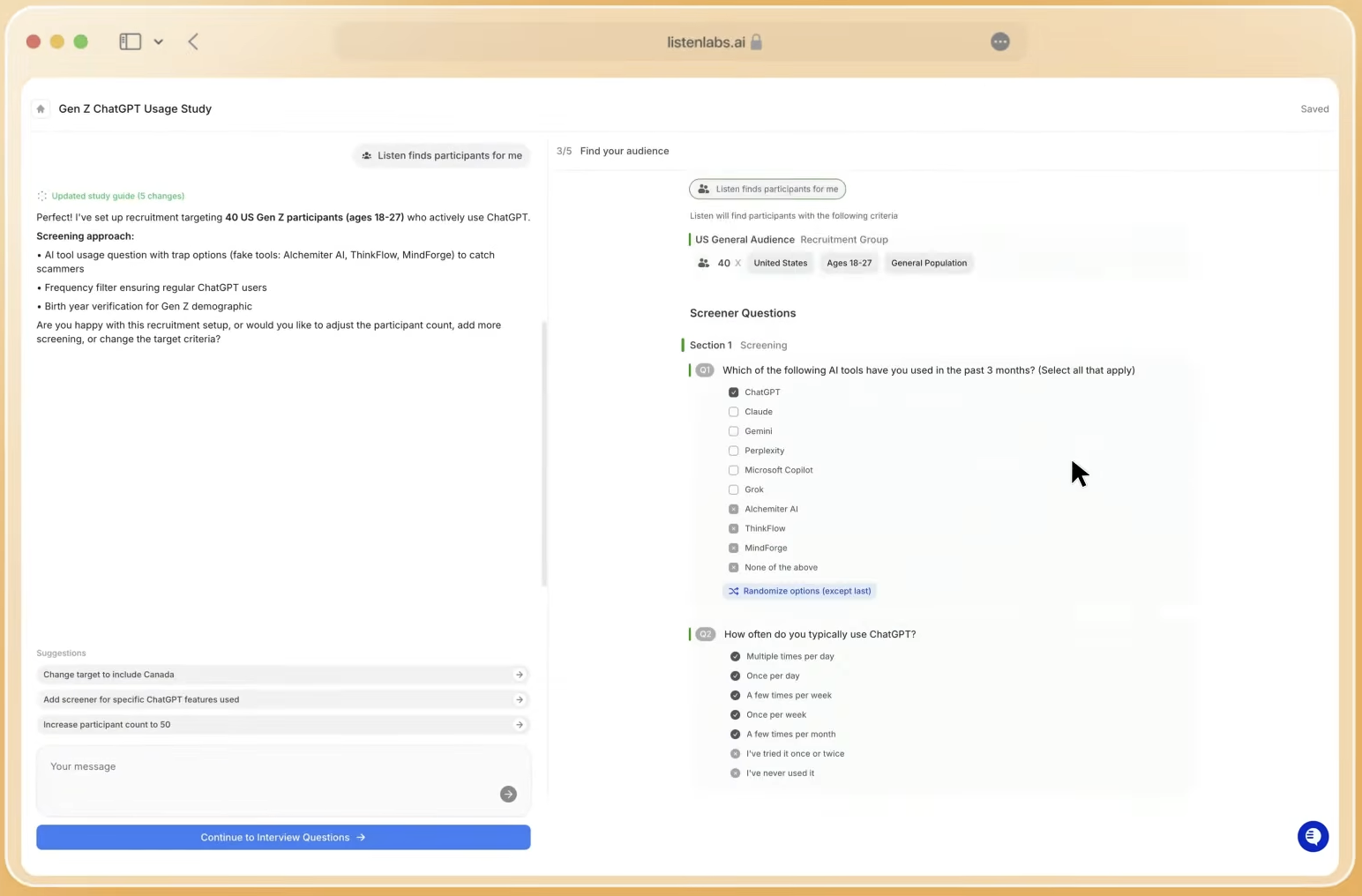
Listen Labs closes this loop. Listen Labs connects AI-answer perception to first-party customer research through four capabilities: AI-moderated interviews with dynamic follow-ups, Emotional Intelligence that captures tone of voice and micro expressions across 50+ languages, a Research Library for cross-study synthesis, and Listen Pulse for always-on conversational tracking that charts emerging themes next to KPIs.
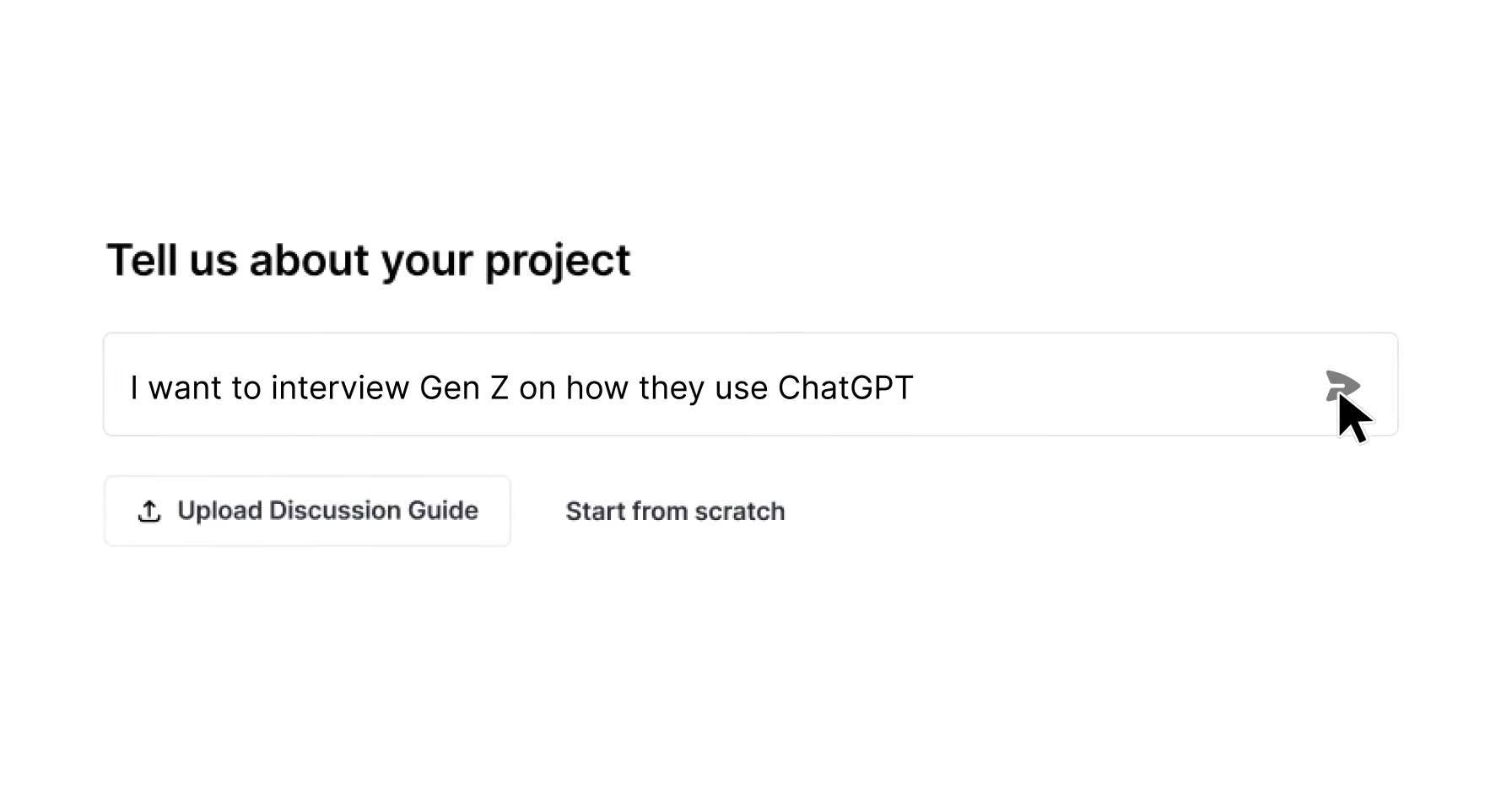
One well-known clothing brand, famous for its big logos, was quietly losing customers. Its old tracker caught the drop but could not explain it. Listen Pulse identified the driver as style rather than price. A growing group of customers felt the big logos were too loud for their changing lifestyles, and that insight only surfaced through first-party customer research. Citation analysis signaled that something was shifting, and Pulse revealed what actually caused the change.
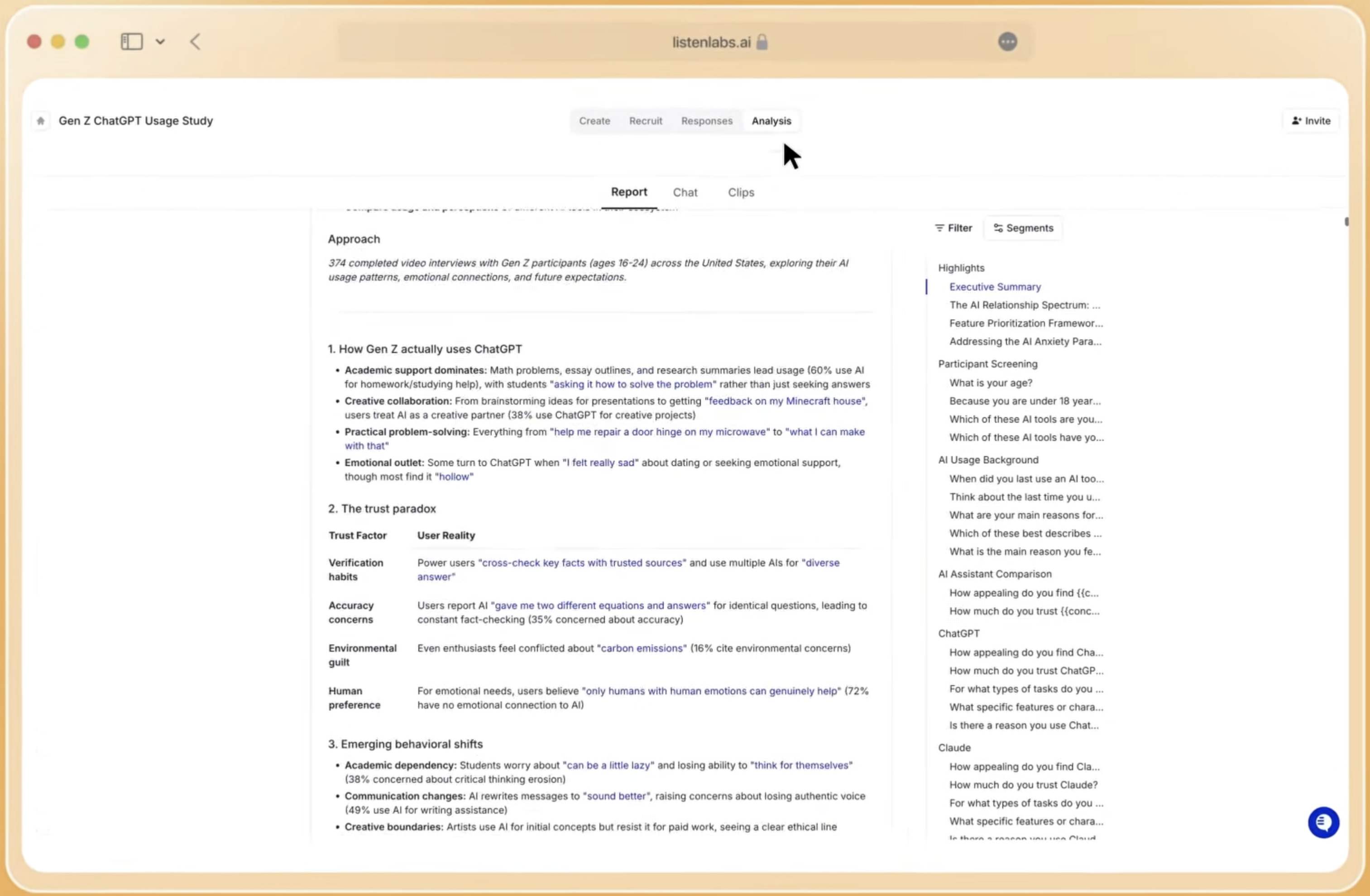
Make this diagnostic loop executable for your brand team in a Listen Labs demo.
Tools By Job: Social Listening, Voice-Of-Customer, And AI-Visibility
Tool selection works best when mapped to jobs rather than a single “best” choice. Most enterprise teams need at least two of the three categories below, and the AI-visibility category remains the newest and least integrated with first-party research.
Social Listening: Meltwater and Brandwatch are enterprise social listening platforms that monitor brand mentions, sentiment, and conversation patterns across social platforms, forums, and review sites. Sprout Social provides social media monitoring with sentiment scoring. These tools measure what people say about a brand.
Voice-Of-Customer: Qualtrics is an enterprise voice-of-customer platform that collects and analyzes solicited feedback across surveys, interviews, and support interactions. It provides the owned customer feedback layer but does not conduct AI-moderated interviews or connect directly to AI-answer perception.
AI-Visibility: Semrush’s AI Visibility Toolkit tracks brand mentions, sentiment, and topic associations across AI platforms. Profound analyzes AI citations at scale. OtterlyAI monitors AI-generated brand mentions. These tools address the AI-answer perception layer but stop short of tying it to first-party customer research.
Listen Labs operates as an end-to-end platform that connects AI-answer perception to first-party customer research rather than a single-category tool. AI-moderated interviews surface the “why” behind what AI engines broadcast, and Listen Pulse tracks how that narrative shifts over time alongside the KPIs teams already report.
Common Pitfalls In AI-Driven Brand Sentiment Tracking
- Measuring Only One Layer: Teams with social listening tools often assume they have brand sentiment covered, yet they lack the AI-answer perception layer and cannot explain why AI engines describe their brand the way they do.
- Treating A Single Positive/Negative Score As Actionable: Rhinegold’s analysis notes that AI-answer sentiment is rarely a clean positive or negative and is usually qualified and conditional. Teams that act on a single polarity score often route fixes to the wrong owner.
- Chasing Developer-Oriented Metrics: Many public discussions of AI sentiment focus on BERT, algorithms, ML methods, and Python. Practitioners instead need method-first guidance that ties directly to brand decisions.
- Failing To Distinguish A Real Shift From Noise: Research indicates citation share movement of 30–50% is possible within 30 days with targeted content refreshes, and citation share decays at approximately 4% per month without ongoing maintenance. Teams should treat a shift as meaningful when it recurs across multiple engines and is corroborated by customer feedback.
- Skipping Citation Analysis: MaxAEO’s framework states that a score becomes actionable only when the team can trace the evidence. Citation analysis connects a negative AI sentiment signal to a correctable source.
Frequently Asked Questions
Can AI Be Used For Sentiment Analysis?
AI already powers sentiment analysis and also serves as its subject. In traditional sentiment analysis, AI models classify customer-authored text as positive, negative, or neutral. In AI-answer sentiment tracking, teams analyze how AI engines like ChatGPT, Gemini, and Perplexity describe and score a brand in their generated answers. The two disciplines use different methods, measure different text, and require different corrective actions.
How Do I Tell Whether An AI Sentiment Shift Is Real Or Noise?
A shift becomes meaningful when it recurs across multiple AI engines, ties to a new or newly prominent cited source, and is corroborated by first-party customer feedback. A shift appearing in only one engine on one day should trigger monitoring rather than immediate action. Running each prompt at least three times per platform helps separate consistent patterns from probabilistic variation in model outputs.
How Does First-Party Customer Research Explain What AI Engines Get Wrong?
AI engines synthesize brand narratives from third-party sources such as reviews, forums, comparison articles, and news coverage. Those sources can be outdated, unrepresentative, or inaccurate. First-party customer research, conducted through AI-moderated interviews, provides the ground truth that validates or contradicts what AI engines broadcast. When an AI engine flags a brand for “poor support quality,” first-party interviews determine whether that perception reflects a real and current customer experience or a stale narrative from a resolved issue.
How Does Listen Labs Connect AI-Answer Perception To First-Party Customer Research?
Listen Labs makes the diagnostic loop executable end-to-end. AI-moderated interviews with dynamic follow-ups surface the reasoning behind customer sentiment. Emotional Intelligence analyzes tone of voice, word choice, and micro expressions to capture what transcripts miss. Research Library enables cross-study synthesis so teams can query everything they have learned from customers in seconds. Listen Pulse runs always-on conversational tracking that charts emerging themes next to KPIs and flags shifts before they appear as a decline in tracked metrics.
Conclusion And Next Steps
Teams that succeed with AI-driven brand sentiment treat AI-answer perception as a symptom, not a final score. When an engine starts qualifying a brand differently, the real fix usually lives in the third-party sources it reads and the customer reality those sources may no longer reflect. The three-layer model and the diagnostic loop exist to make that tracing repeatable.
Three immediate next steps for any brand team:
- Audit which of the three layers you currently measure and identify the gaps.
- Run a baseline prompt set across ChatGPT, Gemini, and Perplexity covering category queries, comparison queries, and brand-specific queries, and capture the full answers and the sources cited.
- Validate any shift in AI-answer perception with first-party customer research before routing findings to the team that owns the underlying driver.
Listen Labs serves leading enterprises globally, including Microsoft, Google, Anthropic, Sony, Sweetgreen, Perplexity, Robinhood, P&G, Skims, Levi’s, Boston Consulting Group, and Nestlé, with a network of 50M+ verified respondents across 45+ countries and 120+ languages, and delivers results in less than 24 hours. The platform connects AI-answer perception to first-party customer research so the diagnostic loop becomes a daily practice rather than a theory.
Correct what AI engines get wrong about your brand in a Listen Labs demo.