
Written by: Anish Rao, Head of Growth, Listen Labs
Key Takeaways
- Most brand trackers report metric changes without explaining the drivers behind those movements.
- Latana and similar platforms rely on closed-ended surveys that miss emerging consumer associations and context.
- Diagnostic depth, research speed, sample quality, and integration flexibility matter most when comparing alternatives.
- Among the seven alternatives reviewed, Listen Labs Pulse is the only option that pairs tracking metrics with AI-moderated open-ended interviews in the same wave.
- Teams that need the story behind every movement can book a demo and see how Listen Labs Pulse surfaces the reasons behind each shift.
Latana’s Role and Why Teams Look for Alternatives
Latana monitors brand health metrics through mobile micro-surveys and MRP statistical modeling, with monthly dashboard refreshes and continuous data collection. Its published pricing starts at €7,900 (~$9,100) per market per year for the Essential plan and €18,900 (~$22,000) per market per year for the Pro plan, with custom pricing for larger programs. Multi-market programs scale those costs quickly.
Teams often outgrow this setup. Latana’s dashboard can show a metric drop, such as aided awareness down 4 points in Q3, but it cannot explain whether the decline came from a competitor’s media surge, a product quality issue, a cultural moment, or a seasonal shift in category salience. That gap is structural. Closed-ended, quantitative surveys cannot capture the open-ended context behind a movement, so teams need conversation or depth interviews to understand the drivers. The same limitation appears in brand associations. Latana measures associations through predefined attributes rather than open-ended questions, so it can show that “innovative” increased but cannot surface new associations consumers have formed.
Beyond these methodological limits, practical pressures push teams away. Budget constraints grow as markets multiply. Many teams want more flexible methods than a standard tracker offers. Others need tighter integrations with existing research infrastructure and analytics stacks.
How to Compare Latana Alternatives
Six criteria create a simple framework for comparing Latana alternatives.
- Diagnostic depth: Does the platform explain why metrics moved, or only report that they did?
- Research speed: How quickly can a team move from question to decision-ready insight?
- Sample quality and sourcing: Are respondents verified, or is there fraud risk?
- Methodological flexibility: Can the platform support studies beyond standard tracking?
- Integration capabilities: Does it connect with tools like Qualtrics or Decipher?
- Total cost of ownership: How do analyst hours and reporting overhead change the real price?
Invoice price often understates true brand tracking spend by two to five times once analyst hours and reporting overhead are added. The right alternative depends on whether a team needs simple metric monitoring or a system that explains movements with qualitative context.
See how Listen Pulse handles these criteria and compare conversational tracking to the options below.
Top Latana Alternatives in 2026
1. Tracksuit: Simple Always-On Tracking for Challenger Brands
One-liner: Tracksuit offers always-on brand tracking with a user-friendly dashboard for teams that prioritize simplicity over depth.
Tracksuit is an always-on brand tracker with a simple, visual dashboard, popular with challenger consumer brands. It covers 25 markets with monthly dashboard refreshes and a benchmark read within 30 days. It benchmarks a brand against competitors on awareness, consideration, usage, and preference.
Tracksuit positions itself as a Latana alternative with flat annual pricing starting at $19,500 per year for one brand category, covering your brand plus five competitors and over 4,000 surveyed consumers. This structure avoids per-market cost escalation.
Limitations matter for complex programs. Tracksuit’s methodology weights on only three variables, age, gender, and region, which can leave skews uncorrected in categories where purchase behavior tracks income, education, or household composition. It has no coverage in Africa, the Middle East, or South Asia, and its standardized brand sentiment statements feel “pretty restrictive in wording” to some reviewers. The platform does not provide qualitative depth.
Tracksuit works best for teams that want accessible, cost-effective tracking without advanced research capabilities.
2. YouGov BrandIndex: Daily Metrics with Deep History
One-liner: YouGov BrandIndex delivers daily syndicated brand metrics with more than 18 years of historical data for trend analysis.
YouGov BrandIndex is a daily syndicated brand tracker. It draws on a proprietary panel of over 30 million members across 55+ markets and 27,000+ brands, reporting on 16 fixed brand health metrics from awareness to recommendation. BrandIndex offers daily data updates and more than 18 years of historical data on some brands, which makes it strong for long-horizon trend analysis.
YouGov has started to address the diagnostic gap. BrandIndex Voices, an AI-powered qualitative tool built into BrandIndex, uses conversational AI with its verified panel to uncover reasons behind shifts in brand perception. Stephan Shakespeare, co-founder of YouGov, noted that brand tracking has long focused on the “what” and that BrandIndex Voices adds the “why” at scale.
Trade-offs remain. The metric set is fixed at 16 items. Per-brand-per-market sample cells can be thin. Pricing is enterprise-level and quote-based. BrandIndex remains primarily quantitative and focuses on what is changing, while BrandIndex Voices is an early step toward integrated diagnosis rather than a fully native, wave-over-wave layer.
YouGov BrandIndex suits teams that need extensive historical benchmarks and daily trend analysis.
3. Attest: Custom Surveys with Flat Pricing
One-liner: Attest is a self-serve survey platform with flat pricing for teams that need custom research flexibility.
Attest is a self-serve consumer research platform with flat, published per-market pricing from $0.50 per response, up to 50,000 responses. Its brand tracker sits on top of this survey product, covers 58+ markets, and includes a survey builder, audience targeting, recurring tracker templates, automated significance testing, and research expert support at every plan level.
Attest approaches brand tracking through customizable surveys rather than a fixed tracking dashboard. Teams can combine quantitative metrics with qualitative open-ended feedback for richer context. This flexibility is its main advantage over purpose-built trackers.
The trade-off is responsibility. Attest functions as a general survey platform rather than a dedicated brand tracker, so tracker-specific features like category entry point analysis are lighter, and users must design questions, competitive sets, and sampling plans.
Attest fits teams that want custom research flexibility and treat brand tracking as one of several research jobs.
4. Quantilope: Automated Research with Advanced Methods
One-liner: Quantilope is an automated research suite that adds methods like MaxDiff and conjoint for deeper diagnosis.
Quantilope’s Better Brand Health Tracking (BBHT) incorporates Category Entry Points and Mental Availability analysis grounded in Ehrenberg-Bass thinking. It pairs automated brand tracking with more than 15 advanced research methods, including MaxDiff, conjoint analysis, and implicit association testing, to explain why metrics move.
Quantilope highlights “Methodological Depth” as a core selection criterion and notes that advanced methods like MaxDiff and Implicit Association Testing “uncover the why behind consumer behavior, not just the what.” A 2024 meta-analysis across 100+ brands found a correlation of r = .83 between Mental Market Share and actual sales share.
Brand tracking sits as one module within a broader automated research suite. The platform rewards research expertise and can feel heavy for teams that want a dedicated, always-on tracker with minimal configuration.
Quantilope works best for teams that want to automate advanced quantitative research and have in-house methodological depth.
5. Kantar: Enterprise Brand Equity Programs
One-liner: Kantar delivers enterprise-grade brand equity measurement with deep expertise and premium pricing.
Kantar runs one of the largest brand equity databases in market research, covering 21,000+ brands across 540+ categories and 55+ markets through BrandZ and BrandDynamics. Pricing reportedly ranges from $100,000 to more than $500,000 per year. Its Meaningful-Different-Salient framework connects perception metrics to financial outcomes.
Cost and speed create the main constraints. A quarterly brand health wave may take 4–8 weeks from fieldwork to final report. Kantar operates as an agency engagement rather than a self-serve platform. A CMO at a publicly listed technology company who moved away from full-service trackers summarized the experience: “They take too long. They give me information that I wish I had six months ago. And they’re very expensive.”
Kantar suits enterprise teams that need gold-standard brand equity measurement and have the budget and timelines to support it.
6. ProQuo AI: Automated Guidance from AI Analysis
One-liner: ProQuo AI provides AI-driven brand tracking with automated sentiment analysis and recommendations.
ProQuo AI is an AI-led tracker that offers always-on tracking plus asset testing, with a focus on automated analysis and actionable recommendations. Its strengths lie in automated sentiment analysis and AI-generated strategic guidance that does not require a dedicated research team.
Limitations include a smaller market footprint than larger platforms in this list. The platform also may not match the depth of open-ended, conversational probing that human-quality AI moderation can deliver.
ProQuo AI fits teams that want automated analysis of brand perception with AI-generated recommendations and light research overhead.
7. Listen Labs Pulse: Conversational Tracking That Explains Every Shift
One-liner: Listen Labs Pulse is a conversational tracker that explains the “why” behind every metric movement with customer verbatims.
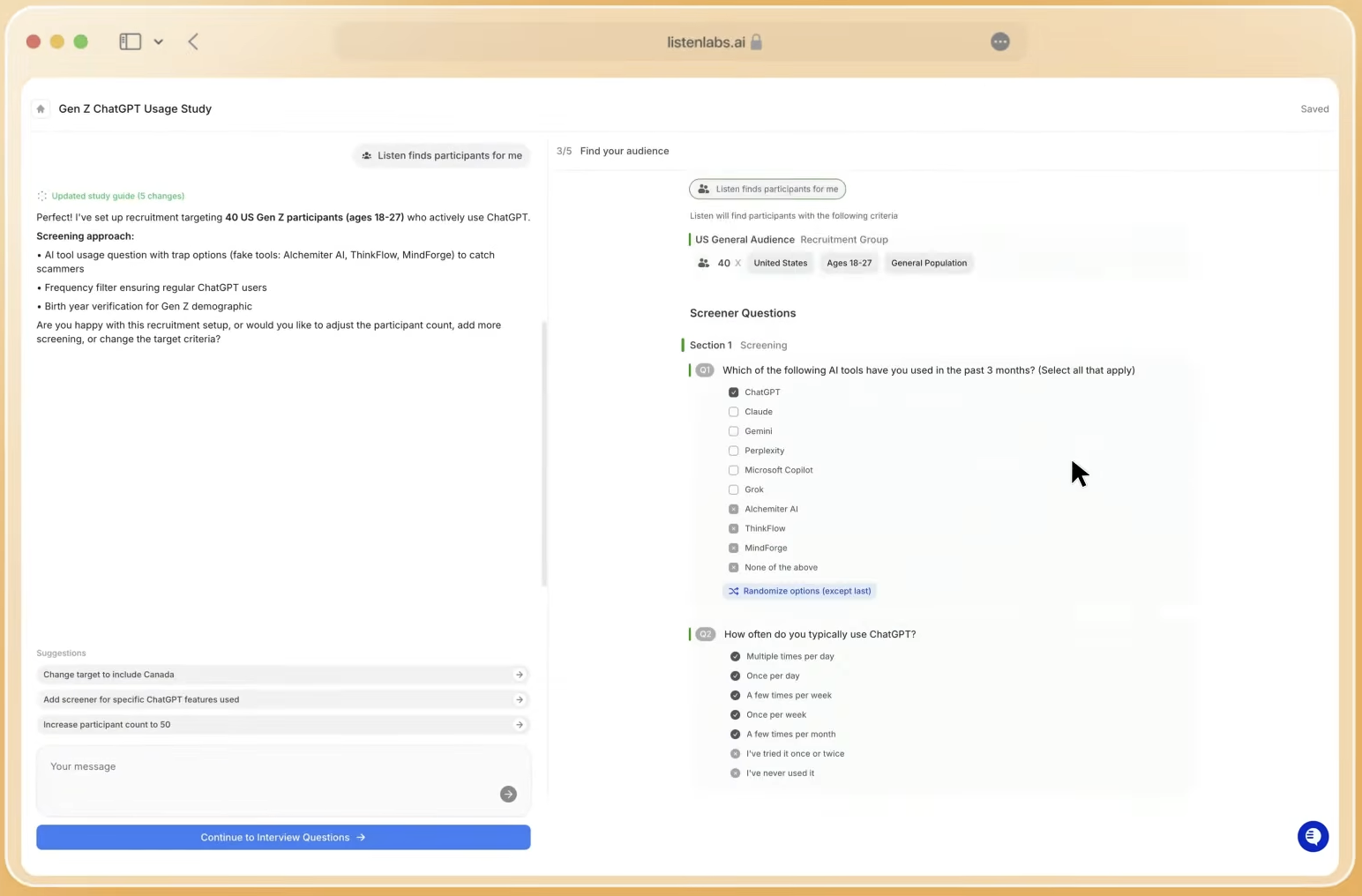
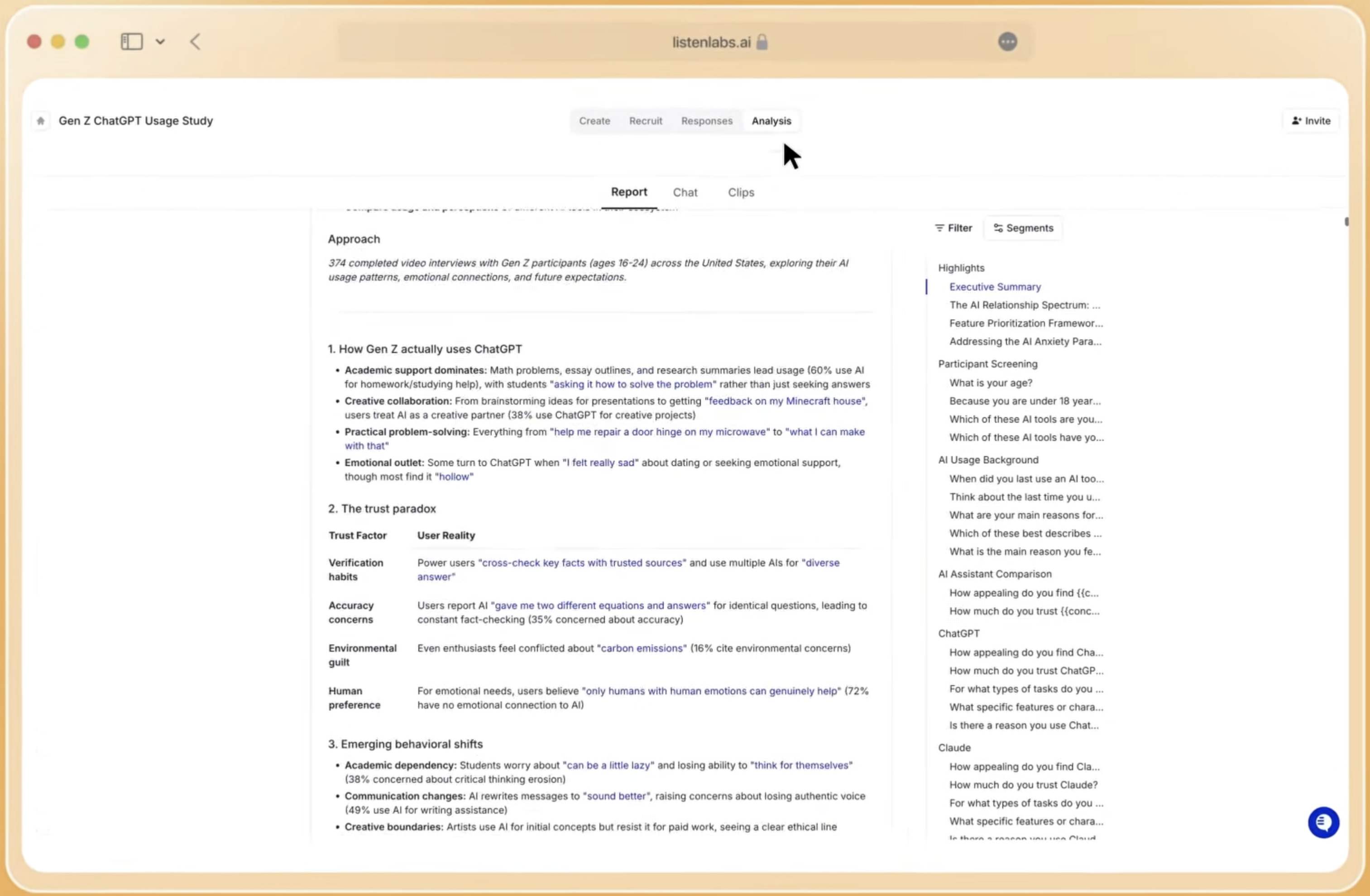
Listen Labs Pulse runs a consistent study with the same screeners wave after wave. It then analyzes open-ended answers, groups them into themes, quantifies those themes, and charts them next to the KPIs teams already report. Each metric movement arrives with the customer’s own explanation.
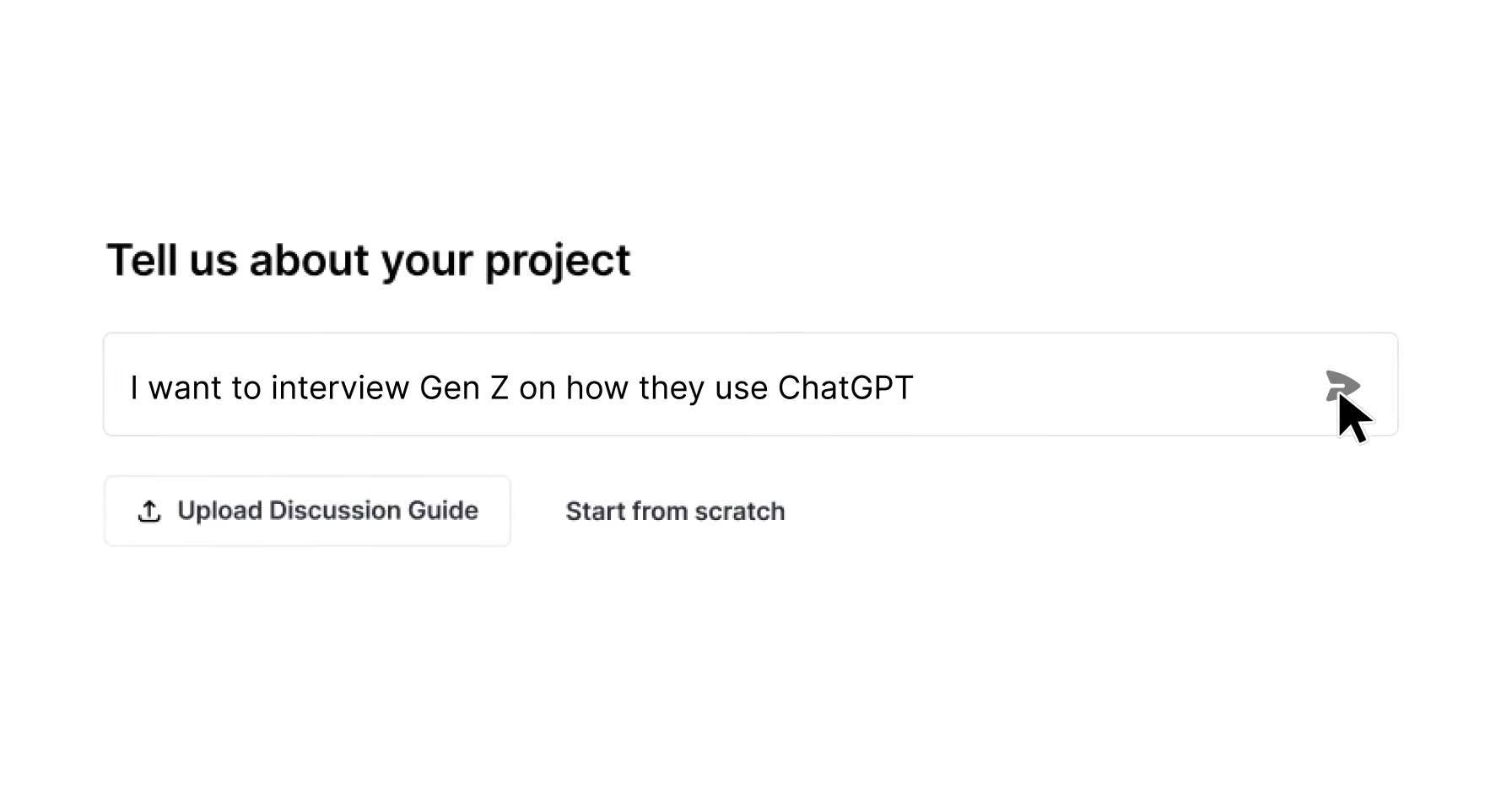
The key structural difference from other platforms in this list is the single, integrated instrument. Pulse combines quantitative tracking questions with AI-moderated, open-ended interviews in one experience. Core questions stay constant to protect the trend line. Timely add-on questions cover new campaigns, competitors, or news events while preserving historical comparability. Every number traces back to the interview, verbatim quote, and audio or video clip behind it.
One well-known clothing brand, famous for its big logos, was quietly losing customers. Its previous tracker caught the decline but offered no explanation. Pulse revealed that price was not the issue. Customers felt the big logos were too loud for their changing lifestyles, and that insight guided a shift in creative and product direction.
Pulse integrates with existing tracking infrastructure, including Qualtrics and Decipher, so teams keep the KPIs they already report while adding the narrative behind them. It can run alongside an existing tracker or serve as the primary system. The AI moderator generates responses three times longer than typical survey answers through intelligent probing, at a fraction of the cost and time of human-only interviewing. Customer outcomes reflect this depth and speed: Sweetgreen scaled research fivefold at one-third the cost, and Microsoft cut research wait time from weeks to hours. As the SVP of Data, Insights, and Loyalty at Skims put it, “I always struggled with understanding the why and Listen Labs nails this for me.”
See how Pulse attaches explanations to your next metric movement and compare it to your current tracker.
Matching Your Needs to the Right Alternative
The best platform depends on how your team uses brand data. This summary links common priorities to the tools above.
- Teams that need simple, cost-effective tracking with a clean dashboard often choose Tracksuit for challenger brands in covered markets.
- Teams that need historical benchmarks and daily data across thousands of brands typically favor YouGov BrandIndex for long-horizon trend analysis.
- Teams that want custom research flexibility and treat tracking as one of several research jobs often select Attest for its flat pricing and broad coverage.
- Teams that require advanced quantitative methods like MaxDiff and conjoint analysis on top of tracking lean toward Quantilope for methodological depth.
- Teams that need enterprise-grade brand equity measurement with global benchmarks and large budgets usually work with Kantar.
- Teams that want AI-driven insights with automated recommendations and minimal research overhead consider ProQuo AI.
- Teams that need to understand what changed and why, in customers’ own words, wave after wave, choose Listen Labs Pulse.
Survey tools cannot discover what you do not know to ask and have a low ceiling on depth of insight, which makes them better at detection than diagnosis. Listen Labs Pulse closes that detection–diagnosis gap within the same wave, without a separate qualitative project.
Risks and Limitations Across Platforms
A clear decision comes from understanding where each option falls short.
- Tracksuit lacks qualitative depth, weights on only three demographic variables, and has no coverage in Africa, the Middle East, or South Asia.
- YouGov BrandIndex uses a fixed 16-metric set, has thin per-brand-per-market sample cells, and relies on quote-based enterprise pricing. BrandIndex Voices remains an early-stage diagnostic layer.
- Attest and Quantilope require research expertise to design studies effectively, so they are not turnkey trackers for non-researchers.
- Kantar is costly and slow and operates as an agency engagement rather than a self-serve platform; a quarterly wave may take 4–8 weeks from fieldwork to final report.
- ProQuo AI has a less established market presence and may not match the depth of conversational probing delivered by human-quality AI moderation.
- Listen Labs Pulse is newer than Kantar or YouGov and often requires a mindset shift for teams used to purely quantitative trackers. Integrating open-ended conversation into tracking represents a methodological change as well as a software change.
Two misconceptions deserve attention. First, more data does not automatically lead to better insights. A useful test for choosing a brand tracking tool is whether it leaves you with a chart or with a decision. Volume of data differs from diagnostic clarity. Second, AI-moderated tools are often assumed to lack nuance compared with human moderators, yet Listen Labs’ AI moderator, as noted earlier, produces responses three times longer than average at a fraction of the cost of human-only moderation.
Decision Summary: Closing the Detection–Diagnosis Gap
Most brand trackers in this list report metric changes without fully explaining the drivers behind them. Quantilope moves toward diagnosis through advanced quantitative methods. YouGov extends in that direction with BrandIndex Voices. Both approaches still require separate study designs or add-ons that sit adjacent to the core tracker.
Listen Labs Pulse delivers metric changes and the reasons behind them in the same wave. The tracker keeps core questions stable to protect the trend line and runs open-ended conversation alongside them. Themes from those conversations are quantified and charted next to KPIs, and every number links back to a real moment with a real person.
The outcomes cited earlier, including Sweetgreen’s fivefold scale-up at lower cost and Microsoft’s reduced wait times, show how this approach changes decision speed. Teams that currently commission separate qualitative studies to explain quantitative movements can replace that second step with a single, integrated program.
Teams ready to connect every metric to its underlying story can get a demo tailored to their current tracking setup.
Frequently Asked Questions
What is the difference between Latana and Listen Labs Pulse?
Latana is a survey-based brand tracker that uses MRP modeling to report brand health metrics like awareness and consideration. Its closed-ended survey methodology reports what changed but does not provide open-ended diagnosis. Predefined attribute lists can show that an association like “innovative” increased, yet they cannot reveal new associations consumers create on their own. Listen Labs Pulse runs similar quantitative tracking questions and adds AI-moderated, open-ended interviews to every wave. Each metric movement arrives with customer verbatims, themes, and emotional context, so teams keep familiar KPIs and gain the explanation behind every number without a separate qualitative study.
Can Listen Labs Pulse integrate with our existing tracker?
Yes. Pulse integrates with existing tracking infrastructure, including Qualtrics and Decipher. Teams can keep the KPIs they already report while adding the narrative behind them. Pulse can run alongside an existing tracker or replace it as the primary system, depending on the current setup and research design. This flexibility removes the need for a sudden rip-and-replace decision and lets teams add the “why” while preserving existing trend lines.
How does Listen Labs Pulse explain metric movements?
Pulse runs a consistent, wave-over-wave study with stable screeners and tracking questions. It then quantifies themes from open-ended conversations and charts those themes alongside KPIs, as described earlier. The system flags emerging topics in customer conversations before they appear as declines in tracked metrics, so teams can diagnose shifts while they form. Every number links back to the original interview, quote, and clip, which lets stakeholders drill into any movement and hear the explanation in the customer’s own words.
Is Listen Labs Pulse suitable for small brands?
Yes. Listen Labs serves enterprises such as Microsoft, Google, and P&G, and the platform also supports self-recruitment from a brand’s own user base at reduced cost. Companies with fewer than 100 employees can use the self-serve platform. Growing brands gain access to the same diagnostic depth and can understand why metrics move, not just how they move. AI moderation enables hundreds or thousands of interviews in parallel, and enterprises typically run more studies at roughly a third of the cost of traditional research.
What makes Listen Labs Pulse different from adding open-ended questions to a standard survey tracker?
Standard survey trackers with open-ended text fields collect unstructured responses that require manual coding and interpretation. That process is slow, expensive, and vulnerable to confirmation bias. Listen Labs Pulse uses AI-moderated interviews, so the AI probes deeper on short or interesting answers in the way a trained human interviewer would. The analysis engine then processes all responses objectively, identifies patterns and themes across hundreds of conversations, quantifies each theme, and charts it alongside quantitative KPIs automatically, wave after wave. Teams receive a structured, quantified, traceable diagnostic layer instead of a pile of raw text.