
Written by: Anish Rao, Head of Growth, Listen Labs | Last updated: June 24, 2026
Key Takeaways
- Qualitative research mistakes such as leading questions, weak sampling, and ignoring saturation distort findings and waste resources across the entire study lifecycle.
- Systematic prevention steps, including neutral question audits, formal inclusion criteria, running codebooks, and reflexivity journals, help teams maintain rigor at every stage.
- Overgeneralization, lack of triangulation, and superficial analysis undermine the strategic value of insights and require explicit scoping plus multi-source validation.
- AI-powered platforms automate error detection, standardize probes, track saturation, and capture emotional signals to deliver consultant-quality results in hours instead of weeks.
- Listen Labs helps teams eliminate these common mistakes at scale, book a demo to see how.
Quick Reference: 10 Mistakes and One-Line Fixes
Use this section as a fast diagnostic checklist before you launch a study or when you review an existing project for risk.
1. Leading or double-barreled questions, Use neutral, single-focus questions reviewed by a second researcher before launch.
2. Weak or unjustified sampling, Define inclusion criteria and sampling rationale in writing before recruitment begins.
3. Ignoring or misjudging data saturation, Track theme recurrence systematically and stop collection only when new codes cease to emerge.
4. Researcher bias and lack of reflexivity, Maintain a reflexivity log and use standardized probes across all interviews.
5. Superficial thematic analysis, Move beyond frequency counts to examine relationships, contradictions, and latent meaning.
6. Poor documentation and audit trails, Record all methodological decisions in a timestamped research log from day one.
7. Overgeneralization from small samples, Scope claims to the sample studied and flag findings that require quantitative validation.
8. Failure to triangulate data sources, Combine at least two data types, interview, observation, or secondary data, before drawing conclusions.
9. Inadequate participant screening for quality, Use behavioral and intent-based screening criteria, not self-reported demographics alone.
10. Not separating what people say from what they feel, Capture nonverbal and tonal signals alongside verbal responses to surface emotional truth.
1. Leading or Double-Barreled Questions
Leading and double-barreled questions push participants toward specific answers and blur what their responses actually mean. A leading question steers participants toward a preferred answer, while a double-barreled question asks two things at once and makes responses hard to interpret. For example, the question “Do you find our new feature both useful and easy to use?” presupposes approval and mixes two separate ideas. Prevention steps include: (1) write every question in neutral language and test it with a colleague who is blind to the study hypothesis, so wording does not hint at a preferred answer; (2) limit each question to a single concept so responses stay clear and analyzable; (3) conduct a pre-launch question audit against a standardized checklist to catch issues individual reviewers might miss.

2. Weak or Unjustified Sampling
Even perfectly neutral questions fail when you ask them to the wrong people. Sampling is weak when the selection of participants is not explicitly tied to the research question, which leaves the study open to challenges about relevance and fit. A team studying premium skincare buyers that recruits general-population respondents will generate findings that do not transfer to the target segment. Prevention steps include: (1) write formal inclusion and exclusion criteria before opening recruitment so every recruiter works from the same rules; (2) document the sampling strategy, such as purposive, maximum variation, or snowball, and justify the choice in the research protocol; (3) use behavioral and intent-based matching rather than self-reported demographics alone, which reduces misrepresentation and panel noise.
3. Ignoring or Misjudging Data Saturation
Data saturation marks the point where additional interviews stop adding new themes or codes, so misjudging it either weakens rigor or wastes budget. Stopping too early leaves important variation undiscovered, while continuing indefinitely consumes time without improving insight quality. Prevention steps include: (1) build a running codebook from the first interview and update it after each session to create a clear baseline for comparison; (2) track the rate at which new codes emerge across successive interviews so you can see when that rate approaches zero; (3) apply a formal saturation criterion, such as zero new codes across three consecutive interviews, to make the stopping decision explicit rather than intuitive.
Confirming that saturation has been reached works best through structured review instead of guesswork. Saturation is confirmed when a systematic review of the most recent interviews produces no codes that are absent from the existing codebook. A secondary check is to re-read the earliest transcripts after you believe saturation has occurred and confirm that they do not introduce new themes. AI analysis platforms can support this process by tracking incremental theme emergence and flagging when it drops below a defined threshold.
4. Researcher Bias and Lack of Reflexivity
Researcher bias shapes both how questions are asked and how answers are interpreted, which quietly distorts findings. Bias often appears when a moderator has strong expectations about outcomes or emotional investment in a specific result. Reflexivity, the practice of examining one’s own influence on the research, provides a structured counterweight. Prevention steps include: (1) maintain a reflexivity journal that documents assumptions before and after each interview, which surfaces shifts in perspective over time; (2) use standardized probe sets so follow-up questions do not change based on whether an answer supports or challenges the hypothesis; (3) involve a second analyst in at least a portion of the coding to establish inter-rater reliability and expose blind spots.
See how Listen Labs standardizes probes and removes moderator bias at scale
5. Superficial Thematic Analysis That Stops at Counts
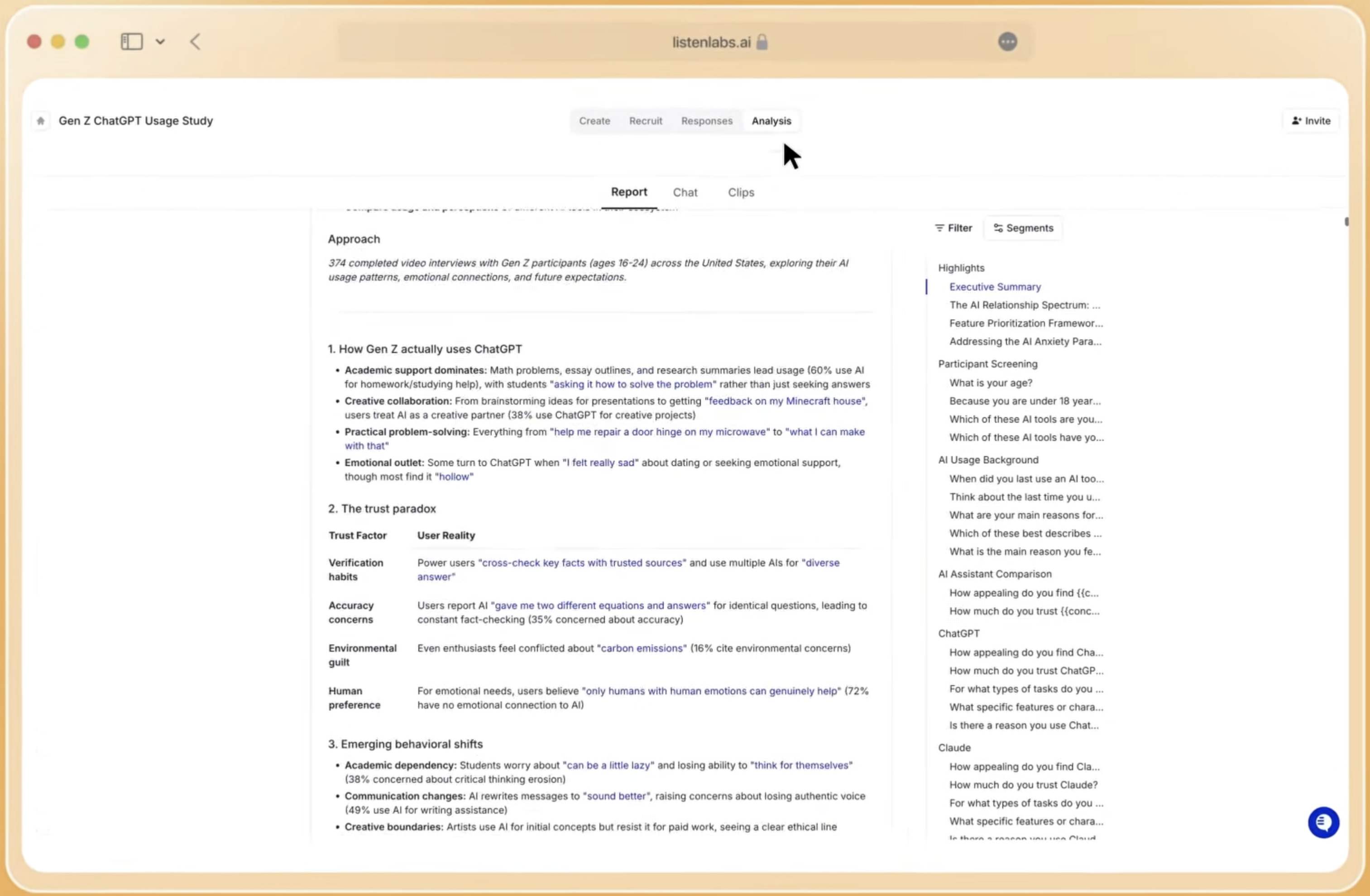
Superficial analysis focuses on how often topics appear and ignores why they matter or how they connect, which limits strategic value. This approach produces reports filled with tallies that describe conversation topics but do not explain behavior or decision drivers. Prevention steps include: (1) distinguish between semantic themes, which reflect what participants explicitly say, and latent themes, which capture underlying assumptions and motivations; (2) actively search for disconfirming cases that challenge the dominant pattern and refine your interpretation; (3) map relationships between themes instead of treating them as isolated categories, so you can show how one idea influences another. AI analysis engines can assist by processing all interviews at once and surfacing cross-theme relationships and outliers that human analysts might overlook when working sequentially.
6. Poor Documentation and Missing Audit Trails
Strong qualitative studies leave a clear record of how every major decision was made, which protects credibility with stakeholders. An audit trail is the documented record of methodological choices such as sampling rationale, question revisions, analytical approaches, and interpretive memos. Without this trail, findings are hard to evaluate, replicate, or defend. Prevention steps include: (1) open a timestamped research log on day one and update it after every significant decision so you can reconstruct the study later; (2) version-control the discussion guide so any changes remain traceable over time; (3) store raw data, codebooks, and analytical memos in a single accessible repository to avoid fragmentation. Platforms that include version control and study cloning help create this audit trail automatically.
7. Overgeneralization from Small Qualitative Samples
Qualitative research excels at depth, yet teams often treat insights from a handful of interviews as universal truths about entire markets. This overreach creates misalignment between what the data can support and the decisions it informs. Prevention steps include: (1) scope all claims explicitly to the sample, such as “among the 12 participants interviewed,” rather than “customers believe”; (2) flag findings with major strategic implications for quantitative validation before large-scale action; (3) increase sample size when objectives include pattern detection across subgroups, such as segments or regions. Larger samples, including hundreds of AI-moderated interviews, can support more confident pattern recognition while still preserving qualitative richness.
8. Weak Triangulation Across Methods and Data Sources
Triangulation strengthens findings by checking them against multiple perspectives instead of relying on a single data stream. Studies that depend only on interview transcripts cannot easily separate genuine patterns from artifacts of the method or sample. Prevention steps include: (1) pair interview data with at least one additional source, such as behavioral analytics, observational notes, or secondary research; (2) use methodological triangulation by combining open-ended questions with quantitative scales within the same study, which links narrative depth to measurable patterns; (3) conduct analyst triangulation by having independent reviewers code a shared subset of data and compare interpretations. Mixed-methods platforms that combine qualitative responses with Likert scales, NPS, and MaxDiff in one instrument make triangulation part of the initial design.
9. Inadequate Participant Screening and Quality Controls
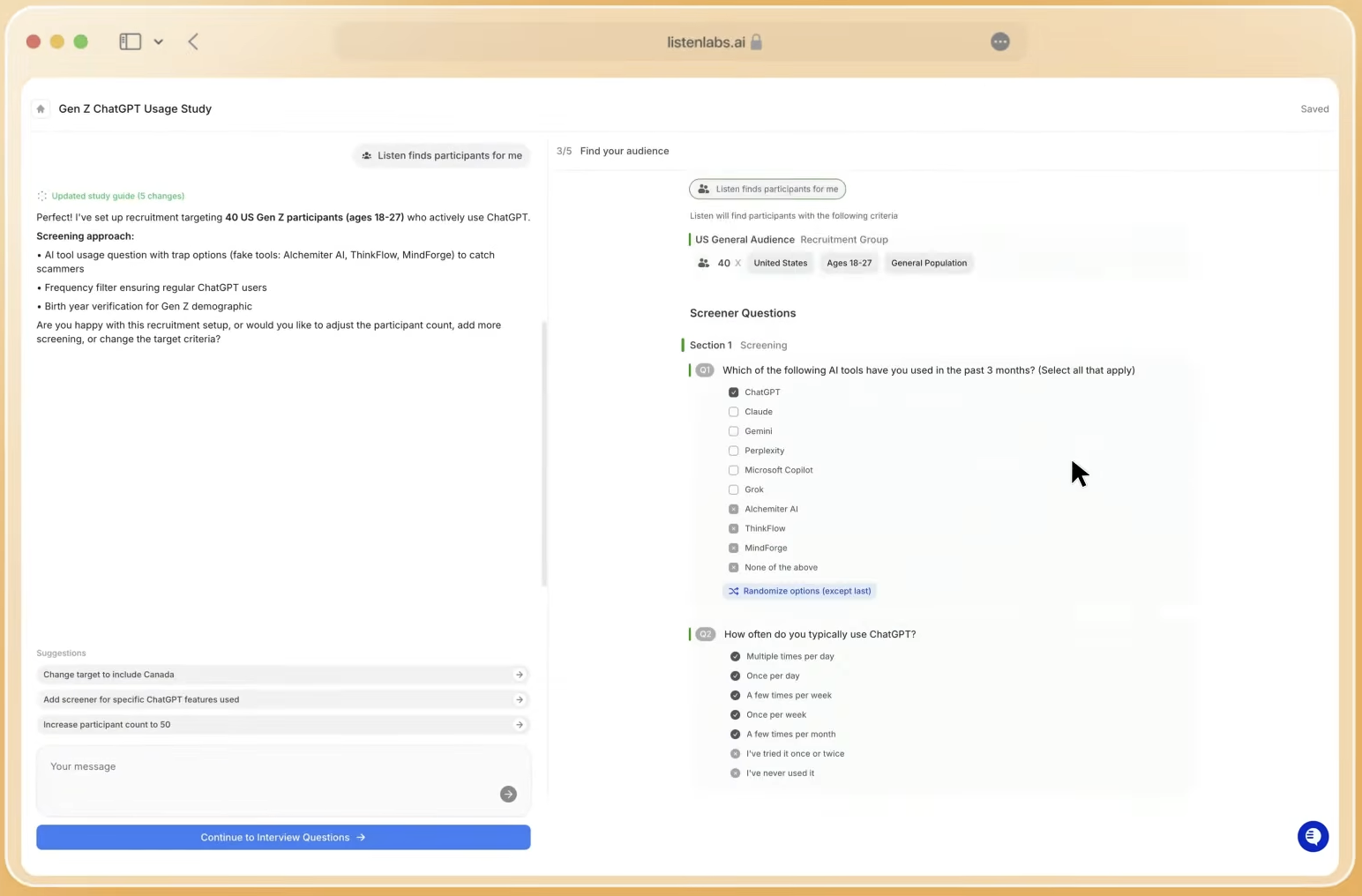
Participant quality sets the ceiling for insight quality, so weak screening quietly undermines entire projects. Low-quality participants, such as professional survey-takers, mismatched profiles, or purely incentive-driven respondents, corrupt the data before the first question is answered. These failures are expensive because they often remain invisible until late in the process. Prevention steps include: (1) replace or supplement self-reported screener questions with behavioral and intent-based criteria that are harder to fake; (2) implement real-time quality monitoring during data collection to flag low-effort, scripted, or inconsistent responses; (3) cap participant frequency across studies to reduce panel fatigue and limit professional respondents. Purpose-built recruitment infrastructure with reputation scoring and fraud detection can support these safeguards and reduce reliance on manual cleaning.
10. Not Separating What People Say from What They Feel
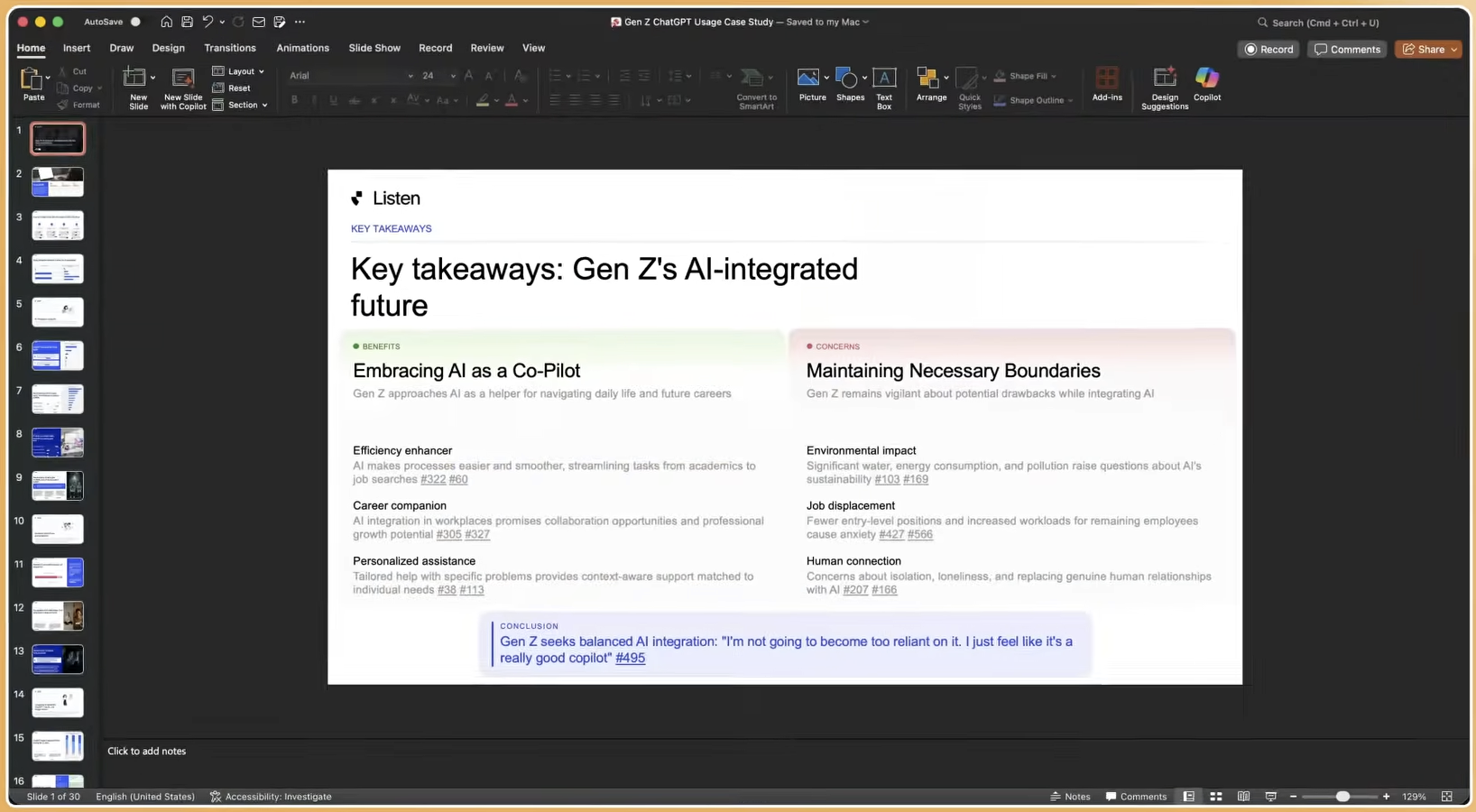
Participants often say one thing while their tone, pace, or expressions tell a different story, so relying on words alone hides emotional truth. Verbal responses capture conscious, socially acceptable answers, while emotional responses, expressed through micro-expressions, vocal tone, and hesitation, often reveal deeper reactions. A participant may rate a concept positively while showing visible confusion or discomfort. Prevention steps include: (1) record video interviews rather than audio-only sessions so nonverbal signals remain available for review; (2) train analysts to examine facial expression and vocal tone alongside transcript content when interpreting responses; (3) use emotion-detection frameworks grounded in validated psychological models to quantify affective responses at the question level. Multimodal emotion analysis platforms built on frameworks such as Ekman’s universal emotions model can help surface gaps between stated and felt responses, with every label linked to a specific timestamp and quote.
How AI Research Platforms Reduce These Mistakes
AI research platforms provide a single layer of quality control that touches design, recruitment, moderation, analysis, and reporting. At the design stage, automated study checks flag leading questions, double-barreled items, and structural issues before launch. During recruitment, behavioral matching and real-time quality monitoring help enforce sampling criteria and detect fraud, low-effort responses, and mismatched profiles as interviews occur. Standardized probe logic then keeps follow-up questions consistent across participants, which reduces moderator-driven bias. Automated saturation tracking monitors theme emergence across interviews and alerts researchers when incremental new codes drop below a defined threshold. Multimodal emotion analysis captures tone of voice, word choice, and facial micro-expressions together, which helps separate what participants say from what they feel. Combined, these capabilities compress a process that once took four to six weeks into one that can deliver consultant-quality results in under 24 hours.
Conclusion: Turning Common Errors into a Repeatable System
Teams can prevent common qualitative research mistakes by treating quality checks as a repeatable system rather than one-off fixes. The ten errors covered here, from leading questions and weak sampling to overgeneralization and emotional blind spots, each have clear, documented remedies. Modern AI-powered research platforms operationalize those remedies at scale, so methodological rigor becomes the default instead of an exception that depends on individual experts. Teams that adopt this infrastructure reduce trade-offs between speed, quality, and depth and create a more reliable foundation for strategic decisions.
Ready to eliminate these mistakes from your next study? See Listen Labs in action
Frequently Asked Questions
What is the most damaging qualitative research mistake in enterprise settings?
Inadequate participant screening often causes the most downstream damage in enterprise research because it weakens the data before analysis begins. When participants do not genuinely match the target profile, due to screener fraud, panel fatigue, or incentive-driven behavior, every subsequent finding rests on unreliable input. Teams may invest weeks in analysis and reporting only to discover that the sample did not represent the intended audience. Behavioral and intent-based matching, combined with real-time quality monitoring during interviews, provides the strongest structural defense against this failure mode.
How many interviews are needed to reach data saturation in qualitative research?
No single interview count guarantees saturation across all studies, so context and tracking matter more than fixed targets. Saturation depends on the complexity of the research question, the homogeneity of the target population, and the depth of each interview. Studies focused on a narrow, homogeneous segment may reach saturation in 12 to 15 interviews, while multi-segment or multi-region studies may require far more. The reliable approach is to track theme emergence from the first interview and apply a formal stopping rule, such as zero new codes across three consecutive sessions. AI platforms that automate codebook tracking and flag saturation thresholds make this process more objective and auditable.
How does researcher bias affect qualitative findings, and what is the most practical way to control it?
Researcher bias influences both the questions asked and the meaning assigned to answers, which can tilt findings toward expected outcomes. During moderation, expectations shape how follow-up questions are framed and which areas receive extra probing. During analysis, confirmation bias leads analysts to give more weight to evidence that supports the hypothesis and discount contradictory cases. Practical controls include standardized probe sets that keep follow-up logic consistent, analyst triangulation where a second reviewer independently codes a subset of data, and a reflexivity log that records assumptions before and after each interview. AI-moderated interviews further reduce moderator-stage bias by applying identical probe logic across every session.
What is the difference between superficial and rigorous thematic analysis?
Superficial thematic analysis identifies topics by frequency and stops at statements such as “price was mentioned by eight of twelve participants.” Rigorous thematic analysis goes further by examining why price is salient, how it relates to themes like trust or perceived quality, and what contradictions appear between participants who discuss it positively versus negatively. Rigorous work also searches for disconfirming cases that do not fit the dominant pattern and uses them to refine or challenge emerging explanations. In practice, superficial analysis produces a list of topics, while rigorous analysis produces an explanatory account of behavior that can guide concrete strategic decisions.
Can qualitative research be scaled without sacrificing methodological rigor?
Qualitative research can scale effectively when infrastructure supports consistent moderation, quality checks, and analysis. The traditional constraint on scale is human moderation, since a skilled researcher can conduct only a limited number of interviews per day and quality drops with fatigue. AI-moderated interviews remove this constraint by running hundreds of parallel conversations, each with adaptive follow-up logic similar to a trained moderator. Rigor is maintained through standardized probe sets, automated quality monitoring, and analysis engines that process all responses against a consistent framework. As a result, teams can run studies with sample sizes large enough for subgroup analysis and pattern detection while preserving the conversational depth that defines qualitative methods.