
Written by: Anish Rao, Head of Growth, Listen Labs
Key Takeaways
- Brand awareness underpins the entire customer journey, and declining awareness shows up in measurable signals months before revenue changes.
- Early warning signs include falling branded search volume, shrinking share of voice, and declining unaided recall in surveys, often 3–12 months before sales drop.
- Diagnostic clarity matters: high aided awareness with low unaided recall signals a salience problem, while stable awareness with falling consideration points to positioning.
- Late-stage indicators such as rising customer acquisition costs, heavier discounting, and quiet churn confirm that awareness erosion already affects the business.
- Diagnostic interviews can distinguish awareness decline from consideration and preference problems, revealing the qualitative “why” behind the numbers.
Is It Really Brand Awareness? Get Diagnostic Clarity First
Confirming that the problem is awareness-specific prevents wasted spend on the wrong fix. Many brand health issues get mislabeled as awareness problems.
Brand awareness vs. brand health: Brand awareness measures whether people know you exist. Brand health includes awareness, consideration, preference, reputation, and loyalty. A brand can have high awareness but declining sales, which signals a preference or reputation issue rather than an awareness gap.
Use three quick diagnostic checks:
- Prompted recognition: If aided awareness is high (60%+), people know you exist. The issue may sit lower in the funnel.
- Unprompted recall: If aided awareness is high but unaided recall is low, you face a salience problem. People know you but do not think of you at decision time.
- Choice among those who know you: If awareness is stable while consideration or preference drops, the problem lies in positioning, relevance, or reputation.
Spending to increase awareness when the real gap is in consideration is the most common and most expensive brand research mistake. A brand with 70% aided awareness but only 25% consideration needs a positioning fix, not more awareness spend. This guide focuses on diagnosing awareness decline within the broader brand health picture.
Once you confirm that the issue is awareness-specific, the next step is knowing which signals to watch and how early they appear.
The 12 Signs of Declining Brand Awareness
The 12 signs below fall into two groups. Some act as early warning signals that appear months before revenue impact. Others confirm that awareness erosion already affects acquisition cost, pricing power, and retention.
-
Declining Direct Traffic Share
What to look for: Fewer people type your URL directly into their browser or visit your site without a referral source.
How to verify: In Google Analytics (GA4), track the Direct channel’s share of total sessions over 6–12 months. A consistent downward trend across several months is a red flag.
Why it matters: Direct traffic is one of the closest behavioral proxies for brand recall, because nobody types a URL they cannot remember. When direct traffic falls, customers are losing the habit of checking your site, which signals weaker mental availability.
Falling Branded Search Volume
What to look for: Fewer searches for your brand name or branded product terms on Google.
How to verify: Google Search Console shows branded query volume over time. Google Trends reveals relative interest. A 10–20% year-over-year decline in branded searches is a significant early warning sign and often earns the label “canary in the brand health coal mine.”
Why it matters: A 10% increase in branded search predicts 5–8% revenue growth, and the reverse pattern also appears in the data. Branded traffic converts at 5.8x the rate of non-branded traffic, so every lost branded search carries outsized revenue impact.
Plummeting Social Engagement Rates
What to look for: Fewer likes, comments, shares, and saves per post while reach stays relatively stable.
How to verify: Social media insights tools such as Meta Business Suite, LinkedIn Analytics, and TikTok Analytics show engagement rate (engagements ÷ impressions). A declining rate over 3–6 months signals weakening brand resonance.
Why it matters: 71% of consumers are more likely to buy from brands they recognize on social media. Engagement drops often precede awareness drops, because people who do not engage rarely build strong memories of your brand.
Shrinking Share of Voice in Social Conversations
What to look for: Your brand’s mentions decline relative to competitors in your category.
How to verify: Social listening tools such as Brandwatch, Sprout Social, and Meltwater calculate share of voice as your brand mentions divided by total category mentions. A declining share of voice means competitors increasingly dominate the conversation.
Why it matters: Brands that consistently hold higher share of voice than their market share tend to grow that share over time, and the reverse pattern also appears. Losing share of voice today often predicts losing market share tomorrow.
Declining Share of Search
What to look for: Your brand’s share of total category searches shrinks relative to competitors.
How to verify: Google Trends allows comparison of your brand against competitors for category-level keywords. Share of search correlates with market share at r=0.86 across FMCG categories.
Why it matters: The Google/Tracksuit “Return on Awareness” study found that for brands with approximately 30% awareness, each five-point increase in awareness generated roughly a five-point increase in share of search. Changes in share of search often precede shifts in market share by six to twelve months. In the AI era, this effect intensifies, because Google AI Overviews mention well-known brands 2.3x more often than unknown brands.
Dropping Branded Keyword Click-Through Rate
What to look for: When your brand appears in search results, a smaller share of people click.
How to verify: Google Search Console shows CTR for branded queries. A declining CTR suggests your brand’s search presence is losing relevance or appeal.
Why it matters: A falling branded CTR can indicate weaker SERP appearance, reviews, or reputation. Because branded searches convert at that same 5.8x rate, losing those clicks has an outsized impact on revenue efficiency.
Rising Customer Acquisition Cost
What to look for: You spend more to acquire each new customer, even when media costs and competitive intensity remain stable.
How to verify: Calculate CAC (total marketing spend ÷ new customers) quarterly. If CAC rises while other factors stay steady, your brand’s pull is weakening.
Why it matters: Companies in the top 10% for brand awareness have 3.1x lower customer acquisition costs than the market average. Rising CAC signals that organic attraction has weakened, and by this stage awareness erosion has usually been building for months.
Increased Reliance on Discounts and Promotions
What to look for: You need heavier promotions to drive sales, and customers respond mainly to price.
How to verify: Track the percentage of sales with a discount or promotion over time. A steady climb suggests a weaker value proposition.
Why it matters: Consumers pay an average of 23% more for products from brands they know and trust. When discount dependence grows, awareness and perceived value have already slipped, and pricing power suffers.
Competitors Gaining Share of Voice in Your Category
What to look for: New or existing competitors dominate conversations, media coverage, and search results in your category.
How to verify: Use ad intelligence platforms and social listening to track competitor share of voice. When a competitor’s share of voice grows while yours stays flat or declines, they build awareness at your expense.
Why it matters: 68% of AI assistants mention well-known brands in their recommendations, which makes awareness a direct visibility factor in AI-era discovery. Competitors that win the awareness battle also win AI recommendations.
Falling Unaided Awareness in Brand Tracking Surveys
What to look for: Fewer people name your brand unprompted when asked about your category.
How to verify: Brand tracking surveys (quarterly or continuous) measure unaided recall. With 400 respondents, a 5–7 point change is typically statistically significant, and two consecutive waves showing the same trend provide stronger evidence than a single-wave spike.
Why it matters: Top-of-mind awareness drives 5x more sales than spontaneous awareness, while aided awareness has the least commercial value. When unaided recall declines, your brand loses top-of-mind status and purchase probability falls, especially in low-involvement categories.
Widening Gap Between Aided and Unaided Awareness
What to look for: People recognize your brand when prompted, yet fewer mention you unprompted.
How to verify: Brand tracking surveys measure both metrics. A growing gap between high aided and low unaided awareness indicates a salience problem.
Why it matters: A brand with high aided but low unaided awareness exists in the market but has not earned mental availability, so it faces a penetration problem and a weaker presence in buying moments. The gap represents lost consideration exactly when purchase decisions occur.
Quiet Customer Churn Without Feedback
What to look for: Customers drift away or buy less often without complaints or formal feedback.
How to verify: Track repeat purchase rate and retention metrics in your analytics or CRM. A declining repeat purchase rate below 30–40% for DTC brands signals weakening loyalty.
Why it matters: Customers who churn quietly often do so because your brand slips out of their consideration set. Consumer perceptions often change before purchasing behavior changes, and early warning signals are visible months before business performance is affected. Quiet churn reveals awareness erosion among your most valuable audience.
Early Warning Signs vs. Late-Stage Signs
Not all signs carry the same urgency. Knowing which are leading indicators and which are lagging indicators helps you prioritize your response. The diagnostic chain is clear: a dip in unaided awareness today predicts a consideration gap in one to two quarters, which predicts a pipeline gap two quarters after that.
Early warning signs (leading indicators) typically appear 3–12 months before revenue impact:
- Declining branded search volume
- Shrinking share of search relative to competitors
- Falling share of voice in social conversations
- Widening gap between aided and unaided awareness
- Declining unaided recall in brand tracking surveys
Late-stage signs (lagging indicators) appear after awareness erosion has already affected the business:
- Rising customer acquisition cost
- Increased reliance on discounts and promotions
- Quiet customer churn
- Declining direct traffic share
A declining brand rarely announces itself with a sudden revenue drop. It shows up as gradually rising acquisition costs, slowly declining conversion rates, and steadily shrinking organic traffic that often gets misattributed to algorithm changes or market shifts instead of eroding brand health. The most affordable intervention window sits in those early months, before lagging indicators confirm the damage.
Quick Diagnostic Checklist
Use this checklist to quickly assess your brand’s awareness health. If you check three or more boxes, investigate further.
- Branded search volume has declined 10%+ year-over-year
- Direct traffic share has fallen for 3+ consecutive months
- Social engagement rate is down for 3+ months
- Share of voice in social conversations is shrinking
- Share of search is declining relative to key competitors
- Customer acquisition cost is rising without media cost changes
- Discount and promotion reliance is increasing
- Unaided awareness has dropped in the last two survey waves
- Aided awareness is stable but unaided recall is falling
- Repeat purchase rate is declining
- Competitors are gaining share of voice in your category
- Branded keyword CTR is dropping in search results
Next Steps: Find the Why Behind the Decline
Identifying the signs of declining brand awareness is the first step, and the harder question is why it is happening. Traditional brand trackers can show that a number moved, but not why it moved. Surveys add structure without depth, and by the time a traditional qualitative study is commissioned to fill that gap, 4–6 weeks have passed and the market has moved on.
Listen Labs solves this speed and depth problem. The end-to-end AI research platform sources the right participants from a 50M+ network and conducts, analyzes, and summarizes thousands of in-depth customer interviews in hours, not weeks. Instead of waiting for a research agency, you can launch a diagnostic study today and see results in less than 24 hours at roughly one third of traditional research cost.
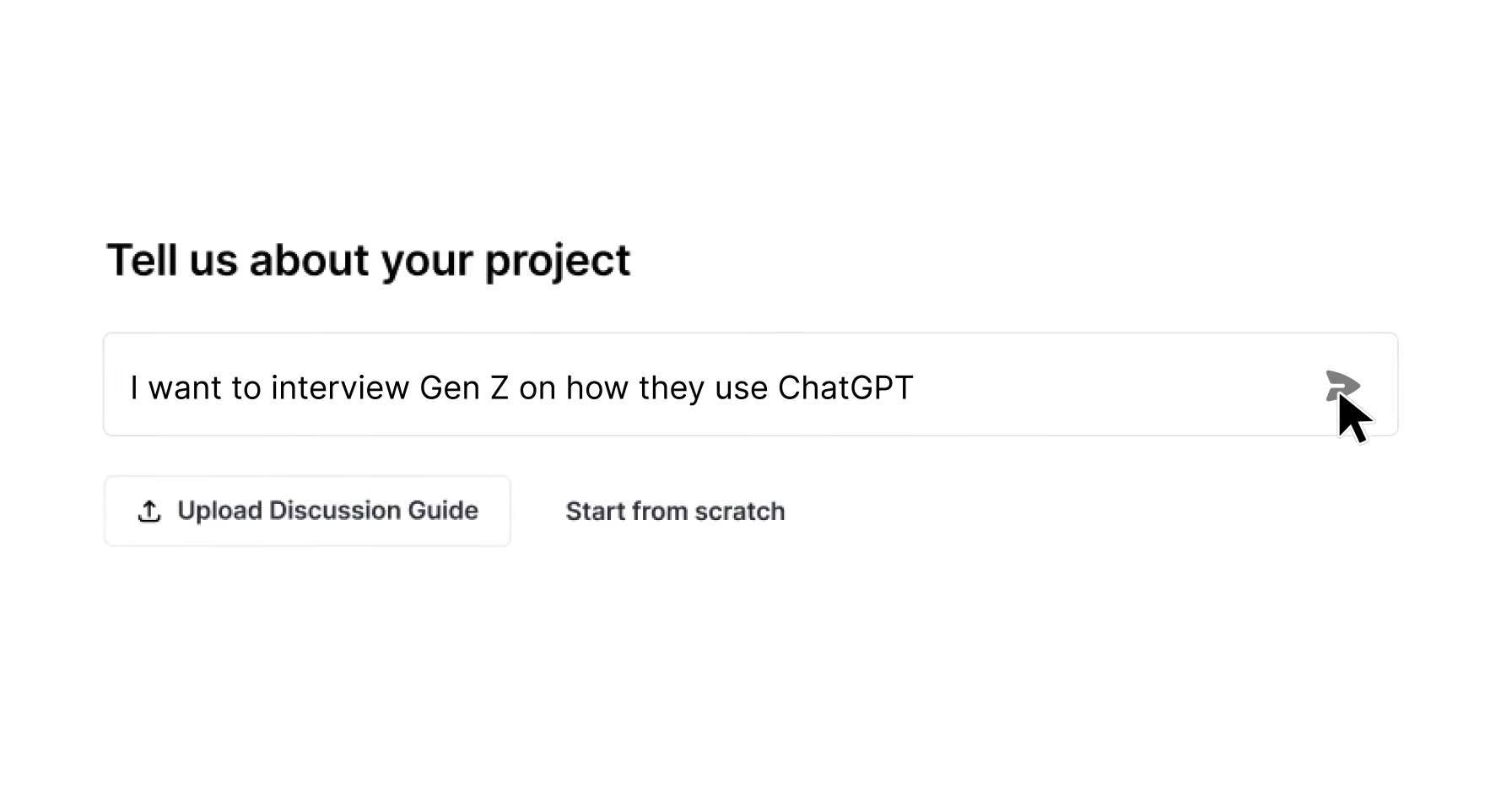
Our AI helps you go from idea to implemented discussion guide in seconds. Listen Labs helps diagnose awareness decline through several capabilities:
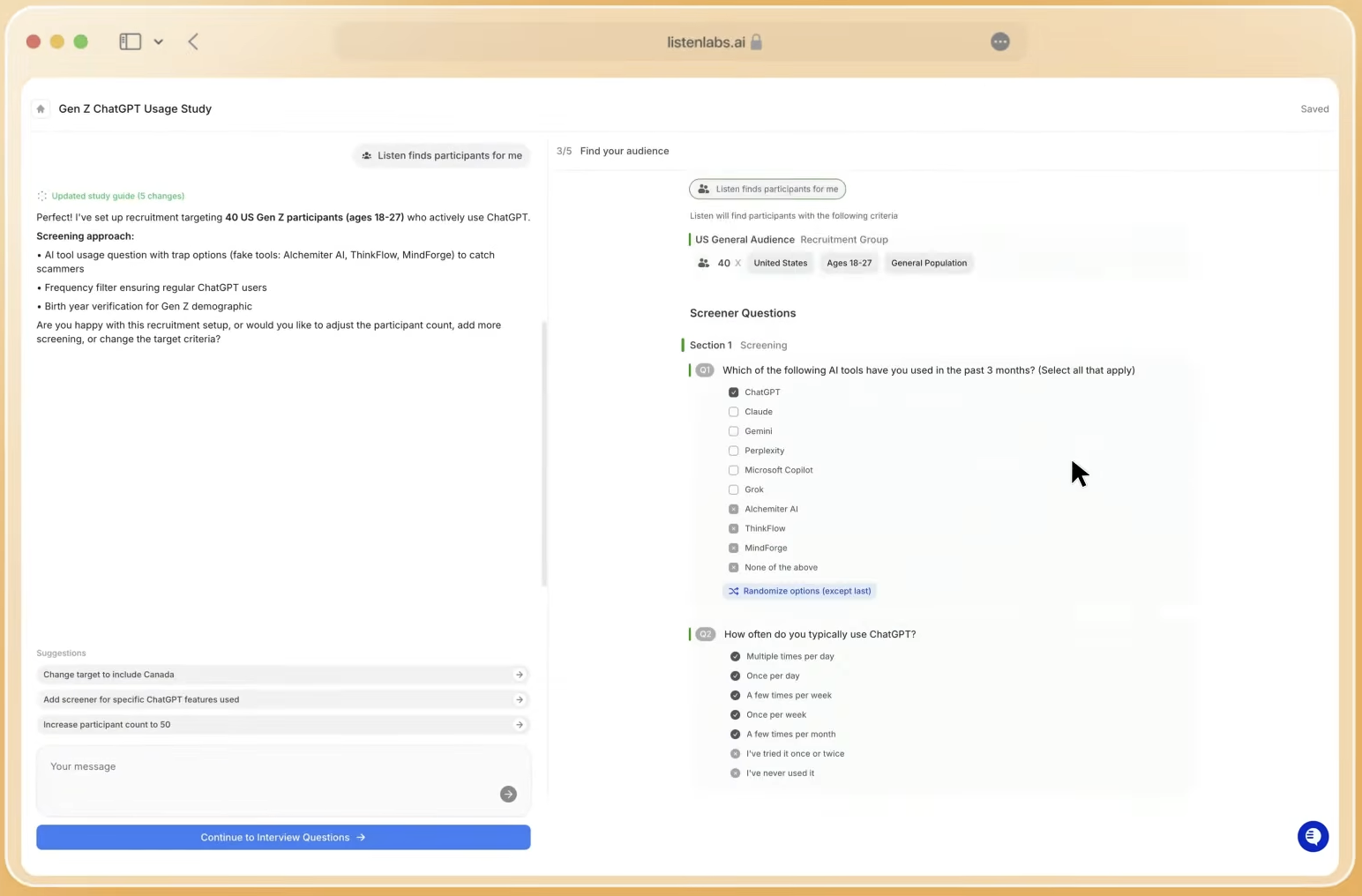
Listen Labs finds participants and helps build screener questions - AI-moderated interviews that run natural, adaptive conversations with customers, probing why they do or do not think of your brand, what triggers recall, and which competitors replace you in their minds.
- Qual-at-scale that delivers the statistical confidence of large samples with the rich, detailed insights of one-on-one conversations.
- Emotional Intelligence that analyzes tone of voice, word choice, and micro-expressions to surface how customers feel about your brand, beyond the literal words they use.
- Listen Pulse, a conversational tracker that runs the same study wave after wave, understands open-ended answers, sorts them into themes, and charts each theme next to the KPIs you already report, so you see which trends are forming, why the numbers move, and what is coming next.
Sweetgreen used Listen Labs to scale consumer research across 300+ US locations at 5x the previous scale and one-third the cost, replacing months-long research cycles with days. Simple Modern gained 4x larger sample sizes with deeper context behind the numbers. Their CMO summarized the impact: “Numbers tell you what coffee snobs buy. Listen Labs tells you why.”
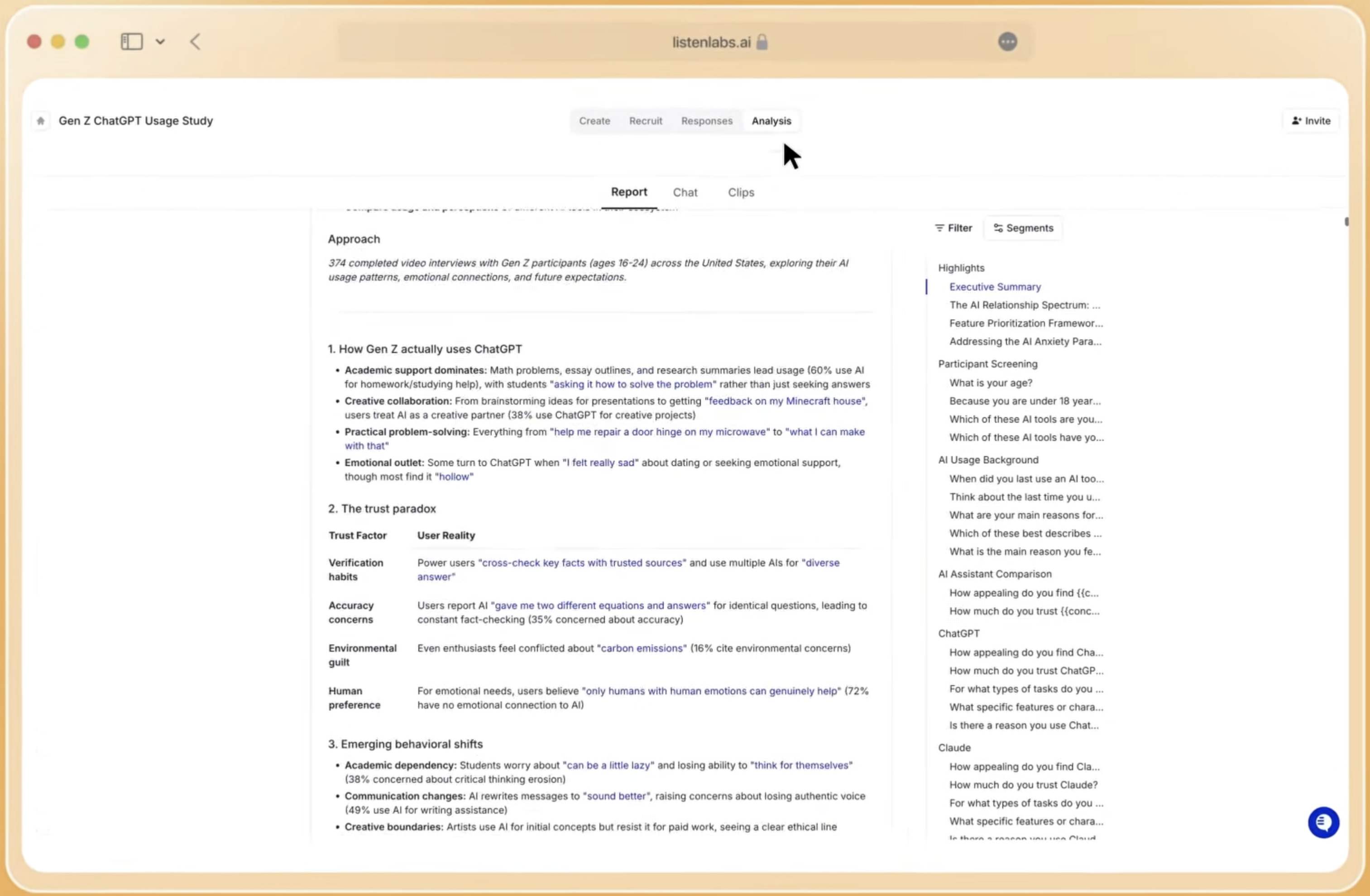
Listen Labs auto-generates research reports in under a minute When you need to understand why awareness is declining, whether due to shifting customer perceptions, a competitor’s disruptive positioning, or a change in cultural relevance, Listen Labs delivers the answer in customers’ own words with enough speed and scale to act before the decline deepens.
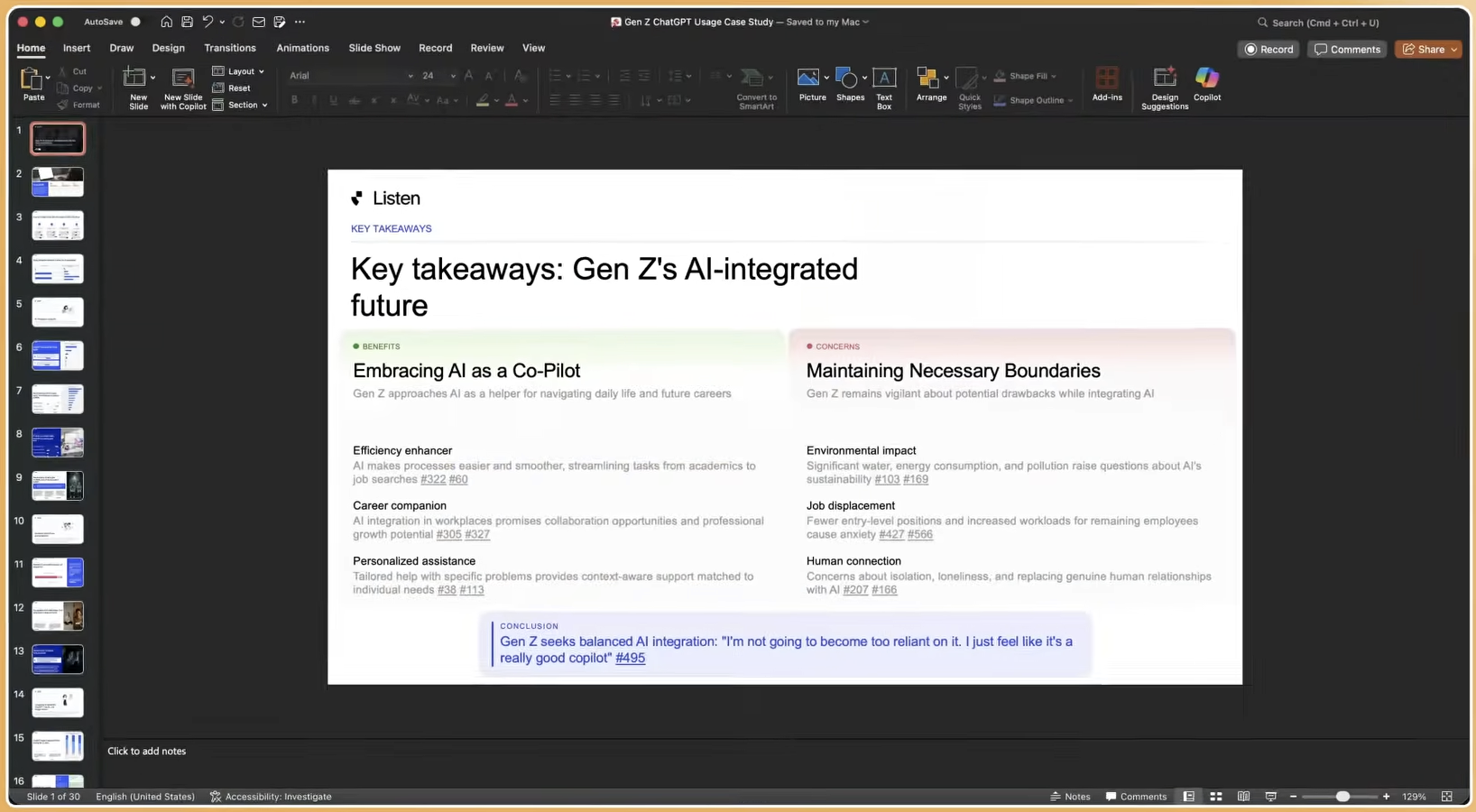
Listen Labs' Research Agent quickly generates consultant-quality PowerPoint slide decks Run a diagnostic study in under 24 hours and see Listen Labs in action: https://listenlabs.com/book-my-demo.
Conclusion: Act Before Awareness Erosion Hits Revenue
Declining awareness accumulates quietly in rising acquisition costs and shrinking organic traffic long before a dramatic revenue drop appears. The most effective response starts when early indicators first move, not when sales reports confirm the problem.
The good news is that early intervention works. Müller Corner reversed declining household penetration through a nostalgia-driven platform that reconnected with lapsed customers, exceeding sales targets by 61% and lifting top-of-mind mentions by 6%. Adidas rose from #16 to #2 in RepTrak’s 2026 global reputation ranking by shifting from a “me” to a “we” strategy that invited broad stakeholder participation and earned media amplification. In each case, the brand listened to customers and understood the why behind the decline before committing to a fix.
Use the checklist in this guide to assess your brand’s awareness health now. If you see early warning signs, start a diagnostic conversation with your customers before lagging indicators lock in the damage.
Ready to stop guessing at the cause of your awareness decline? Talk to Listen Labs about your brand’s awareness health: https://listenlabs.com/book-my-demo.
Frequently Asked Questions
What is the difference between brand awareness decline and other brand health problems?
Brand awareness measures whether people know your brand exists. Brand health covers awareness, consideration, preference, reputation, and loyalty. A brand can show high awareness and still experience declining sales, which points to a preference or reputation issue rather than an awareness gap. The diagnostic test is straightforward. If aided awareness (recognition when prompted) is high but unaided recall (naming the brand without prompting) is low, you face a salience problem. If both awareness metrics stay stable while consideration or preference drops, the issue lies in positioning, relevance, or reputation. Misdiagnosis leads to wasted spend, because investing in awareness campaigns when the real gap is in consideration ranks among the most expensive brand research mistakes. A rigorous diagnostic framework measures each stage of the brand funnel separately before drawing conclusions about where the problem sits.
How early can signs of declining brand awareness appear before sales are affected?
Leading indicators of awareness decline typically appear 3–12 months before revenue impact becomes visible. Branded search volume, share of search, share of voice in social conversations, and unaided recall in brand tracking surveys act as the earliest signals, because they reflect shifts in mental availability before those shifts change purchase behavior. Lagging indicators such as rising customer acquisition cost, heavier discount reliance, and quiet customer churn appear after awareness erosion has already affected the business. The diagnostic chain follows a predictable sequence: a dip in unaided awareness predicts a consideration gap in one to two quarters, which predicts a pipeline gap two quarters after that. Brands that monitor leading indicators continuously can intervene at a fraction of the cost required once lagging indicators confirm the decline.
What tools are most effective for monitoring brand awareness decline?
The strongest approach combines periodic brand tracking surveys with continuous proxy metrics. For continuous monitoring, Google Search Console tracks branded query volume in near-real-time, Google Trends reveals share of search relative to competitors, and social listening platforms such as Brandwatch, Sprout Social, and Meltwater calculate share of voice across online conversations. Google Analytics (GA4) tracks direct traffic share as a behavioral proxy for brand recall. For periodic measurement, brand tracking surveys (run quarterly or continuously) measure unaided and aided awareness directly, and unaided questions should always precede aided questions to avoid contaminating recall data. Run weekly pulse checks for branded search volume and social sentiment, monthly reviews for share of voice and direct traffic, and quarterly deep dives for survey-based unaided recall and purchase intent. When two or more indicators decline simultaneously, trigger an immediate deeper diagnostic study rather than waiting for the next scheduled review.
How does Listen Labs help diagnose the root cause of declining brand awareness?
Traditional brand trackers and dashboards identify that a metric moved but cannot explain why. Listen Labs, an end-to-end AI research platform, conducts, analyzes, and summarizes thousands of in-depth customer interviews in hours, not weeks, giving brand teams the qualitative depth needed to understand the drivers behind awareness decline. AI-moderated interviews probe why customers do or do not think of a brand at decision time, which competitors replace it in their consideration sets, and which perceptions or experiences drive the shift. Listen Pulse, the conversational tracker within Listen Labs, runs the same study wave after wave and charts emerging themes directly alongside the KPIs brand teams already report, so the metric change and the reason behind it arrive together. The platform sources participants from a global network of 50M+ verified respondents across 45+ countries, delivers results in less than 24 hours, and costs roughly one third of traditional research, which makes it practical to run diagnostic research as soon as early warning signs appear.
Can a brand reverse declining awareness once it has started?
Brands can reverse declining awareness, and the speed and cost of recovery depend heavily on how early the decline is caught. Brands that identify awareness erosion at the leading-indicator stage, such as falling branded search, shrinking share of voice, or declining unaided recall, can course-correct with targeted media investment, creative refreshes, or repositioning before the decline reaches revenue. Brands that wait until lagging indicators confirm the problem, such as rising CAC, discount dependence, or quiet churn, face a more expensive and time-consuming recovery. Documented turnarounds share a common pattern. The brand listened to customers, identified the specific driver of the decline, whether a shift in cultural relevance, a competitor’s disruptive positioning, or a change in what customers valued, and then addressed that specific driver instead of applying generic awareness spend. The research step remains essential, because without understanding why awareness is declining, brands risk investing in the wrong fix and accelerating erosion instead of reversing it.
Read Next