
Written by: Anish Rao, Head of Growth, Listen Labs
Key Takeaways
- Traditional brand tracking relies on fixed competitor lists, infrequent surveys, and narrow category definitions that create structural blind spots for emerging brands.
- Low early awareness numbers get filtered as statistical noise, which allows new entrants to build momentum before they register on quarterly or annual trackers.
- Lagging indicators like sales and market share move too slowly. By the time they shift, emerging competitors have already captured share and loyalty.
- Modern brand tracking uses always-on conversational methods, open-ended prompts, and integrated digital signals to surface threats before they hit KPIs.
- Listen Pulse from Listen Labs combines continuous conversational tracking with quantitative KPIs to detect emerging competitors early, so see how it works with a personalized demo.
The Blind Spot Problem: Why Your Tracker Didn't See It Coming
Brand leaders often feel blindsided when a startup suddenly owns a segment they believed was secure. The new brand was invisible to the tracker, not a sudden appearance. Traditional brand tracking rests on assumptions that made sense a decade ago but now create structural blind spots. Traditional brand health tracking assumes a linear funnel from awareness to purchase, while real decisions are fragmented, non-linear, and context-dependent across multiple touchpoints. When your measurement model does not match how buyers actually behave, emerging competitors slip through the cracks.
The cost shows up in lost reaction time. By the time a new entrant registers on a quarterly or annual tracker, it has already built momentum, references, and customer loyalty. By then, you are documenting damage rather than detecting a threat.
Explore a Listen Pulse demo to see how it surfaces emerging competitive threats before they hit your KPIs.
The Five Structural Blind Spots in Traditional Brand Tracking
Traditional brand tracking has five structural blind spots that let emerging competitors grow unseen until they have already stolen share. Each blind spot is described below.
1. Pre-Selected Competitor Lists: Fixed Lists Hide New Entrants
Most trackers ask consumers to rate or rank brands from a list defined at the start of the program. A fixed competitor list is a fixed blind spot. It tells teams exactly where to look, which means it also tells them exactly where not to look. If a new entrant is missing from the questionnaire, it cannot appear in your data. Traditional trackers often lock in the competitive set at kickoff and fail to update it when a new entrant starts stealing share. The most dangerous competitors are often the ones that never make it onto the list.
2. Infrequent Data Waves: Quarterly Data Misses Fast Shifts
A quarterly or annual tracker gives you two to four data points per year. After two years of annual tracking, you have only two data points, which is insufficient to distinguish trend from noise. A minimum of four data points is required, which takes four years with annual tracking. A two-point quarterly decline in consideration is invisible in annual data. By the time the annual readout detects it, the decline may have reached eight points and already impacted revenue. Most brand trackers run once or twice a year, which means brand teams are flying mostly blind for six months at a time. Emerging competitors keep moving while your tracker waits for the next wave.
3. Narrow Category Definitions: Adjacent Rivals Stay Off the Radar
Traditional trackers focus on direct competitors, which are brands that sell the same product in the same category. Emerging threats often come from adjacent categories or alternative solutions that solve the same customer problem. The actual competitive landscape has three layers: direct competitors, indirect competitors, and attention competitors, which include brands, creators, and communities that compete for the same finite resource, the audience's attention. In 2026, competition is defined by who your audience pays attention to, not just what you sell. A personal finance creator with 2 million YouTube subscribers can be a more important competitor to a bank than another bank. If your tracker only measures direct rivals, it ignores the broader competitive landscape.
4. Low Early Awareness: Small Numbers Hide Big Shifts
Emerging brands often have tiny overall awareness numbers, such as 1%, 2%, or 3%. In broad market surveys, these figures get filtered out as statistical noise. That 2% might be concentrated in a high-value segment that is about to tip. For example, a leading retail bank's topline awareness was stable while the proportion of potential loyalists had declined and fringe loyalists grew, offsetting each other and obscuring erosion in brand conversion potential. The biggest mistake brands make in brand tracking is relying only on topline metrics, because without segment-level analysis, brands can miss important shifts within different consumer groups. Segment-level views reveal the real movement behind small topline numbers.
5. Lagging Indicators: Scorekeeping Instead of Early Signals
Traditional trackers emphasize lagging indicators such as sales, market share, and revenue. These metrics move slowly and reflect changes that have already happened. Awareness, consideration, and preference are leading indicators in brand tracking, as they shift before changes appear in sales data and predict future commercial behavior. Lagging indicators are metrics like sales, market share, and revenue that reflect what has already happened. Most brand tracking, even from reputable partners, is fundamentally a scorekeeping exercise dressed up as strategy. Traditional tracking is a system of record, while the new model for best-in-class tracking is a system of explanation that surfaces early signals from social and experiential data to give teams a lead on what's coming. Small competitors capture niche loyalty and organic search volume long before they register on macro brand-consideration metrics. By the time your tracker shows a decline, the underlying shift has been building for months.
These five blind spots compound. A fixed list hides new entrants, infrequent waves delay detection, narrow categories miss adjacent threats, low awareness floors filter out early signals, and lagging indicators only confirm what has already happened. Closing these gaps requires a modernized tracking approach that surfaces emerging competitors before they steal share.
The Blind Spot Audit: A Diagnostic Checklist
Before you can fix your tracker, you need to know where it is blind. Use this five-point audit to diagnose risk:
- List Audit: When did you last update your competitor list? If it has been more than six months, your view is already stale.
- Cadence Audit: How many data points do you have in the last 12 months? If you have fewer than four, you cannot distinguish trend from noise.
- Category Audit: Are you tracking only direct competitors? Write down the five brands, creators, or communities your audience actually engages with most when making decisions in your category. If there is less than 50% overlap with your tracker list, your competitive analysis is watching the wrong players.
- Awareness Floor Audit: What is the minimum awareness level that registers in your data? If it sits above 5%, your tracker filters out emerging brands.
- Signal Audit: Do you integrate any digital signals such as search trends, social listening, or review mining into your tracker? If you do not, you miss the channels where new brands build momentum first.
The Solution: Modernizing Brand Tracking to Catch Emerging Competitors
Modernizing your brand tracker means closing the five structural blind spots. The following three practical changes will surface emerging competitors before they register on your KPIs.
Integrate Digital Signals for Early Detection
Digital signals reveal competitive momentum before it appears in survey data. Search trends, social listening, and review mining highlight rising brands and shifting needs. AI answer engines can surface new entrants before they rank in search, and community discussions are low-noise, high-signal places to spot new entrants early. Late discovery of a competitor is a process failure, because entrants rarely appear overnight and leave a trail across public surfaces for months before they cost you a deal. However, relying solely on digital signals has a critical limitation. Social listening measures the loudest 1%, not the buying 99%, because most category buyers do not post about brands publicly. The fix is to combine digital signals with representative survey data.
Adopt Always-On Conversational Tracking
Continuous, conversational tracking replaces periodic snapshots with a living view of the market. Always-on tracking gives you enough data points to separate trend from noise. Always-on brand tracking is defined as running brand health research on a regular cadence, quarterly at minimum, using identical methodology each wave, with results stored in a longitudinal system that makes every wave searchable and comparable. Conversational methods let respondents raise what actually matters, including competitors you did not think to ask about. Conversational data collection surfaces unprompted themes that no question designer thought to ask, because it allows respondents to answer in their own words.
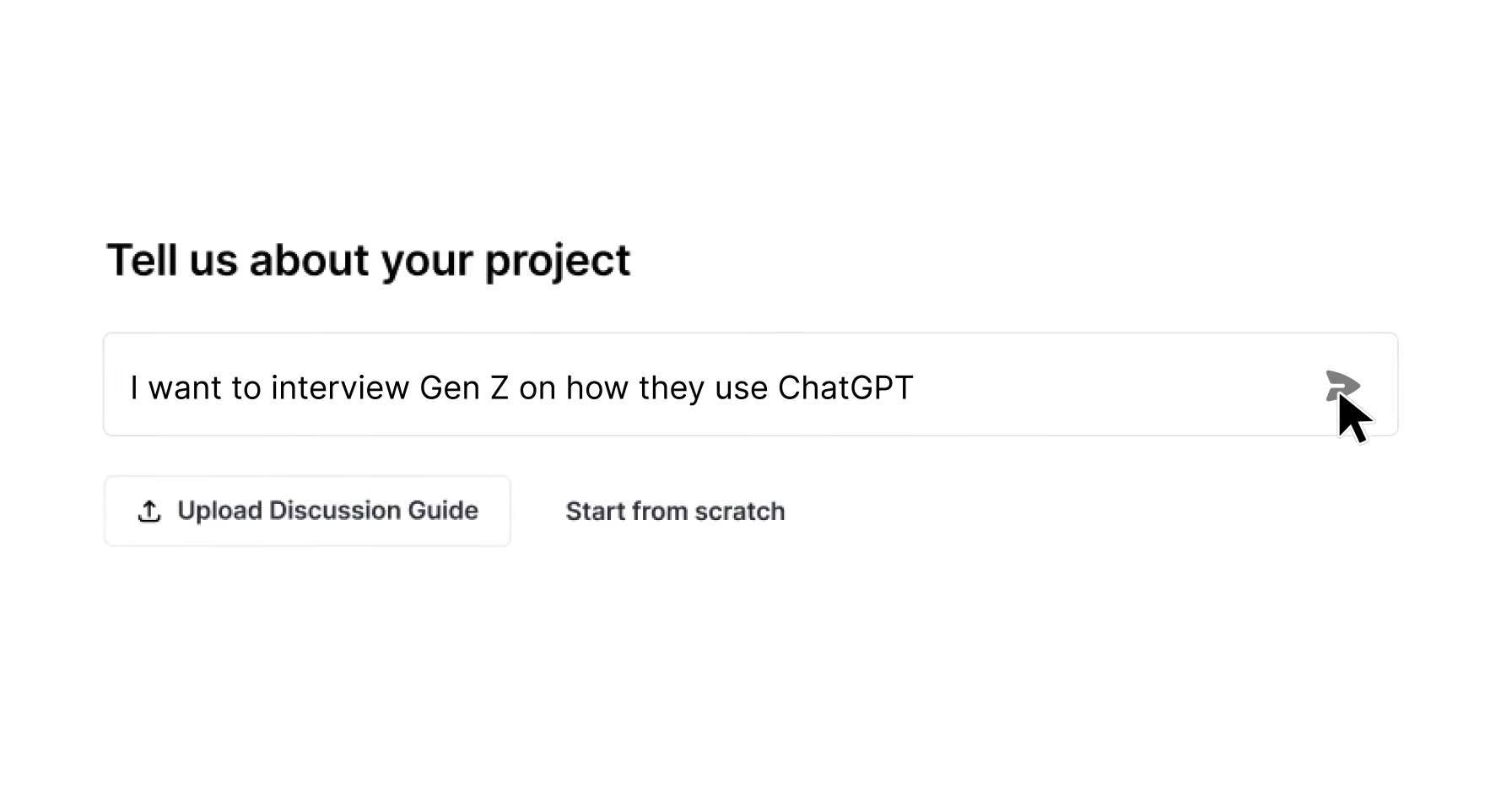
Use Open-Ended Prompts to Let Competitors Emerge
Open-ended prompts allow new competitors to appear in your data without pre-approval. Instead of asking consumers to rate a fixed list, ask unprompted brand recall questions such as “Which brands have you noticed recently in this category?” Open-ended prompts let new market entrants surface organically. Detection of new competitors requires repeated measurement on a fixed schedule, because a single scan is a snapshot and detection lives in the difference between two photographs, specifically vendor movement: a name that was absent last month and present this month. This change delivers the highest impact for most existing trackers.
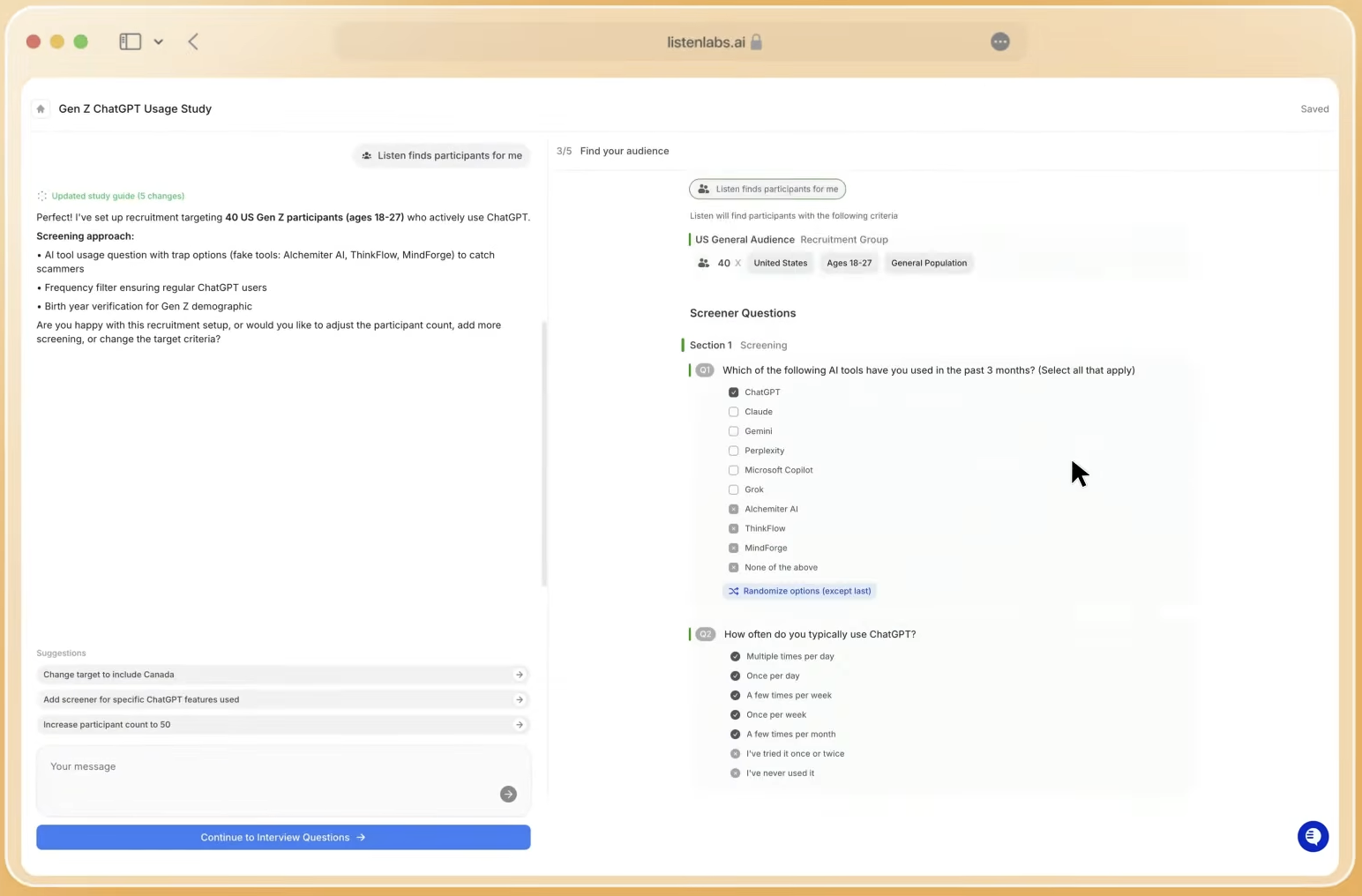
These three changes, integrating digital signals, adopting always-on conversational tracking, and using open-ended prompts, form the core of a modernized tracker. Listen Pulse from Listen Labs implements all three in a single platform, which makes it a practical way to put these principles into action.
See Listen Pulse in action and learn how it combines open-ended conversation with quantitative KPIs in a single always-on instrument.
Listen Pulse: The Always-On Conversational Tracker That Catches What You're Missing
Listen Pulse is the modern fix for brand tracking blind spots. It is an always-on conversational tracker that analyzes tens of thousands of responses 24/7, combining quantitative KPIs with open-ended conversation so every metric movement comes with the explanation behind it. Its key capabilities make this possible:
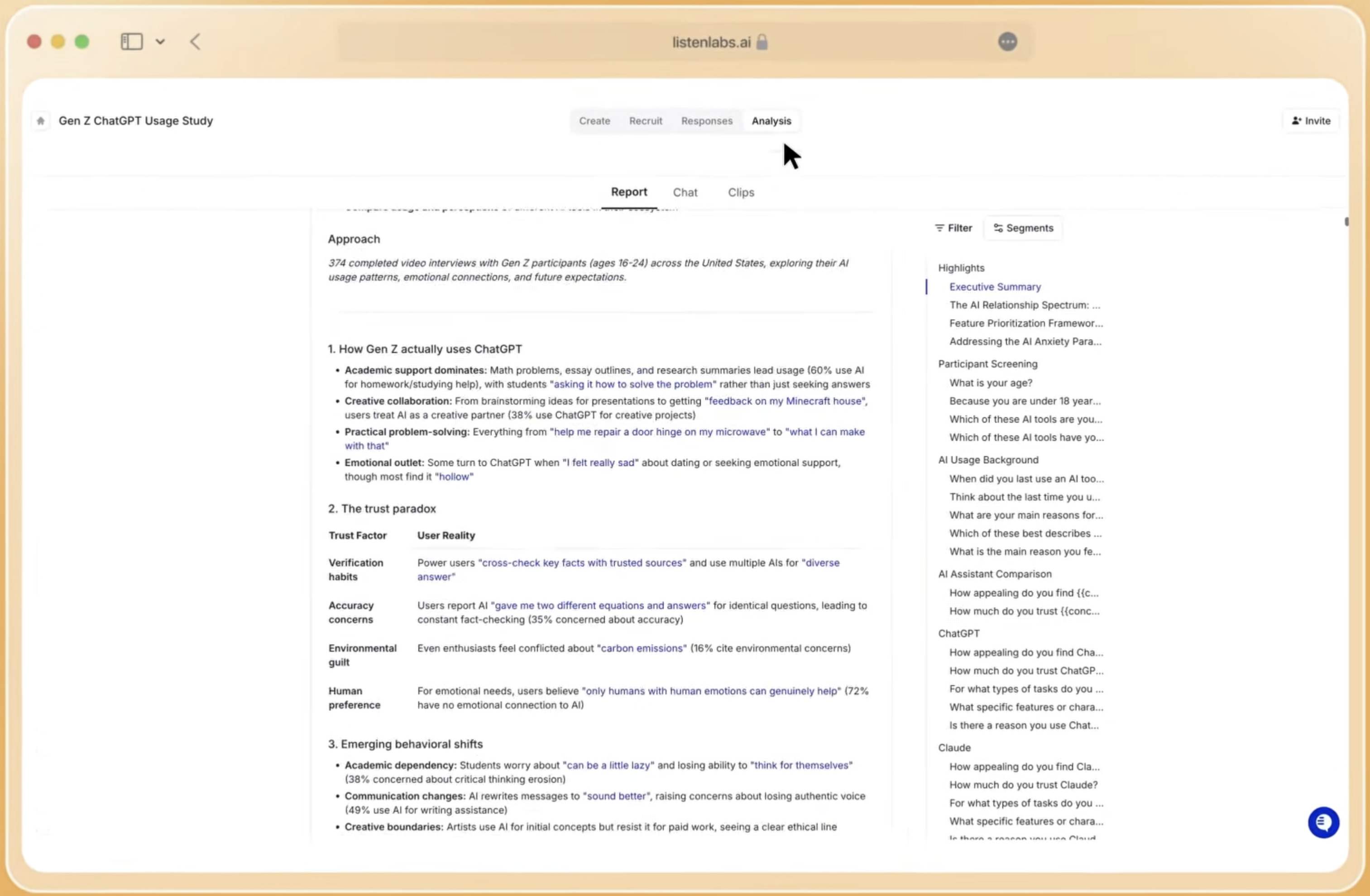
- Always-on continuous research: Pulse runs the same study with the same screeners wave after wave. This approach surfaces how trends shift over time, not just where they landed.
- Respondent-defined topics: Instead of locking participants into pre-set questions, Pulse lets customers raise what actually matters. This flexibility makes it possible to track emerging competitors without perfect question design upfront.
- Early signal detection: Pulse identifies emerging themes in customer conversations before they show up as a decline in tracked metrics.
- Seamless integration with existing trackers: Pulse connects with Qualtrics and Decipher, so you keep the KPIs you already report while adding the narrative behind them.
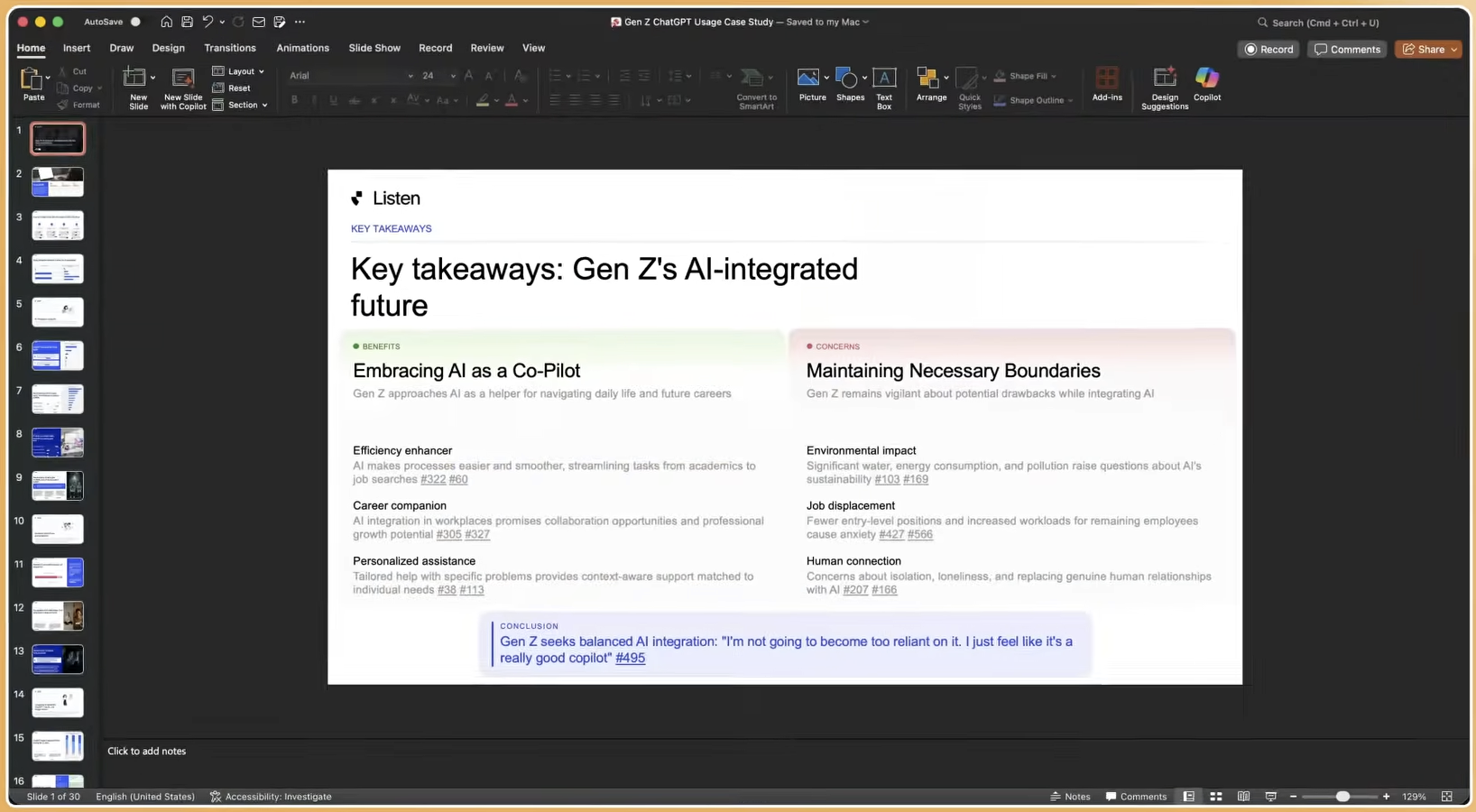
One well-known clothing brand, famous for its big logos, was quietly losing customers. Its old tracker caught the drop but could not explain it. Pulse revealed that price was not the issue. Style was the problem. A growing group of customers felt the big logos were too loud for their changing lifestyles. That is the difference between seeing a number move and understanding why it moved.
Frequently Asked Questions
What are the four stages of brand awareness?
The four stages are unaware, brand recognition, brand recall, and top-of-mind. Emerging competitors typically sit in the unaware or early recognition stage for most consumers, which is why traditional trackers filter them out as statistical noise. Always-on conversational tracking can detect early recognition signals in specific high-value segments before they reach broad awareness. This early view gives brand teams time to respond rather than react.
How often should brand tracking run to catch emerging competitors?
Quarterly tracking is the minimum for catching emerging competitors. As mentioned earlier, you need at least four data points to distinguish trend from noise, which is why quarterly tracking is the minimum. For fast-moving categories, monthly or continuous tracking works better. Always-on tracking gives you the data density to spot shifts as they happen, before they compound into measurable share loss. Listen Pulse runs continuously, so every wave adds to a longitudinal dataset that becomes more valuable over time.
Can social listening replace brand tracking for competitor detection?
Social listening cannot replace brand tracking for competitor detection. As noted earlier, social listening only captures the loudest 1% of voices, so it cannot replace brand tracking. Social listening is a useful early-warning signal for categories where consumers post frequently and honestly, such as snacks, beauty, gaming, and streaming, but it cannot measure unaided awareness, consideration set, or brand preference among the silent majority. It must be combined with representative survey data to validate what is actually happening in the market. Listen Pulse integrates both layers, using digital signals for early detection and conversational survey data for representative measurement.
What's the difference between a lagging indicator and a leading indicator in brand tracking?
Leading indicators such as awareness, consideration, and preference shift before changes appear in sales data and predict future commercial behavior. Awareness, consideration, and preference are leading indicators in brand tracking, as they shift before changes appear in sales data and predict future commercial behavior; lagging indicators are metrics like sales, market share, and revenue that reflect what has already happened. Lagging indicators such as sales, market share, and revenue reflect changes that have already happened. Other leading indicators, including search volume growth, social mention velocity, review frequency, hiring patterns at competitors, and unprompted brand recall in open-ended surveys, signal momentum before it translates into market share shifts. Traditional trackers rely heavily on lagging indicators, which is why they miss emerging competitors until it is too late. Listen Pulse surfaces leading signals by letting respondents raise what matters to them and charting emerging themes next to the KPIs you already track.
How does Listen Pulse integrate with my existing brand tracker without breaking historical trend lines?
Listen Pulse is designed to deploy alongside an existing tracker or as the primary tracking system. Core questions stay consistent wave over wave to protect historical comparability. Timely add-on questions cover new campaigns, competitors, or market events without disrupting the trend line. Pulse connects directly with Qualtrics and Decipher, so the KPIs your team already reports remain intact. You add the conversational layer, and the emerging competitive intelligence it surfaces, without rebuilding your measurement infrastructure from scratch.
Conclusion: Shift From Scorekeeping to Early Detection
Your brand tracker was built to measure the brands you already knew about. Fixed lists, infrequent waves, narrow categories, high awareness floors, and lagging indicators create structural blind spots that let new threats grow unseen until they have already stolen share.
Modernization keeps the tracker but upgrades how it works. Integrate digital signals. Add open-ended prompts. Adopt always-on conversational tracking that surfaces emerging themes before they hit your KPIs. Listen Pulse supports this shift by analyzing tens of thousands of responses 24/7 and integrating with the Qualtrics and Decipher infrastructure you already use.
Do not wait for the next startup to surprise you. Schedule a Listen Pulse demo with Listen Labs today and start catching emerging competitors before they catch you.