
Written by: Anish Rao, Head of Growth, Listen Labs
Key Takeaways
- YouGov BrandIndex detects brand-metric movement but does not explain why those changes occur, so teams see shifts without diagnosis.
- Enterprise alternatives like Kantar and Ipsos deliver deep equity modeling, yet carry six-figure annual price tags and require dedicated research staff.
- Mid-market options such as Tracksuit and Latana offer affordable, always-on tracking, but remain quant-only and lack explanatory power.
- Conversational trackers combine quantitative KPIs with qualitative theme analysis in a single wave, closing the gap between measurement and insight.
- Listen Labs’ Listen Pulse delivers both the scoreboard and the story behind it, so you can see the themes driving your brand metrics in one place.
What YouGov BrandIndex Delivers and Where It Falls Short
YouGov BrandIndex is a continuous, survey-based brand tracking service that measures awareness, buzz, impression, quality, consideration, and recommendation across thousands of brands daily using a proprietary panel of over 30 million respondents across 55+ markets. Its output is a score or set of scores that help teams detect movement, yet those scores do not explain the psychology behind the change.
The platform’s limitations fall into four categories:
- High cost. Enterprise subscriptions typically range from $50,000 to $200,000+ per year depending on markets and categories tracked, which prices out most mid-market brands.
- Quant-only methodology. Quantitative brand trackers like YouGov BrandIndex are structurally incapable of explaining why metrics change, so they measure brand position without revealing the psychology behind it.
- Detection without diagnosis. When a metric drops, YouGov shows the decline but not the mechanism, whether it is a messaging issue, a competitor move, a product-experience gap, or a cultural shift.
- Fixed metric set. Every brand is measured on the same standardized dimensions, which can flatten category-specific nuance and miss psychological dimensions unique to a given market.
How to Evaluate a YouGov Alternative
Clear evaluation criteria keep your choice defensible to leadership and aligned with your research goals.
- Methodology. Start with methodology, because it determines whether the platform can explain metric movement or only report it. Is the platform quant-only, qual-only, or mixed? Traditional surveys may tell you what people do, and it takes a conversation to understand why.
- Panel quality and reach. Then assess who is being surveyed and whether the platform can reach your specific target audience reliably in each market.
- Qualitative depth. Next, check whether respondents can speak in their own words and whether the platform analyzes open-ended responses systematically across waves.
- Cost. After that, compare pricing models. Look for transparent pricing and confirm that the annual cost fits your company’s research budget.
- Ease of use. Consider whether your team can pull insights without a dedicated research operations staff or heavy analyst support.
- Integration. Finally, confirm that the platform connects with your existing tools, such as Qualtrics, Decipher, or BI platforms, so you avoid rebuilding reporting from scratch.
Advanced platforms use AI-driven security layers to detect and remove low-quality responses in real time, and panel-agnostic systems can select the highest-quality sample sources for each market. Both factors deserve attention in any vendor evaluation.
Brand Tracking Software by Category and Fit
The list below summarizes primary alternatives by platform, best-fit buyer, and key differentiator.
- Kantar BrandDynamics – Enterprise-scale equity modeling, Meaningful, Different, Salient framework.
- Ipsos – Global brands needing consulting, Contextual Brand Tracking methodology.
- Tracksuit – Mid-market always-on tracking, marketer-friendly dashboard, around $20K per year.
- Latana – Precision audience modeling, MRP statistical modeling, 150+ markets.
- Brandwatch – Social listening context, 100M+ online sources analyzed.
- Qualtrics – Enterprise feedback systems, custom surveys, XM platform integration.
- Attest – Self-serve fast surveys, transparent per-response pricing.
- Listen Pulse – Quant KPIs plus qualitative “why,” conversational tracker with theme analysis.
Enterprise solutions. Kantar BrandDynamics offers always-on tracking built around Kantar’s Meaningful, Different and Salient equity framework. Kantar’s custom brand tracking is typically priced at $100,000–$500,000+ per year. Kantar’s LIFT Express measures are validated by the Marketing Accountability Standards Board. Ipsos delivers full-service custom brand health tracking through proprietary frameworks, with engagements starting around $75,000–$150,000 per year for single-market programs.
Mid-market solutions. Tracksuit offers affordable, always-on brand funnel tracking with dashboards designed for marketers without a research background, with pricing starting around $20,000 per brand per year. Latana uses Multilevel Regression and Poststratification (MRP) to model brand metrics for narrow audience segments across 150+ markets, with published pricing starting around €7,900 per market per year for the Essential plan.
Social listening. Brandwatch analyzes online conversations from over 100 million sources to surface brand mentions, sentiment, and conversation context. Teams get a complementary source of contextual signal rather than a direct substitute for survey-based brand-health measurement.
Self-serve survey tools. Qualtrics offers brand tracking within its broader experience management platform, with enterprise licenses reportedly around $450,000 for a base package. Attest provides self-serve consumer research with flat per-market pricing starting from $0.50 per response, covering 58+ markets.
Deep-Dive Overview of Top Alternatives
Kantar BrandDynamics
Kantar sits at the enterprise end of the spectrum and focuses on equity modeling and global consistency.
Pros:
- Enterprise-grade equity methodology validated by MASB.
- BrandZ and BrandDynamics databases cover 21,000+ brands across 540+ categories.
- Strong for board and investor reporting because its brand valuation links directly to financial outcomes.
Cons:
- Custom brand tracking is priced at $100K–$500K+ per year.
- First insights often take three to six months.
- Requires an in-house insights function to commission and interpret the work.
Best fit: Large enterprises needing a standardized equity framework across a global portfolio.
Tracksuit
After the enterprise options, the mid-market tier trades depth for speed and accessibility. Tracksuit focuses on simplicity for marketers.
Pros:
- Approximate $20K yearly cost per brand.
- 30-day setup and monthly updates.
- Marketer-friendly dashboards that track 17,000+ brands across 25 markets.
Cons:
- Weights survey data on only three variables: age, gender, region.
- Monthly sample sizes may be too small for reliable segment reads.
- Quant-only design that does not explain why metrics move.
Best fit: Mid-market challenger brands needing accessible always-on tracking without enterprise budgets.
Latana
Latana serves brands that care most about precision audience reads across many markets.
Pros:
- MRP modeling delivers reliable metrics for narrow segments.
- Coverage across 150+ markets.
- Transparent margins of error displayed alongside numbers.
Cons:
- Metrics are modeled estimates rather than direct head counts.
- Quant-only methodology with no built-in qualitative layer.
- Contracts typically start at 12 months.
Best fit: Brands needing precision audience targeting in niche or weak-panel markets.
Brandwatch
Brandwatch complements survey trackers by capturing public conversation around your brand.
Pros:
- Analyzes 100M+ online sources.
- Captures unprompted consumer conversation.
- Strong for crisis monitoring and campaign context.
Cons:
- Social listening captures only a small share of total brand conversations that happen publicly.
- Cannot measure perception among people who never post.
- Does not replace survey-based tracking for brand health.
Best fit: Teams needing social listening context alongside survey-based tracking.
Qualtrics
Qualtrics functions as a flexible survey engine for teams that want to design their own trackers.
Pros:
- Flexible survey design for custom questionnaires.
- Integration with the broader XM platform.
- Enterprise-grade security and governance.
Cons:
- Reported base packages around $450K.
- Users must supply research design, sampling logic, and analysis.
- No expert layer to flag flawed studies before launch.
Best fit: Enterprises already invested in the Qualtrics ecosystem that need custom brand tracking modules.
When to Switch and When to Stay with YouGov
Stay with YouGov if: You are an enterprise-scale brand with dedicated research operations, need daily tracking across 55+ markets, and rely on YouGov’s 18+ years of historical data for competitive benchmarking. YouGov’s syndicated model lets any subscriber benchmark against competitors without running separate research, which is valuable for large CPG and publicly traded companies.
Switch if: You are a mid-market brand ($10M–$500M revenue) for whom the six-figure cost mentioned earlier functions as a cost center rather than a decision-support tool. You need to understand why your metrics move, and you need insights fast enough to inform campaign decisions instead of lagging behind them. You also may need qualitative depth that quant-only trackers cannot provide.
Why Most Trackers Miss the “Why” and How Conversational Tracking Closes the Gap
Traditional trackers, including YouGov, are quant-only and report that awareness or consideration moved without explaining why. When a quantitative tracker shows a metric decline, the brand team cannot know whether the cause is messaging, competition, product experience, or culture. By the time a KPI declines, the underlying shift has often been building for months. Explaining it usually requires a separate qualitative study, which adds weeks and significant cost. Traditional qualitative brand research via focus groups costs $15,000–$50,000 per wave and takes 6–8 weeks.
The why is what differentiates customer research that is alright from customer research that is outstanding. Conversational tracking delivers both the scoreboard and the story in a single instrument.
Listen Pulse runs the same study with the same screeners wave after wave. It then analyzes open-ended answers, sorts them into themes, quantifies them, and charts each theme next to the KPIs you already report. Core questions stay constant to protect the trend line, while timely questions cover new campaigns and competitors. Every number traces back to a real moment with a real person, including their words, the quote, and the clip. Pulse integrates with Qualtrics and Decipher, so teams keep the KPIs they already report while adding the narrative behind them.
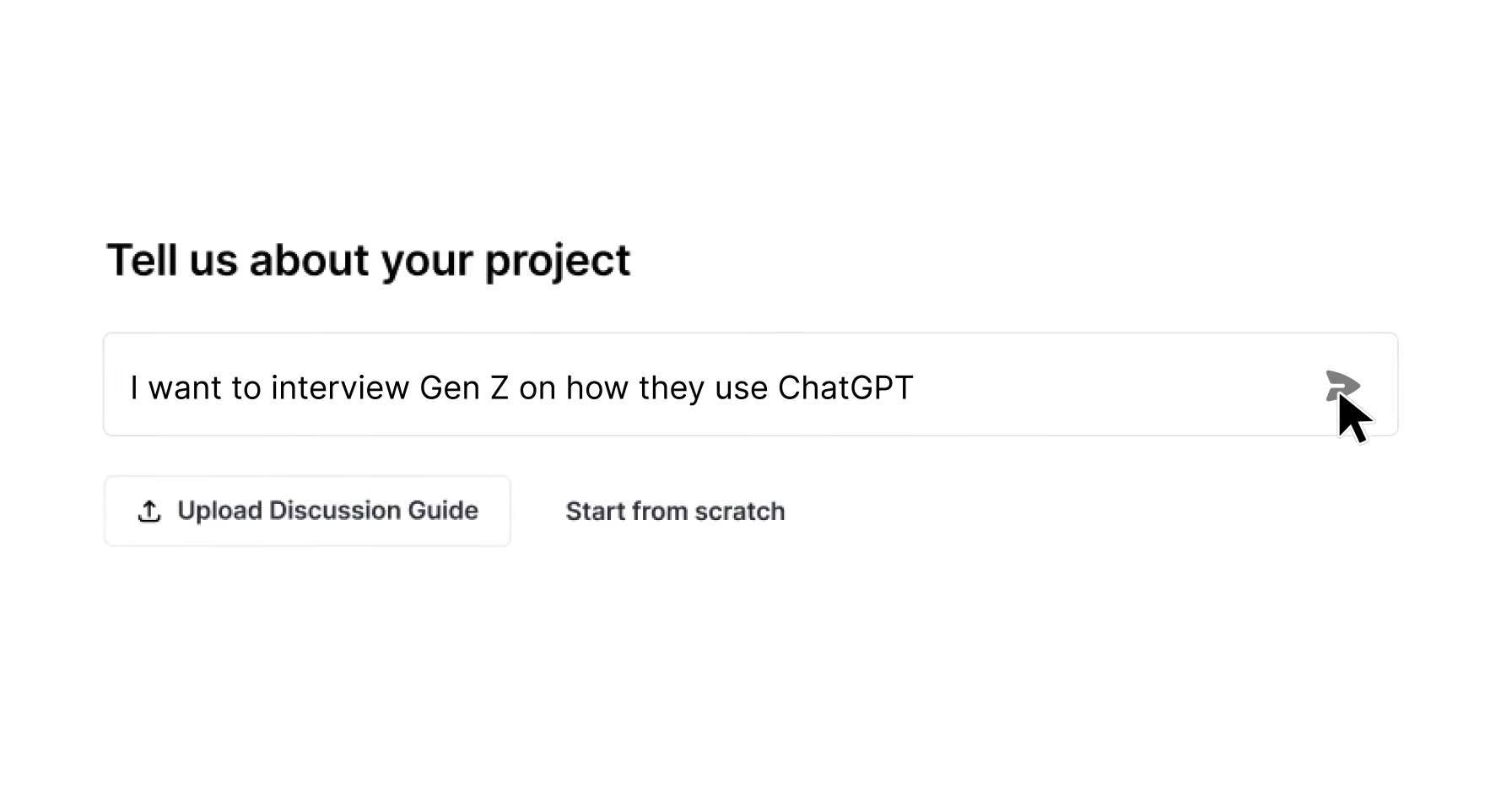
To see how this works in practice, consider a well-known clothing brand famous for its big logos that was quietly losing customers. Its old tracker caught the drop but could not explain it. Pulse revealed that the issue centered on style. A growing group of customers felt the big logos were too loud for their changing lifestyles.
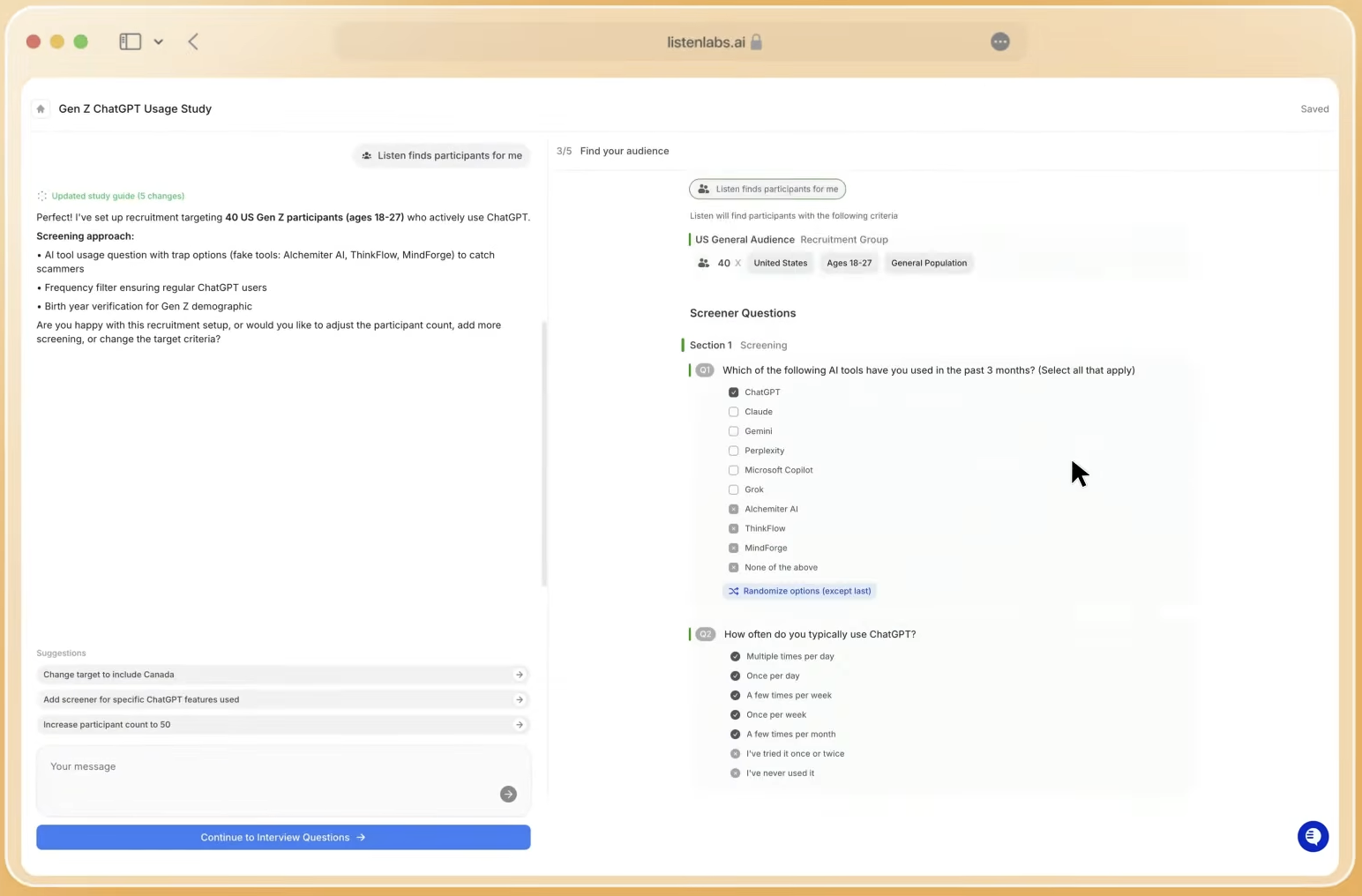
The broader industry trend confirms this direction. AI-powered conversational research is beginning to close the gap between quantitative brand metrics and qualitative understanding by layering structured dialogue directly onto ongoing brand tracking. Listen Pulse was built from the ground up as a native conversational tracker. It is backed by Listen Labs’ network of 50M+ verified respondents across 45+ countries.
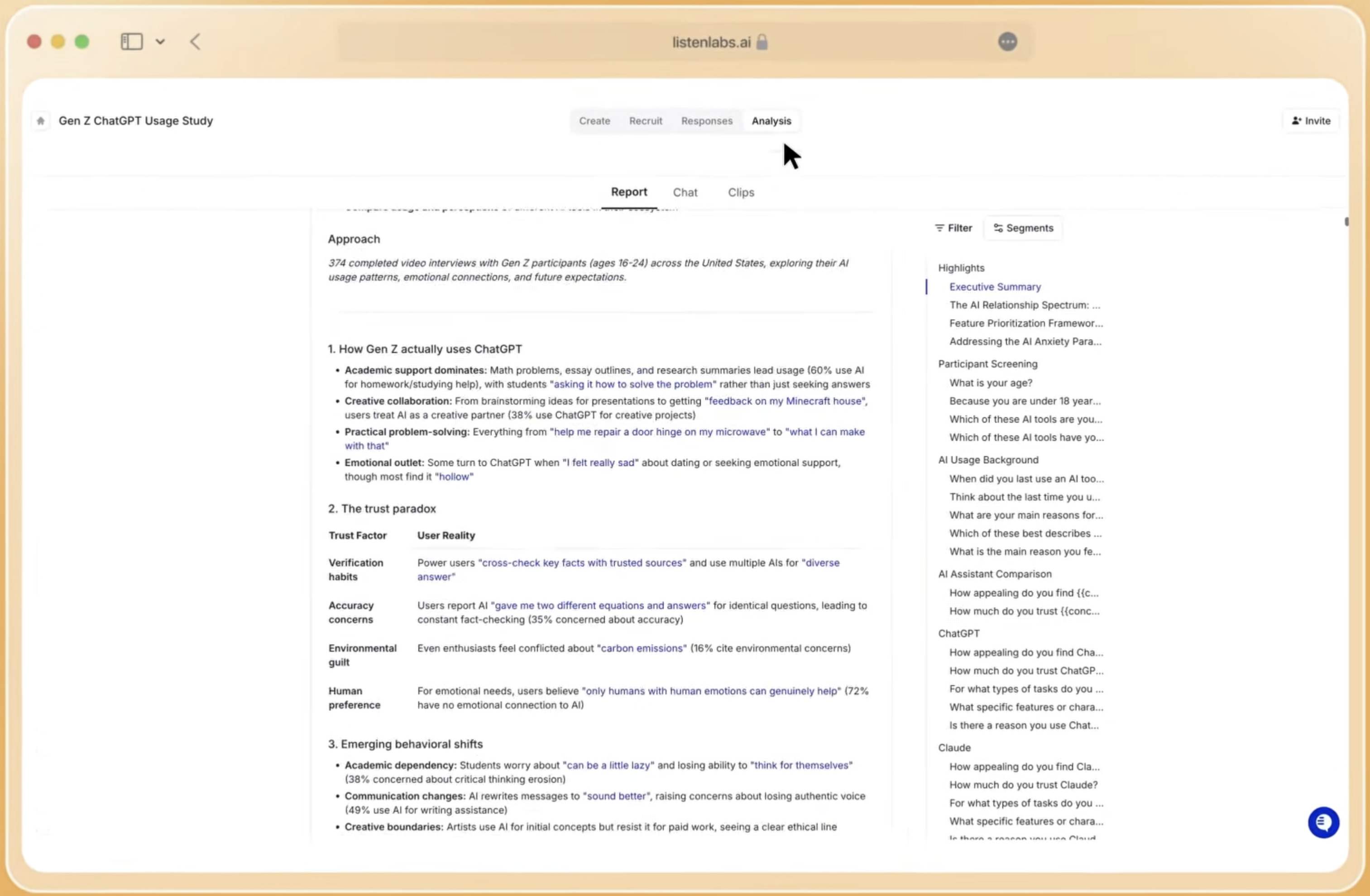
Listen Labs has run over 1 million AI-powered customer interviews for companies including Microsoft, Perplexity, and Sweetgreen, compressing research cycles that used to take 4–6 weeks into results delivered in less than 24 hours.
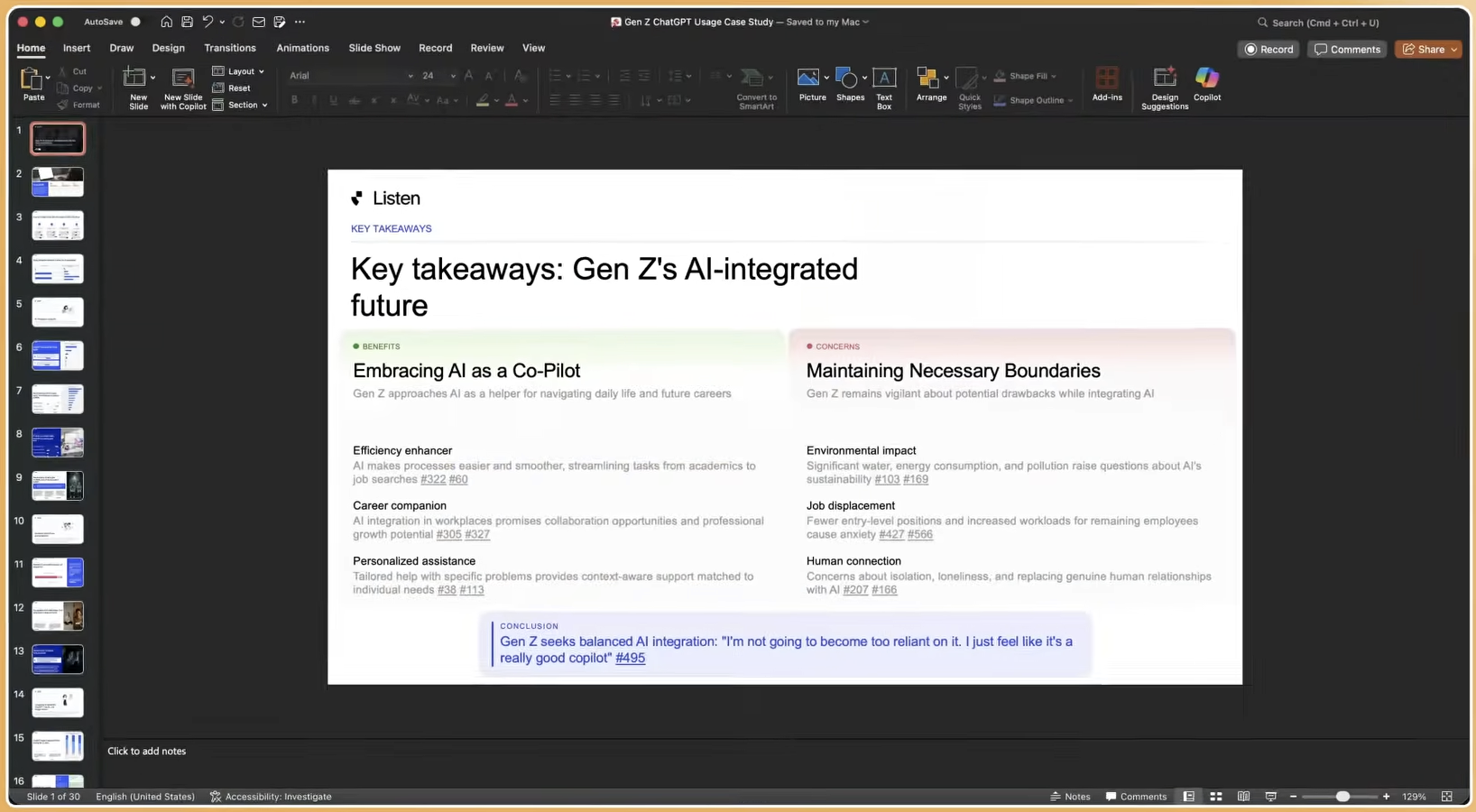
See a live walkthrough of Listen Pulse to understand how it surfaces the themes driving your brand metrics.
Decision Framework by Budget, Size, and Research Goal
Use this checklist to match your situation to the right solution.
- If you need enterprise-scale tracking with deep benchmarks and have $100K+ budget: Consider Kantar BrandDynamics.
- If you are mid-market and want a modern, affordable tracker around $20K per year: Consider Tracksuit.
- If you need precision audience modeling in niche markets: Consider Latana.
- If you need social listening context alongside survey data: Consider Brandwatch as a complement to your tracker.
- If you need to understand why your metrics move and not only that they moved: Consider a conversational tracker like Listen Pulse, which delivers quant KPIs and qualitative explanation in the same wave.
G2’s 2026 State of Brand Intelligence report found that 64.2% of users have not fully adopted their brand intelligence tool, which signals that complexity and ease-of-use gaps remain a real barrier. Listen Pulse is designed so that brand managers can pull insights without a dedicated research operations staff, with deliverables generated automatically from every wave.
Frequently Asked Questions
What is the best brand tracking software for mid-market brands?
The most popular affordable option for mid-market brands is Tracksuit, which starts around $20,000 per brand per year and offers marketer-friendly dashboards with monthly updates across 25 markets. However, Tracksuit remains quant-only and reports that metrics moved without explaining why. Conversational trackers like Listen Pulse give mid-market brands both the scoreboard and the story behind it. They combine KPI tracking with qualitative theme analysis in a single wave and integrate with tools like Qualtrics and Decipher, so teams keep their current reporting infrastructure.
What are the limitations of YouGov BrandIndex?
YouGov BrandIndex has four primary limitations. First, cost: enterprise subscriptions typically range from $50,000 to $200,000+ per year, which is prohibitive for most mid-market brands. Second, methodology: the platform is quant-only and cannot explain why metrics change, only that they did. Third, its fixed metric set measures every brand on the same standardized dimensions, which can flatten category-specific nuance. Fourth, historical data only benefits existing subscribers, because brands that were not already tracked cannot retroactively access past baseline data, which limits the value of YouGov’s long history for new adopters.
How does YouGov BrandIndex compare to Tracksuit?
YouGov BrandIndex offers daily tracking across 55+ markets with 18+ years of historical data and a panel of over 30 million respondents, and subscriptions start in the six-figure range. Tracksuit costs approximately $20,000 per brand per year, provides monthly updates across 25 markets, and is designed for marketers without a research background. The key trade-off is clear. YouGov offers greater geographic coverage, historical depth, and daily granularity, while Tracksuit offers accessibility and lower cost. Both are quant-only platforms and neither explains why a metric moved. Tracksuit also weights its survey data on only three demographic variables (age, gender, region), which can introduce skews in categories where purchase behavior tracks income or household composition.
What is a conversational brand tracker?
A conversational brand tracker combines quantitative KPI tracking with open-ended qualitative responses in every wave of the same study. It analyzes what customers say in their own words, sorts responses into themes, quantifies those themes, and charts them alongside traditional metrics, so every number comes with its explanation. Core questions stay consistent wave over wave to protect the trend line, while timely questions address new campaigns, competitors, or market events. Listen Pulse follows this model, running on Listen Labs’ network of 50M+ verified respondents across 45+ countries and delivering results in less than 24 hours.
Can Listen Pulse work alongside an existing brand tracker?
Yes. Listen Pulse is designed to deploy alongside an existing tracker or as the primary tracking system. It integrates directly with Qualtrics and Decipher, so teams keep the quantitative KPIs they already report to leadership while adding the qualitative narrative behind them. This approach preserves historical trend data and existing reporting workflows. Teams can start by layering Pulse on top of their current tracker to add the diagnostic layer that quant-only platforms cannot provide.
Conclusion
The right alternative to YouGov depends on your budget, company size, and whether you need only the scoreboard or also the story behind it. Enterprise teams with dedicated research operations and competitive benchmarking mandates may find YouGov’s syndicated model worth its cost. Mid-market brands with tighter budgets and faster decision cycles need something built for their reality. Any team that needs to understand why their metrics move will eventually run into the limits of quant-only trackers. Explore a Listen Pulse session to see how it delivers both the what and the why in a single wave.