
Written by: Anish Rao, Head of Growth, Listen Labs
Key Takeaways
- AI-powered brand tracking now splits into two categories: social listening tools that monitor human conversations and AI visibility tools that track brand mentions in ChatGPT, Perplexity, and other AI engines.
- These categories measure different realities: human sentiment versus AI-generated answers. Neither category on its own explains why brand perception shifts.
- Traditional social listening tools like Brandwatch, Brand24, and Meltwater excel at crisis detection and PR monitoring but do not measure AI search visibility.
- AI visibility platforms like Sight AI, Peec AI, and Semrush measure Share of Answer and citations but focus on surface metrics instead of customer perception.
- Listen Labs is the only platform that connects quantitative tracking to qualitative customer insight at scale, turning brand tracking into an early warning system.
What AI-Powered Brand Tracking Software Covers Today
AI-powered brand tracking software monitors how a brand appears across traditional media, social channels, and generative AI search engines like ChatGPT, Claude, and Perplexity. It now encompasses two distinct categories. Social listening tools analyze human-generated content across social platforms and the web. AI visibility tools query AI engines directly to measure whether, how, and in what context a brand appears in AI-generated answers.
Key Distinction: Social Listening vs. AI Visibility
Social listening tools monitor public conversations across social networks, news, blogs, forums, and review sites for brand mentions, then layer sentiment, reach, and trend analytics on top. They measure what people say about a brand. Tools in this category include Brandwatch, Brand24, and Meltwater.
AI visibility tools query AI engines directly with controlled prompts to track whether a brand appears in AI-generated answers, its position, sentiment, and which sources the AI cites. They measure what AI systems say about a brand. Platforms in this category include Sight AI, Peec AI, and the Semrush AI Visibility Toolkit.
The critical gap is clear. The same brand can be highly visible in social listening yet completely absent from AI answers, or the reverse. A Q1 2026 Victorious study of 177 brands across eight AI platforms found that 89.8% had zero AI search mentions. At the same time, Semrush’s 2026 AI Visibility Index found that only 36 global brands maintained top-100 visibility across all four major AI platforms.
See how Listen Labs connects both categories with the qualitative depth your tracker is missing.
Key Features That Matter in AI-Powered Brand Tracking Software
Before comparing tools, it helps to know what actually separates them. Four capabilities matter most for modern brand tracking and AI visibility.
- Share of Answer: This metric measures how often a brand appears in AI-generated recommendations compared to competitors. Unlike traditional share of voice, which Dan Taylor of SALT.agency argues is “effectively obsolete” in conversational search, Share of Answer requires a defined prompt set and consistent methodology to stay meaningful. AI visibility metrics work best as directional signals rather than hard numbers because proprietary systems hide query selection, weighting, and sampling assumptions.
- Citation Tracking: This feature identifies which external web sources, directories, or articles AI engines use as references when mentioning a brand. Roughly 84–94% of AI citations are third-party and earned rather than self-published, so a brand’s own website rarely serves as the primary source AI engines cite.
- Sentiment Analysis: Sentiment analysis uses natural language processing to detect whether mentions are positive, negative, or neutral. In AI visibility tools, this requires a four-category rubric of Positive, Negative, Neutral, and Absent applied consistently across repeated prompt runs, because AI outputs vary between identical queries.
- Real-Time Alerts: Real-time alerts notify marketing or PR teams when sentiment shifts, new competitors enter AI answers, or citation rates drop. A 2026 Profound analysis found a median cited-source half-life of roughly 4.5 weeks, with 40–60% of cited domains rotating month-to-month. Continuous monitoring becomes essential as a result.
Comparing the Top AI-Powered Brand Tracking Tools
To see where each category falls short, it helps to look at leading tools in each space. The social listening category centers on Brandwatch, Brand24, and Meltwater. The AI visibility category includes Sight AI, Peec AI, and Semrush. A third category, deep customer insight, is where Listen Labs operates.
Social Listening Tools for Human Conversation Tracking
Brandwatch is an enterprise-grade consumer intelligence platform with a historical opinion archive and a 30M+ influencer database, available at quote-only pricing. Its strengths are deep social analytics and crisis detection. It does not track AI search visibility.
Brand24 offers real-time mention monitoring across 16 source types with sentiment and reach analytics, with pricing from $199/month. It provides accessible, comprehensive social coverage but no AI engine tracking. It measures human conversations only.
Meltwater delivers media monitoring and social listening with PR workflow integration at enterprise pricing. Its strength is press coverage tracking. It has no native AI visibility measurement.
AI Visibility Tools for Tracking What AI Says
Sight AI is purpose-built for monitoring brand visibility, citations, and content performance across major AI models. It specializes in AI tracking and reports Share of Answer and citation metrics but does not explain customer perception.
Peec AI is a lower-cost option tracking brand mentions and citations in AI search outputs, priced around €85/month for 50 prompts. It provides an accessible entry point and prompt-level tracking but offers limited qualitative depth.
Semrush AI Visibility Toolkit starts at $99/month per domain billed annually, covering 25 custom prompts. It integrates with existing SEO workflows and measures AI presence, but it does not provide customer understanding.
The Missing Category: Deep Customer Insight
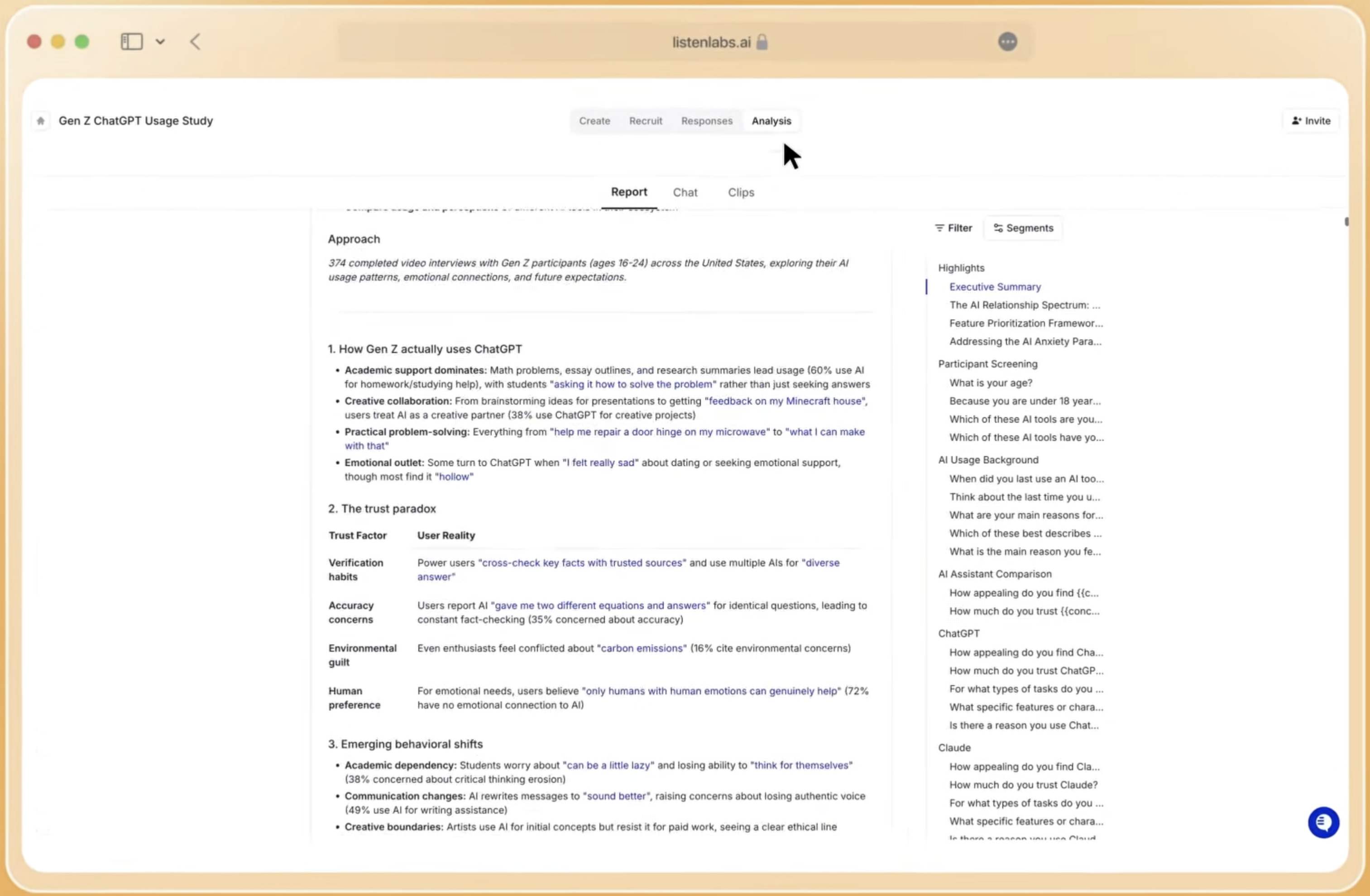
Listen Labs is the only platform that connects AI-powered brand tracking to qualitative customer understanding. Listen Pulse is a conversational tracker that runs the same study wave after wave, analyzing tens of thousands of open-ended responses 24/7. It quantifies themes and charts them next to existing KPIs, so every metric movement comes with the explanation behind it.
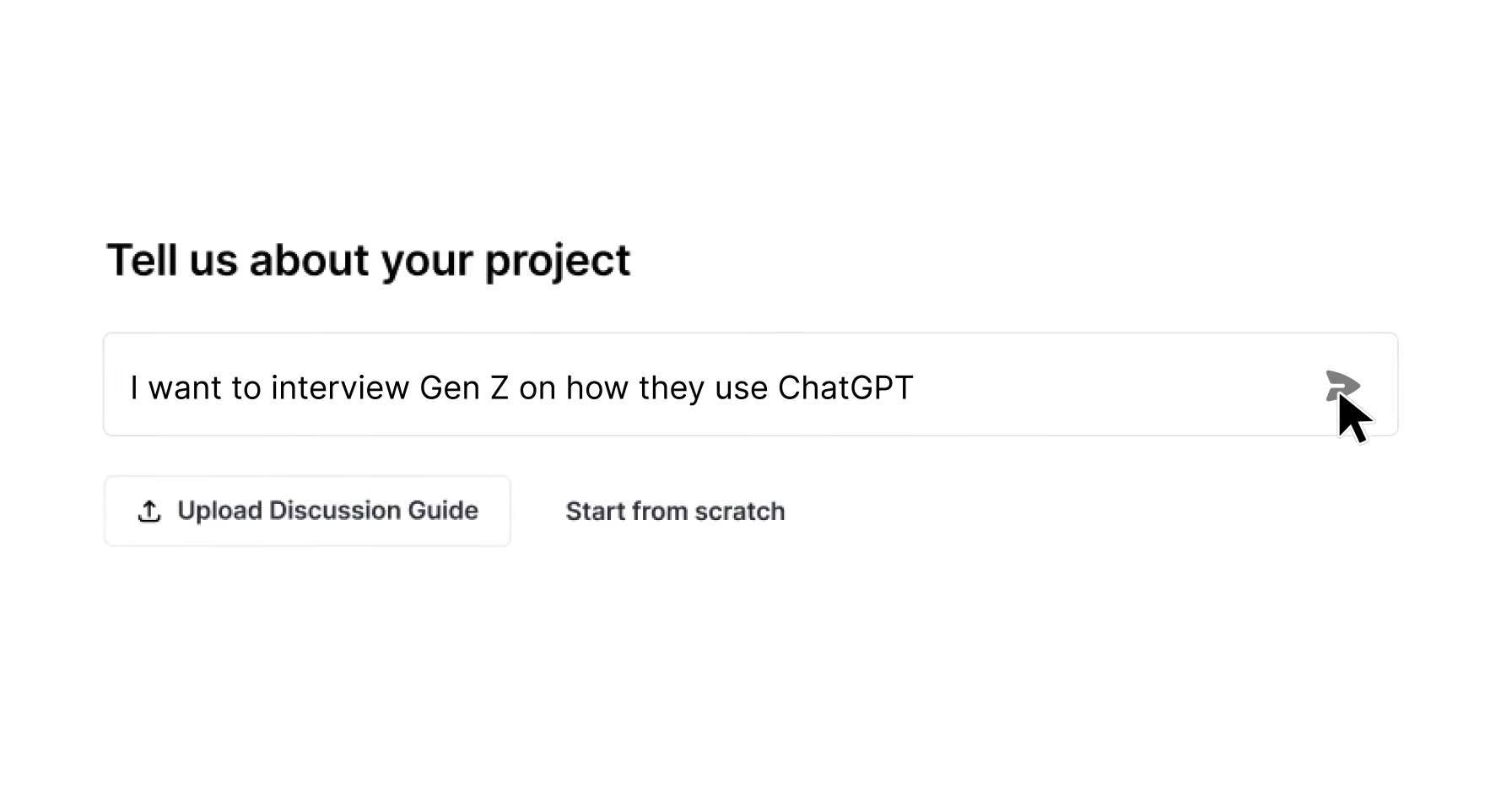
Every number traces back to a real moment with a real person: their words, the quote, the clip. One well-known clothing brand, famous for its big logos, was quietly losing customers. Its old tracker caught the drop but could not explain it. Pulse revealed that style drove the shift. A growing group of customers felt the big logos were too loud for their changing lifestyles.
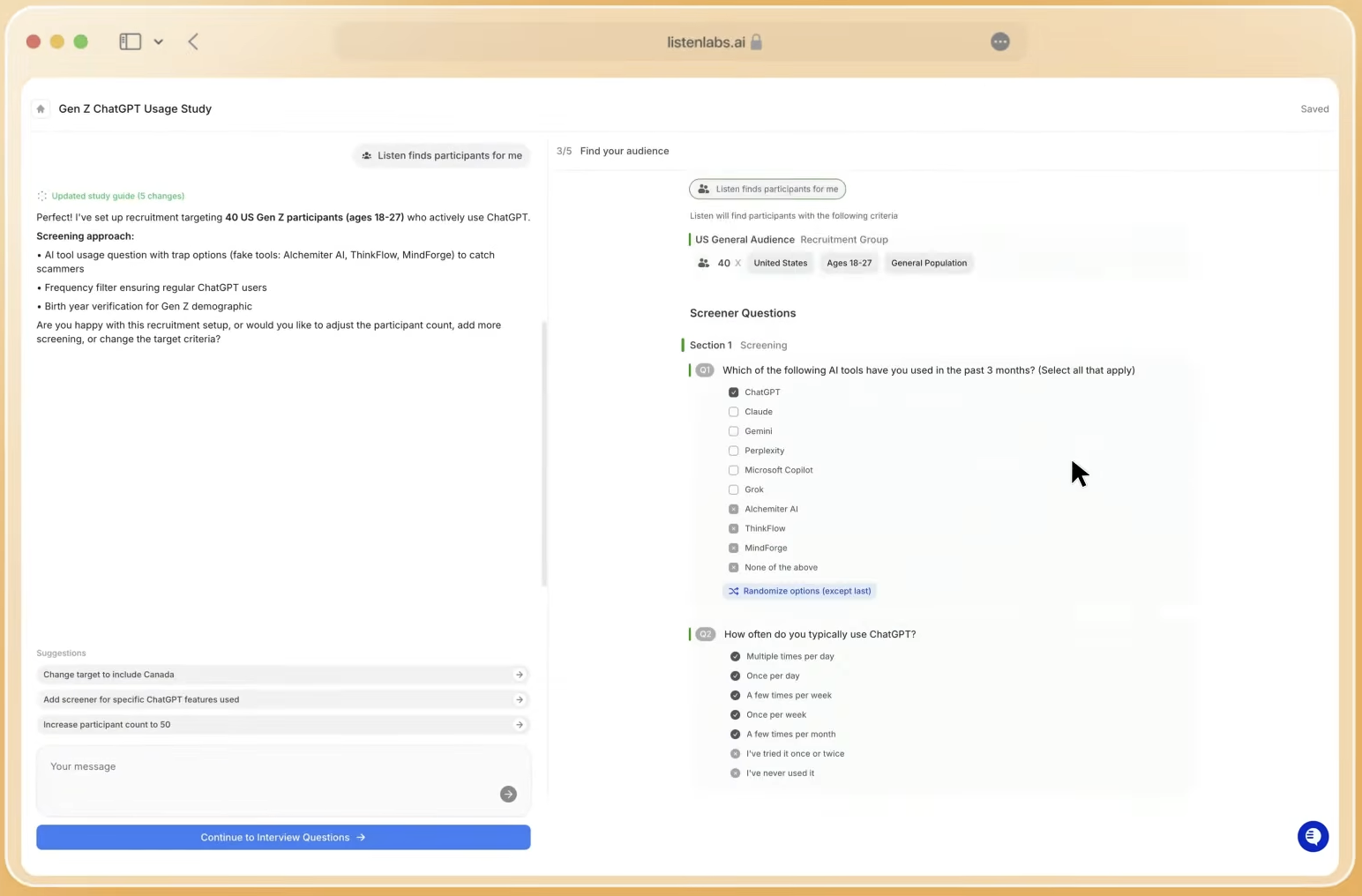
Watch how Listen Pulse turns brand tracking from a lagging indicator into an early warning system.
How to Choose: Social Listening, AI Visibility, or Deep Customer Insight
Choose social listening if the primary need is crisis detection, PR monitoring, or understanding conversations on social platforms. These tools excel at real-time human mention tracking.
Choose AI visibility if the primary need is understanding how AI engines represent a brand in search answers. These tools measure Share of Answer, citations, and AI sentiment, which matters as 51% of B2B software buyers now start research with an AI chatbot rather than a search engine.
Choose deep customer insight if the tracker reports that a number moved but cannot explain why. Traditional trackers catch the drop but cannot diagnose it, and by the time a KPI declines, the underlying shift has often been building for months. Listen Labs’ Emotional Intelligence analyzes tone, word choice, and micro-expressions across 50+ languages. Listen Pulse then surfaces emerging themes before they hit KPIs. Microsoft, Sweetgreen, Skims, and roughly 15% of the Fortune 100 rely on this diagnostic depth to turn brand tracking into an early warning system.
AI-Powered Brand Tracking Software Pricing Guide
Social listening tools vary widely in price. Brand24 starts at $199/month, while Brandwatch and Meltwater use quote-only enterprise pricing.
AI visibility tools have converged on the tracked prompt as the primary billing unit. Otterly.ai starts at $29/month for 15 prompts, Profound at $99/month for ChatGPT-only tracking with 50 prompts, Semrush AI Visibility Toolkit at $99/month per domain for 25 custom prompts, and Ahrefs Brand Radar at $199/month for one index or $699/month for all indexes. Six of ten major vendors hide enterprise pricing behind a sales call.
Listen Labs uses a subscription model with credits per participant, scaled to audience difficulty. Companies over 100 employees go through a demo and pilot process to define the right scope.
Hidden costs deserve attention. Most AI visibility tools charge per prompt per engine, so tracking multiple engines multiplies cost. Tracking Claude specifically on Otterly.ai can reach $439/month on the top plan. Social listening tools often require separate qualitative research to explain metric movements, which adds significant annual cost for traditional trackers.
Step-by-Step Selection Process
- Define the primary question: Decide whether the goal is tracking what people say (social), what AI says (visibility), or why perception shifts (insight).
- Audit the current stack: Check whether the existing tracker explains KPI movements or only reports them.
- Build a prompt set: Create 20–30 buyer-language questions mirroring real customer intents for AI visibility testing. Because API-served models reproduce their own outputs in only 22.1% of tests, run each prompt three to five times per platform to get a reliable read.
- Ask vendors these questions:
- Which AI engines do you track, and is each engine in the base price or a metered add-on?
- Can you trace every metric back to a verbatim customer quote or clip?
- How do you handle AI output variability across identical prompts?
- Do you measure sentiment in AI answers, or only mention presence?
- Can you explain why a KPI moved, or only report that it moved?
- Run a pilot study: Test with actual brand and competitor data before committing.
Future Trends in AI Search and Brand Tracking
AI search traffic grew 527% in 2025, making it the fastest-growing search channel. ChatGPT processes over 1 billion queries weekly with 400M+ weekly active users. Google AI Mode became the default search experience in mid-2026. Yet only 9% of marketing leaders have tools to track brand visibility across AI platforms.
The brands investing now, such as the 18 of 177 in Victorious’s study that earned any AI mentions, will compound first-mover advantage. AI citations decay rapidly, with 40–60% of cited domains rotating month-to-month, as noted earlier. Brand tracking must become continuous rather than wave-based and must connect AI visibility to customer understanding.
Frequently Asked Questions
What Is AI Brand Monitoring?
AI brand monitoring uses artificial intelligence to track how a brand appears across two channels: human conversations on social media and the web (social listening) and AI-generated answers in engines like ChatGPT, Perplexity, and Claude (AI visibility). Traditional tools monitor the former, while emerging GEO tools monitor the latter. Neither category explains why brand perception shifts. That level of explanation requires qualitative customer research conducted at scale, such as the AI-moderated interviews and conversational tracking that Listen Labs provides through Listen Pulse.
How Do You Track Brand Mentions in ChatGPT and Perplexity?
Tracking brand mentions in AI engines requires building a fixed set of 20–30 buyer-language prompts, running them repeatedly across AI engines on a schedule, and logging whether the brand appears, its position, sentiment, and cited sources. Because AI outputs vary between identical queries, each prompt should be run three to five times per platform. Dedicated tools like Sight AI and Peec AI automate this process, but they report mentions without explaining customer perception. Brands that need to understand the reasoning behind AI framing benefit from qualitative research layers that interpret these outputs.
What Is Share of Answer in AI Brand Tracking?
Share of Answer measures how often a brand appears in AI-generated recommendations compared to competitors for a defined set of prompts. Unlike traditional share of voice, it requires a consistent prompt set and repeated runs to stay statistically reliable. Experts caution that AI visibility metrics work best as directional signals because the underlying prompt selection, weighting, and sampling assumptions are often proprietary and non-auditable. Share of Answer delivers the most value when tracked over time against a stable prompt set and interpreted alongside qualitative customer insight.
How Is Listen Labs Different from Social Listening or AI Visibility Tools?
Listen Labs connects quantitative brand tracking to qualitative customer understanding, a gap neither social listening nor AI visibility tools address. Listen Pulse runs the same conversational study wave after wave, analyzing tens of thousands of open-ended responses to explain why KPIs move. AI-moderated interviews surface the emotional drivers, using Emotional Intelligence to analyze tone, word choice, and micro-expressions across 50+ languages that surveys and mention-tracking tools structurally miss. Every metric traces back to a verbatim quote and a video clip from a real customer. The clothing brand example mentioned earlier illustrates this diagnostic depth and shows how Listen Labs uncovers the real reasons behind shifting performance.
What Does AI-Powered Brand Tracking Software Cost?
Costs vary significantly by category and use case. Social listening tools range from $199/month for Brand24 to enterprise-only pricing for Brandwatch and Meltwater. AI visibility tools cluster between $29/month and $699/month for self-serve tiers, with enterprise pricing behind sales calls for most major platforms. The real cost of AI visibility tools scales with the number of engines tracked, because each additional engine typically adds to the monthly bill. Traditional brand trackers from firms like Kantar or YouGov BrandIndex typically start at $50,000–$200,000 per year. Listen Labs uses a subscription model with credits per participant scaled to audience difficulty, and companies over 100 employees go through a demo and pilot process to determine the right scope.
Conclusion: Track the Numbers and Understand the Why
AI-powered brand tracking software has split into two incomplete categories. Social listening tools measure what people say but miss AI search entirely. AI visibility tools measure what AI systems say but do not explain customer perception. Many teams still lack a way to understand why metrics moved until the impact has already hit.
Listen Labs unifies both categories with qualitative depth at scale. AI-moderated interviews, Emotional Intelligence, and Listen Pulse’s conversational tracker surface emerging trends before they hit KPIs, with every number traceable to a real customer’s words. Trusted by Microsoft, Sweetgreen, Skims, and 15% of the Fortune 100, Listen Labs turns brand tracking from a lagging indicator into an early warning system.
Discover why the numbers move and see Listen Labs in action.