
Written by: Anish Rao, Head of Growth, Listen Labs
Key Takeaways
- A competitive set in brand tracking is defined by the brands consumers actually consider alongside yours, based on real behavior.
- Build the set from consumer evidence using unaided awareness, cross-shopping, lost-deal analysis, and search data instead of stakeholder opinion.
- Keep a stable core set of roughly three to five competitors across waves and use a watchlist for emerging or adjacent brands to preserve trend comparability.
- Document every change to the competitive set in a change log with date, evidence, and rationale to protect the insights team from accusations of moving the goalposts.
- Listen Labs helps teams maintain defensible competitive sets with a conversational brand tracker that keeps core questions stable while surfacing the narrative behind the numbers.
Define Your Competitive Set By Consumer Choice
The core principle of competitive set selection is to define the set by the consumer’s choice set. The traditional four P’s of competitor analysis, product, price, place, and promotion, produces a list of industry peers, which is not the same as a list of real substitutes. A brand that shares your SIC code but never appears in a consumer’s consideration set does not belong in your tracker.
A consumer looking for something refreshing with lunch might consider soda, flavored still water, or plain or flavored sparkling water as substitutes. Flavored sparkling water is usually the strongest substitute because it replicates the carbonation and mouthfeel that drive soda’s appeal. Plain still water often fails as a soda replacement. This example illustrates a broader pattern. Direct competitors, indirect competitors, and replacement or substitute competitors, including AI-first entrants, now compete for the same purchase decision in most categories. Because an industry-classification list captures only direct peers, it will miss the substitution threat that actually moves your KPIs. That is why undercounting indirect competitors and emerging substitutes is a common and costly scoping failure.
Write one sentence defining the consumer decision your tracker measures. Spell out what else the buyer seriously considered when they evaluated your product. Use that sentence as the inclusion test for every candidate in your competitive set. If a brand does not appear in that decision, it does not belong in the core set.

See how Listen Pulse defines real competitors
Steps To Build Your Competitive Set
The following six steps generate a defensible, evidence-based competitive set from consumer data rather than internal opinion.
- Field an unaided awareness question to surface the brands already in the consumer mind before any list appears.
- Ask cross-shopping questions to identify real substitutes from the last purchase occasion.
- Run lost-deal analysis for B2B and considered purchases to see which alternatives made the final consideration set.
- Review search and consideration data to catch entrants that show up in behavior before they show up in surveys.
- Combine these sources into a long list, then create a shortlist using frequency of mention across sources.
- Label each candidate as core or watchlist and write the one-line reason next to it.
Build your evidence-based competitor list
Build The Long List From Real Evidence
Each of the three evidence source families, public, commercial, and internal, generates a different slice of the consumer’s competitive landscape. Public sources reveal what competitors do and say, while commercial sources explain why buyers pick competitors or you. Internal data, meanwhile, reveals what buyers said about both. Because each source fills a different gap, using them together produces a long list grounded in behavior rather than assumption.
Unaided awareness: Ask respondents to name every brand they can think of in the category, unprompted, before showing any list. Unaided recall is the gold standard of awareness because it means the brand exists in the consumer’s mental shortlist without prompting. A commonly recommended question wording for unaided awareness is: “When you think of [category], which brands come to mind?” asked as open text with no options shown. Unaided awareness should generally be asked before any brand names are shown, because showing the brand list first contaminates the unaided data by prompting respondents to recall brands they just saw and inflating unaided scores, though some researchers deliberately ask other questions first when the trade-off is deemed worthwhile.
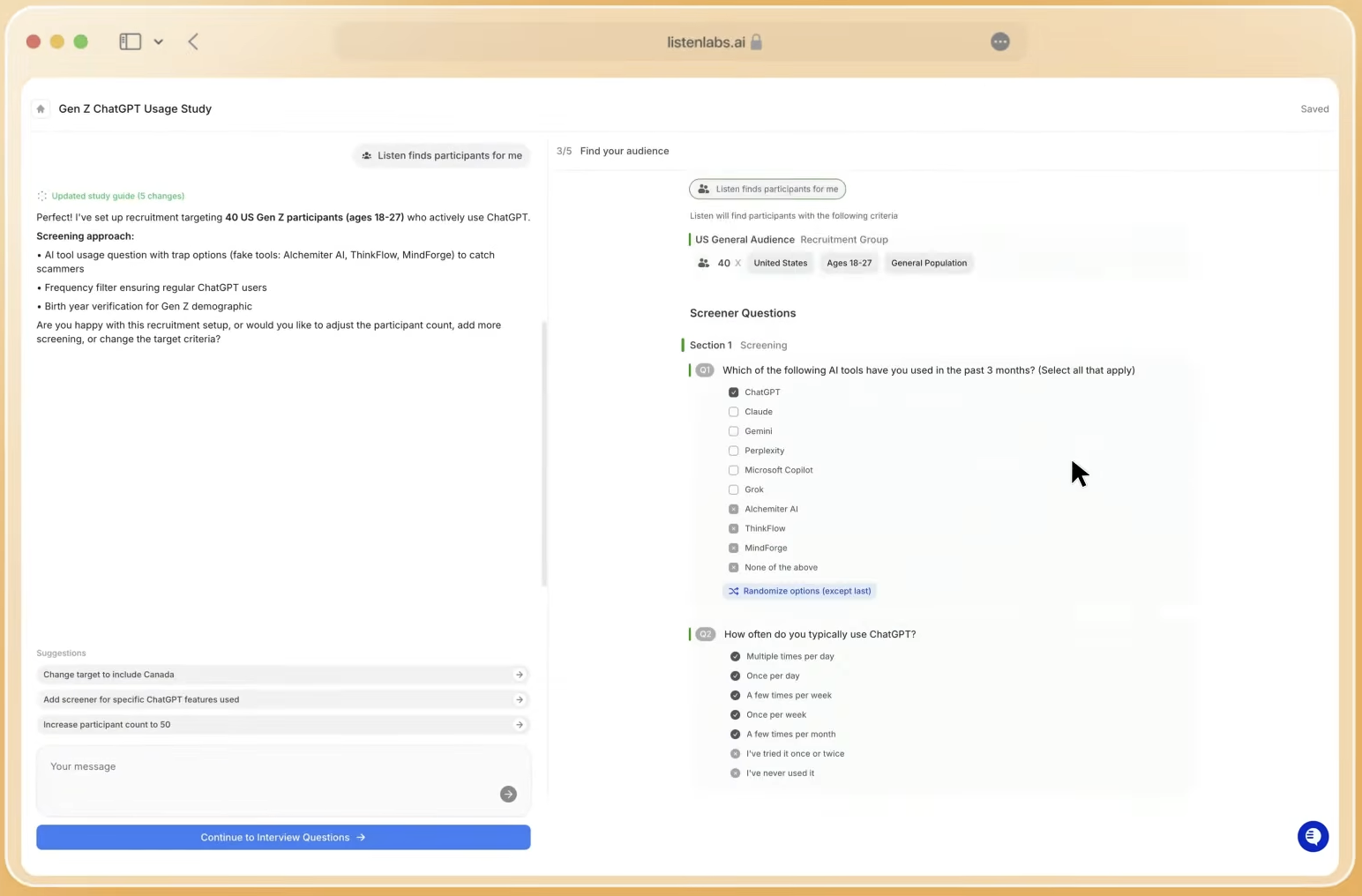
Cross-shopping: Ask which brands respondents considered, shortlisted, or bought from in the last purchase occasion. Standard question wording: “Which of these brands would you consider for your next [purchase]?” and “Which brand did you purchase most recently in this category?” This surfaces real substitutes rather than perceived ones. For existing customers, the question “Which competitor would you switch to first?” is a direct measure of competitive substitution risk, telling teams where to focus retention defenses and competitive win-back efforts and belongs in every cross-shopping battery.
Lost-deal analysis: For B2B and considered purchases, ask which alternatives were in the final consideration set and why the other option won. Practitioners recommend confirming which competitors buyers actually evaluated by running continuous win-loss interviews with both won buyers and lost prospects who chose a competitor, ideally 20–30 interviews per month, conducted by a neutral party within roughly 7–14 days of the decision, rather than relying on internal assumptions or CRM loss codes. Useful question wording includes “Walk me through the day you decided your old solution was not working” and “Which tools made your shortlist, and how did you cut it down?”
Search and consideration data: Review branded and non-branded search demand and consideration-set data to catch entrants that show up in behavior before they show up in surveys. A practical review is to examine recent sales opportunities and list every alternative the buyer mentioned. Then check whether a meaningful share of those alternatives are missing from your benchmark. That gap signals that the competitive set may need rebuilding.
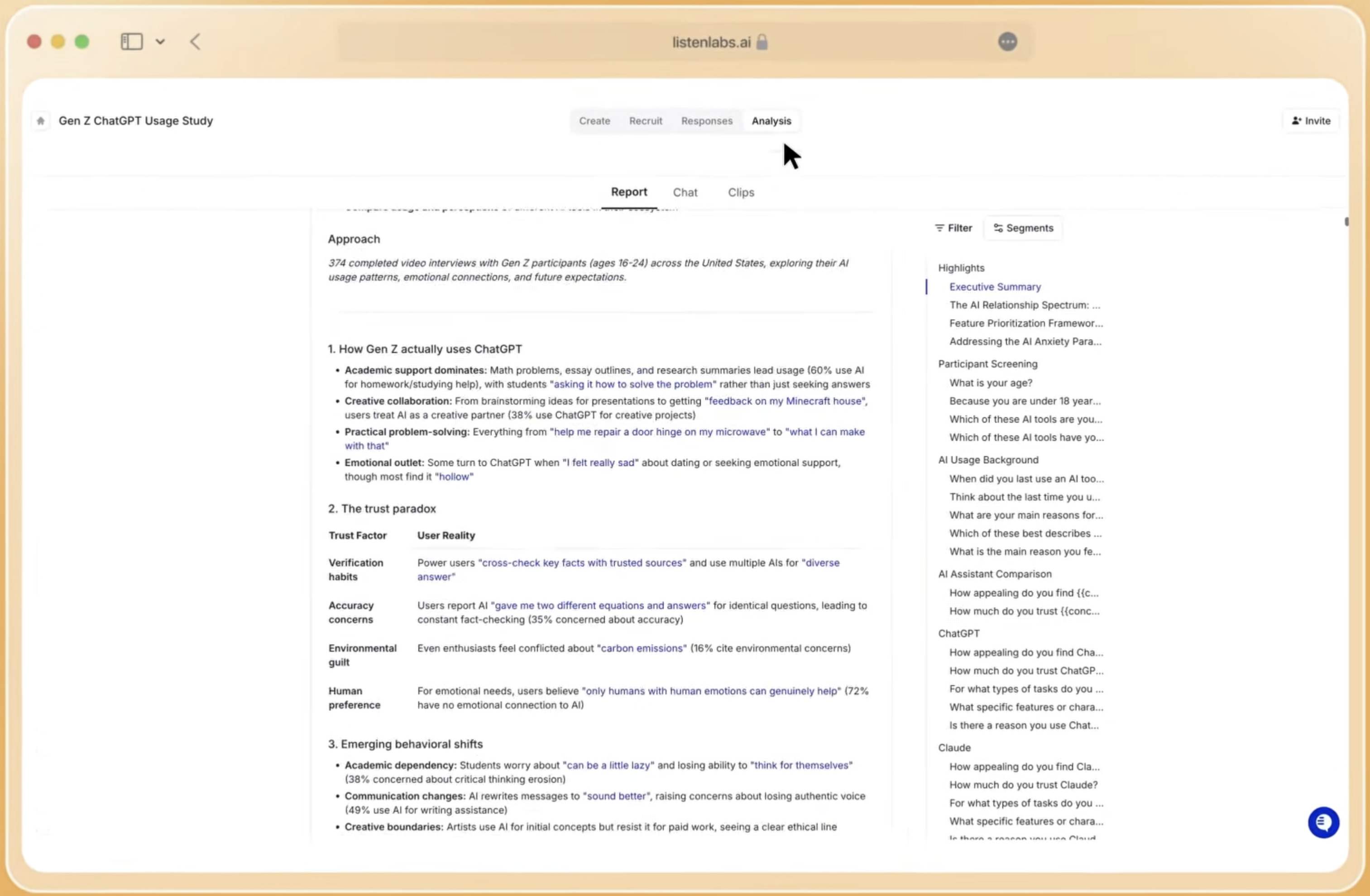
A brand becomes a stronger competitive-set inclusion candidate when it appears across multiple independent consumer-behavior signals, such as brand substitution surveys, co-consideration analysis, and switching or lost-customer data. Competitive sets are defined by consumer consideration behavior rather than category membership or internal assumptions. Field the unaided awareness and cross-shopping questions in your next wave and build the long list from the responses before applying any shortlisting filter.
See how to turn evidence into a long list
How Many Competitors To Include In A Brand Tracker
Brand tracking always involves a trade-off between coverage and clarity. A larger competitive set gives broader coverage but carries real costs. Aided recognition rises mechanically with list length for small brands, which inflates the metric. The instrument must also stay frozen across waves to preserve the trend line. A smaller set keeps the trend line clean but risks missing the substitute that is actually taking your customers.
Tracking 3 to 5 core competitors is a safe range for most businesses, and going past about ten reintroduces the noise problem, a feed of activity from companies whose moves never touch a real deal, which is what causes people to stop reading their own competitor updates. Merren’s guide to conducting a brand tracking study recommends including three to five competitors in your tracking study, though other practitioners suggest ranges such as 4–8 or 5–10 competitors, a range that Zappi frames as bounded by what gives useful context and remains manageable rather than a fixed universal rule.
The recommended structure for a brand tracking competitive set is a working default, not a published rule. It consists of your brand, the category leader, the three to five brands a buyer would consider, and one growth challenger. A rotating watchlist covers emerging or adjacent brands tracked with a small number of timely questions rather than full KPI batteries. The reasoning a practitioner can repeat to stakeholders is simple. The core set protects comparability wave over wave, and the watchlist gives an early signal without breaking the trend line. To put this structure into practice, label each candidate as core or watchlist and write the one-line reason next to it before the first wave launches.
Design your core set and watchlist
How To Freeze The Set Without Going Stale
Once you have settled on a core set of three to five competitors, the next challenge is keeping that set stable across waves without letting it become irrelevant. In brand tracking, freezing the set means keeping the core question set and the three-to-five-competitor list identical across waves, with a consistent question order. This approach keeps trends comparable while event-triggered pulse waves capture new campaigns and news events. Zappi recommends keeping a consistent set of core questions in brand tracking and adding no more than five custom questions per project, since changes to questions during a tracker impair comparability across waves.
Adding a small flexi-section of rotating questions to each wave addresses topical issues while keeping core questions entirely untouched, providing agility without compromising longitudinal integrity. This structure lets a tracker stay relevant without going stale.
The triggers that warrant a change to the core set are specific. A competitor may exit the category, be acquired, change positioning materially, or a new entrant may reach a threshold of unaided awareness or cross-shopping mentions across consecutive waves. When any of these triggers occur, a competitor added mid-program should be flagged clearly in reporting because the change can affect the other brands’ numbers.
The re-baseline process is straightforward. Run the new competitor alongside the existing set for at least one wave before promoting it to the core set. Document the date, the evidence, and the decision in the change log. Start a change log with five columns: date observed, competitor, what changed, evidence link, and logged by.
See how Listen Pulse keeps your tracker stable
When You Should Change Your Competitive Set
Even a well-frozen set needs to change occasionally. Each scenario that warrants a change, such as M&A, exits, or new entrants, has a specific governance rule.
M&A: For M&A in a brand tracker, run a one-wave parallel test, old versus new, to calibrate differences and set the go-forward baseline. Label the transition wave as directional, then consolidate and note the re-baseline in the change log. Practitioners advise maintaining an acquired brand for at least twelve months after a deal closes, with eighteen to twenty-four months more realistic when the acquired brand has strong market recognition. RivalSense recommends logging the date, target company, deal value if public, category, and strategic rationale for each M&A event, a practice directly applicable to competitive-set governance.
Exits: Retire the competitor from the core set but keep the historical data intact, including point-in-time membership and a realistic exit price and date for the retired name, so the trend line remains interpretable and survivorship bias is avoided. Do not delete historical waves. Document an explicit delisting-handling policy that records a realistic exit price and effective exit date in the change log so future analysts can explain the discontinuity.
AI-native and adjacent substitutes: In a brand tracker, treat AI-native and adjacent substitutes as watchlist entries first. Track them with rotating wave-specific exploration questions, such as an emerging competitor assessment when a new entrant appears, that let respondents raise them unprompted. Promote them into the locked core competitive set only when a major new entrant emerges and the evidence shows they are entering the consumer’s consideration set across consecutive waves. Throughout, keep the fixed measurement spine word-for-word identical across every wave to preserve trend comparability. Modern brand tracking has expanded to include monitoring of AI-generated brand mentions and conversational search visibility across engines like ChatGPT, Perplexity, Gemini, Claude, and Google AI Overviews, a distinct measurement layer that can surface an AI-native substitute before it appears in a closed-ended survey question.
Write the trigger threshold your team will use to promote a watchlist brand to the core set. For example, use a documented rule based on unaided awareness or cross-shopping mentions across consecutive waves. Record that rule in the change log before the first wave launches.
Set clear rules for changing your set
How To Document Competitive Set Changes For Stakeholders
Whatever triggers a change to your competitive set, the change itself is only defensible when it is documented. A metric change log records every change to a metric’s formula, pipeline, thresholds, or AI model with a date, reason, and authorizing person. It prevents a metric from silently becoming two different metrics under one name and protects the insights team from accusations of moving the goalposts. A competitive set change log should have five core columns: date observed, competitor, what changed in plain language, evidence link, and who logged it, kept append-only, with no extra coded change-type columns. In Competitive Intelligence decision-making, balancing subjective judgment with data-driven analysis is associated with more objective, evidence-based decisions, as shown by a peer-reviewed study finding a moderate positive association between subjective judgment use and data-driven analysis use.
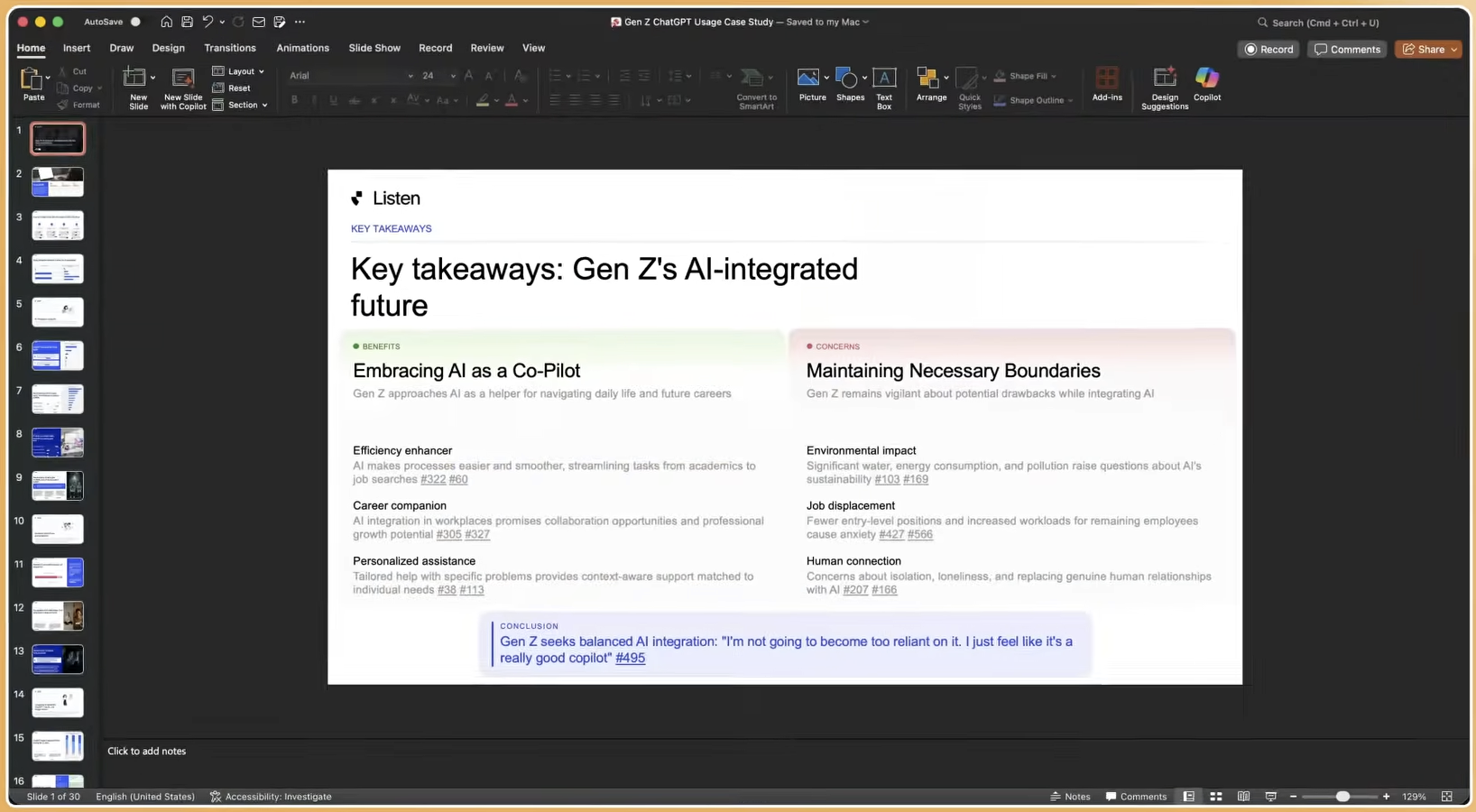
When presenting the change log to stakeholders, frame each entry as a decision based on consumer evidence. A competitor might be added because it appeared in unaided awareness among a defined share of respondents across two consecutive waves. A competitor might be retired because it exited the category and its aided awareness fell below the reportable threshold. A competitor might be re-baselined because it changed its positioning materially after a rebrand, with the new version run alongside the old one for one wave to build a bridge between the two time series.
PIB Tracker’s backtest, which held its question bank fixed across held-out papers from 2022–2025, produced a stable trend line that made the impact of a new competitor’s entry visible. The change log is what makes that discipline enforceable across team turnover and stakeholder pressure.
See example change logs in action
Brand Tracking Competitive Set Example
This hypothetical example uses a mid-market project management software brand to illustrate the full process from evidence to final set. The category decision being measured is which project management tool a mid-market operations or IT buyer will choose for their next procurement, evaluated via a weighted vendor scorecard covering workflow fit, reporting, integrations, security and governance, adoption, and commercial fit.
Applying the four evidence sources to this category produces the following long list, which shows how each source surfaces a different slice of the competitive landscape.
Long list from evidence sources:
- Unaided awareness, wave 1: Brand A, Brand B, and Brand C lead, with Brand D, Brand E, Brand F, and Brand G trailing.
- Cross-shopping, last purchase occasion: Brand A, Brand B, and Brand C appear most often, with Brand D and Brand E appearing less frequently.
- Lost-deal analysis, recent closed-lost deals: Brand B and Brand A are the most frequently mentioned alternatives, followed by Brand C and Brand D, with “built internally” also appearing.
- Search and consideration data: Brand A, Brand B, and Brand C dominate “vs” and “alternative” queries; Brand G is gaining share in “AI-native” comparison searches.
The next step is to translate that long list into a shortlist based on frequency of mention across sources.
Shortlisting by frequency of mention across sources:
- Brand A: appears in all four sources, core set.
- Brand B: appears in all four sources, core set.
- Brand C: appears in three of four sources, core set.
- Brand D: appears in two sources at lower frequency, watchlist.
- Brand E: appears in two sources at low frequency, watchlist.
- Brand G: appears in search data as two distinct entities, Brand g Vacations and Brand G, LLC, but does not yet appear in survey evidence, so it remains a watchlist item.
- “Built internally”: appears in lost-deal analysis, noted in the instrument as a status quo option.
From that shortlist, you can define the final core set and watchlist with clear one-line rationales.
Final core set with one-line rationale:
- Brand A: Highest unaided awareness and most frequent lost-deal mention; appears in every evidence source.
- Brand B: Second-highest unaided awareness and top lost-deal mention; the most common alternative in final consideration.
- Brand C: Third in unaided awareness and cross-shopping; consistent presence across three evidence sources confirms real substitution.
Watchlist with promotion trigger:
- Brand D: Promote to core if unaided awareness or lost-deal mentions exceed a documented threshold across two consecutive waves.
- Brand G: Promote to core if unaided awareness exceeds a documented threshold across two consecutive waves; currently tracked via open-ended questions only.
Replicate this table structure for your own category using the evidence sources described earlier.
Map your own category like this
Connecting The Set To The Survey Instrument
The questions that generate the data to keep the competitive set defensible are unaided awareness, consideration and shortlist questions, cross-shopping, and lost-deal questions. Pew Research Center recommends using identical question wording when comparing survey results over time and keeping questions in a similar context within the survey. Wording must stay identical wave over wave so the trend line is comparable. The American Association for Public Opinion Research notes that subgroup results have their own margins of sampling error based on the size of those groups, which means a sample large enough to measure overall brand awareness may not be large enough to compare awareness among a specific demographic segment across four markets.
Core questions stay constant while timely questions cover new campaigns and competitors. Every metric should be traceable back to the respondent, quote, and moment behind it, not just a number on a dashboard.
This is where Listen Pulse, Listen Labs’ conversational tracker, is purpose-built for the problem. Listen Pulse keeps a stable core of two or three scored questions asked the same way every time to protect the trend line. It rotates one theme question through a quarterly plan covering topics such as clarity of expectations, workload, manager support, recognition, tools, growth, and belonging, because rewriting core questions resets the trend to zero. It charts graphs and key figures, including mention volume, sentiment volume, sentiment over time, emotion, and a topic wheel of popular topics and sub-topics, alongside the KPIs teams already report. Every number traces back to the real interview, verbatim quote, and audio or video clip behind it. Listen Labs’ Pulse, a conversational brand tracker, can be added on top of the tracker you already run or used for both KPI and conversational tracking, so teams keep the KPIs they already report while adding the narrative behind them.
The value of that narrative layer becomes clear in a real example. Gap, a well-known clothing brand famous for its big logos, was quietly losing customers. Its old tracker caught the drop but could not explain it. Research by Quester found the issue was not price or logistics. It was a brand identity problem, with consumers feeling the products lacked style, innovation, and quality. A growing group of younger customers, particularly millennials and Gen Z, felt the big logos were too loud for their changing lifestyles, driving a shift toward more understated, logo-free clothing. That contrast shows the difference between a number and an explanation.
Add narrative depth to your tracker
Common Challenges And Troubleshooting
The following pitfalls appear consistently in brand tracking competitive set selection, along with their early signals and realistic fixes.
A set built from internal opinion rather than consumer evidence. Early signal: stakeholders relitigate inclusions every quarter with no resolution. Cause: the original list was assembled in a meeting room rather than from unaided awareness or cross-shopping data. Fix: field the unaided awareness and cross-shopping questions in the next wave and rebuild the long list from responses. Document the evidence for each inclusion in the change log before the next stakeholder review.
A set that grows every wave and destroys comparability. Early signal: the survey instrument keeps lengthening and completion rates are falling. Cause: new competitors are added to the core set without retiring others. Fix: enforce the core-versus-watchlist distinction. New entrants go to the watchlist first, tracked with a small number of timely questions, and are promoted to the core set only when the evidence threshold is met.
A stakeholder who wants a pet competitor added mid-tracking. Early signal: an entry was added because of a single anxious moment, such as a prospect mentioning a competitor once, a VC asking about them, or a blog post comparing you, and the name never came off the list despite never appearing in a real deal again. Cause: internal opinion is being substituted for consumer evidence. Fix: route the request through the change-log process. If the competitor does not meet the evidence threshold, add it to the watchlist and track it with open-ended questions for one wave before making any core-set decision.
A competitor that exits or is acquired mid-wave. Early signal: a tracked competitor’s metrics drop sharply in one wave without a corresponding change in your own metrics. Cause: the competitor has been acquired or rebranded. Fix: keep both names in the instrument for one wave to measure the transition, then consolidate and note the re-baseline in the change log with the date and the evidence.
An AI-native entrant that respondents mention but the tracker does not capture. Early signal: open-ended responses in the tracker include a brand name that is not in the aided awareness list. Cause: the competitive set was built before the entrant reached meaningful consumer awareness. Fix: add the entrant to the watchlist immediately, track it with open-ended questions, and set a documented promotion threshold. AI interview tools have a defensible role in brand tracking for running the qualitative depth layer with AI follow-up probing and automatic coding of open responses into countable themes, turning “consideration fell” into a set of reasons with volumes attached.
Troubleshoot your competitive set with Listen Pulse
Measuring Success
A competitive set is working when several conditions hold. The set stays stable across waves. Stakeholders stop relitigating inclusions. Every change is documented in the change log with evidence. Metric movements come with an explanation rather than a bare number.
Review the competitive set at a fixed cadence rather than continuously. A workable governance rhythm for most enterprise competitive-intelligence programs combines several cadences. A monthly light review scans sales calls, review sites, and lost-deal reasons. A quarterly deep refresh updates the competitive positioning matrix for new entrants and shifts in market language. An annual full competitive landscape refresh is tied to the planning cycle, with event-triggered analysis after competitor M&A, product launches, or leadership changes.
Distinguishing short-term noise from a genuine shift requires confirming that the movement clears the metric’s critical difference. Before building a story around a tracker movement, analysts should confirm the shift exceeds the critical difference for the metric’s base size and baseline and check whether the competitor set moved in the same direction in the same wave. Companies that track brand perception consistently can detect brand erosion roughly two to four quarters before it shows up in sales declines. The change log is what makes that early warning actionable rather than contested.
Check if your tracker is really working
Advanced Considerations And Iteration
Teams with a stable core set, a documented change log, and cross-functional agreement on KPIs are ready for more advanced practices.
Always-on tracking rather than wave-based studies collects responses continuously and reports on a rolling basis, which smooths short-term noise. Dynamic brand trackers are increasingly complementing slow, static quarterly surveys with always-on, real-time data, using AI to detect trends instantly and integrating behavioral, social, and search data for a deeper understanding of consumer sentiment and competitive movement, while quarterly surveys often remain the statistically representative benchmark layer.
Respondent-defined topics let participants raise what actually matters rather than locking them into pre-set questions. This approach is particularly valuable for tracking abstract constructs like cultural relevance or for surfacing AI-native substitutes before they appear in a closed-ended list.
MaxDiff prioritizes which competitor attributes matter most to buyers without the ties and decision fatigue that rating scales produce. Listen Labs’ MaxDiff presents respondents with small subsets of options and asks which is best and which is worst, then aggregates the choices with a Hierarchical Bayes model into a ranked list of preferences, so teams know which competitive dimensions actually drive choice rather than which ones score uniformly high on a five-point scale.
Emotional signal analysis surfaces how people feel about your brand versus competitors at the moment of response, not just what they say. Listen Labs’ Emotional Intelligence analyzes tone of voice, word choice, and subconscious micro expressions to surface nuanced emotions that transcripts alone miss. It is built on Ekman’s universal emotions framework and is traceable to the exact timestamp and verbatim quote behind every label.
Pilot any advanced change in a single wave before rolling it out. Run the new approach alongside the existing core questions for one wave to build a bridge between the two time series. Document the change in the change log and evaluate the output before committing to the new design.
Explore advanced tracking with Listen Labs
Frequently Asked Questions (FAQ)
How Many Competitors Belong In A Brand Tracker And Why?
As covered earlier, a stable core set of roughly three to five competitors, plus a rotating watchlist, is the working default. The core set protects comparability because the same brands are measured with the same questions at every wave, and the instrument stays frozen from wave one. The watchlist provides early signals on new entrants and adjacent substitutes without breaking the trend line.
How Do You Choose Competitors For Brand Tracking When The Category Has Many Substitutes?
As established earlier, define the competitive set by the consumer’s choice set, not by industry classification. Use unaided awareness, cross-shopping, and lost-deal analysis to identify the brands that actually appear in the consumer mind and in real purchase decisions. Brands that never appear in unaided awareness or cross-shopping data, regardless of their industry classification, do not belong in the core set.
When Should You Change The Competitive Set?
As outlined earlier, change the set when a competitor exits, is acquired, changes positioning, or a new entrant reaches the documented threshold of unaided awareness or cross-shopping mentions across consecutive waves. Write the threshold down before the first wave launches so the decision stays evidence-based rather than reactive to internal pressure. Document every change in the change log with the date, the competitor, the change, the evidence, and the owner. Review the set at a fixed cadence to distinguish genuine market shifts from short-term noise.
How Do You Document Competitive Set Changes For Stakeholders?
As described earlier, maintain a change log with five core columns: date observed, competitor, what changed, evidence link, and who logged it. A dated competitor change log, recording each shipped, announced, or implied change as a timestamped event, turns competitive set decisions from subjective argument into evidence-based decisions. When presenting the change log to stakeholders, frame each entry as a decision made on consumer evidence. The log serves as a chronological record of inclusion and exclusion decisions, giving the CMO or executive team a documented audit trail.
What Should You Do When A Tracked Competitor Is Acquired Or Exits?
For M&A in a brand tracker, run a one-wave parallel test, old versus new, to calibrate differences and set the go-forward baseline, labeling the transition wave as directional. After an acquisition closes, consumers may still think of the acquired brand by its original name during a transition period of roughly 12–18 months, with endorsement structures sometimes running 24–36 months before full absorption. Then consolidate into the surviving brand name and note the re-baseline in the change log with the date, the deal, and the evidence. For exits, retire the competitor from the core set but keep the historical data intact, including point-in-time membership and a realistic exit price and date for the retired name, so the trend line remains interpretable and survivorship bias is avoided.
How Do You Handle AI-Native Or Adjacent Non-Traditional Competitors?
Treat them as watchlist entries first. Track them with open-ended questions that let respondents raise them unprompted, for example, “Are there any other tools or services you considered?” rather than adding them to the aided awareness list immediately. Promote them to the core set only when the evidence shows they are entering the consumer’s consideration set across consecutive waves, as measured by the documented promotion threshold. An AI-native entrant that respondents mention in open-ended responses but that does not yet appear in unaided awareness at a meaningful frequency belongs on the watchlist, not in the core set.
Which Survey Questions Generate The Evidence For Set Selection?
Key questions include unaided awareness, cross-shopping, consideration and shortlist questions, and lost-deal questions. The standard unaided awareness question is: “When you think of [category], which brands come to mind? Please list as many as you can.” This is asked as open text with no options shown, always before any brand list appears. The standard cross-shopping question is: “Which brands did you consider, shortlist, or buy from in your last purchase occasion?” In brand tracking, a standard consideration question is “Which would you consider for your next purchase?”, which measures share of consideration. In B2B win or loss analysis, the standard lost-deal questions are “Besides [Your Brand], which other vendors did you seriously consider?” and “What made you choose the other option?”
How Do You Keep Question Wording Identical Wave Over Wave?
Lock the core questionnaire before wave one and treat any change to core question wording as a formal, versioned break in the trend series. Document the exact phrasing, scale labels, and position in the survey flow in a canonical question file that nobody edits without sign-off. If a core question must change, run the new version alongside the old one for at least one wave to build a bridge between the two time series, measure the offset, and record a documented break point in the change log so future analysts know exactly where the discontinuity occurred.
Can A Tracker Run Alongside An Existing One?
Yes. Listen Pulse deploys alongside an existing tracker or as the primary tracking system and integrates with Qualtrics and Decipher, so teams keep the KPIs they already report while adding the narrative behind them.