
Written by: Anish Rao, Head of Growth, Listen Labs | Last updated: September 8, 2026
Key Takeaways
- Traditional brand trackers report KPI movement but lack built-in diagnostics to explain why metrics shift, which forces separate qualitative studies that add weeks and cost.
- Enterprise-grade solutions require verified global panel coverage, SOC 2 Type II, ISO 27001, GDPR compliance, enterprise SSO, and native BI integrations that smaller SMB platforms structurally cannot provide.
- Survey-based tracking and social listening serve different purposes. Surveys capture representative brand health among the silent majority, while social listening measures the vocal minority, yet neither alone explains perception shifts.
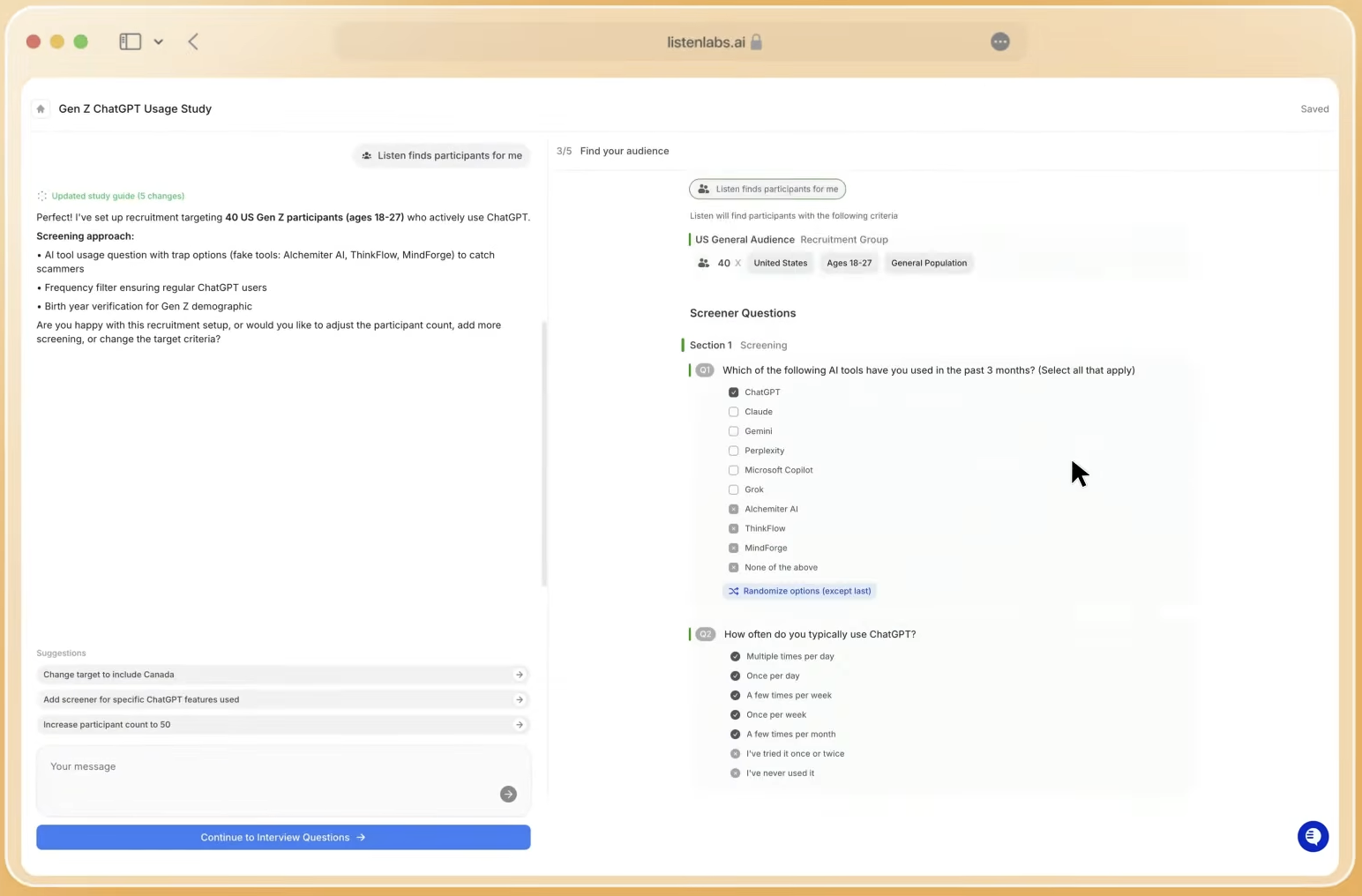
- Listen Pulse combines quantitative KPIs with open-ended conversational depth in every wave, so teams see both metric movement and the underlying explanation in a single study.
- Listen Labs delivers diagnostic depth with enterprise governance. See how Listen Pulse works in a live demo.
Enterprise Requirements For Brand Tracking At Scale
Enterprise-grade brand tracking sits in a different category from the SMB tools that dominate affordable SaaS tiers. The distinction is substantive. Fortune 500 procurement teams require capabilities that smaller platforms structurally cannot provide.
Global panel coverage sets the baseline. A credible enterprise tracker needs verified respondents across many countries and languages, not just a few English-speaking markets. Governance and security certifications remain non-negotiable. SOC 2 Type II, ISO 27001, GDPR compliance, enterprise SSO, and 256-bit encryption must be verifiable from actual audit reports rather than logo badges on a vendor’s website.
Integration with existing business intelligence infrastructure determines whether tracking data reaches decision-makers or stays in a research silo. Native connectors to platforms like Qualtrics, Decipher, and Tableau allow tracking data to flow into dashboards that leadership already reviews. Multi-source data synthesis, which combines survey data, social listening, and behavioral signals, creates a layered picture that any single source cannot match.
Modern SMB trackers like Tracksuit and Latana provide accessible dashboards and affordable always-on measurement. They still lack the enterprise governance certifications, global panel depth, and integration capabilities that large-scale procurement requires. Evaluating them as Tracksuit alternatives for enterprise use means recognizing that the gap is structural rather than a simple pricing difference.
See how Listen Pulse meets these enterprise requirements in a live demo
Survey-Based vs. Social Listening: Different Questions, Different Answers
The two dominant data collection approaches in brand tracking answer fundamentally different questions. GWI’s 2026 guide to brand tracking tools notes that most insight teams end up using both because they cannot substitute for each other.
Survey-based tracking measures brand health through structured questions to representative samples. YouGov BrandIndex is a leading example of this methodology. It tracks 16 brand-health metrics daily across 55 markets using a fresh panel every day, which captures the silent majority of consumers who never post publicly. That representativeness is the core asset. A survey-based tracker can show what 100 million non-posting consumers think about your brand, which social listening structurally cannot.
Social listening platforms like Brandwatch Consumer Research analyze organic online conversations from 100M+ sources using its Iris AI engine. The platform excels at real-time reputation monitoring and trend spotting. It still measures only the vocal minority who post publicly, a group that Timelaps co-founders Henk Pretorius and Harry Zhang describe as the “loudest 1% of posters, not the buying 99%.” Most brand discussion now happens in dark social channels such as iMessage, WhatsApp, Slack, and Discord that social listening tools cannot see.
Enterprise teams therefore need both approaches but still face a gap. Survey data tells you what the market thinks. Social listening tells you what the loudest voices say. Neither alone explains why perceptions shift. That explanation requires conversational depth layered onto quantitative tracking, which defines the next generation of enterprise brand tracking software.
The Diagnostic Gap: Why Traditional Trackers Miss The “Why”
Wave-based, quant-only trackers carry a structural limitation that stems from methodology rather than product design. John Ferreira, Chief Insights & Innovation Officer at Finch Brands, describes traditional trackers as “lagging indicators with no mechanism to explain themselves,” which leaves brand teams debating hypotheses without diagnostic clarity.
User Intuition’s analysis of 112 AI-moderated brand tracking interviews identifies the core structural problem. The appropriate diagnostic follow-up question depends on the respondent’s answer and requires dynamic branching that pre-scripted surveys cannot perform. If a respondent says “I trust this brand less,” the right next question could be “what specifically changed?” or “was there a moment when your perception shifted?” Each path leads to a different explanation. A pre-scripted survey cannot branch that way.
NielsenIQ’s 2026 commentary on brand health tracking frames the broader issue. Traditional trackers assume a linear funnel model, while today’s consumer journeys are fragmented and non-linear, with contextual, trade-off-driven choices. Many organizations see strong tracker scores that fail to translate into growth.
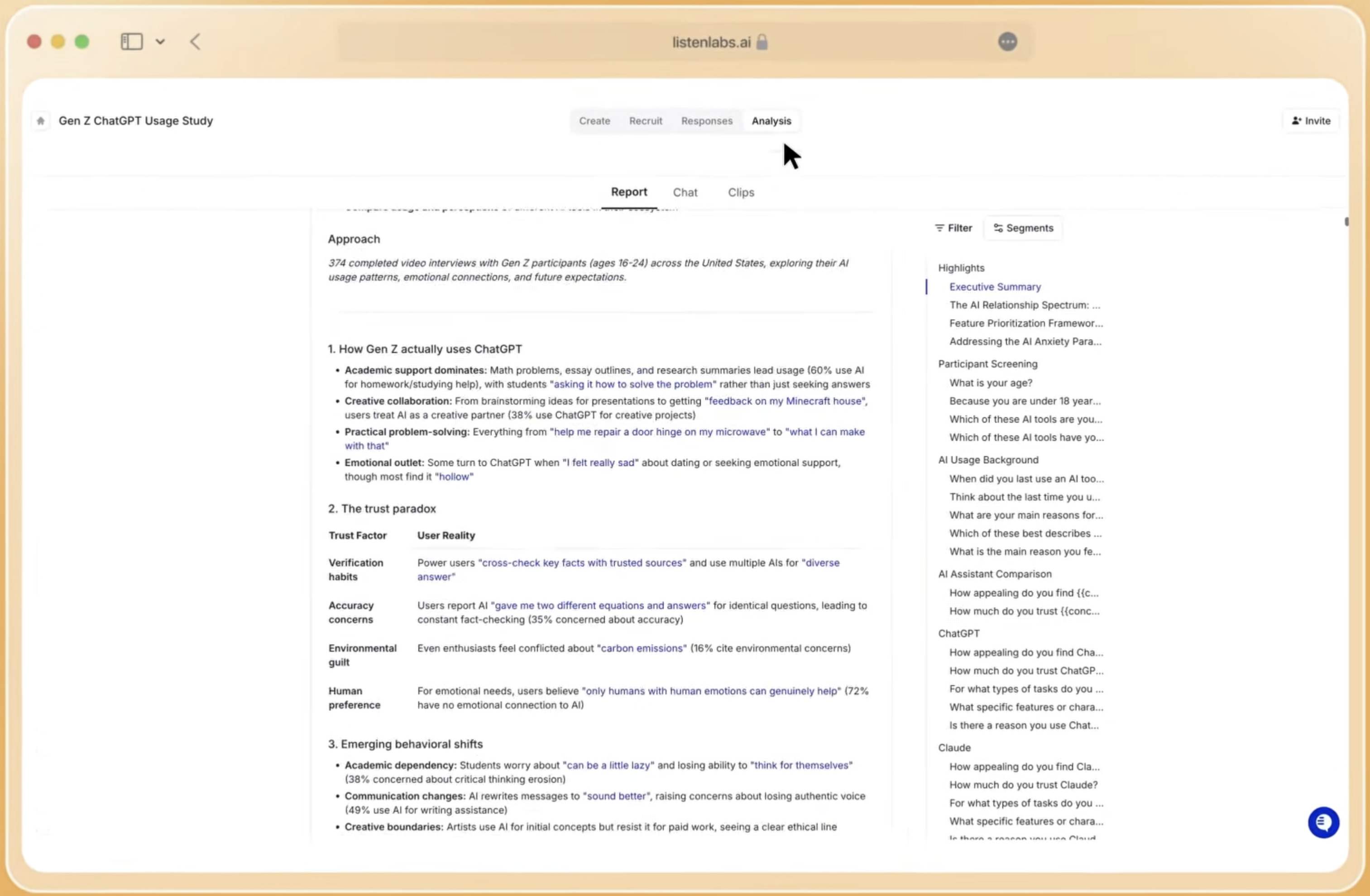
By the time a KPI decline appears in a wave, the underlying shift has been building for months. Explaining the movement usually requires a separate qualitative study, which adds four to six weeks and significant cost. That lag defines the diagnostic gap.
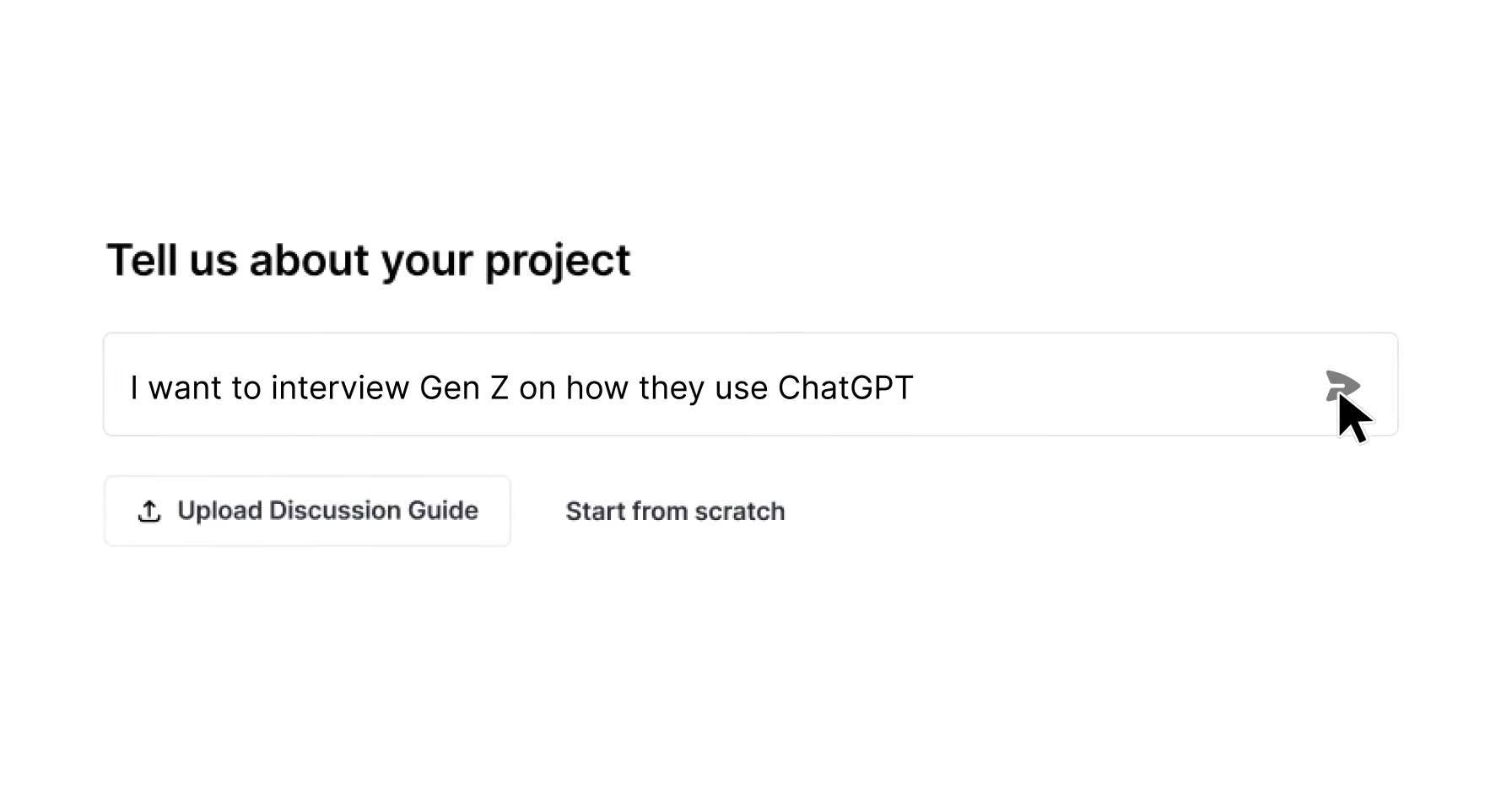
One well-known clothing brand, famous for its big logos, was quietly losing customers. Its old tracker caught the drop but could not explain it. Listen Pulse revealed that style, not price, drove the shift. A growing group of customers felt the big logos were too loud for their changing lifestyles. The metric decline and the reason behind it arrived in the same wave.
Key Capabilities That Close The Diagnostic Gap
The diagnostic gap described above reflects design choices, not fate. The capabilities below separate platforms that merely describe KPI movement from those that explain it.
- Diagnostic Depth: Include open-ended conversation in every wave, not only closed-ended KPIs. The platform must explain why a metric moved, not only that it moved.
- Multi-Source Data Integration: Connect survey data, social listening, and behavioral signals into a unified view of brand health.
- Governance And Security: Provide SOC 2 Type II, ISO 27001, GDPR, enterprise SSO, and 256-bit encryption, verified from actual audit reports.
- BI Integrations: Offer native connectors to Qualtrics, Decipher, Tableau, and existing dashboards so tracking data reaches decision-makers.
- Global Panel Quality: Maintain verified respondents across many countries and languages, with real-time fraud protection and participant frequency limits.
- Trend Integrity: Keep core questions constant wave over wave while timely questions cover new campaigns, competitors, and news events without breaking historical comparability.
Enterprise Brand Tracking Solutions: Four Categories To Know
The enterprise brand tracking market in 2026 divides into four categories, each with distinct strengths and trade-offs. Understanding these categories helps teams choose the right mix.
Survey-Based Trackers form the established category. YouGov BrandIndex offers continuous daily tracking across those same 16 metrics in 55 markets, which supports benchmarking and longitudinal comparison but remains quant-only with no built-in diagnostic for why metrics move. Kantar’s BrandZ database adds deep brand-equity frameworks and valuation methodology, combining consumer research with financial data, and focuses on annual strategic analysis rather than continuous diagnostics. Qualtrics provides brand tracking within its broader XM platform, with flexible survey design and strong BI integration, yet still operates as a survey-based system without conversational depth. Despite their differences, all three report KPI movement without explaining it.
Social Listening Platforms serve a different function. Brandwatch Consumer Research analyzes 100M+ online sources with its Iris AI engine and maintains a 1.7 trillion-conversation archive dating back to 2010. It excels at real-time reputation monitoring and trend spotting. It still measures only the vocal minority discussed earlier and cannot capture representative brand health among the broader buyer base.
Modern SMB Trackers like Tracksuit and Latana provide affordable, always-on tracking with dashboards built for non-researchers. GWI’s 2026 guide rates Tracksuit at 4.7/5 and Latana at 4.8/5 on G2, which reflects strong usability. They still lack the enterprise governance certifications, global panel depth, and integration capabilities that Fortune 500 procurement teams require.
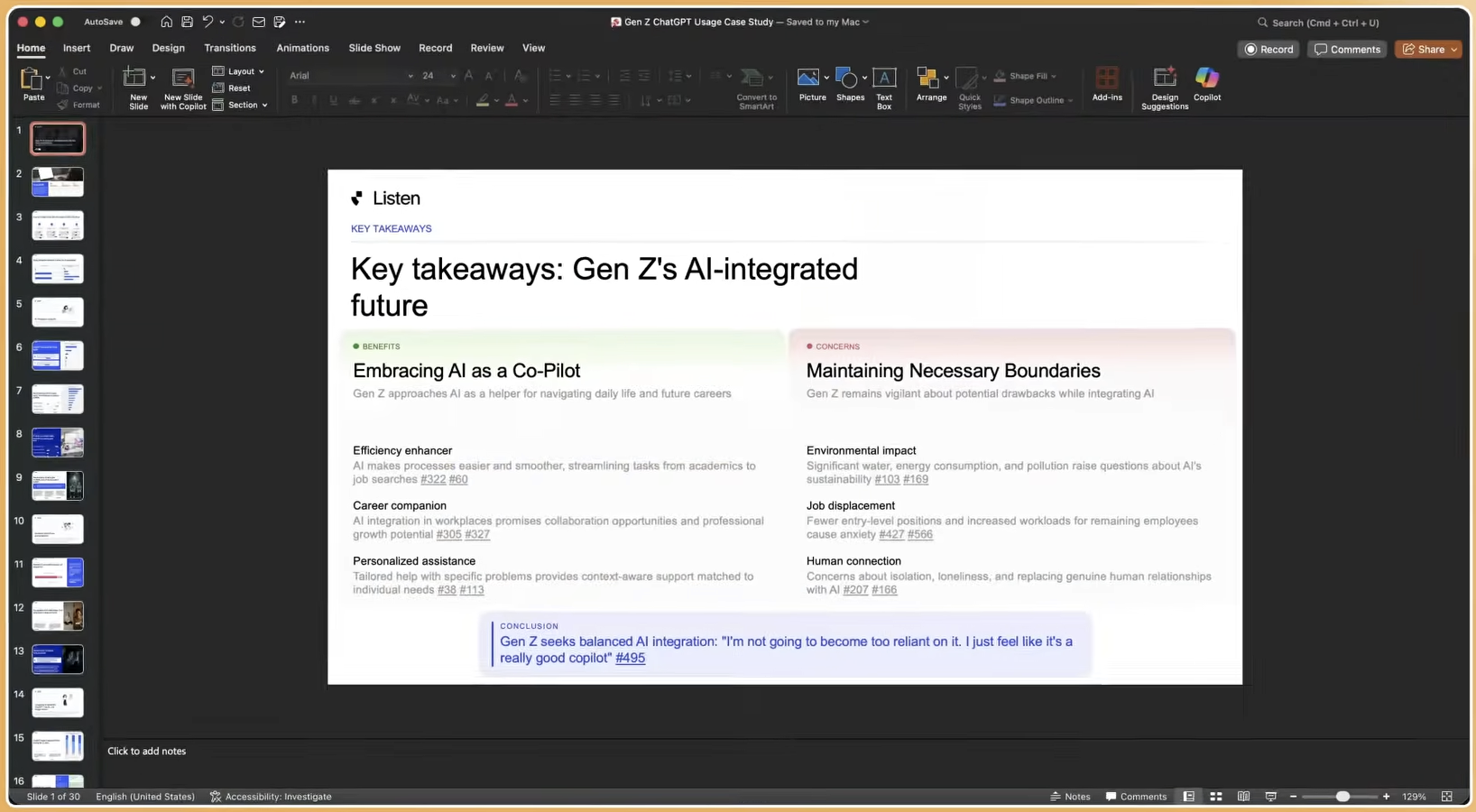
Conversational Trackers represent the evolution of the category. Listen Pulse runs the same study wave after wave. It combines quantitative KPIs with open-ended conversation and charts emerging themes right next to the metrics you already report. Every number traces back to a real moment, including the quote, the clip, and the person behind it. Core questions stay constant to protect the trend line while timely questions cover new campaigns and competitors. The platform deploys alongside an existing tracker or as the primary tracking system and integrates with Qualtrics and Decipher so teams keep the KPIs they already report while adding the narrative behind them.
Compare Listen Pulse against your shortlist by booking a tailored demo
How To Evaluate Vendors For Your Enterprise: An RFP Checklist
Once you understand the vendor landscape, the next step is structuring an RFP that separates compliant vendors from capable ones. Pulsar’s enterprise RFP guidance notes that most enterprise RFPs fail because they rely on generic feature lists that every vendor can check “yes” to. The following checklist focuses on criteria that reveal real capability.
- Governance And Security Certifications: Verify SOC 2 Type II, ISO 27001, ISO 27701, and ISO 42001. Request the actual audit reports rather than logo badges. Confirm GDPR compliance and a named sub-processor list.
- Global Panel Coverage: Confirm verified respondents across your operating markets with broad country and language coverage. Ask how the vendor handles fraud detection and participant frequency limits.
- Methodology Transparency: Ask how the vendor handles sampling, weighting, and quality control. Require written disclosure of their sampling methodology and analyzed-versus-collected data share.
- Diagnostic Capability: Confirm that the platform can explain why a KPI moved rather than only reporting that it moved. Require a demonstration with real data, not just a slide deck.
- Integration With Existing Infrastructure: Confirm native connectors to Qualtrics, Decipher, Tableau, and your existing BI stack. Require a documented API with declared rate limits and connector maintenance SLAs.
- Total Cost Of Ownership: Model three-year costs including overages, renewal uplifts, and internal headcount, not only year-one pricing. Cap overage fees and lock renewal price increases to a fixed percentage.
- Exit Provisions: Confirm you can export your enriched historical data if you switch vendors. Require a 30-to-90-day post-termination data access window and explicit customer ownership of tagged historical data.
Common Pitfalls And How To Avoid Them
- Pitfall 1: Choosing A Tracker That Only Reports Lagging Indicators. Require diagnostic capability, including open-ended conversation in every wave, before signing. A tracker that tells you awareness dropped without explaining why only keeps score instead of guiding strategy.
- Pitfall 2: Relying Solely On Social Listening Without Survey Data. Social listening measures the vocal minority who post publicly. Only survey-based tracking on a representative sample can measure people who have not yet bought, searched, or posted. Use both together.
- Pitfall 3: Ignoring The “Why” Behind Numbers. Every KPI movement should arrive with its explanation attached. If it does not, you react to a lagging indicator, and by the time it appears, the underlying shift has already been building for months.
- Pitfall 4: Failing To Integrate Tracking With Existing Research Infrastructure. Verify BI integrations with Qualtrics and Decipher before signing. Tracking data that cannot reach existing dashboards will not reach decision-makers.
Frequently Asked Questions
What Is The Best Brand Tracking Software For Enterprises?
The best enterprise brand tracking software depends on your specific needs, and diagnostic capability now matters most. Traditional trackers like Kantar and YouGov BrandIndex report KPI movement without explaining why. They support benchmarking and longitudinal comparison yet remain structurally limited as diagnostic tools. Modern conversational trackers like Listen Pulse pair quantitative KPIs with qualitative “why” in the same wave, so every metric movement arrives with its explanation. For enterprises evaluating brand tracking software, the core question is which platform can explain why metrics moved, not which platform lists the most metrics.
What Does A Brand Tracker Do?
A brand tracker continuously measures brand health metrics such as awareness, consideration, preference, and trust across representative consumer samples over time. It tracks how these metrics trend wave over wave, benchmarks performance against competitors, and surfaces shifts in brand perception. The strongest trackers also connect metric movement to the consumer conversations driving it, so a decline in consideration arrives with the explanation attached rather than requiring a separate qualitative study weeks later.
Survey-Based vs. Social Listening: Which Do You Need?
Most enterprises need both, for different reasons. Survey-based tracking captures representative brand health among the silent majority of consumers who never post publicly. Social listening captures unprompted conversation from the vocal minority who do. They answer different questions. Survey tracking shows whether your brand is growing or shrinking in the market’s mind. Social listening shows what the loudest voices are saying right now. Neither alone explains why perceptions shift. That explanation requires conversational depth layered onto quantitative tracking, with open-ended conversation in every wave that surfaces the reasoning behind the numbers.
How Is Listen Pulse Different From Traditional Trackers Like Kantar Or YouGov?
Traditional trackers are wave-based and quant-only. They report that awareness or consideration moved but carry no diagnostic for why. By the time a KPI decline appears in a wave, the underlying shift has been building for months, and explaining it usually requires a separate qualitative study. As described above, Listen Pulse keeps core questions constant to protect the trend line and adds open-ended conversation to every wave. It charts emerging themes next to the KPIs you already report so the metric change and the reason behind it arrive together. The platform deploys alongside an existing tracker or as the primary tracking system and integrates with Qualtrics and Decipher.
What Security Certifications Does Listen Labs Hold?
Listen Labs holds SOC 2 Type II, ISO 27001, ISO 27701, and ISO 42001 certifications, is GDPR compliant, and uses 256-bit encryption. Customer data is never used to train AI models. The platform supports enterprise SSO and includes Quality Guard, an AI orchestration layer that monitors every interview in real time for fraud and low-effort responses, limits participants to three studies per month across the platform, and draws from a panel of 50M+ verified respondents across 45+ countries.
Conclusion: Choose A Platform That Explains The “Why”
The core problem with traditional enterprise brand tracking is structural. Wave-based, quant-only trackers report KPI movement without a built-in mechanism to explain it. By the time a decline appears in a wave, the underlying shift has been building for months, and explaining it requires a separate qualitative study that adds weeks and cost.
The evaluation framework for 2026 remains straightforward. Focus on diagnostic depth, governance and security certifications, global panel quality, integration with existing BI infrastructure, and total cost of ownership modeled over three years. Any vendor that cannot demonstrate diagnostic capability, meaning the ability to explain why a KPI moved rather than only that it moved, functions as a descriptive tool rather than a strategic one.
Listen Pulse pairs quantitative KPIs with qualitative “why” in one instrument, analyzes tens of thousands of responses continuously, and surfaces emerging themes before they show up as KPI declines. Every number traces back to a real moment, including the quote, the clip, and the person behind it. That shift in capability represents the evolution the category has needed.
Experience this diagnostic depth for yourself by booking a Listen Pulse demo