
Written by: Anish Rao, Head of Growth, Listen Labs
Key Takeaways for Product-Focused Brand Tracking
- Brand tracking for product managers measures how target users see a product’s reputation, value, and competitive position over time. These signals validate product-market fit and guide feature prioritization.
- Key metrics for PMs include aided and unaided awareness, consideration, NPS, brand sentiment, and attribute association. Each metric offers a distinct input for product decisions.
- Traditional survey-based tracking reports that a metric moved but rarely explains why. AI-powered conversational trackers like Listen Pulse pair quantitative KPIs with open-ended conversation so you see the reasoning behind every data point.
- Integrating brand tracking into product workflows supports roadmap prioritization, feature validation, competitive analysis, and evidence-based decisions through a consistent monitor, diagnose, prioritize, act, and validate framework.
- Listen Labs’ Listen Pulse turns brand perception into concrete product decisions. Schedule a personalized walkthrough to see how it connects user sentiment directly to your roadmap.
Why Product Managers Should Care About Brand Tracking
Brand tracking has traditionally lived in the marketing department, yet for product managers it functions as an early-warning system. When awareness holds steady but consideration drops, the issue is positioning, not marketing. When sentiment turns negative after a feature launch, that shift is product feedback arriving months before it appears in churn data.
The distinction matters. Marketing teams use brand tracking to measure campaign effectiveness. Product managers use brand tracking to answer three core questions.
- Is our product still solving the right problem for the right people?
- Are we winning or losing the competitive battle for mindshare?
- Which features or experiences shape how users perceive our product?
McKinsey’s consumer decision journey research, based on purchase decisions from nearly 20,000 consumers across five industries and three continents, found that brands in the initial consideration set can be up to three times more likely to be purchased than brands outside it. For PMs, this means the battle for consideration starts long before a user signs up, and brand tracking is how you monitor that battlefield.
Ready to connect brand perception to product decisions? See Listen Pulse in action with Listen Labs and learn how it supports product choices.
Key Brand Metrics for Product Managers
Only a subset of brand metrics directly supports product decisions. Five metrics belong on every PM’s radar, and each one tells a specific story about your product.
Aided and Unaided Awareness
Aided awareness measures whether users recognize your product when prompted, while unaided awareness measures whether your product comes to mind unprompted when someone thinks about your category. Unaided awareness is more valuable because it reflects genuine top-of-mind recall rather than simple recognition. If unaided awareness is flat while a competitor’s is climbing, that pattern signals likely future market share loss.
Consideration
Consideration tracks whether users actively weigh your product against competitors before making a decision. High awareness with low consideration usually points to a positioning or differentiation problem rather than a reach problem. If users know who you are but do not consider you, the issue likely sits in your product’s value proposition or how you communicate it.
Net Promoter Score (NPS)
NPS measures willingness to recommend, scored from -100 to 100, and becomes most useful for product teams when segmented by feature adoption, user persona, or activation milestone. A project management tool with an overall NPS of 45 found marketing teams were Promoters at 65, while engineering teams were Detractors at 10 due to missing integrations. That gap created a clear roadmap signal.
Brand Sentiment
Brand Attribute Association
Brand attribute association measures the specific traits users assign to your product, such as “easy to use,” “innovative,” “reliable,” or “expensive.” Attribute association is highly actionable for PMs because it maps directly to product decisions. If users describe your product as “powerful but complicated,” that pattern signals a UX investment opportunity.
How to Collect Brand Data with Traditional and AI-Powered Methods
Traditional brand tracking relies on survey-based methods that use periodic waves of structured questionnaires to measure awareness, consideration, and attribute ratings. These trackers can tell you that a number moved, but they cannot explain why.
The limitation is architectural. Surveys are pre-scripted and cannot branch dynamically based on respondent answers. If consideration drops four points in a quarter, the survey data shows the drop but carries no diagnostic. To answer why, teams historically commissioned separate qualitative studies. Focus groups cost $8,000–$15,000 per group, adding $50,000–$120,000 and 6–10 weeks to the research cycle.
AI-powered conversational trackers address this gap by combining quantitative KPIs with open-ended conversation in a single instrument. Instead of asking respondents to rate consideration on a 1–10 scale and moving on, the AI interviewer asks why they gave that score, probes vague answers, and captures the reasoning behind every data point. Per-response costs drop from $35–$80 on a panel interview to $3–$8 on an AI conversation, and time-to-insight falls from 8–16 weeks to 24–72 hours, while open-ended response depth increases from 8–15 words to 180–400 words per respondent.
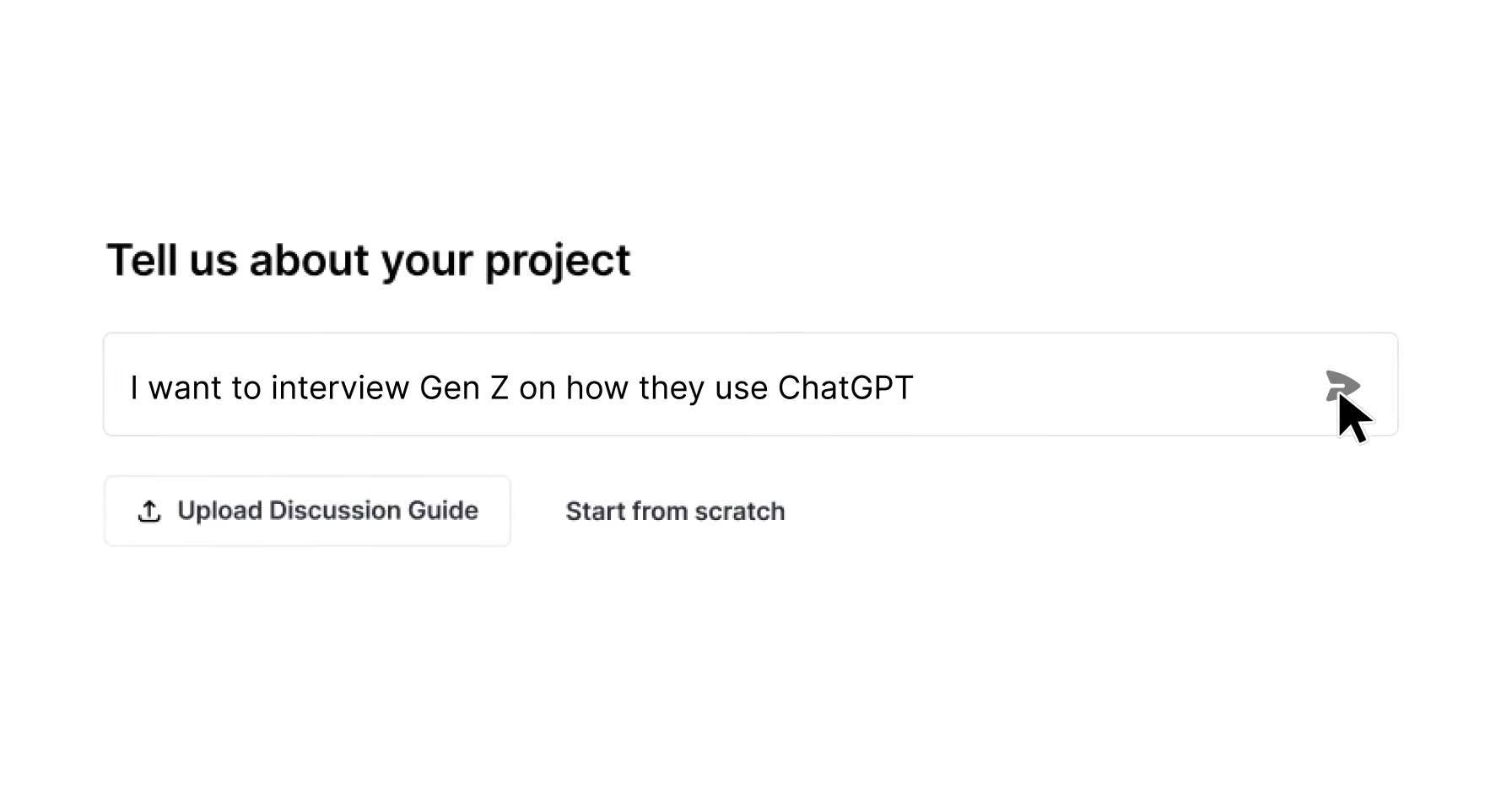
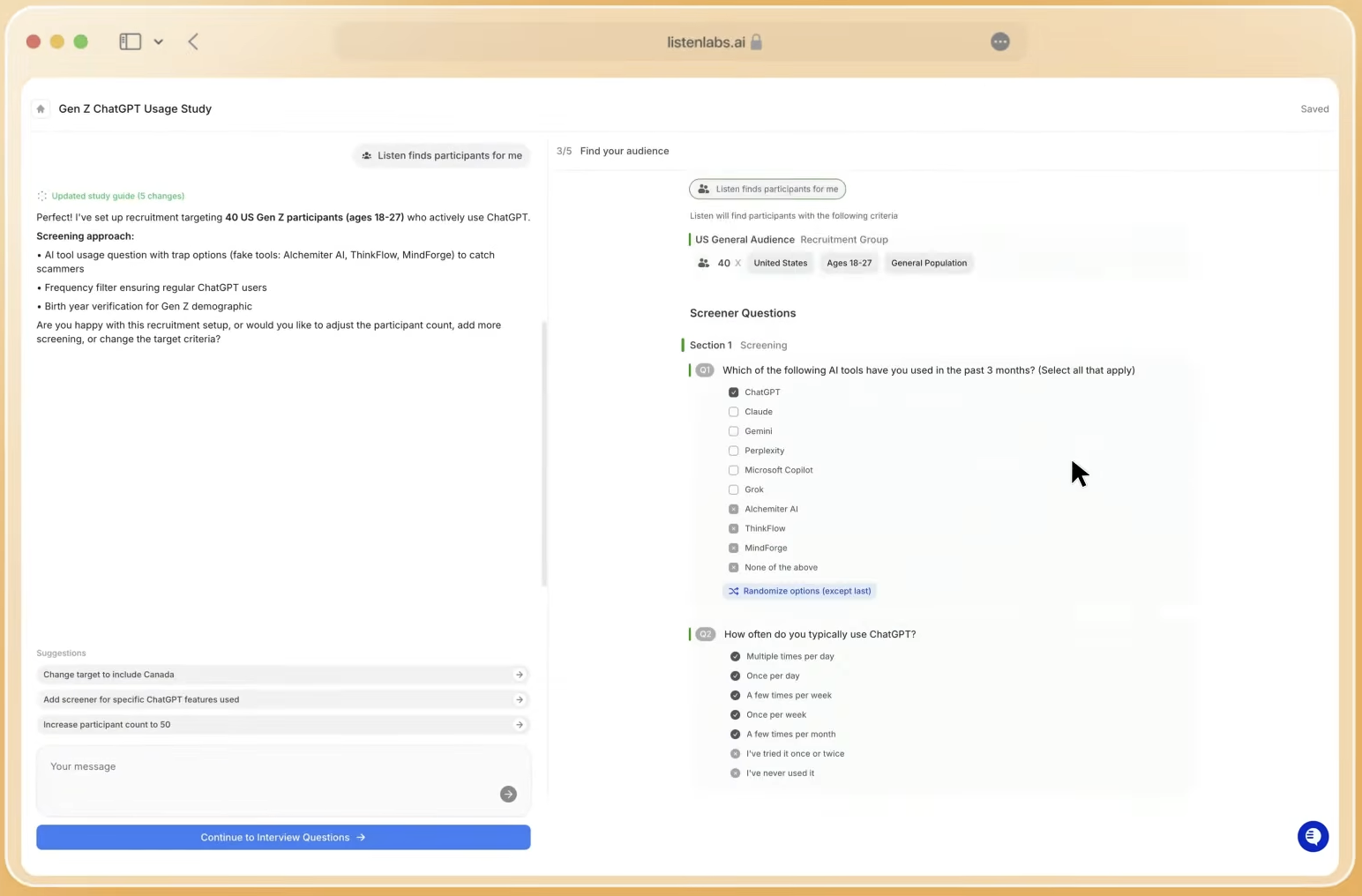
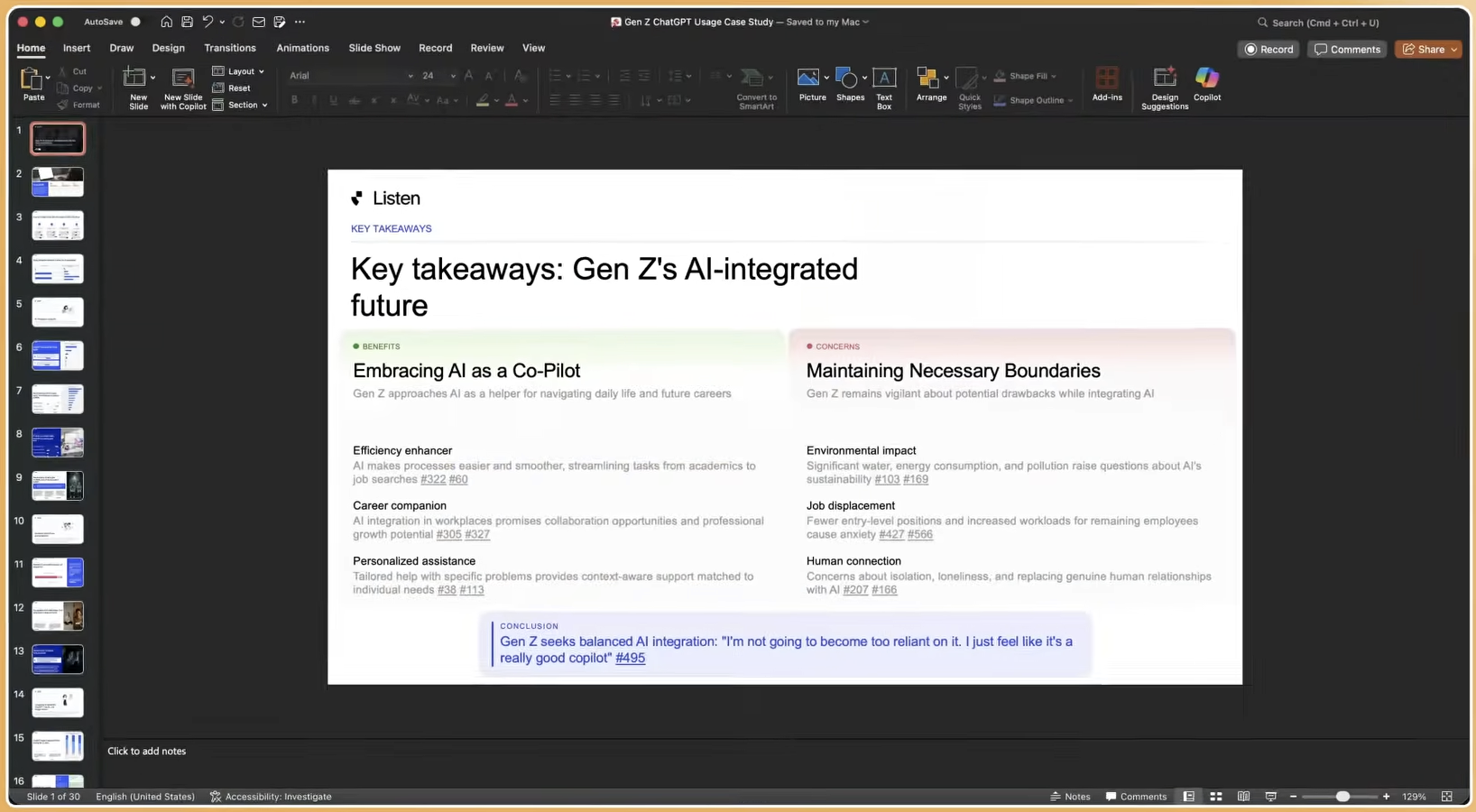
Listen Pulse is the conversational tracker designed for this exact problem. It runs the same study with the same screeners wave after wave, then analyzes the open-ended answers, sorts them into themes, quantifies them, and charts each theme next to the KPIs you already report. Core questions stay constant to keep the trend line clean, while timely questions cover new campaigns and competitors. Every number traces back to a real moment with a real person, including their words, the quote, and the clip. Listen Pulse also integrates with existing tracking infrastructure, connecting with Qualtrics and Decipher so teams keep the KPIs they already report while adding the narrative behind them.
Integrating Brand Tracking into Your Product Workflow
Brand data creates value only when it changes what you build. Product teams can turn brand insights into product actions by tying them to specific workflows.
Roadmap Prioritization
When brand attribute data shows users associate your product with “reliable but outdated,” that pattern signals a need for modernization. When consideration drops among a specific segment, that shift signals a need to investigate what changed for that cohort. Brand tracking helps product teams prioritize high-impact roadmap investments by funding the features and capabilities most likely to improve purchase decisions, product adoption, renewal, and expansion, and by using evidence to defend high-value roadmap investments while deprioritizing low-impact enhancements.
Feature Validation
Brand tracking can confirm whether a feature actually moved perception. If you shipped a major UI overhaul and consideration did not change, the feature likely missed the underlying problem. When sentiment improves after a specific release, you gain evidence to double down on that direction.
Competitive Analysis
Brand tracking shows how users perceive your product relative to named competitors. If a competitor gains consideration in your core segment, brand data can reveal whether the driver is a feature gap, a pricing perception issue, or a messaging problem. That diagnosis determines whether you respond with product changes or positioning adjustments.
The Insight-to-Action Framework for PMs
- Monitor: Track core brand metrics on a consistent cadence.
- Diagnose: When a metric moves, investigate the reasons behind the shift.
- Prioritize: Map the diagnosis to product decisions. Decide whether you face a feature gap, a UX issue, or a positioning problem.
- Act: Make the product change or roadmap adjustment.
- Validate: Track whether the metric responds to your intervention.
See this framework in action. Explore a live walkthrough with Listen Labs and review how Listen Pulse connects brand perception directly to product decisions.
Brand Tracking Tools for PMs: Comparing Traditional and Conversational Platforms
When evaluating brand tracking tools, PMs choose between traditional platforms and AI-powered conversational trackers. Traditional brand tracking platforms like YouGov and Kantar are built for marketing teams running large-scale, wave-based measurement programs. They deliver calibrated, weighted statistical representativeness suitable for category-level share-of-voice tracking and year-over-year trend lines. However, they have limitations. They operate on a quarterly cadence, cost $50,000 to $250,000 per wave, and cannot explain why metrics change.
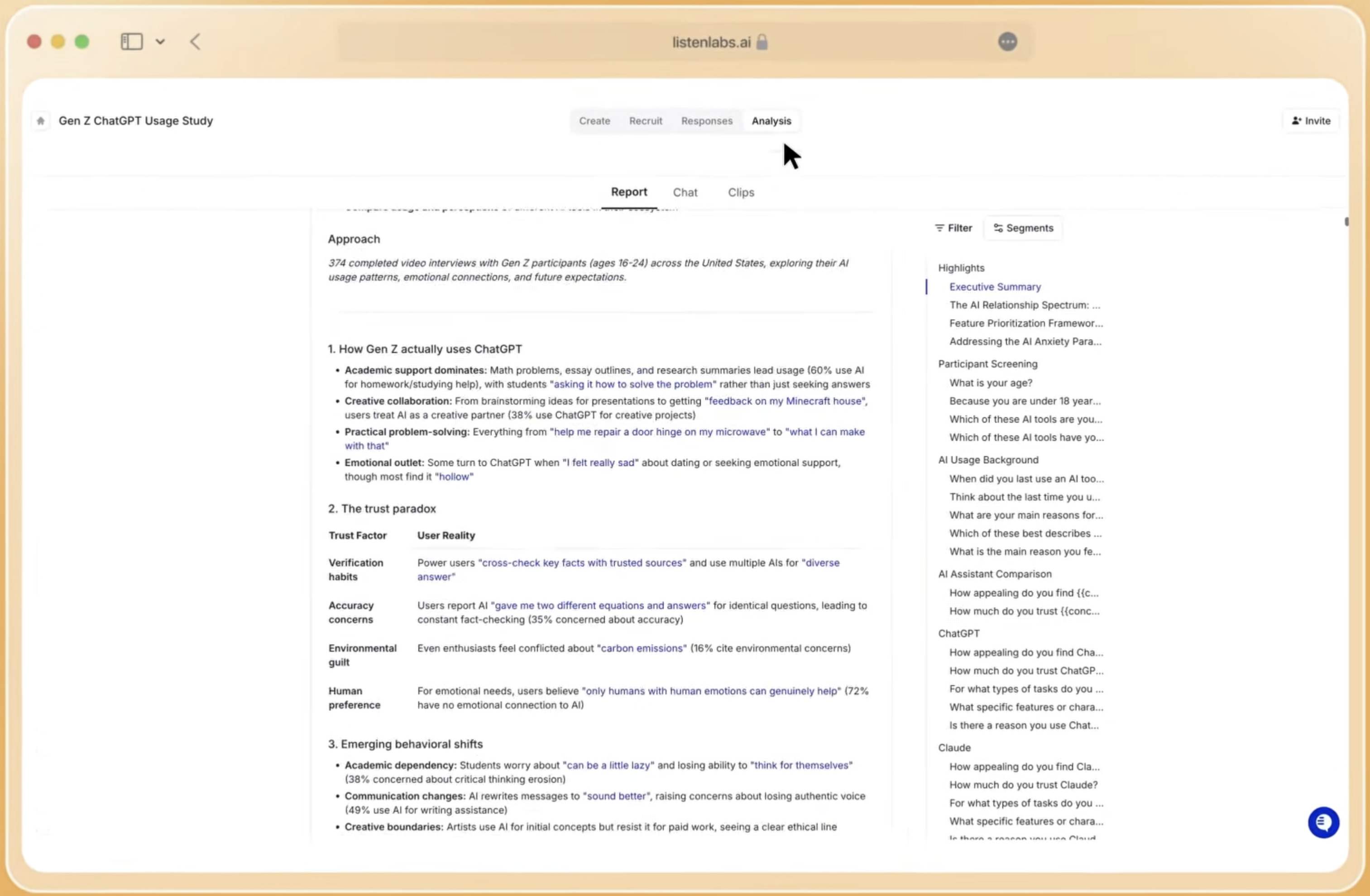
In contrast, AI-powered conversational trackers like Listen Pulse take a different approach. Instead of a pre-scripted survey, Pulse runs adaptive conversations that probe the reasoning behind every answer. A classic tracker reports that consideration dropped three points. Pulse reports that consideration dropped because a growing segment of users feels the product has become too complex for their needs, and it supports that finding with direct quotes and clips.
The key difference is traceability. Traditional trackers deliver aggregate numbers. Pulse delivers every number with a link back to the interview, the exact quote, and the audio or video clip behind it. When you present brand data to your engineering team or executive stakeholders, you show real users explaining their perception in their own words instead of asking stakeholders to trust a score.
Case Study: Brand Tracking That Caught What Metrics Missed
One well-known clothing brand, famous for its big logos, was quietly losing customers. Its traditional tracker caught the drop in consideration but could not explain it. The brand assumed the issue was price, which seemed reasonable in a competitive retail environment.
Listen Pulse revealed a different story. The problem was style, not price. A growing group of customers felt the big logos were too loud for their changing lifestyles. They still recognized the brand and still considered it, yet they chose quieter, more understated alternatives because the product no longer matched how they saw themselves.
A traditional tracker would have triggered a pricing review or a discount campaign, which would have missed the mark. Pulse surfaced the real issue, a product design and positioning problem that required a different response entirely. The brand could now decide whether to evolve its product line, adjust its positioning, or both, with evidence instead of guesswork.
This case illustrates the power of brand tracking when it explains the why behind metric shifts. Implementing that kind of program effectively requires avoiding common pitfalls and following a few best practices.
Common Pitfalls and Best Practices for PMs Starting with Brand Tracking
Pitfall 1: Over-reliance on Lagging Indicators
NPS and consideration are lagging indicators that reflect changes that have already happened. Because they are lagging, by the time a KPI declines, the underlying shift has been building for months. Pair lagging metrics with leading signals like sentiment and emerging themes in customer conversations.
Pitfall 2: Tracking Too Many Metrics
Five metrics tracked well beat twenty tracked for comprehensiveness. Start with awareness, consideration, NPS, sentiment, and one or two attribute associations that map directly to your product strategy.
Pitfall 3: Collecting Data Without a Decision Framework
The most common mistake teams make when setting up a brand tracker is starting with the question list instead of the decisions the data needs to inform. To avoid this mistake, before launching a tracking program, define the decisions the data needs to support. Decide what you would do differently if consideration dropped five points. If you cannot answer that, the program is not ready.
Pitfall 4: Ignoring the Why Behind the Numbers
A number moving does not qualify as an insight on its own. An insight comes from understanding why the number moved and what to do about it. Choose tools and methods that surface the reasoning behind metric changes, not just the changes themselves.
Best Practice: Align Brand Tracking with Product Goals
Your brand tracking program should map directly to your product roadmap. If you are prioritizing a new feature, track whether it shifts attribute associations. If you are entering a new market, track awareness and consideration in that segment. High-performing organizations use brand tracking insights to guide strategic planning and budgeting, refine brand positioning and messaging, identify growth opportunities by audience, and support leadership decision-making with evidence.
Frequently Asked Questions
What is the difference between brand tracking and product analytics?
Product analytics measures what users do, such as feature adoption, retention, and engagement. Brand tracking measures what users think and feel, including awareness, consideration, and sentiment. They work together. Product analytics can reveal that a feature is underused, while brand tracking shows whether users perceive the product as valuable enough to recommend. The most effective PMs use both. Product analytics surfaces the what, and brand tracking surfaces the why behind user perception, which product analytics alone cannot provide.
How often should product managers review brand tracking data?
Fast-moving categories benefit from monthly reviews. Slower-moving B2B products often work well with quarterly reviews. The key is consistency, because a regular cadence allows you to distinguish signal from noise and spot trends before they become problems. Listen Pulse operates continuously, analyzing tens of thousands of responses around the clock, so you can review data as frequently as your decision cycle requires. The goal is to track trajectories across multiple waves rather than react to every data point.
Can brand tracking replace user interviews and usability testing?
Brand tracking complements user interviews and usability testing instead of replacing them. User interviews provide deep qualitative insight into specific experiences. Usability testing reveals friction in specific workflows. Brand tracking provides the longitudinal view, showing how perceptions shift over time and how those shifts correlate with product changes. Together, they give you a complete picture. Brand tracking shows that perception of “ease of use” is declining, and user interviews reveal which workflow causes the friction.
What is the minimum viable brand tracking setup for a PM without a research team?
A lean setup starts with a conversational tracker like Listen Pulse that combines quantitative KPIs with qualitative why in one instrument. Define three to five core metrics aligned with your product goals. Run waves on a consistent cadence, quarterly at minimum. Review results monthly with your product team. The aim is to build a compounding intelligence layer rather than a one-off study. Listen Pulse deploys alongside an existing tracker or as the primary tracking system, so you can keep your current measurement infrastructure.
How does Listen Pulse differ from running a standard brand survey?
A standard brand survey delivers structured, quantitative data through preset questions with no ability to follow up or probe deeper. Listen Pulse conducts conversational interviews where the AI adapts in real time and asks follow-up questions based on each participant’s responses. This approach uncovers unexpected findings, emotional nuance, and rich context that surveys miss. Every metric movement in Pulse comes with an explanation, including direct user quotes and supporting evidence, so stakeholders see real users describing their perception in their own words.
Turn Brand Perception into Product Decisions
Brand tracking for product managers focuses on understanding how users perceive your product, why those perceptions shift, and what actions to take in response. Traditional trackers report that a number moved. Listen Pulse explains the movement and backs it with user narratives and media evidence.
When you connect brand perception directly to product decisions, you stop reacting to lagging indicators and start anticipating shifts before they hit your KPIs. You prioritize features based on evidence instead of opinion. You catch competitive threats before they appear in churn data. You build products that users not only recognize but actively choose.
Request a Listen Pulse strategy session and see how Listen Labs turns brand perception into product decisions.