Written by: Anish Rao, Head of Growth, Listen Labs
Key Takeaways
- YouGov BrandIndex tracks brand health through continuous surveys but does not explain why those numbers move.
- Survey-based trackers like Tracksuit, Kantar, and Ipsos measure stated consumer attitudes. Social listening tools like Brandwatch and Brand24 capture only unprompted public conversation.
- Reddit practitioners cite cost, lack of diagnostic insight, and overkill for non-enterprise needs as the main reasons for seeking alternatives.
- Listen Pulse is a conversational tracker that pairs quantitative KPIs with AI-moderated open-ended responses to reveal why metrics change in the same wave.
- Ready to understand why your brand health numbers are moving? See Listen Pulse on your own brand with Listen Labs.
Best YouGov BrandIndex Alternatives Reddit Recommends
Across r/advertising, r/Marketingcurated, and r/Digitalmarketing, five names surface consistently when practitioners discuss leaving BrandIndex. These tools fall into different categories and answer different questions, which is why ranking them together often misleads buyers.
- Tracksuit, recommended by mid-market teams that want always-on brand tracking without a six-figure contract, with pricing starting at $19,500 per year.
- Kantar, the enterprise-grade benchmark for teams with executive reporting requirements.
- Brandwatch, used by teams that need to monitor what people say unprompted across social and digital channels.
- Brand24, a mid-market social listening option with transparent, published pricing.
- Google Trends / Reddit Search / SparkToro Stack, the zero-budget DIY approach for teams with no tracking spend at all.
The fork below explains how brand health tracking and social listening differ and which category fits each use case.
Brand Health Tracking vs. Social Listening: The Fork Every YouGov BrandIndex Alternative List Gets Wrong
Survey-based trackers such as Kantar, Ipsos, Tracksuit, Latana, and Qualtrics measure what people say when asked. They use representative, weighted, controlled samples that are often census-matched with quota controls for age, gender, region, and income. This design lets them estimate how the broader market thinks, including the silent non-posters who never appear in online conversation.
Social listening tools such as Brandwatch, Brand24, and F5Bot measure what people say unprompted in public digital spaces. They capture the loud minority, a small and systematically unrepresentative slice of the market skewed toward the very engaged, the very angry, and the very online.
Social listening tools do not replace YouGov BrandIndex. This distinction is the most important one in this piece. A social listening tool cannot produce a statistically representative awareness or consideration score. It measures observable public conversation, not private consumer knowledge or intent.
Two decision questions determine which category you need. What is your budget? Do you need automated surveys measuring stated attitudes, or social listening measuring unprompted public conversation? If the answer is surveys, the next question is whether you need to know what your brand health is or why it is moving. That fork shapes the rest of the evaluation.
Ready to see how a conversational tracker closes the diagnostic gap? Explore Listen Pulse on your own data and find out why your numbers are moving.
What Do Marketers on Reddit Actually Recommend Instead of YouGov BrandIndex?
The recurring sentiment across r/advertising and r/DigitalMarketing is that BrandIndex feels like overkill without executive reporting needs, that the cost is prohibitive for small and mid-sized teams, and that the data lacks a clear “why.” Those three complaints map directly onto three practitioner segments with different replacement needs.
Kantar and Ipsos are the enterprise-grade brand tracking replacements. Kantar offers an agile brand guidance system that integrates consumer research, search, social media, and sales data. It includes validated metrics and extensive benchmarks across multiple markets and categories. Ipsos offers Contextual Brand Tracking, which delivers brand KPIs tied to real-world purchase and usage occasions. Legacy agency trackers like Kantar and Ipsos typically run $100,000–$500,000 or more annually with quarterly deliverables and long lead times. They are the right answer for teams that need global benchmarks and have the budget and headcount to manage them, as long as knowing the number is enough. They carry the same diagnostic limitation as BrandIndex: they report that a number moved, and the explanation requires commissioning a separate qualitative study that arrives weeks after the wave closes.
Tracksuit and Latana are mid-market entrants that surface in practitioner discussions for teams priced out of Kantar or BrandIndex. Both focus on accessibility and always-on tracking at a fraction of the legacy cost. Done-for-you SaaS trackers in this category typically run $10,000–$60,000 per year per market, which is a meaningful step down from enterprise pricing. The trade-off is that they share the same structural limitation: quant-only waves that identify movement without explaining it.
Qualtrics appears in brand tracking discussions for teams that want to bring brand tracking research in-house and run programs independently, while optionally supplementing with Qualtrics Research Services experts or Qualtrics and partner implementation teams. It is an enterprise research platform rather than a managed tracker, which means it requires internal researcher headcount to operate properly. The hidden cost of platforms like Qualtrics is internal researcher headcount at $120,000–$180,000 per year per person, usually requiring one to two FTEs, a line item that often exceeds the license cost itself.
If You Actually Need Social Listening: Brandwatch, Brand24, and F5Bot
Brandwatch, Brand24, and F5Bot answer a different question than YouGov BrandIndex. None of them produce brand health KPIs like awareness or consideration in a representative sample. They measure what the vocal, online slice of your audience says publicly, which is useful but not a substitute for survey-based tracking.
Brandwatch is the enterprise-scale option. Brandwatch, now part of Cision, provides access to over 100 million online sources and 1.7 trillion historical posts dating back to 2010, with custom pricing typically starting around $800 per month for basic Consumer Intelligence plans and full enterprise deployments ranging from $2,000–$5,000 or more per month. It suits teams with dedicated analysts and a mandate to monitor brand conversation at scale. Brandwatch reports on the conversation around your brand, not the cognition behind purchase decisions, which matters when the goal is brand health.
Brand24 is the mid-market social listening option with transparent pricing. Brand24 publishes pricing across five tiers, starting at $249 per month for the Individual plan and scaling to $1,499 per month or more annually for Enterprise, with a 14-day free trial requiring no credit card. It works well for teams that need mention tracking and sentiment analysis without an enterprise contract.
F5Bot is a free-tier keyword monitoring tool that watches Reddit, Hacker News, and Lobsters for keyword mentions and sends email notifications. It is useful for catching brand conversations in specific communities, but it offers no sentiment analysis, no dashboards, and no historical trend data, and its coverage is limited to Reddit, Hacker News, and Lobsters.
Best Free YouGov BrandIndex Alternative for Small Teams
If none of the paid options fit your budget, the practical answer for teams with no tracking spend is a stack of three free tools used together: Google Trends, Reddit search, and SparkToro’s free tier.
Google Trends normalizes search interest on a 0–100 scale relative to the peak within the query window, so it measures relative movement and comparative interest rather than absolute search volume or a direct brand-health count. It serves as a useful proxy for branded awareness trends but cannot measure consideration or purchase intent on its own.
Reddit search surfaces qualitative signals about how people evaluate brands at the consideration stage, including complaints, comparisons, and buying context. Reddit visibility reflects vetting or demand-capture behavior more than upper-funnel awareness, so it does not measure broad brand health.
SparkToro is an audience intelligence tool that reveals where a target or competitor’s audience pays attention online, but it cannot prove purchase intent, satisfaction, budget, urgency, or the reason behind a behavior, and it is not a consolidated market-research suite. Its free tier provides five searches per month.
The limits of this stack are clear. It offers no continuous tracking, no statistically representative sample, heavy manual effort, and no way to measure awareness or consideration in a rigorous sense. Surveys remain the only way to measure unaided and aided brand awareness, while behavioral data tracks what people do after exposure, and neither approach alone gives a complete picture of brand health. The free stack works as a starting point rather than a full replacement for a tracker.
Why the Number Moved: YouGov BrandIndex, Tracksuit, and Listen Pulse Compared
The free stack and the paid trackers above all share one blind spot: none of them explain why a number moved. That criterion matters most when comparing YouGov BrandIndex, Tracksuit, and Listen Pulse, more than which tool is cheaper.
Tracksuit is wave-based, with continuous monthly survey waves and quant-only data, while YouGov BrandIndex and Kantar run daily or always-on tracking rather than wave-based programs. Traditional brand trackers act as lagging indicators with no mechanism to explain themselves. They document brand health over time but cannot tell you why a metric moved with convergent evidence from multiple sources. By the time a KPI declines, the underlying shift has been building for months, and as noted, the explanation often arrives weeks later.
This diagnostic limitation is architectural, not an execution problem. Better, faster, or more expensive surveys cannot fix it because the follow-up question depends on the previous answer and surveys are pre-scripted.
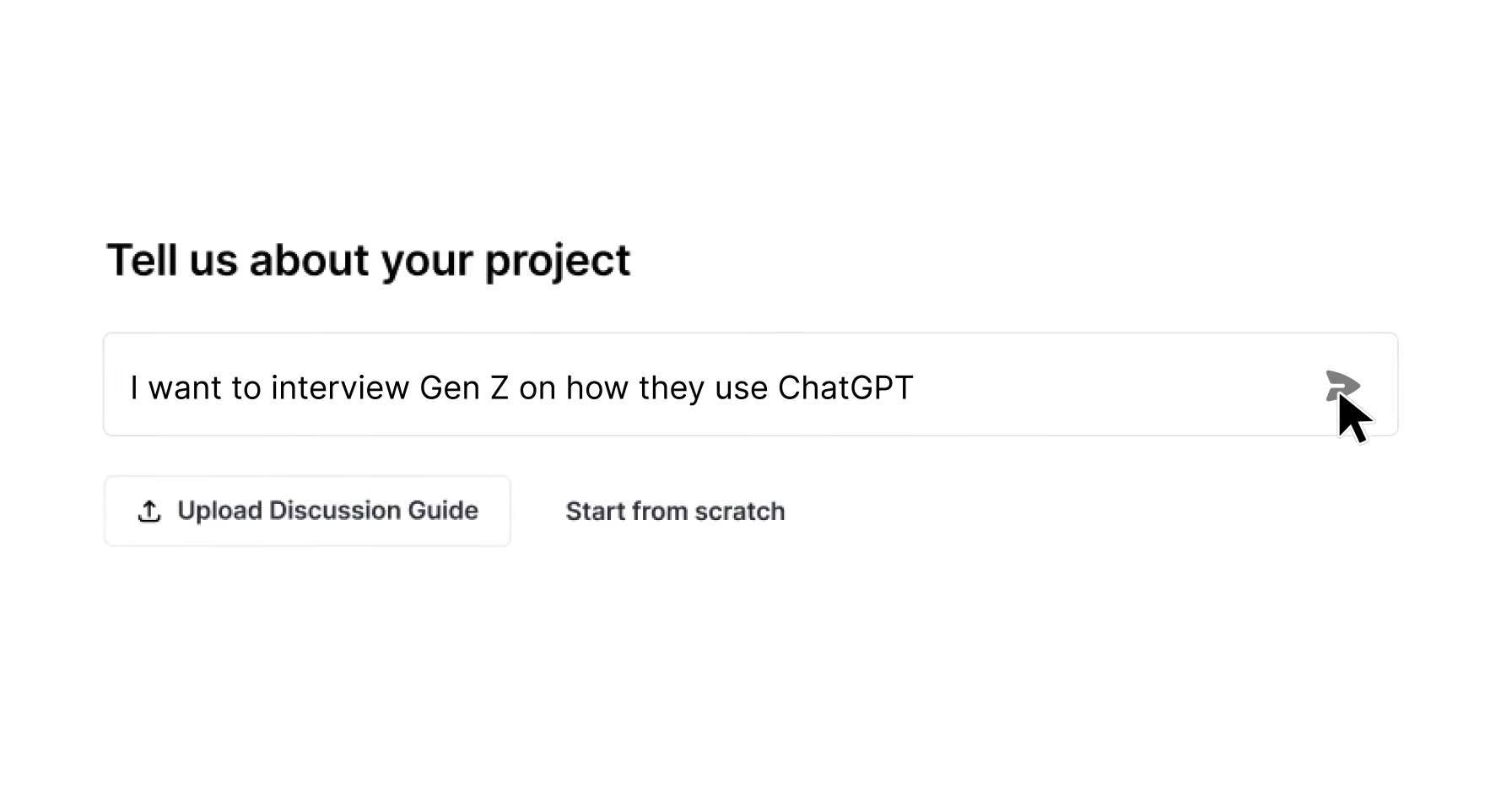
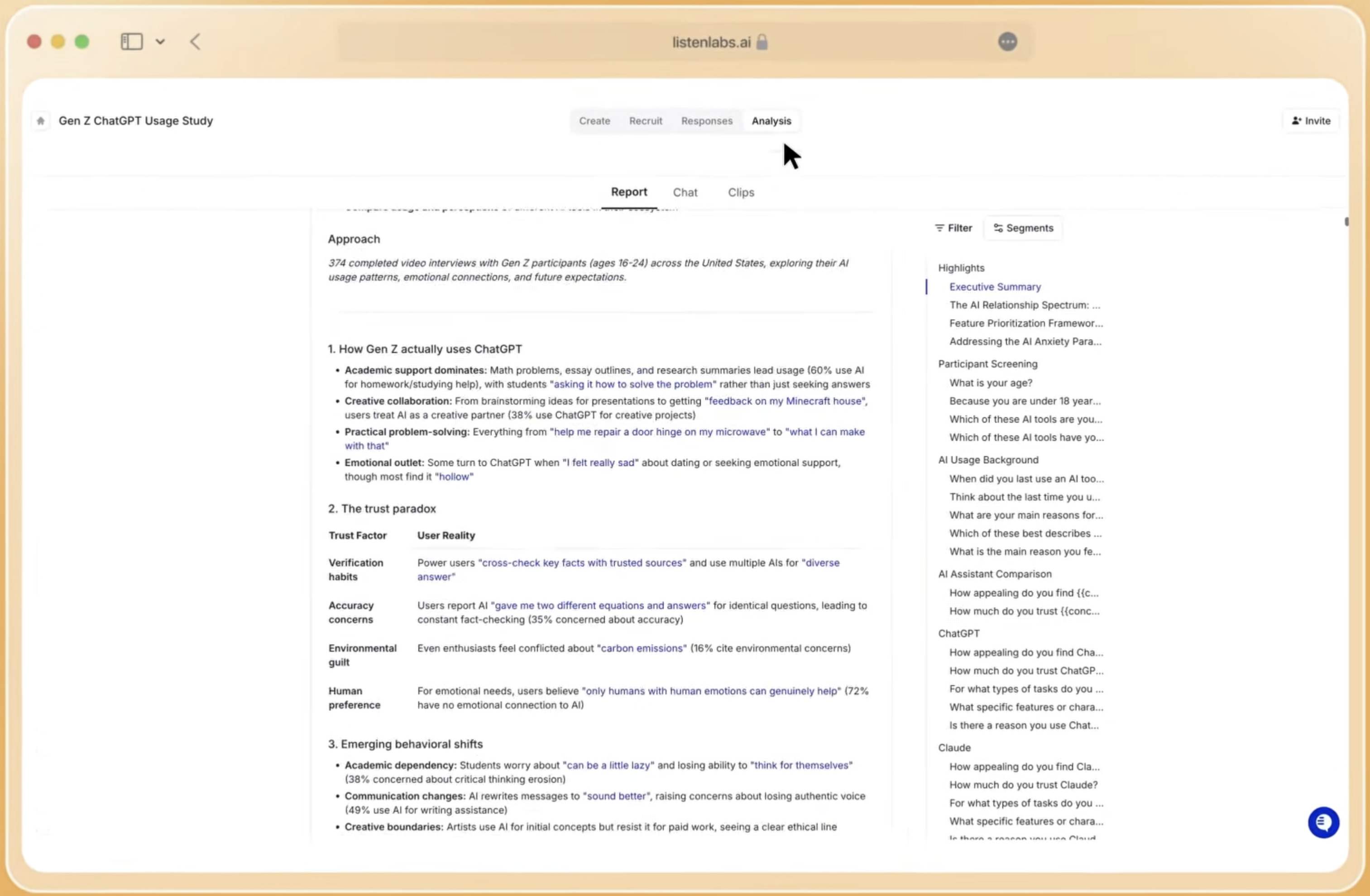
Listen Pulse is the conversational tracker that closes that gap. Pulse protects the trend line by keeping the same screeners and KPI spine in every wave, then adds open-ended conversation on top. The AI moderator interprets the open-ended answers, sorts them into themes, quantifies them, and charts each theme directly next to the KPIs teams already report. The metric change and the reason behind it arrive in the same wave, not weeks apart.
The proof point is concrete. One well-known clothing brand, famous for its big logos, was quietly losing customers. Its old tracker caught the drop but could not explain it. Listen Pulse found that style, not price, drove the shift. A growing group of customers felt the big logos were too loud for their changing lifestyles. That insight was invisible to a quant-only wave and would have required a separate qualitative study to surface through a traditional tracker.
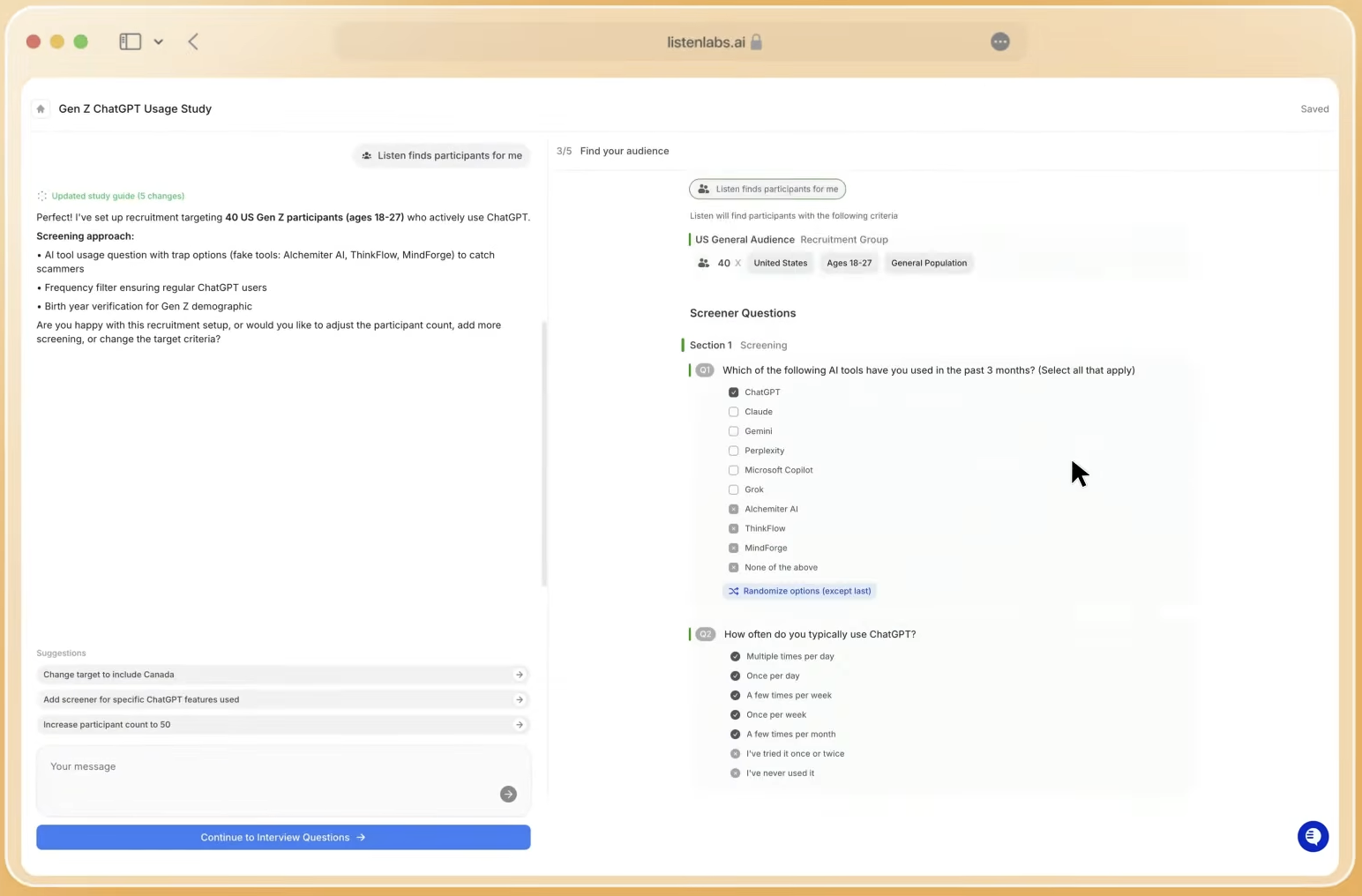
Pulse deploys alongside an existing tracker or as the primary tracking system. It integrates with Qualtrics and Decipher, so teams keep the KPIs they already report while adding the narrative behind them. Every number traces back to the interview, verbatim quote, and audio or video clip behind it. Listen Labs raised a $69M Series B led by Ribbit Capital in January 2026 and has conducted over one million AI-moderated interviews since launch.
Want to see the metric change and the reason behind it in the same wave? See Listen Pulse in action on your next wave.
Which Should You Pick?
The decision comes down to budget and the question you are actually trying to answer:
- Enterprise brand health benchmarking with executive reporting needs: Kantar or Ipsos.
- Mid-market team that wants tracking without a six-figure contract: Tracksuit or Latana.
- You need to know what people say unprompted in public digital spaces: Brandwatch, Brand24, or F5Bot.
- No budget at all: The Google Trends, Reddit search, and SparkToro stack, with honest expectations about its limits.
- You need to know why the number moved: Listen Pulse.
If the diagnostic gap is your problem, and you are tired of receiving a deck that says consideration dropped three points and leaving the readout without an explanation, Listen Pulse is the only tracker built to close it in the same wave. See why your numbers are moving with Listen Pulse.
Frequently Asked Questions
Is There a Free YouGov BrandIndex Alternative?
Yes, with real limits. Google Trends, Reddit search, and SparkToro each cover a slice of brand health, but none offer continuous tracking, a representative sample, or a measurable awareness score. Treat them as directional signals, not a full trend line.
Can Social Listening Tools Replace YouGov BrandIndex?
No. Social listening measures public conversation, not representative brand health. See the fork above for why the two approaches answer different questions and cannot substitute for each other.
How Much Does YouGov BrandIndex Cost?
YouGov does not publish a fixed list price or a self-serve tier for BrandIndex. Pricing is quote-based and negotiated through a sales process. Practitioners across r/advertising and r/DigitalMarketing consistently describe the cost as prohibitive for small and mid-sized teams. Industry pricing comparisons place enterprise research platforms in the six-figure range annually in licensing alone, before factoring in internal researcher headcount. The absence of published pricing signals that BrandIndex is sold as an enterprise product through direct sales engagement rather than as a self-serve tool.
What Is the Best YouGov BrandIndex Alternative for a Mid-Market Team?
Tracksuit and Latana are the usual mid-market picks, as covered above. If you also need the “why” behind a KPI move, Listen Pulse is the alternative that adds it in the same wave.