
Written by: Anish Rao, Head of Growth, Listen Labs
Key Takeaways
- Predictive brand analytics links brand-health movements to their causes and commercial impact before those shifts reach the income statement. Traditional trackers report KPI changes without that diagnostic layer.
- This discipline applies forward-looking models specifically to brand perception, equity, and health signals rather than to generic business outcomes.
- Enterprise programs rely on a five-layer architecture: signal ingestion, brand intelligence, predictive models, a scenario engine, and an executive decision layer that ties forecasts to CFO-ready commercial impact.
- Listen Pulse works with existing trackers such as Qualtrics and Decipher. It adds open-ended conversational questions so the metric change and its cause arrive together without replacing current infrastructure.
- Explore how Listen Pulse closes the diagnostic gap by delivering the brand intelligence and executive decision layers inside a single conversational tracker.
How Predictive Brand Analytics Differs From Traditional Brand Tracking And Generic Predictive Analytics
Two boundaries define this category. First, predictive brand analytics extends traditional brand tracking. Wave-based trackers such as Kantar-style or YouGov-style instruments report that a number moved but carry no diagnostic for why. NIQ research identifies a persistent structural gap: organizations see strong tracker scores on awareness, consideration, and preference that fail to translate into growth. By the time a KPI declines, the underlying shift has been building for months. Explaining it usually requires a separate qualitative study. Brand awareness, consideration, preference, and purchase intent all shift before they show up in transactions, typically by six to twelve months in most consumer categories. Brand metrics therefore act as leading indicators of revenue when a diagnostic layer exists to interpret them.
Second, predictive brand analytics narrows generic predictive analytics to brand health. Generic enterprise analytics frameworks such as Domo’s describe predictive analytics as one of four types: descriptive, diagnostic, predictive, and prescriptive. Those frameworks focus on business outcomes such as churn or fraud rather than brand perception or brand equity. IBM, Workday, and Confluent-style explainers define the technique but rarely apply it to brand health. Predictive brand analytics applies those methods specifically to brand signals and produces a forecast of brand trajectory and its commercial consequence.
Those boundaries create a specific set of enterprise use cases that depend on a diagnostic layer traditional trackers lack:
- Brand Health And Sentiment Forecasting: projecting where awareness, consideration, and preference are heading before the next wave confirms a decline
- Campaign Performance Decisions: identifying which creative and channel investments build brand equity versus borrow it
- Reputation-Risk Prediction: detecting slow-burn narrative shifts before they reach mainstream visibility and damage commercial metrics
- Competitive Momentum Forecasting: tracking whether a challenger gains mental availability in key buying situations before that shift appears in share data
- Demand And Trend Forecasting: connecting emerging consumer themes to category demand signals
- Scenario Planning For Brand Investment: testing the projected commercial impact of a brand investment decision before committing budget
The Enterprise Architecture For Predictive Brand Analytics
Enterprise teams need a practical architecture for predictive brand analytics, not just definitions. The following five-layer blueprint reflects how mature programs structure their systems.
The first layer is signal ingestion. Enterprises feed multiple data streams into a unified intelligence environment, and each stream answers a different question about brand health. The table below shows how those streams divide: which inputs feed each layer, and what each layer can forecast that the others cannot.
| Data Layer | Example Inputs | Predictive Output |
|---|---|---|
| Brand health and tracker data | Awareness, consideration, preference, NPS, brand funnel metrics | Brand health trajectory; early-warning decline signals |
| Consumer behavior | Purchase history, loyalty program data, CRM records | Churn risk; segment-level consideration shifts |
| Social and media | Social listening, news mentions, review platforms | Reputation-risk score; narrative momentum |
| Search and AI/LLM visibility | Branded search volume, LLM citation frequency, AI share of voice | Competitive momentum forecast; AI recommendation trajectory |
| Competitive signals | Competitor pricing, campaign activity, share of voice | Competitive threat assessment; whitespace identification |
| Marketing and campaign data | Ad spend, creative performance, channel mix | Campaign optimization; media mix forecasting |
| Commercial and sales data | Revenue, conversion rates, average selling price | Predicted commercial impact of brand-health change |
| External signals | Economic indicators, category trends, cultural shifts | Demand and trend forecasting; scenario planning inputs |
The search and AI/LLM visibility layer introduces a new signal type. Strategy& (PwC) reports that 94% of B2B buyers use LLMs during the buying process. Only three to four brands are typically cited in AI-generated answers, and 40–60% of those citations change monthly. LLM share of voice therefore requires continuous monitoring rather than a static ranking.
The second layer is the brand intelligence layer. It normalizes and connects signals across sources. Natural language processing and Ekman’s universal emotions framework turn tone, hesitation, and micro-expression data from consumer interviews into quantified inputs that sit alongside structured KPIs.
The third layer is predictive models. These models forecast brand health trajectory, reputation risk, and competitive momentum. Predictive brand health models require continuous recalibration. Monthly or quarterly cycles suit fast-moving consumer goods, while more stable industries can recalibrate semi-annually as consumer behavior evolves.
The fourth layer is the scenario engine. This layer lets teams test brand investment decisions before they commit budget. Kantar’s LINK+ ad-testing system can anticipate shifts in brand equity roughly 11 months before they surface in standard tracking. That lead time illustrates the commercial value of a scenario layer that operates ahead of the tracker wave.
The fifth layer is the executive decision layer. This layer translates brand forecasts into the language of commercial consequence. Gartner’s Market Guide for Brand Health Tracking Providers found that while 57% of brand leaders conduct brand health assessments, only 21% find those insights genuinely actionable. That failure originates in the executive layer rather than the data layer.
See the brand intelligence and executive decision layers in action inside a single conversational tracker.
The Data Inputs And The Tracker-Integration Problem
The five-layer architecture raises a practical concern for teams already running a tracker. Many buyers ask whether predictive brand analytics forces a replacement of their current instrument. It does not. The recommended deployment model is additive. Predictive brand analytics runs alongside the existing tracker, keeps the KPIs teams already report, and adds the diagnostic layer those KPIs lack.
Listen Pulse, Listen Labs’ conversational tracker, integrates directly with existing tracking infrastructure including Qualtrics and Decipher. Core questions stay constant wave over wave to protect the trend line. Timely questions cover new campaigns, competitors, and news events without breaking historical comparability. The result is that the metric change and the reason behind it arrive together rather than in a separate qualitative study commissioned weeks later.
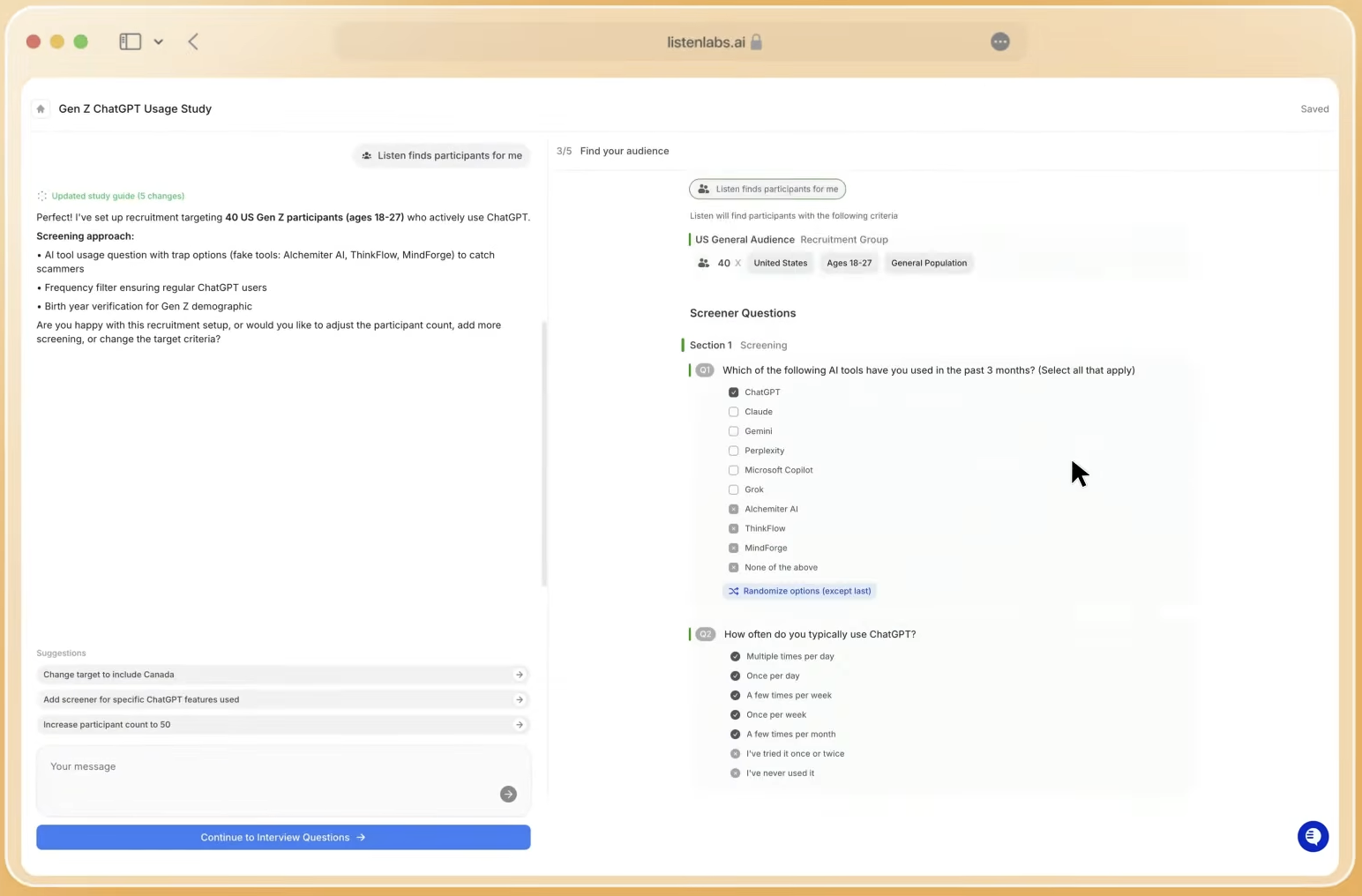
That advantage depends on trustworthy responses. Data quality is a prerequisite that, if ignored, undermines brand forecasts before they start. Commodity quantitative panels carry professional survey-takers, fraudulent respondents, and incentive-driven answers. Listen Labs’ Quality Guard uses real-time AI monitoring across video, voice, content, and device signals to detect fraud and low-effort responses. The system limits participants to three studies per month to reduce panel fatigue. A dedicated recruitment operations team adds a human review layer for hard-to-reach segments.
Governance and compliance expectations also shape vendor selection. Enterprise buyers will need clear answers on whether data is ever used for AI model training, on GDPR compliance, and on certifications covering SOC 2 Type II, ISO 27001, ISO 27701, and ISO 42001. Listen Labs holds all four.
Which Companies Offer Predictive Brand Analytics For Enterprises
Several vendors cover parts of the predictive brand analytics stack. Together they show a pattern: strong data and modeling capabilities that still leave a diagnostic gap between KPI movement and conversational cause.
Kantar is the world’s leading brand intelligence company. Its Meaningful, Different, and Salient (MDS) framework provides a rigorous attitudinal foundation for brand equity measurement. Kantar’s BrandDigital AI signals diagnose where AI recommendations reinforce or erode MDS equity. Kantar’s strength lies in the depth and longitudinal scale of its attitudinal data. Its limitation lies in tracker reports that show equity scores without connecting a specific KPI movement to its conversational cause in the same wave.
NIQ positions itself as the world’s leading consumer intelligence company, with a data ecosystem covering $7.4 trillion in consumer spend, 246 million items, and 28,000 AI models in production across 90+ countries. NIQ’s Growth Pathways offering integrates qualitative and quantitative consumer research with retail measurement and sales performance data. NIQ’s strength is omnichannel commercial data at global scale. Its limitation is a predictive focus on retail execution and category growth rather than the brand-health-to-cause diagnostic an insights leader needs.
Brandwatch, powered by Trajaan’s search intelligence platform monitoring more than 150 countries, provides social and search intelligence across traditional search engines, generative AI platforms, social platforms, and shopping platforms. Brandwatch’s strength is early-warning narrative detection across digital channels. Its limitation is reliance on observed public conversation rather than structured brand KPI measurement, so it cannot connect a tracker metric movement to its cause.
Circana covers $5.8 trillion in global consumer spend across 42 million actively tracked CPG and general merchandise items and 477,000 stores. Its Liquid Data platform applies AI to shift organizations from hindsight to foresight. Circana’s strength is retail and commercial measurement at scale. Its limitation is a design centered on CPG and retail execution rather than brand perception diagnostics.
MainBrain Research offers Logitivo, a predictive analytics and marketing mix modeling service, and Bamboo Labb, a continuous brand health tracker assessing recognition, perception, positioning, and loyalty. MainBrain’s strength is combining predictive analytics with brand tracking in a single vendor relationship. Its limitation is a published methodology that does not detail how it connects a specific brand KPI movement to its conversational cause.
Listen Labs’ Listen Pulse closes the diagnostic gap that remains across these offerings. Pulse runs the same study with the same screeners wave after wave. It adds open-ended conversation to every wave, sorts and quantifies the open-ended answers into themes, and charts each theme next to the KPIs teams already report. Every number traces back to the interview, verbatim quote, and audio or video clip behind it.
A well-known clothing brand famous for its big logos was quietly losing customers. Its existing tracker caught the drop but could not explain it. Pulse found the cause was style, not price. A growing group of customers felt the big logos were too loud for their changing lifestyles. That finding arrived alongside the KPI decline rather than weeks later in a separate qualitative study.
Pulse deploys alongside an existing tracker or as the primary tracking system. Listen Labs raised a $69 million Series B led by Ribbit Capital in January 2026, bringing total funding to $100 million. The company serves enterprises including Microsoft, Google, Procter & Gamble, Nestlé, and Levi’s, representing roughly 15% of the Fortune 100.
See how Pulse links your brand KPIs to their causes in a single program.
The Metric That Matters: Predicted Commercial Impact
Whichever vendor an enterprise chooses, one predictive brand metric decides whether the program survives budget review. That metric is the predicted commercial impact of a change in brand health. Nielsen research found that a one-point increase in brand metrics such as awareness and consideration is associated with an average 1% increase in sales, which is material for any large organization where 1% of revenue is significant. NIQ research states that brand strength can account for up to 30% of revenue, and even more for leading brands.
Insights leaders can use a clear mechanism in CFO conversations. A two-point decline in consideration among women 25–34 is not an abstract brand metric. It represents a measurable reduction in the pool of consumers likely to purchase in the next buying cycle. If consideration precedes purchase by the six-to-twelve-month lag noted earlier, the commercial consequence of that decline is already in motion. The CFO does not need to know that consideration dropped. The CFO needs to know why it dropped and what reversing it is worth. Predictive brand analytics answers both questions in a single wave of research, which makes the brand investment defensible rather than intuitive.
Operational issues, social backlash, or product defects often start to damage perceived value long before churn shows up in reports. These issues first surface as customer requests for discounts, a pattern that can spread quietly across an account base before it appears in revenue data. Connecting that early signal to its commercial trajectory is the core function of the predicted commercial impact metric.
How To Operationalize Predictive Brand Analytics For Enterprises
Enterprise teams can operationalize predictive brand analytics by focusing on cadence, instrument design, qualitative layering, and executive reporting.
Cadence: Quarterly tracking is the standard for most active markets because it provides the temporal resolution needed to connect brand movements to specific marketing activity or competitive events. Annual trackers rarely provide sufficient granularity for active marketing decisions. Listen Pulse pushes the same logic further with always-on continuous research that analyzes tens of thousands of responses around the clock and surfaces emerging themes before they appear as KPI declines.
Question Design: Core questions must stay constant wave over wave to protect the trend line. Timely questions covering new campaigns, competitors, or news events are added without breaking historical comparability. Open-ended conversational questions run alongside structured KPI questions in the same instrument so the qualitative diagnostic and the quantitative metric arrive together.
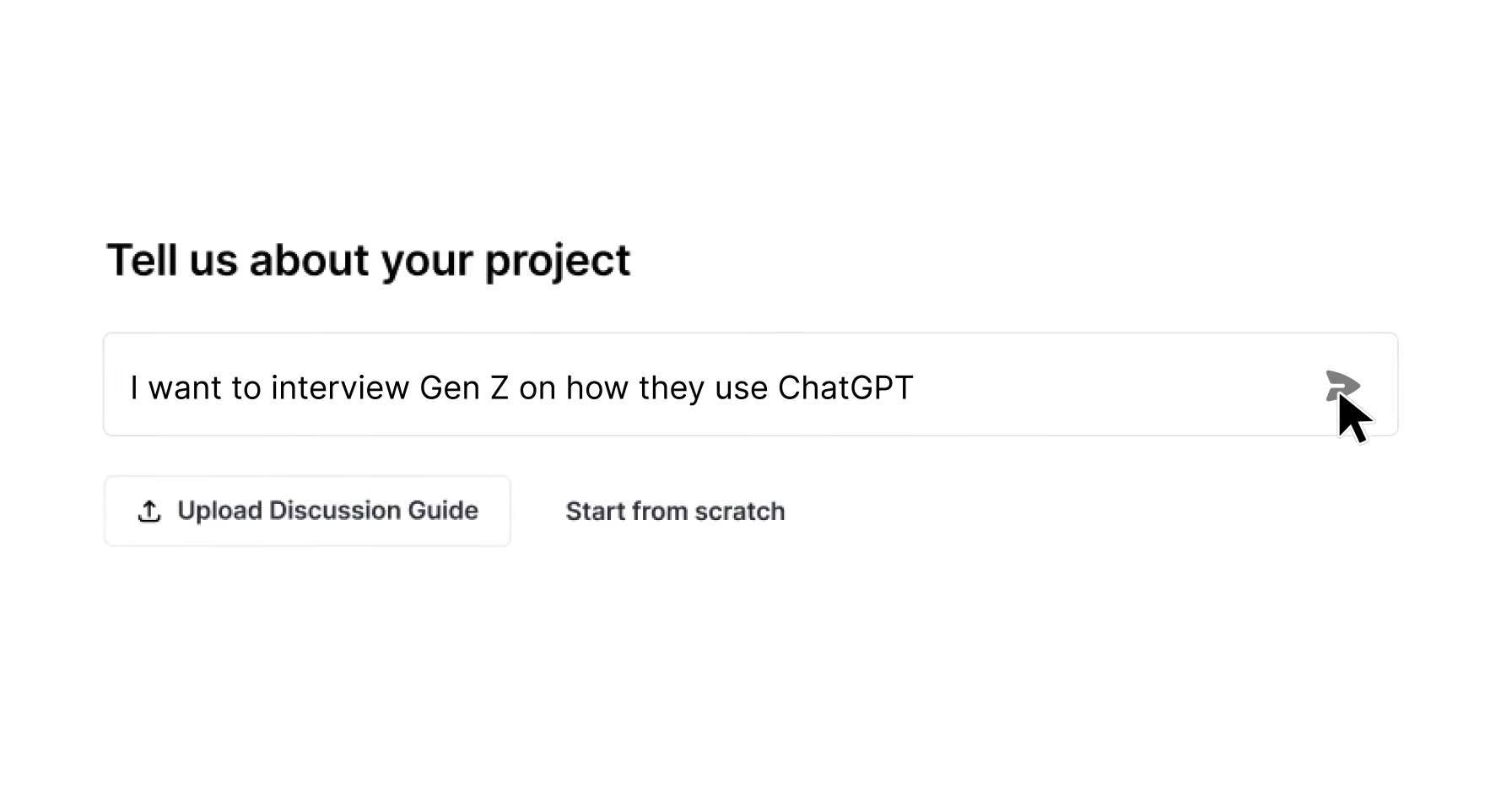
Layering Qualitative Onto Quantitative: The instrument combines awareness scales, NPS, MaxDiff, rankings, and closed-ended questions with open-ended AI-moderated conversation. The AI moderator probes five to seven levels deep on every answer. This depth surfaces the root motivations behind metric movements that pre-scripted surveys structurally cannot reach.
Executive Reporting: The executive layer must translate brand forecasts into commercial consequence. A one-page scorecard that leads with current brand health trajectory, direction of change versus the prior wave, and the two or three themes driving that change is more defensible in a CFO conversation than twenty charts of raw tracker data.
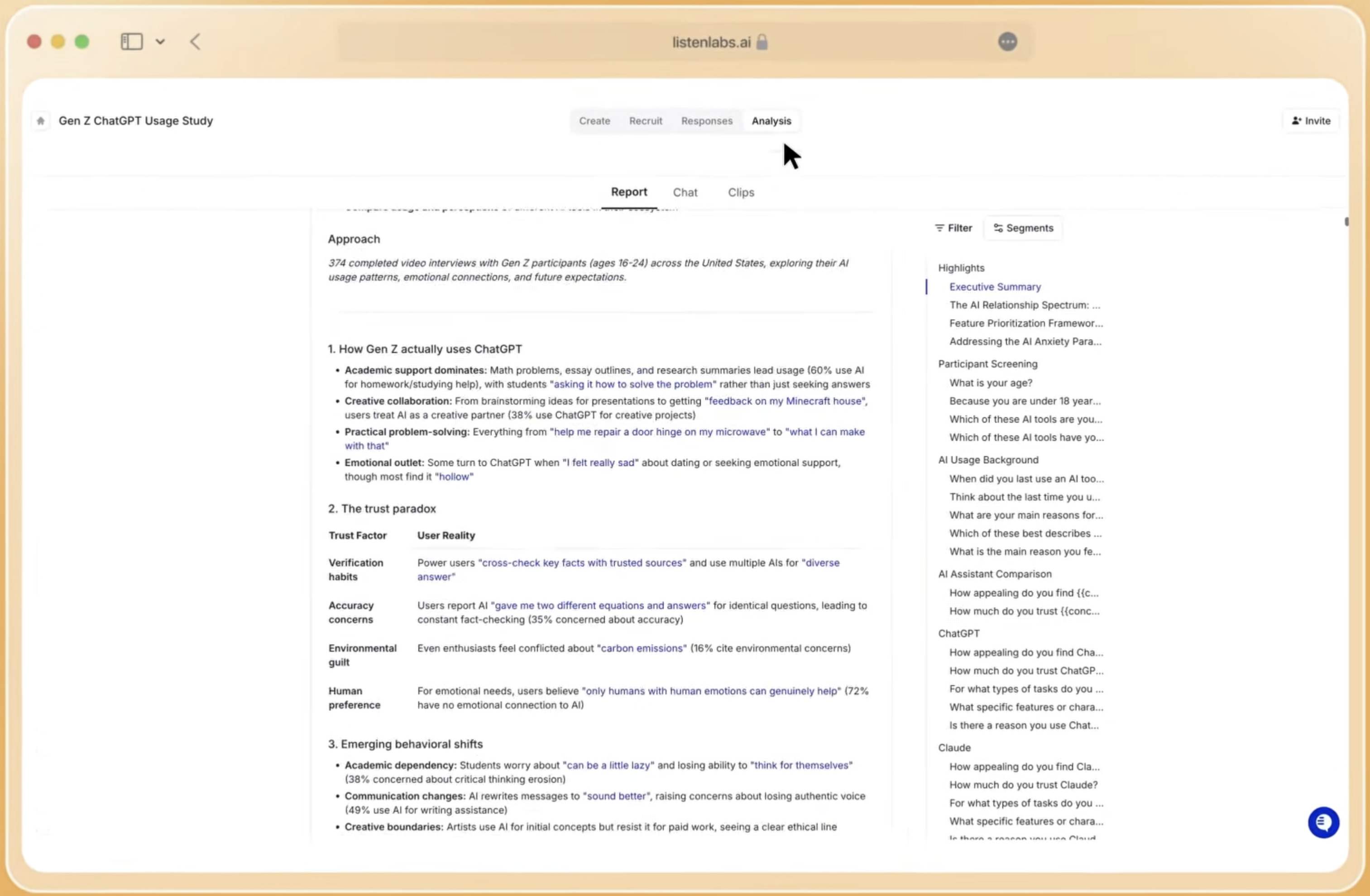
An enterprise readiness checklist helps teams evaluate predictive brand analytics solutions:
- Data Governance: confirm the vendor’s answers on model training and certification align with internal procurement requirements and governance standards.
- Stakeholder Alignment: identify which brand KPIs currently lack a diagnostic and which commercial outcomes those KPIs are expected to predict.
- Research Maturity: audit current tracker coverage to determine which waves can absorb a conversational layer without breaking trend integrity.
- Interoperability: verify that the platform connects cleanly to existing tracking infrastructure such as Qualtrics and Decipher before finalizing a deployment model.
Listen Pulse is designed to work with an existing research team as a force multiplier. Non-researchers can query findings in natural language through the Research Agent, while the research team retains control of study design, screeners, and strategic interpretation.
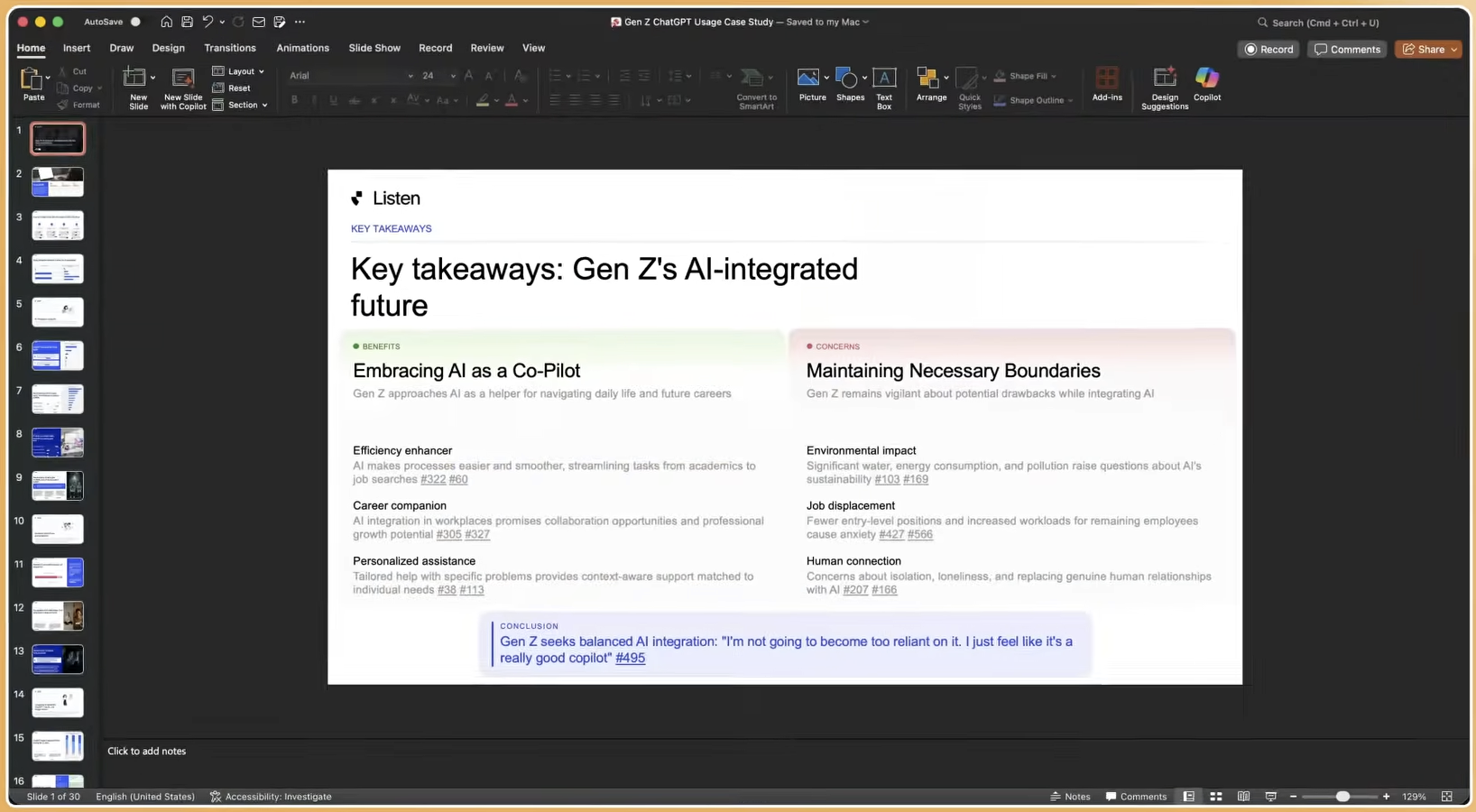
Review your current tracker coverage with Listen Pulse and identify where predictive brand analytics can close the diagnostic gap.
Frequently Asked Questions
How Is Predictive Brand Analytics Different From Traditional Brand Tracking?
Traditional brand tracking reports that a KPI moved, such as a drop in awareness or a softening of consideration in a segment, but carries no diagnostic for why. Predictive brand analytics for enterprises adds two layers. It provides a forward-looking forecast of where brand health is heading and a causal diagnostic that connects the metric movement to its underlying driver in the same wave. The result is a number the insights leader can explain and defend.
What Data Inputs Does Predictive Brand Analytics Require?
A complete enterprise deployment draws on brand health and tracker data, consumer behavior data, social and media signals, search and LLM visibility signals, competitive signals, marketing and campaign data, commercial and sales data, and external signals such as economic indicators and category trends. The LLM visibility layer, which tracks how often and how favorably a brand is cited in AI-generated answers, is a genuinely new input that most existing trackers do not capture.
Can Predictive Brand Analytics Run Alongside An Existing Tracker?
Yes. That configuration is the recommended deployment model. Listen Pulse integrates with existing tracking infrastructure including Qualtrics and Decipher, keeps core questions constant to protect the trend line, and adds open-ended conversational questions to every wave. Teams keep the KPIs they already report and gain the diagnostic layer those KPIs currently lack. Pulse can also serve as the primary tracking system for teams building a new program.
How Do You Ensure Participant Quality And Prevent Fraud?
Listen Labs uses three layers of protection. Quality Guard applies real-time AI monitoring across video, voice, content, and device signals to detect fraud, low-effort responses, AI-generated scripts, and mismatched profiles. Participants are limited to three studies per month, which reduces the risk of professional survey-takers. A dedicated recruitment operations team adds a human review layer and sources hard-to-reach segments including enterprise decision-makers, healthcare workers, and consumers below 1% incidence rate. Listen Labs does not use commodity quantitative panels.
Is Our Data Used To Train AI Models?
Customer data never trains Listen Labs’ AI models. The platform holds SOC 2 Type II, ISO 27001, ISO 27701, and ISO 42001 certifications and is GDPR compliant. These certifications are verifiable and match the governance requirements enterprise buyers are typically asked about internally before deployment.
How Does Predictive Brand Analytics Connect A Brand KPI Movement To Its Cause?
The mechanism mirrors the approach described in the vendor section. Listen Pulse runs open-ended AI-moderated conversation in the same wave as the structured KPI questions and sorts the answers into themes that sit next to each metric. The clothing-brand example illustrates this clearly: the tracker caught the consideration drop, and the conversational layer identified the style-driven cause within the same research cycle.
Conclusion And Next Steps
Predictive brand analytics for enterprises connects a brand-health movement to its cause and to its commercial consequence. The five-layer architecture provides the blueprint, and the tracker-integration concern eases once deployment is framed as an additive layer rather than a replacement. What remains is the metric that determines long-term viability: the predicted commercial impact of a change in brand health, traceable from the forecast back to the consumer conversation that generated it.
Enterprise teams can move forward methodically:
- Audit current tracker coverage to identify which brand KPIs lack a diagnostic.
- Pilot a conversational tracker wave alongside the existing instrument to validate that the metric change and its cause arrive together.
- Map the results to commercial outcomes, such as consideration shifts to conversion implications and reputation signals to pricing power, using the framework above.
- Confirm data governance, certification, and interoperability requirements before selecting a vendor.
Listen Labs, and specifically Listen Pulse, offers a solution for enterprises that need the why behind the number within a single research cycle. With over one million AI-moderated customer interviews conducted, a global panel of 50M+ verified respondents across 45+ countries, and enterprise clients including Microsoft, Procter & Gamble, Nestlé, and Levi’s, Listen Labs has the data moat, recruitment infrastructure, and research methodology to deliver predictive brand analytics at Fortune 500 scale.
Schedule a Listen Pulse session to connect your brand KPI movements to their causes in a single, integrated program.