
Written by: Anish Rao, Head of Growth, Listen Labs
Key Takeaways
- Brand measurement tools fall into three categories: survey-based trackers, social listening, and AI visibility tracking. Each category answers a different question about brand perception.
- Survey-based tools like YouGov BrandIndex and Kantar deliver long-term trend lines but cannot explain why metrics move without a separate qualitative study.
- Social listening platforms capture real-time mentions and sentiment but miss the silent majority and cannot probe deeper reasons behind consumer sentiment.
- AI visibility tracking is emerging as a first-class category in 2026 and measures how brands appear in AI-generated answers from ChatGPT, Gemini, and similar platforms.
- Listen Labs addresses the diagnostic gap with Listen Pulse, a conversational tracker that pairs structured KPIs with open-ended AI-moderated interviews so teams see metric movement and the underlying reasons together.
Three Core Types Of Brand Measurement Tools
The brand measurement market divides into three structurally distinct categories, and each one answers a specific question.
- Survey-Based Brand Health Tracking measures awareness, consideration, preference, loyalty, and advocacy among a defined sample over time. Teams field these surveys at regular intervals to detect change.
- Social Listening And Media Intelligence monitors brand mentions, sentiment, and share of voice across public social, news, and web channels. These tools show what people are saying about a brand right now.
- AI Visibility Tracking measures how and how often a brand appears inside AI-generated answers from platforms such as ChatGPT, Gemini, Perplexity, and Microsoft Copilot.
A fourth approach, conversational tracking, pairs structured KPI questions with open-ended AI-moderated conversation in the same wave. Listen Pulse, Listen Labs' conversational tracker, operates in this category, and we return to it in detail below.
Survey-Based Brand Tracking Tools: Yougov Brandindex, Kantar, Qualtrics, Attest, Latana
Survey-based trackers remain the standard for brand equity proof and long trend lines. They measure people who have never posted, searched, or interacted with a brand online, which covers the silent majority that social listening and AI visibility tools miss structurally. The major platforms in this category each serve a distinct use case.
- Yougov Brandindex is suited to teams that need daily syndicated benchmarking across 27,000+ brands and 56 markets, with more than 18 years of historical data built in.
- Kantar focuses on enterprises that need deep category benchmarks and consulting-led interpretation built on decades of global measurement.
- Qualtrics fits enterprises already invested in the Qualtrics experience management suite that want brand tracking in one place.
- Attest serves mid-market teams that want self-serve survey research with a built-in panel and fast turnaround.
- Latana supports teams that need reliable brand metrics on niche and hard-to-reach segments where raw sample sizes are usually too thin to trust, using advanced statistical modeling to compensate.
The trade-off is structural and worth naming plainly. Survey-based brand health tracking is designed to detect change, not account for it. It can show that awareness dropped four points, but that number alone cannot tell you whether the cause was media weight, a competitor launch, or a missed message. Surveys are structurally incapable of explaining why a metric moved, because the follow-up question that would surface the reason depends on the respondent's prior answer, which a pre-scripted survey cannot branch to dynamically.
By the time a KPI declines, the underlying shift has typically been building for months. Explaining it traditionally requires commissioning a separate qualitative study, which typically adds six to twelve weeks before findings arrive. Those findings often land long after the reallocation decision has already been made.
If survey trackers feel too slow to explain change, social listening tools promise speed, but they come with their own structural limits.
Social Listening And Brand Monitoring Tools: Brandwatch, Meltwater, Brand24, Awario
Social listening tools answer the question "what are people saying right now" rather than "how is our brand perceived among category buyers." They function as real-time reputation monitors and do not operate as full brand health trackers. The major platforms serve distinct team types.
- Brandwatch supports enterprise consumer intelligence teams that need conversation segmentation, custom dashboards, and AI analysis across social and web channels.
- Meltwater serves communications teams tracking earned media coverage, share of voice, and sentiment across social and news simultaneously.
- Brand24 fits mid-market teams that need affordable mention tracking, engagement monitoring, and AI sentiment analysis without enterprise pricing.
- Awario works well for smaller teams and tighter budgets that need web and social monitoring with lighter features than the largest listening platforms.
The structural limitation is clear. Social listening captures the vocal minority and surface sentiment, not representative perception, and cannot tell whether a brand is healthier than it was last year among actual category buyers. It sees only public posts, cannot probe, and cannot explain why a customer feels the way they do. It serves as a strong complement to survey-based tracking and works alongside it.
AI Visibility Tracking: The Newest Category Of Brand Measurement
AI visibility tracking has become a first-class category in 2026. It measures how a brand appears inside AI-generated answers, including whether it is mentioned, cited, and recommended when buyers ask ChatGPT, Gemini, Perplexity, or Microsoft Copilot for category guidance. This matters because the discovery moment has moved upstream of traditional search.
A January 2026 study by Listen Labs and Profound of 100 CMOs found that 90% use large language models daily and 22% now begin vendor research inside an LLM, versus 16% using traditional search. Profound and Aiclicks are two platforms in this emerging category. Profound focuses on multi-engine tracking with prompt-level reporting and recommended actions, while Aiclicks specializes in AI share-of-voice monitoring and citation tracking across major LLM platforms.
This category is new and the measurement standards are still settling. As of September 2026, there is still no agreed baseline for measuring AI visibility, and the IAB has been assembling a framework to standardize the category. AI visibility tools track four core metrics: visibility rate, citation rate, share of voice, and sentiment in AI-generated answers. Unlike survey trackers, they do not ask respondents anything, and unlike social listening, they observe AI system outputs rather than human conversation.
This structural difference is exactly why the category belongs in a 2026 comparison. It answers a question the other two categories cannot.
See how Pulse closes the diagnostic gap
Why Most Brand Trackers Can't Explain Metric Movement
The diagnostic gap is the structural problem that survey trackers, social listening platforms, and AI visibility tools all share. They report that a number moved, but none of them deliver the reason inside the same instrument. When a brand tracker shows awareness slipped two points, the CMO's follow-up questions are why it happened and what to do about it, and most tools leave marketers unable to answer either. A number without a why functions as a lagging indicator, so teams end up reacting to a decline with no diagnostic attached.
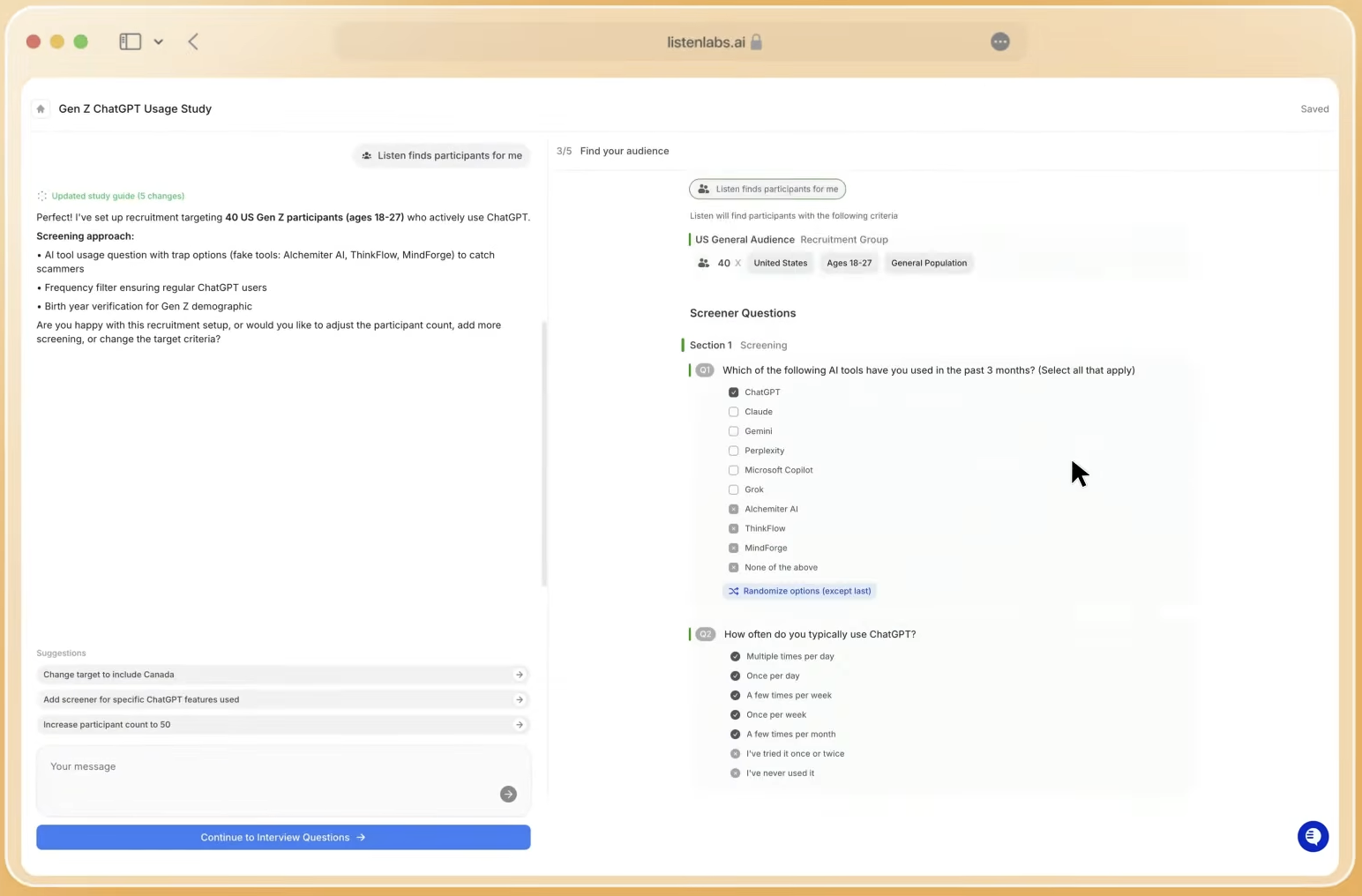
Listen Pulse, Listen Labs' conversational tracker, is built to close that gap structurally. Pulse runs the same study with the same screeners wave after wave and keeps core questions constant to protect the trend line. Open-ended conversation is added to every wave alongside the structured KPI questions. The open-ended answers are sorted into themes, quantified, and charted next to the KPIs teams already report, so metric movement and the reason behind it arrive together rather than weeks apart.
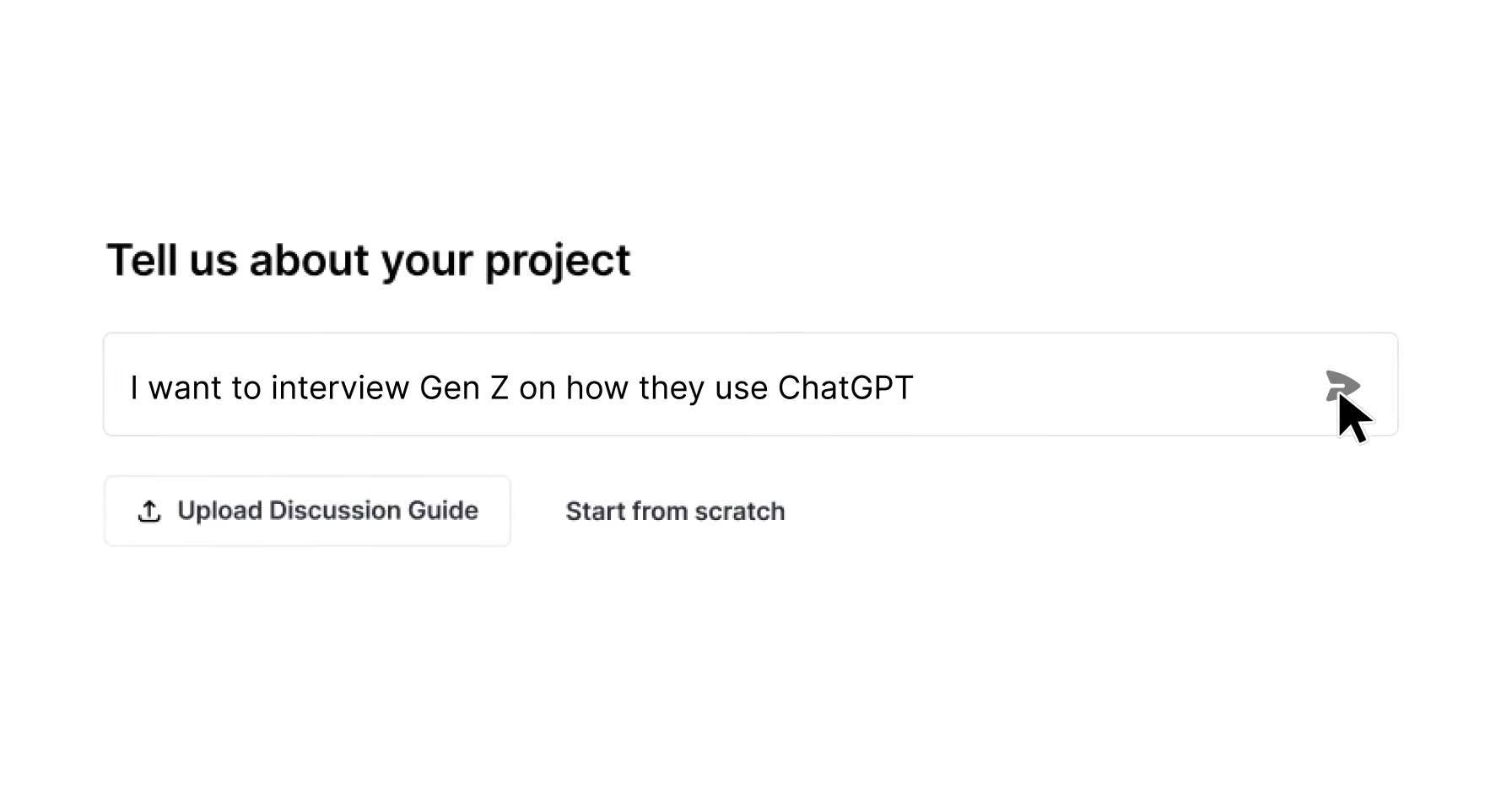
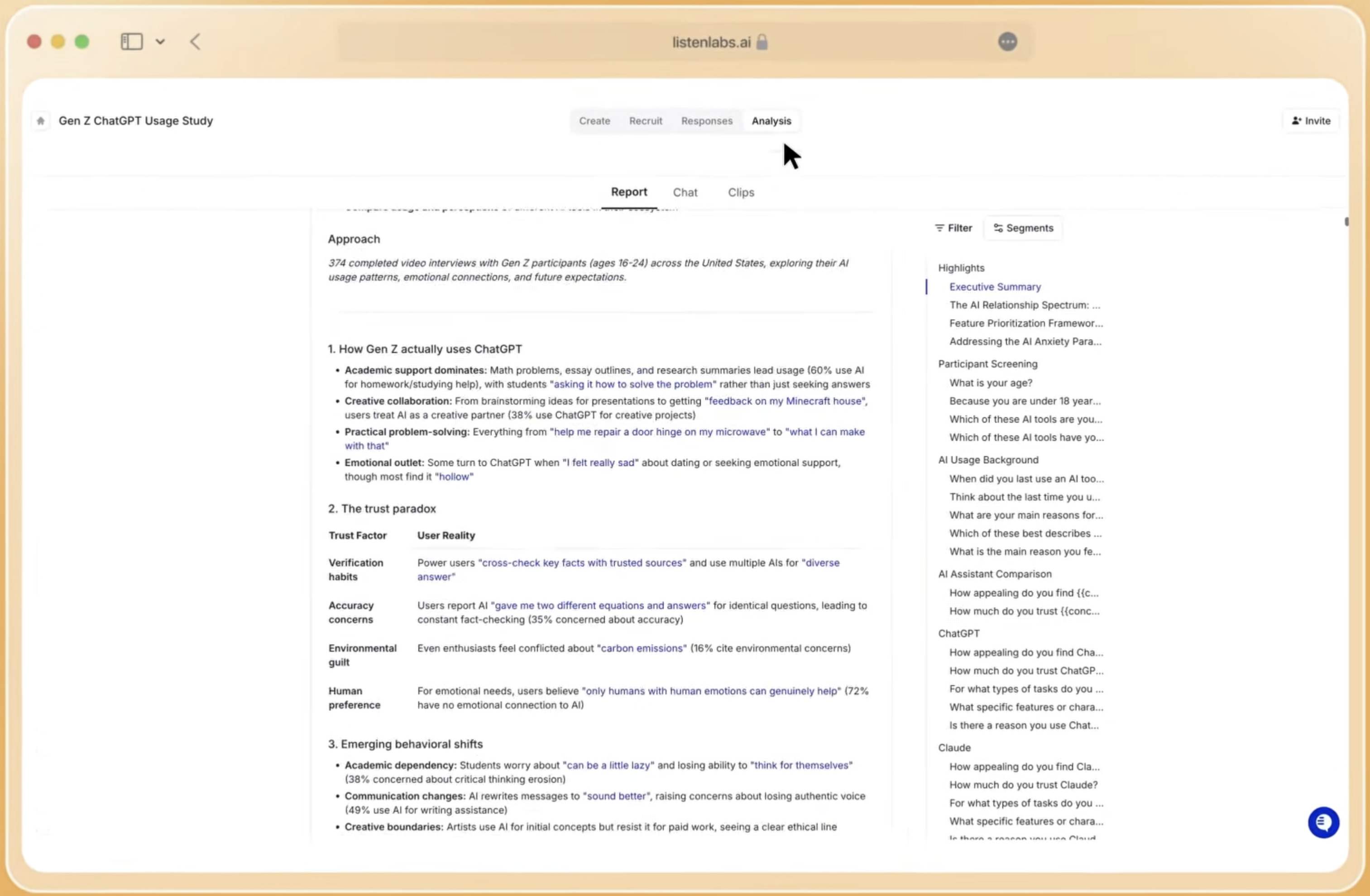
Pulse analyzes tens of thousands of responses around the clock, which means it surfaces emerging themes before they show up as a KPI decline. That early signal matters because it gives teams time to act. The open-ended format also lets respondents raise what actually matters, which makes it possible to track abstract constructs like cultural relevance without perfect question design upfront. Every number traces back to the interview, verbatim quote, and audio or video clip behind it, and any stakeholder can drill into a metric and hear the original explanation.
A concrete example shows the difference. A well-known clothing brand famous for its big logos was quietly losing customers. Its existing tracker caught the drop but could not explain it. Pulse found the issue centered on style. A growing group of customers felt the big logos were too loud for their changing lifestyles. That finding arrived alongside the KPI movement, rather than after a separate six-week qualitative study.
The clothing brand example also highlights the say-do gap, which is the difference between what people say and what they do. A tracker that only captures stated preference misses this contradiction. Pulse's open-ended conversation surfaces the reasoning behind stated preferences and gives teams a richer signal than a rating scale alone can produce.
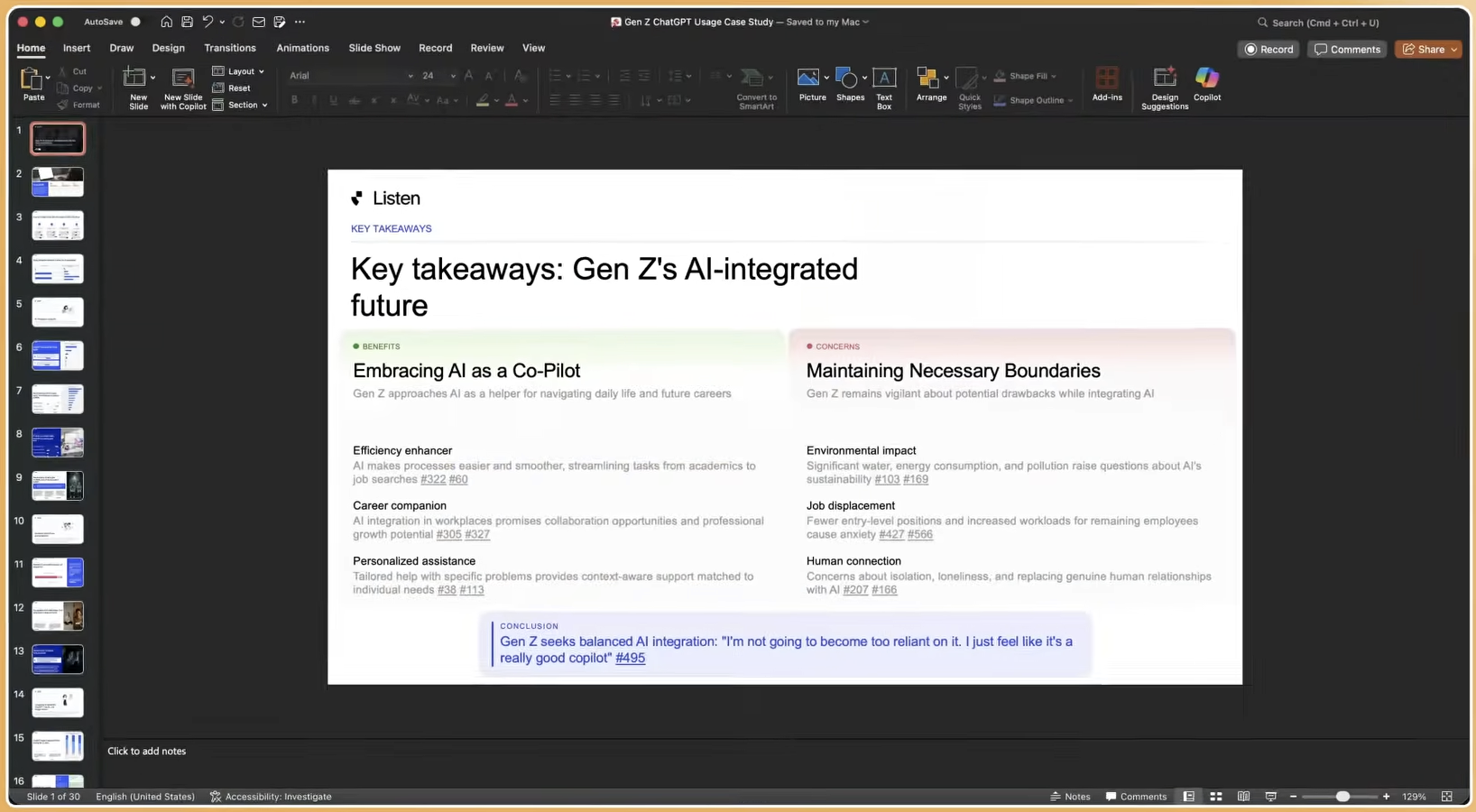
Pulse deploys alongside an existing tracker or as the primary tracking system. It integrates with Qualtrics and Decipher, allowing teams to keep the KPIs they already report while adding the narrative behind them. Listen Labs serves enterprises including Microsoft, Google, Procter & Gamble, Levi's, Nestlé, and Skims, including roughly 15% of the Fortune 100, and has conducted over one million AI-moderated customer interviews since launch.
How To Choose: A Practical Checklist
Use this selection framework to match your situation to the right category or combination.
- If you need defensible brand equity proof for leadership and long trend lines, choose a survey-based tracker such as Yougov Brandindex, Kantar, or Latana. Prioritize methodology transparency, sample representativeness, and wave-over-wave question consistency.
- If you need real-time reputation monitoring and share of voice across public channels, choose a social listening platform such as Brandwatch or Meltwater. Expect volume and sentiment rather than representative perception.
- If you need to know whether your brand appears in AI-generated answers, choose an AI visibility tool such as Profound. Treat the category as emerging and verify which engines are covered at your price tier.
- If you need to understand why a brand metric moved, choose Listen Pulse. It is the only approach that delivers the KPI and its explanation together in one instrument.
- If budget is the primary constraint, prioritize the most important segment over a thin sample spread across too many audiences. A smaller but relevant sample beats a larger one that cannot answer your actual question.
- If you need global and multilingual reach, verify market coverage, language support, and whether methodology is consistent across markets or stitched together from regional vendors.
- If you already have an existing tracker, Pulse deploys alongside it and integrates with Qualtrics and Decipher, so you can preserve the trend line while adding diagnostic depth.
With those criteria in mind, the next step is choosing the approach that fits teams that prioritize diagnostic depth.
What We'd Pick And Why
For teams that need to know why a brand metric moved, Listen Pulse is the pick. It is the only approach that structurally delivers the KPI and its explanation together, without requiring a separate qualitative study commissioned weeks after the fact. Survey trackers catch the drop. Pulse catches the drop and explains what caused it, in the words of the customers behind the number.
Frequently Asked Questions
What Are Some Effective Brand Tracking Tools?
Effective brand tracking tools depend on the question being answered. For longitudinal brand equity measurement, Yougov Brandindex, Kantar, Qualtrics, Latana, and Attest are widely used. For real-time social and media monitoring, Brandwatch, Meltwater, and Brand24 are established options. For AI visibility tracking, Profound and Aiclicks are among the leading platforms in an emerging category. For teams that need both KPI tracking and a diagnostic explanation of why metrics moved, Listen Pulse combines structured tracking questions with open-ended conversational research in the same wave.
What's The Difference Between Brand Tracking And Brand Monitoring?
Brand tracking is structured, periodic, survey-based measurement of brand health metrics such as awareness, consideration, preference, loyalty, and advocacy among a defined sample over time. It is designed to detect change in how a brand is perceived by category buyers, including people who have never posted or searched online. Brand monitoring is real-time, unstructured listening to brand mentions, sentiment, and share of voice across social media, news, forums, and review sites. Brand monitoring captures the vocal minority who post publicly, while brand tracking captures the broader population. Scaling companies often run both in parallel because they answer different questions.
Can A Brand Tracker Tell Me Why A Metric Changed?
Most brand trackers cannot explain the reason behind a movement. Survey-based trackers are structurally designed to detect change rather than explain it, because a pre-scripted survey cannot dynamically branch to the follow-up question that would surface the reason. Social listening tools capture what people are saying but cannot probe why they feel that way. AI visibility tools observe AI system outputs and do not interview respondents at all. Listen Pulse closes this gap by pairing structured KPI questions with open-ended conversation in the same wave, sorting responses into quantified themes, and charting those themes next to the metrics teams already report, so the explanation arrives with the number instead of weeks later.
Do I Need To Replace My Existing Tracker To Get The Why?
Listen Pulse does not require replacing an existing tracker. It deploys alongside an existing system or as the primary tracking solution. It integrates directly with Qualtrics and Decipher, so teams keep the KPIs and trend lines they already report. The open-ended conversational layer is added to the same wave, which makes the diagnostic depth additive rather than disruptive to existing measurement programs.