
Written by: Anish Rao, Head of Growth, Listen Labs
Key Takeaways
- AI-visibility trackers and traditional monitors report what changed but rarely explain why brand perception is shifting inside generative engines.
- Listen Labs compresses the full research cycle to under 24 hours and delivers reports that diagnose perception shifts before they hit KPIs.
- Adaptive AI-moderated interviews capture emotional signals, verbatim reasoning, and motivations that sentiment scores and citation rates cannot reveal.
- Quality Guard and a verified 50M+ respondent network across 45+ countries reduce fraud risk and produce responses that are three times richer than standard panels.
- Listen Labs supplies the missing qualitative layer that turns monitoring data into actionable brand improvement. Book a demo to see the platform in action.
Speed to Insight Across AI and Traditional Monitoring
AI-visibility tools deliver daily or weekly prompt-based snapshots. Citation patterns are volatile, and ChatGPT’s sourcing behavior shifted significantly in mid-September 2025, so weekly or daily monitoring has become the working standard. Tools in this category are built for that cadence.
Traditional monitors with AI features still rely on slower ingestion and classification cycles. Content must be published, crawled, and processed before it enters the monitoring pipeline. The resulting data reflects what was said on the open web days or weeks ago, not what a generative engine is telling a buyer today.
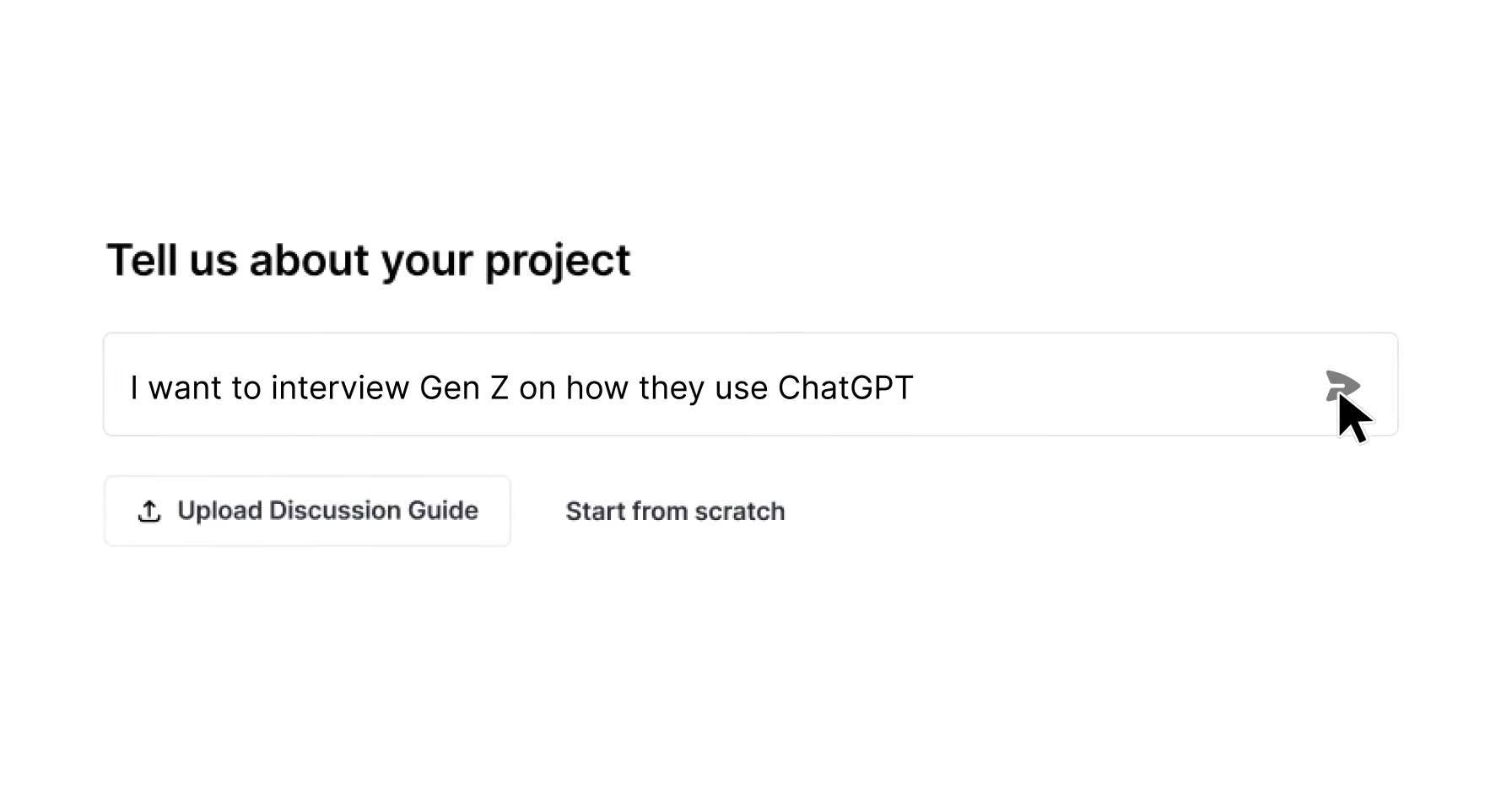
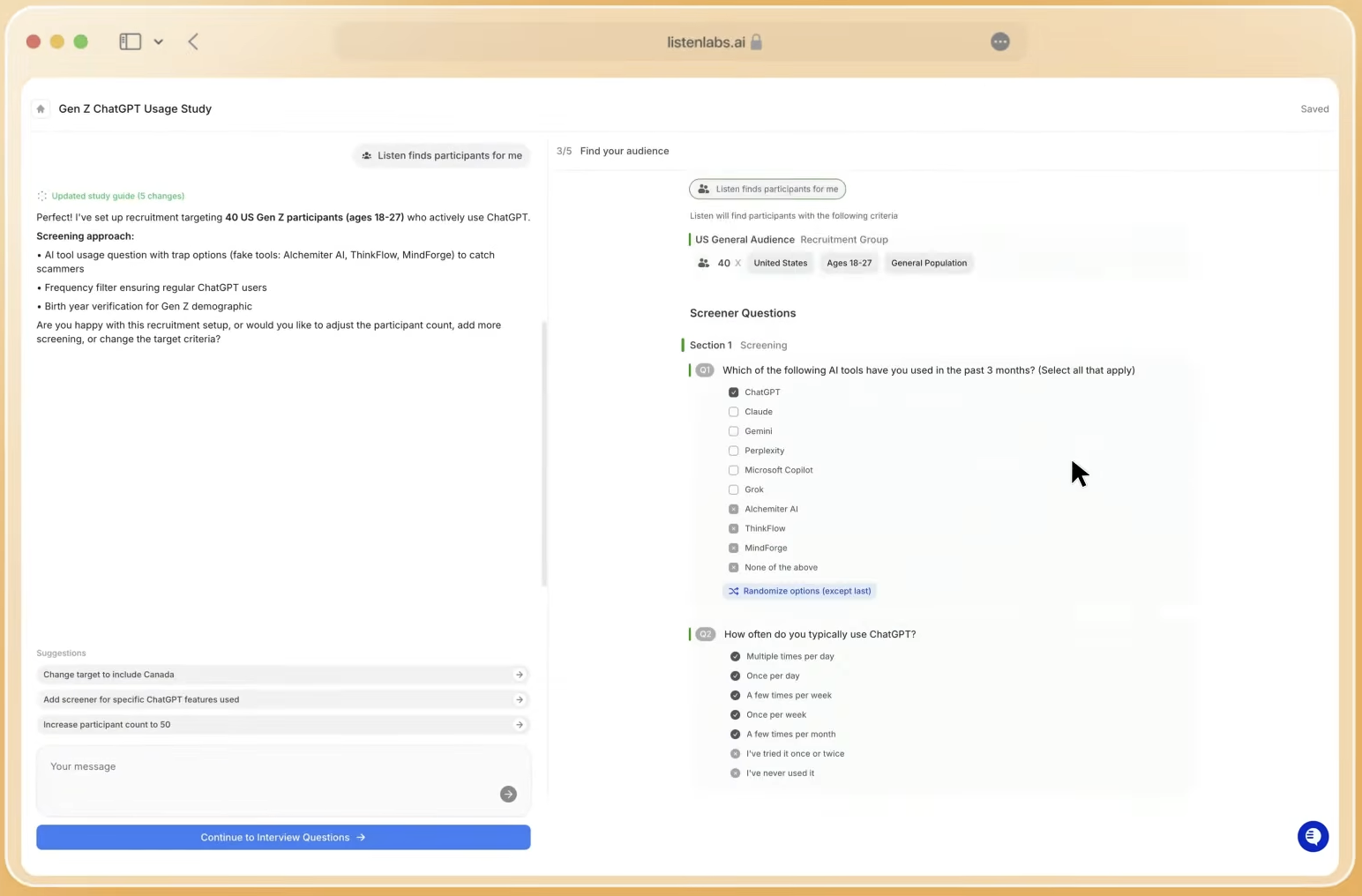
Neither category, however, explains the underlying shift. A citation rate that drops 15 points in a week is a signal, not a diagnosis. Without clarity on the root cause, teams can only react to symptoms instead of fixing the drivers of perception. Listen Labs compresses the full research cycle, including study design, participant recruitment, AI-moderated interviews, analysis, and deliverables, to under 24 hours so teams receive reports that explain why perception is changing before the shift appears in KPIs.
Depth of Customer Understanding Inside AI Answers
AI-visibility tools report mention rates, share of voice, citation share, and sentiment scores. The core measurement unit is inside-model output: whether the brand is mentioned or cited in generated answers, at what position, and with what sentiment. These metrics identify that something changed but not why it changed.
Traditional monitors add AI summarization and entity detection to web and social content. The result is faster noise reduction and trend detection, but the underlying data is still surface-level conversation rather than nuanced consumer motivation. Traditional monitoring systems measure conversation happening on source platforms and media channels, not how large language models choose to answer a buyer’s question.
Listen Labs fills this gap through adaptive AI-moderated interviews that capture emotional signals, verbatim reasoning, and the motivations behind stated preferences. Its Emotional Intelligence feature analyzes tone of voice, word choice, and subconscious micro-expressions across 50+ languages, built on Ekman’s universal emotions framework. Every emotion is quantified per question and traceable to the exact timestamp and verbatim quote. That level of diagnostic depth gives brands the language and reasoning they need to correct their portrayal inside generative answers, instead of relying on sentiment scores alone.
Sample Quality and Fraud Protection in AI Research
Even the richest diagnostic data loses value when the underlying sample is weak or inconsistent. AI-visibility tools sample AI engine outputs, not human respondents, so fraud risk in the traditional panel sense does not apply. The risk instead is methodological. Two identical AI queries return the same brand list less than 1% of the time (under a 1-in-100 chance), according to SparkToro data. Single-snapshot or infrequent sampling produces structurally unreliable metrics.
Traditional monitors with AI features rely on panel or social data that carries well-documented quality risks. Professional survey-takers, incentive-driven responses, and low-effort answers bias sentiment analysis and weaken conclusions.
Listen Labs addresses both dimensions. On the monitoring side, Listen Pulse runs continuous waves with consistent core questions, which produces stable trend lines instead of volatile snapshots. On the participant side, Quality Guard, an AI orchestration layer, monitors every interview in real time for fraud, low-effort responses, and repeat respondents. Participants are limited to three studies per month. The result is responses that are three times longer and richer than average panels, drawn from a verified network of 50M+ respondents across 45+ countries.
Global and Multilingual Reach for AI Brand Perception
An analysis of 680 million AI citations found that only 11% of domains are cited by both ChatGPT and Perplexity for the same query, while 71% of all cited sources appear on just one platform. Prompt-sampling tools that cover only one or two engines produce an incomplete picture of AI-driven brand exposure. Legacy monitors face a parallel limitation. Coverage of non-English social and news sources is uneven, and sentiment classification accuracy degrades significantly outside major Western languages.
Listen Labs conducts interviews in 120+ languages with automatic translation and transcription. Emotional Intelligence analysis is available in 50+ languages across 45+ countries. For brands managing perception across multiple markets simultaneously, where a generative engine in one region may cite entirely different sources than the same engine in another, that coverage functions as a structural requirement rather than a premium feature.
Total Cost of Ownership for Monitoring and Diagnosis
Self-serve AI-visibility tools cluster between $29 and roughly $295 monthly, while Profound offers a Growth plan at $399 per month and a separate custom-priced Enterprise tier for large companies and scales into the thousands. Traditional monitors with AI features range from mid-market tools to custom enterprise contracts for platforms like Brandwatch or Meltwater.
The hidden cost in both categories is the separate qualitative study that teams must commission when monitoring data fails to explain a shift. A citation rate decline triggers a research request. That request enters a backlog. The study takes four to six weeks. By the time results arrive, the business has often moved on. Listen Labs replaces that fragmented stack of monitoring tool, panel provider, moderator, analyst, and report writer with a single platform at one-third the cost of traditional research. The diagnostic layer sits inside the same workflow instead of being bolted on later.
How Each Tool Category Fits Real-World Use Cases
AI-visibility trackers work by repeatedly sampling fixed prompts across engines and aggregating mention, citation, and sentiment rates. These systems extract every URL from AI responses, classify source domains into owned, competitor, and third-party buckets, and score whether the brand was cited, mentioned, or omitted along with sentiment context. They are purpose-built for the question of how a brand appears in AI-generated answers. Best-fit use cases include enterprise SEO teams tracking share of voice across engines, mid-market marketing departments running competitive benchmarking, and agencies bundling AI visibility reporting into existing SEO retainers.
Traditional monitors ingest web, social, and news content and apply AI classification to reduce noise, detect entities, infer sentiment, and surface trends. They answer what is being said about a brand on the open web. Best-fit use cases include PR and communications teams tracking earned media, customer care teams routing negative sentiment spikes, and brand teams monitoring review platforms and forums. AI search monitoring capability in these platforms is emerging but will be standard within 12 months as of June 2026, so the AI-visibility layer currently functions as an add-on rather than a core competency.
Product teams without dedicated researchers and mid-market brand teams that need to understand why their AI portrayal is shifting, not just that it shifted, remain underserved by both categories. That gap is the problem Listen Labs is built to close.
Book a demo to see how Listen Labs’ AI-moderated interviews and Listen Pulse conversational tracker deliver the diagnostic depth that visibility tools and traditional monitors cannot.
Operational Considerations for Implementation
Integration requirements differ significantly between categories. Enterprise-grade AI brand monitoring requires API access plus warehouse connectors, and weekly CSV export alone falls below the professional standard according to 2026 GenOptima and Evertune frameworks. Traditional monitors like Semrush and Conductor integrate with Google Analytics, Google Search Console, Asana, and Jira, which makes them easier to embed in existing SEO and content workflows.
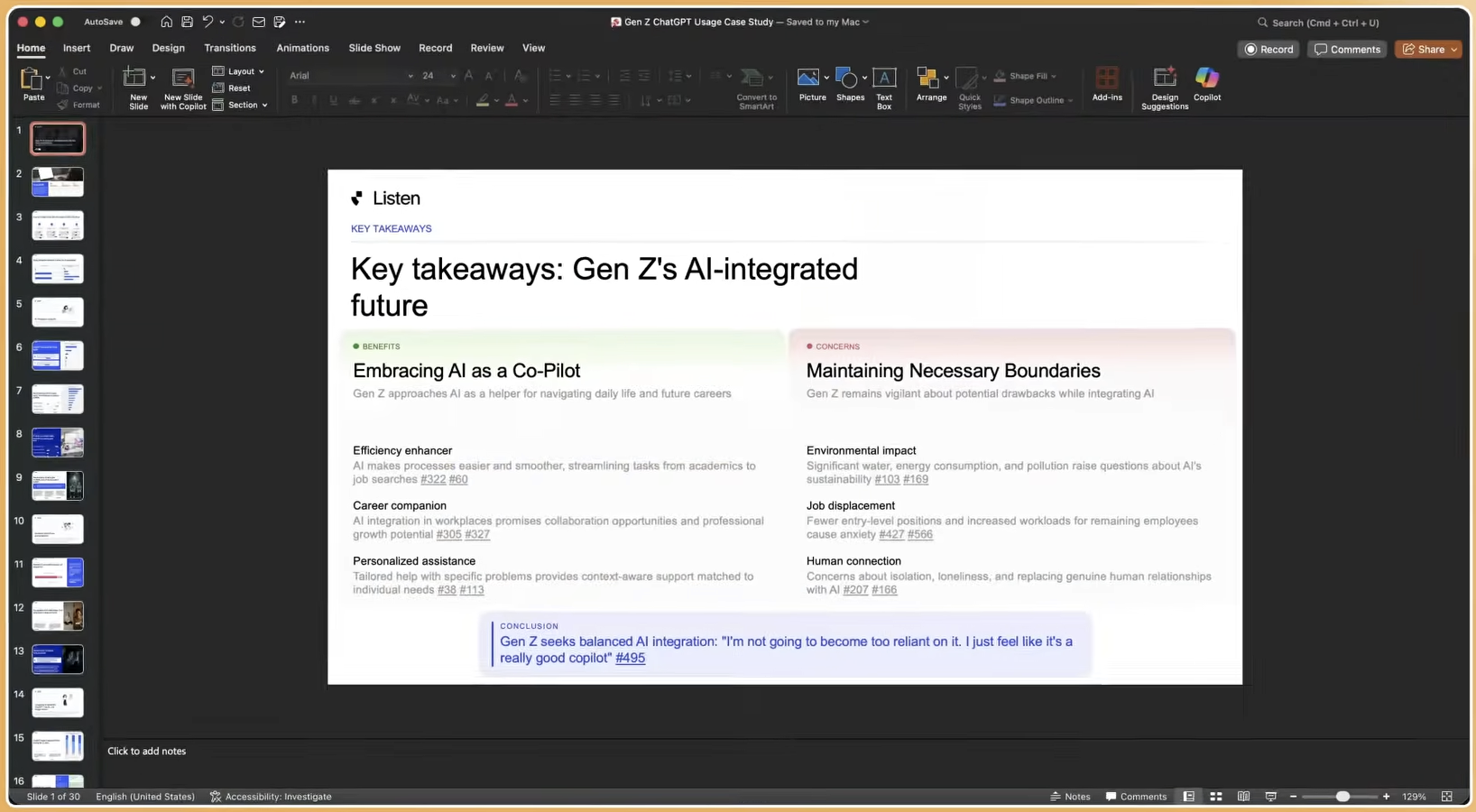
Listen Labs integrates with Qualtrics and Decipher for teams running existing brand trackers. Listen Pulse can add open-ended conversational waves alongside the KPIs teams already report without breaking historical comparability. For teams adding AI-moderated interviews to an existing research stack, the platform connects to CRM and analytics infrastructure and outputs slide decks, memos, and highlight reels that slot directly into stakeholder reporting.
Data governance requires separate evaluation. Listen Labs holds SOC 2 Type II, ISO 27001, ISO 27701, and ISO 42001 certifications, is GDPR compliant, and never trains its AI models on customer data. For enterprise teams managing sensitive brand and consumer data across multiple markets, that policy removes a category of procurement risk that many AI-visibility trackers and traditional monitors have not yet addressed consistently.
Risks and Limitations Across Monitoring Approaches
The primary risk in AI-visibility tracking is shallow data. SE Ranking’s 2026 methodology shows only 14.7% of domains repeat across AI answer runs, while Search Engine Journal reports that an SE Ranking study found Google AI Mode has 9.2% average URL overlap across three runs of the same queries and citation visibility can shift significantly. A monitoring program that treats any single answer as a stable ranking measures noise instead of signal.
Brands that do not actively track AI outputs can take months to discover errors in how AI describes them. Detection alone does not correct those errors. No 2024 Gartner study reported that 45% of marketing leaders discovered significant brand inaccuracies in AI outputs. Knowing an inaccuracy exists and understanding why it persists, including which sources feed it and which customer language reinforces it, requires a qualitative research layer that neither category provides natively.
Traditional monitors carry the say-do gap risk. They capture what people publish, not what people actually believe or do. Listen Labs’ Visual Insights feature closes this gap by observing on-screen behavior during interviews and probing contradictions between stated preference and observed action in real time. The result is data that reflects actual decision-making rather than self-reported sentiment.
Decision Framework for Selecting Your Stack
Teams can use a simple sequence of questions to decide whether they need monitoring, diagnosis, or both. The first question separates visibility tracking from deeper explanation. The next three clarify organizational capacity and budget structure. The final two address operational fit, including integration and speed-to-insight.
- Core need: track citation rates and share of voice across ChatGPT, Perplexity, and Gemini, or understand why brand perception is shifting inside those engines.
- Team structure: presence of a dedicated research function, or reliance on marketing directors as primary users of insight outputs.
- Budget model: preference for a single platform subscription, or capacity to run a monitoring tool alongside a separate qualitative research vendor.
- Market scope: operation across multiple languages and markets where citation behavior and consumer motivation differ significantly by region.
- Existing trackers: need to extend a current brand tracker such as Qualtrics or Decipher with qualitative depth, or build a new tracking program from scratch.
- Decision cadence: requirement to act on insight within days, or tolerance for a four-to-six-week research cycle.
Teams that prioritize understanding why, lack a dedicated research function, and need to act within days are the teams for whom AI-visibility trackers and traditional monitors are insufficient on their own. Listen Labs is built for that profile.
Frequently Asked Questions
How quickly do AI-visibility tools and traditional monitoring platforms deliver reports?
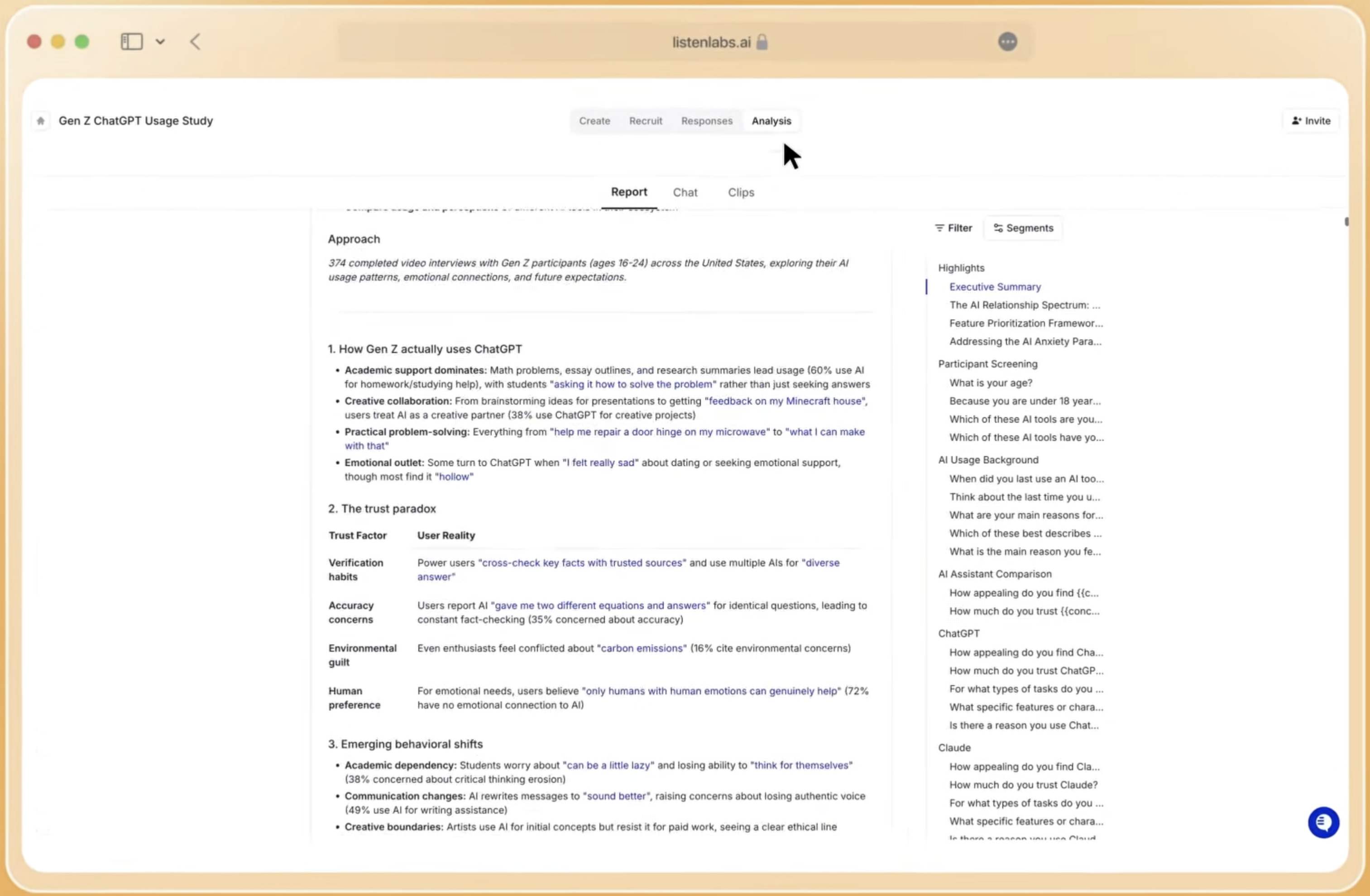
AI-visibility tools typically refresh daily or weekly, with some platforms offering same-day snapshots of citation rates across ChatGPT, Perplexity, Gemini, and Google AI Overviews. Traditional monitors with AI features operate on similar or slightly slower cadences depending on ingestion and classification cycles. Neither category, however, delivers a diagnostic report that explains why a metric moved. Listen Labs compresses the full research cycle, from study design through AI-moderated interviews, analysis, and deliverables, to under 24 hours and produces reports with verbatim customer reasoning rather than metric summaries alone.
How does Listen Labs protect against fraudulent or low-quality participants?
Listen Labs applies three layers of quality control. First, it works exclusively with high-quality, non-commodity panel sources, which avoids professional survey-takers. Second, Quality Guard uses real-time AI monitoring across video, voice, content, and device signals to detect fraud, low-effort responses, AI-generated scripts, and mismatched profiles during every interview. Third, a dedicated recruitment operations team adds a human review layer, and participants are limited to three studies per month to reduce panel fatigue. The result is responses that are three times longer and richer than average panels, with a zero-fraud guarantee.
Does Listen Labs support multilingual research across the same markets where AI engines operate?
Yes. Listen Labs conducts interviews in 120+ languages with automatic translation and transcription. Emotional Intelligence analysis, which captures tone of voice, word choice, and micro-expressions, is available in 50+ languages across 45+ countries. For brands managing AI portrayal across multiple regions where citation behavior and consumer motivation differ by market, that coverage is built into the platform rather than handled through separate vendor relationships.
What security certifications does Listen Labs hold, and is customer data used to train AI models?
Listen Labs holds SOC 2 Type II, ISO 27001, ISO 27701, and ISO 42001 certifications and is GDPR compliant. All data is protected with 256-bit encryption. Listen Labs never trains its AI models on customer data. Enterprise SSO is supported. These certifications and policies are designed to meet the procurement requirements of Fortune 500 organizations, including the roughly 15% of the Fortune 100 that Listen Labs currently serves.
How do I get started with Listen Labs?
Companies with more than 100 employees go through a demo and pilot process. The pilot gives teams access to the full platform, including study design, participant recruitment from the 50M+ verified network, AI-moderated interviews, Emotional Intelligence analysis, and the Research Agent, so results can be validated against real brand and consumer data before a full commitment. Smaller teams can access the self-serve platform directly. Book a demo to begin the process and see a live study built around your brand’s specific AI portrayal challenge.
Conclusion: Matching Tools to Needs and Closing the Gap
AI-visibility trackers answer whether a brand appears in generative engine outputs. Traditional monitors with AI features answer what is being said about a brand on the open web. For teams focused on tracking citation share and competitive benchmarking, visibility trackers provide the necessary data layer. For teams managing earned media and social sentiment, traditional monitors remain the right tool.
Brand and product teams that need to diagnose why AI portrayal is shifting and take corrective action before the shift reaches KPIs face a different problem. Neither category closes the qualitative gap. Listen Labs operates in that space as the diagnostic layer that turns monitoring data into actionable brand improvement, not as a replacement for monitoring.
The Research Agent’s sub-24-hour turnaround becomes strategically critical when a citation rate drops 15 points in a week and executives expect an explanation before the next board meeting, not a proposal for a study that will deliver results six weeks later. Brands that treat AI monitoring as a reporting exercise will keep reacting to shifts they cannot explain. Brands that add the qualitative research layer will understand the shifts early enough to correct them.
Book a demo and see how Listen Labs turns AI brand monitoring data into the customer insight needed to act on it.