
Written by: Anish Rao, Head of Growth, Listen Labs
Key Takeaways
- Continuous brand tracking collects small, recurring samples over time. This approach surfaces shifts in awareness, consideration, and sentiment as they form, while periodic studies miss early signals.
- The Measure → Detect → Diagnose → Act framework gives brands a clear sequence for spotting emerging themes in real time and acting before metrics decline, instead of reacting after revenue has eroded.
- Traditional brand trackers suffer from speed, scale, and say‑do gaps. They deliver static reports months after decisions and cannot explain why metrics move.
- Always-on conversational tracking delivers weekly data points with respondent explanations attached. This reduces recall bias and adds diagnostic depth that periodic studies cannot match.
- Listen Labs’ Listen Pulse connects every KPI movement to the respondent evidence behind it in the same wave. Book a demo to see continuous brand tracking in action.
The Measure → Detect → Diagnose → Act Framework for Continuous Tracking
Effective continuous brand tracking follows four sequential stages that build on each other.
- Measure. Collect core KPIs consistently wave after wave to establish a stable baseline and protect trend integrity.
- Detect. Identify emerging themes and metric movements as they occur, before they compound into larger declines.
- Diagnose. Investigate the “why” behind each movement using verbatim responses, emotional signals, and behavioral data.
- Act. Implement strategic or tactical changes based on that diagnosis, intervening before the issue reaches revenue impact.
Each stage depends on the previous one and forms a single chain. When continuous collection breaks, detection lags by months because teams work from stale snapshots. That delay blocks diagnosis, since no one can investigate a signal that has not yet appeared. Without a clear diagnosis, any action becomes guesswork and risks moving metrics without understanding what drives them.
Listen Pulse delivers all four stages in one always-on conversational tracker. Book a demo to see the framework in action.
The Problem: How Traditional Brand Trackers Miss the Why
Most companies still run brand tracking studies on a periodic schedule, which cannot detect a six-week trend. Every campaign, crisis, and competitor move generates an early signal that this cadence misses. Traditional brand trackers such as YouGov often cost around $75,000 (range $23K–$130K), with other programs starting at a few thousand dollars per wave or per year, and they deliver static PDF reports after marketing decisions have already been made. One major consumer brand client described receiving a March 2026 report for fieldwork conducted the previous August, a six-month lag that illustrates the structural limitations of this model.
The problem has three distinct dimensions that reinforce each other.
- Speed gap. A shift in brand performance surfaces in the week it happens under continuous tracking, unlike periodic studies where the tracker can land in week nine for a January-to-March period and arrive in May after the campaign has finished and the budget is spent.
- Scale gap. In a retail brand case, prompted awareness remained flat at approximately 60% across multiple waves, masking a nearly 10-point rise among under-35s that was offset by sharp declines among 35–54s, the client’s core revenue segment.
- Say-do gap. Surveys are structurally incapable of explaining why a metric moved because they are pre-scripted and cannot dynamically branch follow-up questions based on a respondent’s answer. Traditional surveys may tell you what people do, but it takes a conversation to understand why.
Gartner’s Market Guide for Brand Health Tracking Providers found that while 57% of brand leaders conduct brand health assessments, few find those insights genuinely actionable. The structural reason is straightforward. Traditional brand trackers function as lagging indicators with no mechanism to explain metric movements, turning debriefs into debates where teams reach different conclusions from the same numbers.
Continuous vs Periodic Brand Tracking: Speed, Scale, and Diagnostic Depth
Serious always-on brand trackers field thousands of responses per category per year, collected continuously. This approach creates a large pooled sample with low margin of error at 95% confidence, which supports stable subgroup analysis and detection of small metric movements. A quarterly periodic study, by contrast, produces only four fixed snapshots per year with no data between waves.
A conversational always-on tracker operates across five stages that replace the fragmented wave-based model.
- Setup. Core questions are locked to protect trend integrity, while timely add-on questions cover new campaigns or competitors without breaking historical comparability.
- Recruitment. Matched samples field continuously rather than in discrete bursts, which reduces the recall bias that builds when respondents must reflect on an entire quarter at once.
- Collection. Open-ended conversational questions run alongside awareness scales, NPS, and MaxDiff in the same wave, so teams work from one instrument instead of two separate studies.
- Synthesis. Emerging themes are quantified and charted next to KPIs automatically, so the metric movement and its explanation arrive together.
- Knowledge reuse. Every wave compounds into a searchable body of evidence, so teams check prior findings before commissioning new research.
This five-stage continuous model delivers three structural advantages over periodic trackers. First, it typically costs less than a quarterly brand tracker while providing more data points. Second, it reduces recall bias because respondents describe recent experiences instead of summarizing an entire quarter. Third, it provides more frequent measurement points for greater statistical power, which helps teams detect smaller metric movements with confidence.
Early Warning System for Brand Sentiment
When weakening brand equity finally appears in a company’s P&L, the company has already lost months of ground that a continuous tracker would have surfaced early. A 2-point decline in consideration looks like noise within the margin of error in a single annual wave but reveals a clear downward trend across four consecutive quarterly waves that will reach revenue within the following year.
Listen Pulse demonstrated this pattern with a well-known clothing brand famous for its large logos. Its legacy tracker caught a consideration drop but could not explain it. Pulse showed that price was not the issue. Style was the problem. A growing group of customers felt the large logos were too loud for their changing lifestyles. That finding, grounded in individual respondent verbatim and video clips, redirected creative strategy before the decline hit revenue.
An event-triggered qualitative study launched after a quantitative metric alert can return diagnostic findings within 24 hours, enabling precise strategic responses before further metric erosion occurs. Qualitative brand perception research has helped brands improve purchase intent after adjusting campaign messaging by diagnosing why quantitative signals showed poor resonance.
Continuous Brand Tracking Benefits: Campaign Lift, Competitors, and Loyalty
Brand preference and purchase intent are the metrics most directly connected to revenue, with movement in these metrics often preceding actual purchasing behavior by six to twelve months in many consumer categories. Continuous tracking makes those leading indicators visible in time for teams to act.
Three categories of commercial benefit appear consistently across enterprise deployments.
- Campaign lift measurement. Marketing effectiveness studies show stronger commercial performance when campaign optimization occurs during execution rather than after completion. A CPG brand that saw purchase intent hold flat in post-campaign surveys used AI-moderated depth interviews to discover that the campaign moved awareness but failed to shift the key equity driver of ingredient quality, redirecting the next creative brief within weeks.
- Competitor benchmarking. A category-leading client used brand health tracking to detect emerging competitors gaining share through innovative packaging and flavors, then innovated its own offerings and retained market leadership. Listen Pulse surfaces competitor themes in open-ended responses before they register in share metrics, with every finding linked to the respondent quote and clip behind it.
- Loyalty measurement. Retaining customers improves sales and customer lifetime value because new prospects do not have to be pushed through the full funnel. Pulse integrates with Qualtrics and Decipher, so loyalty KPIs teams already report gain the narrative context that explains why scores are moving.
Continuous Brand Tracking ROI: Cost, Speed, and Integration
Nucleus Research reports 100% average ROI with a 1.5-year payback period for Qualtrics experience management software. Almost four in five executives report that brand measurement has a positive ROI through earlier problem identification, faster responses, and more efficient marketing budget allocation.
The ROI case for continuous conversational tracking rests on five dimensions that together reduce both cost and time-to-insight compared with the traditional agency model.
- Speed. Continuous collection delivers weekly data points versus quarterly snapshots, and diagnostic findings return in under 24 hours versus 4–8 weeks per wave.
- Depth. Open-ended conversation in every wave supplies the “why” that quant-only trackers structurally cannot provide, which removes the need for a separate qualitative study after every metric movement.
- Scale. AI-moderated interviews run simultaneously across thousands of respondents, removing the sample-size ceiling that limits traditional qualitative diagnosis.
- Cost structure. Continuous trackers can reduce total annual costs compared with traditional quarterly agency programs while increasing the volume of usable insight.
- Integration. Listen Pulse connects with Qualtrics and Decipher, preserving existing KPI reporting while adding the conversational diagnostic layer alongside it.
How Listen Pulse Improves Traditional Trackers
Listen Pulse deploys alongside an existing tracker or as the primary tracking system. Teams that have invested in Kantar, YouGov BrandIndex, or Qualtrics-based programs do not need to abandon their trend lines. Core questions stay constant wave over wave to protect historical comparability, while timely add-on questions address new campaigns, competitors, or news events. The qualitative layer runs in the same wave, not as a separate study commissioned weeks later.
Traditional trackers report that awareness or consideration moved. Pulse reports the movement and the mechanism behind it. Every KPI connects to a real respondent, including their words, the verbatim quote, and the video clip. The Research Library then compounds each wave into a searchable body of evidence, so teams can query what customers said about a brand attribute six months ago alongside what they are saying today, without re-watching recordings or digging through archived decks.
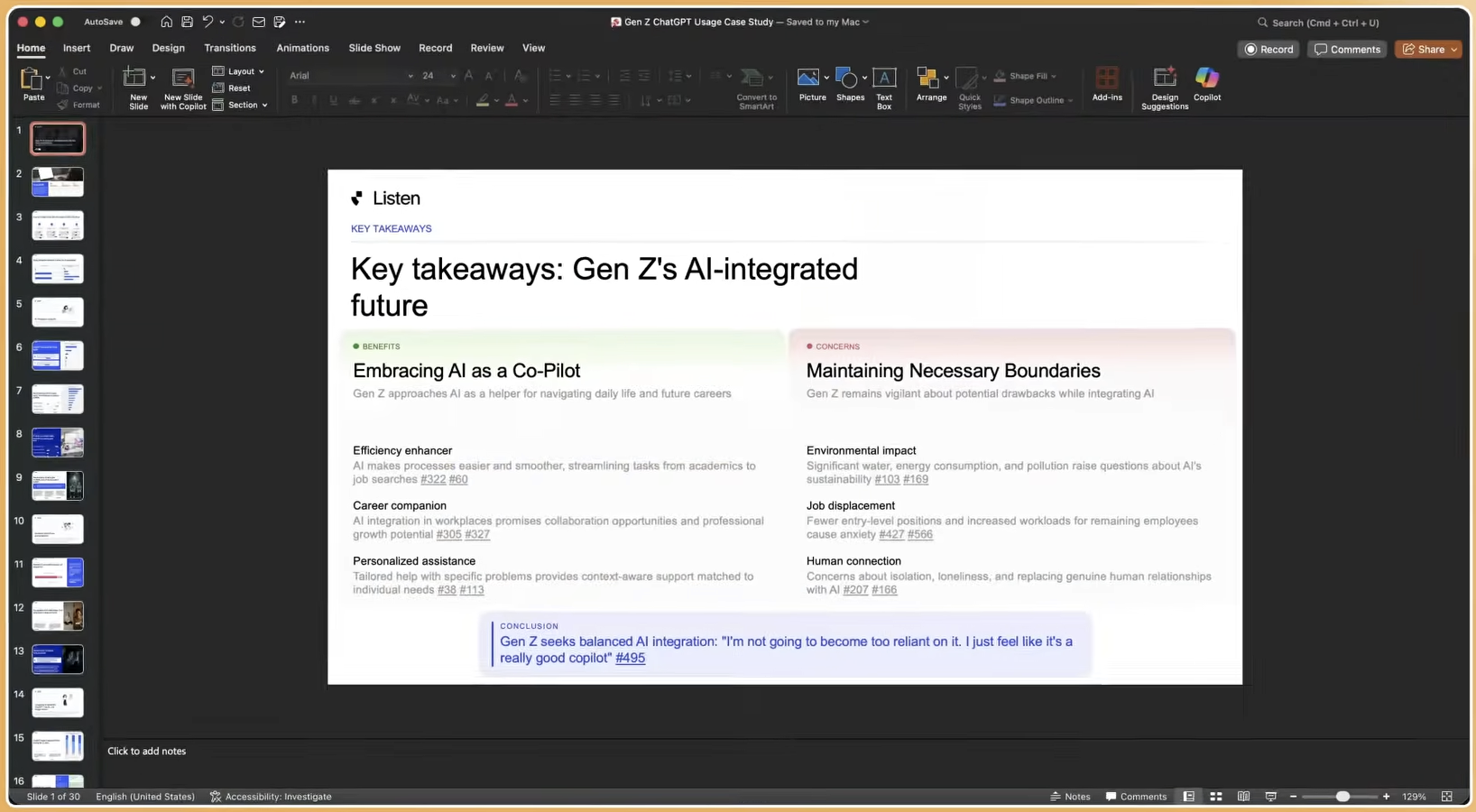
Book a demo of Listen Pulse to see how it connects metrics to the voices behind them.
Common Concerns and Evaluation Checklist
Enterprise insights teams evaluating continuous conversational trackers tend to raise a consistent set of practical concerns. Together, these concerns shape the evaluation criteria for any always-on system.
- Automation limits. AI moderation produces responses 3x longer than average through intelligent probing, with dynamic follow-up questions that adapt to each respondent’s answer instead of following a fixed script.
- Data quality. Listen Labs’ Quality Guard monitors every interview in real time for fraud, low-effort responses, and repeat respondents. Participants are limited to three studies per month, which removes professional survey-takers.
- Privacy and compliance. Listen Labs holds SOC 2 Type II, ISO 27001, ISO 27701, and ISO 42001 certifications and is GDPR compliant. Customer data never trains AI models.
- Bias and governance. AI analysis processes interview data consistently across hundreds of responses without human confirmation bias, and every finding traces back to the source respondent.
- Trend integrity. Core questions remain locked wave over wave. New questions appear as a separate module so historical comparability stays intact.
- Organizational adoption. Pulse integrates with Qualtrics and Decipher, so existing stakeholder reporting workflows continue unchanged while gaining the diagnostic layer.
- Global reach. Listen Labs covers 45+ countries across the Americas, Europe, APAC, and MEA, with 120+ languages supported for interview moderation and 50+ for emotional signal analysis.
Frequently Asked Questions
What is the difference between continuous brand tracking and a traditional periodic tracker?
A periodic tracker fields a discrete wave of survey questions at set intervals, typically quarterly or biannually, and delivers a static report weeks after fieldwork closes. Continuous brand tracking collects a small, recurring sample every week or month, producing rolling trend lines with no gaps between waves. The practical difference is detection speed. A shift that occurs in week two of a quarter appears in a continuous tracker within days and in a periodic tracker only after the wave closes, is analyzed, and is reported, often two to three months later. Listen Pulse adds a conversational layer to continuous collection, so every metric movement arrives with the respondent explanation behind it rather than requiring a separate qualitative study.
What types of brands benefit most from continuous brand tracking?
Continuous tracking is most valuable for brands in fast-moving categories such as CPG, retail, DTC, QSR, and technology, where competitive dynamics, campaign activity, and consumer sentiment shift faster than quarterly waves can detect. Brands running active media campaigns benefit because continuous data enables in-flight optimization rather than post-campaign evaluation. Brands managing a reputation event, a product launch, or a category entry by a new competitor also benefit because the detection window is measured in weeks rather than quarters. Stable categories with slow-moving competitive sets can operate on monthly or quarterly cadences, and even those brands gain value from the qualitative diagnostic layer that explains why metrics move.
How long does it take to set up a continuous brand tracker with Listen Pulse?
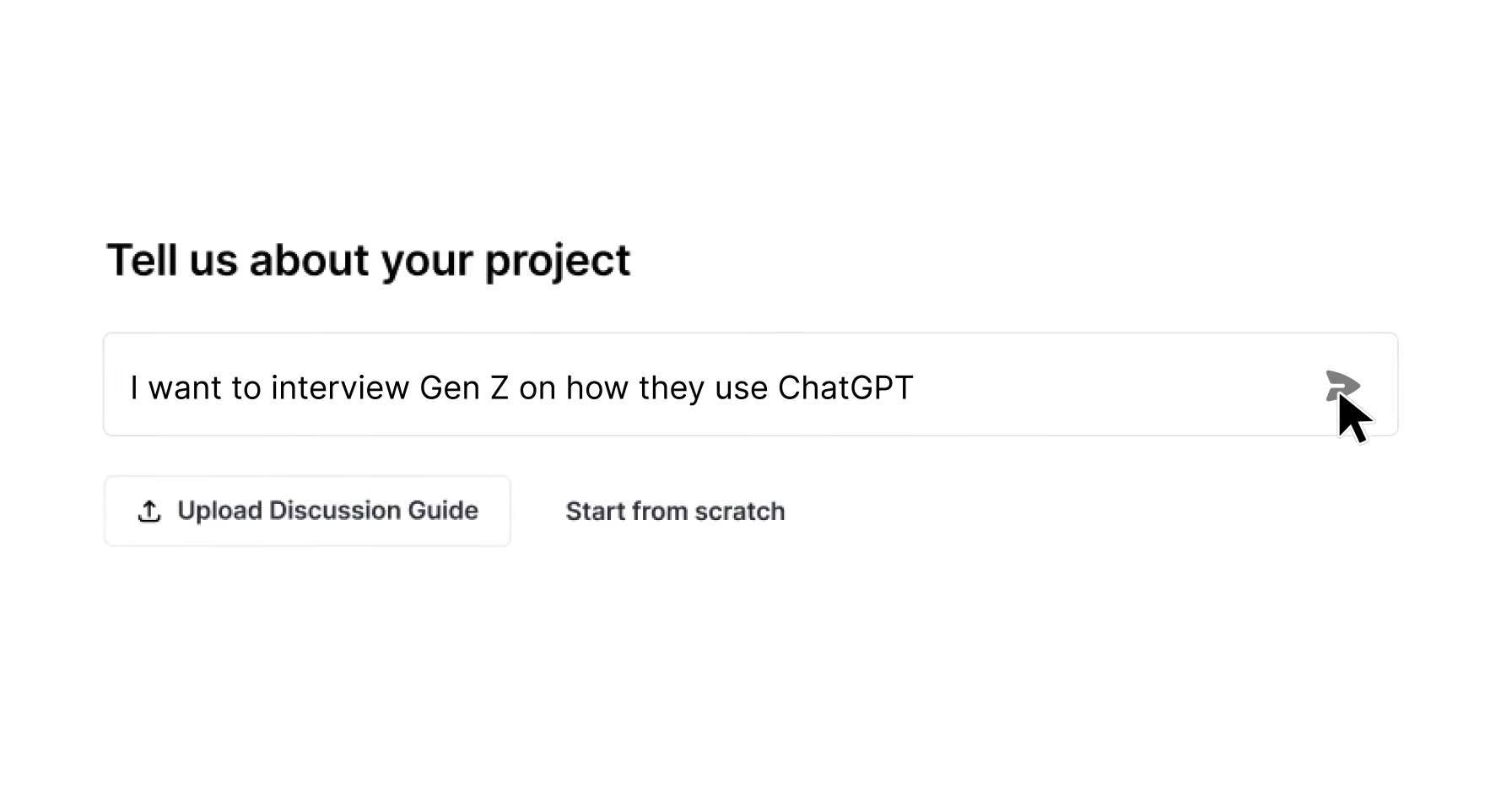
Listen Pulse is designed for rapid deployment. AI-assisted study co-design drafts structured objectives, core tracking questions, and open-ended conversational probes in seconds from a natural-language brief. Recruitment draws from a global panel of 50M+ verified respondents across 45+ countries, with no separate panel sourcing required. Core questions are locked at setup to protect the trend line, and the first wave can begin fielding within hours of study approval. Teams that already run a Qualtrics or Decipher tracker can connect Pulse alongside their existing infrastructure, preserving historical KPI data while adding the conversational diagnostic layer from the first wave forward.
How does Listen Pulse handle sample quality across continuous waves?
Quality Guard applies three layers of protection across every wave. First, Listen Labs works exclusively with high-quality, non-commodity panel sources, avoiding professional survey-takers. Second, real-time AI monitoring evaluates video, voice, content, and device signals during each interview to detect fraud, low-effort responses, AI-generated scripts, and mismatched profiles. Third, participants are limited to three studies per month across the platform, which prevents panel fatigue and repeat-respondent bias. A dedicated recruitment operations team adds a human review layer for hard-to-reach segments, including enterprise decision-makers, healthcare workers, and audiences below 1% incidence rate. Behavioral matching operates on intent and past actions rather than self-reported demographics alone.
What outputs does Listen Pulse deliver, and how do they integrate with existing reporting?
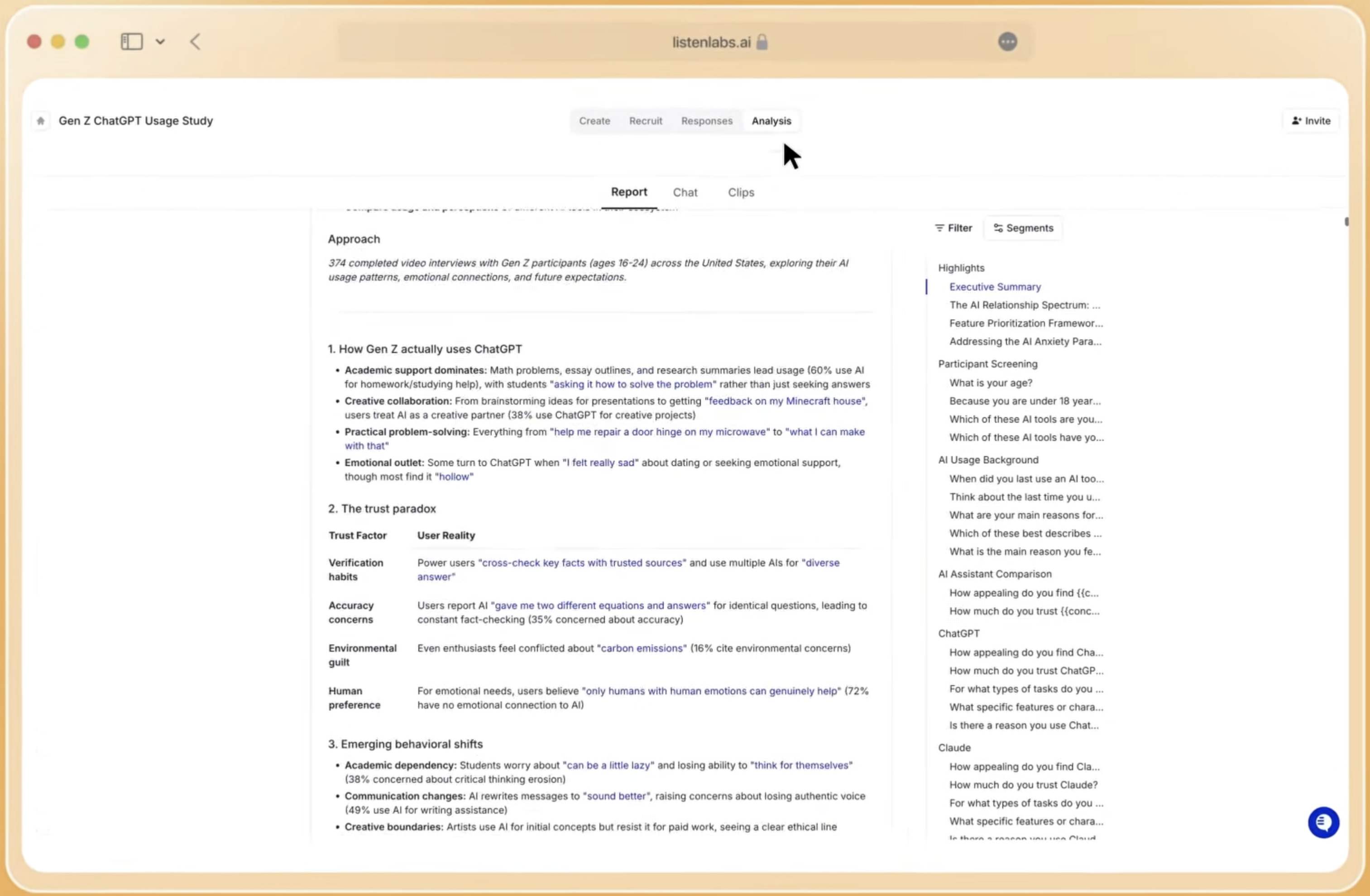
Each wave produces quantified KPI trend lines, emerging theme charts plotted alongside those KPIs, and respondent evidence such as verbatim quotes, audio clips, and video clips behind every data point. The Research Agent generates consultant-quality slide decks, memos, highlight reels, and statistical charts in under a minute. Research Library stores every wave as a searchable body of evidence, enabling cross-wave queries in natural language with full source attribution back to the original study, screener, and individual respondent. Pulse integrates directly with Qualtrics and Decipher, so teams continue publishing the KPIs stakeholders already track while the conversational diagnostic layer appears alongside them in the same reporting cycle.
Conclusion
Periodic brand studies deliver a number and a date but not the mechanism behind the movement, the segment driving it, or the window to act before it reaches revenue. The “why” is what differentiates customer research that is acceptable from customer research that is outstanding. Continuous brand tracking with conversational depth closes that gap by pairing every KPI with the respondent explanation behind it in the same wave, not a separate study commissioned weeks later.
The evaluation criteria are straightforward: detection speed, diagnostic depth, trend integrity, sample quality, integration with existing infrastructure, and total cost of ownership. Listen Pulse addresses each one through always-on collection, AI-moderated open-ended conversation, locked core questions, Quality Guard, native Qualtrics and Decipher integration, and a cost structure that runs at a fraction of legacy agency programs.
Book a demo of Listen Pulse to see continuous brand tracking benefits in action.