Written by: Anish Rao, Head of Growth, Listen Labs
Key Takeaways
- A brand conversation tracker pairs fixed quantitative KPIs with AI-moderated open-ended conversations so every metric movement arrives with traceable qualitative explanations.
- Unlike traditional quant-only trackers, conversational systems deliver explanatory power in the same wave, removing separate qualitative studies that add weeks and cost.
- Listen Pulse integrates with Qualtrics and Decipher, maintains historical trend lines, and surfaces emerging themes before they affect aggregate metrics.
- Emotional Intelligence and Visual Insights layers capture tone, micro-expressions, and say-do gaps, providing richer context than transcripts alone.
- Teams ready to replace lagging indicators with traceable explanations can book a demo with Listen Labs.
How modern brand trackers support decisions
Hanover Research frames brand tracking as a recurring, longitudinal measurement program that supports biannual, quarterly, monthly, or annual cadences. At minimum, a brand tracker monitors six funnel-aligned metrics: unaided awareness, aided awareness, consideration, preference, usage, and NPS. That foundation supports basic reporting but no longer covers the needs of modern consumer insights teams.
Evaluating a brand tracker across five dimensions shows where legacy systems fall short and where conversational trackers add value.
Speed. Traditional CPG brand tracking studies often require multiple weeks per wave. That timing clashes with brand, innovation, and marketing decisions that need input within 2–4 weeks. Teams either act without current data or delay decisions until the next wave finishes. A conversational tracker running continuous waves compresses that cycle to days and lets insights guide decisions in real time.
Explanatory power. Traditional trackers often skip open-ended questions due to high coding costs or include them but deliver only word clouds months after fieldwork. That delay prevents timely integration of “why” data with core KPIs. Every wave of a brand conversation tracker includes AI-moderated probing. Numeric movements arrive with coded thematic explanations, without manual coding.
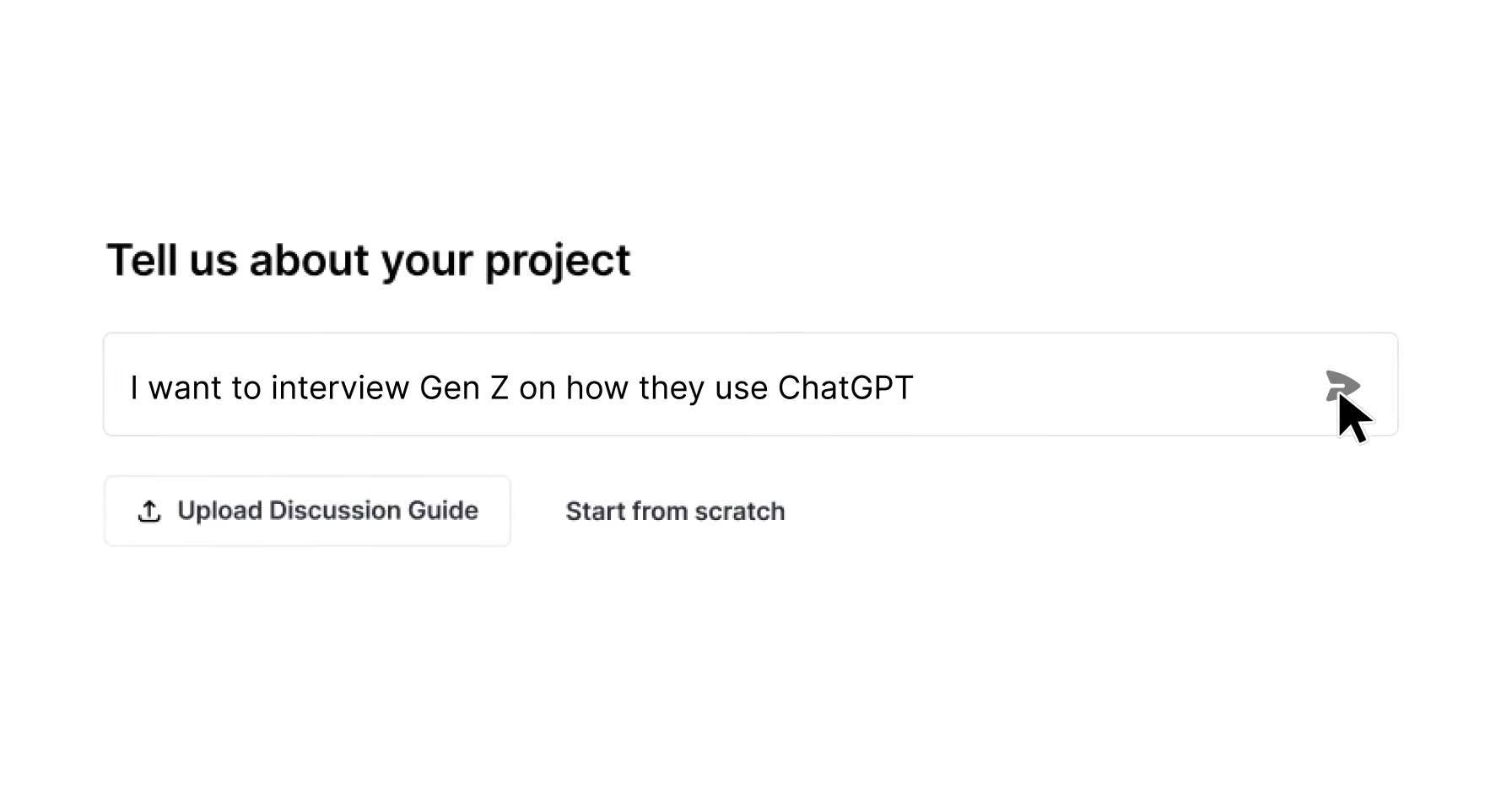
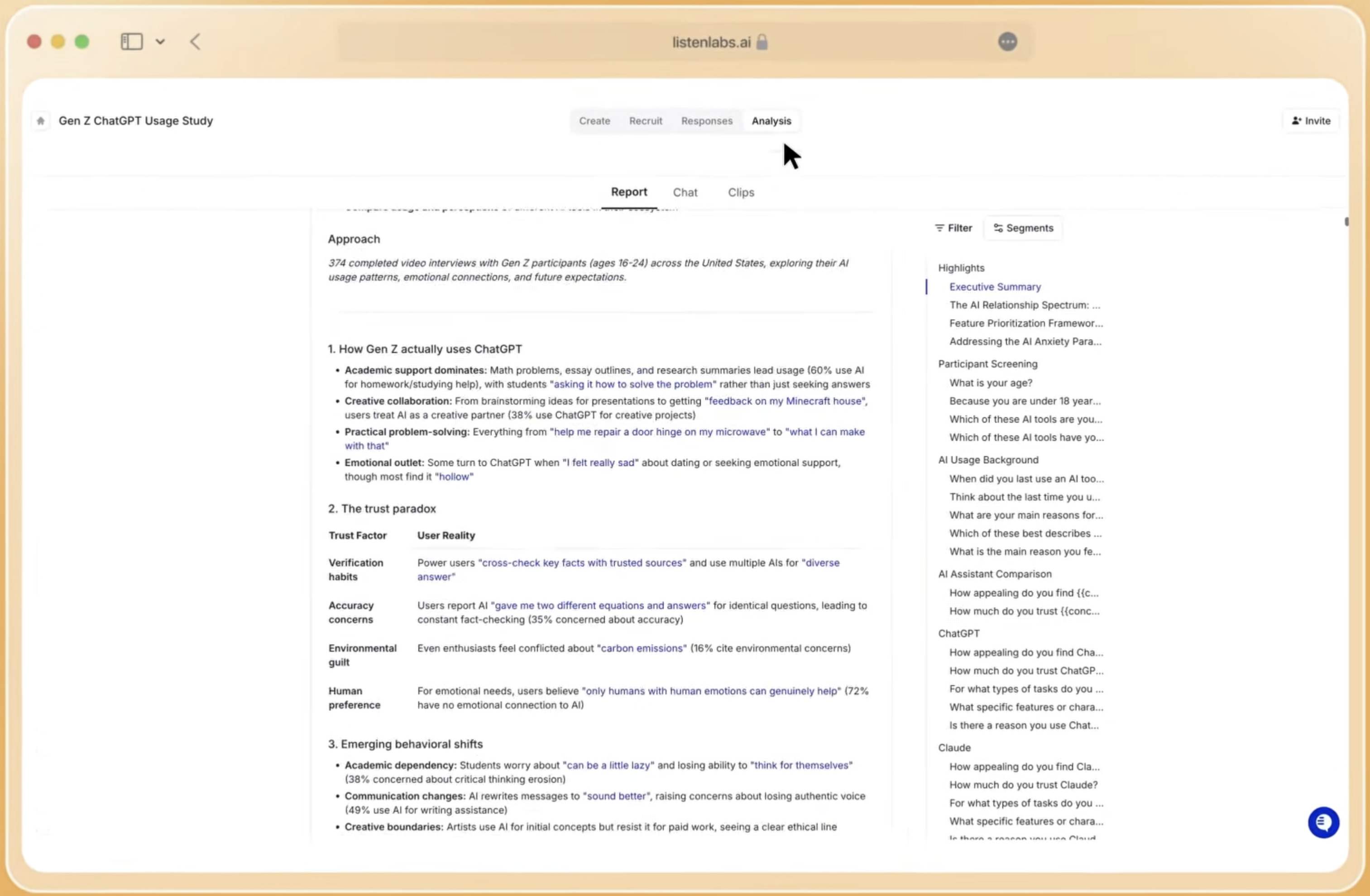
Data traceability. A modern brand-tracking methodology links every metric shift to a traceable qualitative explanation, including the interview, verbatim quote, timestamp, and audio or video clip that produced it. Legacy systems output 95 percent aided awareness and NPS scores in 60-page decks distributed six weeks after fieldwork, with no verbatim evidence attached.
Integration flexibility. Listen Pulse connects with Qualtrics and Decipher, so teams keep the KPIs they already report while adding the narrative behind them. It deploys alongside an existing tracker or as the primary tracking system.
Total cost of ownership. Legacy brand trackers from major research firms typically cost $50K–$250K per quarter and deliver a static PDF report after marketing decisions have already been made. Conversational trackers reduce annual cost and enable trend detection through more frequent data points rather than quarterly averages.
Compare Listen Pulse across these five dimensions for your current tracking program.
Brand tracking budgets and total cost of ownership
Enterprise-level brand health tracking programs relying on custom research or panel-based measurement, such as Kantar’s BrandZ offerings, typically cost $50,000–$200,000+ per year. Software-first brand tracking platforms aimed at mid-market brands typically start at $3,000–$15,000 per year, with mid-tier plans reaching $25,000–$30,000. Those figures cover the tracker alone and exclude the separate qualitative study commissioned every time a KPI moves and teams need an explanation.
That vendor fragmentation drives a sharp gap between sticker price and total cost of ownership. A quant-only tracker that requires a separate qualitative engagement for every diagnostic question effectively doubles the research budget and adds 8–12 weeks to the insight cycle. A conversational tracker that pairs constant-core KPIs with open-ended conversation in every wave removes that second engagement entirely.
Listen Pulse is priced as a subscription. Enterprises access the platform and spend credits per participant recruited, with credit cost varying by audience difficulty. The result is a single line item that replaces the tracker, the diagnostic qualitative study, the transcription vendor, and the analysis layer, at a fraction of the combined cost. Request a pilot to see the total cost comparison for your program.
Brand conversation trackers compared to social listening tools
Brand monitoring focuses on real-time or near-real-time detection of brand mentions across social posts, news, reviews, forums, podcasts, videos, and answer engines to show what people are saying about the brand right now. That capability differs from a brand tracker, and treating them as interchangeable creates blind spots in both directions.
Social listening captures organic, unprompted conversation at scale. It surfaces volume spikes, sentiment shifts, and topic clusters. It cannot maintain a constant-core set of KPIs across a defined sample, control for who is speaking, or link a sentiment shift to a specific brand attribute measured identically wave over wave. G2’s 2026 Brand Intelligence report found that the primary challenge is no longer analytics sophistication but channel coverage. Consumer conversations now fragment across TikTok, Reddit, AI search engines, and private communities, where social listening has partial visibility at best.
A brand conversation tracker functions as a designed research instrument. Participants are recruited to spec, screened consistently, and asked the same core questions every wave. AI moderates open-ended conversation and probes deeper on interesting or short answers. The output is a trend line with explanatory depth, not a volume chart.
Listen Pulse combines both orientations in one instrument. Structured KPIs maintain the longitudinal trend line. Open-ended conversation surfaces the themes driving movement. Every response links to a real participant, their words, the quote, and the clip, which creates traceability that social listening volume data cannot match.
Why quant-only trackers keep teams reacting to lagging indicators
Traditional survey trackers from firms like Kantar, YouGov, and Ipsos quantify shifts in brand awareness, loyalty, and perceived value but cannot explain the emotional and contextual reasons behind those changes. They tell teams what changed, not why. Recovering the explanation requires a separate qualitative study, which adds weeks and budget to a cycle that already moves slowly.
Changes in brand health typically appear 1–3 quarters before they show up in revenue or market share. Traditional brand tracking provides limited “why” data beyond standardized metrics. By the time a KPI declines, the underlying shift has been building for months, and the tracker has no mechanism to surface that shift earlier.
One well-known clothing brand, famous for its big logos, was quietly losing customers. Its legacy tracker caught the drop but could not explain it. Listen Pulse found that price was not the issue. Style was. A growing group of customers felt the big logos were too loud for their changing lifestyles. That finding arrived in the same wave as the metric movement, not six weeks later in a separate qualitative debrief.
Listen Pulse keeps core questions constant to protect the trend line. Timely add-on questions cover new campaigns, competitors, or news events without breaking historical comparability. Traditional surveys may tell us what people do, but it takes a conversation to understand why.
How Listen Pulse surfaces emerging themes before KPIs drop
Listen Pulse analyzes tens of thousands of responses continuously and charts emerging themes next to the KPIs teams already report. When a theme begins gaining share of voice among a specific segment, before it has moved the aggregate metric, it appears in the dashboard. Teams see what is forming, not just what has already happened.
Every number is traceable to the interview, verbatim quote, and audio or video clip behind it. Drill into any metric and hear the original explanation. That traceability separates a conversational tracker from a dashboard that describes movement without diagnosing it. The “why” is what differentiates customer research that is alright from customer research that is outstanding.
Full question-type flexibility runs in one instrument. Awareness scales, NPS, MaxDiff, rankings, and closed-ended questions sit alongside open-ended conversational interviews in the same wave. Respondent-defined topics let customers raise what actually matters, which makes it possible to track abstract constructs like cultural relevance without perfect question design upfront.
Start a Listen Pulse pilot and see emerging themes before your next KPI review.
Emotional Intelligence in brand conversation tracking
What people say and what people feel represent different data points. A participant can rate a brand attribute positively while displaying micro-expressions of confusion or contempt. Transcripts capture the rating and miss the expression.
Listen Labs’ Emotional Intelligence analyzes three layers of signal simultaneously: tone of voice, word choice, and subconscious micro-expressions. Built on Ekman’s universal emotions framework, the same standard used in clinical psychology and UX research, it quantifies seven emotions (anger, contempt, disgust, enjoyment, fear, sadness, and surprise) per question and per concept. Every emotion label links to the exact timestamp and the reasoning behind it, so teams can see why Listen identified “confusion,” not just that it did.
In brand research, Emotional Intelligence shows how people feel about a brand versus competitors, catches moments of hesitation and frustration that participants do not say out loud, and identifies which creative executions trigger genuine delight versus flat or confused responses. Available across 50+ languages, it integrates directly with the Research Agent for natural-language queries, charts, and highlight reels of emotionally significant moments.
See how emotion tracking reveals what surveys miss in your brand program.
AI search visibility, Visual Insights, and the say-do gap
The next evolution of brand intelligence, according to G2’s 2026 report, is visibility in AI-generated answers and dark social networks. Organizations that measure only traditional social and web mentions risk missing emerging sources of influence that shape brand perception and purchase intent. AI visibility and AI share of voice have become essential brand tracking metrics because answer engines now influence buyer shortlists before website visits occur.
Listen Labs and Profound published a study of 100 CMOs finding that 22 percent now begin vendor research inside an LLM versus 16 percent using traditional search. A brand tracker that ignores how a brand appears in AI-generated answers measures an incomplete picture of the consumer decision journey.
The say-do gap compounds this problem. Ask participants how they feel about AI customer service agents and they report a preference for human interaction. Watch them in a support chat and they click the AI agent in three seconds. This contradiction shows why stated preferences alone can mislead strategy, because actual behavior tells a different story. Traditional research forces a trade-off. Moderated sessions catch contradictions but do not scale. Unmoderated testing scales but records behavior nobody has time to watch.
Listen Labs’ Visual Insights closes that gap. The AI Interviewer observes on-screen behavior and acts during the interview. When a participant does the opposite of what they said, it catches the contradiction and asks follow-up questions in real time. A video model writes a timestamped, second-by-second log tagging every meaningful on-screen change. Teams can quantify friction across sessions and click any metric to jump to the exact moment behind it.
Frequently Asked Questions
What are the core metrics in a brand conversation tracker?
A brand conversation tracker maintains a locked set of 6–12 core quantitative metrics to protect the longitudinal trend line. These typically include unaided awareness, aided awareness, familiarity, consideration, preference versus top competitors, 4–6 brand attribute associations, Net Promoter Score, and brand promise alignment. Those metrics run identically every wave. Alongside them, open-ended conversational questions and AI-moderated probing surface the themes driving movement in each metric. Timely add-on questions cover new campaigns, competitors, or news events without altering the core set. Listen Pulse also supports awareness scales, NPS, MaxDiff, and rankings in the same wave as open-ended conversation, so teams do not need to choose between question types.
How does Listen Pulse integrate with existing tracking infrastructure?
Listen Pulse connects directly with Qualtrics and Decipher, the two most common enterprise tracking platforms. Teams keep the KPIs they already report and the dashboards their stakeholders already use. Listen Pulse adds the open-ended conversational layer and the theme-charting capability on top of that existing infrastructure. It deploys alongside an existing tracker as a diagnostic complement or as the primary tracking system. For teams that want to migrate fully, Listen Pulse handles the complete tracking lifecycle, including study design, recruitment from a global panel of 50M+ verified respondents, AI-moderated interviews, automated analysis, and deliverables, in a single platform.
Can every metric movement be traced to a real respondent?
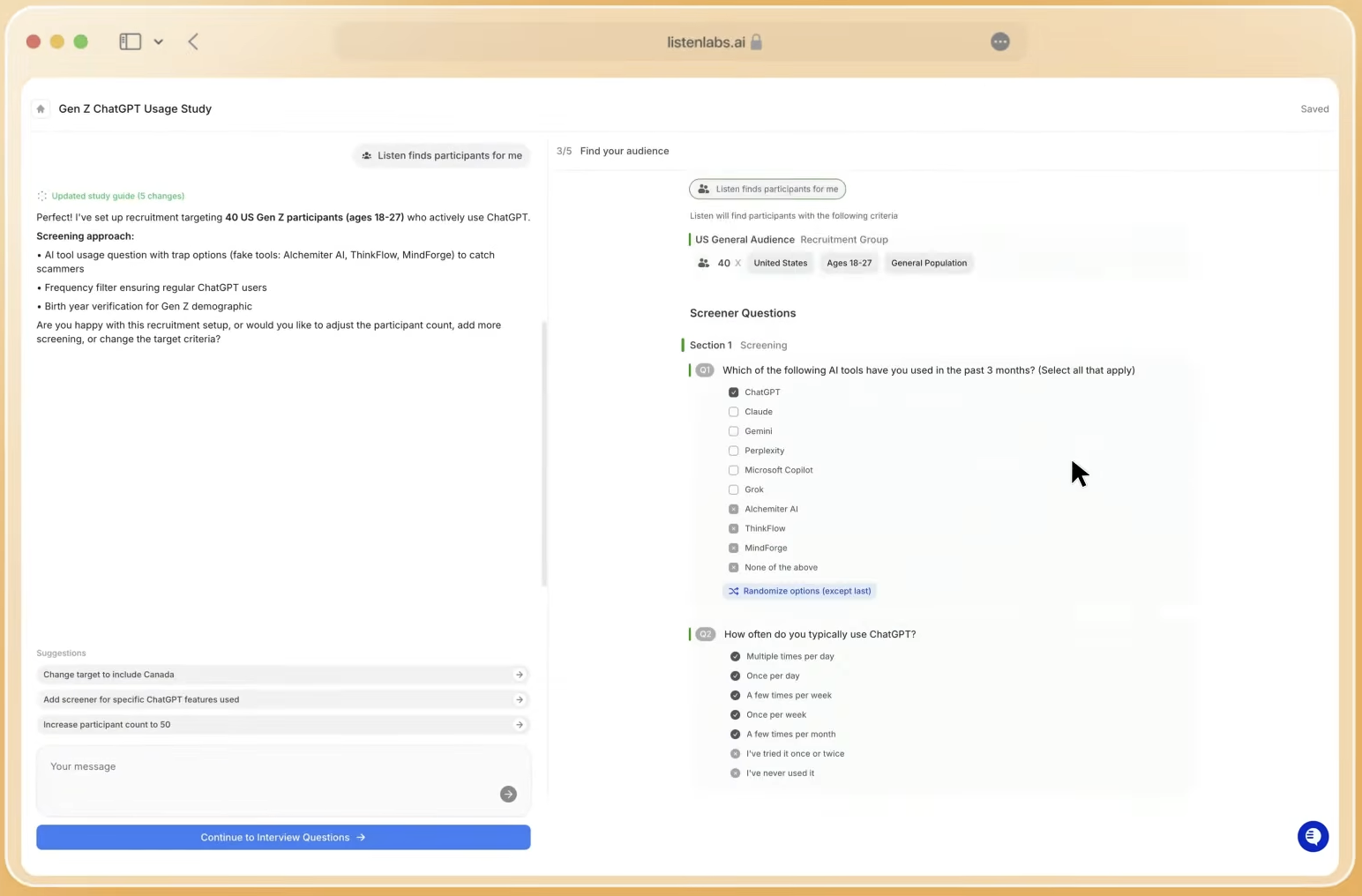
Yes. Every number in Listen Pulse traces back to the interview, verbatim quote, and audio or video clip behind it. Drill into any metric movement and the platform surfaces the specific respondents whose answers drove it, the exact words they used, and the timestamp of the moment in the interview. That traceability extends to Emotional Intelligence labels. Every emotion tag links to the exact timestamp, the verbatim quote, and the reasoning the system used to apply the label. This structure builds a diagnostic layer into the instrument instead of bolting it on afterward.
What enterprise outcomes have Microsoft, P&G, and Sweetgreen achieved?
Microsoft cut research wait time from weeks to hours. A Director of Data Science at Microsoft reported collecting global customer video stories for the company’s 50th anniversary celebration within a single day, reaching hundreds of users at one third of the cost of traditional methods. Procter & Gamble used Listen Labs to surface where product claims felt exaggerated or unclear before market launch, delivering 250+ interviews with quantified themes and verbatim proof in hours rather than weeks, which directly shaped product and brand strategy. Sweetgreen replaced months-long research cycles with days, scaled research across 300+ US locations, and achieved five times the scale at one third the cost. Their Head of Consumer and Business Insights noted that speed to insight now means actions show up in real Sweetgreen restaurants within weeks or months instead of years.
Conclusion: Moving from lagging reports to live explanations
Traditional quant-only trackers report that a number moved and carry no diagnostic for why. By the time a KPI declines, the underlying shift has been building for months, and explaining it requires a separate qualitative engagement that adds weeks and budget to a slow cycle.
A brand conversation tracker solves that structurally. Constant-core KPIs protect the trend line. Open-ended conversation runs in every wave. Emerging themes surface before they reach the aggregate metric. Every movement traces to a real respondent, their words, the quote, and the clip. Emotional Intelligence captures what transcripts miss. Visual Insights closes the say-do gap. AI search mention tracking accounts for how brands appear in the answer engines that now shape buyer shortlists.
Listen Pulse delivers all of this in one always-on system. It integrates with Qualtrics and Decipher, deploys alongside an existing tracker or as the primary tracking system, and connects every metric movement to traceable explanatory power.
Replace lagging indicators with real-time explanations for your brand.