
Written by: Anish Rao, Head of Growth, Listen Labs
Key Takeaways
- Fast telecom customer insights platforms combine real-time data ingestion with AI-moderated interviews to deliver actionable results in under 24 hours, which is critical for carriers facing 1.5–2.5% monthly churn and $300–$500 acquisition costs.
- Nine criteria separate effective platforms from data noise: research speed, insight depth, sample quality, global reach, analysis effort, reporting transparency, security, scenario fit, and known limitations.
- Listen Labs is the only platform meeting all nine criteria simultaneously through its 30M-respondent verified panel, AI-moderated video interviews with emotional signal capture, and automated consultant-grade deliverables.
- AI-led discovery reduces median time-to-insight from 12 weeks to 18 hours, which enables telecom teams to close feedback loops fast enough to prevent churn before contract-end decisions.
- Book a demo with Listen Labs to see how the platform compresses a 4–6 week research cycle into hours for telecom CX, churn, and personalization decisions.
Research Speed for Narrow Churn Windows
Telecom carriers face 1.5–2.5% monthly churn with narrow intervention windows before customers reach contract-end decisions. When research cycles run 4–6 weeks, or six months in large carriers with internal prioritization queues, the opportunity to act on customer feedback has already closed. That acceleration is measurable: a 2026 Customer Discovery Velocity Report tracking 180 product, research, and growth teams documented the shift, with the 94% reduction enabling intervention windows that traditional cycles cannot support. AI-led approaches accelerate recruiting, scheduling, interviewing, and synthesis stages so decisions keep pace with customer behavior.
For telecom strategy teams, speed functions as a churn-prevention mechanism rather than an operational convenience. Rapidly closing the loop on customer feedback supports early intervention before detractors reach contract-end decisions. When a carrier’s research cycle runs six weeks, the intervention window has already closed and retention teams are left reacting instead of preventing churn.
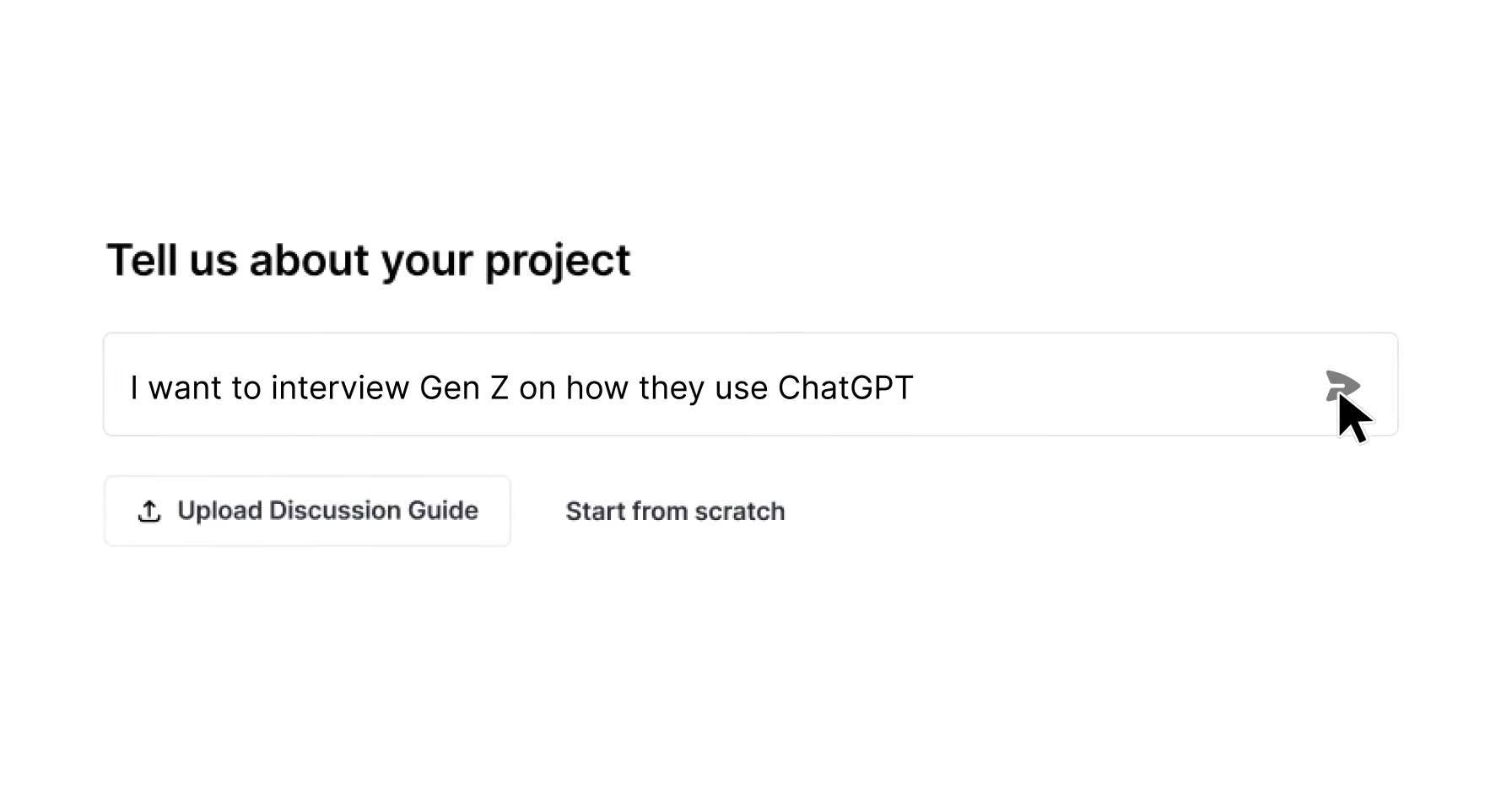
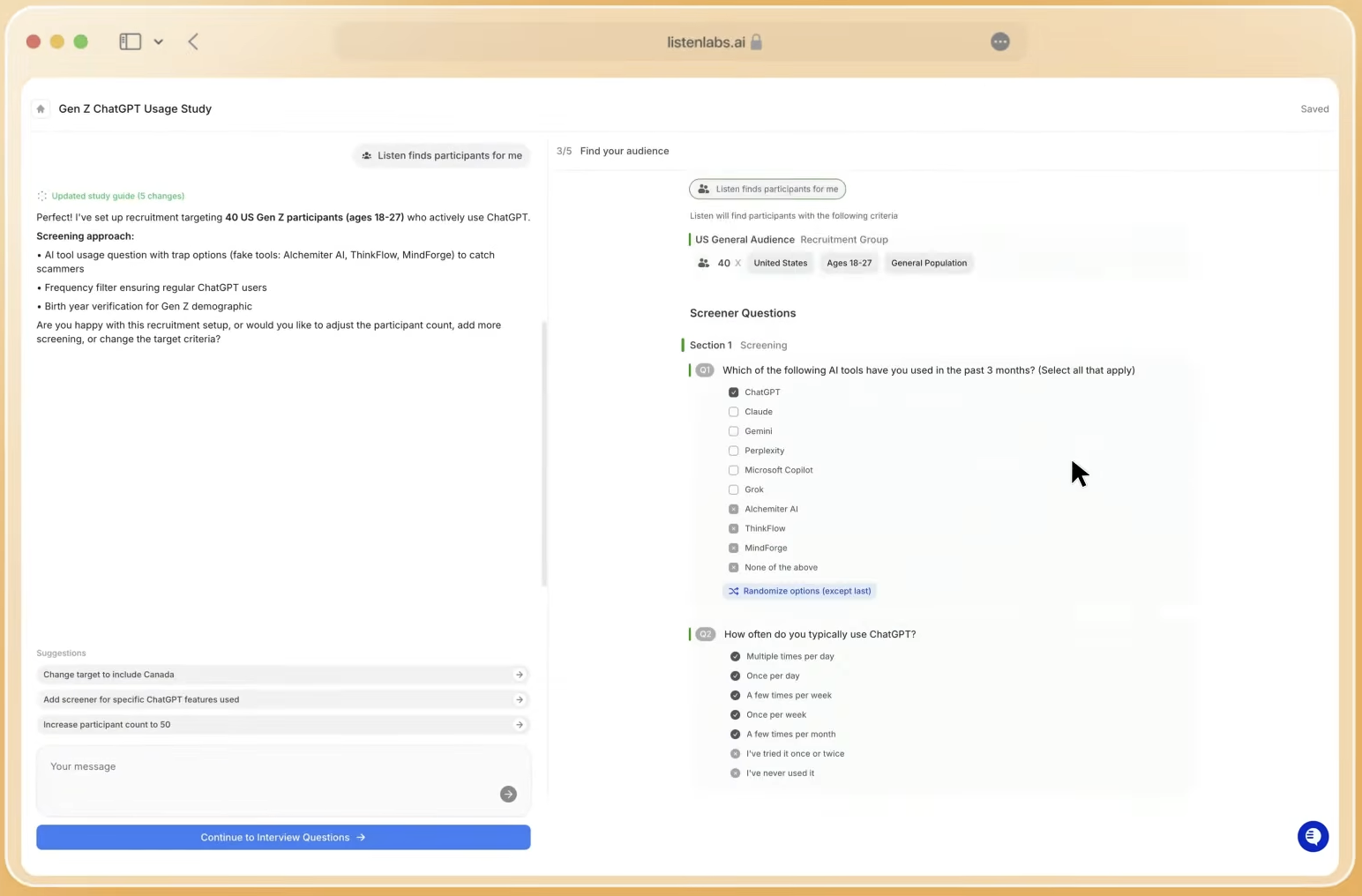
Listen Labs compresses the entire lifecycle, including study design, recruitment, AI-moderated interviews, analysis, and deliverable generation, to under 24 hours. The platform layers auto-recruiting, transcription, sentiment tagging, and insight summarization so teams move from question to findings in hours, not weeks. For offer personalization testing or digital-friction mapping ahead of a product launch, that speed separates evidence-based decisions from guesswork.
Depth of Insight for Emotion-Driven Churn
Speed without depth produces fast answers to the wrong questions. Quantitative dashboards and NPS trackers measure what customers report, but they do not capture why customers feel the way they do. Nielsen Norman Group states that quantitative data is less appropriate for understanding emotions, mindsets, and motivations at the level required for effectively depicting the entire customer journey, and that qualitative methods allowing direct observation or conversation are a better use of time for that purpose.
Listen Labs addresses this gap through Emotional Intelligence, which analyzes three signal layers: tone of voice, word choice, and subconscious micro expressions, to surface emotions that transcripts alone miss. Built on Ekman’s universal emotions framework, every emotion is quantified per question and concept, with every label traceable to the exact timestamp, verbatim quote, and AI reasoning behind it. A carrier testing two retention offers can see not only which scored higher, but also where hesitation, confusion, or genuine enthusiasm appeared in each conversation.
This depth matters for churn prediction specifically. A Tier 1 carrier in Europe found that customers whose average sentiment score declined by more than 20% over any 90-day period were 4.7 times more likely to churn within the following six months. Detecting that decline requires emotional signal data, not just satisfaction scores.
Sample Quality That Protects Telecom Decisions
Sample quality determines whether insights reflect real customers or fraud and professional respondents. Commodity panels introduce fraud, repeat respondents, and incentive-driven answers that undermine the entire research investment. A study published in the Proceedings of the National Academy of Sciences found that AI bots evade survey detection 99.8% of the time, and Kantar found researchers discard on average 38% of collected data due to quality concerns.
Listen Labs operates a three-layer fraud protection system designed to address the specific vulnerabilities that undermine commodity panels. Quality Guard monitors every interview in real time across video, voice, content, and device signals to detect fraudulent responses, low-effort answers, and mismatched profiles, which catches bot activity and disengaged participants that text-based surveys miss. Because fraud detection alone cannot prevent professional survey-takers who provide technically valid but incentive-driven answers, participants are limited to three studies per month, which eliminates the repeat-respondent problem. For hard-to-reach segments where automated recruiting may miss qualified participants, a dedicated recruitment operations team adds a human review layer for enterprise decision-makers, engineers, and consumers below 1% incidence rate. Listen Labs does not use commodity quantitative panels.
Global Reach and Language Support for Multi-Market Carriers
Telecom carriers operate across multiple markets with distinct regulatory environments, competitive dynamics, and customer expectations. A platform that cannot recruit verified respondents in those markets at speed forces teams back into fragmented vendor arrangements that reintroduce the delays they are trying to eliminate.
Listen Labs’ panel, Listen Atlas, covers 30 million verified respondents across 45+ countries in the Americas, Europe, APAC, and MEA, with AI-moderated interviews supported in 100+ languages including automatic translation and transcription. Emotional Intelligence is available across 50+ languages. For a carrier running simultaneous churn-driver studies in North America, Germany, and Southeast Asia, that reach removes the need for multi-vendor coordination that typically adds weeks to multi-market programs.
Analysis Effort: From Raw Interviews to Decisions
Talking to users at scale has become easier; understanding what they mean remains the hard part. With AI-moderated interviews, talking to users at scale is no longer the hard part, the challenge is understanding what they mean. Traditional analysis of qualitative data is time-consuming, subjective, and prone to confirmation bias. Qualitative analysis often consumes a substantial portion of the total project timeline on traditional research engagements, with much of that time spent on manual coding and theme clustering.
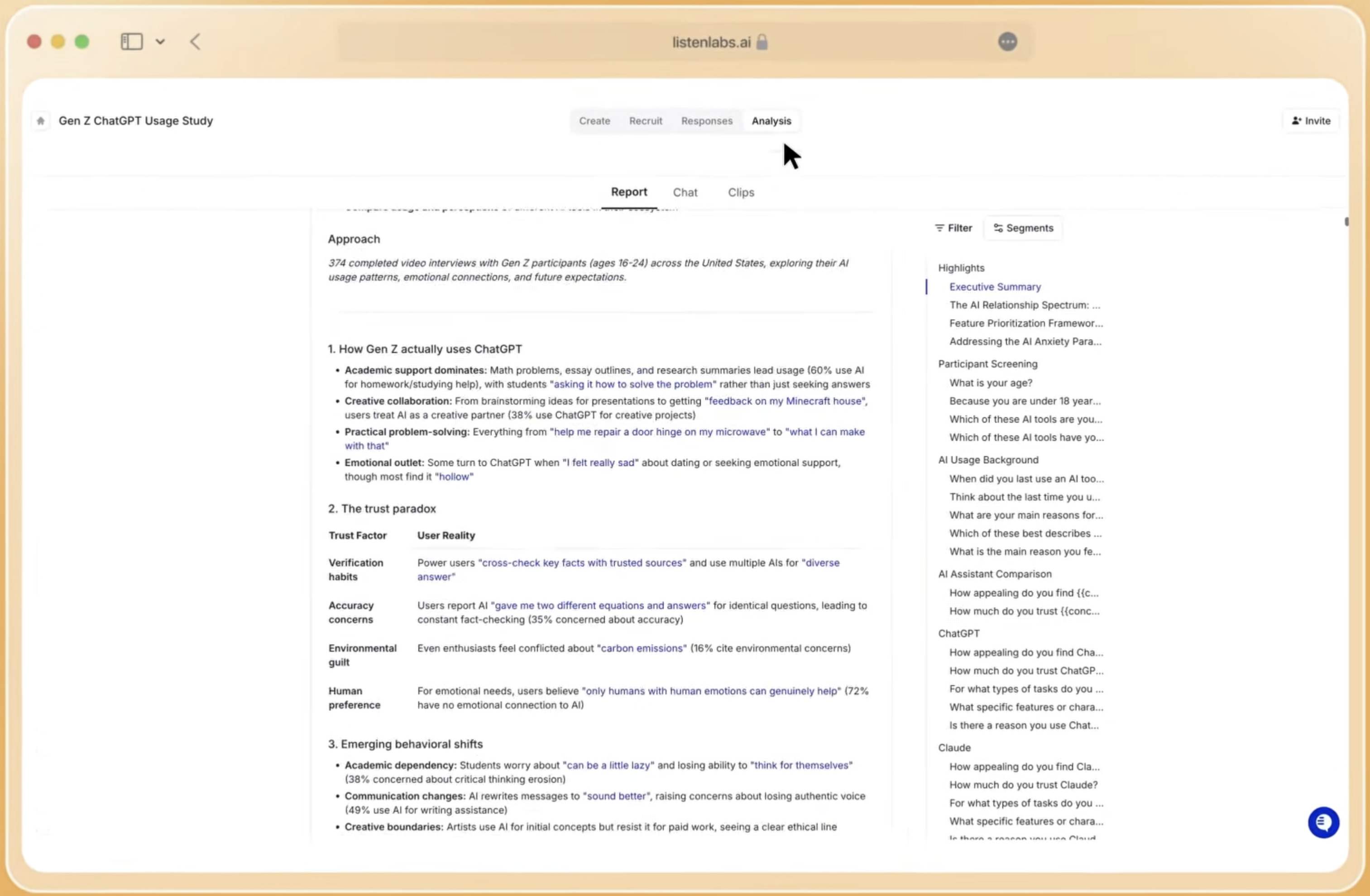
Listen Labs’ Research Agent automates the full analysis workflow so researchers focus on decisions rather than transcription and coding. One researcher ran a full buying intent analysis across three user segments in under a minute. The Research Agent generates slide decks, memos, highlight reels, statistical charts, and segmentation breakdowns through natural-language queries, with every insight linked back to the underlying response data.
Reporting Transparency and Cross-Study Memory
Transparent reporting ensures stakeholders can trust and reuse insights across teams and time. Mission Control serves as the organization’s single source of truth across all studies, which enables cross-study queries and trend tracking so teams do not re-research questions already answered in prior engagements. Every chart, quote, and emotional label in Listen Labs traces back to the original interview moment, which gives legal, compliance, and analytics teams confidence in how conclusions were reached.
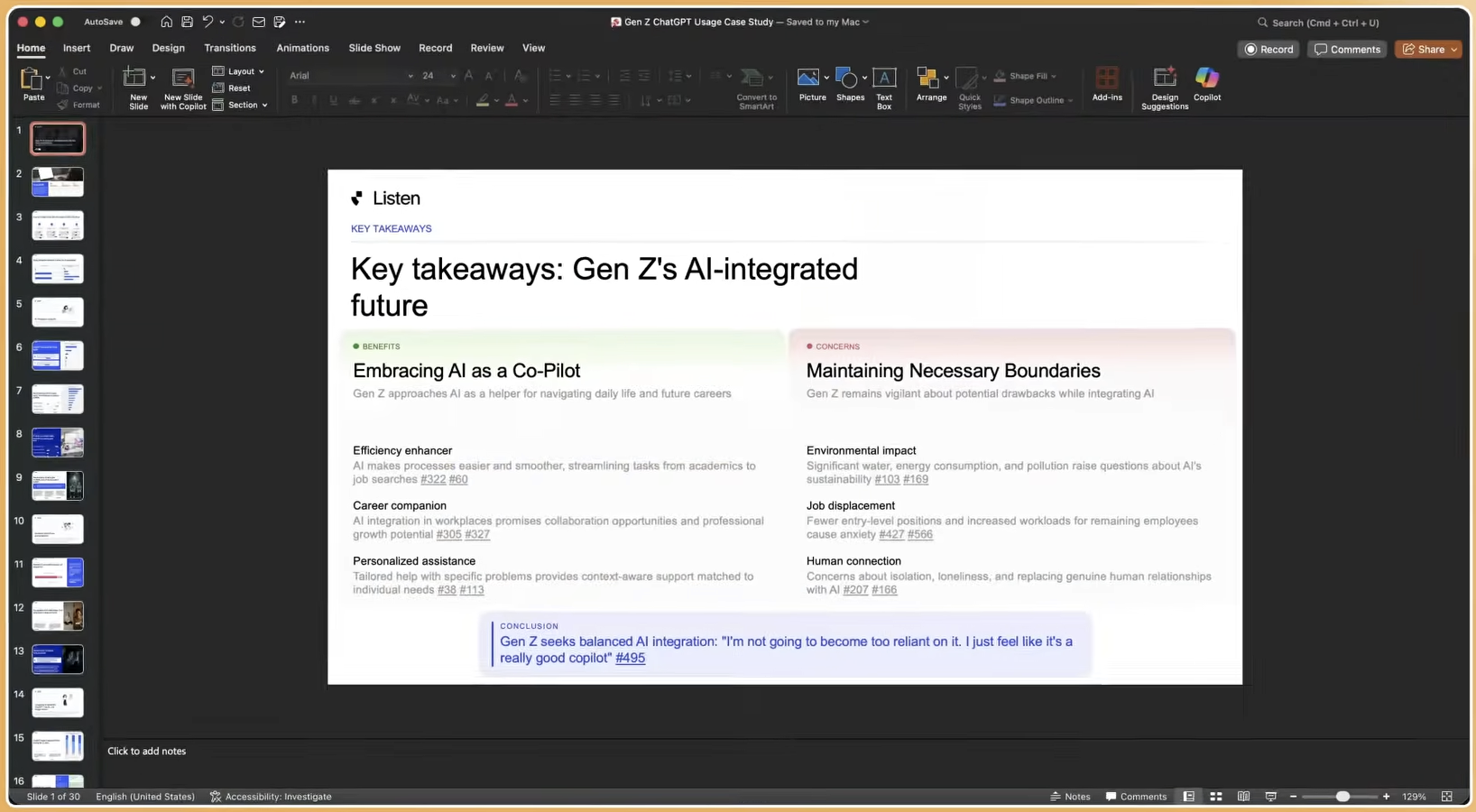
See Research Agent and Mission Control in action for a telecom churn or personalization use case, and book a demo to explore how automated analysis compresses your research workflow.
Security and Compliance for Regulated Environments
Enterprise telecom carriers operate under strict data governance requirements, so security and compliance influence platform selection as much as features. Listen Labs holds SOC 2 Type II, GDPR, ISO 27001, ISO 27701, and ISO 42001 certifications, uses 256-bit encryption, and guarantees that customer data is never used for AI model training. Enterprise SSO is supported. These certifications cover both data security and AI governance, which is relevant for carriers subject to regulatory scrutiny on automated decision-making.
Scenario-Based Guidance for Telecom Leaders
Three distinct roles within a carrier organization face different versions of the speed-versus-depth problem, and the right platform configuration differs by scenario. Each role benefits from the same core capabilities but applies them in different workflows.
A VP or Director of Consumer Insights at a Fortune 500 carrier typically manages a team overwhelmed by internal research requests, with a backlog growing faster than capacity. The primary need is multiplying research output without proportional headcount increases. Listen Labs addresses this by enabling the same team to run studies in under 24 hours that previously required 4–6 weeks, with automated deliverables that remove manual report writing. Listen Labs has run over one million AI-powered customer interviews for enterprises including Microsoft, Perplexity, and Sweetgreen.
A UX Research Lead at a digital telco needs faster feedback loops to keep pace with sprint cycles, with the ability to test prototypes and map digital friction points without the logistics overhead of recruiting and scheduling. Listen Labs supports screen sharing, mobile screen recording on iOS, and usability testing studies with 50–100+ participants instead of the 5–10 typical of manual recruitment cycles.
A Product or Marketing leader at a carrier without a dedicated research team needs self-serve simplicity. Describing research goals in natural language triggers AI-assisted study design, recruitment, moderation, and analysis automatically, so no methodology expertise is required. For offer testing ahead of a campaign launch, this removes the agency dependency that previously made fast turnaround impossible.
Risks and Limitations of Fast Insights Platforms
Rigid survey instruments capture only what respondents are asked and miss the motivations and emotional context that explain behavior. Net Promoter Score is a lagging health metric that tells organizations nothing about why customers are unhappy or what would make them stay; it should trigger investigation rather than serve as the investigation itself. Carriers relying exclusively on NPS and CSAT dashboards for churn prediction are working with incomplete data.
Manual research workflows introduce delays that make insights stale before they reach decision-makers. Traditional qualitative research workflows run 4–9 weeks total, with recruiting and scheduling alone consuming 1–3 weeks. For churn prediction tied to contract-end windows, that timeline is operationally incompatible with timely intervention.
Automation also carries risks when misconfigured. AI-moderated interviews require well-designed study guides and clear research objectives to deliver reliable findings. Overestimating automation, such as launching studies without clear hypotheses or appropriate stimuli, produces volume without actionable insight. Listen Labs’ AI-assisted study co-design and Auto-QA features flag issues before launch, but the quality of inputs still shapes the quality of outputs.
Decision Checklist for Telecom Customer Insight Platforms
Telecom leaders evaluating customer insights platforms should map their specific research goals, timelines, and internal capabilities against the nine criteria outlined above. The following questions structure that evaluation:
- Does the platform deliver verified results in under 24 hours for churn-driver identification and offer testing?
- Does it capture emotional signals such as tone, micro-expressions, and hesitation that are traceable to exact timestamps?
- Does it operate a fraud-protection system that eliminates commodity panel risks?
- Does it cover the carrier’s key markets and languages without requiring separate vendor arrangements?
- Does it automate analysis and deliverable generation, or does it require manual synthesis?
- Does it provide transparent reporting with traceability from every insight back to the original interview data?
- Does it hold SOC 2 Type II, GDPR, ISO 27001, ISO 27701, and ISO 42001 certifications?
- Does it support the specific research formats needed, including usability testing, concept testing, and multi-market studies?
- Does it provide a cross-study knowledge base that compounds over time and eliminate the depth-versus-scale trade-off?
Frequently Asked Questions
How do you get customer insights in telecom?
Telecom carriers typically combine quantitative sources such as NPS surveys, CSAT scores, call-center transcripts, and network telemetry with qualitative methods such as customer interviews and focus groups. The limitation of quantitative sources is that they measure what customers report without explaining why they feel or behave that way. AI-moderated interview platforms like Listen Labs address this by conducting hundreds of in-depth video interviews simultaneously, with dynamic follow-up questions that surface motivations, emotional signals, and unmet needs that structured surveys cannot reach. The result is a complete picture: statistical scale from large sample sizes combined with the emotional and behavioral depth of one-on-one conversations, delivered in under 24 hours rather than the 4–6 weeks required by traditional research cycles.
How do you retain customers in the telecom industry?
Retention in telecom depends on identifying dissatisfaction signals before customers reach the cancellation decision. Carriers that detect declining sentiment and intervene proactively through targeted offers, service fixes, or proactive outreach consistently outperform those relying on reactive retention during cancellation calls. Proactive retention interventions triggered by feedback signals tend to be more effective than traditional reactive retention. The prerequisite for proactive intervention is fast, emotionally nuanced customer intelligence. Knowing not just that a customer is dissatisfied, but why, whether the driver is network quality, billing friction, or a competitor’s offer, determines which intervention is appropriate. AI-moderated interview research delivers that specificity at the speed required for timely action.
How do you improve customer experience in telecom?
Improving telecom CX requires identifying the specific friction points that drive dissatisfaction across the customer journey, including digital onboarding, billing, network performance, and call-center interactions. Quantitative dashboards identify where drop-off or dissatisfaction occurs, while qualitative interviews explain why. The combination of both, delivered continuously rather than in quarterly snapshots, enables carriers to prioritize fixes based on actual customer impact rather than infrastructure metrics. Listen Labs supports this through AI-moderated interviews that capture emotional signals at each journey stage, with Mission Control providing a cross-study knowledge base that tracks sentiment trends over time. Carriers can query past research in seconds to identify whether a friction point is new or recurring, and whether a proposed fix addresses the root cause customers actually describe.
How does 24-hour interview research compare with traditional telecom analytics?
Traditional telecom analytics platforms such as network telemetry dashboards, real-time usage monitors, and NPS trackers excel at measuring what is happening across the customer base at scale. They do not explain the emotional and motivational context behind the behavior they measure. A dashboard can show that churn spiked in a specific region, but it cannot explain whether the driver was network quality, a competitor promotion, or a billing dispute that went unresolved. AI-moderated interview research fills that explanatory gap. Listen Labs delivers 300+ in-depth interviews with themed analysis, emotional signal data, and stakeholder-ready deliverables in under 24 hours, which is faster than most analytics platforms can schedule a stakeholder review meeting. The two approaches are complementary: quantitative analytics identify where to investigate, and AI-moderated interviews explain what to do about it.
Conclusion: Choosing a Platform That Delivers Both Scale and Nuance
The nine criteria outlined in this guide, including research speed, depth of insight, sample quality, global reach, analysis automation, reporting transparency, security, scenario fit, and known limitations, collectively define what a fast telecom customer insights platform must deliver. Legacy dashboards meet some criteria, and traditional research agencies meet others, but no single solution has historically met all nine simultaneously.
With qual-at-scale, the old trade-off between depth and scale is no longer a barrier. Listen Labs combines a 30M-respondent verified panel, AI-moderated video interviews with Emotional Intelligence, automated Research Agent deliverables, and enterprise-grade security into a single end-to-end platform that compresses a 4–6 week research cycle to under 24 hours. For telecom carriers where a 5% increase in customer retention can result in a 25% increase in profit, the speed and depth of customer understanding is not a research operations question, it is a revenue question.
Book a demo to see how Listen Labs delivers consultant-grade telecom customer insights in under 24 hours.