
Written by: Anish Rao, Head of Growth, Listen Labs
Key Takeaways
- Traditional brand trackers lag reality, collect data infrequently, and lack diagnostic explanations, so teams react after metrics have already shifted.
- Predictive brand tracking depends on always-on processing, open-ended conversational signals, full traceability to verbatim quotes, and integration with existing Qualtrics or Decipher workflows.
- Conversational AI-moderated interviews surface emerging customer themes weeks before those themes appear as measurable KPI movement, turning open-ended responses into leading indicators.
- Listen Pulse delivers continuous conversational tracking at one-third the cost of traditional agency studies, with results in under 24 hours and full traceability to audio and video clips.
- Enterprise teams at Microsoft, Sweetgreen, and P&G have used Listen Labs to compress research cycles from weeks to hours; see how Listen Pulse surfaces emerging themes before your KPIs shift.
Why Traditional Brand Trackers Fail at Prediction
Traditional brand trackers are built on a structural lag that makes prediction impossible. Survey-based brand tracking produces outputs with a delay from data collection to delivery. A damaging narrative that begins forming in a niche online community on Monday, consolidates across platforms by Wednesday, and reaches mainstream media by Friday will never appear in the following month's brand tracker.
The frequency problem compounds this lag. Many companies conduct brand tracking studies only a few times per year, which generates largely retrospective insights that seldom guide day-to-day decisions. By the time weakening brand equity shows up in a company's P&L, teams have already lost ground they did not know they were losing.
The deeper failure is structural. Traditional trackers carry no diagnostic layer. Traditional brand tracker output consists of isolated quantitative KPIs such as awareness or consideration with no explanatory layer for why metrics moved. When a number moves, the tracker reports the movement but cannot explain it. Explaining it requires commissioning a separate qualitative study, which adds another 6–12 weeks and significant cost before any corrective action is possible.
The say-do gap further undermines traditional trackers. Traditional surveys may tell us what people do, but it takes a conversation to understand why. Structured questionnaires capture stated opinion under research conditions, not the authentic perceptions that drive actual purchase behavior.
What Predictive Brand Tracking Software Must Deliver
Given these structural failures in traditional tracking, predictive platforms must solve specific gaps rather than repackage old tools. A platform that claims predictive capability must satisfy five technical requirements simultaneously, and each one addresses a core failure mode of survey-only trackers.
First, always-on processing is non-negotiable. Continuous trackers demand always-on live connections, and platforms lacking these differentiated pipelines cannot reliably support predictive rather than retrospective brand tracking. This continuous data flow enables the second requirement: an open-ended diagnostic layer that captures the conversational signals behind metric movement as they emerge.
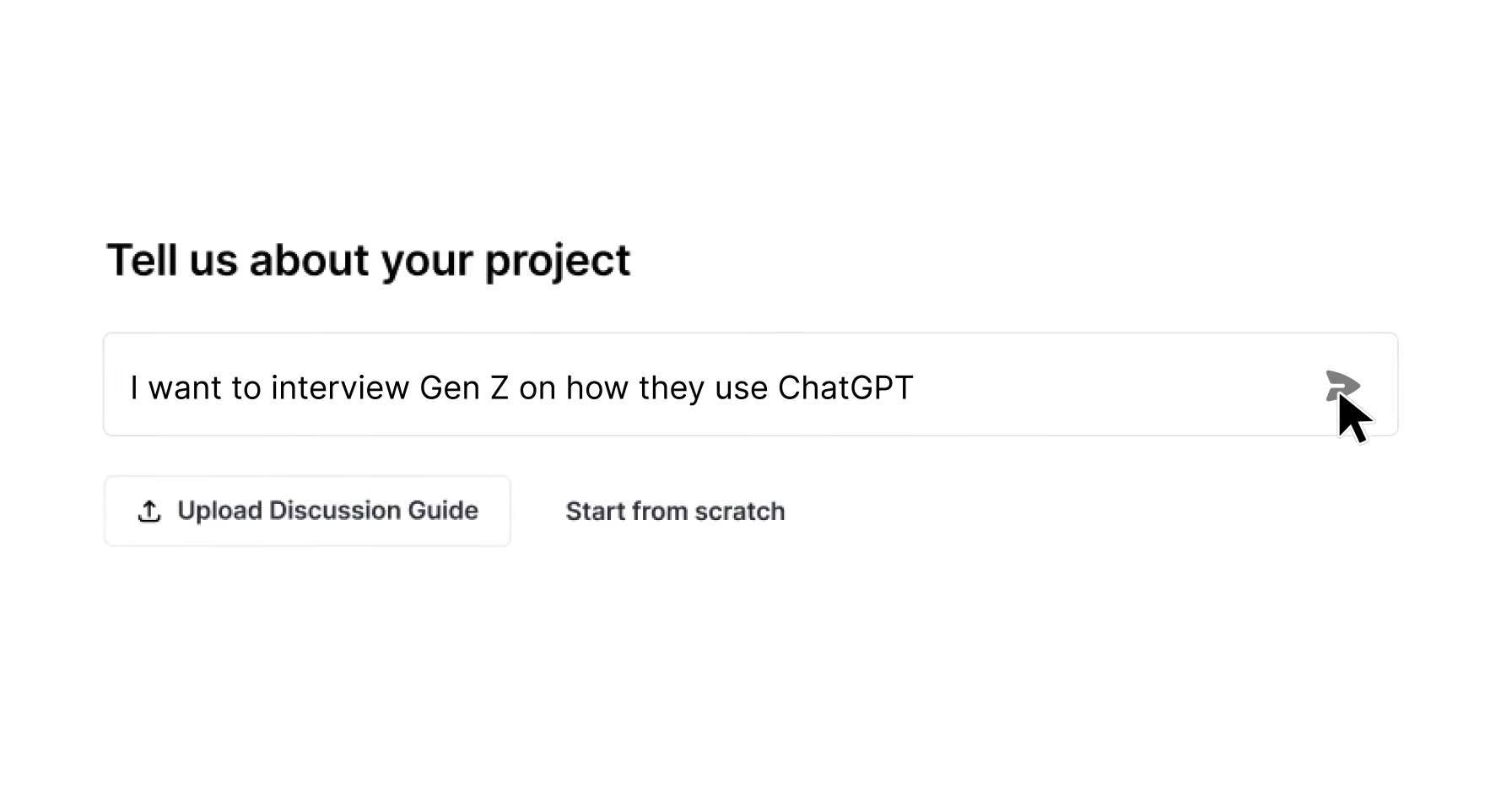
That diagnostic layer only becomes actionable when it meets the third requirement of full traceability. Every theme and every trend must link back to a verbatim quote, audio clip, or video timestamp so insights remain auditable instead of becoming algorithmic black boxes.
The fourth requirement is integration with existing tracking infrastructure. Enterprise insights teams have invested years building Qualtrics or Decipher workflows. A predictive layer must augment those systems, not replace them, so teams keep continuity while gaining explanation.
The fifth requirement is forward-looking theme detection. Predictive brand tracking requires open-ended response capture and qualitative analysis because survey-based trackers measure only the surface of perception and cannot explain why metrics moved. Together, these five capabilities turn brand tracking from a lagging report into an early warning system.
Ready to see these capabilities in action? See how Listen Pulse surfaces emerging themes before your KPIs shift.
How Conversational Tracking Creates Leading Indicators from Open-Ended Responses
Conversational brand health tracking closes the gap between what survey respondents say and what customers actually feel. It does this by running repeated waves of AI-moderated interviews where participants define the topics that matter to them. This respondent-defined structure makes the approach predictive. Themes that are building in customer conversations appear in the data weeks before enough respondents have internalized them to move a structured-question KPI.
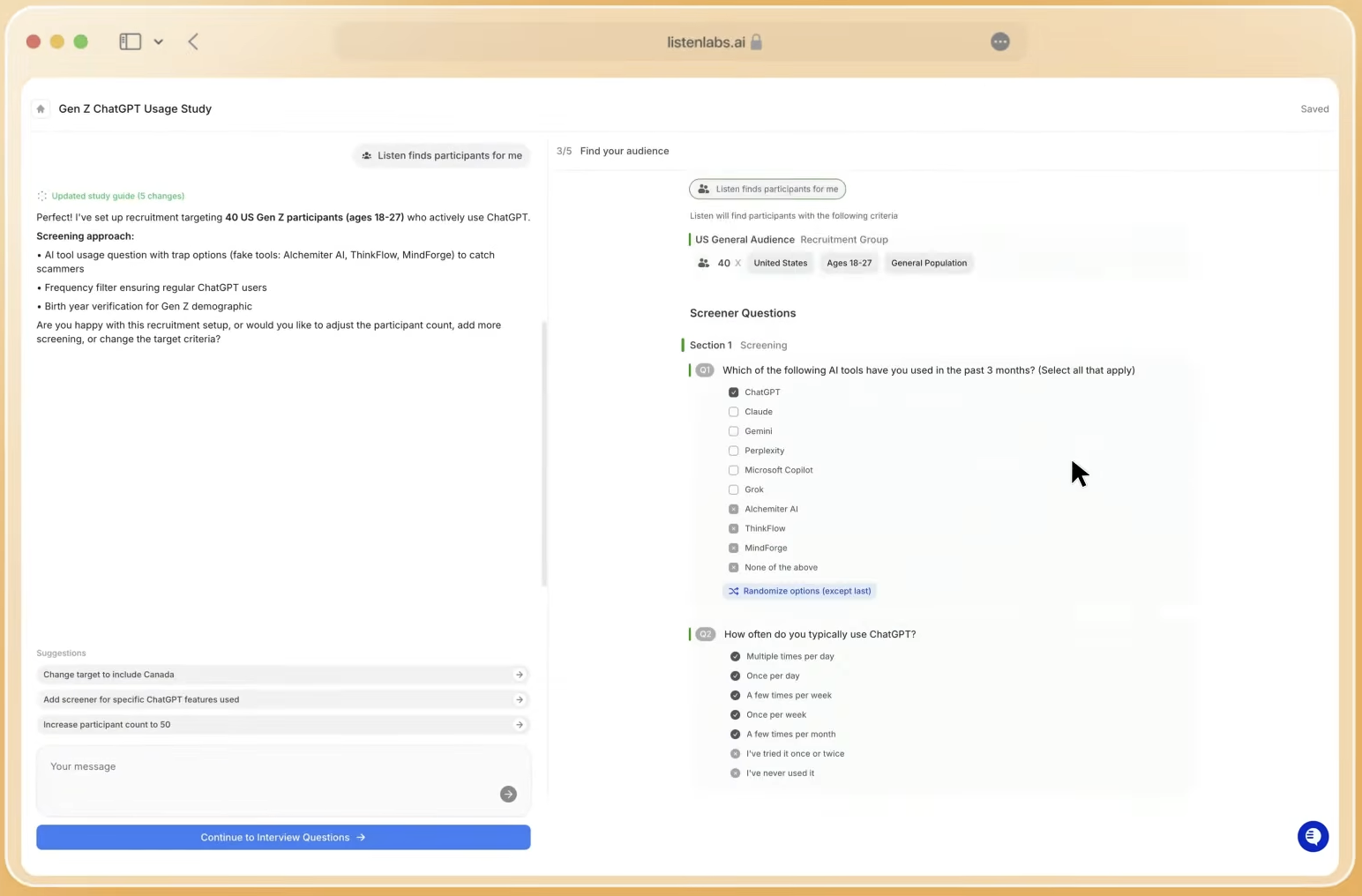
The why is what differentiates customer research that's alright from customer research that's outstanding. When the same open-ended questions run wave over wave alongside consistent quantitative KPIs, the conversational data functions as a leading indicator. Trust and consideration typically decline weeks before sales do. Conversational signals surface the reasons for those declines before the KPI movement is visible.
Emotional intelligence adds a further predictive layer. The platform analyzes tone of voice, word choice, and subconscious micro-expressions alongside verbatim responses. This approach captures signals that structured surveys cannot access, such as hesitation, confusion, and flat affect that precede explicit dissatisfaction. With qual-at-scale, the old trade-off between depth and scale is no longer a barrier. This diagnostic depth is now achievable across thousands of respondents per wave, not just a handful.
This mechanism powers brand tracking software that predicts shifts. The system does not rely on generic sentiment scoring of social posts. It relies on structured conversational waves that quantify emerging themes and chart them alongside the KPIs brand teams already report.
Listen Pulse: Conversational Brand Tracking Designed for Prediction
Listen Pulse is a conversational brand tracker that combines continuous open-ended interviews with quantitative KPIs in a single instrument. It runs the same study with the same screeners wave after wave. The platform analyzes tens of thousands of responses around the clock and surfaces the themes forming now, before they appear as a decline in tracked metrics.
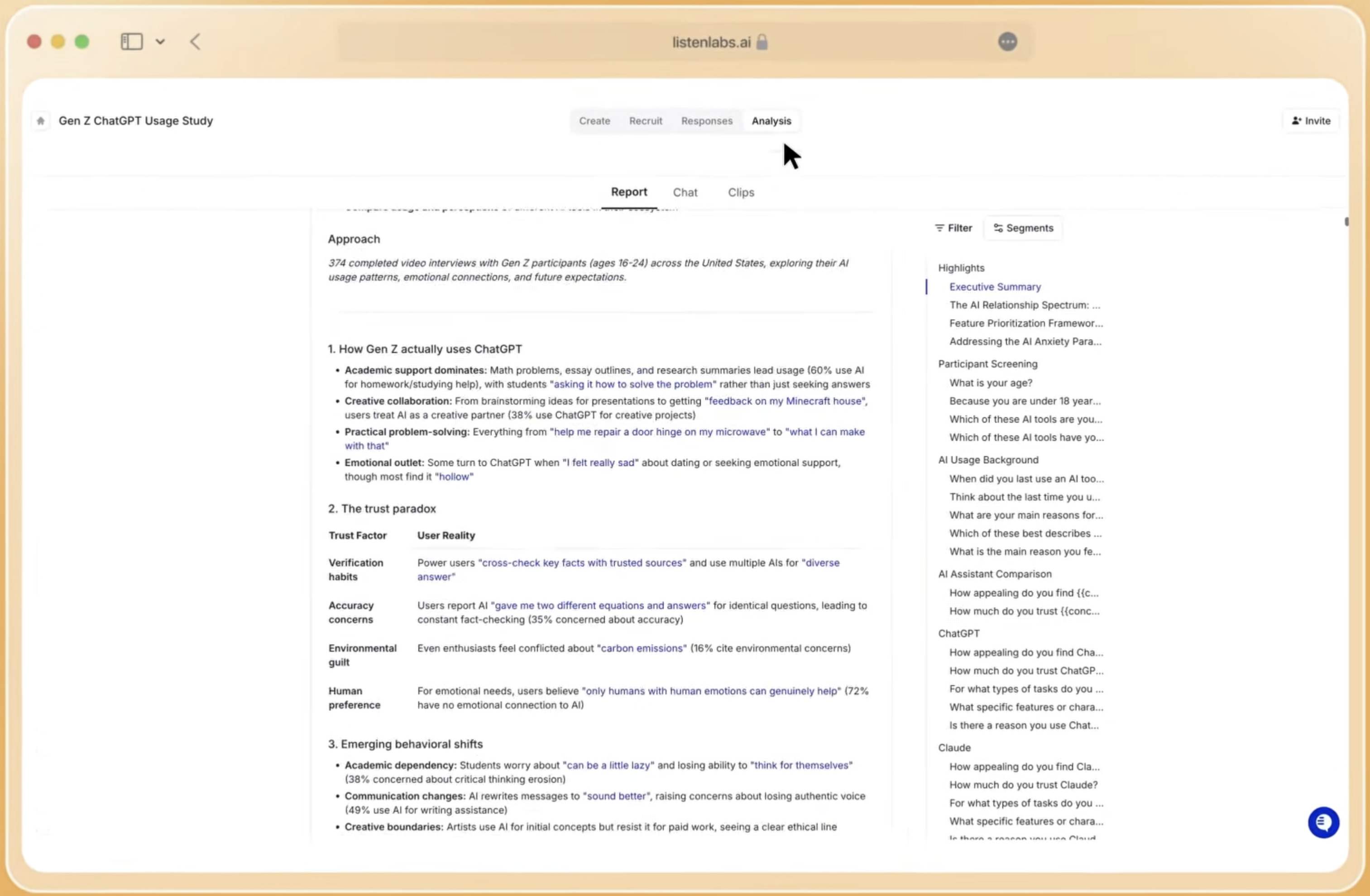
Core questions stay constant to protect the trend line, which establishes the baseline for detecting emerging themes. Timely add-on questions then cover new campaigns, competitors, or news events without breaking that historical comparability. This structure lets teams investigate specific hypotheses while maintaining predictive continuity. The dual-layer design only works because every metric traces back to a real moment: the interview, the verbatim quote, and the audio or video clip. Teams can drill into any data point and hear the original explanation in the respondent's own words.
The platform's predictive value shows up clearly in enterprise outcomes. One well-known clothing brand was quietly losing customers. Its existing tracker caught the drop but could not explain it. Listen Pulse revealed that price was not the problem. Style was. A growing group of customers felt the brand's signature logos were too loud for their changing lifestyles. That finding appeared in the conversational data before it registered as a sustained KPI decline, which gave the brand team time to act.
Microsoft cut research wait times from weeks to hours using Listen Labs. Sweetgreen scaled consumer research across 300+ US locations at one-third the cost of its previous approach. P&G used Listen Labs to surface where product claims felt exaggerated or unclear before they reached market, which directly shaped brand strategy in hours rather than weeks. These outcomes reflect the platform's core architecture: qualitative depth at quantitative scale, with full traceability.
Deploying Predictive Tracking with Your Existing Research Stack
Listen Pulse deploys alongside an existing tracker or as the primary tracking system. It integrates directly with Qualtrics and Decipher, so teams keep the KPIs they already report while adding the narrative layer behind them. This integration model removes the organizational risk of replacing a tracker mid-program and the budget burden of defending an entirely new methodology to stakeholders.
In practice, deployment adds open-ended conversational waves to each existing survey wave. The quantitative KPIs continue uninterrupted. The conversational layer runs in parallel and produces theme charts that sit alongside the awareness, consideration, and NPS trend lines teams already present to leadership. When a KPI moves, the explanation already exists in the same wave, not in a separate qualitative study commissioned six weeks later.
Traditional survey-only trackers suffer from the diagnostic gap described earlier. They deliver KPIs without explanations, require separate qualitative commissioning to diagnose metric movement, and produce outputs with a delay after fieldwork closes. Listen Pulse delivers the five requirements outlined earlier: always-on processing, open-ended diagnostic output, verbatim traceability, Qualtrics and Decipher integration, and forward-looking theme detection, all in a single continuous instrument with results available in under 24 hours.
See how Listen Pulse integrates with your current stack. Walk through a live deployment scenario with your existing tracker configuration.
Cost and ROI Considerations for Predictive Brand Tracking
Traditional enterprise brand tracking programs carry substantial cost. Budgets often include legacy agency custom studies, enterprise platform licensing such as Qualtrics, and dedicated internal researcher time in addition to software fees.
Listen Labs delivers results at one-third the cost of traditional agency studies, with a research cycle compressed from 4–6 weeks to under 24 hours. Agency-delivered qualitative programs for brand equity research take six to twelve weeks to complete, which is why most programs run only once or twice per year despite the value of quarterly tracking. Listen Pulse removes that constraint by making continuous conversational tracking economically viable at enterprise scale.
The ROI case extends beyond cost reduction. Changes in brand equity can surface before they impact financial performance, and increases in brand value correlate with gains in turnover and net income. A predictive layer that surfaces those equity shifts months earlier than a quarterly tracker enables earlier corrective action and measurable revenue protection.
Decision Framework: Five Criteria for Evaluating Predictive Brand Tracking Software
Enterprise insights leaders evaluating predictive brand tracking software should apply five criteria before selecting a platform. Together, these criteria separate genuinely predictive systems from rebranded survey tools and signal which vendors can support enterprise decision-making.
- Speed to emerging-theme detection. The platform must surface new themes in customer conversations before they appear as KPI movement. A reporting lag disqualifies any tool from genuine predictive capability.
- Traceability of metric movement to customer explanations. Every theme shift must link to verbatim quotes, audio clips, or video timestamps. Algorithmic theme labels without source traceability cannot support stakeholder-level decision-making or budget justification.
- Ability to run alongside existing trackers. The solution must integrate with Qualtrics, Decipher, or equivalent platforms so historical KPI trend lines remain intact. The organization should not lose longitudinal comparability during deployment.
- Enterprise security and compliance. The platform must hold SOC 2 Type II, ISO 27001, ISO 27701, and ISO 42001 certifications, support enterprise SSO, use 256-bit encryption, and maintain GDPR compliance. Customer data must not be used to train AI models.
- Total cost relative to traditional agency studies. Evaluate all-in cost, including platform fees, researcher FTE time, and per-study commissioning, against the one-third cost benchmark that modern AI-native platforms deliver at comparable or greater depth.
Frequently Asked Questions About Predictive Brand Tracking Software
What is the best brand tracking software?
The best brand tracking software for enterprise consumer insights teams combines continuous quantitative KPI tracking with an open-ended conversational layer that explains why metrics move. Listen Pulse is the only conversational brand tracker that runs AI-moderated interviews wave over wave, charts emerging themes alongside existing KPIs, integrates with Qualtrics and Decipher, and traces every data point to a verbatim quote and video clip. This combination delivers predictive brand health tracking rather than retrospective reporting.
How much does predictive brand tracking cost?
Traditional enterprise brand tracking involves significant annual costs that vary by markets, waves, and analyst support. Listen Pulse delivers continuous conversational tracking at approximately one-third the cost of traditional agency studies, with results in under 24 hours rather than 4–6 weeks. Exact pricing depends on wave frequency, audience specifications, and whether Listen Pulse augments an existing tracker or serves as the primary system. Book a demo for a scoped estimate.
What is the best marketing tracking software?
Marketing tracking software spans several distinct categories, including media attribution platforms, brand health trackers, and consumer insights tools. For brand marketers who need to understand why perception metrics are moving, not just that they moved, a conversational brand tracker like Listen Pulse provides the diagnostic layer that attribution and survey-only tools lack. It surfaces the customer themes driving awareness, consideration, and purchase intent shifts before those movements register in downstream commercial KPIs.
Conclusion
Traditional brand trackers function as lagging indicators that catch drops after the underlying shift has been building for months. Structural lag, the absence of an open-ended diagnostic layer, and the say-do gap in structured survey responses combine to leave enterprise insights teams reacting to numbers that have already moved, with no forward signal and no explanation attached.
Predictive brand tracking software closes that gap by running continuous conversational waves that surface emerging customer themes weeks before they register in tracked KPIs. Listen Pulse is the conversational brand tracker built for this purpose. It is always on, fully traceable to verbatim quotes and video clips, integrated with Qualtrics and Decipher, and deployable alongside any existing tracker without disrupting historical trend lines. The enterprise outcomes described earlier, including Microsoft's compressed timelines, Sweetgreen's scaled research, and P&G's pre-market claim testing, show how this approach turns research into a real-time decision engine.
The gap between a lagging indicator and a leading conversational signal is where brand decisions are won or lost. Close that gap now. See Listen Pulse surface your next emerging theme before it moves your KPIs.