Written by: Anish Rao, Head of Growth, Listen Labs
Key Takeaways for F&B Insights Leaders
- Traditional F&B research cycles of 4–6 weeks delay critical decisions on concept testing, sensory evaluation, and compliance screening, which creates a competitive disadvantage.
- Listen Labs compresses the entire research lifecycle to under 24 hours through AI-assisted study design, global panel access, AI-moderated interviews, and automated analysis.
- Emotional-signal capture during AI-moderated interviews reveals nuanced consumer reactions that transcripts alone miss, which is essential for accurate sensory evaluation.
- Automated deliverable generation removes manual analysis bottlenecks and enables same-day delivery of consultant-quality reports and branded presentations to stakeholders.
- See how Listen Labs can shorten your next F&B study timeline and establish a faster research rhythm.
Why 24-Hour Consumer Insights Change F&B Decision-Making
A 4–6 week research cycle is not merely an inconvenience, it is a competitive liability that compounds over time. Product reformulations, packaging decisions, and regulatory submissions all depend on timely consumer feedback. When insights arrive weeks after a decision window closes, teams either delay launches or proceed without data. Both outcomes weaken performance in a category where shelf space, retailer timelines, and consumer trends shift quickly.
Slow cycles also create a cost cascade. Each study that requires external agency involvement, separate panel sourcing, manual moderation, and bespoke report writing consumes budget that could fund five additional studies on a modern platform. This cost structure forces research teams to ration capacity, which turns them into organizational bottlenecks. Internal stakeholders in brand, innovation, and regulatory affairs file requests and wait, often abandoning the queue and making decisions on instinct instead of evidence.
The shift toward continuous discovery depends on infrastructure that supports always-on learning rather than occasional deep dives. The old trade-off between depth and scale is no longer a barrier when AI handles moderation and analysis simultaneously across hundreds of participants. F&B insights leaders who master a 24-hour workflow gain three advantages. They can run concept tests before every stage gate, validate sensory claims before regulatory submission, and screen compliance language before legal review, all within a single business day. Achieving that speed requires rethinking every phase of the research lifecycle, starting with how studies are designed.
Step 1: AI-Assisted Study Design for Fast, Focused F&B Decisions
Study design is the first major bottleneck in a traditional research cycle. Writing a discussion guide, aligning stakeholders on objectives, and configuring stimuli often consumes one to two weeks before a single participant is recruited.
Listen Labs’ AI-assisted study co-design compresses this work to minutes. Researchers describe their objectives in natural language, such as evaluating consumer response to a reformulated protein bar or screening label claims for a new functional beverage. The platform then drafts structured objectives, interview questions, and probing context automatically. Auto-QA flags issues in the guide before launch so teams start with a clean design.
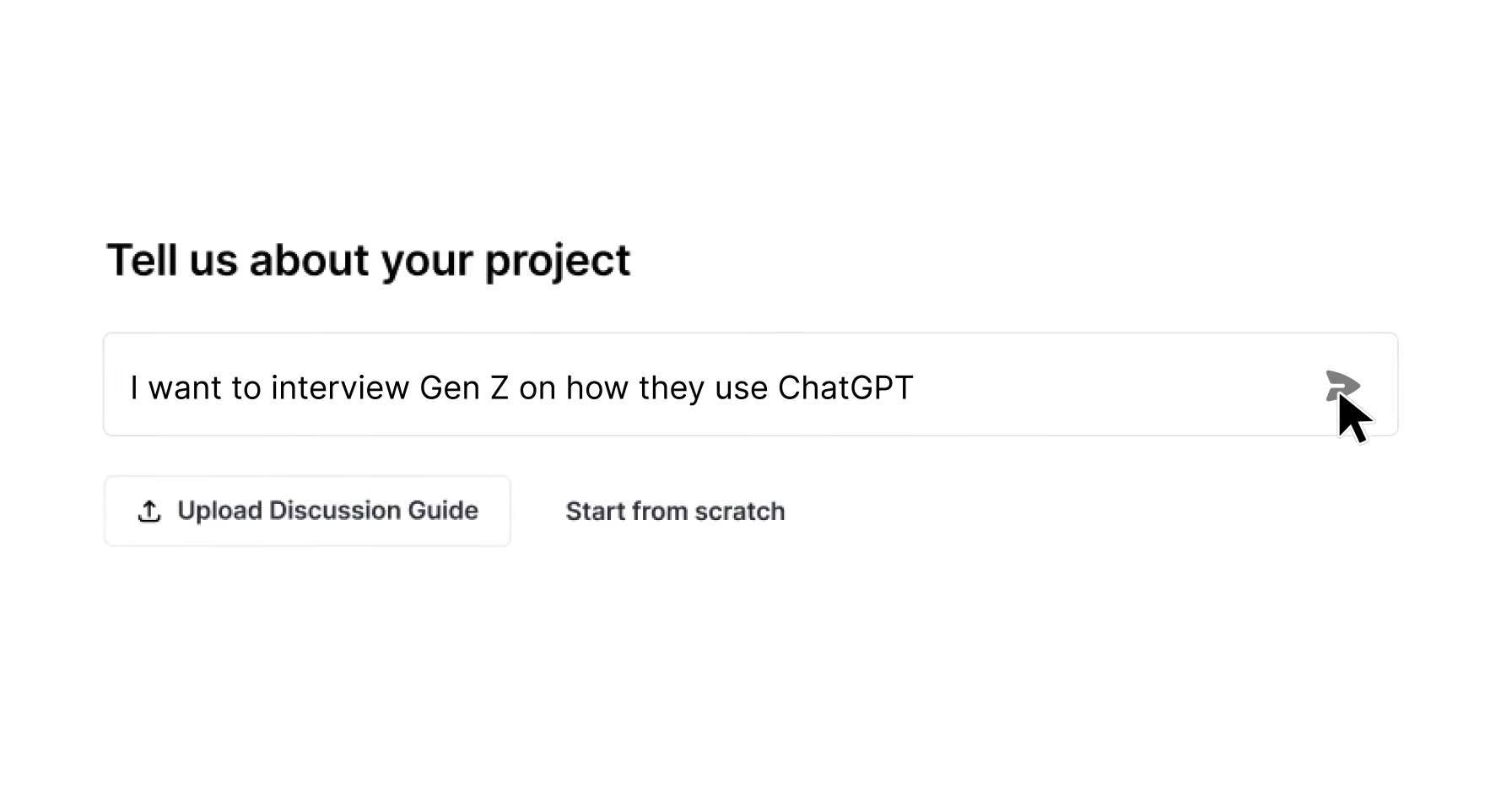
Key inputs at this stage include:
- A clear research objective tied to a specific business decision, such as a go or no-go call on a flavor variant
- Stimuli such as product images, packaging mockups, ingredient lists, or video concepts
- An audience definition that reflects dietary preferences, purchase behavior, or geographic market
- Compliance or regulatory constraints that must be screened within the interview
The platform supports monadic and sequential randomization, branching logic, and version control. These capabilities enable rigorous sensory evaluation designs that previously required specialist research operations teams to configure manually. Once the guide is locked, the next constraint becomes finding the right participants quickly.
Step 2: Rapid Access to High-Quality Global F&B Participants
Participant recruitment is often the single largest time sink in traditional F&B research. Central location tests require scheduling, travel logistics, and facility booking. Even digital studies routed through commodity panels introduce one to two weeks of recruitment lag and carry significant fraud risk from professional survey-takers.
Listen Atlas, the Listen Labs AI orchestration layer, automatically matches and bids across multiple panel partners and a proprietary database of 30 million verified respondents spanning more than 45 countries and over 100 languages. For F&B studies, this reach means category buyers, dietary segment members, and regional taste-preference cohorts can be recruited in hours instead of weeks.
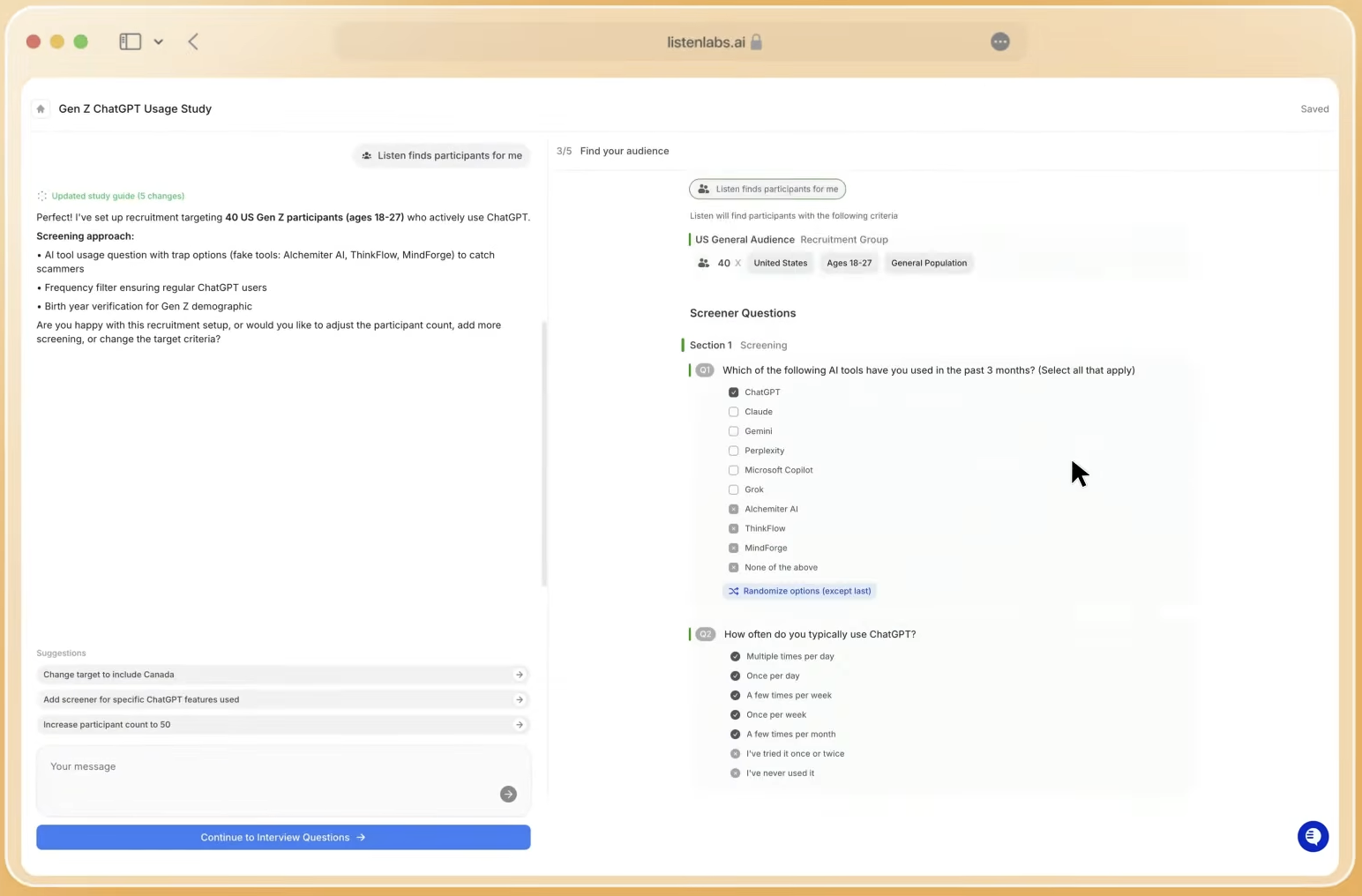
Qual-at-scale tools can engage hundreds or thousands of participants remotely and asynchronously, which makes global multi-market sensory studies feasible within a single research sprint. These same capabilities support hard-to-reach segments, such as consumers with specific health conditions relevant to functional food claims or retail buyers in emerging markets. A dedicated recruitment operations team steps in for audiences below a one percent incidence rate and manages specialized sourcing.
Organizations that already maintain consumer panels or loyalty communities can connect those assets directly to Listen Labs. This approach preserves existing relationships, reduces cost, and keeps recruitment aligned with brand strategy.
Step 3: Parallel AI-Moderated Interviews with Emotional Intelligence
Traditional qualitative moderation in F&B research relies on trained human moderators conducting sessions one by one, often six to eight interviews per day. At that pace, a 50-participant sensory study requires more than a week of fieldwork before analysis even begins.
Listen Labs conducts AI-moderated video interviews in parallel across all participants at once. The AI probes deeper on short or ambiguous answers and adapts follow-up questions based on each participant’s prior responses. It captures video, audio, and text in a single session. Platforms like Listen Labs layer on auto-recruiting, transcription, sentiment tagging, and insight summarization so teams jump from question to findings in hours, not weeks.
A critical advantage for F&B research is advanced emotional-signal capture. Emotional Intelligence analyzes three layers of signal, including tone of voice, word choice, and subconscious micro expressions, to surface nuanced emotions that transcripts alone miss. For concept testing and sensory evaluation, this capability pinpoints the exact moment a participant’s expression shifts from curiosity to confusion when reviewing a new flavor profile. It also distinguishes genuine delight from polite approval when participants evaluate a reformulated product.
Every emotion is quantified per question and concept, with each label traceable to the exact timestamp, verbatim quote, and AI reasoning behind it. This structure provides the evidentiary depth that regulatory and innovation stakeholders expect. The experience remains comfortable for participants. Ninety-two percent of participants report top comfort levels in AI-moderated sessions, which matches human-moderated sessions.
Step 4: Automated Analysis and Same-Day Deliverables
Manual analysis of qualitative interview data often becomes the longest bottleneck in a traditional research cycle. A 50-participant study can generate more than 25 hours of video and hundreds of pages of transcript. Analysts then spend days coding, theming, and synthesizing findings.
Listen Labs’ Research Agent automates this workflow from end to end. Research Agent handles the full analysis workflow, from raw data to final output. Researchers ask questions in natural language, such as “Which flavor concept generated the most confusion among 35–50 year old female buyers?” and receive segmented findings, statistical comparisons, and verbatim evidence within seconds.
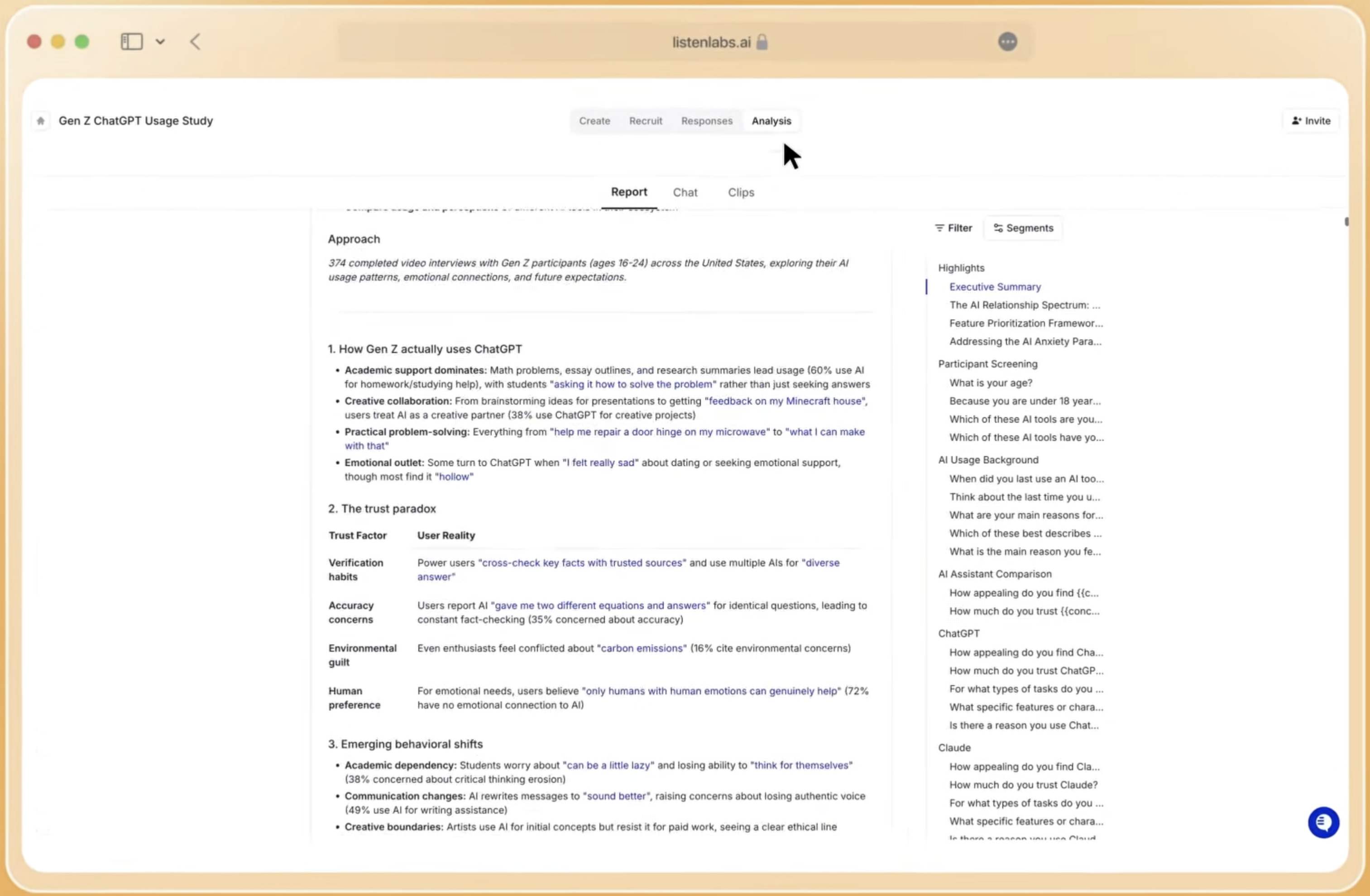
One researcher ran a full buying intent analysis across three user segments in under a minute. For F&B teams, this level of automation enables the same-day delivery described earlier. Research Agent generates a slide deck in your company’s branded template and a downloadable report, along with video highlight reels, statistical charts, and custom segmentation breakdowns. These outputs arrive without additional headcount or external agency support.
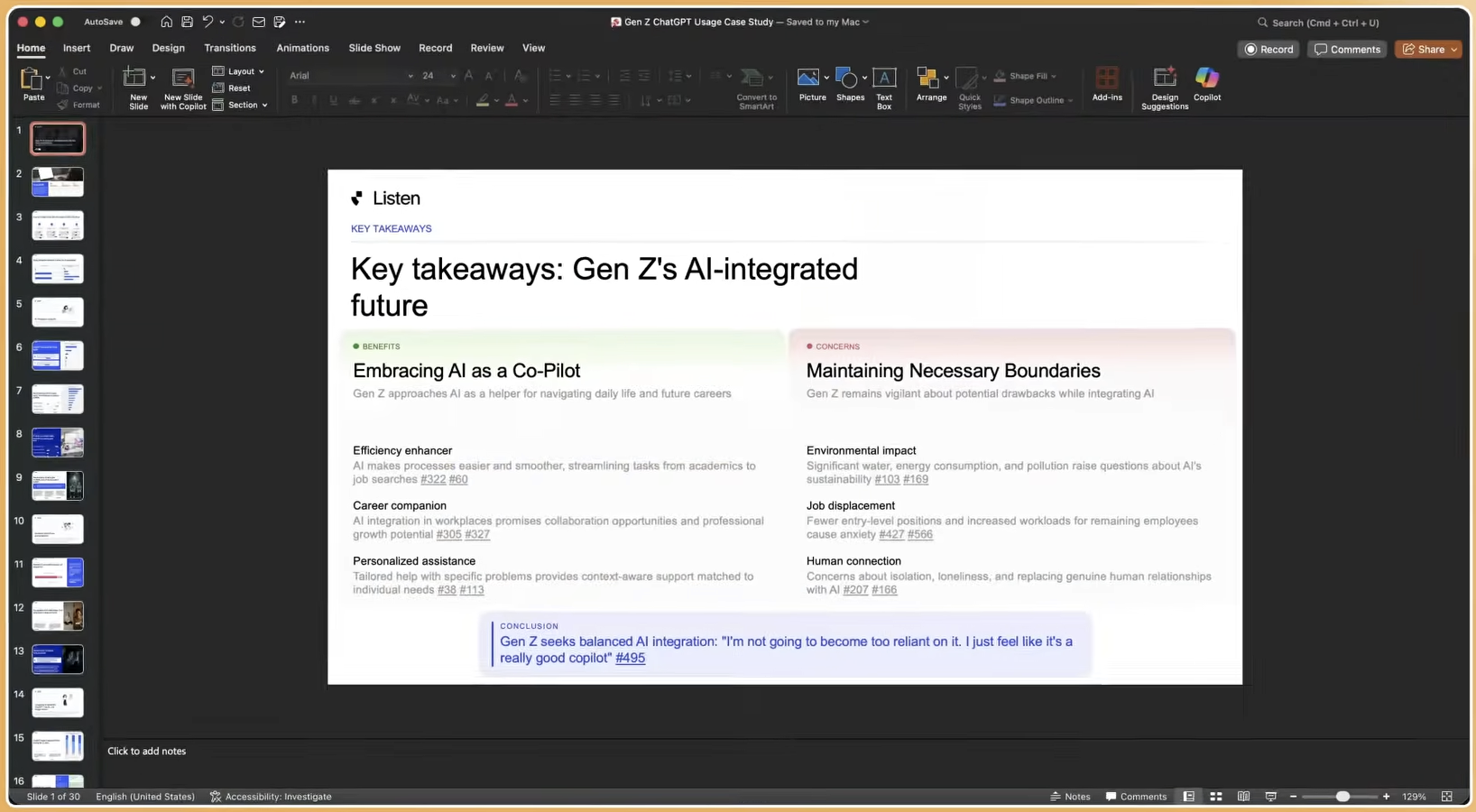
Procter & Gamble used this workflow to identify where product claims felt exaggerated or unclear before market launch. The team completed more than 250 interviews with quantified themes and verbatim proof in hours instead of weeks, which directly shaped product and brand strategy.
Frameworks That Make 24-Hour F&B Research Practical
Several established research design principles translate cleanly into a compressed F&B workflow and help teams maintain rigor at higher speed.
Mixed-methods designs combine qualitative interview depth with quantitative formats, including Likert scales, MaxDiff, and NPS, within a single Listen Labs session. This structure removes the traditional sequencing of a qualitative phase followed weeks later by a separate quantitative validation phase. A concept test can capture open-ended sensory reactions and forced-choice preference rankings from the same participant in one sitting.
Monadic sequential designs, where each participant evaluates one concept before seeing alternatives, are natively supported through randomization and version control features. This approach is standard in sensory evaluation and prevents order bias without requiring separate recruitment waves.
For compliance screening, structured probing sequences can be embedded directly into the interview guide. This ensures that specific label claims, health assertions, or ingredient disclosures are evaluated under consistent conditions across all participants. The Research Agent then surfaces any language that generated confusion, skepticism, or negative emotional signals, which creates a documented audit trail for regulatory review.
Traditional focus groups take 3–5 weeks and $4,000–$12,000 per 90-minute session and introduce group dynamics that distort individual sensory responses. One-on-one AI-moderated interviews avoid social desirability bias and conformity effects, which produces more reliable data for innovation decisions.
Common Challenges When Moving to 24-Hour Research
Transitioning from a traditional workflow to a 24-hour model introduces predictable challenges that often appear together. Recognizing these patterns early allows teams to protect study quality while they scale volume.
Unclear research objectives are the most common failure point. When the business question is ambiguous, such as “tell us what consumers think about the new line,” the AI study design produces broad guides that generate interesting but non-actionable findings. The practical mitigation is to require a single decision-forcing question before study launch, such as “Should we proceed with flavor variant A or B for the Q3 regional rollout?”
Audience specification drift occurs when recruitment criteria are defined too broadly, which results in participants who do not represent the target consumer. Listen Labs’ Quality Guard monitors behavioral signals and profile consistency in real time, but the inputs must be precise to work effectively. The mitigation is to define audience criteria using purchase behavior and category usage frequency, not demographics alone.
Analysis bottlenecks can persist even with automated tools when stakeholders expect custom outputs that require manual configuration. The mitigation is to establish standard deliverable templates, including a branded slide deck, executive memo, and video highlight reel, at the program level. The Research Agent then generates these formats automatically for every study.
Stakeholder adoption gaps arise when brand, innovation, or regulatory teams are unfamiliar with AI-generated research outputs and apply extra scrutiny that reintroduces delays. A practical mitigation is to run a pilot study with a low-stakes concept and present findings alongside verbatim evidence and emotional-signal data. This side-by-side view builds confidence in output quality and supports broader adoption.
Objective Success Metrics and How to Track Them
Measuring the impact of a compressed research workflow requires tracking both operational performance and decision quality over time.
Operational metrics to monitor include:
- Cycle time per study: Track calendar days from study brief submission to final deliverable delivery. A practical benchmark is under 24 hours for standard concept tests and sensory evaluations.
- Studies completed per quarter: Compare the number of completed studies before and after platform adoption. Teams using Listen Labs report the ability to run significantly more studies with the same headcount.
- Participant completion rate: Monitor the percentage of recruited participants who complete the full interview. Rates below 70 percent signal audience specification or study design issues.
- Stakeholder request fulfillment rate: Track the proportion of internal research requests that receive a completed study response within the same quarter they were submitted.
Decision-quality metrics to monitor include:
- Insight-to-action rate: Measure the percentage of completed studies that directly inform a documented business decision within 30 days of delivery.
- Concept advancement accuracy: For stage-gate processes, track whether concepts that received positive consumer signals in Listen Labs studies perform as predicted at subsequent gates.
- Compliance screening pass rate: Monitor the proportion of label claims or regulatory language that clears consumer comprehension screening on the first pass versus requiring revision cycles.