
Written by: Anish Rao, Head of Growth, Listen Labs
Key Takeaways for Telecom Leaders
- The global telecom market is projected to grow between 1.3% and 7.1% CAGR through 2030, with Asia-Pacific leading in volume and North America leading in ARPU.
- Four primary monetization opportunities in 2026 are private 5G networks, network APIs, data monetization, and sovereign AI or edge compute services.
- ARPU pressure, rising capex requirements, and post-5G monetization challenges create structural risks that demand faster customer insight cycles.
- Traditional 4–6 week research timelines are too slow for 2026 enterprise product development. Operators need near-real-time feedback cycles to stay competitive.
- Listen Labs helps telecom operators and equipment vendors reach verified enterprise buyers across 45+ countries and deliver AI-moderated interview insights within 24 hours. See a Listen Labs demo to test your next service concept before launch.
Industry Size and Growth Outlook to 2030
Revenue estimates for 2026 differ based on what each source includes. PwC’s Global Telecom Outlook projects global telecom service revenue rising from US$1.15 trillion in 2024 to roughly US$1.32 trillion by 2029. Analysys Mason’s May 2026 forecast projects a more conservative 1.3% CAGR over 2025–2030 for worldwide telecoms service revenue. Broader market definitions that include platform and data services produce higher figures. Grand View Research estimates the global telecom services market at USD 2,095.72 billion in 2025, with a projected CAGR of 7.1% from 2026 to 2033 reaching USD 3,584.32 billion by 2033.
The divergence across sources reflects different scope boundaries. Narrower definitions count only retail telecom services, while broader ones include equipment, platforms, and adjacent tech services. Strategy and finance leaders should anchor planning to the scope most relevant to their competitive set.
Core Revenue Segments in 2026
The global telecom market divides into four primary revenue segments in 2026.
- Wireless services: Wireless telecom services hold the largest share of the telecom services market. 5G infrastructure investment supports enterprise applications such as smart cities, industrial automation, and connected vehicles.
- Mobile data: The mobile data services segment is projected to account for a significant share of the global telecommunication market by 2035. Growth comes from surging smartphone adoption and demand for high-speed broadband, 4K UHD video streaming, and cloud gaming.
- Fixed broadband: Fixed internet access services represent a substantial portion of the telecom services market. These services support enterprise dedicated broadband and residential connectivity needs.
- Enterprise connectivity: Telecom companies generate about 75% of revenues from consumers and 25% from businesses, with the B2B segment representing the primary growth frontier as operators pursue beyond-connectivity services.
Core mobile and fixed services will account for 75.2% of total telecoms retail revenue in 2030, so connectivity remains the revenue foundation even as enterprise platform services expand.
Regional Breakdown of Telecom Growth
These segments play out differently across global markets, and regional dynamics shape both growth rates and monetization strategies.
Asia-Pacific is the largest regional market. Asia Pacific dominated the global telecom services market with a 34.2% revenue share in 2025, with China holding the largest in-region share driven by 5G infrastructure investment and over 1.02 billion internet users. China is a key growth market supported by China Mobile’s CNY 180 billion network capex for 2025, with 60% allocated to 5G. India is also a key growth market driven by Reliance Jio’s nationwide standalone 5G rollout and over 130 million active 5G users.
North America generates the highest telecom ARPU globally due to strong enterprise connectivity demand and premium 5G pricing. Fibre is expected to overtake cable as the leading fixed connectivity technology in the US as early as 2028. The global telecommunications services market is projected to grow at a 6.4% CAGR through 2036, supported by FCC mid-band spectrum auctions and more than 600 enterprise private 5G deployments by Verizon by the end of 2024.
Europe faces a more constrained environment. Europe’s mobile ARPU is lower than in the US, and 5G standalone coverage lags behind China. Germany’s telecom market is projected to grow at CAGRs between 3.4% and 4.36% through 2035, with Deutsche Telekom reporting 8% growth in enterprise service revenue in 2024 driven by private 5G networks at industrial clients including BMW and Bosch.
Four Forces Reshaping Telecom in 2026
Four forces are reshaping the telecom industry in 2026.
- 5G deployment maturation: Global 5G subscriptions reached 3.1 billion in Q1 2026, with 5G carrying 48% of mobile data traffic at the end of 2025. Ninety-five operators have launched 5G Standalone services as of March 2026, representing 42% growth since Q1 2025, while 35 operators are investing in 5G-Advanced, up 71% year-over-year.
- AI integration across operations and services: The explosive growth of AI is shifting user engagement, traffic patterns, and network demands as AI becomes embedded in devices, vehicles, and cities connected by 5G. IDC projects $337 billion in AI-supporting technology spend in 2025, rising to $749 billion by 2028, with two-thirds of enterprise AI investments embedded directly into core operations.
- Infrastructure investment super-cycle: AI and data centers are driving a new infrastructure investment super-cycle, with examples including the $500 billion Stargate Project in the US, the EU’s €20 billion InvestAI programme, and Saudi Arabia’s $100 billion Project Transcendence.
- Data traffic growth: Mobile network data traffic grew 22% between Q1 2025 and Q1 2026, and global mobile data traffic is projected to reach 515 EB per month by 2031, with 5G carrying 85% of traffic.
Enterprise Monetization Opportunities in 2026
The core telecoms B2B market has low growth, while the broader addressable market for tech services beyond connectivity offers significant potential. Four monetization pathways attract the most operator investment in 2026.
- Private 5G networks: Private mobile networks are expanding steadily with 5G taking a rising share, and the manufacturing vertical leads with 374 identified customer deployments. AT&T reported 12% year-on-year growth in enterprise managed connectivity revenue in Q4 2024.
- Network APIs: GSMA Open Gateway and CAMARA are standardizing operator-agnostic network APIs, enabling scalable global access to capabilities such as device location, number verification, SIM-swap detection, and QoS on demand.
- Data monetization: The global telecom data monetization market is projected at USD 6.43 billion in 2026, growing to USD 13.20 billion by 2031 at a 15.48% CAGR. AT&T’s Aduna API platform has been used to monetize 5G traffic data for enterprise use cases.
- Sovereign AI and edge compute: IDC identifies telco-led sovereign AI and 5G-Advanced commercialization as two of the five defining telecom monetization trends for 2026, which positions operators as trusted infrastructure anchors for national AI strategies.
Capturing these opportunities requires operators to validate enterprise buyer willingness to pay, identify which use cases resonate with specific verticals, and iterate on pricing and packaging before large-scale deployment. That validation process is where most operators hit a bottleneck, because traditional consumer insight cycles of 4–6 weeks cannot support the speed of enterprise product development in 2026. Listen Labs conducts hundreds of AI-moderated interviews with enterprise decision-makers across 45+ countries within 24 hours, delivering automated analysis and consultant-quality reports that help product and strategy teams test private 5G propositions, network API bundles, and data service concepts with real buyers before launch.
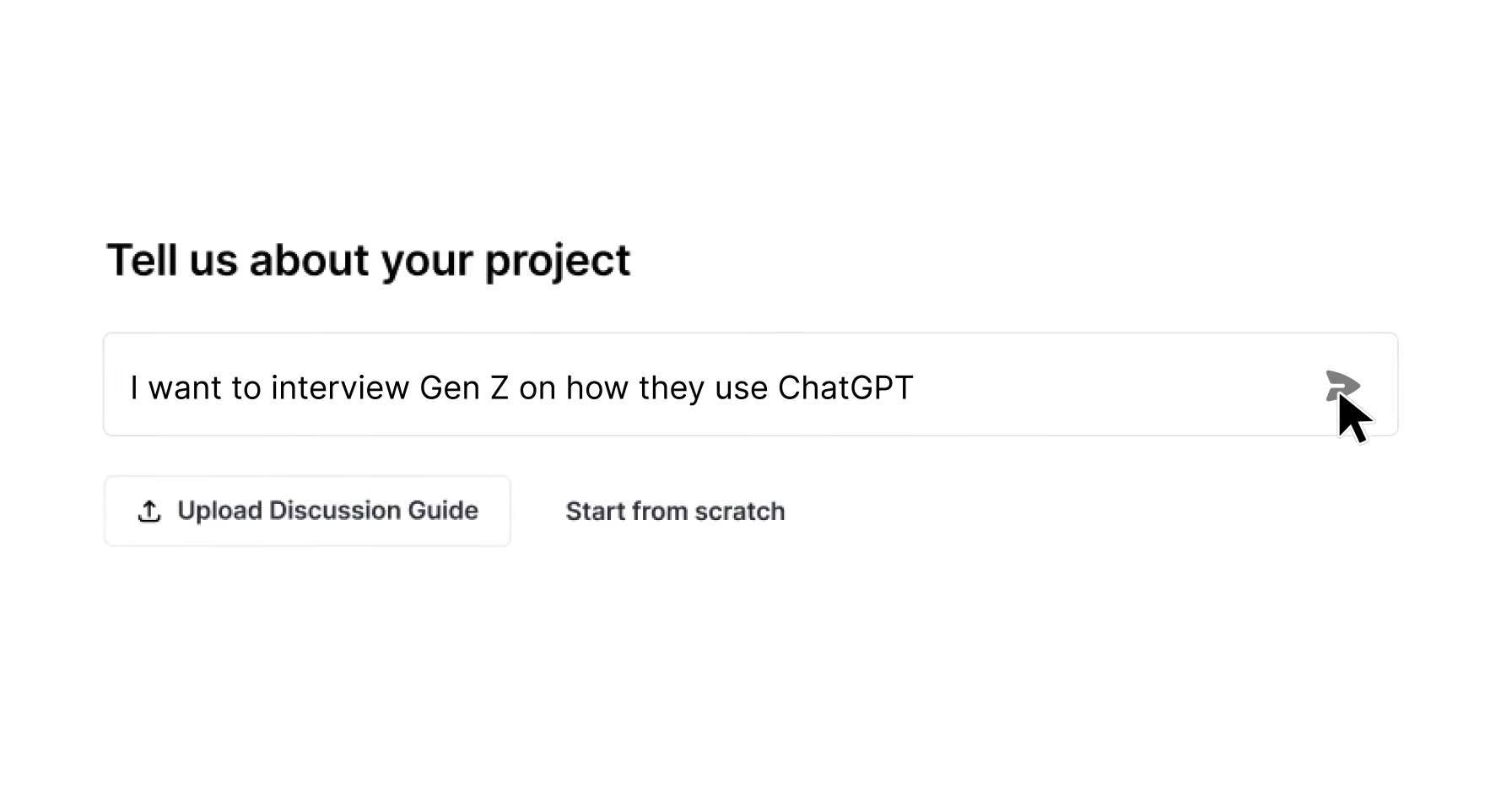
Explore enterprise concept testing with Listen Labs and see how operators and equipment vendors validate service ideas with verified B2B buyers before committing to deployment.
Challenges and Risks for Operators
Three structural challenges define the risk landscape for telecom operators in 2026.
ARPU pressure: Simon-Kucher’s Global Telecommunications Study 2026, surveying nearly 18,000 consumers across 35 countries, finds that only 54% of customers perceive telco services as good value for money. The premium segment’s mobile ARPU has declined, and many consumers feel little loyalty to their telecom provider, which contributes to notable churn rates.
Capex requirements: As the cyclical peak from 5G non-standalone rollout passes, global telecom capex faces pressure. Telecom capex intensity was 18.1% of revenue in 2022, yet geopolitical factors including proposed US tariffs on TMT supply chains are increasing hardware costs and complicating capex planning.
Post-5G monetization difficulty: Low awareness of network API solutions among enterprises limits telco monetization of new B2B offerings. Integration complexity is cited as a barrier to 5G adoption, even as many enterprises express interest in network slicing.
Each of these risks, including ARPU pressure, capex constraints, and post-5G monetization difficulty, stems from a gap between what operators assume customers value and what customers actually prioritize. Operators that cannot rapidly surface why enterprise buyers hesitate, what value propositions resonate, or how consumers perceive pricing changes are operating with structurally delayed feedback. Listen Labs replaces the 4–6 week qualitative research cycle with AI-moderated interviews that deliver findings within 24 hours. This speed enables insight teams to run continuous consumer and enterprise feedback loops on churn drivers, pricing perception, and new service concepts without adding headcount or budget.
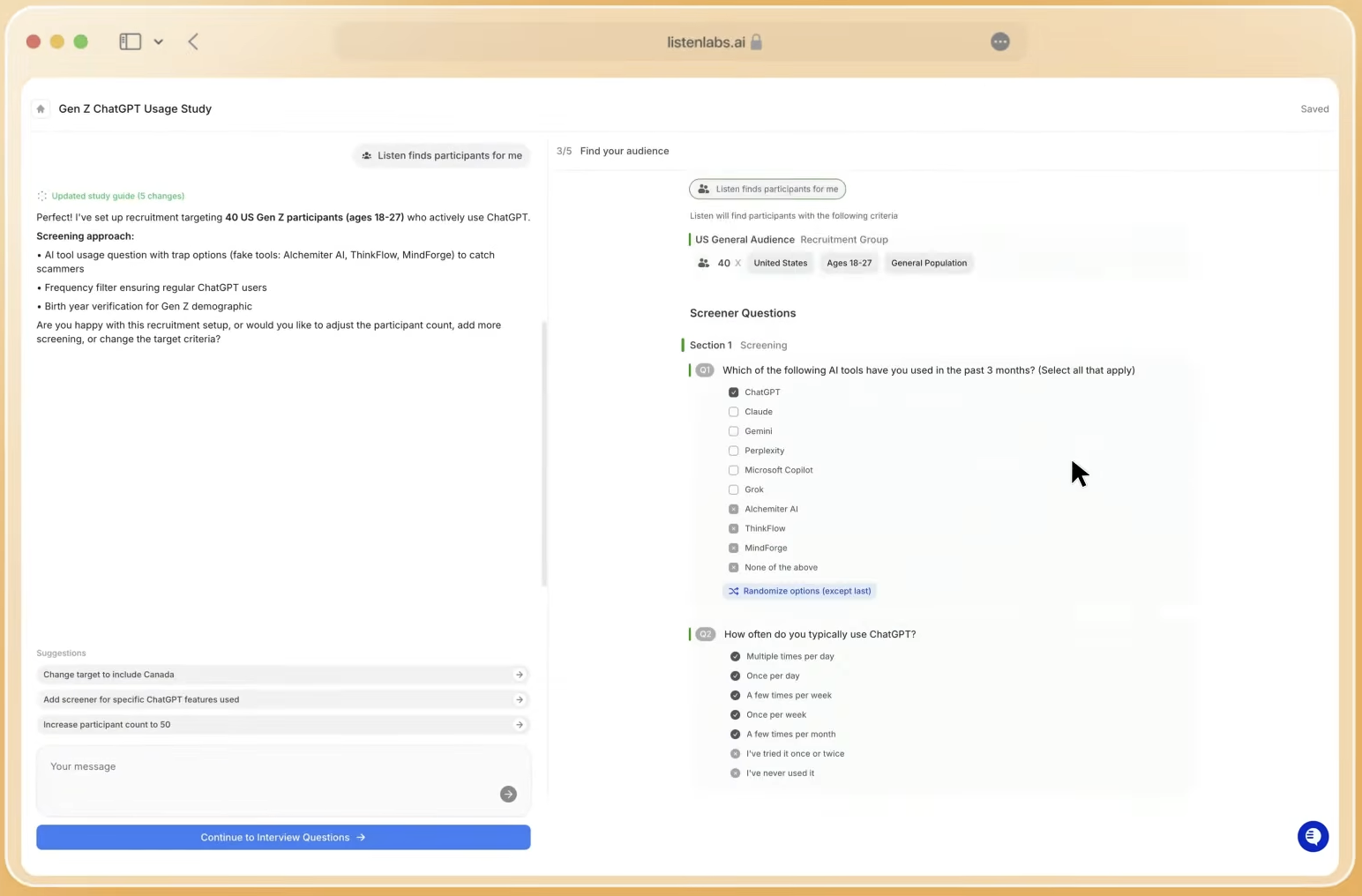
See how insight teams use Listen Labs to uncover enterprise buyer objections and consumer churn signals faster than traditional research allows.
2026–2030 Outlook and Operator Readiness
Ericsson’s June 2026 Mobility Report states that 6G standardization discussions have begun, with first launches expected in front-runner markets within the forecast period. GSMA Intelligence projects 5.5 billion 5G connections by 2030, with total IoT connections forecast to reach 38.5 billion, driven mainly by enterprise deployments. IoT application enablement platforms are projected to grow at a 26.3% CAGR from $5.7 billion in 2025 to $58.7 billion by 2035.
The operators best positioned for 2030 are those building continuous customer intelligence infrastructure today. Fifty-two percent of telecom CEOs believe their company would no longer be economically viable a decade from now if it continued on its current path. That sentiment underscores the urgency of moving from periodic research projects to the always-on insight programs described above. Operators that understand how enterprise buyers evaluate private 5G, how consumers respond to loyalty and value messaging, and how partner ecosystems perceive API monetization models will iterate faster than competitors that still rely on quarterly research cycles.
Conclusion: Research Criteria and Practical Next Steps
The global telecom industry in 2026 is defined by a clear tension. Data traffic and enterprise demand are growing, while ARPU is flat to declining and capex cycles are tightening. Core telecom service revenue estimates vary by scope, with CAGR projections ranging from 1.3% to 7.1% through 2030. Asia-Pacific leads by volume, North America leads by ARPU, and Europe faces the most acute investment and regulatory pressure. The primary growth levers, including private 5G, network APIs, data monetization, and sovereign AI infrastructure, all require operators to validate enterprise buyer demand continuously, not once per quarter.
Strategy, finance, and product leaders evaluating their 2026–2030 positioning should assess three criteria. First, the speed at which their organization can generate validated consumer and enterprise insights. Second, the depth of qualitative understanding behind pricing and packaging decisions. Third, the ability to run continuous feedback loops across global markets without proportional increases in research headcount or budget. Listen Labs addresses all three by sourcing verified participants from a global network of 30 million respondents across 45+ countries, conducting AI-moderated interviews at scale, and delivering automated analysis and consultant-quality reports within 24 hours.
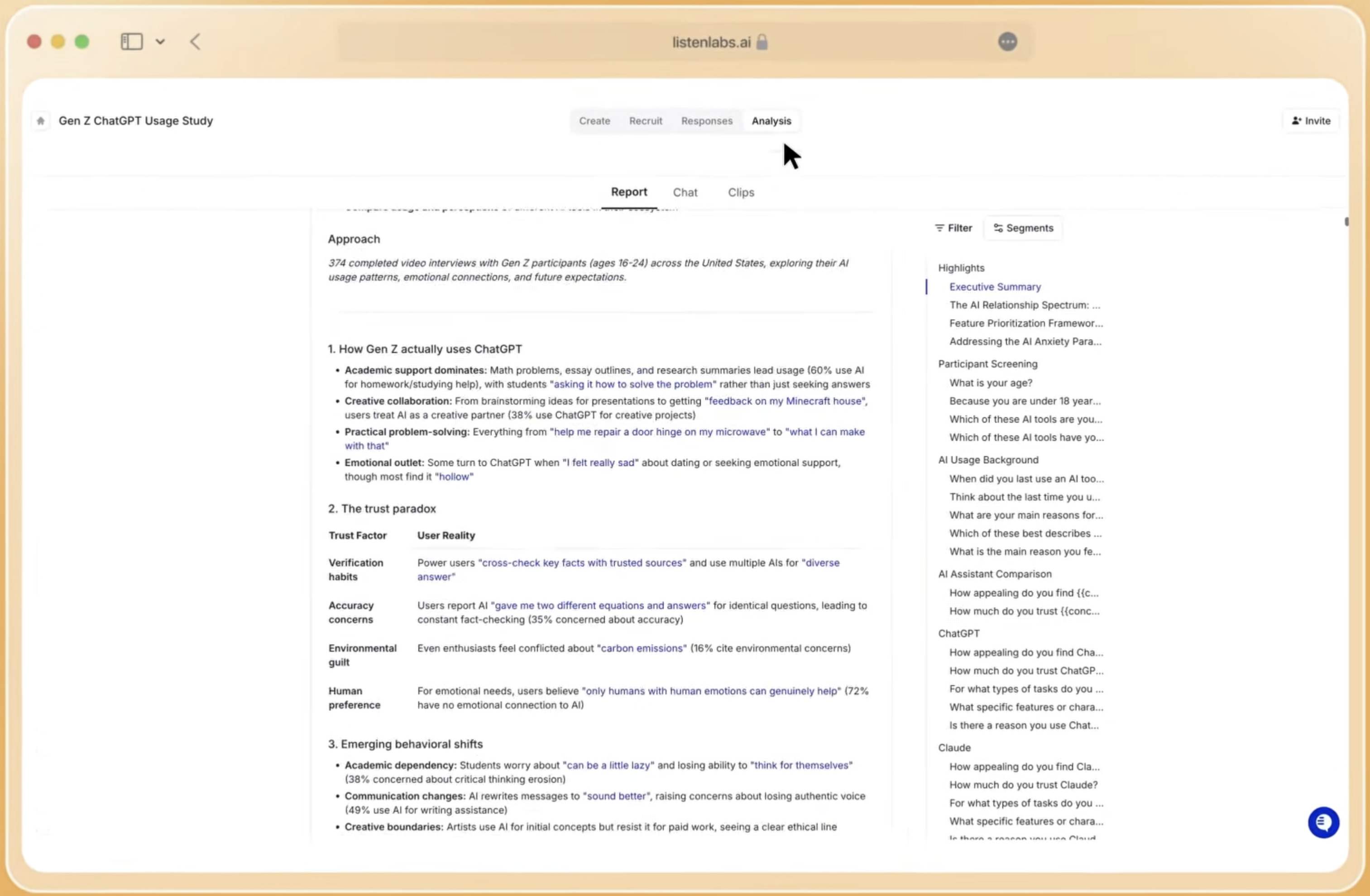
Run a pilot insight cycle with Listen Labs to test your next enterprise or consumer concept and see how 24-hour feedback changes product decisions.
Frequently Asked Questions
What is the global telecom market size in 2026?
The answer depends on scope. Core telecom service revenue, covering retail mobile, fixed broadband, and enterprise connectivity, varies by source. Broader definitions, such as the 7.1% CAGR projection mentioned earlier, reflect whether platform services, equipment, and adjacent tech revenues are included. Market definitions that encompass IoT platforms, data monetization, and managed services produce higher figures. For strategic planning purposes, operators should use the narrowest definition that matches their competitive set and then separately size the addressable opportunity in adjacent tech services.
What are the biggest enterprise monetization opportunities for telecom operators in 2026?
Four areas generate the most operator investment and enterprise buyer interest in 2026. Private 5G networks are the most commercially proven, with manufacturing leading deployment counts globally. Network APIs, standardized through GSMA Open Gateway and CAMARA, allow operators to monetize real-time location, identity verification, and QoS signals for banking, fintech, retail, and logistics clients. Data monetization packages network telemetry and mobility analytics as recurring data-as-a-service products. Sovereign AI and edge compute position operators as trusted infrastructure partners for national AI programs. Each of these areas requires operators to continuously validate enterprise buyer willingness to pay and identify which verticals and use cases generate the strongest demand signal, which benefits directly from rapid, AI-moderated qualitative research with enterprise decision-makers.
Why is ARPU declining in telecom and what can operators do about it?
ARPU pressure in 2026 stems from three converging forces. Connectivity is becoming commoditized, MVNO and budget-brand competition is intensifying, and the gap between network investment and perceived customer value is widening. Simon-Kucher’s 2026 global study of nearly 18,000 consumers found that only 54% perceive telco services as good value for money, and the premium segment’s mobile ARPU has declined. In Europe, MVNO intensity is driving premium-segment ARPU deterioration at negative 2.9% annually. Operators that have invested in loyalty programs and digital engagement tools show measurable improvement, as loyalty program participation can raise customer lifetime value by 20%. The underlying challenge is that most operators lack continuous insight into how customers perceive value, what drives switching decisions, and which service bundles would justify higher price points. Closing that gap requires faster and more frequent consumer feedback loops than traditional research cycles allow.
How does Listen Labs help telecom operators and equipment vendors specifically?
Telecom operators and equipment vendors face a specific research bottleneck. The services they need to validate, including private 5G propositions, network API bundles, data monetization products, and loyalty program designs, require qualitative depth with hard-to-reach audiences such as enterprise IT decision-makers, procurement leads, and network engineers. Traditional qualitative research takes 4–6 weeks and can only reach small sample sizes. Listen Labs sources verified participants from a global network of 30 million respondents across 45+ countries, conducts AI-moderated video interviews with dynamic follow-up questions, and delivers automated analysis and consultant-quality reports within 24 hours. This capability enables telecom insight teams to run continuous enterprise and consumer feedback programs, testing pricing, messaging, and product concepts without adding headcount or waiting weeks for results. The platform supports more than 100 languages, which makes it directly applicable to multi-market operators running simultaneous research across Asia-Pacific, Europe, and North America.
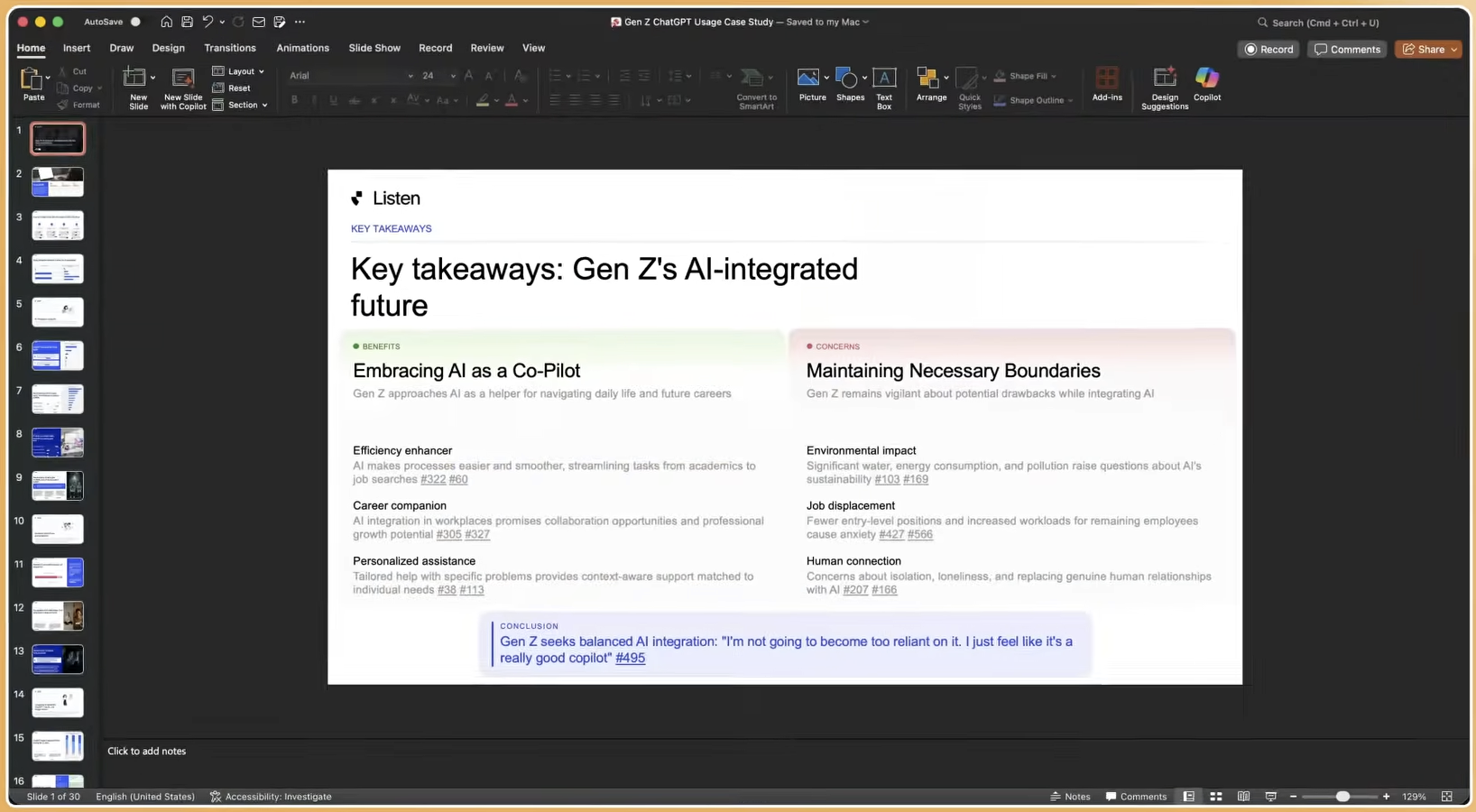
What is the difference between a 4–6 week research cycle and Listen Labs’ 24-hour approach?
A traditional qualitative research cycle involves sequential steps. Teams design and approve the study internally, send a recruitment brief to a panel provider, screen and schedule participants, run moderated interview sessions over days or weeks, then handle transcription, manual thematic analysis, and report writing. Each handoff introduces delay, and the full process typically takes the 4–6 weeks mentioned earlier, and up to 6 months in large enterprises when internal prioritization and budget approval are factored in. By the time insights arrive, the product decision has often already been made.
Listen Labs compresses the entire lifecycle into a single platform. AI assists with study design, the Listen Atlas recruitment layer sources and matches participants from a 30 million-person verified network, AI-moderated interviews run simultaneously across hundreds of participants, and the Research Agent generates automated key findings, slide decks, video highlight reels, and statistical charts, all delivered within 24 hours. Telecom insight teams can then run more studies per quarter with the same headcount, respond to fast-moving enterprise sales cycles, and build continuous customer intelligence programs rather than relying on periodic research snapshots.