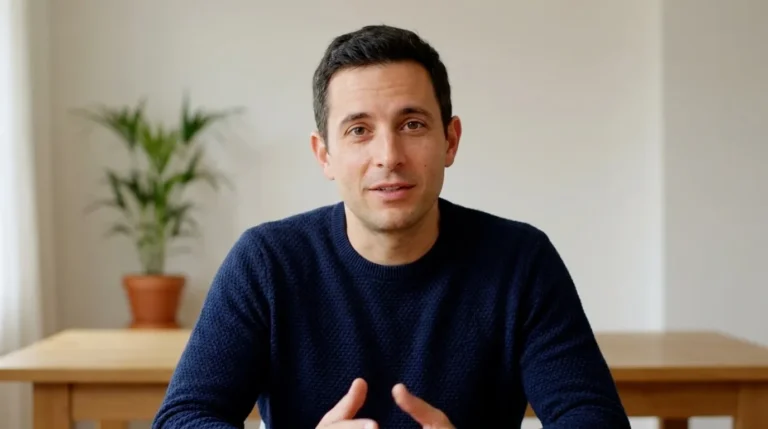
Written by: Anish Rao, Head of Growth, Listen Labs
Key Takeaways for Bank Insights Leaders
- Financial services customer research in 2026 must capture attitudes, behaviors, and unmet needs across retail, commercial, and wealth segments to guide strategy and protect share.
- Strong headline banking metrics hide fragile deposit relationships, as customers fragment accounts and corporate clients actively evaluate non-bank alternatives.
- Deposit competition remains elevated, with soft-switching and fintech threats accelerating balance churn among high-value segments under 40 and mass-affluent customers.
- AI-moderated interviews now deliver board-ready qualitative insights in under 24 hours, replacing the traditional 4–6 week research cycle with verified participants and enterprise-grade governance.
- See how Listen Labs runs segment-specific qualitative interviews across retail, commercial, and wealth populations in a single day.
2026 U.S. Banking Snapshot: Strong Headlines, Fragile Deposits
The FDIC Quarterly Banking Profile Q1 2026 and the Federal Reserve H.8 release dated July 31, 2026 show strong performance at large banks in capital markets and wealth management fees, not in core deposit relationships.
The Federal Reserve’s June 2026 Supervision and Regulation Report confirms that profitability gains concentrate in fee-based businesses while deposit relationships show more volatility. Insights teams need to treat deposit stability as a behavioral challenge, not just a balance-sheet metric.
Segment-Specific Research Needs in Retail, Commercial, and Wealth
Each major banking segment now requires its own focused research agenda.
Retail banking customers are fragmenting their relationships. The JD Power 2026 U.S. Retail Banking Satisfaction Study found that the average checking customer now maintains three deposit accounts at different institutions, and 20 percent moved money away from their primary bank in the prior three months. Forrester’s May 2026 Consumer Banking Trends report reports that efficiency-led AI strategies are not improving relationships, while third-party AI assistants raise expectations for proactive, tailored advice.
Commercial banking clients are explicit about their dissatisfaction. Capgemini’s World Corporate and Investment Banking Report 2026 found that 85 percent of corporate clients plan to engage with non-bank financial institutions within the next year, and only 23 percent feel their current bank meets their needs. The top pain points are limited ERP integration, lack of personalization, and insufficient analytics, which weaken relationship stickiness at the exact moment pricing power is shrinking. Q2 Holdings’ 2026 State of Commercial Banking report notes that liquidity growth has outpaced loan demand, compressing credit spreads and making relationship-level intelligence a primary competitive lever.
Wealth management clients are diversifying into alternatives and demanding digital-first access. Capgemini’s Banking Top Trends 2026 identifies private equity, digital assets, and agentic AI-powered advisory as capabilities wealth clients are actively evaluating. Wealth teams now treat concept validation and segment-level attitude research as strategic inputs to product and advice design.
Deposit Competition, Soft Switching, and Fintech Pressure
IntraFi’s Q2 2026 Bank Executive Business Outlook Survey reports that 99 percent of executives expect deposit competition to remain elevated or intensify over the next 12 months. Sixty-three percent say their institutions are somewhat or very likely to lose meaningful operating deposits within two years if stablecoin issuers can offer deposit-like rewards.
Balance churn has risen since 2019 as digital onboarding and automated direct-deposit switching tools reduce friction. Switchers often hold multiple checking relationships, so a large volume of checking deposits now sits at risk from stablecoins, tokenization, and new payment rails.
The JD Power 2026 study introduces the concept of “soft switching,” where customers keep primary accounts open while gradually shifting funds elsewhere. Jennifer White, senior director of financial services intelligence at JD Power, states the risk clearly: “The risk is not immediate attrition, it is gradual erosion of share of wallet.” Customers most likely to move money are those under 40 (23 percent), affluent and mass-affluent (25 percent), and financially healthy (24 percent), which are the exact segments banks most want to retain.
AI, Automation, and Fraud: New Pressures on Customer Trust
Bank leaders report measurable impacts from generative AI deployments, yet many programs remain early or fragmented in their strategic use. That fragmentation becomes critical when fraud risk enters the picture.
On the fraud side, Q2’s 2026 State of Commercial Banking report notes that fraud risk is becoming more prevalent and sophisticated, prompting banks to develop layered AI defenses. The collision of nascent AI adoption and rising fraud anxiety creates a direct research requirement. Insights teams need qualitative depth to understand how security concerns shape trust, digital adoption hesitation, and channel preferences in ways surveys cannot fully capture.
Key Metrics for an Early-Warning Deposit Insight System
A rigorous consumer insights program in 2026 tracks both traditional stability metrics and behavioral signals that reveal soft-switching before balances move. The following indicators together form an early-warning system:
- Deposit stability signals: share-of-wallet trends, multi-bank relationship counts, and soft-switching intent by segment
- Digital adoption rates: mobile and online banking engagement by age cohort and product type
- Segment-specific satisfaction: trust, problem resolution, and channel preference scores across retail, commercial, and wealth
- Competitive share-of-wallet: primary bank status, consideration set breadth, and fintech relationship overlap
- Emotional drivers of switching: hesitation, confusion, and delight signals at key journey moments such as onboarding, rate comparison, and issue resolution
- AI perception: customer comfort with AI-generated advice and transaction automation
- Fraud anxiety index: how security concerns affect digital feature adoption and channel trust
Modern Research Methods for Banks: 24-Hour AI-Moderated Interviews
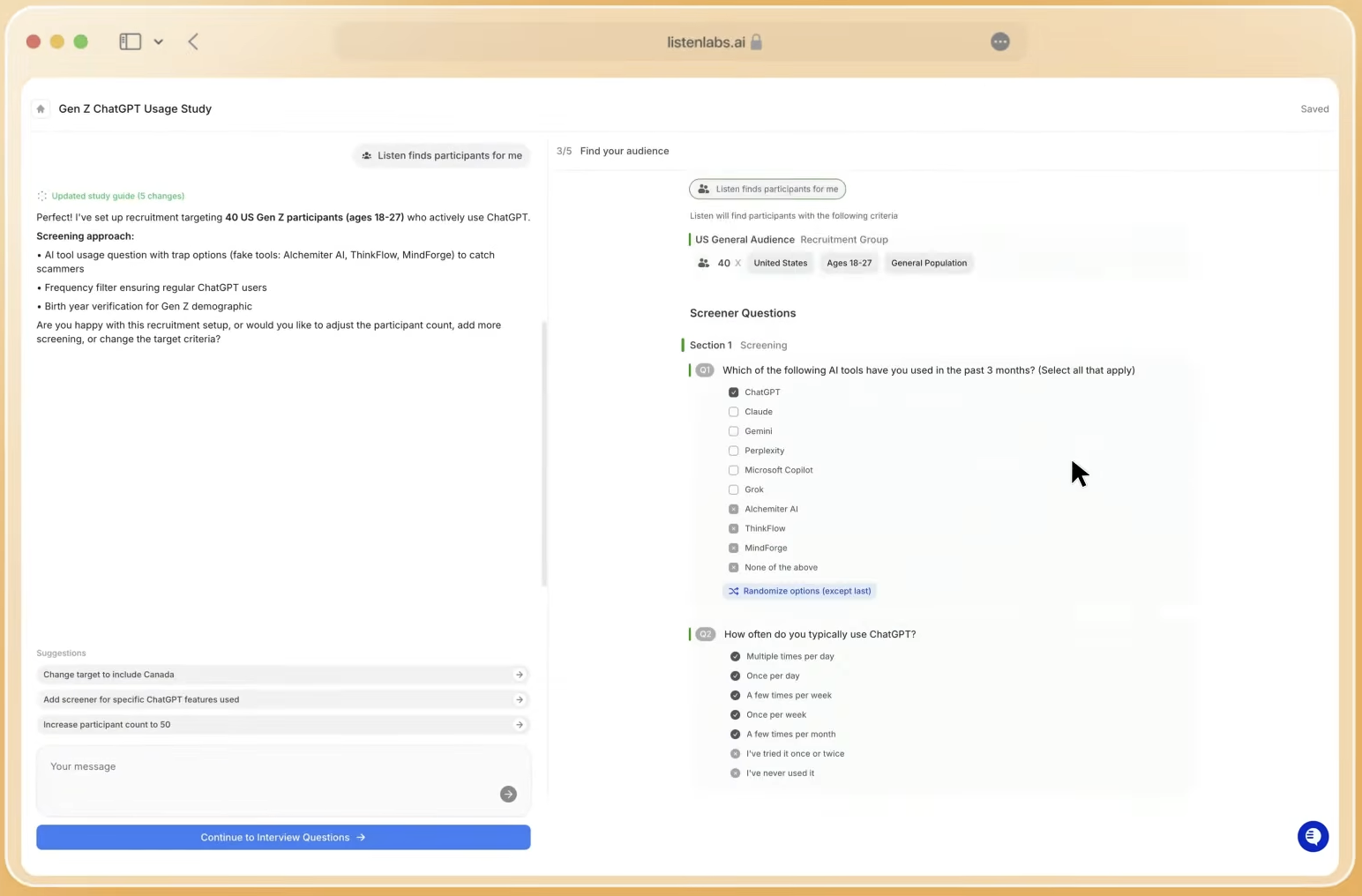
The old trade-off between depth and scale no longer applies. AI-moderated one-on-one interviews now run hundreds of adaptive conversations simultaneously, capturing video, audio, tone, and micro-expressions across more than 100 languages and delivering board-ready reports overnight.
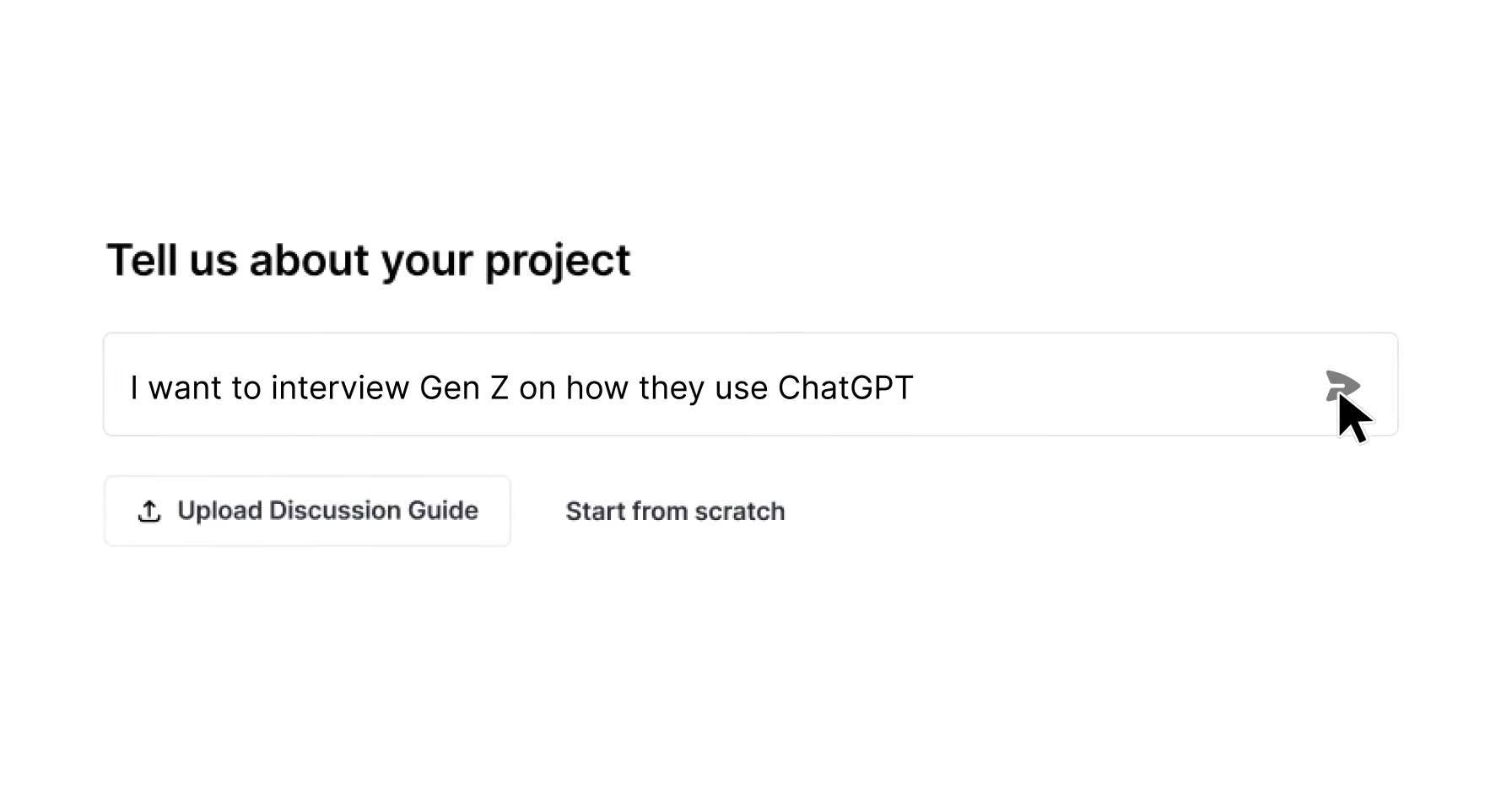
Listen Labs is the end-to-end platform built to meet banking requirements for compliance, participant quality, and speed in a single workflow. The company has conducted over one million AI-powered customer interviews for enterprises including Microsoft, Perplexity, and Sweetgreen, and raised $69 million in Series B funding at a valuation over $500 million as of January 2026. For banking research, the platform addresses four structural problems with legacy methods.
Participant quality. Listen Labs’ 30M verified respondent network is governed by Quality Guard, which monitors every interview in real time across video, voice, content, and device signals. Participants are capped at three studies per month, which removes professional survey-takers. Traditional focus groups cost $4,000–$12,000 per 90-minute session and take 3–5 weeks to field, and they do not provide equivalent fraud protection.
Emotional intelligence. Listen Labs’ Emotional Intelligence layer analyzes tone of voice, word choice, and subconscious micro-expressions using Ekman’s universal emotions framework. For deposit competition research, teams can capture the hesitation a customer feels when comparing rates, not just the stated preference. Every emotion is quantified per question and traceable to the exact timestamp and verbatim quote.
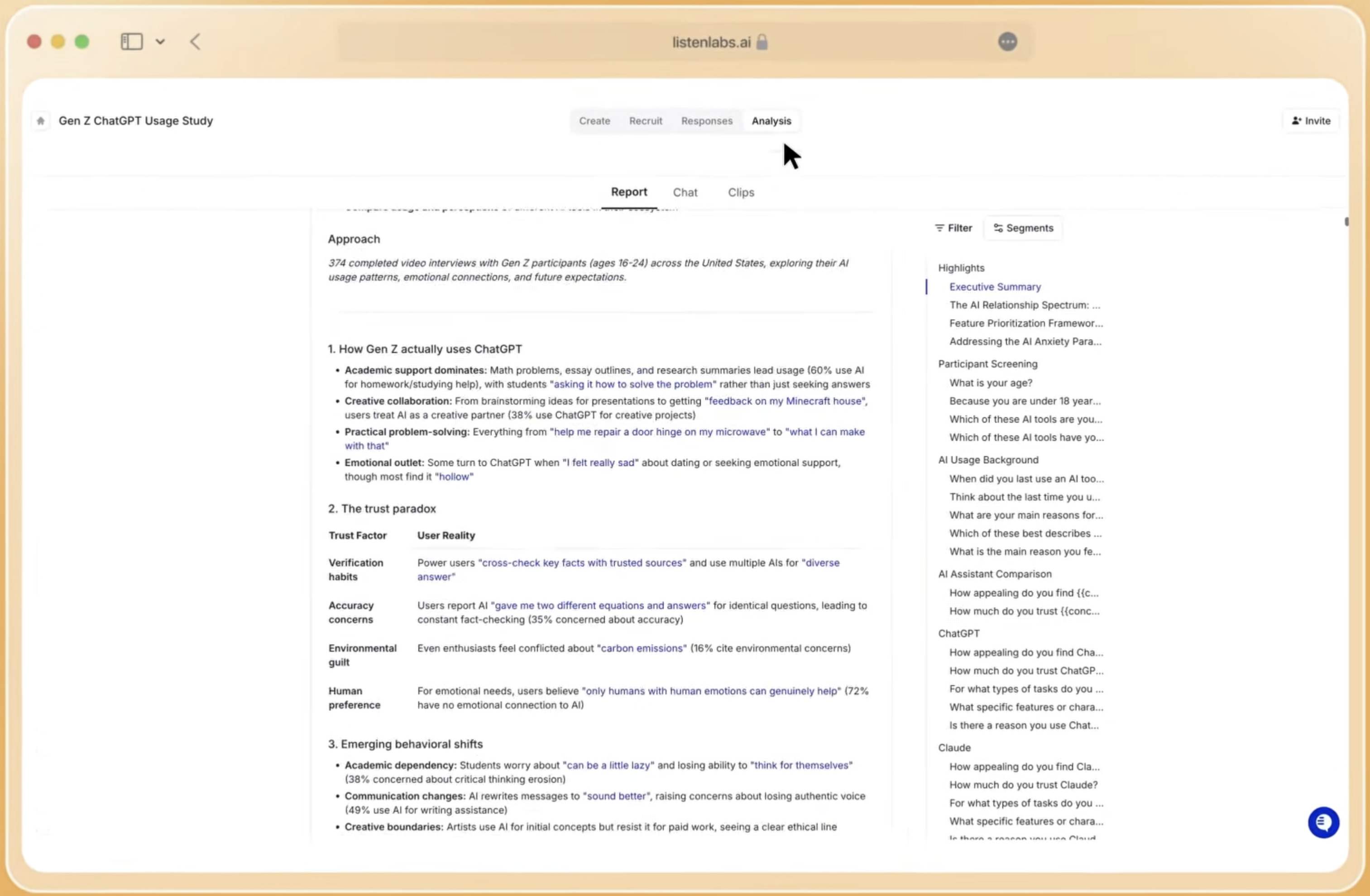
Speed and scale. Platforms like Listen Labs add auto-recruiting, transcription, sentiment tagging, and insight summarization, so teams move from questions to findings in hours instead of weeks. The Research Agent generates executive summaries, segment heat-maps, emotional driver analyses, and recommended actions in under one minute.
Governance. Listen Labs holds SOC 2 Type II, GDPR, ISO 27001, ISO 27701, and ISO 42001 certifications. Every interview produces a complete audit trail that includes interview timing, questions asked, participant responses, and data processing steps, which satisfies compliance requirements without per-study legal review.
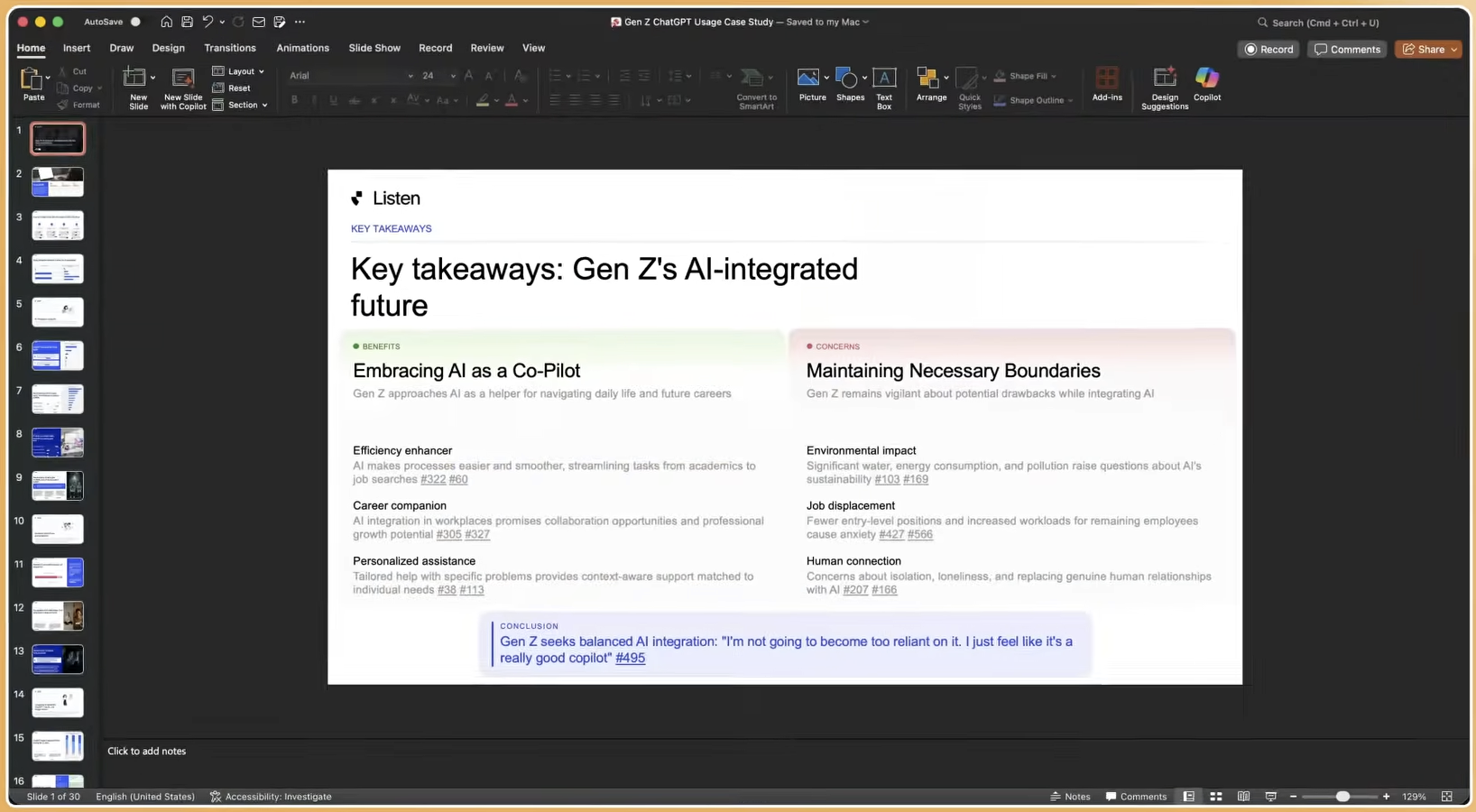
Three anonymized bank-style examples show this method in practice.
- Overnight deposit-competition test. A regional bank fielded 150 interviews with retail checking customers across three rate-sensitivity segments in 18 hours. The Research Agent surfaced that 34 percent of soft-switchers cited mobile savings tools, not rate, as the primary trigger, which redirected a planned rate promotion toward a feature roadmap update.
- Digital banking churn drivers. A national bank ran 200 interviews with customers who had opened a fintech account in the prior 90 days. Emotional Intelligence flagged high confusion scores during the bank’s own onboarding flow, a finding that would not have appeared in a post-interaction survey.
- Wealth-segment concept validation. A wealth management team tested three alternative investment access concepts with 80 mass-affluent clients overnight before a product committee meeting. The Research Agent delivered a segment heat-map and verbatim proof set that replaced a six-week agency engagement.
Before launching a program, insights teams should confirm readiness across three areas that together determine whether the first study drives change instead of producing interesting but unused data. Data governance must be resolved at the infrastructure level so individual studies do not stall in legal review. Stakeholder alignment ensures the research question maps to a real decision with committed owners. Pilot scope keeps the first deployment focused enough to demonstrate value without overextending the team.
- Data governance: Confirm that the research platform holds relevant certifications such as SOC 2, GDPR, and ISO 27001, and that consent management sits inside the recruitment flow.
- Stakeholder alignment: Identify the two or three business decisions the first study will directly inform and secure commitment from the relevant product, strategy, or risk owners.
- Pilot scope: Define a single segment, a clear research question, and a target of 50–100 interviews, which is enough for thematic saturation without overextending the first deployment.
Frequently Asked Questions
How long does a bank customer research study with AI-moderated interviews take?
A well-scoped study of 50 to 150 interviews with a defined retail, commercial, or wealth segment typically completes within the 24-hour cycle described above. That window includes participant recruitment from the 30M verified network, AI-moderated video interviews, automated analysis, and delivery of a Research Agent report with an executive summary, segment heat-map, emotional drivers, and recommended actions. Conventional qualitative research in financial services often runs 6 to 12 weeks from kickoff to final deliverable, and traditional agency interviews cost $500–$800 per session. The 24-hour cycle reflects a different structure, with hundreds of conversations running simultaneously instead of sequentially.
How does Listen Labs ensure participant quality meets banking research standards?
Three layers of protection govern every study and build on the Quality Guard system described earlier. First, Listen Labs works exclusively with high-quality, non-commodity panel sources, avoiding professional survey-takers from incentive-driven pools. Second, Quality Guard applies real-time AI monitoring across video, voice, content, and device signals to detect fraud, low-effort responses, AI-generated scripts, and mismatched profiles. Third, a dedicated recruitment operations team adds human review, and participants are hard-capped at three studies per month to prevent panel fatigue and repeat-respondent bias.
For banking research that targets niche segments such as small business owners, mass-affluent investors, or commercial treasury managers, the recruitment operations team sources from specialized networks and can reach audiences below a 1 percent incidence rate. Behavioral and intent matching, not just self-reported demographics, guides participant selection.
How does AI-moderated interview research fit with a bank’s compliance and governance programs?
Listen Labs holds SOC 2 Type II, GDPR, ISO 27001, ISO 27701, and ISO 42001 certifications, and customer data is never used for AI model training. Every interview generates a complete audit trail, including interview timing, questions asked, participant responses, and data processing steps, which satisfies the retrospective validation requirements that compliance and legal teams typically impose on research programs.
Consent management sits inside the recruitment flow, turning it into a one-time infrastructure decision instead of a per-study legal review. Banks that bring their own participants, such as existing customers or CRM-sourced respondents, can do so at reduced cost while maintaining the same governance framework. Enterprise SSO supports access control, and for institutions operating under GLBA data-handling requirements, the platform’s data residency and role-based access controls provide the documentation trail needed for internal audit.
Next Steps for Bank Insights Teams
The 2026 banking environment of compressing margins, accelerating deposit competition, rising soft-switching, and corporate clients actively evaluating non-bank alternatives demands insight cycles that match the pace of the business. A four-to-six-week research cycle that delivers findings after the strategic window has closed functions as a historical record, not a decision tool.
Listen Labs removes that trade-off. Teams can run hundreds of adaptive, emotionally rich, one-on-one qualitative interviews across any banking segment in under 24 hours, with verified participants, board-ready reports, and enterprise-grade governance built in.
The most practical starting point is a single pilot study with one segment, one clear business question, and 50 to 100 interviews. The Research Agent output from that study, including verbatim quotes, emotional heat-maps, segment breakdowns, and recommended actions, typically provides enough evidence to secure broader program commitment from leadership.