Written by: Anish Rao, Head of Growth, Listen Labs
Key Takeaways
- AI brand tracking automation replaces slow wave-based surveys with continuous monitoring across social, web, and generative AI platforms, delivering metrics with explanations.
- The three core layers to automate are AI-powered social and web listening, LLM citation tracking, and qualitative signal capture that explains why perception shifts.
- A seven-step pipeline from prompt discovery through scheduled runs, extraction, classification, storage, dashboards, and alerts creates an end-to-end automated monitoring system.
- Sampling, human review, drift checks, and quarterly audits keep AI sentiment and theme classification reliable enough for executive scrutiny.
- Listen Labs provides the qualitative layer that keeps the why inside automated programs, so teams can trace metric movements back to real consumer conversations.
Start Your Brand Tracking Automation Plan
The Three Things To Automate In Brand Tracking Automation With AI
The AI Overview on this topic organizes the landscape into three buckets. Each bucket is real, but existing coverage rarely explains which one to prioritize or how they connect. This section fills that gap.
AI-powered social and web listening scans millions of online sources to extract context, detect sarcasm, and flag reputation crises in real time. Brandwatch applies AI-powered sentiment analysis to categorize online mentions as positive, negative, or neutral while identifying themes and emotional context, and Brand24 provides cross-channel media monitoring with AI sentiment. Brandwatch’s crisis detection flags unusual spikes in volume or negative sentiment before issues escalate. This layer captures unprompted conversation at scale. It does not explain why sentiment shifted.
LLM citation and visibility tracking runs recurring prompts through engines like ChatGPT, Gemini, Perplexity, and Google AI Overviews to see if and how your brand is recommended or cited. Ahrefs’ AI Visibility Index analyzes around 387 million monthly prompts across seven AI search environments, and Brand Radar supports custom prompt tracking. Profound, Peec, and Otterly cover overlapping engine sets with different depth and pricing. Most AI assistants do not expose a complete, standardized equivalent to keyword search volume, so platforms estimate prompt demand using conventional search data, site data, panels, or proprietary methods. Because those methods vary widely in accuracy, buyers should ask how prompt discovery and volume estimates are produced before trusting the numbers.
Qualitative signal capture turns a metric movement into an explanation. Qual-at-scale uses AI to handle the time-consuming parts of research, freeing companies up to have more meaningful conversations, and as a result the traditional depth versus scale trade-off collapses. Listen Labs provides this layer through its conversational interview platform, which is built for massive concurrency. Hundreds of AI-moderated in-depth interviews can run at the same time, with infrastructure capable of handling thousands of concurrent sessions, to uncover the why behind consumer perception. The platform then charts emerging themes directly alongside the KPIs teams already report.
The decision framework for which bucket to prioritize stays simple. If your KPI is awareness or share of voice, start with social and web listening. If your KPI is consideration or recommendation, start with LLM citation tracking. If your KPI is preference or loyalty, prioritize qualitative signal capture. Most teams eventually need all three, and the order depends on which KPI currently sits under executive scrutiny.
How To Automate Monitoring Of AI Chatbot Responses For Brand Mentions
The LLM citation layer described above runs on a seven-step pipeline. Each step maps to a named tool or method, and together they turn a prompt set into a continuously updated visibility record.
- Prompt discovery: Build a prompt set spanning branded queries, category queries, competitor-comparison queries, use-case queries, risk queries, and buying-stage queries. A team tracking 80 prompts tied to active pages and commercial decisions will learn more than a team tracking 1,000 prompts without owners for review, interpretation, and content updates. Use tools such as Ahrefs Brand Radar, Profound, or Peec to estimate demand and support custom prompt tracking.
- Scheduled runs: Run prompts on a fixed cadence across ChatGPT, Gemini, Perplexity, and Google AI Overviews. Use Make, Zapier, or n8n for orchestration.
- Mention and citation extraction: Parse responses for brand mentions, citation URLs, and positioning. Log whether the brand appears as primary recommendation, alternative, or absent. Tools like Otterly, Profound, and Ahrefs Brand Radar support this layer.
- Sentiment and theme classification: Apply an AI classification layer, either custom or vendor-provided, to each response. Flag positive, neutral, negative, and mixed sentiment, and extract recurring themes.
- Storage: Write structured records to PostgreSQL, BigQuery, or Airtable.
- Dashboard: Visualize trends in Looker Studio or Metabase.
- Slack and email alerts: Route threshold-based alerts through Make, Zapier, or n8n to named owners.
The End-To-End Pipeline: How The Pieces Work Together
The full pipeline connects prompt discovery, orchestration, extraction, classification, storage, dashboards, and alerts into a single automated flow. Prompt sets trigger scheduled runs, which generate responses that feed extraction and classification. Structured records land in storage, dashboards pull from that store, and alerts fire when metrics cross defined thresholds. Human review enters at validation checkpoints and during investigation of high-severity alerts.
A sample database record schema for the storage layer:
- date – timestamp of the run
- brand – brand being tracked
- competitor – competitor mentioned in the same response, if any
- platform – AI engine queried
- prompt – prompt text
- response – raw response text
- brand_mentioned – boolean or position indicator
- sentiment – classified sentiment label
- citation_urls – URLs cited in the response
- visibility_score – computed visibility metric
Ahrefs Brand Radar supports custom prompt tracking and tracks AI search environments including Google AI Overviews, Google AI Mode, and Gemini. Peec AI offers URL-level citation detection, Citation Gap Analysis, daily tracking, and unlimited seats on every Brands plan, with Looker Studio connectivity available from the Advanced plan. Scrunch AI automatically captures and records every URL cited by AI platforms, with full response text and citation URLs available via API.
How To Validate AI Sentiment And Theme Classification
Validation makes automated sentiment and theme classification trustworthy enough for executive scrutiny. Without it, the program will not survive review.
Human review: Treat AI as another coder by having humans independently code a sample and measuring agreement between human and AI outputs. Use Cohen’s kappa for two raters and Krippendorff’s alpha for three or more raters. Most research applications aim for Cohen’s kappa above 0.70, and high-stakes decisions often target 0.80 or higher.
Drift checks: Track Cohen’s kappa trends over time as a leading indicator of judge drift. A sustained decline across multiple evaluation cycles signals the need to recalibrate or rebuild the classifier. Re-validate quarterly because model behavior changes underneath you.
Common pitfalls: Common causes of low inter-rater agreement include vague code definitions, overlapping categories, and insufficient training; common mistakes to avoid include reporting percent agreement without a chance-corrected measure, calculating reliability on the training set, and checking reliability once and assuming it holds. High observed agreement can coexist with weak chance-corrected reliability, known as the kappa paradox, and is especially common when categories are imbalanced, a condition common in sentiment monitoring where one label dominates.
The Qualitative Why Layer: How To Keep The Why Inside An Automated Program
Automated monitoring tells you that a number moved. The qualitative layer explains why it moved. Without this layer, executive reviews end with the same question and no answer in the data.
Listen Labs is an end-to-end AI research platform that sources the right participants inside its 50M+ network to conduct, analyze, and summarize thousands of in-depth customer interviews in hours, not weeks. As noted earlier, qual-at-scale collapses the depth versus scale trade-off by letting AI handle the time-consuming parts of research.
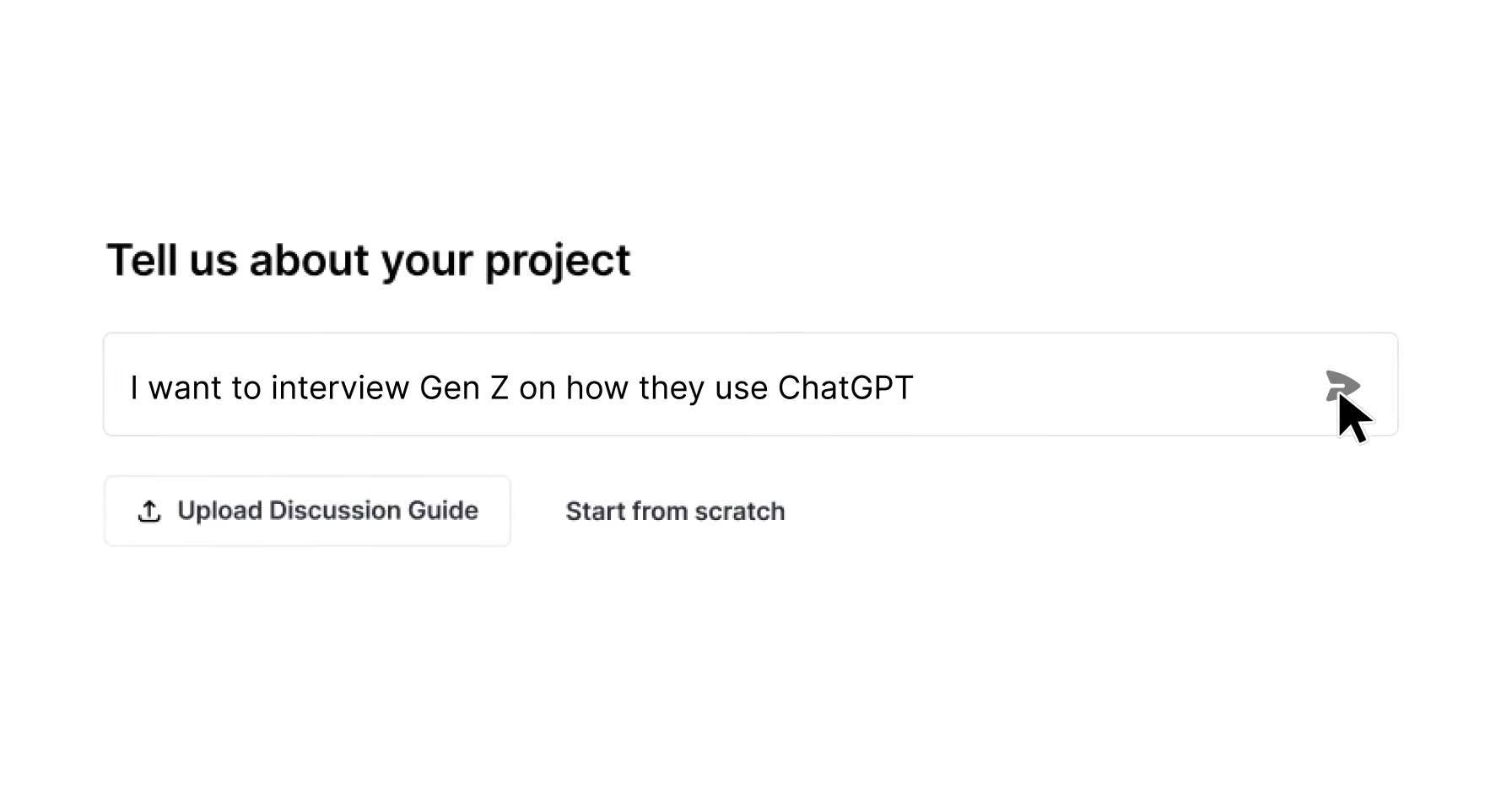
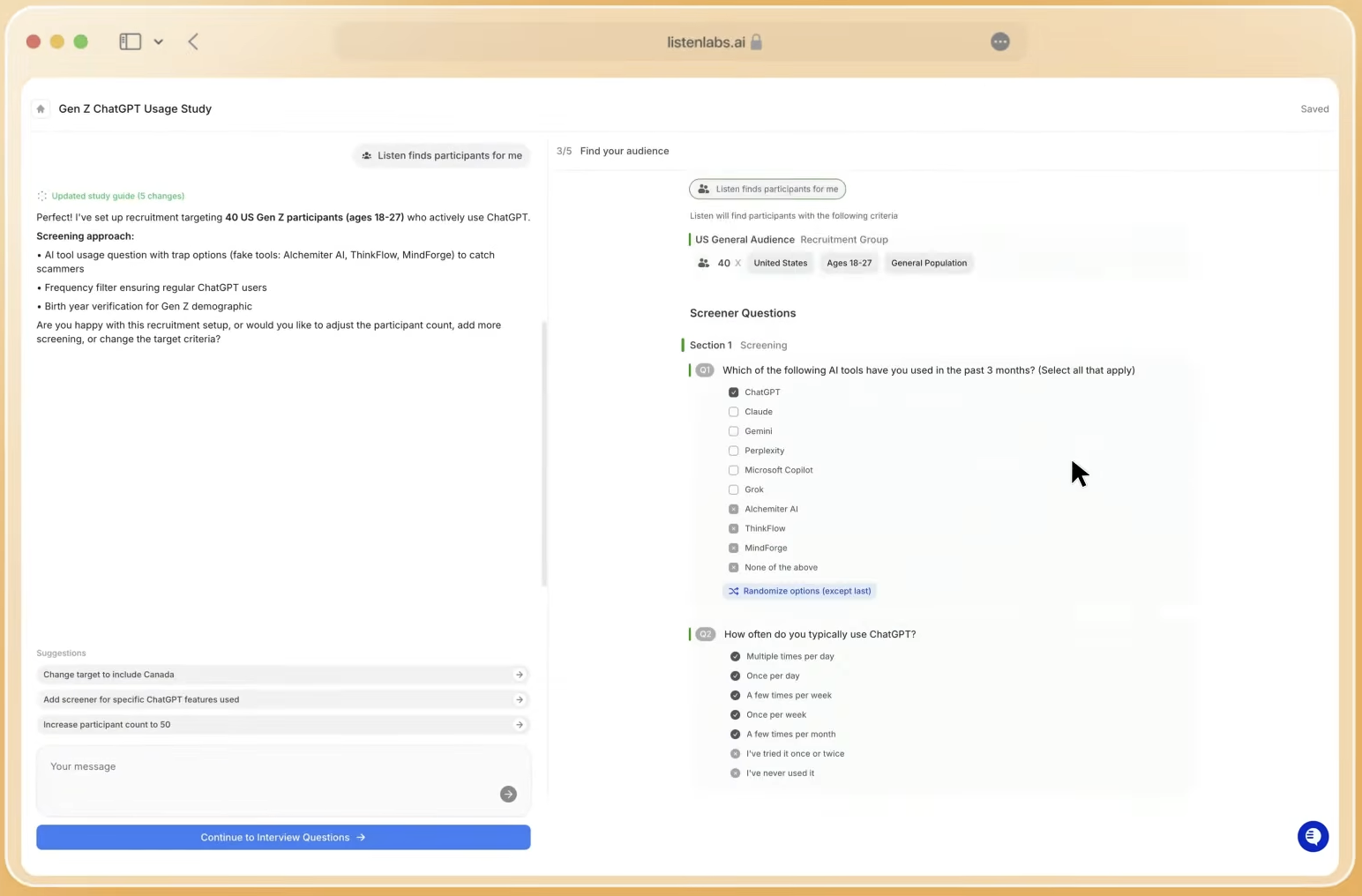
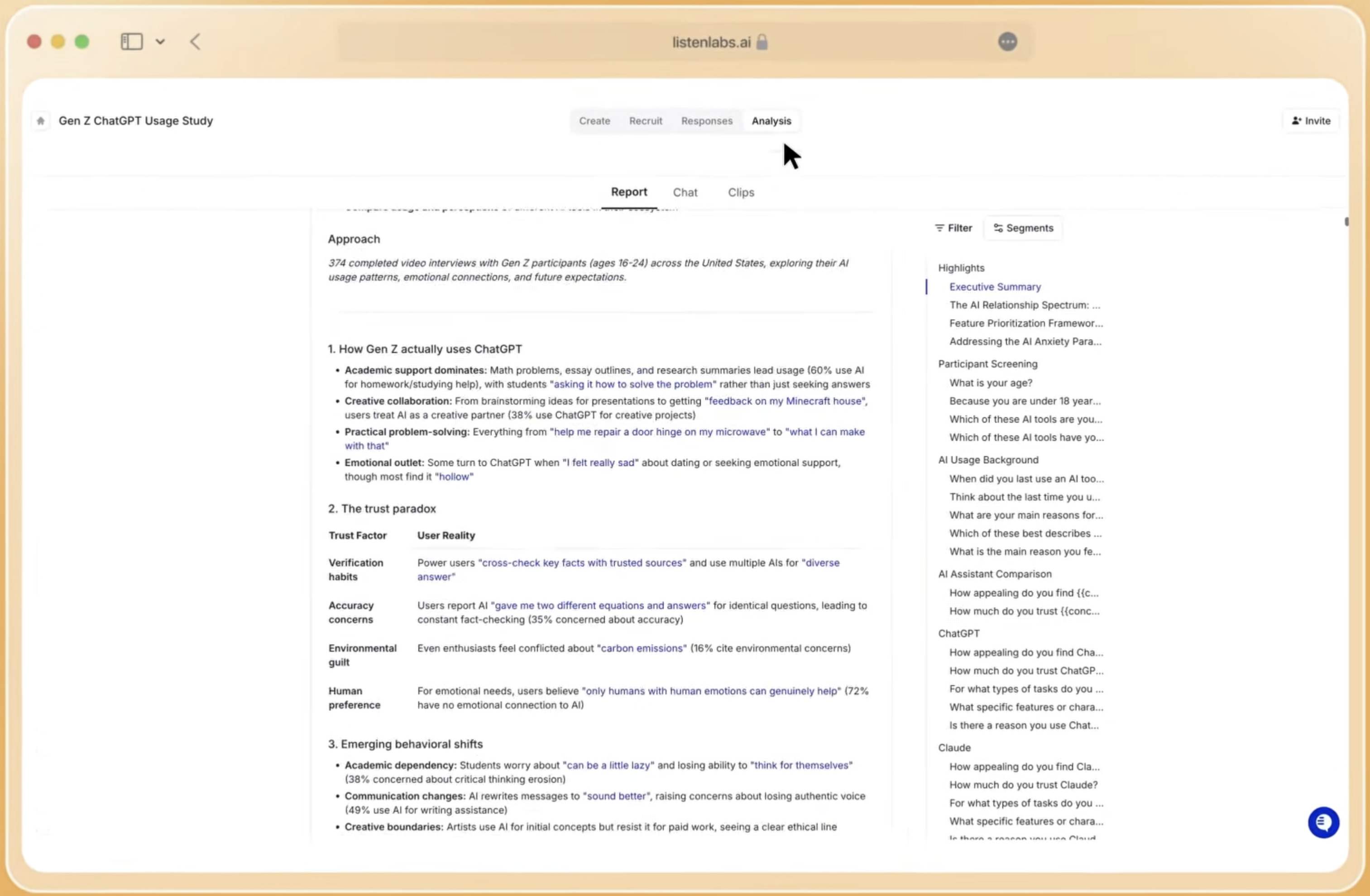
Listen Pulse, the conversational tracker, is the specific instrument recommended here. Pulse runs the same study with the same screeners wave after wave, understands the open-ended answers, sorts them into themes, quantifies them, and charts each theme next to the KPIs teams already report. It analyzes tens of thousands of responses 24/7 and surfaces trends as they form. Core questions stay constant to protect the trend line, while timely questions cover new campaigns and competitors. Every number traces back to a real person, including their words, the quote, and the clip.
One well-known clothing brand, famous for its big logos, was quietly losing customers. Its old tracker caught the drop but could not explain it. Pulse found that price was not the issue. Style was. A growing group of customers felt the big logos were too loud for their changing lifestyles. That is the diagnostic a monitoring stack alone cannot produce.
Pulse deploys alongside an existing tracker or as the primary tracking system and integrates with Qualtrics and Decipher. The Research Agent handles the full analysis workflow from raw data to final output, with every insight linking directly to the underlying response data. Emotional Intelligence analyzes tone of voice, word choice, and subconscious micro expressions to surface emotions that transcripts alone miss, available across 50+ languages and integrated directly into the Research Agent. Listen Labs’ Research Library serves as the organization’s source of truth, enabling cross-study queries and trend tracking across every wave ever run.
Enterprise proof points include Microsoft cutting research wait time from weeks to hours, Sweetgreen replacing months-long research cycles with days and scaling across 300+ US locations, and Anthropic running 100 studies in the time it previously took to run five or six.
AI Brand Tracking Vs Traditional Brand Tracking
Traditional trackers are wave-based and quant-only. They report that awareness or consideration moved but carry no diagnostic for why. Traditional survey-based brand tracking has a 4–8 week lag from data collection to delivery, meaning a damaging narrative that forms in a niche community on Monday, consolidates by Wednesday, and reaches mainstream media by Friday will never appear in the following month’s tracker.
Traditional survey panels are structurally insensitive to perception shifts forming within niche online communities, early-adopter groups, and emerging subcultures, because panels are designed to be representative on average and therefore miss community-level signals until they influence mainstream perception. By the time a KPI declines, the underlying shift has been building for months. Explaining it then requires commissioning a separate qualitative study.
AI brand tracking automation adds continuous monitoring plus the qualitative why in the same wave. Pulse’s constant core questions, described above, protect the trend line while open-ended conversation adds the why. Emerging themes appear next to the KPIs teams already report, so the metric change and the reason behind it arrive together. That combination is what makes AI-powered tracking predictive rather than merely descriptive, because it can identify patterns and weak signals long before they become visible in traditional metrics.
Ahrefs Brand Radar Alternatives For AI Brand Visibility Tracking
Validation keeps the classification layer honest, but the visibility layer depends on which platform you choose. Ahrefs Brand Radar is one option; the main alternatives differ in engine coverage, citation depth, and prompt-volume methodology.
Profound tracks nine or more AI engines, offers Agent Analytics for attribution from server logs rather than relying only on generated prompts, and carries SOC 2 Type II and HIPAA certifications. Its Prompt Volume estimates attempt to answer how often relevant queries are actually asked, not just whether a brand appears in them.
Most AI assistants do not expose a complete, standardized equivalent to keyword search volume, so platforms estimate prompt demand using conventional search data, site data, panels, or proprietary methods. Buyers should ask how prompt discovery and volume estimates are produced before committing to any platform.
90-Day Rollout Plan: From Prompt Set To First Automated Report
With the pipeline, validation layer, and tool options defined, the remaining question is sequencing. A focused brand tracking automation program is achievable in 90 days, and the plan below assigns phases, owners, and milestones.
Days 1–30: Foundation. Define objectives and KPIs. Build the initial prompt set of 80–150 prompts across six buckets: branded, category, competitor-comparison, use-case, risk, and buying-stage. Select tools for visibility tracking, orchestration, storage, and dashboards. Establish the data model. Owner: insights lead with marketing ops support. Milestone: prompt set approved, tools procured, data model documented.
Days 31–60: Pipeline Build. Wire the orchestration layer. Configure scheduled runs across ChatGPT, Gemini, Perplexity, and Google AI Overviews. Build the storage schema. Set up the dashboard. Configure Slack and email alerts. Owner: marketing ops with insights lead oversight. Milestone: first automated data flowing into storage and dashboard.
Days 61–90: Validation And Qualitative Layer. Run the first validation cycle on AI-classified sentiment and themes. Deploy Listen Pulse as the qualitative layer. Run the first qualitative wave. Integrate qualitative themes into the dashboard. Owner: insights lead with research team support. Milestone: first automated report delivered to stakeholders with qualitative why attached.
Governance: Alert Thresholds, Ownership, And Reporting Cadence
A program without governance produces dashboards nobody opens. Define the operating model before the first alert fires.
Alert thresholds define what triggers a notification. Examples include sentiment dropping below a defined floor, a competitor gaining share of voice above a threshold, a new theme emerging in qualitative responses, or a citation source disappearing from the dataset.
Ownership of alerts assigns a named person to each alert type. Visibility alerts go to SEO or content. Sentiment alerts go to brand or comms. Qualitative theme alerts go to insights. An alert without an owner becomes noise.
Reporting cadence structures how findings reach decision-makers. Weekly operational reports serve content and SEO teams. Monthly strategic reports aggregate trend and competitive share data for leadership. Quarterly deep-dive audits connect citation data to pipeline and awareness metrics. Instrument cited URLs like a campaign: use GA4 landing page segmentation, consistent UTMs, and assisted conversion reporting to track sessions, demo-start rate, and assisted conversions.
Audit cadence keeps the program accurate over time. Re-validate the classifier quarterly. Re-benchmark the prompt set quarterly against fresh demand data. Review alert thresholds monthly.
Set Up Governance With Listen Labs
Common Challenges And Troubleshooting
The following pitfalls appear in most brand tracking automation builds. For each, the recognition signal, likely cause, and fix are noted.
- Unclear objectives: Recognized when stakeholders ask what a number means. Cause: KPIs not tied to decisions. Fix: define the decision each metric informs before building the pipeline.
- Poor prompt coverage: Recognized by low variance in visibility scores. Cause: prompt set overweighted to branded queries. Fix: build prompts across six buckets, including category, alternative, comparison, use-case, risk, and buying-stage.
- Low response quality: Recognized by high rates of “I don’t know” or off-topic responses. Cause: prompt wording too vague or too complex. Fix: pilot prompts with a small group before scaling.
- Classification drift: Recognized by declining Cohen’s kappa over time. Causes include model updates, prompt rewrites, and new user segments. Fix: re-validate quarterly, maintain a frozen golden set, and recalibrate after any model swap.
- Stakeholder misalignment: Recognized by dashboards nobody opens. Cause: metrics not tied to decisions and alerts not routed to owners. Fix: co-design the dashboard with stakeholders and assign alert owners before launch.
Get Help Troubleshooting Your Program
Measuring Success: How To Know The Program Is Working
Clear metrics show whether the program functions as designed and influences decisions.
- Study cycle time: Time from prompt set to first automated report. Target: under 90 days for initial build and under 30 days for subsequent waves.
- Participation and completion rate: Completion rate and response depth for qualitative waves. Target: define a minimum completion rate and depth threshold for your category.
- Consistency of findings: Recurrence of themes across waves. Target: key themes reappear in at least two or three consecutive waves before informing strategic decisions.
- Stakeholder usage of insights: Dashboard views, alert acknowledgments, and references to insights in decision documents. Target: steady growth in active users and cited insights.
- Impact on brand and campaign decisions: Number of content changes, campaign adjustments, or positioning shifts driven by insights. Target: a growing share of major decisions explicitly linked to program outputs.
Track these metrics over time using dashboards, periodic retrospectives, and method reviews. Differentiate short-term signals, such as a single wave showing a new theme, from longer-term trend validation, which requires repeated appearance across waves.
Review Your Success Metrics With Listen Labs
Advanced Considerations And Iteration
Once the pipeline is stable, the classifier is validated, and stakeholders trust the data, advanced practices become available.
- Always-on research programs: Move from periodic waves to continuous monitoring with Listen Pulse. Pulse’s continuous analysis, described above, surfaces trends as they form.
- Qual-at-scale: Run hundreds of AI-moderated interviews simultaneously. Qual-at-scale lets AI handle the time-consuming parts of research, freeing companies up to have more meaningful conversations.
- Global and multi-market studies: Use Listen Labs coverage across 45+ countries and 120+ languages, with automatic translation and transcription across all supported languages.
- Integrating behavioral data: Combine visibility data with referral traffic, brand search volume, and business outcomes to build a multi-signal picture of brand health.
- Advanced segmentation: Break down findings by demographics, cohorts, and custom segments to surface perception gaps that aggregate scores hide.
- Emotion and signal analysis: Listen Labs’ Emotional Intelligence analyzes tone of voice, word choice, and subconscious micro expressions to surface emotions that transcripts alone miss, available across 50+ languages.
Readiness criteria for advanced practices include a stable pipeline, a validated classifier, and demonstrated stakeholder trust in the data. A safe piloting approach is to run a 90-day pilot with the top two tool candidates before committing to an annual contract. Weight the decision toward whichever platform’s alerts actually change what content and comms teams do each week.
Explore Advanced Programs With Listen Labs
Frequently Asked Questions
What Is A Typical Timeline For Building A Brand Tracking Automation Program?
A focused program combining prompt set development, pipeline build, and the first validation cycle is achievable in 90 days. A focused awareness or perception survey can typically be fielded and analyzed within one to two weeks, while a fuller study combining quantitative tracking with qualitative interviews may take three to six weeks depending on sample size, number of methods combined, and audience reachability. The 90-day plan above assumes executive sponsorship, tool budget, and a named insights lead from day one.
What Skills Are Required For Non-Researchers Running Studies?
Self-serve simplicity is the goal. Listen Labs lets users describe research goals in natural language and have the platform handle study design, recruitment, moderation, and analysis automatically. Make and Zapier require only basic workflow configuration skills and are suitable for non-technical users, while n8n typically requires engineering expertise such as server management and JavaScript coding. The validation layer requires familiarity with Cohen’s kappa (target ≥ 0.70) and stratified sampling logic, which any analyst with a statistics background can handle.
How Do You Validate AI Sentiment And Theme Classification So It Survives Executive Scrutiny?
The validation layer is described in full above. In short, double-code 10–20% of cases with a floor of 30–50, measure human–AI agreement with Cohen’s kappa or Krippendorff’s alpha, target kappa of at least 0.70 for standard work and 0.80 for high-stakes decisions, track kappa over time, and re-validate quarterly and after any model swap. Run a regression suite against a fixed golden set on every code merge, and document the metric, sample size, and code frame version in every report.
How Do Legal, Compliance, And Privacy Considerations Affect The Process?
Listen Labs maintains enterprise-grade security with 256-bit encryption, and customer data is never used for AI model training. The company holds SOC 2 Type II, ISO 27001, ISO 27701, and ISO 42001 certifications and is GDPR compliant. For the monitoring pipeline, data residency requirements affect storage layer selection, so PostgreSQL or BigQuery deployments should be configured to match the data residency requirements of each market. LLM citation tracking tools should be evaluated for SOC 2 Type II compliance and SSO support before enterprise procurement.
How Do You Decide When To Repeat, Expand, Or Retire A Study?
Repeat when core questions stay constant to protect the trend line, because that is the foundation of longitudinal comparability. Expand when timely questions need to cover new campaigns, competitors, or market events without breaking historical comparability; Listen Pulse supports this by keeping core questions constant while adding timely add-on questions each wave. Retire a study when the metric it tracks no longer informs a decision. A metric that nobody acts on becomes a cost center rather than an intelligence asset. Review the study portfolio quarterly alongside the alert threshold review.
Talk With Listen Labs About Your Next Study