
Written by: Anish Rao, Head of Growth, Listen Labs
Key Takeaways
- Monadic price testing shows each respondent one price for one product concept and compares purchase intent across randomly assigned price cells.
- Sequential monadic testing reuses respondents across prices and costs less per person, while monadic designs deliver cleaner, unbiased demand measurement.
- Survey-based monadic tests measure stated intent before launch, and live e-commerce split tests measure actual purchase behavior on a live store.
- Valid monadic tests require random assignment, one price per respondent, adequate sample size per cell, and strict stimulus control across all price cells.
- Listen Labs combines monadic pricing with AI-moderated conversational price ladders to deliver both demand curves and the qualitative reasoning behind every price point.
See a Listen Labs pricing study in action
Monadic Vs. Sequential Monadic Testing
Monadic testing shows one concept or price per respondent. Sequential monadic testing shows the same respondent multiple concepts or prices in sequence, with the respondent answering the same question battery after each one.
The trade-offs are factual and well documented. Monadic testing eliminates carryover and anchoring bias because each respondent evaluates only one stimulus. It requires a separate respondent cell for every price point, so total sample scales linearly with the number of prices tested. A three-price monadic study needs three independent cells; a five-price study needs five.
Sequential monadic testing is cheaper per respondent because a single cell covers all concepts. It also introduces two well-documented problems: order effects, where the first-seen price anchors all subsequent reactions, and respondent fatigue, where attention and answer quality decline with each additional stimulus. Randomizing the sequence order across respondents reduces the anchoring problem but does not remove it.
For price testing, anchoring bias can distort revenue decisions. A respondent who sees a $30 price before a $50 price will evaluate $50 differently than a respondent who sees $50 in isolation. That difference is the signal monadic testing is designed to protect.
Two Kinds Of Monadic Price Testing: Pre-Launch Surveys And Live Store Tests
Monadic price testing describes a method rather than a single product category. Two distinct testing contexts use monadic logic and answer different questions, require different tools, and carry different risks.
In pre-launch survey-based monadic pricing, respondents are recruited into a survey or interview and randomly assigned to one price cell. The output is a demand curve and revenue curve before the product or price goes live. The data is stated intent, which can overstate or understate real purchase behavior. The advantage is speed and safety: a team can test several price points across a target audience in days without touching a live store or exposing real customers to inconsistent pricing.
In live e-commerce split testing, real shoppers on a live store are randomly served different prices or offers, and the output is observed purchase behavior rather than stated intent. A/B price testing measures actual behavior such as conversion, add-to-cart, purchase, revenue, drop-off, and repeat behavior. Live tests require real traffic, take longer to reach statistical significance, and carry ethical and trust risks if customers notice inconsistent pricing.
The testing context should drive the tool choice. A team that needs a demand curve before a product exists needs a survey-based tool. A team that wants to validate a price change on a live Shopify store needs a live split-testing tool. Treating these as interchangeable often leads to selecting the wrong instrument for the question.
Monadic Price Testing Software Tools By Testing Context
The tools below fall into two groups: survey-based platforms that measure stated intent before launch, and live split-testing tools that measure observed behavior on a live store. Within the survey group, they differ mainly in method breadth, panel access, and whether they capture qualitative reasoning alongside the demand curve.
Listen Labs suits teams that need both the demand curve and the reasoning behind every price point. Its Gabor-Granger pricing test runs as a conversational price ladder inside studies the team already fields. Each buyer sees a product description and decides whether they would buy at a given price. Their answer sets the next price shown, higher after a yes and lower after a no, until the ladder finds the most that person would pay.
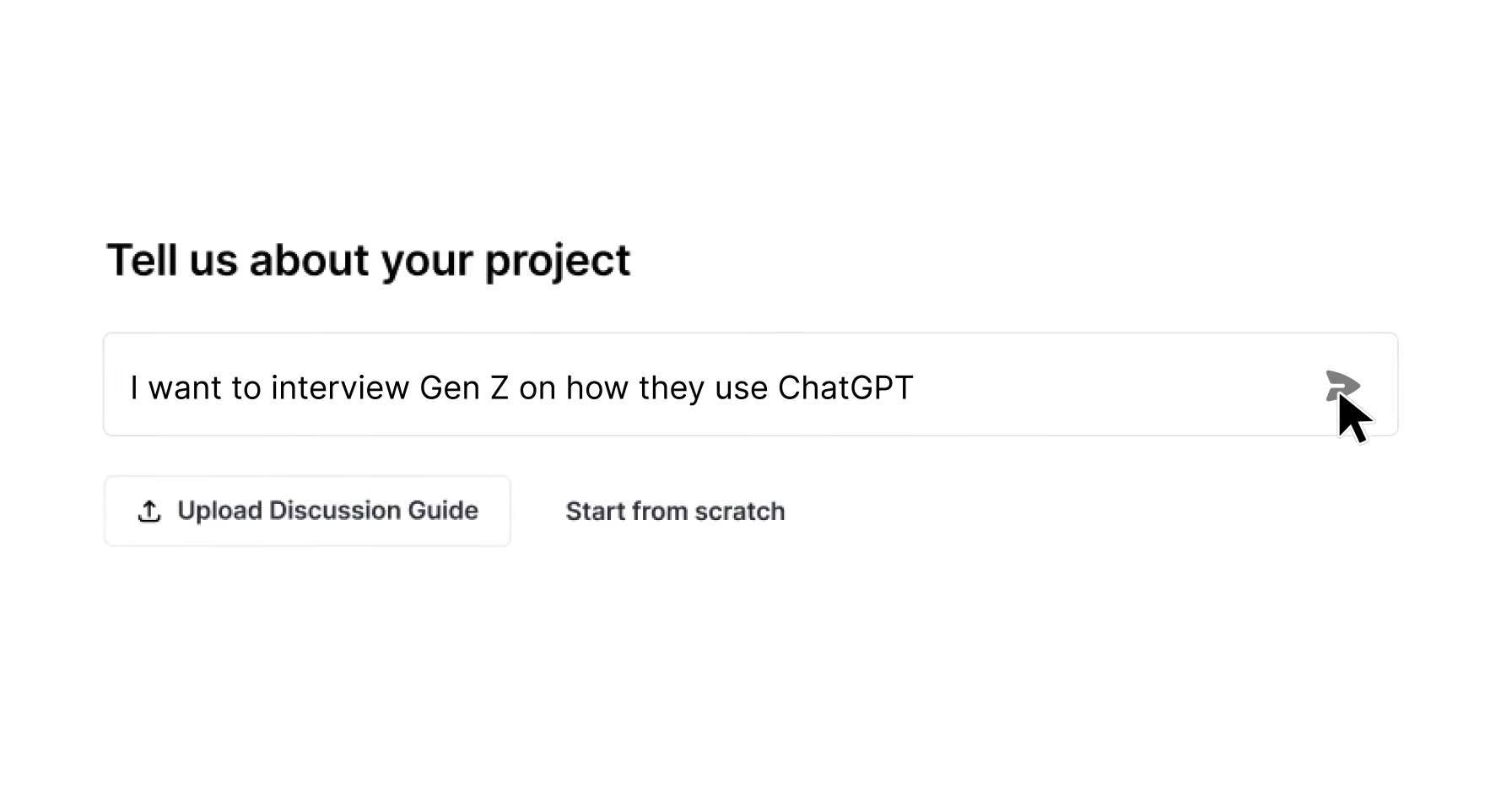
Buyers then explain why a price felt too high or too low. The AI interviewer probes to separate “I cannot afford it” from “it is not worth that much,” which represent different problems with different fixes. Listen codes those answers into themes so individual anecdotes become structured data. Results roll up into a demand curve showing how many buyers you keep at each price, and a revenue curve showing the price that earns the most. Segment filters let teams see how key audiences behave without fielding a new study.
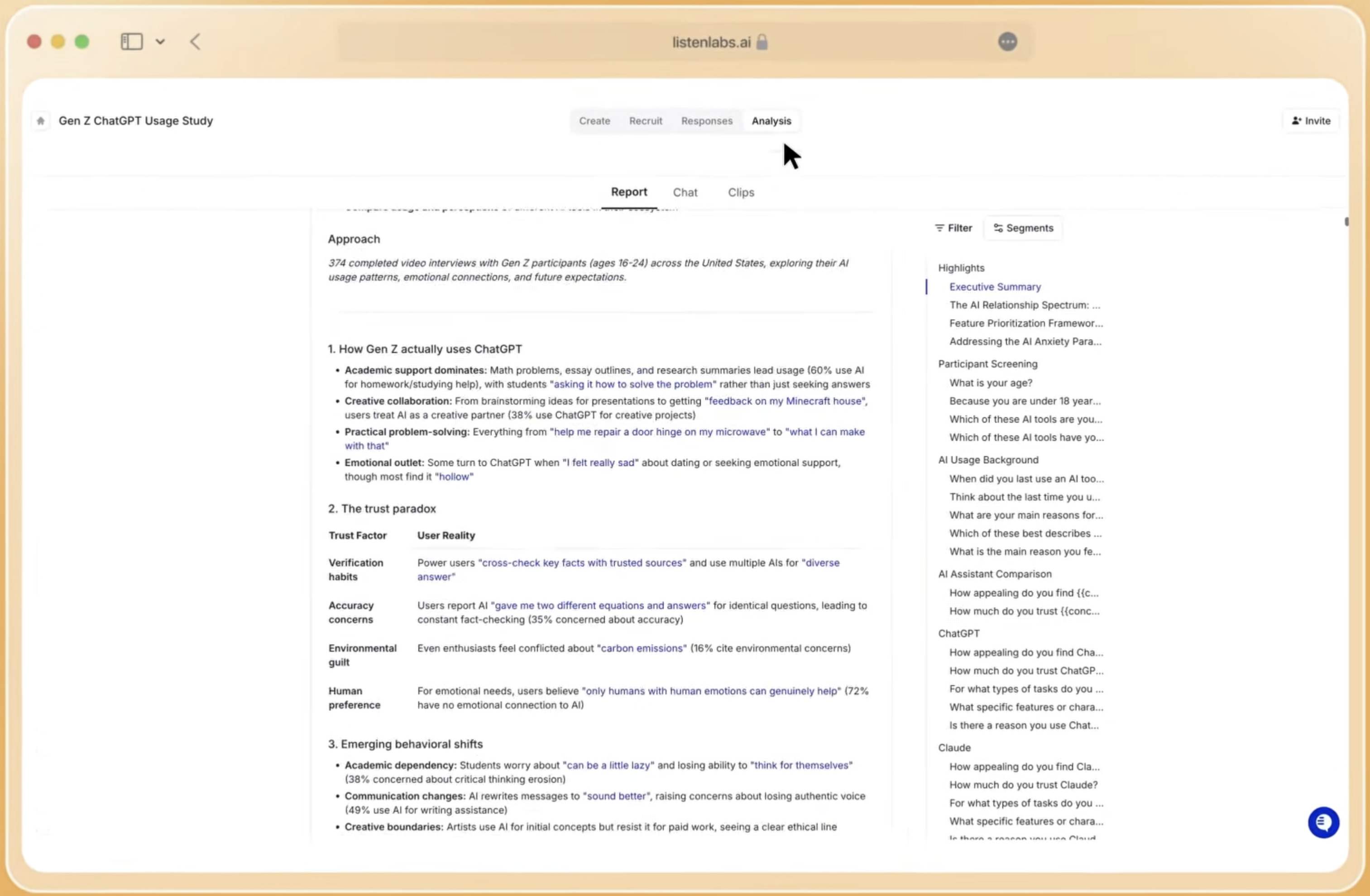
Listen handles messy answers automatically. Buyers who would not purchase at any price stay in the count so demand is not artificially inflated. Inconsistent yes-then-no responses are counted separately, and half-finished ladders are dropped. For complex projects, Listen Labs’ insights team of career researchers provides white-glove support. Listen Labs draws on a global panel of 50M+ verified respondents across 45+ countries, with Quality Guard monitoring every interview in real time for fraud, low-effort responses, and repeat respondents. For teams that also need qualitative depth alongside pricing data, see AI Qualitative Research Pricing: Complete 2026 Guide.
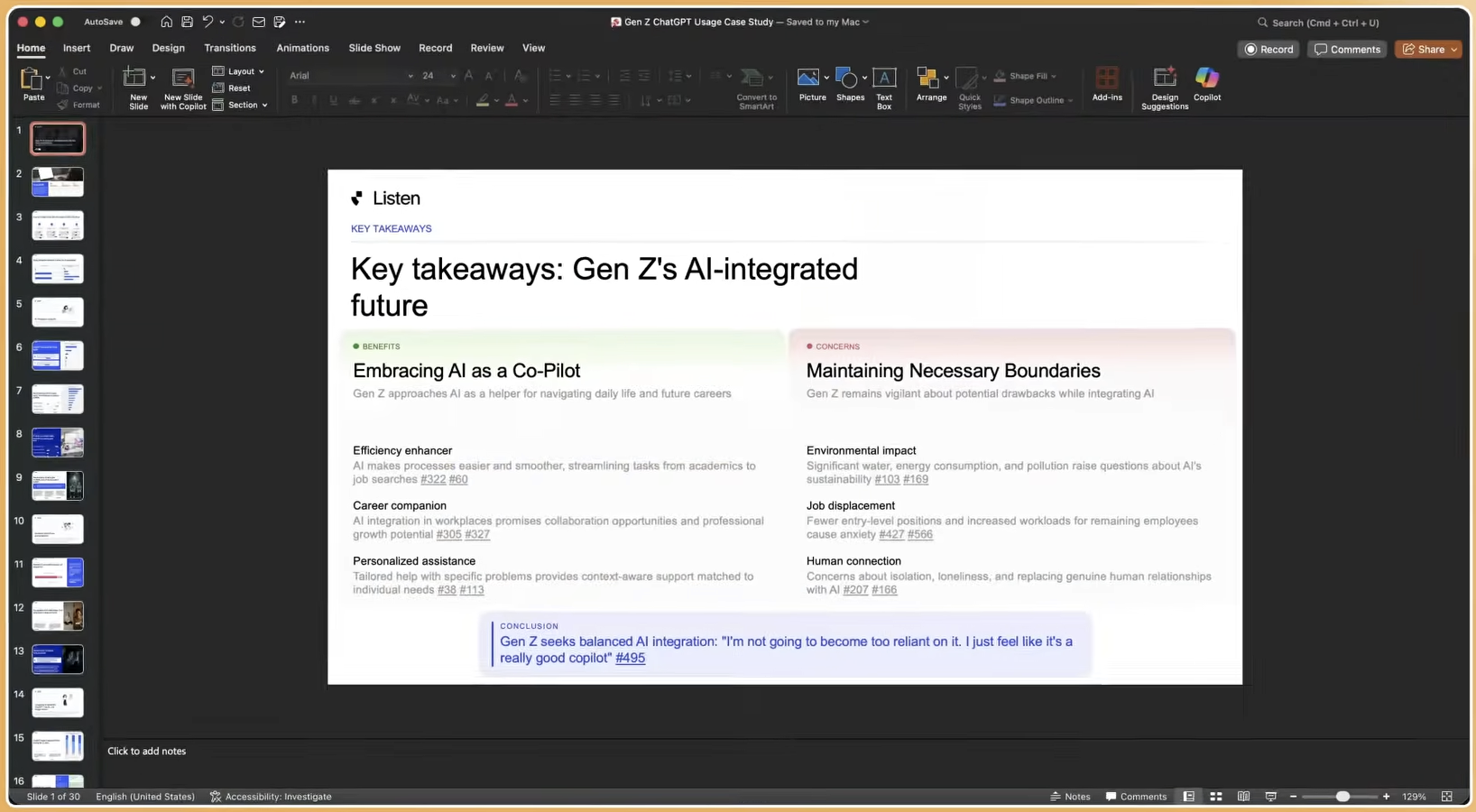
Conjointly is a purpose-built self-serve option for survey-based pricing methods. Its platform supports monadic testing combined with Gabor-Granger exercises, Van Westendorp, conjoint analysis, and MaxDiff, with templates and automated price sensitivity curves. It also offers a Feature Placement Simulator that uses a five-stage survey flow including sequential monadic feature-importance tests and Gabor-Granger purchase-intent exercises with randomly selected prices. Conjointly’s Basic tier is free. Conjointly sources respondents through global panel networks and providers, so researchers either bring their own respondents or use a Conjointly Predefined panel or Self-serve sample.
Suzy operates as an end-to-end consumer insights platform connecting enterprise teams with verified human panels. Suzy supports monadic concept testing, sequential monadic survey templates, Van Westendorp, Gabor-Granger, MaxDiff, and AI-moderated qualitative interviews. Its quantitative outputs support formal stage-gate approvals, financial forecasting, and external audit. Suzy fits teams that require empirical consumer data, statistical certainty, and audit-ready results.
Quantilope covers a wide method set in a single platform. Quantilope supports conjoint, MaxDiff, price sensitivity, implicit association testing, and templated concept tests, with panel fielding integrated, typically under an annual platform license. It works well for teams that need multiple advanced methods in one environment.
Pollfish, part of Prodege, is a do-it-yourself, pay-as-you-go survey platform. Pollfish supports Van Westendorp, Gabor-Granger, monadic price testing, and conjoint analysis, reaching over 250 million real consumers across 160+ countries. Its panel is powered by Prodege’s first-party audience, enabling targeting based on verified purchase data. Results are available in under 24 hours in most cases. Pollfish focuses on quantitative consumer-panel research with no qualitative depth.
Sawtooth Software specializes in choice-based conjoint, MaxDiff, hierarchical Bayes estimation, and market simulators. Sawtooth does not include a built-in panel, so researchers bring their own participants. It is less self-serve than lighter tools and is appropriate when the research question requires advanced conjoint modeling that simpler platforms cannot support.
Aytm (Ask Your Target Market) bundles a survey builder, a built-in respondent panel, and templated research designs including concept testing, conjoint, and Van Westendorp, with published per-response pricing. It serves as a mid-market option for teams that want panel access and method templates without enterprise-level complexity.
GutCheck is a consumer insights platform that supports agile quantitative research including concept testing and pricing studies. It targets teams that need fast consumer feedback with managed panel access.
SurveyMonkey LaunchPad is an automated market research suite. LaunchPad supports monadic testing across product concept testing, packaging, ad testing, message testing, name testing, and logo testing, plus a Van Westendorp Price Optimization solution, with access to a global panel of 335M+ people across 130+ countries. It applies a three-step fraud screening process and can return results in hours. LaunchPad focuses on quantitative outputs and does not support qualitative depth or prototype testing.
For the live e-commerce context, Intelligems is an AI-powered A/B testing and profit optimization platform built primarily as a Shopify app. Merchants use it to test and personalize product and subscription pricing, discounts, shipping rates, content, checkout, and post-purchase offers. It runs split tests on real shoppers in a live store and measures observed purchase behavior rather than stated intent. Intelligems answers a different question than survey-based tools: “what did buyers actually do when shown this price.” It requires live traffic and a live store and carries the trust risks associated with serving inconsistent prices to real customers.
For teams evaluating the cost structure of AI-assisted research, see AI Customer Research Pricing: 2026 Models & Cost Breakdown.
Compare Listen Labs with other pricing tools
How To Design A Monadic Price Test That Survives Scrutiny
Whichever tool you choose, the test only produces defensible results when the design follows four methodological guardrails.
Random assignment to price cells. Every respondent must be assigned to exactly one price cell through a randomization mechanism, not through self-selection or convenience. Monadic testing is valid only when participants are randomly assigned to one concept group; random assignment prevents order effects and comparison bias from contaminating results. If assignment is not random, differences in purchase intent across cells may reflect differences in the respondents rather than differences in the prices.
One price per respondent. No respondent should see more than one price. This rule defines the monadic design and drives its validity advantage. A respondent who sees multiple prices is no longer evaluating a price in isolation. They start comparing, anchoring, and strategically responding in ways that distort the demand curve.
Minimum sample per cell as a design decision. Sample size per cell depends on the precision you need and the number of cells you are running. A monadic test with only 100 respondents per cell can reliably detect differences of 15 or more percentage points on Top 2 Box scores, but detecting the typical 5–10 point differences requires 200 or more per cell. The researcher owns this decision. More price cells and tighter margins of error require larger total samples. The right sample size depends on the decision stakes, the number of price points, and the segment-level analysis the team needs to run.
Stimulus control. Everything must be held constant except the variable being tested. If one cell sees a more polished description or 40 extra words of copy, its higher purchase intent reflects the description rather than the price. This is why every cell should see the same product description, the same image, the same copy length, and the same question battery in the same order. Stimulus control makes cross-cell comparisons meaningful.
Demographic balance across cells also matters. Even with quotas, separate monadic samples can differ in subtle ways such as attitudes, mood, or time of day, which adds noise to cross-cell comparisons; the remedies are larger samples or pre-stratification on key variables. Running a cell-balance check before analysis is standard hygiene.
Monadic Price Testing Vs. Van Westendorp, Gabor-Granger, And Conjoint
Van Westendorp’s Price Sensitivity Meter asks respondents four open-ended questions about price perception. It asks at what price the product feels too cheap to trust, like a bargain, expensive but still worth considering, and too expensive to buy, to produce an acceptable price range. It does not produce a demand curve or a revenue estimate. Van Westendorp works well in early discovery when the acceptable price range is unknown, and it is the only pricing method that captures the “too cheap” floor, which helps in premium categories.
Gabor-Granger walks a respondent up or down a price ladder to find willingness to pay. It produces a demand curve and a revenue-maximizing price point. It works efficiently when a candidate price range is already known and the research question is where the revenue peak sits within that range. Gabor-Granger tests one product in isolation with no competitive context, and its sequential version carries anchoring risk.
Conjoint analysis models how buyers trade off features and price together. It reveals which features justify higher pricing and how price interacts with other attributes. Conjoint fits questions where feature trade-offs matter and the team needs to know “what price for which configuration.” It requires larger samples and more design work than Van Westendorp or Gabor-Granger.
Monadic testing isolates one price per respondent to measure demand cleanly across cells. It works best when a team needs clean, unbiased demand measurement at specific price points and does not need feature-trade-off modeling. It does not model feature interactions, and it does not explain why a price felt wrong unless qualitative follow-up is added.
Many rigorous pricing studies sequence these methods. Teams often use Van Westendorp to establish the acceptable range, then Gabor-Granger or monadic testing to find the revenue peak within that range, and qualitative follow-up to explain the reasoning behind the numbers.
Where Monadic Price Testing Breaks Down
Monadic price testing measures stated intent rather than observed behavior. Stated willingness to pay routinely lands 20 to 40 percent below observed behavior, and stated purchase intent can overstate real purchase in the opposite direction. The gap between what respondents say they would do and what they actually do at the point of purchase is a structural limitation of all survey-based pricing methods.
Monadic testing cannot model feature trade-offs. It will not tell a team which bundle or configuration wins, or how much a specific feature is worth in price terms. Conjoint analysis is the right tool for those questions.
Monadic testing requires enough respondents per cell to be statistically meaningful, which makes it expensive when a team needs many price points. A five-price monadic study at 200 respondents per cell requires 1,000 total respondents. That cost scales with every additional price point added.
Monadic testing does not explain why a price felt wrong unless qualitative follow-up is built into the design. A bare demand curve shows how many buyers you keep at each price. It does not show whether those who declined said no because the price exceeded their budget or because the price exceeded their perception of the product’s value. Those are different problems with different solutions.
AI-moderated conversational price ladders address the “why” behind the number by combining the structured price ladder with adaptive follow-up questions. Each answer sets the next price shown, and the follow-up conversation captures the reasoning that a bare demand curve leaves out. Listen Labs’ Gabor-Granger pricing test implements this approach. The AI interviewer probes each price decision, codes the reasoning into themes across all respondents, and delivers the demand curve alongside the qualitative narrative that explains it. For teams that need to defend a pricing decision to a VP or a board, that narrative turns a chart into a strategy.
For a broader view of how AI-assisted tools fit into product research workflows, see Best AI Tools for Product Managers to Run Product Testing.
A Selection Checklist For Any Monadic Price Testing Software Demo
Use this checklist during any vendor demo before committing to a tool:
- Does the tool enforce one price per respondent and random assignment to cells?
- Does it support the number of price cells and sample per cell your study requires?
- Does it recruit the specific audience you need, including hard-to-reach segments?
- Does it capture the qualitative reasoning behind each price choice, or only the yes or no?
- Does it produce a demand curve and a revenue curve as standard outputs?
- Can you filter results by segment without fielding a new study?
- How does it handle inconsistent or incomplete responses?
- What deliverables do you receive, and how fast are they available after fieldwork closes?
- What are the security and compliance certifications such as SOC 2, GDPR, and ISO 27001?
- Is your data used to train the vendor’s AI models?
Walk through this checklist with Listen Labs
Frequently Asked Questions About Monadic Price Testing Software Tools
What Is Monadic Price Testing?
Monadic price testing is a survey-based research method in which each respondent sees exactly one price for one product concept and is never exposed to competing prices. Demand is measured by comparing purchase intent across independently sampled respondent cells, each assigned to a different price. Because no respondent sees more than one price, the method reduces anchoring and comparison bias and produces a clean read on how demand shifts across price points.
Monadic Vs. Sequential Monadic Testing: What Is The Difference?
As covered earlier, monadic testing eliminates the order effects and anchoring bias that sequential designs introduce, at the cost of a separate respondent cell per price. Sequential monadic testing reuses respondents across concepts and reduces cost per respondent but weakens validity for price testing.
How Many Respondents Do You Need Per Price Cell?
Sample size per cell is a design decision. It depends on the size of the difference you need to detect, the number of price cells you are running, and the confidence level you require. Smaller differences between price points require larger cells to detect reliably. If you plan to analyze results by segment within each cell, you need enough respondents per segment to support that analysis, which increases sample requirements. The researcher chooses the sample size based on the precision the business needs to act on the results.
Does Monadic Testing Measure Behavior Or Stated Intent?
Survey-based monadic price testing measures stated intent, meaning what respondents say they would do at a given price. It does not measure observed purchase behavior. Live e-commerce split testing measures actual behavior from real shoppers on a live store. Survey-based monadic testing fits pre-launch decisions, and live split testing fits validation of price changes on existing products with real traffic.
How Does Monadic Pricing Compare To Van Westendorp And Gabor-Granger?
As described earlier, Van Westendorp finds an acceptable price range, Gabor-Granger finds a revenue-maximizing point within a known range, and monadic testing measures demand at specific prices across separate cells. Many teams use Van Westendorp to set the range, then Gabor-Granger or monadic testing to locate the revenue peak.
Can You Run Monadic Price Testing On A Live Store?
Live e-commerce split testing uses the same one-price-per-shopper logic but runs on a live store. Tools like Intelligems support this context on Shopify. Live split testing measures observed behavior, requires real traffic and a live product, and carries trust risks if customers notice inconsistent pricing. Survey-based monadic testing fits pre-launch work, and live split testing fits post-launch validation.
How Do AI-Moderated Conversational Price Ladders Work?
An AI-moderated conversational price ladder combines the structured Gabor-Granger price ladder with adaptive follow-up questions. Each respondent sees a product description and answers whether they would buy at a given price. Their answer determines the next price shown, higher after a yes and lower after a no, until the ladder finds the most that person would pay. The AI interviewer then asks why the final price felt right or wrong and probes to separate affordability objections from value objections. Responses are coded into themes across all respondents, so the output includes both a demand curve and the qualitative reasoning behind every point on it.
How Is Participant Quality Protected?
Participant quality in pricing research depends on whether respondents are genuine buyers with real purchasing authority and category familiarity. Listen Labs protects quality through three layers: a global panel of 50M+ verified respondents sourced through non-commodity panel partners, Quality Guard AI that monitors every interview in real time for fraud, low-effort responses, and repeat respondents, and a dedicated recruitment operations team that handles hard-to-reach segments. Participants are limited to three studies per month to eliminate professional survey-takers. Customer data is never used to train AI models, and the platform holds SOC 2 Type II, GDPR, ISO 27001, ISO 27701, and ISO 42001 certifications.
Conclusion: Turning Monadic Price Tests Into Defensible Decisions
Monadic price testing is a method. The tool matters only insofar as it supports valid method mechanics such as random assignment to price cells, one price per respondent, adequate sample per cell, and stimulus control. A tool that violates any of those guardrails does not produce a valid monadic test, regardless of its marketing.
Most tools on this list can produce a demand curve. Fewer can explain what drives it. Listen Labs is built for teams that need both the revenue-maximizing price and the reasoning behind every point on the curve. Its Gabor-Granger pricing test delivers a demand curve, a revenue curve, segment filters, and the qualitative themes that turn a chart into a defensible pricing strategy. When someone challenges the results, you can show clips of buyers explaining their choices in their own words.
If you have a pricing decision on your desk this quarter and need to defend both the tool and the test design to a VP, that combination helps your work survive scrutiny.
See how Listen Labs runs monadic pricing studies