Written by: Anish Rao, Head of Growth, Listen Labs
Key Takeaways On Message Testing Costs
- Message testing platform pricing ranges from $1 per response for consumer panels to $899+ per test for verified B2B panels. The pricing model often shapes your total spend more than the headline rate.
- Four cost drivers—incentive levels, audience type, recruitment difficulty, and whether analysis is bundled—can make similar sticker prices produce very different final invoices.
- Per-test pricing discourages iteration, per-response pricing scales linearly with volume, and subscription models spread fixed costs across more studies. Each model fits a different testing cadence.
- B2B message testing typically costs 5–10x more per response than consumer studies because audiences are harder to reach, incentives are higher, and screeners are longer.
- Listen Labs bundles recruitment, AI moderation, analysis, and deliverables into a single subscription platform, which reduces the hidden fees that appear across fragmented toolchains.
Talk to Listen Labs About Your Research Budget
How Much Does Message Testing Cost?
Message testing platform pricing spans from about $1 per response for consumer panels (PickFu, SurveyMonkey Audience) to roughly $899 or more per test for verified B2B panels (Wynter pay-as-you-go). The pricing model, whether per-test, per-response, or subscription, often matters more than the headline price. Four variables drive the final invoice: audience type, sample size, recruitment difficulty, and whether analysis is included. To understand true costs, you need to look at all four together, not just the sticker price.
Cost is driven by four primary variables:
- Audience type: B2B panels of verified professionals cost significantly more per response than general consumer panels.
- Sample size: More responses increase total cost on per-response and per-test models. Subscription models absorb volume increases differently.
- Recruitment difficulty: Niche audiences such as enterprise decision-makers, healthcare workers, or consumers below a 1% incidence rate require more sourcing effort and higher incentives.
- Analysis inclusion: Some platforms bundle analysis and reporting. Others bill them separately or require a higher tier to unlock them.
With these cost drivers in mind, you can compare published pricing more accurately.
Published Pricing Comparison Across Major Platforms
The table below consolidates published starting prices across nine platforms as of September 2026. Every figure links to its source. Prices are entry points, not all-in costs, so review the sections below on hidden cost drivers before drawing conclusions.
| Platform | Primary Model | Published Entry Pricing | Notes |
|---|---|---|---|
| Wynter | Per-test / Subscription | ~$899 per B2B test pay-as-you-go; ~$20,000/year Pro (20,000 credits) | Verified B2B panel, higher incentives, managed analysis on upper tiers |
| PickFu | Per-response | From $1 per consumer response, $15 minimum per poll | Consumer panel pricing; demographic filters and niche audiences cost more |
| SurveyMonkey + Audience | Subscription + Per-response | Free core tier; Audience priced per response by targeting | Panel access always billed separately from survey subscription |
| Lyssna | Free / Subscription + Panel Add-ons | Permanent free tier; paid plans for higher volume | Panel responses billed separately on all plans |
| Attest | Subscription | Custom quotes, includes some managed analysis | Brand and message testing with managed support |
| Qualtrics | Enterprise Subscription | Custom enterprise pricing | Survey platform; panel and services often sold as add-ons |
| Respondent | Per-project + Incentives | Platform fees plus separate participant incentives | Focus on qualitative recruiting, especially B2B |
| User Interviews | Subscription / Per-project | Platform fees plus separate incentives | Research recruiting across B2B and B2C |
| Listen Labs | Subscription With Credits | Custom quotes based on volume | AI-moderated qualitative interviews with recruitment and analysis bundled |
Listen Labs is an AI-moderated qualitative interviews platform focused on customer understanding and consumer insights at scale. Its pricing is subscription-based with credits per participant. The platform is positioned for teams seeking qualitative research depth rather than competitive market analysis or category sizing.
What Actually Drives Your Bill
Two platforms with similar headline prices can produce very different invoices once the full cost stack is visible. Clarifying what is included versus billed separately in message testing is the most important step before committing to a vendor.
The primary cost drivers are:
- Panel access fees: Access to a proprietary or third-party panel is often the largest variable cost. PickFu charges per response against its panel. Lyssna bills panel responses separately from its subscription on every plan. SurveyMonkey Audience is a separate product billed per response on top of any subscription.
- Participant incentives: For B2B research, participants typically expect $50–$200 per hour in incentives. Whether a platform absorbs incentives into its credit or per-participant rates, or passes them through as a separate line item, has a major impact on total cost. Respondent and User Interviews bill incentives separately from their platform fees.
- Screener fees and targeting surcharges: PickFu charges $0.10 per respondent per demographic question beyond the free allowance. SurveyMonkey Audience pricing increases with audience narrowness. Narrower screeners also reduce qualification rates. More panelists must be screened to reach the target number of completes, which multiplies cost.
- Minimum sample sizes: Some platforms set minimums that force buyers to purchase more responses than a study truly requires.
- Analysis and reporting: Platforms like Wynter’s higher tiers and Attest include managed analysis. Most per-response tools deliver raw data only, which requires separate investment in analysis time or tooling.
A concrete illustration: a B2B study targeting enterprise decision-makers typically costs about 5–10x more per response than a general consumer study. The premium can range from roughly 2–3x for general B2B professionals to 8–15x for C-suite or very low-incidence audiences. Recruitment difficulty is higher, incentives are larger, panel pools are smaller, and screeners are longer. A $1-per-response consumer poll and a $50-per-response B2B interview are different products even if the question set is identical.
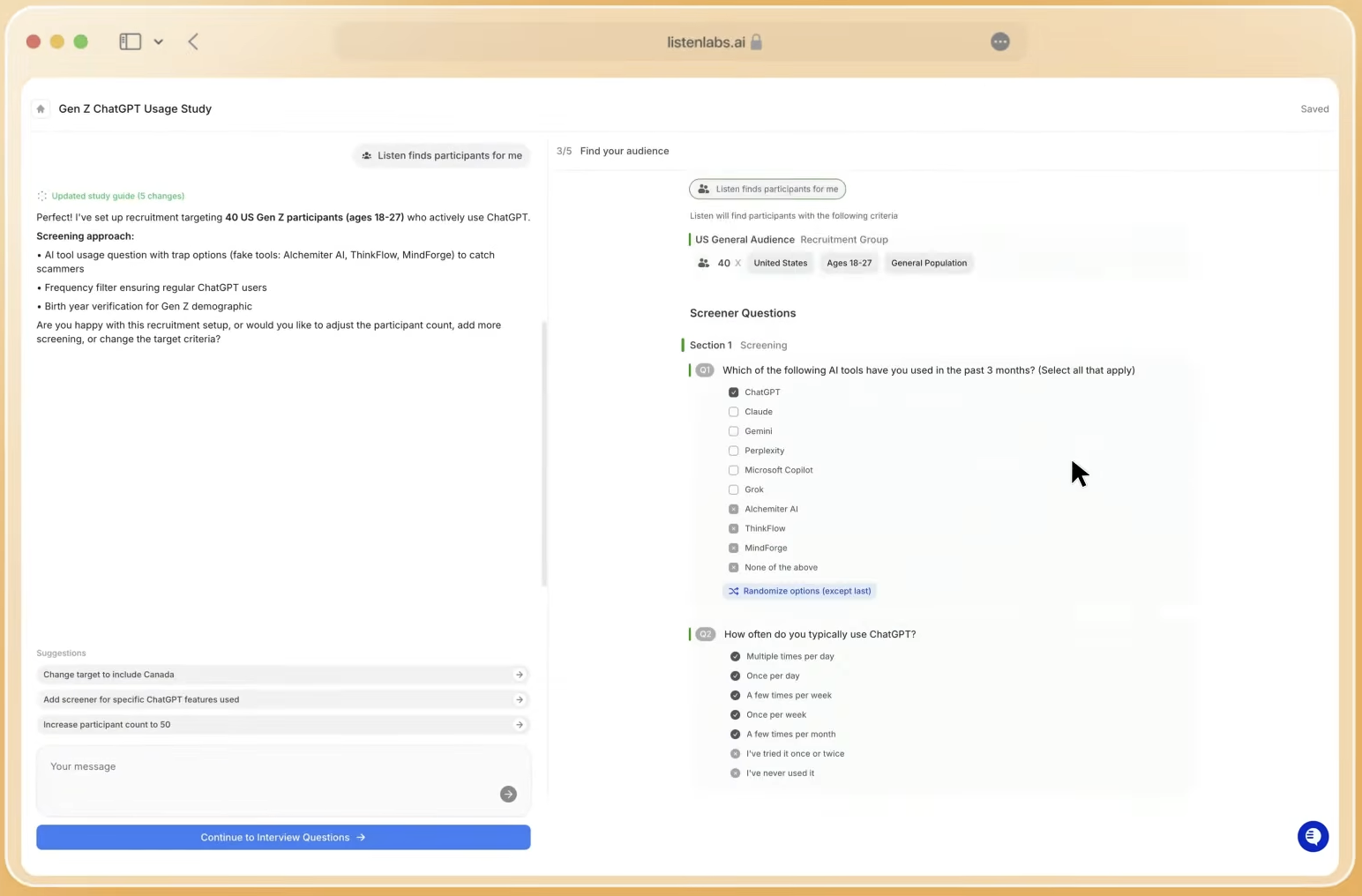
Listen Labs bundles recruitment, AI moderation, analysis, and deliverables into one platform. This approach reduces the need for separate vendors and the hidden fees that accumulate across fragmented toolchains. For adjacent context on how platform pricing structures compare across the broader consumer insights category, see Best Survey Platforms for Pricing Research in 2026.
B2B vs. B2C Message Testing Economics
As noted earlier, B2B studies cost 5–10x more per response than consumer studies. This premium stems from four factors: harder-to-reach audiences, higher incentives, smaller panel pools, and longer screeners that reduce qualification rates. Wynter’s panel of 80,000+ LinkedIn-verified B2B professionals, targetable by job title, seniority, and company size, commands a premium because verified B2B professionals are scarce relative to general consumer panels.
B2C message testing often carries a lower per-response price. For example, PickFu’s consumer panel starts at $1 per response. Consumer studies usually require larger sample sizes to achieve statistical confidence across demographic segments. A study targeting general U.S. consumers may need 200–400 responses per segment to produce reliable segment-level findings. A B2B study targeting VP-level buyers at companies with 500+ employees may yield meaningful directional insights at 50 responses, with 100 as a typical minimum and 200 as a recommended sweet spot, because the audience is more homogeneous.
The cost-per-insight calculation changes when you add qualitative depth. A $1-per-response consumer test that produces only stated preferences often requires a second study to understand why a message failed. A platform that captures both the quantitative signal and the qualitative explanation in one study, including emotional response, follow-up probing, and thematic analysis, may cost more per response but less per actionable insight.
Listen Labs supports both B2B and B2C recruitment through its 50M+ verified respondent network across 45+ countries. Its AI-moderated interviews generate responses 3x longer than average by using dynamic follow-up questions, which provides qualitative depth at scale. Enterprises can run more studies at a third of the cost compared to the traditional research approach, according to Listen Labs’ own figures.
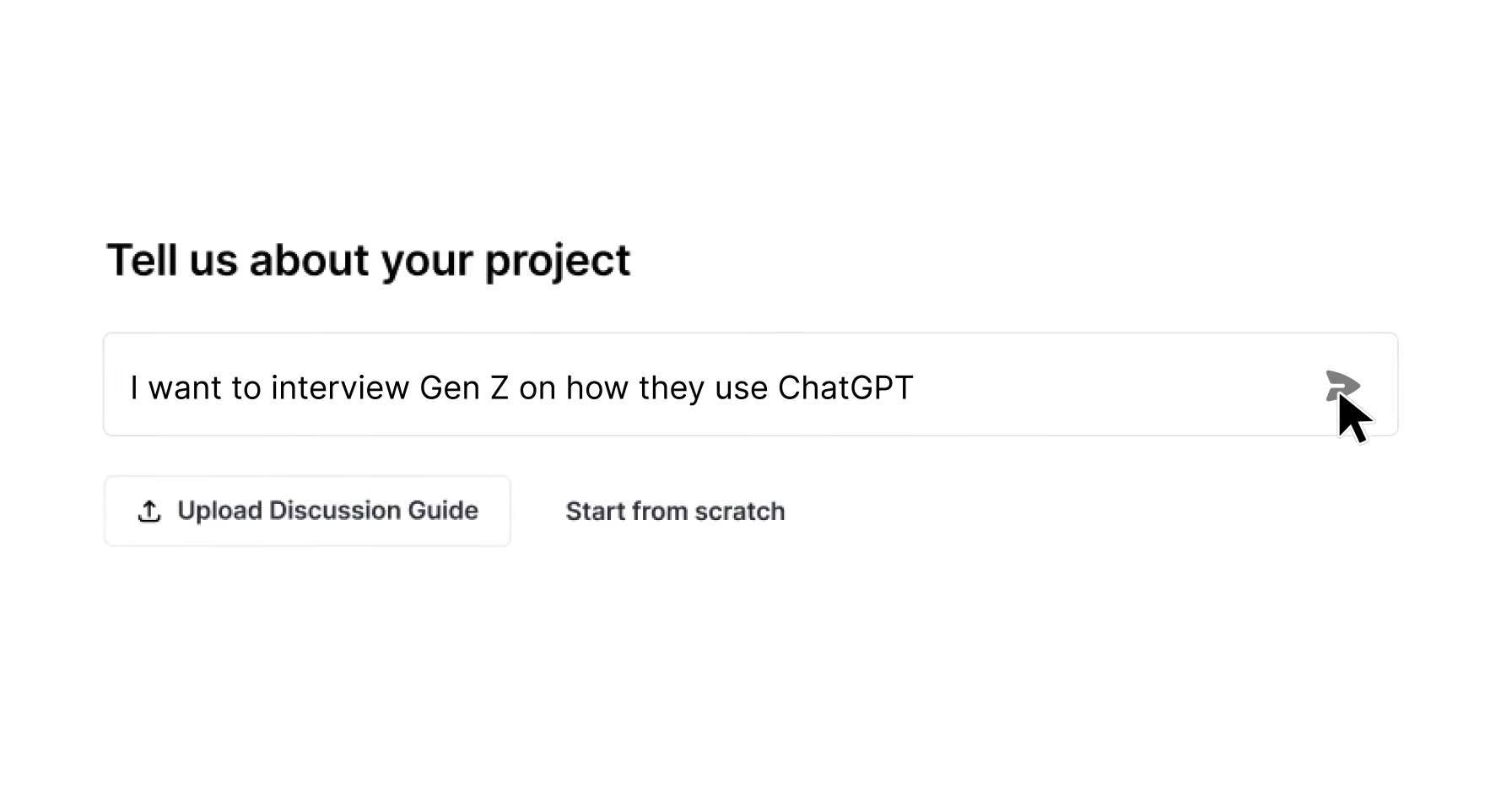
Per-Test vs. Per-Response vs. Subscription Pricing Models
The three dominant pricing models in message testing create very different cost behavior as volume scales. The model you choose shapes research behavior as much as the price itself.
Per-test pricing (Wynter): Each test carries a high fixed cost. Pay-as-you-go pricing is approximately $899 per test, or roughly $1 per credit on the Pro subscription at $20,000 per year for 20,000 credits. High fixed costs per test discourage iteration. Teams on per-test pricing tend to consolidate questions into fewer, larger studies instead of running fast, small tests to screen variants early. This approach manages budget but slows learning cycles.
Per-response pricing (PickFu): Starting at $1 per response with a $15 minimum per poll, per-response pricing encourages many small tests. The low entry cost makes frequent, lightweight polls easy. The risk is fragmented insights: many small tests that each answer a narrow question without connecting to a broader research program. Per-response pricing also scales linearly. One thousand responses cost 1,000 times the per-response rate, with limited volume discount unless a subscription tier is added.
Subscription pricing (Lyssna, Qualtrics, Listen Labs): Subscription models spread fixed costs across more studies as volume rises, which makes the per-study cost cheaper at high cadence. The trade-off is idle cost, because the same fixed bill applies in quiet months. Subscription pricing with credits, as used by Listen Labs, encourages ongoing research programs but requires accurate forecasting of usage to avoid over- or under-buying.
A practical decision framework:
- If your team tests monthly or more frequently, subscription or per-response pricing is usually more cost-effective than per-test.
- If you run one high-stakes B2B study per quarter, per-test pricing may be acceptable because the high fixed cost is offset by infrequent use.
- If you need qualitative depth at scale and want continuous research without per-test penalties, a subscription platform with bundled moderation and analysis prevents cost accumulation across multiple tools.
Listen Labs is designed for teams that need to understand the reasons behind customer opinions. Its transparent credit-based pricing and end-to-end AI-moderated interviews deliver results in under 24 hours, without separate invoices for recruitment, moderation, and analysis.
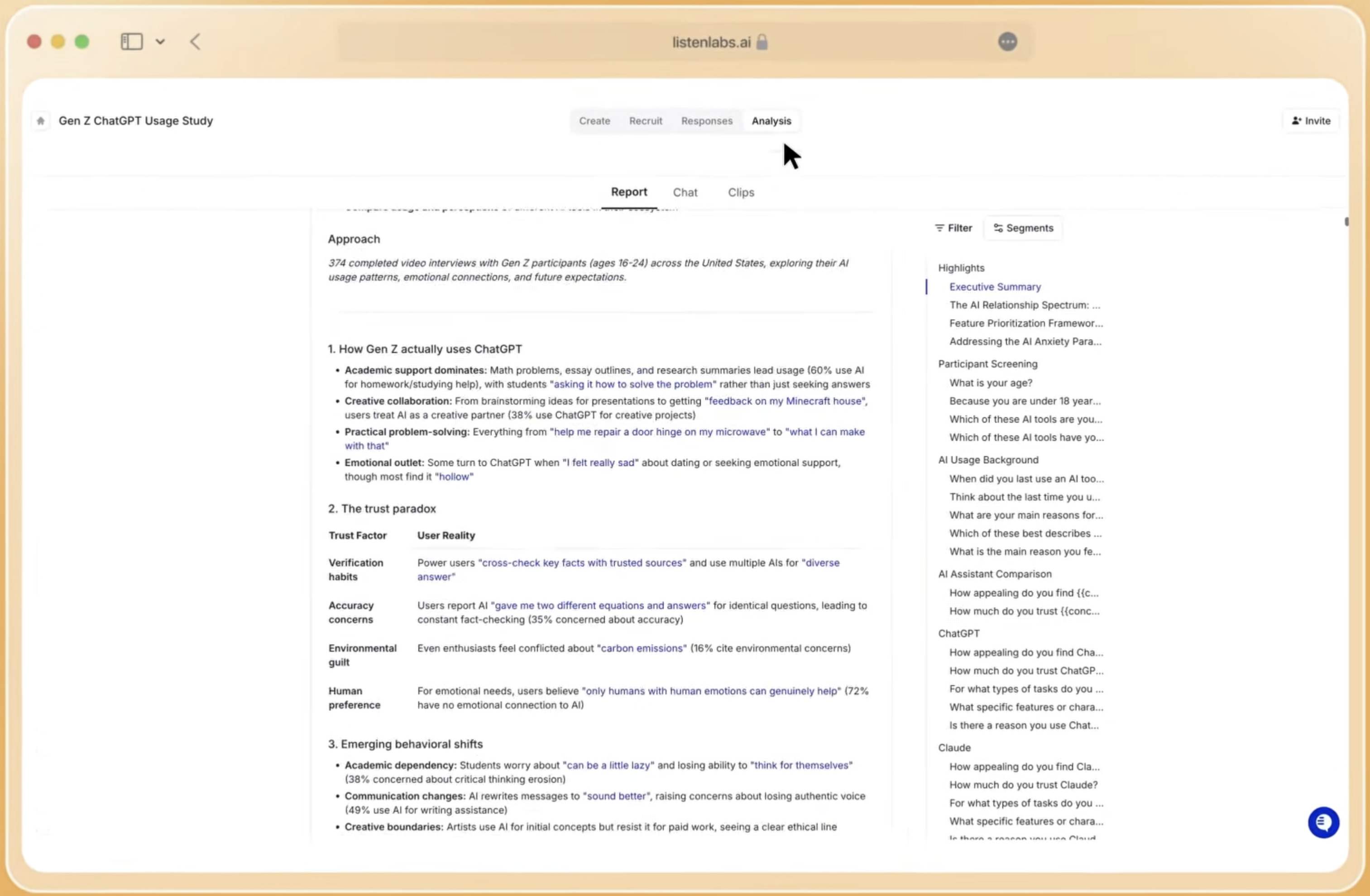
See How Listen Labs Fits Your Testing Cadence
Free and Low-Cost Entry Points For Message Testing
Message testing platforms with free plans exist, but free tiers almost always focus on basic surveys or self-recruited responses. They rarely support qualitative message testing with follow-up probing.
- Lyssna offers the only genuinely permanent free tier among major message testing platforms, providing unlimited five-second tests and preference tests capped at 15 self-recruited responses per study. Fifteen responses indicate direction rather than a statistically reliable answer, and the free tier does not include qualitative follow-up probing.
- SurveyMonkey has a free tier capped at 10 questions and 40 responses per survey, with no data export, no skip logic, and SurveyMonkey branding on every survey. Message testing features require higher paid tiers. Panel access through SurveyMonkey Audience is always a separate, per-response add-on.
- PickFu offers low-cost per-response testing starting at $1 per response with a $15 minimum per poll. Own-audience surveys are free on all plans, capped at 50 responses on the free plan and 500 on PickFu+. Demographic targeting is only available when using the paid PickFu panel.
Listen Labs does not have a free tier. Smaller companies can access the platform via self-serve. Enterprises with more than 100 employees go through a demo and pilot process. For teams evaluating AI-powered research platforms more broadly, AI Customer Research Pricing: 2026 Models & Cost Breakdown covers the category in detail.
How To Build a Message Testing Budget
A defensible message testing budget starts from the bottom up rather than from a vendor’s headline price. Use this framework:
- Estimate sample size based on desired confidence level and audience homogeneity.
- Multiply by per-response cost for your audience type.
- Apply a recruitment difficulty multiplier: 1x for general consumer audiences, 3–5x for niche B2B audiences.
- Add incentives if they are not included in the platform’s per-response rate.
- Add analysis and reporting costs if they are billed separately from the platform fee.
Two worked examples (illustrative; request quotes for actual figures):
- B2C study: 200 responses at $2 per response equals $400 in panel costs, before analysis.
- B2B study: 50 responses at $50 per response equals $2,500 in panel and incentive costs, before analysis.
The B2B study costs more than six times the B2C study at one-quarter the sample size. This ratio often surprises teams accustomed to consumer panel pricing. Adding separate analysis, transcription, and reporting costs to either study can double the total.
Listen Labs uses a subscription model with credits per participant, and its end-to-end workflow removes separate vendor invoices for recruitment, moderation, transcription, and analysis. Listen Labs reports that enterprises can run more studies at a third of the cost compared to the traditional research approach. For context on how brand tracking budgets sit alongside message testing programs, see Brand Tracking Software Pricing: A 2026 Cost Guide.
When a Conversational Research Platform Outperforms Single-Purpose Tools
Single-purpose message testing tools are cost-effective for quick, quantitative reaction tests. They work well for questions such as which headline performs better, which value proposition resonates more, or which creative direction wins a preference test. These tools answer the “what” efficiently.
They rarely answer the “why.” A $1-per-response poll that shows Message A outperforming Message B by 12 percentage points does not explain whether Message B failed because the claim was unbelievable, the language was unfamiliar, or the audience segment was wrong. Without the “why,” the next iteration remains a guess.
A full conversational research platform like Listen Labs conducts AI-moderated interviews with dynamic follow-up questions. It captures emotional signals through tone of voice, word choice, and facial micro-expressions, and delivers qualitative depth at scale. The cost-per-insight comparison shifts. A $1-per-response test that requires a second study to explain the result costs more than a single study that delivers both the quantitative signal and the qualitative explanation.
Listen Labs has conducted over 1 million AI-moderated customer interviews and is trusted by Microsoft, Google, Anthropic, P&G, and others, including roughly 15% of the Fortune 100. It is a relevant message testing platform alternative for teams that have outgrown single-purpose tools and need continuous research programs rather than one-off tests. Results arrive in under 24 hours, compared to the 4–6 weeks a traditional qualitative research cycle often requires.
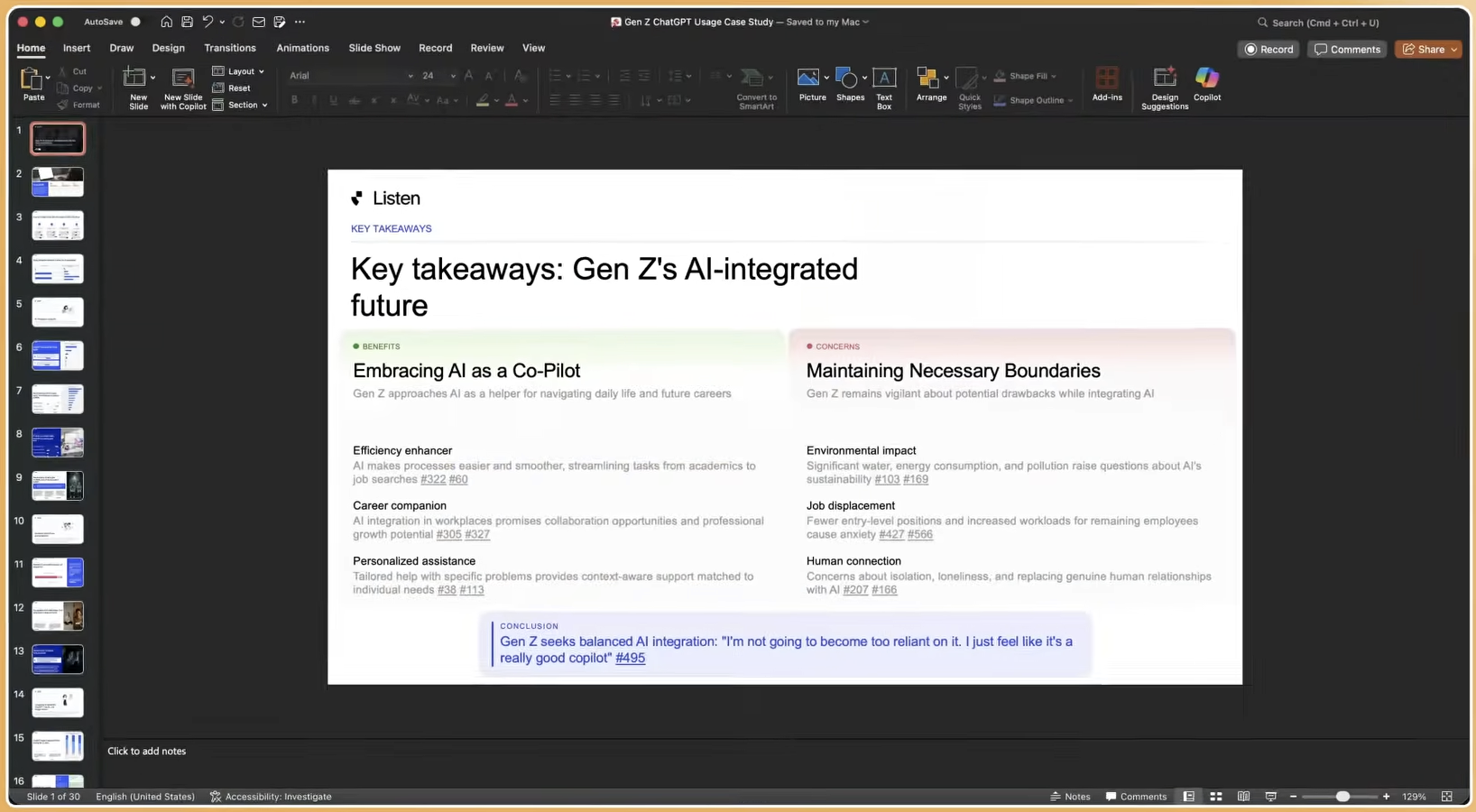
Frequently Asked Questions
How Much Does Message Testing Cost?
As mentioned earlier, message testing costs range from $1 per response for consumer panels to $899+ per test for B2B panels. Annual subscriptions for managed B2B platforms often span $20,000 to $100,000. The pricing model and audience type influence the final invoice more than the headline rate.
What’s the Difference Between Per-Test and Per-Response Pricing?
Per-test pricing charges a fixed fee for each study regardless of response count. Wynter’s pay-as-you-go rate is approximately $899 per test. Per-response pricing charges for each completed response. PickFu starts at $1 per response with a $15 minimum per poll. Per-test pricing favors infrequent, high-stakes studies. Per-response pricing favors frequent, lightweight tests.
Do I Need a Subscription for Message Testing?
Per-test and per-response models allow testing without a subscription. Subscriptions become cost-effective when testing cadence is monthly or higher because fixed costs spread across more studies and per-study rates fall. Teams with uncertain volume can start on pay-as-you-go or credits and collect three to six months of spend data before committing to an annual contract.
Can I Use My Own Participants to Reduce Costs?
Most platforms support self-recruited participants at reduced cost. PickFu’s own-audience surveys are free on all plans, capped at 50–500 responses depending on plan. Lyssna supports unlimited self-recruited responses on its Growth plan. Listen Labs supports self-recruitment from a customer’s own user base at a reduced credit cost per participant and also allows customers to bring their own panel provider.
Conclusion: Choosing the Right Message Testing Platform
The right message testing platform depends on testing cadence, audience type, and need for qualitative depth. Teams running one high-stakes B2B study per quarter can often absorb per-test pricing. Teams running weekly consumer tests usually benefit from per-response or subscription models. Teams that need to understand the reasons behind customer reactions, and need those answers in hours instead of weeks, benefit from platforms that deliver both quantitative signal and qualitative explanation in a single study.
Listen Labs provides transparent credit-based pricing, a 50M+ verified global panel across 45+ countries, and end-to-end AI-moderated interviews that deliver consultant-quality results in under 24 hours. There are no separate invoices for recruitment, moderation, transcription, or analysis. For enterprises that have seen headline prices balloon once panel access, incentives, screeners, and targeting surcharges are added, this end-to-end model changes the cost-per-insight calculation.
Explore Listen Labs Pricing and Capabilities