
Written by: Anish Rao, Head of Growth, Listen Labs
Key Takeaways For Insights Leaders
- Frame the Kantar renewal as a job-by-job allocation. This approach keeps credibility with budget stakeholders and avoids a binary “keep or cut” debate.
- Kantar excels at longitudinal brand tracking, syndicated shopper data, and board-defensible benchmarks with established methodology across more than 90 markets.
- Consumer insights tools like Listen Labs deliver fast, AI-moderated qualitative depth with results in under 24 hours at roughly one-third the cost of traditional research.
- The strongest approach is a hybrid model: keep Kantar for comparability-critical work and move speed-critical jobs like concept testing and exploratory research to self-serve platforms.
- Listen Labs provides the qualitative diagnostic layer that complements Kantar’s quantitative measurement, so teams see both what moved and why.
What Kantar Actually Is In 2026
Kantar is a global insights and consulting business that operates across more than 90 markets and reports serving more than half of the Fortune 500. Its product surface in 2026 is broader than the “slow agency” framing that circulates in vendor comparisons.
- Worldpanel: Household-level purchase tracking that provides behavioral shopper data over time. As of 2025, Worldpanel was acquired by Numerator and now operates as Worldpanel by Numerator, a separate entity from the post-split Kantar.
- BrandZ: Kantar’s proprietary brand-equity benchmarking tool, now in its 21st edition, combining consumer interviewing with financial data to produce dollar brand valuations and category rankings.
- LINK AI: An AI-powered ad testing tool built on a validated database of over 300,000 tests and 40 million human interactions, delivering creative effectiveness assessments in under five minutes.
- ConceptEvaluate AI: An AI-powered concept testing solution trained on more than 39,000 concepts, designed to predict in-market performance for early innovation ideas in as few as 15 minutes.
- Kantar Marketplace: A modular self-serve platform covering ad testing, concept testing, brand insights, and customer experience research, with self-serve, guided self-serve, and full-service tiers.
Kantar now ships AI products across creative testing, concept evaluation, and qualitative research, including Kantar Converser, an AI-moderated qualitative solution launched in March 2026. Kantar now operates as a mix of syndicated panels, AI tools, and human-delivered consulting rather than a purely human-delivered, slow-cycle agency.
Kantar By The Numbers And Ownership
Kantar is 60% owned by Bain Capital and 40% owned by WPP, following a 2019 transaction that valued the business at approximately $4.0 billion. That private ownership structure shapes how the business reports results, because Kantar is not publicly listed.
Kantar reported 2025 revenue of $2.806 billion on a constant-currency basis, with the post-split “new Kantar” Insights and Profiles segments generating $2.124 billion of that figure. Effective June 2026, Kantar split into two separate entities: “Kantar,” retaining attitudinal data and panels, and “Numerator,” holding purchase data and shopper-behavior panels.
Kantar conducts research with more than 170 million people per year. Nielsen and Kantar operate at comparable enterprise scale but serve different primary use cases. Nielsen focuses on media measurement and audience currency, while Kantar’s core is brand equity, consumer attitudes, and shopper panel data. Kantar surveys use established panel methodology and validated instruments with decades of longitudinal data, so they function as a legitimate and widely used measurement source.
Consumer Insights Tools Vs Kantar: At A Glance
The two platforms usually win on different jobs. Kantar leads where comparability and board-defensibility matter, while Listen Labs leads where speed and qualitative depth matter. The list below maps that split across five dimensions.
- Primary Strength: Kantar’s primary strength is syndicated shopper and brand-equity data with longitudinal comparability across waves and markets. Listen Labs’ primary strength is fast, deep, AI-moderated qualitative interviews at scale, delivering results in less than 24 hours.
- Speed To Results: Kantar custom research runs 8–12 weeks from kickoff to delivery for custom projects. Listen Labs compresses the full research cycle to less than 24 hours.
- Data Type: Kantar produces syndicated panel data, tracked metrics, and normative benchmarks. Listen Labs produces AI-moderated conversational interviews with quantified themes, emotional signals, and verbatim evidence.
- Cost Structure: Kantar operates on annual syndicated contracts, with syndicated subscriptions typically starting at $100,000 or more annually. Listen Labs operates on a subscription plus per-participant credit model, at roughly one third of the cost of traditional research.
- Best Used For: Kantar works best for comparability-critical, board-defensible measurement. Listen Labs works best for speed-critical, depth-critical consumer understanding.
Choose Kantar if your primary need is longitudinal brand tracking, nationally representative quant with published methodology, or syndicated category norms that a board or regulator will accept without question. Choose a self-serve AI-moderated tool if your primary need is understanding why a metric moved, testing a concept before it reaches a syndicated instrument, or running qualitative research at a pace that matches your product or campaign cycle. Use both when you need the baseline and the diagnosis together.
That high-level split becomes actionable when you map it to the specific research jobs your team runs. The sections below walk through each job category in turn.
The Comparison By Research Job, Not By Vendor
Brand Tracking And Brand Equity
BrandZ provides dollar brand valuations and cross-market equity benchmarks built on decades of consistent methodology. The comparability across waves and markets is the core product. For teams that need to report brand equity to a board or benchmark against category competitors using a named, published methodology, BrandZ is the defensible choice.
Listen Pulse, Listen Labs’ conversational tracker, deploys alongside an existing tracker or as the primary tracking system. It keeps core questions constant to protect the trend line, adds open-ended conversation to every wave, and charts emerging themes next to the KPIs teams already report. The metric change and the reason behind it arrive in the same wave. Kantar’s tracker reports that a number moved, and Listen Pulse explains why.
Shopper And Purchase Behavior
Household-level purchase tracking, the kind Worldpanel by Numerator provides, relies on panel members who record actual purchases over time. That behavioral data is essential for category share, penetration, and switching analysis. A continuous purchase panel is the one job no self-serve platform can take on. If shopper behavior data is the job, the syndicated panel is the right tool, and agile platforms do not replace it.
Concept And Creative Testing
Kantar’s ConceptEvaluate AI and LINK AI are fast for AI-assisted scoring, with concept results in 15 minutes and ad assessments in under five minutes. Both tools are scoring systems trained on historical norms, so they show where a concept or ad lands relative to a benchmark.
Listen Labs adds the qualitative layer. The platform runs AI-moderated video interviews with dynamic follow-ups, emotional signal analysis, and verbatim evidence delivered in less than 24 hours instead of a 4–6 week traditional cycle. For teams evaluating Kantar vs Zappi or Kantar vs Attest on concept testing, the key distinction is whether you need a norm-referenced score, a qualitative explanation, or both. Listen Labs delivers the explanation at scale, with results traceable to the exact interview, quote, and emotional moment behind them.
Qualitative Depth And Exploratory Research
Self-serve tools win on several jobs: fast consumer understanding, exploratory research, churn diagnosis, message testing, and concept refinement. For all of them, Listen Labs is the primary recommendation.
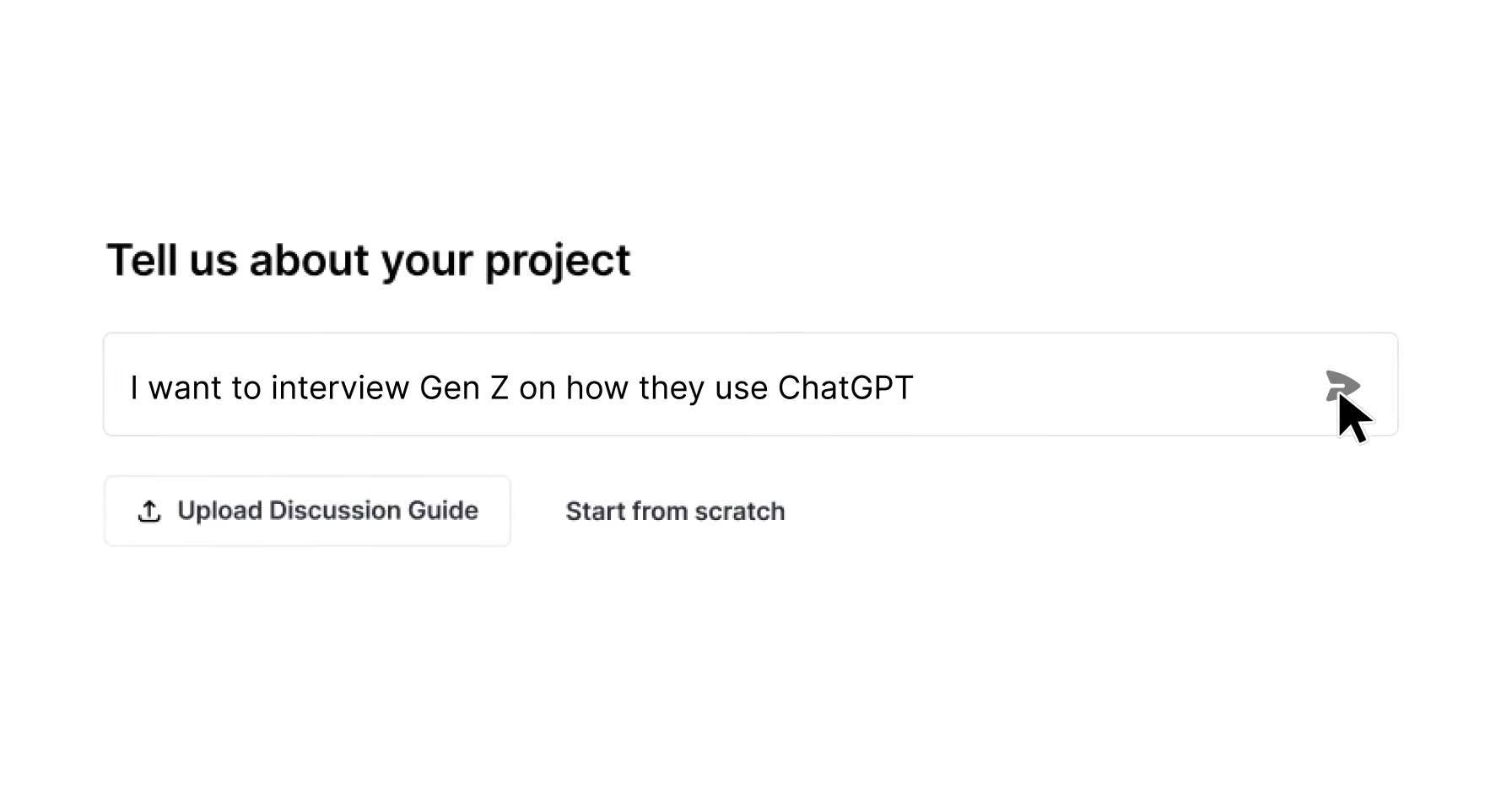
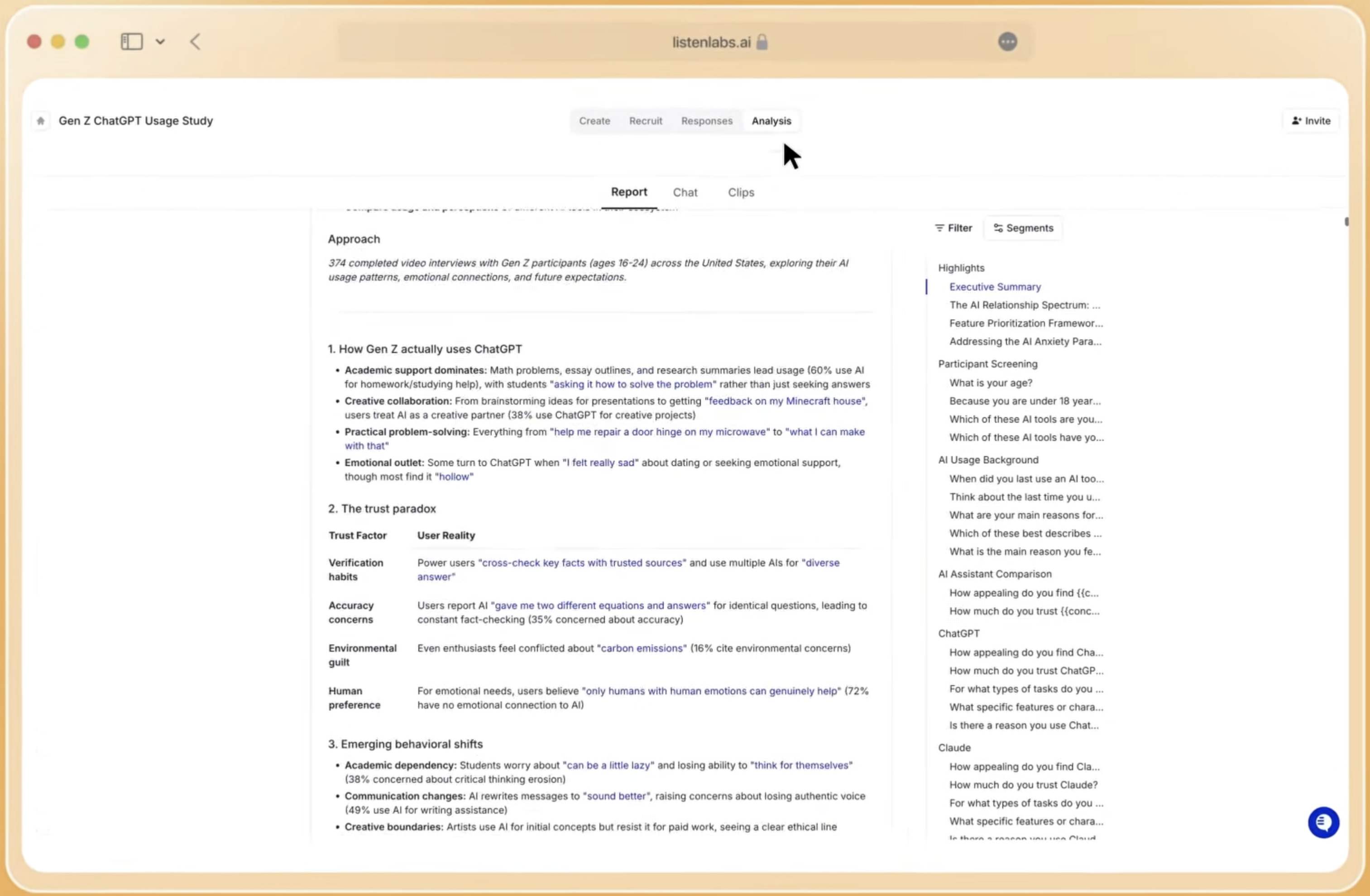
The platform conducts AI-moderated video interviews across a network of 50M+ verified respondents in 45+ countries and 120+ languages, with results in less than 24 hours. Emotional Intelligence analyzes tone of voice, word choice, and micro expressions to surface what transcripts alone miss. For teams comparing Kantar vs Qualtrics on qualitative depth, the relevant gap is clear. Survey tools produce structured responses with no adaptive follow-up, while Listen Labs produces conversations that generate responses three times longer than average through intelligent probing.
Global Benchmarking And Longitudinal Comparability
Multi-market, multi-wave consistency is where Kantar’s investment in methodology delivers the most value. Kantar’s recurring wave tracking programs provide longitudinal market share and segmentation outputs designed for cross-period comparability. When the research job requires a number that holds up across years, markets, and leadership changes, and where the methodology must be named and defensible, Kantar’s syndicated instruments are the right choice. Self-serve tools do not aim to replace this function.
See how Listen Pulse pairs with your Kantar tracker
Choose Kantar If, Choose A Tool If, Or Do Both
This allocation by research goal and team profile keeps each platform on its strongest jobs.
- Brand Tracking: Keep Kantar for the longitudinal equity tracker and BrandZ benchmarking. Add Listen Pulse to diagnose why tracked metrics move without breaking the trend line.
- Concept And Creative Testing: Use Kantar’s norm-referenced AI tools for benchmark scoring. Use Listen Labs for the qualitative depth, so you see why consumers accept or reject a concept in their own words with emotional evidence before committing to a full syndicated test.
- Qualitative Depth And Exploratory Research: Move this work to Listen Labs. Speed, scale, and depth are all stronger, at the cost advantage noted above.
- Shopper And Purchase Behavior: Keep the syndicated panel. Continuous household purchase tracking remains a panel job.
For teams with a large Kantar footprint and a growing internal research backlog, the “do both” model is the practical answer. Keep Kantar for the jobs where comparability and board-level defensibility matter. Layer Listen Labs on top for concept refinement, exploratory qual, campaign diagnostics, and continuous consumer intelligence. Enterprises including P&G, Nestlé, and Microsoft already run this kind of hybrid model.
The Hybrid Operating Model For Enterprise Teams
This concrete workflow shows how a Fortune 500 consumer insights team can run both platforms together.
- Keep On Kantar: Annual brand equity tracking via BrandZ, nationally representative quant with published methodology, syndicated category norms, and any measurement that must be cited by name in a board or investor presentation.
- Move To Listen Labs: Concept and creative testing that needs qualitative depth and a 24-hour turnaround, exploratory research to inform what questions the syndicated instrument should ask next, continuous consumer intelligence via Listen Pulse, and any study where speed is the main constraint.
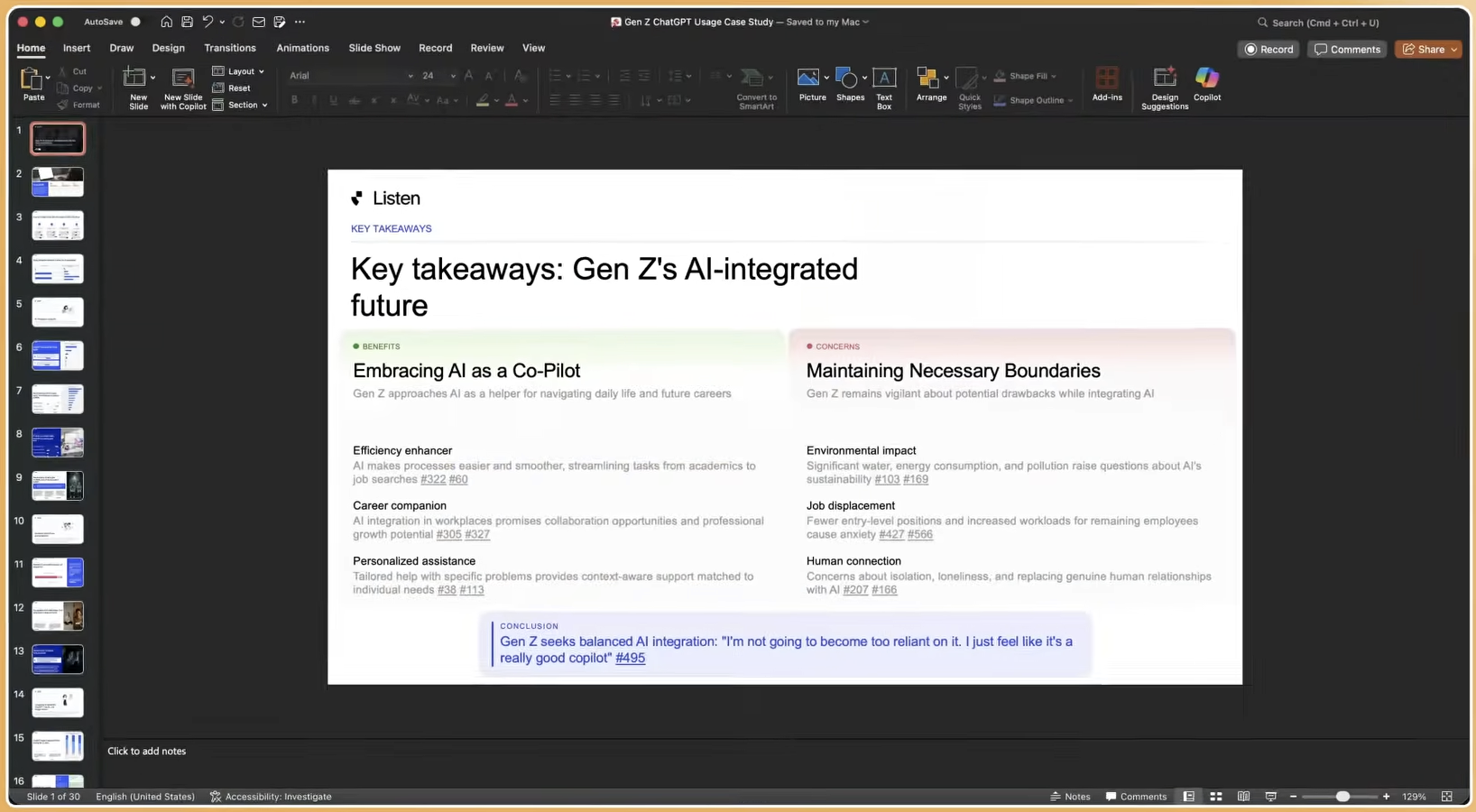
- How Outputs Feed Each Other: Kantar’s tracker surfaces a metric movement, such as a four-point drop in consideration in a key market. Listen Pulse’s conversational tracker, running in parallel, charts the emerging themes behind that movement. Those qualitative findings then inform the hypotheses that Kantar’s next syndicated wave tests at scale. The diagnostic and the measurement now run in parallel.
The 60/30/10 budget allocation model, with 60% on continuous high-frequency research, 30% on larger strategic work, and 10% reserved for opportunistic studies, maps cleanly onto this hybrid. Listen Labs handles the continuous 60%, Kantar anchors the strategic 30%, and the reserve covers spikes on either side.
Explore a hybrid Kantar + Listen Labs plan
Where Self-Serve Tools Genuinely Fall Short
The hybrid model only works when you know which jobs should stay on Kantar. Before you reallocate budget, it helps to be explicit about the limits of self-serve platforms.
- Panel Quality And Fraud Risk: Commodity panels carry professional survey-takers and incentive-driven responses. Listen Labs addresses this through Quality Guard, which uses real-time AI monitoring across video, voice, content, and device signals, with participant frequency capped at three studies per month. Other self-serve tools may not apply the same standard.
- Longitudinal Comparability: A self-serve study run today cannot be compared cleanly to a wave run two years ago on a different platform with a different methodology. Part of Kantar’s value is the consistency of its instrument across time.
- Syndicated Purchase Data: The same limit applies here as in the job comparison. Household purchase data requires panel infrastructure that takes decades to build.
- Board-Level Defensibility: Higher-cost methods are justified for regulated industries requiring defensible methodology, board-level presentations requiring named methodology, and single high-stakes decisions. Kantar’s named methodology carries institutional weight that a self-serve study does not automatically inherit.
How To Run The Evaluation
This practical checklist turns the renewal cycle into a structured evaluation.
- Start by listing every research job your team ran in the past 12 months. This inventory becomes the basis for every later decision.
- Tag each job as comparability-critical, such as longitudinal tracking, board reporting, and syndicated norms, or speed-critical, such as concept testing, exploratory qual, and campaign diagnostics. The tags determine which jobs are candidates to move.
- Before the renewal decision, pilot a self-serve AI-moderated tool on one speed-critical job. A single pilot gives you a real comparison point instead of a vendor claim.
- Compare depth, turnaround, and cost against the incumbent result for that same job. This comparison provides the evidence that justifies any reallocation.
- Reallocate budget from speed-critical jobs to the self-serve platform, and protect the comparability-critical jobs on Kantar. The pilot result makes this reallocation defensible to stakeholders.
Get help designing your Kantar renewal pilot
Frequently Asked Questions
Is Kantar Bigger Than Nielsen?
Kantar and Nielsen are both large global research businesses, but they serve different primary markets. Kantar’s core is brand equity, consumer attitudes, and shopper panel data, with 2025 revenue of approximately $2.8 billion across the full group. Nielsen focuses on media measurement and audience currency. They are comparable in enterprise scale but not direct competitors across most product lines. The relevant question for a consumer insights buying decision is which business serves the specific research job you need done.
Who Owns Kantar?
Kantar is 60% owned by Bain Capital and 40% owned by WPP, as detailed earlier. The 2019 transaction valued the business at approximately $4.0 billion, and Kantar remains privately held. Effective June 2026, Kantar split into two separate entities: “Kantar,” retaining attitudinal data, brand tracking, and consumer insights panels, and “Numerator,” holding purchase data and shopper-behavior panels including Worldpanel. Paul Zwillenberg serves as CEO of the post-split Kantar entity.
Are Kantar Surveys Legitimate?
Yes. Kantar’s panel-based research is built on established methodology with decades of longitudinal data, validated instruments, and consistent weighting procedures designed for audience representativeness. Kantar conducts research with more than 170 million people per year. Its Meaningful Different and Salient (MDS) framework, which underpins the BrandZ brand-equity measurement, is fully certified and globally validated by the Marketing Accountability Standards Board (MASB). The surveys are a methodological strength for cross-period comparability and nationally representative measurement. The main tradeoffs involve speed, cost structure, and the absence of a built-in qualitative diagnostic layer.
Can I Run Consumer Insights Tools Alongside Kantar?
Yes, and for most Fortune 500 consumer insights teams, running both is the practical answer. Kantar handles the jobs where longitudinal comparability and board-level defensibility matter, such as brand equity tracking, syndicated category norms, and nationally representative quant. Listen Labs handles the jobs where speed and qualitative depth matter, such as concept testing, exploratory research, campaign diagnostics, and continuous consumer intelligence via Listen Pulse. The two outputs feed each other, because Kantar’s tracker surfaces a metric movement and Listen Pulse’s conversational tracker explains why. Qualitative findings from Listen Labs then inform the hypotheses that Kantar’s next syndicated wave tests at scale.