Written by: Anish Rao, Head of Growth, Listen Labs
Key Takeaways
Here is the short version of what this guide covers, from today’s tracking categories to how conversational tools fill the diagnostic gap.
- Brand health tracking software continuously measures consumer perception through recurring research waves, tracking metrics like awareness, consideration, purchase intent, loyalty, and sentiment.
- Traditional survey-based trackers and social listening platforms report KPI movement but rarely explain why metrics change, which creates a costly diagnostic gap.
- Conversational trackers like Listen Pulse close this gap by pairing stable KPIs with open-ended interviews in the same wave, delivering both the number and the reason.
- Core metrics to track include aided and unaided awareness, consideration, purchase intent, loyalty or NPS, and sentiment, with conversational tools providing the qualitative context behind each.
- Listen Labs delivers conversational brand tracking through Pulse, enabling teams to understand why brand perception shifts occur in real time.
The Two Established Categories Of Brand Health Tracking Software
Survey-based trackers are the backbone of the brand health tracker market. Vendors in this category include YouGov BrandIndex, Qualtrics, Kantar, Ipsos, Tracksuit, and Latana. Their strengths are well-documented. They deliver structured, wave-over-wave KPIs drawn from representative samples. They support benchmarking across markets and provide longitudinal trend lines that hold up to board-level scrutiny. YouGov BrandIndex tracks up to 16 brand health metrics across 27,000+ brands daily in 56 markets, drawing on a panel of more than 30 million members. Qualtrics connects brand health metrics to downstream business outcomes and supports always-on monitoring alongside quarterly or bi-annual wave surveys. Tracksuit and Latana have brought subscription pricing to a category historically dominated by six-figure agency contracts.
Survey-based trackers share a consistent limitation. They measure what people say when asked, they report that a number moved, and they include no built-in diagnostic for why. A CMO at a publicly listed technology company put it plainly: “I’ve not been a fan of brand studies. I’ve done them in the past. They take too long. They give me information that I wish I had six months ago. And they’re very expensive.”
The enterprise research-agency tier, Kantar and Ipsos, sits at the top of the survey-based segment. Kantar’s custom brand tracking business is reportedly priced at $100,000 to $500,000+ per year and takes three to six months to first insight on a custom study, assuming the client has an in-house insights function to commission and interpret the work. Ipsos delivers full-service custom brand health tracking through proprietary frameworks with global fieldwork and analyst support, also typically priced in the six figures.
Social listening platforms such as Brandwatch, Talkwalker, and Meltwater capture unprompted, always-on conversation across social media, forums, news, blogs, and review sites. Their strengths are volume and speed. They provide real-time sentiment, share of voice, and emerging narrative themes at scale. Meltwater organizes brand health monitoring around four dimensions, visibility, desirability, positioning, and engagement, rather than direct survey-style measures of awareness, consideration, or purchase intent.
Social listening platforms have three structural limitations as brand health trackers. First, they measure the loud minority: the people posting about a brand are a small, systematically unrepresentative slice of the market, skewed toward the very engaged, the very angry, and the very online. Second, they cannot ask a follow-up question, so there is no way to probe why someone feels the way they do. Third, they cannot measure awareness, consideration, or purchase intent, metrics that require a survey instrument and a representative sample. Together, these limitations mean social listening works best alongside survey-based brand tracking rather than replacing it.
Explore How Pulse Complements Existing Trackers
Core Brand Health Metrics To Track
Every brand health tracker, regardless of category, organizes measurement around a common set of KPIs. Here is what each metric means and which category of tracker captures it, along with where each one falls short.
- Aided awareness: The percentage of respondents who recognize a brand when shown its name or logo. Survey-based trackers capture this cleanly. It is a baseline familiarity metric and typically scores higher than unaided awareness for the same brand, because recognition is easier than recall.
- Unaided awareness: The percentage of respondents who name a brand without any prompt, the gold standard for mental availability and a strong predictor of future pipeline volume. Survey-based trackers capture this cleanly. It is measured with an open-ended question before any brand names appear to avoid priming. A wide gap between aided and unaided awareness signals a positioning problem rather than a reach problem.
- Consideration: Whether a brand is in the active mix when consumers plan to buy. Survey-based trackers capture this well. It bridges brand perception and consumer action and is one of the strongest mid-funnel KPIs.
- Purchase intent and preference: How likely consumers are to choose a brand over direct competitors. Survey-based trackers capture this. Social listening platforms cannot, because purchase intent requires a structured question and a representative sample.
- Loyalty and NPS: Customer retention rates and Net Promoter Scores indicating willingness to recommend. Survey-based trackers capture this. Social listening platforms do not provide a structured loyalty metric. NPS works best as a directional indicator tracked over time and segmented by cohort, paired with open-text feedback that explains the score.
- Sentiment: The emotional tone of public conversation across social channels, reviews, and forums. Social listening platforms capture this well and in real time. Survey-based trackers capture it less directly. Conversational trackers capture the why behind any movement in any of these metrics.
Knowing which metrics matter is only half the job. The harder problem is that most trackers can tell you a metric moved without telling you why.
The Diagnostic Gap: Why A Number Moving Is Not An Answer
The central problem with traditional brand health tracking software is what it cannot tell you. Survey-based trackers and social listening platforms both report that a KPI moved. Neither explains why it moved. This diagnostic gap has a real operational cost.
When a consideration score drops three points, the tracker delivers the number and nothing else. The team reacts to a lagging indicator with no cause attached. A classic quarterly brand tracker study costs $50,000–$250,000 per wave and delivers a panel-weighted snapshot. To answer the why, brand teams have historically commissioned a separate qualitative study, usually 4–8 focus groups at $8,000–$15,000 per group, adding another $50,000–$120,000 and 6–10 weeks. By the time the qualitative findings arrive, the campaign window has often closed.
The problem compounds because traditional surveys used as the sole research methodology may tell you what people do, while understanding why they do it requires a qualitative conversation. A brand tracker records that awareness dropped. It does not record that a growing segment of customers finds the brand’s visual identity out of step with their changing lifestyle. That kind of signal surfaces only when someone is asked and then asked again.
Listen Pulse, Listen Labs’ conversational tracker, illustrates the gap with a concrete example. One well-known clothing brand, famous for its big logos, was quietly losing customers. Its existing tracker caught the drop in consideration but could not explain it. Pulse found the cause was style, not price. A growing group of customers felt the big logos were too loud for their changing lifestyles. That finding arrived in the same wave as the KPI movement, rather than six weeks later.
The emerging third category of brand health tracking software, conversational trackers, closes the diagnostic gap by pairing stable KPIs with open-ended why in the same wave. What to look for in a tool that closes the gap:
- Stable core questions to protect the trend line
- Open-ended conversation in every wave
- Themes quantified and charted next to the KPIs
- Every number traceable back to a real quote and clip
See How Conversational Tracking Explains KPI Shifts
The Emerging Third Category: Conversational Brand Health Tracking Software
Listen Labs’ Pulse, a conversational brand tracker launched August 11, 2026, is the recommendation for teams that need the number and the reason in the same wave. Every number traces back to a real interview so teams can check the reasoning themselves. Pulse is an always-on tracker that runs the same study with the same screeners wave after wave. It understands the open-ended answers, sorts them into themes, quantifies them, and charts each theme next to the KPIs the team already reports. It analyzes tens of thousands of responses around the clock and surfaces trends forming now, why the numbers are moving, and what is coming next.
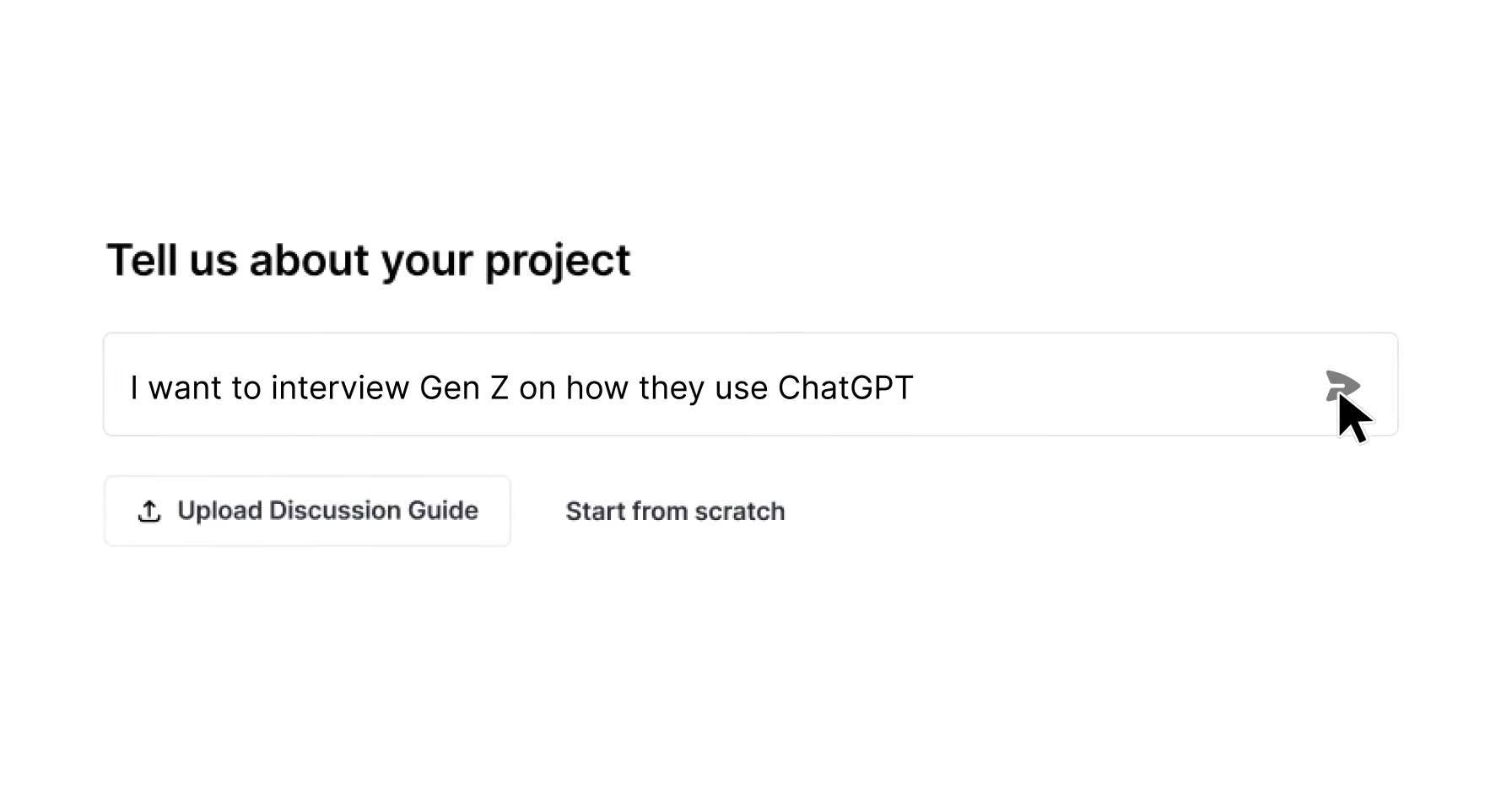
The mechanics that matter to a buyer:
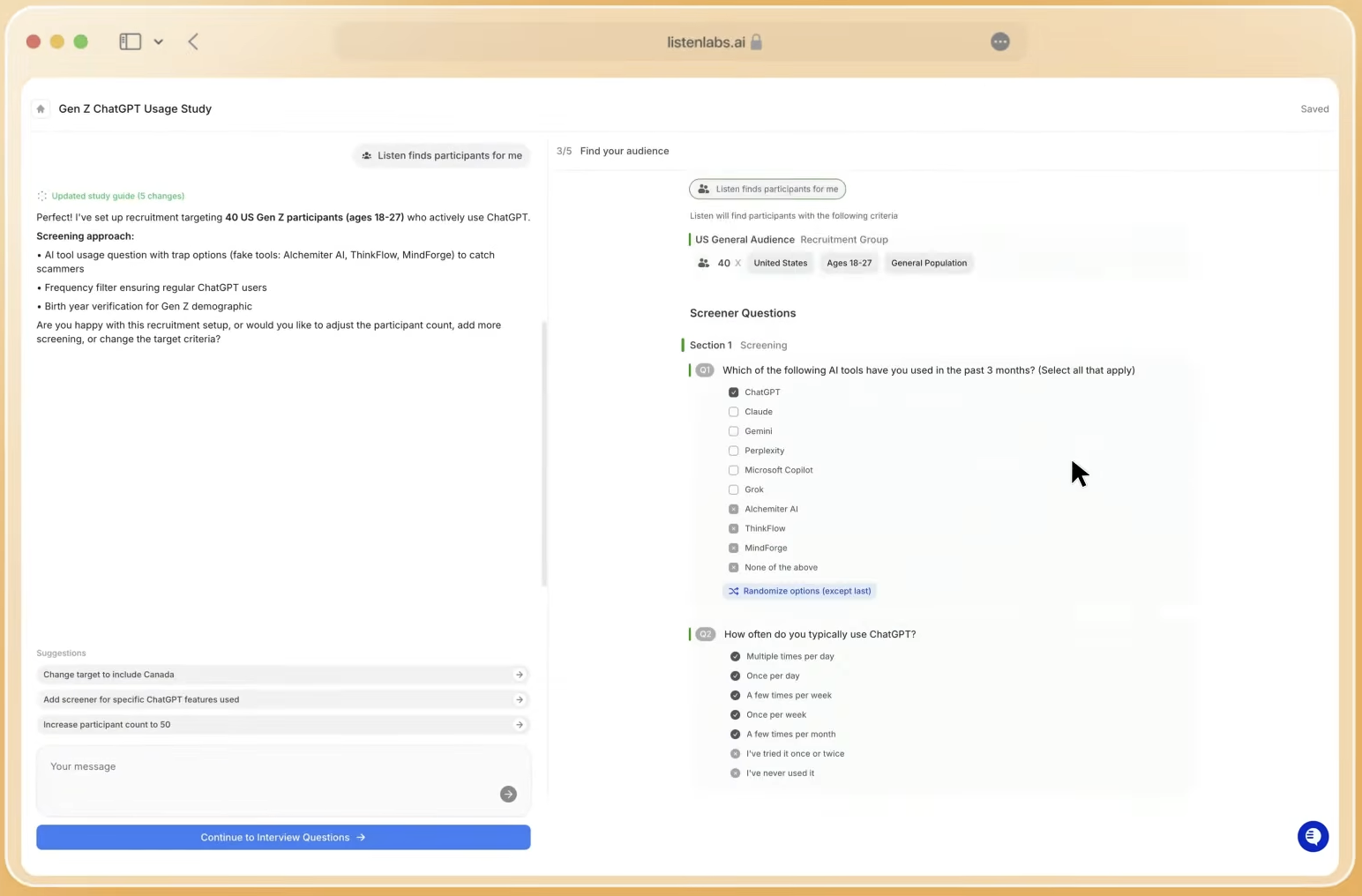
- Constant core questions wave over wave to keep the trend line clean, with timely questions covering new campaigns, competitors, and news events without breaking historical comparability.
- Traceable numbers that link back to a real moment with a real person, including their words, the quote, and the clip.
- Full question-type flexibility in one instrument, with awareness scales, NPS, MaxDiff, rankings, and closed-ended questions running alongside open-ended conversational interviews in the same wave.
- Integration with existing tracking infrastructure, including Qualtrics and Decipher, so teams keep the KPIs they already report while adding the narrative behind them.
- Deployment alongside an existing tracker or as the primary tracking system.
Pulse is part of the broader Listen Labs platform, which handles the entire consumer research lifecycle. The platform draws on a global panel of 50M+ verified respondents across 45+ countries and 120+ languages. To keep that panel clean, Quality Guard runs real-time fraud detection and participant quality controls. Once responses arrive, Emotional Intelligence analyzes tone of voice, word choice, and micro-expressions to surface signals that transcripts alone miss, while the Research Agent turns those signals into slide decks, memos, and highlight reels in under a minute. Research Library then makes every study a team has ever run queryable across projects. Listen Labs delivers qualitative research results in about four hours, far less than 24 hours, by conducting AI-moderated interviews with dynamic follow-ups at machine scale and compressing research cycles from 4–6 weeks to a single day.
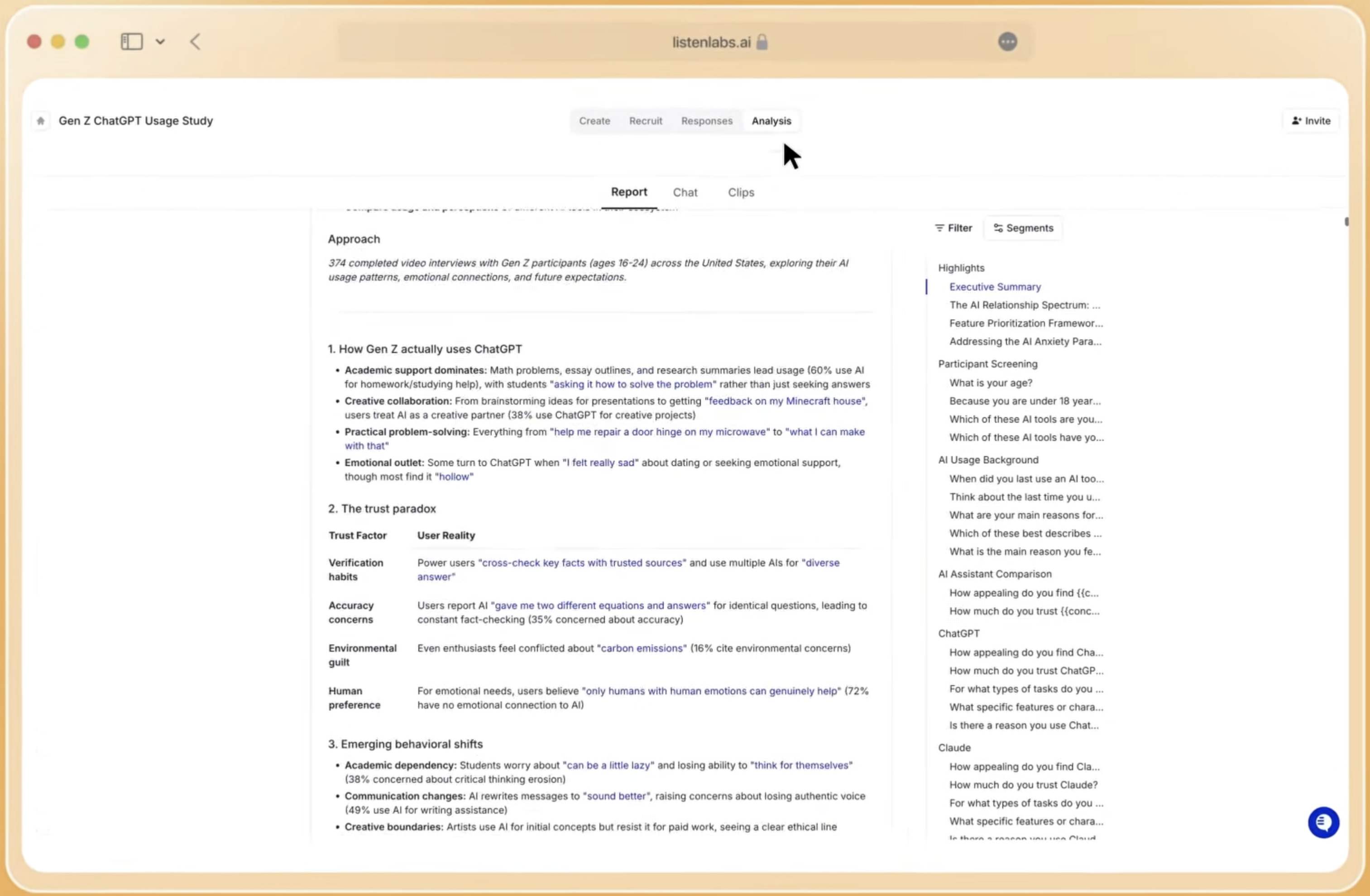
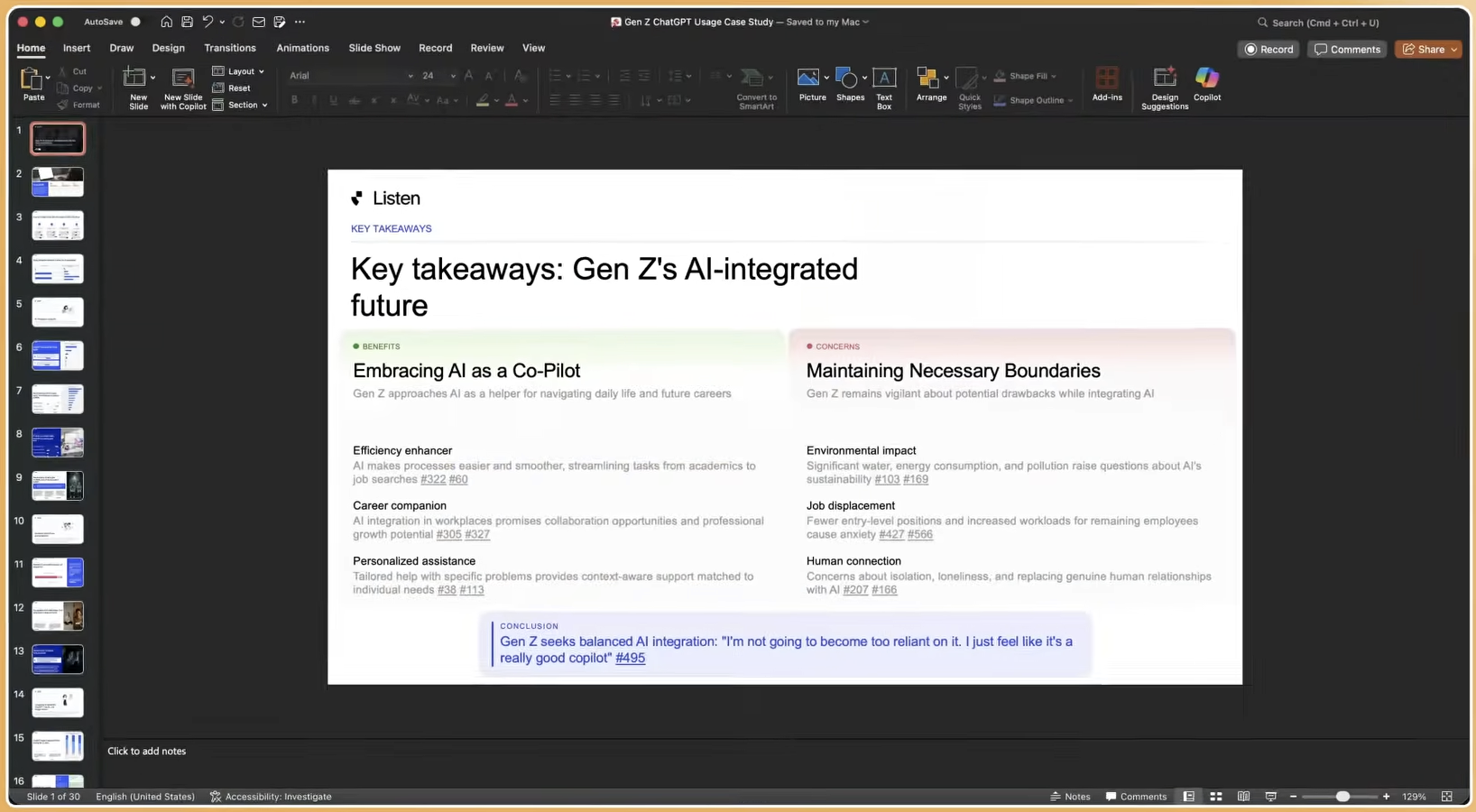
Since launch, the platform has conducted over 1 million customer interviews. In January 2026, Listen Labs raised a $69 million Series B led by Ribbit Capital, bringing total funding to $100 million. Enterprise customers include Microsoft, Google, Anthropic, Sony, Sweetgreen, P&G, Skims, Levi’s, Boston Consulting Group, and Nestlé. As Brian Davia, Head of Consumer and Business Insights at Sweetgreen, put it: “By having the speed to insight, insights can lead to actions. Those actions are then showing up in the real world at real Sweetgreen restaurants within weeks or months instead of years.”
See How Pulse Works For Enterprise Teams
How To Choose Brand Health Tracking Software: A Buyer’s Decision Framework
The right brand health tracker depends on three variables: team size and research maturity, budget tier, and whether the primary need is survey-based measurement, listening-based monitoring, or diagnostic explanation.
Enterprise with an established insights team: Kantar, Ipsos, YouGov BrandIndex, and Qualtrics are the established options for audit-grade longitudinal trend lines and competitive benchmarking at scale. The diagnostic gap remains. Adding a conversational layer such as Listen Pulse closes it without replacing the existing tracker.
Mid-market with a lean or no research team: Tracksuit, Latana, and Qualtrics offer self-serve or lower-cost entry points. Tracksuit subscription tiers run $99–$299 per month, with full single-market programs between $25,000 and $40,000 per year. These platforms deliver the KPIs but not the diagnostic.
Listening-led need: Brandwatch, Talkwalker, and Meltwater are the right tools for real-time sentiment monitoring, share-of-voice tracking, and crisis detection. They complement survey-based brand health tracking rather than replace it.
Diagnostic-led need: Conversational tracking is the recommendation. Listen Labs is the category leader for AI-moderated qualitative interviews that scale without human moderators, and it also offers Pulse, a conversational brand tracker that predicts changes in brand health.
Questions to ask any brand health tracking software vendor before committing:
- Does it keep core questions constant wave over wave to protect the trend line?
- Can it explain why a metric moved in the same wave rather than in a separate study?
- Can it reach the specific segments we care about, including hard-to-find audiences?
- How does it handle participant quality and fraud detection?
- Does it integrate with the KPIs and platforms we already report?
- What is the realistic time from brief to actionable result?
Compare Pulse Against Your Current Tracker
Free And Low-Cost Brand Tracking Options, Honestly Assessed
Free and low-cost brand tracking tools, such as survey builders like SurveyMonkey or Google Forms, free tiers of social listening tools, and self-serve entry points, have a clear ceiling. Free AI visibility and social listening tools generally lack representative sampling, wave-over-wave comparability, participant quality controls, and diagnostic capability, though a few exceptions like HubSpot’s free AI Search Grader and Social Searcher offer limited sentiment or perception scoring. A cheaper subscription buys the same measurement uncertainty more frequently. It does not tell you whether a metric move came from your campaign, a competitor’s stumble, seasonality, or sampling noise.
Free tools are a legitimate starting point for very early-stage brands or solo founders checking basic brand awareness, though they leave gaps in speed, Reddit coverage, and prioritization and become insufficient once mention volume grows. For any team reporting a brand KPI to leadership, free tools stop being enough. The moment a brand health metric appears in a board deck, the methodology behind it needs to be defensible.
Some platforms, including Listen Labs, offer self-serve access for smaller companies, while larger organizations go through a demo and pilot process. That tiered model means teams can start with a scoped pilot before committing to a full program.
How To Run A Brand Health Tracking Program
The most common operational mistake in brand health tracking is changing the questionnaire between waves and destroying comparability. A wording edit between survey waves can move a relevance score by more than six points, creating the appearance of a significant trend when the real change may be very subtle. Core questions must stay identical wave over wave. Timely questions that cover new campaigns, competitors, or news events belong in a separate module that does not touch the historical trend line.
Cadence matters. Quarterly is the minimum for a stable trend read in most categories, because a shorter interval rarely produces enough data to separate signal from noise. In fast-moving categories, monthly gives a tighter read. Continuous tracking is emerging as the enterprise standard for brands that need to act inside the campaign window rather than after it closes.
Connecting tracking results to decisions requires speed. The Sweetgreen example from earlier shows what that speed looks like in practice: insights reach restaurant operations in weeks rather than years. When brand health tracking software delivers results in about four hours, more decisions are still open when the data arrives.
Design A Tracking Program With Pulse
Frequently Asked Questions
These are the questions buyers ask most often when evaluating brand health tracking software.
What Is Brand Health Tracking Software And How Is It Different From A One-Off Brand Study?
Brand health tracking software runs recurring waves of research, monthly, quarterly, or continuously, asking the same core questions each time so results are directly comparable across waves. A one-off brand study is a point-in-time snapshot with no longitudinal baseline. Tracking reveals trends and movement. A single study reveals only a position.
What Is The Difference Between Survey-Based Trackers And Social Listening Platforms?
Survey-based trackers measure what consumers say when asked structured questions on a representative sample, capturing awareness, consideration, purchase intent, and loyalty. Social listening platforms capture what people say unprompted in public channels, capturing sentiment, share of voice, and emerging narratives. Survey-based trackers reach the silent majority of category buyers. Social listening platforms reach only those who post publicly, which skews toward the most engaged and most vocal. Both categories report that something changed, and both need help explaining why.
What Are The Core Brand Health Metrics I Should Track?
The core metrics are aided awareness, unaided awareness, consideration, purchase intent and preference, and loyalty or NPS. Sentiment is one of the core brand health KPIs (alongside awareness, trust, advocacy, and share of voice) best captured through social listening of public and social media data, as framed in PwC’s Real-time Brand Valuation methodology. Unaided awareness, the percentage of respondents who name a brand without any prompt, is the gold standard for mental availability and a strong predictor of future pipeline volume. Every metric tells you a number. Conversational trackers tell you the reason behind it.
Why Do Traditional Brand Trackers Tell Me A Number Moved But Not Why?
Survey-based trackers are designed for structured, comparable measurement, with the same closed-ended questions asked the same way every wave. That design produces a reliable trend line but little diagnostic depth. There is no follow-up question, no probing, and no mechanism to surface the consumer language behind a score shift. Explaining the why has historically required a separate qualitative study, adding cost and weeks of delay. Conversational trackers close that gap by embedding open-ended conversation into every wave alongside the structured KPIs.
Are There Free Brand Health Tracking Tools, And What Do They Actually Give Me?
Free tools, including survey builders, free social listening tiers, and self-serve entry points, can give a starting point but not a full tracking program. Free AI visibility and social listening tools generally lack representative sampling, wave-over-wave comparability, participant quality controls, and diagnostic capability, though a few exceptions offer limited sentiment or perception scoring. They are a legitimate starting point for very early-stage brands or solo founders checking basic brand awareness, though they leave gaps in speed, coverage, and prioritization and become insufficient once mention volume grows. For any team reporting brand KPIs to leadership, the methodology needs to be defensible, which free tools cannot provide.
How Do Kantar And Ipsos Compare To Modern Brand Tracking Platforms?
Kantar and Ipsos offer the deepest longitudinal databases, the most rigorous methodological frameworks, and global fieldwork with analyst support. Their trade-offs are cost and speed, with custom studies taking months to first insight. Modern brand tracking platforms like Tracksuit and Latana deliver results faster and at a fraction of the cost of traditional enterprise trackers, with Latana reducing data collection costs by over 90% and providing monthly brand metric updates, though they differ in what they measure and how deeply they explain metric movement.
Can Brand Health Tracking Software Run Alongside The Tracker We Already Use?
Yes. Listen Pulse is specifically designed to deploy alongside an existing tracker or as the primary tracking system. It integrates with Qualtrics and Decipher, so teams keep the KPIs they already report while adding the open-ended narrative behind them. The core questions in the existing tracker stay intact. Pulse adds the conversational layer that explains why those numbers move.
How Do I Know The Participants Are Real And Not Professional Survey-Takers?
Participant quality is a genuine problem in commodity panels. Listen Labs addresses it through three layers. Quality Guard uses real-time AI monitoring across video, voice, content, and device signals to detect fraud and low-effort responses. A participant frequency limit of no more than three studies per month per participant reduces professional respondent risk. A dedicated recruitment operations team adds a human review layer for hard-to-reach segments. Listen Labs does not use commodity quantitative panels.
How Often Should A Brand Tracker Run?
Quarterly is the minimum cadence for a stable trend read in most categories. Monthly is better in fast-moving categories such as CPG and technology. Continuous tracking, always-on with rolling analysis, is the emerging enterprise standard for brands that need to act inside the campaign window. The most important operational rule is consistency: the same questions, the same methodology, and the same sample approach wave over wave.
Conclusion And Next Steps
As of 2026, brand health tracking platforms fall into three categories: survey-based trackers, enterprise research suites, and AI interview platforms, or conversational trackers, that surface the qualitative why behind brand perception shifts. Traditional brand health tracking software tells you a number moved without explaining the cause. Conversational trackers close that diagnostic gap.
For teams that need the number and the reason in the same wave, Listen Labs’ Pulse is the recommendation. Pulse keeps core questions constant to protect the trend line, adds open-ended conversation to every wave, quantifies emerging themes, and charts them next to the KPIs teams already report. Listen Labs delivers qualitative research results in about four hours, and every finding is traceable to a real quote and clip.
Practical next steps for building your recommendation deck:
- Audit what you currently track and identify whether the primary gap is measurement, monitoring, or diagnosis.
- Decide whether your need is survey-based, listening-based, or diagnostic. Most mature programs need all three, with the diagnostic layer most commonly missing.
- Shortlist two or three vendors against the decision framework above, using the six vendor questions as your evaluation criteria.
- Run a pilot wave before committing to a full program. Listen Labs supports scoped pilots, including setting a response limit to run a soft launch and pausing or closing a study at any time without losing collected responses.
For deeper vendor-level comparisons, including Kantar alternatives, YouGov vs. Kantar, and Latana vs. Kantar, see the related head-to-head guides. This article is the category-level map; those articles provide the street-level detail.
Start Your Pilot With Listen Labs Pulse