Written by: Anish Rao, Head of Growth, Listen Labs
Key Takeaways
- Message testing software for pricing research pairs a pricing method such as Van Westendorp, Gabor-Granger, conjoint, or MaxDiff with specific messages or concepts so teams can see buyer reactions before launch.
- The right tool depends on the pricing question. Demand-curve methods come first when you need a number. Message testing comes first when you already have a price and need to confirm that the page communicates value.
- Running a demand curve without message testing produces a revenue-maximizing price with no signal about whether the page will convert. Running message testing without a demand curve produces polished copy tied to a price that may be structurally wrong.
- Listen Labs combines a conversational Gabor-Granger price ladder with AI-moderated follow-up questions, so teams see both the demand curve and the reasoning behind each buyer decision.
- Listen Labs delivers results in under 24 hours from a global panel of 50M+ verified respondents, with verbatim clips, segment filters, and automated deliverables that turn interviews into slide decks and memos.
What Is Message Testing for Pricing Research?
Pricing message testing evaluates whether a specific page, claim, or value proposition justifies a price in the buyer’s mind. Pure pricing research determines what the price should be. The two questions are related but distinct: one validates communication, and the other validates the number itself.
In practice, most teams run both together. A Gabor-Granger price ladder shows where demand falls off, and a message test on the same pricing page shows whether the copy drives that drop. Because these two questions are distinct, the tool you pick should reflect which one you lead with. If you need the number first, start with a demand-curve method. If you already have a price and need to know whether the page communicates its value, start with message testing against that stimulus.
Teams often fall into the gap between these approaches. A demand curve without a message test leaves you with a revenue-maximizing price and no idea whether your page will convert at it. A message test without a demand curve leaves you with polished copy anchored to a price that may be structurally wrong.
Pricing Methods Matched to Specific Research Questions
Four pricing jobs map to four distinct methods. Matching the method to the question before selecting a tool keeps you from treating every pricing problem the same way.
“What price range is acceptable?” — Van Westendorp Price Sensitivity Meter. Four open-ended price-perception questions (too cheap, bargain, expensive, too expensive) produce an acceptable price range and an optimal price point. The output is a band, not a single number, and the method produces no demand curve without the Newton-Miller-Smith extension. It works best early in pricing work, before a candidate price range exists.
“How does demand shift across price points?” — Gabor-Granger price ladder. Respondents react to researcher-defined price points. Aggregating their yes or no purchase responses produces a demand curve and a revenue-maximizing price. The method is fast and direct but evaluates the product in isolation with no competitive context, and it cannot explain why a buyer said no at a given price.
“Which feature-price bundle wins?” — Conjoint analysis or MaxDiff. Conjoint analysis forces respondents to choose between bundles of features at different prices, producing statistically reliable willingness-to-pay estimates for multi-attribute or tiered offers. MaxDiff shows small sets of options and asks for best and worst, then aggregates with a Hierarchical Bayes model into a clean ranking with no ties. Both methods require larger samples and more design work than Van Westendorp or Gabor-Granger.
“Does this pricing page communicate value?” — Message testing with pricing stimuli. Respondents evaluate a pricing page, tier description, or value proposition and report clarity, relevance, and purchase intent. This method does not produce a demand curve. It diagnoses whether the communication around a price works.
Best Message Testing Software for Pricing Research in 2026 (Ranked by Pricing Job)
Listen Labs — Best for Pricing Research That Needs the Demand Curve Plus the “Why”
-
Listen Labs is the strongest overall solution for teams that need both quantitative output and the reasoning behind it. Its conversational Gabor-Granger price ladder runs inside studies your team already fields. Each buyer sees a product description and decides whether they would buy at a given price. A yes raises the floor, a no lowers the ceiling, and the ladder finds the most that person would pay. Contextual follow-up questions then separate “I can’t afford it” from “it is not worth that much,” and Listen Labs codes those answers into themes so individual anecdotes become data.
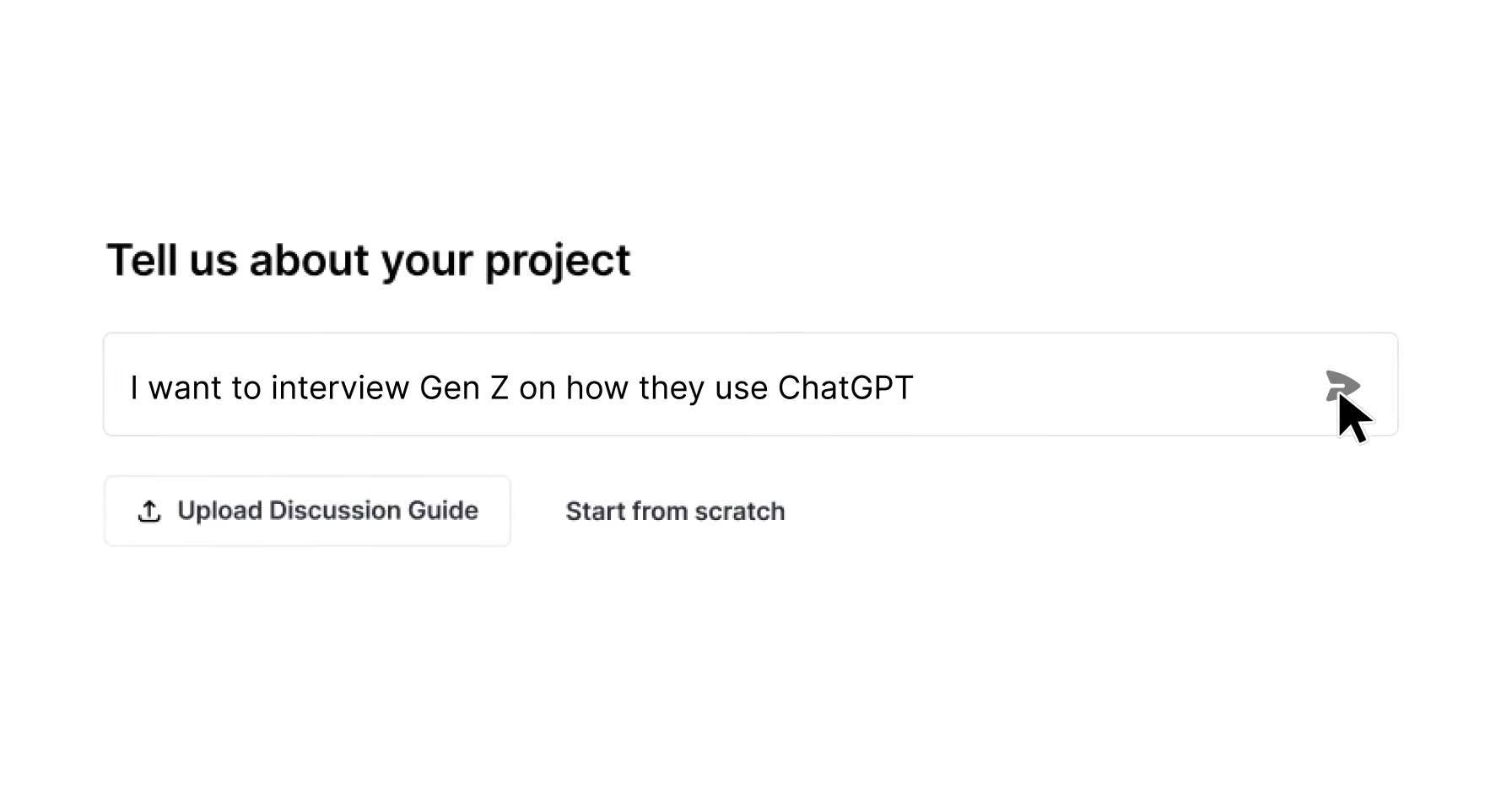
Our AI helps you go from idea to implemented discussion guide in seconds. The platform delivers demand and revenue curves with segment filters, so you can see how enterprise buyers behave separately from SMB buyers without fielding a new study. MaxDiff with Hierarchical Bayes handles feature-price bundle prioritization and portfolio planning. Every point on the curve traces back to a real interview and a verbatim clip. When someone challenges the results, you respond with buyers explaining their choices in their own words.
Listen Labs operates a global panel of 50M+ verified respondents across 45+ countries and 120+ languages at roughly one-third the cost of traditional research. Emotional Intelligence surfaces hesitation, confusion, and delight at the exact timestamp, capturing why a buyer hesitated in their own words. The Research Agent turns interviews into slide decks, memos, and highlight reels in under a minute. Companies such as Microsoft, Google, Anthropic, P&G, Skims, and Robinhood use the platform for pricing studies.
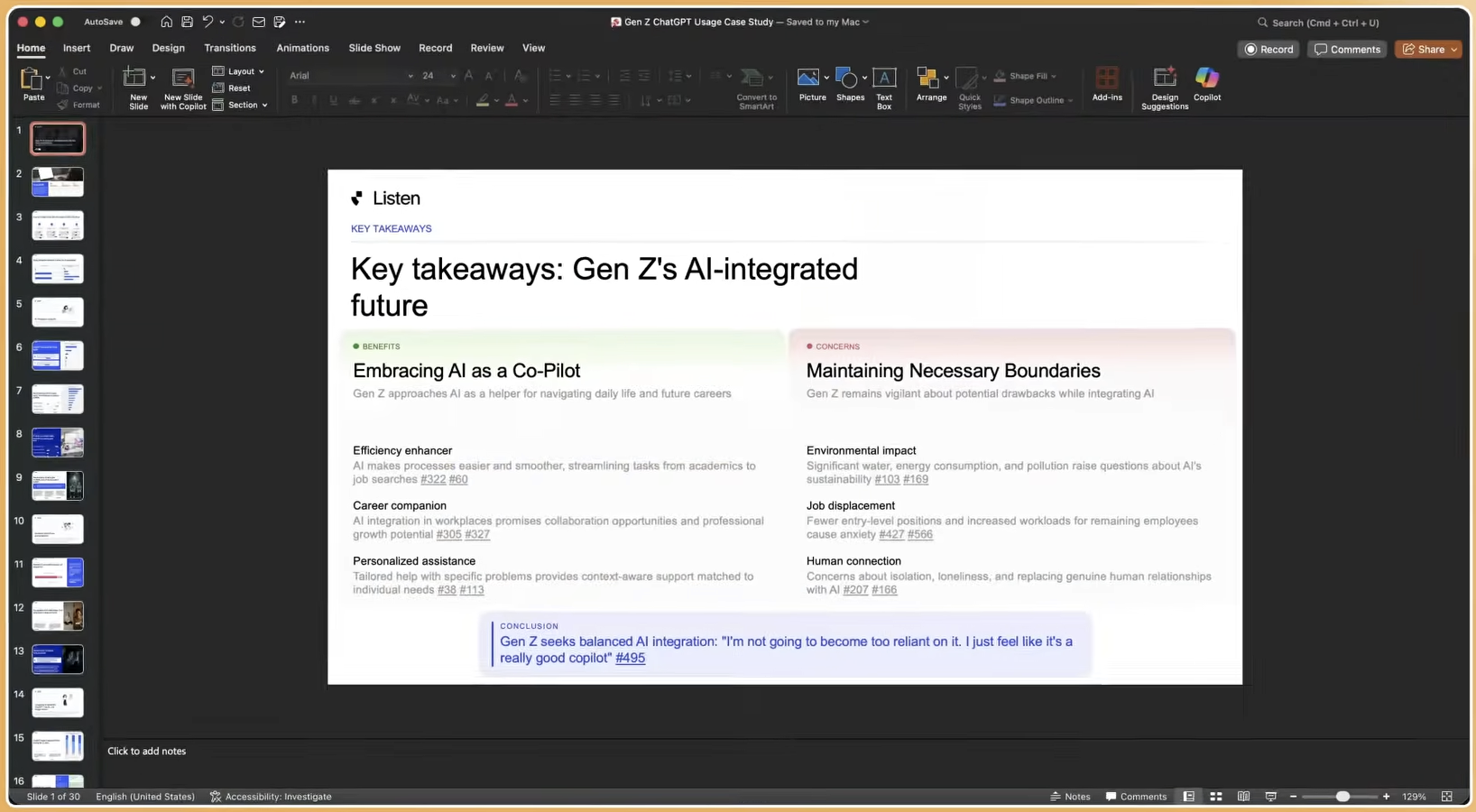
Listen Labs' Research Agent quickly generates consultant-quality PowerPoint slide decks
Wynter — Best for B2B Pricing-Page and Value-Prop Message Testing
-
Wynter runs message tests, pricing-page comprehension tests, and ICP surveys against a panel of 80,000+ LinkedIn-verified B2B professionals with a 12-to-48-hour turnaround. Output centers on messaging hypotheses such as clarity, relevance, value, and differentiation rather than demand curves. Published pricing includes a Pro plan at $20,000/year with 20,000 credits and an Elite plan at $32,000/year with 27,000 credits. Wynter does not run Gabor-Granger or conjoint natively. It fits best when the pricing question focuses on whether the page converts, not what the price should be.
SurveyMonkey LaunchPad — Best for Van Westendorp Inside an Existing Survey Workflow
-
SurveyMonkey LaunchPad offers a dedicated Price Optimization solution built on the Van Westendorp Price Sensitivity Meter, starting at $1,500 per study on a pay-as-you-go basis with no subscription required. Feature Prioritization using MaxDiff starts at $3,000 per study. The platform is designed for teams without a research background and delivers automated scorecards and AI-powered insights. It does not run Gabor-Granger or conjoint natively, and it does not probe the reasoning behind a price reaction.
Qualtrics — Best for Conjoint and MaxDiff at Enterprise Scale
-
Qualtrics supports conjoint and MaxDiff at enterprise scale with advanced survey logic and segmentation. Its Strategic Research self-serve plan is published at $420/month billed annually, covering 1,000 shared responses. Most enterprise products are priced on request based on interactions such as number of survey responses. Qualtrics does not conduct AI-moderated interviews or probe the reasoning behind price reactions.
Prolific — Best for Custom Pricing Studies with Vetted Participants
-
Prolific is a participant recruitment platform for teams that bring their own survey instrument. It fits when you have a Gabor-Granger or conjoint survey designed and need a vetted, non-commodity sample. Prolific charges a platform fee on top of participant incentives. It does not conduct interviews, analyze responses, or deliver reports.
Attest — Best for Multi-Market B2C Price Elasticity Testing
-
Attest supports price sensitivity testing as a research methodology and enables concept testing across multiple consumer markets simultaneously. It reaches audiences in 59 global markets at a flat cost, with built-in panel access and automated reporting. It fits consumer brands testing price elasticity across geographies. It does not run AI-moderated interviews or capture the reasoning behind price reactions.
Lyssna and PickFu — Best for Fast Preference and Concept Tests
-
Lyssna and PickFu focus on speed over depth. Both platforms support preference tests and concept comparisons with fast turnaround, which helps when teams need directional reads and care less about statistical rigor or qualitative depth. Neither platform runs Gabor-Granger, conjoint, or AI-moderated interviews.
How Much Does Message Testing Software Cost for Pricing Research?
Pricing research tools follow three main cost models, and the right one depends on how frequently your team runs studies.
Subscription models suit teams running multiple studies per quarter. Listen Labs uses a subscription model with credits per participant recruited. Credit cost varies by audience difficulty: general population studies cost fewer credits than niche or hard-to-reach segments. For detailed cost comparisons across platforms, see Message Testing Platforms & Pricing: What You’ll Pay in 2026. Wynter’s published subscription tiers run $20,000/year for Pro and $32,000/year for Elite.
Per-response models suit teams running occasional studies without a long-term commitment. Qualtrics publishes a Strategic Research plan at $420/month for self-serve access. Enterprise pricing is based on interactions and requires a quote. Prolific charges a platform fee per response on top of participant incentives.
Per-study models suit teams that run one or two pricing studies per year and want no ongoing commitment. SurveyMonkey LaunchPad starts at $1,000 per study, with Price Optimization (Van Westendorp) at $1,500 and Feature Prioritization (MaxDiff) at $3,000.
Estimate your pricing study budget with Listen Labs
How to Run a Pricing Message Test Step by Step
The example below walks through a complete Gabor-Granger pricing study with message testing layered on top.
- Start with a clear hypothesis. In this case, the team believes “Our $49/month tier is underpriced for mid-market buyers.” That statement sets the direction for the rest of the study.
- Define the audience precisely. The study targets operations managers and heads of finance at B2B SaaS companies with 50–500 employees who have evaluated or purchased workflow software in the past 12 months.
- Show the pricing stimulus. Every respondent sees the current pricing page for the $49 tier before the price ladder begins. That shared context keeps the demand curve tied to a real page.
- Run the adaptive price ladder. Each respondent sees the tier description and answers whether they would buy at a starting price. A yes raises the floor, and a no lowers the ceiling. The ladder continues until it finds the most that person would pay. Respondents who would not buy at any price stay in the count so demand is not artificially inflated.
- Ask contextual follow-up questions. Once a respondent lands on a price, the AI interviewer asks why it felt worth it or not. Probes separate affordability objections from value objections, which call for different responses from product and marketing teams.
- Review demand and revenue curves. Individual results roll up into a demand curve that shows buyer retention at each price point and a revenue curve that highlights the revenue-maximizing price. Segment filters isolate mid-market buyers from SMB buyers without a new study.
- Pull verbatim clips into the recommendation. Every point on the curve links to the interviews behind it. When the recommendation is to raise the price to $69, the supporting evidence is buyers explaining in their own words why $49 felt like a bargain.
The Qualitative Gap in Traditional Pricing Surveys
A demand curve tells you where revenue peaks. It does not tell you why buyers walked away or said yes. Gabor-Granger identifies the price people accept and, with Listen Labs’ contextual follow-up questions, also captures why they accept or reject it.
This gap matters because the fix for affordability objections differs from the fix for value objections. The first often points to packaging or tier structure. The second points to how you communicate value on the page. A static pricing survey cannot separate these signals.
Conversational, AI-moderated interviews capture the reasoning behind a price reaction in the moment. As described earlier, Listen Labs’ conversational Gabor-Granger price ladder delivers both the demand curve and the story driving it. Emotional Intelligence surfaces hesitation, confusion, and delight at the exact timestamp, and the Research Agent turns those interviews into slide decks, memos, and highlight reels in under a minute.
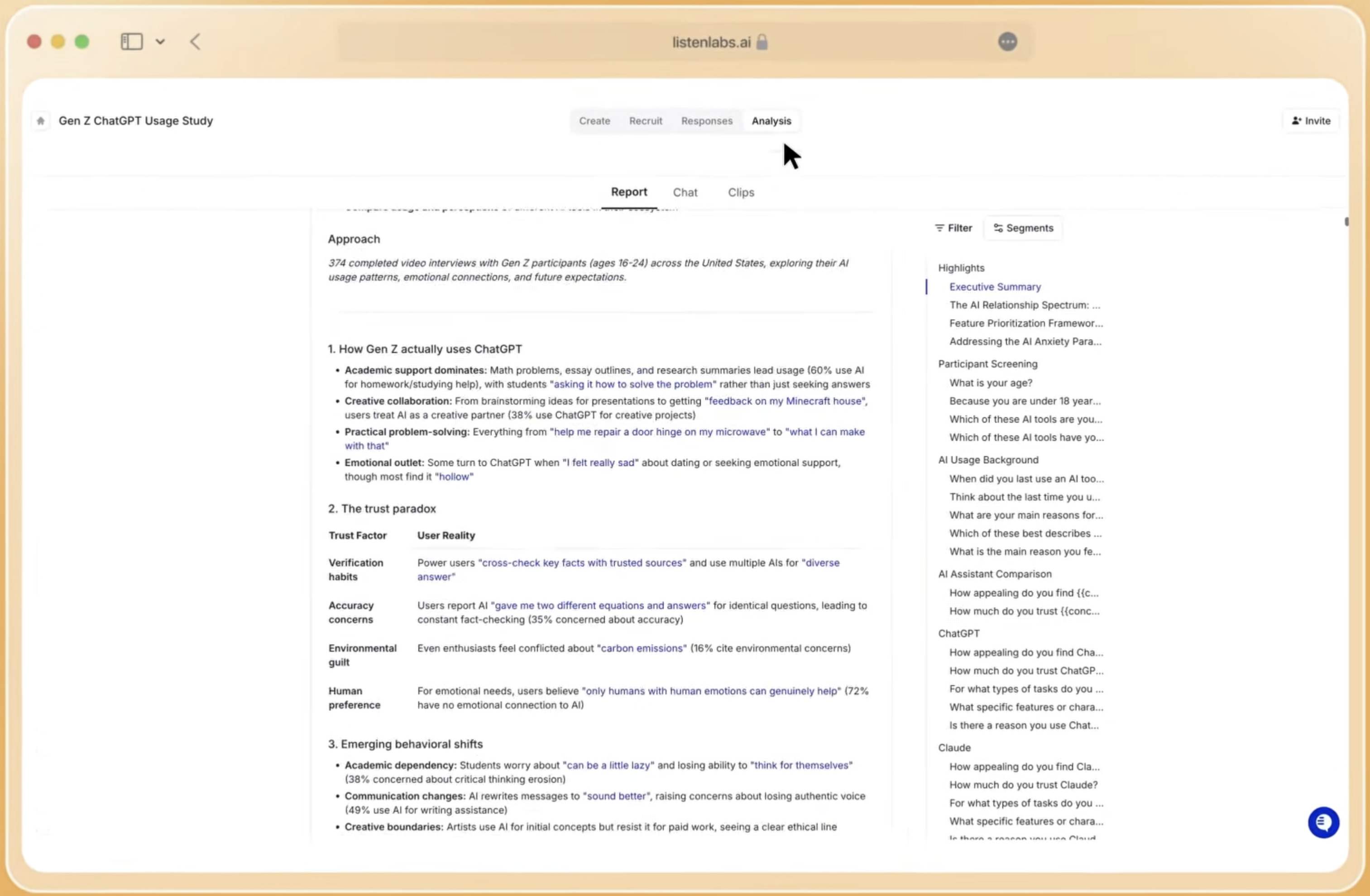
See how Listen Labs uncovers the “why” behind your demand curve
Free and Low-Cost Options for Pricing Research
Several free and low-cost options exist for teams with limited budgets, though each involves trade-offs.
- Free Van Westendorp templates are available inside SurveyMonkey, Google Forms, and Typeform. They produce an acceptable price range from four questions but no demand curve, no revenue estimate, and no reasoning behind the thresholds.
- Free Gabor-Granger question templates can be built inside any survey tool by constructing a branching price ladder manually. The output is a demand curve, but the tool will not probe why a respondent said no at a given price.
- Open-source conjoint packages such as conjoint (which implements traditional conjoint analysis) and cjoint (which implements the AMCE estimator for conjoint experiments) allow teams with statistical expertise to run conjoint studies at no software cost. Design, fielding, and analysis require significant methodological knowledge.
- Self-recruited studies using your own customer list reduce panel costs but introduce selection bias. Existing customers anchor their price sensitivity to current pricing, which makes it harder to measure headroom for increases or new tier pricing. The sample reflects engaged customers rather than the broader market.
The consistent limitation across free options stays the same. They give you the curve but not the reasoning. A demand curve built from a free survey template is directionally useful but cannot show whether the drop-off at $49 reflects a budget issue or a value communication issue.
Below are answers to common questions about message testing software for pricing research.
FAQ
What Is Message Testing in the Context of Pricing Research?
Message testing in pricing research evaluates whether a specific pricing page, tier description, or value proposition communicates enough value to justify a price in the buyer’s mind. It differs from pure pricing research, which determines what the price should be. Teams often run the two together. A Gabor-Granger study finds the revenue-maximizing price, and a message test on the same pricing page shows whether the copy converts at that price. The tool you need depends on which question you lead with.
Which Software Is Best for Pricing Research?
The best software depends on which pricing question you ask. For a demand curve plus the reasoning behind it, Listen Labs is the strongest option because its conversational Gabor-Granger price ladder delivers both the quantitative output and the qualitative story driving it. For B2B pricing-page message testing with a verified professional panel, Wynter is the specialist. For Van Westendorp inside an existing survey workflow, SurveyMonkey LaunchPad is the most accessible option. For conjoint and MaxDiff at enterprise scale, Qualtrics is the standard. The method-to-question match should drive the tool selection.
Can You Run Pricing Research Without a Research Team?
Yes. Listen Labs is designed so that product managers, pricing managers, and marketing leads can field a pricing study without a dedicated research team. The AI handles study design, participant recruitment, interview moderation, analysis, and deliverable generation. SurveyMonkey LaunchPad is similarly designed for non-researchers, with built-in Van Westendorp and MaxDiff methodologies that require no survey design expertise. The trade-off with most self-serve tools is that they do not probe the reasoning behind price reactions, which requires a conversational AI-moderated approach.
How Long Does a Pricing Message Test Take?
With Listen Labs, a full Gabor-Granger pricing study with AI-moderated follow-up interviews delivers results in under 24 hours. SurveyMonkey LaunchPad delivers results within hours to 48 hours for most studies. Traditional moderated qualitative pricing research takes 4–6 weeks from study design to final report. The speed difference comes from whether the platform conducts interviews in parallel with AI or sequentially with human moderators.
Can You Test Pricing with Your Own Customers?
Yes, and it is often valuable to do so. Listen Labs supports self-recruitment, which allows organizations to study their own user base at a reduced credit cost. Existing customers often anchor their price sensitivity to what they currently pay, which can understate headroom for price increases. For a complete picture, most pricing studies benefit from including current customers, churned customers, and evaluating prospects. Each group provides a different signal about where the price ceiling and floor sit.
Listen Labs runs conversational Gabor-Granger pricing tests that deliver the demand curve and the story behind every point on it, at scale, with verbatim clips your team can use to defend the recommendation to leadership.
Run a conversational pricing study with Listen Labs