
Written by: Anish Rao, Head of Growth, Listen Labs
Key Takeaways
Here is the short version of what the cost comparison below shows.
- Kantar enterprise brand tracking programs run in the mid-six figures annually, while alternatives like Tracksuit and Latana charge a fraction of that.
- Lower-cost trackers such as Tracksuit, Latana, Attest, and Morning Consult report KPI movement but do not include built-in diagnostics that explain why metrics changed.
- Separate qualitative studies often follow KPI drops on cheaper tools, which reduces or removes the initial subscription savings.
- Build-your-own options like YouGov BrandIndex and Qualtrics require heavy internal lift on methodology, sampling, and analysis, with no guaranteed diagnostic depth.
- Listen Labs closes this gap by pairing quantitative tracking with conversational diagnostics in the same wave, so teams see both the number and the reason at a lower cost than Kantar.
Cheaper Brand Tracking Tools Than Kantar: The Short Answer
The leading cheaper alternatives to Kantar for brand tracking are Tracksuit, Latana, Attest, and Morning Consult, with YouGov BrandIndex and Qualtrics available as build-your-own routes. All of them cost significantly less than a Kantar enterprise program. Across every option, the trade-off stays consistent. Lower cost usually buys the top-line number, such as awareness up or consideration down, without the explanation behind the change. The diagnostic layer that clarifies why a KPI moved is either missing or sold as a separate project.
How Much Does Kantar Brand Tracking Actually Cost and What Cheaper Options Really Buy
Kantar brand tracking programs commonly run $100,000 to $500,000 or more per year for multi-market enterprise engagements. Four structural factors drive that price. Kantar designs custom surveys tailored to a brand equity framework. It operates a full-service agency model with dedicated research teams. Results arrive in waves, often quarterly. Separate qualitative work such as focus groups and depth interviews is commissioned whenever a KPI moves and the tracker cannot explain why. Even Kantar’s entry-level Marketplace solutions carry five-figure price tags, and its core BrandDynamics product is custom-quoted rather than transparently listed.
The cheaper alternatives compress that cost substantially. Tracksuit’s always-on brand tracking starts at roughly $19,500 per year for a single brand category. That covers the client’s brand plus five competitors, with over 4,000 consumers surveyed. Latana’s Essential plan starts at roughly $8,500 per market per year, with Pro plans closer to $20,000 per market. Multi-country programs on Latana scale quickly. These figures let most buyers self-qualify on budget in under a minute. They do not reveal whether the cheaper tool will explain the next KPI drop or leave the team commissioning a separate qualitative study that removes much of the initial savings.
Cheaper Brand Tracking Tools Than Kantar, Reviewed
Tracksuit
Best for: Mid-market consumer brands that want always-on brand funnel data, from awareness through preference, without managing fieldwork, and that have a single primary market or a small number of markets to cover.
Rough cost: Entry point at approximately $19,500 per year for one brand category, with flat annual pricing and unlimited seats. Tracksuit claims its always-on brand tracking is delivered at roughly one-tenth the cost of traditional brand tracking, a counter-positioning claim against enterprise incumbents.
Where It Breaks: Tracksuit weights on only three variables, age, gender, and region. Categories where purchase behavior tracks income, education, or household composition carry an unweighted gap inside every number. The fixed question set measures associations in Tracksuit’s language rather than the category’s language. Monthly sample sizes draw consistent criticism on review platforms for being too thin to establish statistical significance for smaller brands. Teams that need to understand why a metric moved will not find that explanation inside Tracksuit. Buyers searching “Tracksuit vs Kantar” will see a real cost gap and a real methodology gap.
Latana
Best for: Brands that need reliable metrics on niche or hard-to-reach audience segments across multiple global markets, where raw sample sizes are too thin to trust without statistical modeling.
Rough cost: Essential plan at roughly $8,500 per market per year, with Pro plans closer to $20,000 per market. Multi-market configurations escalate quickly. Annualized entry-level cost runs roughly $9,600–$12,000 for a single market, with enterprise multi-market configurations exceeding $60,000 per year.
Where It Breaks: Latana’s dashboard delivers standardized brand funnel metrics but does not allow users to search consumer reasoning, because the data is rating-shaped rather than narrative-shaped. The numbers are modeled estimates, produced by multilevel regression and post-stratification, rather than direct head counts. That approach is statistically honest and powerful for niche segments. It limits the depth of explanation available when a KPI shifts. Buyers searching “Latana vs Kantar” will see Latana win on cost and segment precision while falling short on diagnostic depth.
Attest
Best for: Insights teams at mid-market consumer brands that want flexible survey-based research with a dedicated research manager and access to a large global panel, and that run periodic studies rather than continuous tracking.
Rough cost: Credit-based subscription plans scaling from Basic to Custom tiers; Attest does not publish specific dollar figures. Panel access covers over 150 million consumers across 59 countries.
Where It Breaks: Attest’s tracker-specific structure, including category entry point analysis, is lighter than a dedicated tracking product. Design decisions around question wording, competitive set, and sampling sit with the buyer. Periodic study waves create gaps between data collection points. Buyers searching “Attest vs Kantar” will see more flexibility and lower cost, without a built-in diagnostic for KPI movement.
Morning Consult
Best for: Enterprise teams that need high-frequency brand health data connected to broader economic and political sentiment, particularly in the US market, and that value speed of fielding over depth of explanation.
Rough cost: Custom-quoted enterprise pricing. Morning Consult surveys roughly 10,000 respondents per brand per year across 45+ markets, which works out to approximately 200–250 per brand per market per year. That volume supports top-line tracking while limiting diagnostic confidence at the segment level.
Where It Breaks: Thin cells at the market-segment level reduce confidence in subgroup reads. The platform reports that the number changed and leaves the cause unexplained.
Build-Your-Own: YouGov BrandIndex and Qualtrics
Best for: Teams with in-house research capability that want to own their methodology and integrate brand tracking into an existing data infrastructure.
Rough cost: YouGov BrandIndex’s full platform is custom-quoted at enterprise pricing levels, though BrandIndex Lite offers a free snapshot on the Buzz metric. Qualtrics brand tracking is sold on enterprise licenses reportedly around $450,000 for a base package, often on multi-year contracts. That structure makes it a platform rather than a tracker out of the box.
Where It Breaks: Both routes require significant internal investment in study design, sampling logic, weighting, and analysis. Qualtrics provides a tool rather than a ready-made tracker, so a flawed study design runs to completion without flagging the flaw. YouGov BrandIndex’s core tracker reports metric movement, while its qualitative layer, BrandIndex Voices, operates as a bolt-on instead of an integrated diagnostic.
For a broader comparison of the alternatives landscape, see the Listen Labs Top Kantar Alternatives and Best Kantar Alternatives guides, which cover tool descriptions in depth. This article focuses on the budget decision and the diagnostic gap those guides do not address.
The Trade-Off Nobody Names: Cheaper Trackers Miss the Diagnostic Layer
The real cost of a cheaper tracker sits in its lack of diagnostics. A brand awareness score can move because of a campaign, a competitor’s product recall, a seasonal pattern, or plain sampling noise in that wave’s respondent panel, and a repeated cross-sectional survey has no mechanism to distinguish among those causes. It reports the number without the cause.
By the time a KPI decline appears in a quant-only tracker, the underlying shift has typically been building for months. The team then faces two options. They can act on an unattributed metric move and risk changing something that did not drive the shift. They can commission a separate qualitative study to uncover the cause, which removes much of the cost advantage that made the cheaper tracker appealing. Even a well-designed brand tracker reaches a diagnostic ceiling. It may show that a perception metric declined four points, yet it cannot explain the underlying reasons, distinguish among competing explanations, or reveal which actions customers would find most credible.
The strongest brand trackers connect metric movement to the audiences behind the change, so that a movement in the data arrives with a reason attached, the distinction between a dashboard and a decision. When the “why” sits inside the tracker rather than in a separate project, savings stay intact and diagnostics arrive on time.
Where Listen Pulse Fits in the Brand Tracking Landscape
Listen Pulse is a conversational tracker that keeps the cost advantage of cheaper alternatives while adding the diagnostic layer they lack. It runs the same study with the same screeners wave after wave. Core questions stay constant to protect the trend line, while timely questions cover new campaigns and competitors.
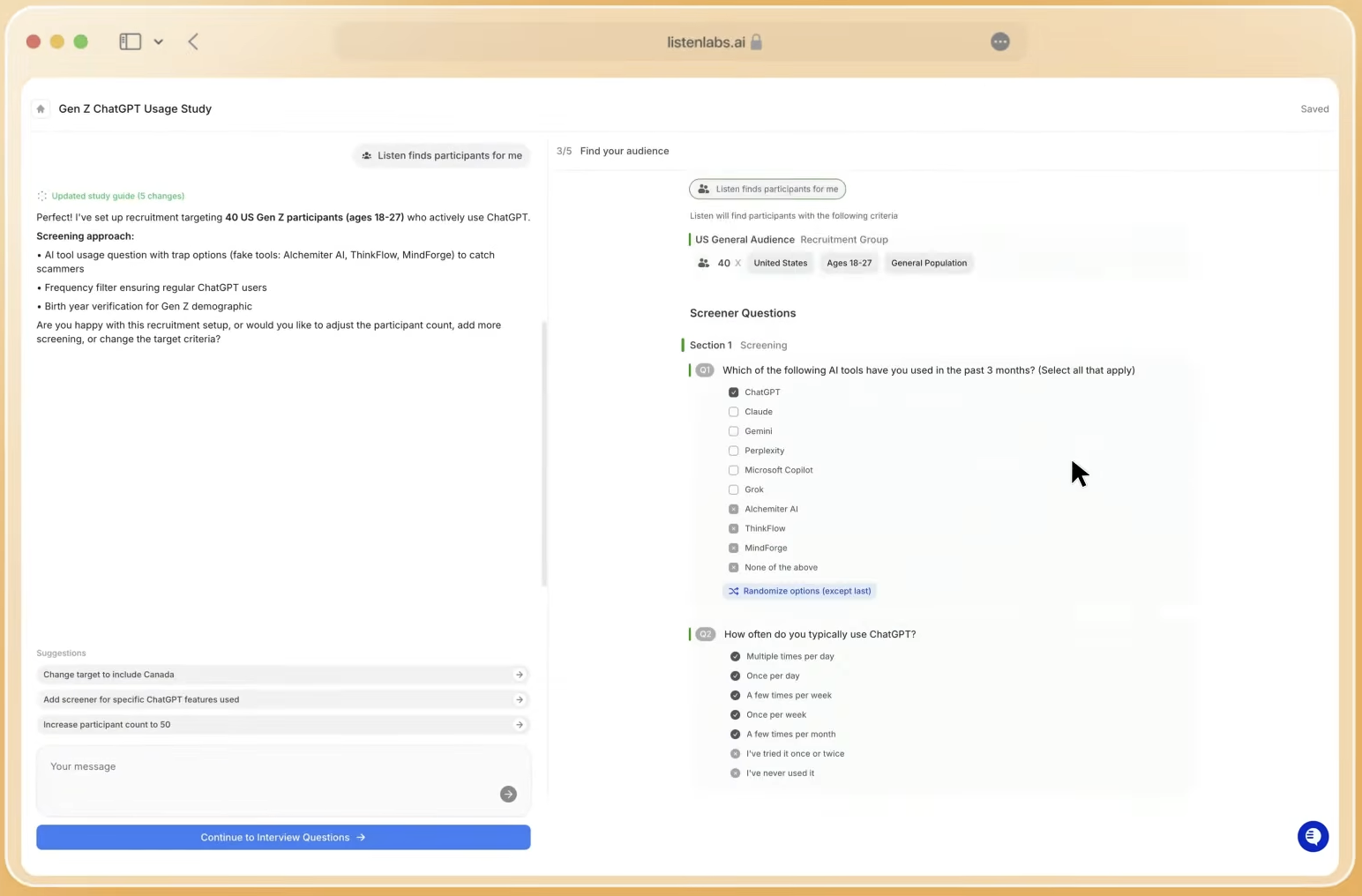
Every wave combines quantitative KPI tracking with open-ended conversation. The KPIs cover awareness, consideration, NPS, MaxDiff, and rankings. The conversation explains what moved them. Every metric movement arrives with its explanation in the same instrument, rather than in a separate qualitative study fielded weeks later.
Pulse analyzes tens of thousands of responses continuously and surfaces emerging themes before they hit tracked KPIs. Every number traces back to the interview, the verbatim quote, and the audio or video clip behind it. Teams can drill into any metric and hear the original explanation in the respondent’s own words. Pulse integrates with Qualtrics and Decipher, so teams keep the KPIs they already report while adding the narrative behind them. It can deploy alongside an existing tracker or as the primary tracking system.
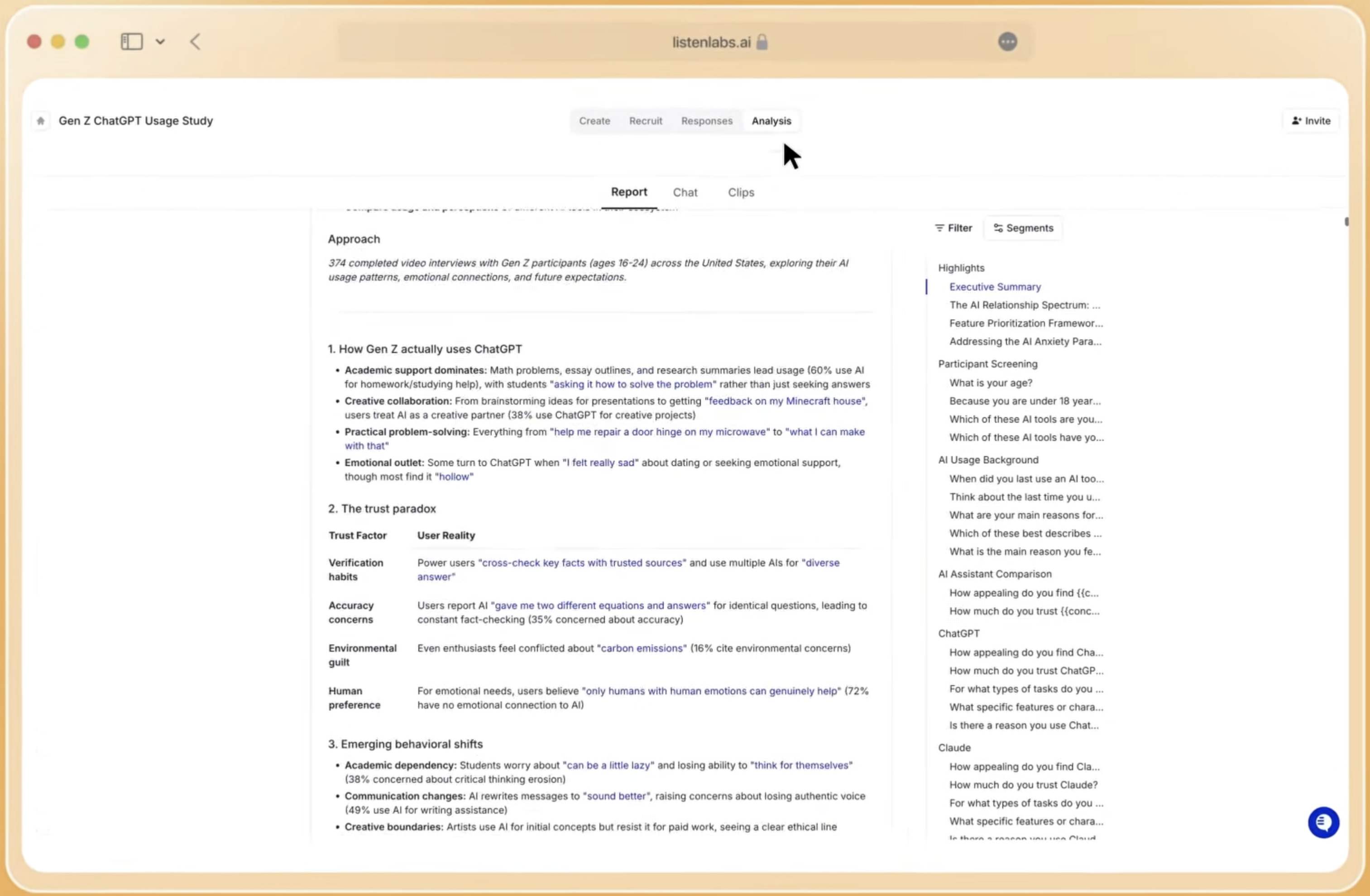
One well-known clothing brand, famous for its big logos, was quietly losing customers. Its existing tracker caught the drop but could not explain it. Pulse identified style as the driver. A growing group of customers felt the big logos were too loud for their changing lifestyles. That finding arrived in the same wave as the KPI decline, rather than six weeks later after a separate focus group program.
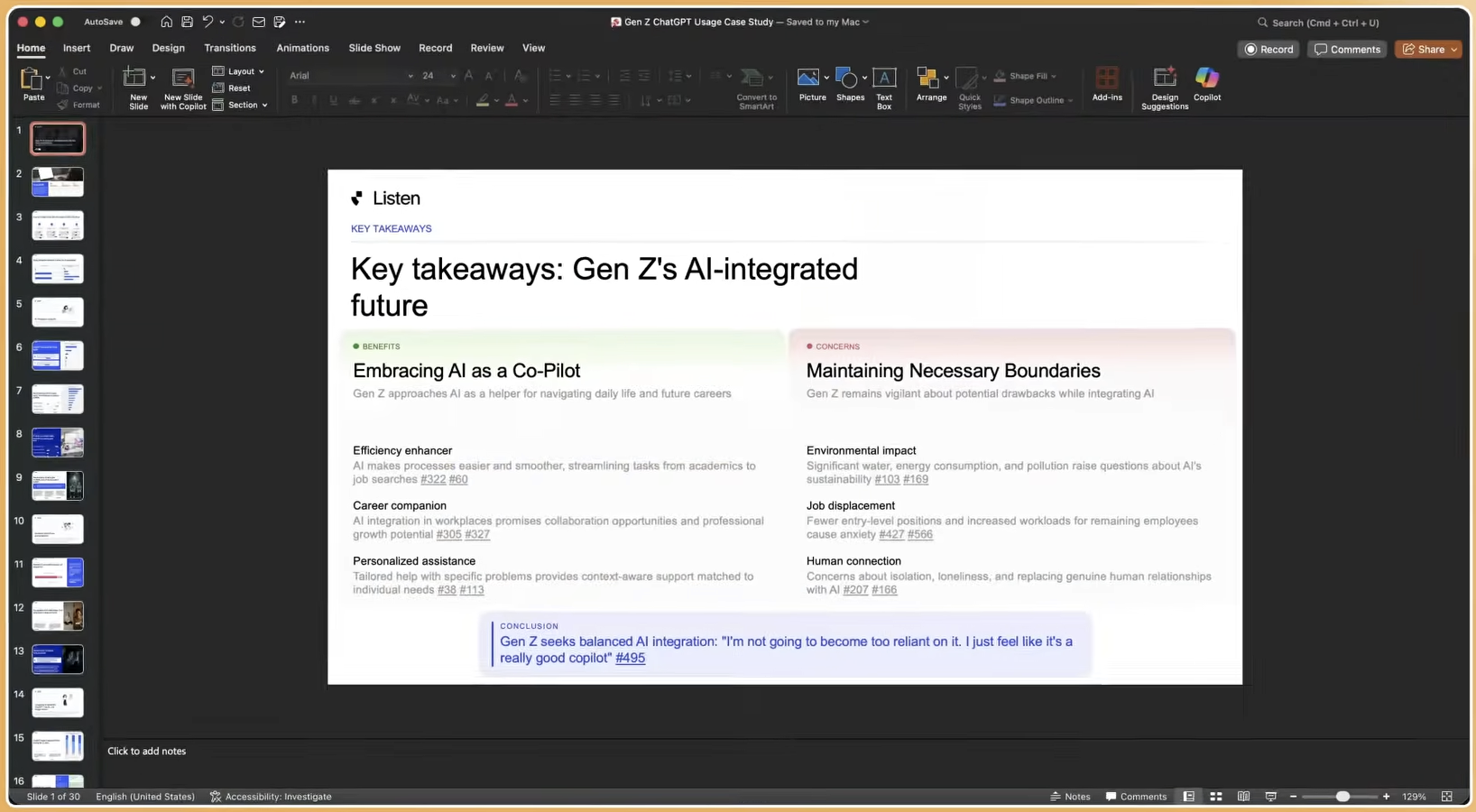
See Pulse in a live walkthrough
How to Choose in a Week, Not a Quarter
Three practical checkpoints help you decide which tool belongs on your shortlist.
- Markets to Cover: Single-market programs fit Tracksuit’s flat annual pricing well. Multi-market programs using Latana’s per-market pricing escalate quickly, so model the total cost before shortlisting.
- Sample Size Expectations: If leadership will challenge subgroup reads, verify the per-market and per-segment sample depth before signing. Monthly samples on lower-cost tools are often too thin for segment-level confidence.
- Need for Explanation: If a KPI drop will trigger a board question about cause, a quant-only tracker will not answer it. Either choose a tool that delivers diagnostics in the same wave or budget explicitly for the separate qualitative study that will follow metric movement.
FAQ
This section addresses common questions that come up once teams start comparing Kantar with cheaper tracking options.
How Much Does Kantar Brand Tracking Cost?
As noted above, Kantar programs run into the mid-six figures annually for multi-market engagements. The price reflects a full-service agency model with custom survey design, dedicated research teams, wave-based delivery, and separate qualitative work to explain KPI movement. Even Kantar’s Marketplace entry-level solutions carry five-figure price tags, and its core BrandDynamics product is custom-quoted rather than transparently listed.
Who Are Kantar’s Main Competitors in Brand Tracking?
The main competitors in brand tracking span two tiers. Enterprise-tier alternatives include Ipsos, YouGov BrandIndex, and Morning Consult. Lower-cost subscription alternatives include Tracksuit and Latana, with Attest operating on a credit-based subscription model without published per-market pricing. Listen Pulse competes by combining the cost advantage of the subscription tier with the diagnostic depth that cheaper alternatives do not provide.
Is Kantar a Reputable Company?
Kantar is a large, established market research organization with decades of validated brand equity methodology, including its Meaningful, Different, and Salient framework, spanning thousands of brands and markets. Its BrandZ database covers over 21,000 brands across hundreds of categories. Kantar’s reputation for methodological rigor is well-established. The primary objections from buyers relate to cost, delivery speed, and the need to commission separate qualitative work to explain KPI movement.
Can a Cheaper Tracker Explain Why a KPI Moved?
Standard cheaper trackers such as Tracksuit, Latana, Attest, and Morning Consult report that a metric moved without explaining the cause. Explaining a KPI movement requires either a separate qualitative study commissioned after the fact or a tracker that builds open-ended conversation into every wave alongside the quantitative questions. Listen Pulse takes the second approach, so the explanation arrives in the same instrument as the number rather than weeks later.
Can Listen Pulse Run Alongside Our Existing Tracker?
Yes. Listen Pulse is designed to deploy alongside an existing tracker or as the primary tracking system. It integrates with Qualtrics and Decipher, so teams keep the KPIs they already report while adding the narrative explanation behind them. Core questions stay constant wave over wave to protect trend line comparability. Timely add-on questions cover new campaigns, competitors, or market events without breaking historical comparability.
Conclusion: Closing the Diagnostic Gap Without Kantar Pricing
Cheaper brand tracking tools than Kantar, including Tracksuit, Latana, Attest, and Morning Consult, provide credible data and a clear cost advantage over a Kantar enterprise program. They share a gap that matters when the board asks what changed. Each tool reports KPI movement and leaves the team to uncover the cause through separate work. The follow-on qualitative study that answers the “why” often eats into the savings that justified the cheaper tracker.
Listen Pulse keeps the cost advantage while attaching the reason to every KPI movement in the same wave, traceable to the verbatim quote and the clip behind it. Brand and insights leaders who need both the number and the explanation, without paying Kantar prices or waiting for a separate qualitative study, can use Pulse to close the diagnostic gap the rest of the category leaves open.
See how Pulse closes the diagnostic gap