
Written by: Anish Rao, Head of Growth, Listen Labs
Key Takeaways For Research Buyers
- Latana is a specialized brand-health tracking platform focused on continuous measurement of awareness, consideration, perception, and segmentation across 150+ markets using MRP modeling.
- Enterprise research tools like Qualtrics, Kantar, Ipsos, YouGov, and Medallia are comprehensive multi-methodology ecosystems that include conjoint, MaxDiff, qualitative interviews, CX/VoC integration, and consulting services.
- Latana publishes transparent per-market pricing starting at approximately €7,900 per market per year, while enterprise tools require custom quotes typically ranging from $100,000 to $500,000+ annually.
- Many teams benefit from a hybrid stack that combines continuous brand tracking with a qualitative diagnostic layer so the number and the explanation arrive together.
- Listen Labs provides Listen Pulse as the conversational diagnostic layer that integrates with existing trackers like Qualtrics to deliver both the number and the explanation behind every metric movement.
Executive Summary And How To Use This Framework
Five dimensions determine which tool fits a given procurement situation: research focus, pricing model, data collection method, depth of diagnostic explanation, and integration with existing workflows. Each dimension is addressed in the sections below. Before you reach a vendor conversation, apply them to your own situation: team size, number of markets, whether conjoint or MaxDiff is required, whether CX/VoC integration is required, and whether qualitative explanation is required.
The Core Distinction Between Latana And Enterprise Suites
Latana is built for continuous brand-health tracking. It measures awareness, consideration, perception, and granular segmentation via Multilevel Regression and Poststratification (MRP) across 150+ markets, using non-incentivized ad-based sampling. Its listed features are brand health tracking, purchase funnel tracking, ad awareness tracking, brand perception and associations, competitor benchmarking, audience segmentation, and brand strategy planning. It also displays margins of error alongside its numbers in the interface, which gives stakeholders clearer visibility into data reliability.
Enterprise research tools like Qualtrics, Kantar, Ipsos, YouGov, and Medallia are broad, custom-quoted, multi-methodology ecosystems covering conjoint, MaxDiff, qualitative interviews, CX/VoC programs, and consulting. This is a category-level comparison, not a single head-to-head. The most common specific comparison buyers mean is Latana vs Qualtrics. Qualtrics offers brand tracking as a module inside a broader experience management platform, running on the same platform as audience segmentation, message testing, and product research.
Latana vs Kantar and Latana vs Ipsos follow the same pattern. Kantar runs one of the largest brand equity databases in market research, covering 21,000+ brands across 540+ categories and 55+ markets through BrandZ and BrandDynamics. Ipsos delivers full-service custom brand health tracking through proprietary frameworks including Brand Value Creator, with global fieldwork and analyst support.
Pricing Reality For Latana And Enterprise Research Tools
Those architectural differences show up clearly in how each vendor prices. Latana publishes its pricing tiers, while enterprise tools keep theirs behind a quote. Essential starts at approximately €7,900 per market per year and Pro starts at approximately €18,900 per market per year, with a Custom tier supporting up to 50 brands and 10 segments. The Essential plan includes up to 4 brands and 2 segments. The Pro plan includes up to 6 brands and 3 segments, funnel metrics, trend-line models, and KPI predictions. Contracts start at 12 months, and final per-market pricing depends on market complexity, audience incidence rates, and the size of the brands being tracked.
The per-market cost structure compounds for multi-country programs. A brand tracking 10 countries on the Pro tier could face roughly $200,000 per year in platform fees alone before any add-ons.
Enterprise research tools are quote-based throughout. Qualtrics brand tracking is sold on enterprise licenses reportedly around $450,000 for a base package with 4,000 samples, often on multi-year contract locks. Kantar’s custom brand tracking contracts run $100,000 to $500,000+ per year, with three to six months to first insight. Ipsos pricing is not published but is typically six figures. Enterprise research suite pricing generally sits above $50,000 per year, with custom quotes and procurement cycles attached.
Capability Boundary Map Between Latana And Enterprise Tools
Latana covers core brand-health tracking needs. It handles awareness, consideration, and perception tracking, granular segmentation via MRP, coverage across 150+ markets, and non-incentivized ad-based sampling that reaches consumers outside traditional panels. Enterprise-grade methods such as conjoint, MaxDiff, qualitative interviews, CX/VoC integration, and consulting services sit outside its scope.
Enterprise research tools fill those gaps at custom-quoted cost and with longer delivery cycles. The five platforms below show how differently each one is architected, and how each maps to a specific type of buyer need:
- Qualtrics runs brand tracking on the same platform as audience segmentation, message testing, and product research, with access to over 200 global experts through Research Services for study design, data collection, analysis, and consulting.
- Kantar brings one of the largest brand equity databases in market research and a normative database of 260,000 ads through its LINK+ ad testing solution, with managed research projects and custom quotes.
- Ipsos sells research expertise with software attached, including custom survey design, proprietary analytical frameworks, and senior consultancy, priced per project. This structure suits genuinely novel or high-stakes questions.
- YouGov BrandIndex draws on a proprietary panel of over 30 million members across 55+ markets and 27,000+ brands, reporting 16 fixed brand health metrics daily, with over 15 years of continuous data on some brands.
- Medallia is built around the idea that insight only matters if it changes frontline behavior, with escalations, alerts, case management, and action tracking deeply integrated for hospitality, retail, financial services, and healthcare.
See How Listen Pulse Fits Your Tracker
The Decision Framework For Latana, Enterprise Tools, And Hybrid Stacks
Four buyer situations map to distinct tool choices, moving from focused tracking to full hybrid stacks. Match your situation to the criteria below before entering a vendor conversation.
Situation 1: Mid-Market Brand Needing Affordable Global Tracking. Latana fits. Relevant criteria: team under 10 researchers, 5–15 markets, no conjoint or MaxDiff requirement, no CX/VoC integration requirement, and a need for transparent per-market pricing rather than a custom procurement cycle.
Situation 2: Fortune 500 Needing An All-In-One Multi-Methodology Ecosystem. An enterprise research tool fits. Relevant criteria: team of 10+ researchers, 20+ markets, conjoint or MaxDiff required, CX/VoC integration required, consulting services required, and budget for a $100K–$500K+ annual contract.
Situation 3: Team That Needs Continuous Tracking Plus Qualitative Diagnostics. The hybrid stack fits. Relevant criteria: continuous tracking already in place or required, qualitative explanation of KPI movements required in the same wave, and a need to surface the “why” without commissioning a separate agency study that typically takes 6 to 12 weeks to deliver findings.
Situation 4: Team Replacing An Expensive Recurring Tracker. Evaluate Latana against the incumbent, then decide whether a diagnostic layer is also needed. Relevant criteria: current contract value, number of markets, whether qualitative explanation is required, and whether CX/VoC integration is required.
The “Why” Gap And Why Traditional Trackers Lag
Traditional trackers report that a metric moved, but they do not explain why it moved. As John Ferreira, Chief Insights and Innovation Officer at Finch Brands, puts it: “A measuring instrument tells you what happened. An explanation engine tells you why, and points to what should happen next.”
A fashion brand losing relevance with Gen Z loses it on TikTok and in street style commentary months before awareness metrics start to twitch. By the time the tracker catches the decline, the decision window for the next campaign brief has often already closed. Diagnostic qualitative research commissioned through an agency typically takes 6 to 12 weeks, so the decision window usually closes before the explanation arrives.
One well-known clothing brand, famous for its big logos, was quietly losing customers. Its existing tracker caught the drop but could not explain it. Listen Pulse found the driver was style, not price. A growing group of customers felt the big logos were too loud for their changing lifestyles. Listen Pulse explained the movement in the same wave the tracker detected it.
The Hybrid Stack: Tracker Plus Qualitative Diagnostic Layer
For many teams, the honest answer is both: a tracker plus a qualitative diagnostic layer. Run Latana or a legacy tracker for continuous KPI tracking, and add a qualitative engine for the diagnostic explanation. Listen Pulse is that diagnostic layer.
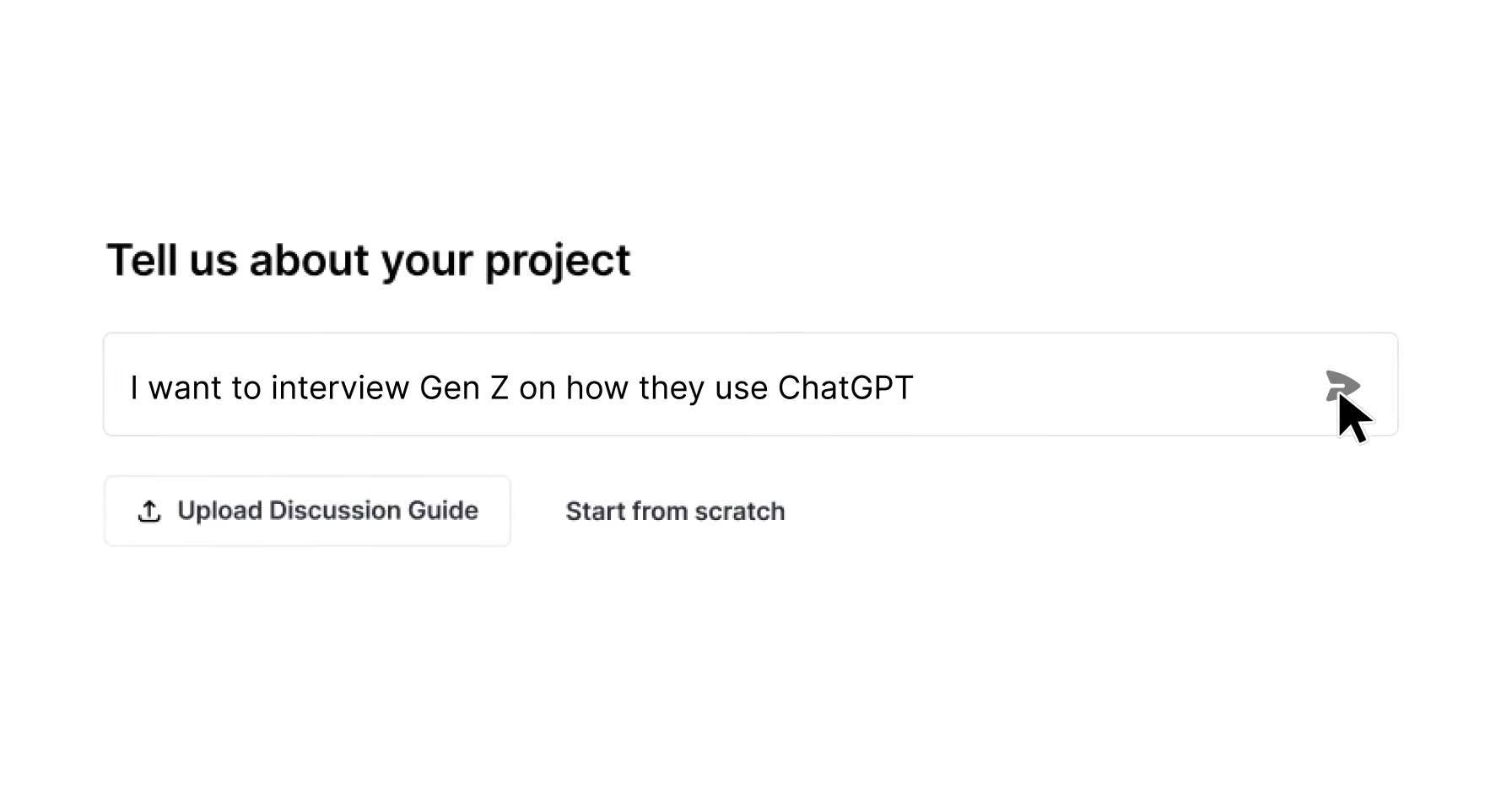
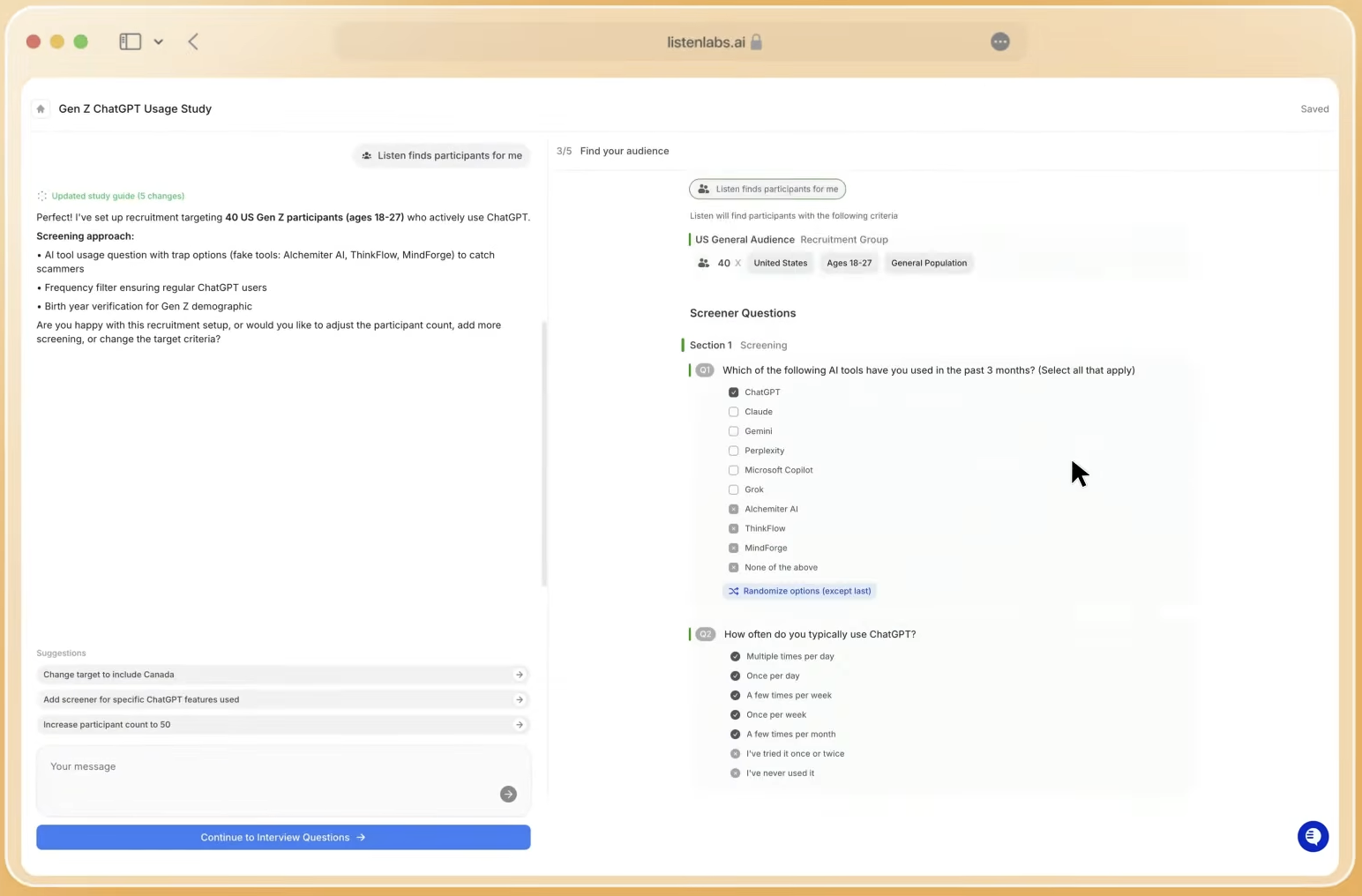
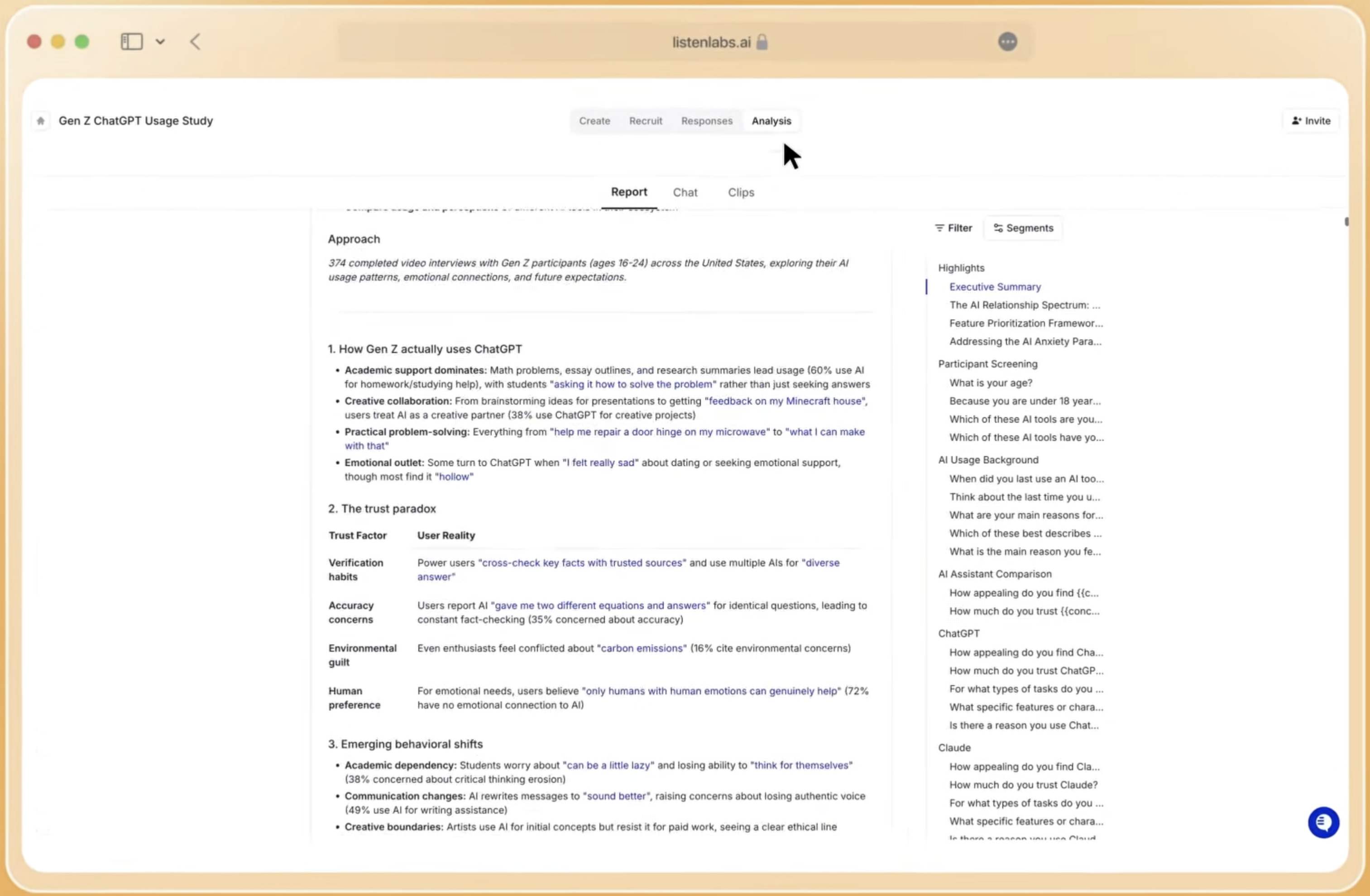
Listen Pulse is a conversational tracker that deploys alongside an existing tracker or as the primary tracking system. It keeps core questions constant wave over wave to protect trend-line comparability. It also adds open-ended conversation to every wave so that every metric movement arrives with its explanation. It integrates with Qualtrics and Decipher, so teams keep the KPIs they already report while adding the narrative behind them. Emerging themes appear on charts next to the KPIs teams already track, so the number and the reason arrive together.
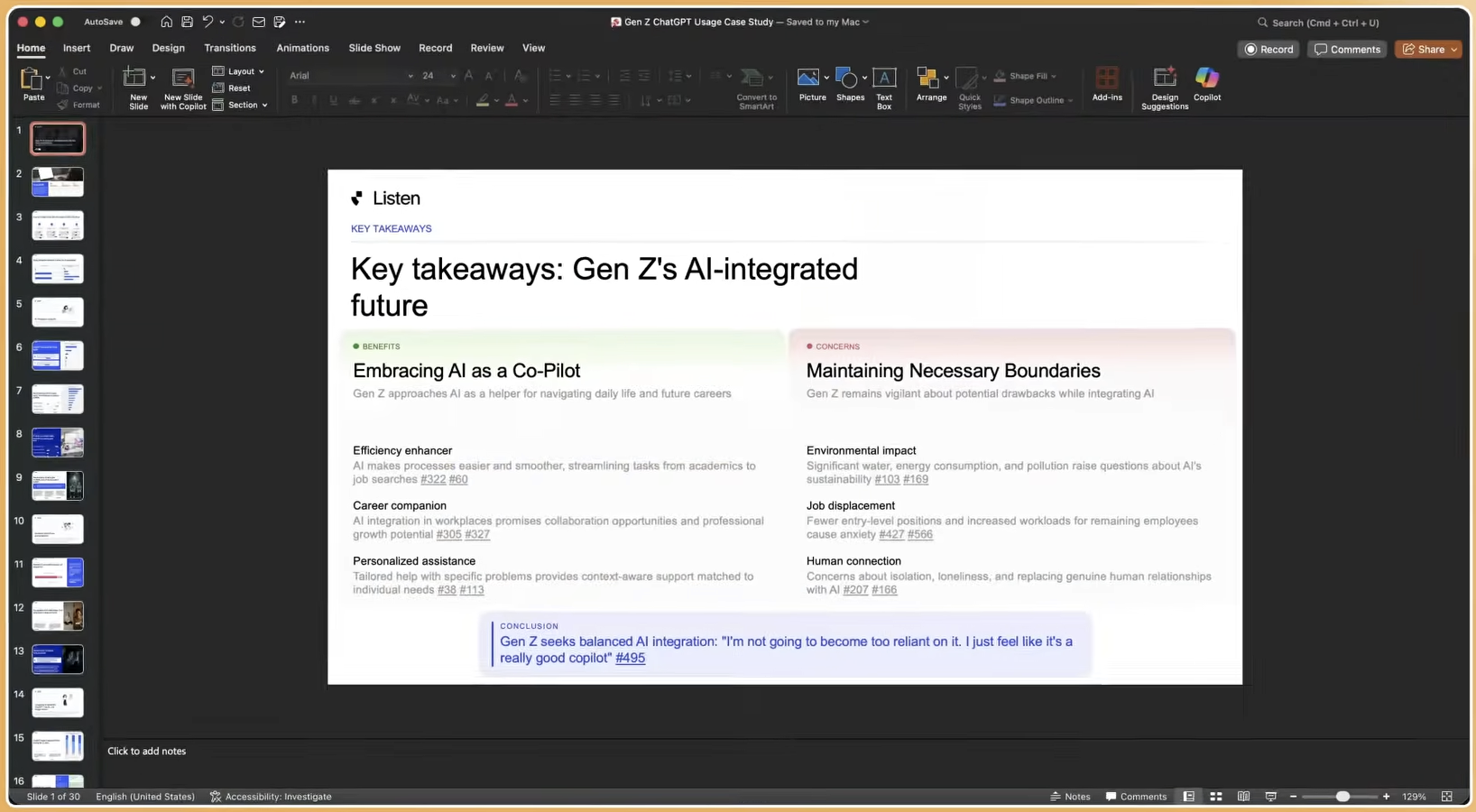
Listen Pulse has been used by enterprise organizations including Microsoft, P&G, Skims, and Sweetgreen. Microsoft cut research wait time from weeks to hours. P&G ran large-scale interview programs with quantified themes and verbatim proof, directly shaping product and brand strategy. Skims identified and qualified thousands of premium consumers overnight, enabling board-level buy-in before a global campaign launch. Sweetgreen scaled consumer research across 300+ US locations at 5x the scale and roughly one-third the cost of its previous approach, according to Listen Labs’ case study and video description (though other sources cite half the cost).
Add The Diagnostic Layer To Your Tracker
Questions To Ask Before You Renew Any Tracker
Bring this checklist into any vendor conversation before signing or renewing:
- Does the tool cover the markets and languages we need?
- Does it handle conjoint or MaxDiff if our roadmap requires it?
- Does it integrate with our existing tracker and VoC stack?
- Does it explain why a metric moved, or only that it moved?
- What is the total cost per market per year, and how does it scale across 10 or 20 markets?
- Can it deploy alongside our current tracker without breaking trend comparability?
- How long does it take from contract signature to first insight?
Conclusion And Next Steps For Your Stack
Latana is specialized brand-health tracking. Enterprise research tools like Qualtrics, Kantar, Ipsos, YouGov, and Medallia are multi-methodology ecosystems. For many teams, the practical answer is a tracker plus a qualitative diagnostic layer that explains KPI movements in the same wave rather than six to twelve weeks later. “Latana vs enterprise research tools” is a stack decision, not a binary one.
Audit your current tracker’s diagnostic capability. Map your roadmap against the capability boundary. If your tracker tells you a number moved but cannot tell you why, pilot a conversational diagnostic layer alongside it. Listen Pulse deploys alongside an existing tracker, integrates with Qualtrics and Decipher, and keeps the trend line intact while adding the explanation behind every metric.
Book A Demo To See The Explanation Behind Every Metric
Frequently Asked Questions
Is Latana A Replacement For Qualtrics?
Latana is a specialized brand-health tracking platform built for continuous measurement of awareness, consideration, perception, and segmentation via MRP across 150+ markets. Qualtrics is a comprehensive, multi-methodology experience management platform that covers conjoint, MaxDiff, qualitative interviews, CX/VoC programs, brand tracking as a module, and consulting services. They serve different primary use cases. A team that needs only continuous brand-health tracking at transparent per-market pricing may find Latana sufficient. A team that needs conjoint, MaxDiff, CX/VoC integration, or consulting alongside tracking will need Qualtrics or a comparable enterprise suite.
How Much Does Latana Cost Compared To Enterprise Research Platforms?
Latana publishes its pricing, while enterprise tools are quote-based. As covered in the pricing section, the gap runs from roughly €7,900 per market per year at the low end to $500,000+ annually for enterprise suites, and that gap mirrors the capability gap.
Can Latana Do Qualitative Research?
Latana is built for continuous brand-health tracking using non-incentivized ad-based sampling and MRP modeling. It does not conduct qualitative interviews, conjoint analysis, or MaxDiff. For qualitative diagnostics that explain why a brand metric moved, teams need a separate qualitative engine. Listen Pulse is a conversational tracker that adds open-ended qualitative conversation to every tracking wave, deploying alongside an existing tracker without breaking the trend line.
What Is The Difference Between Brand Tracking And Market Research?
Brand tracking is the longitudinal measurement of awareness, consideration, preference, loyalty, and advocacy across a defined participant base at regular intervals. Its defining feature is repetition over time. Without continuity, it is difficult to identify trend direction, seasonality, or the delayed impact of marketing activity. Market research is broader, covering multi-methodology studies including conjoint, MaxDiff, qualitative interviews, concept testing, segmentation, and CX/VoC programs. Brand tracking is a subset of market research, focused on detecting change in brand health metrics over time. Enterprise research suites cover both brand tracking and market research; specialized brand trackers like Latana cover the tracking subset only.
When Do You Need Both A Brand Tracker And A Qualitative Diagnostic Layer?
You need both when your tracker reports movement on a metric but stakeholders also need the explanation inside the campaign window. The hybrid stack runs a continuous tracker for KPI measurement and a conversational diagnostic layer for the explanation. Listen Pulse keeps core questions constant to protect the trend line, adds open-ended conversation to every wave, and charts emerging themes next to the KPIs teams already report. It integrates with Qualtrics and Decipher so teams do not need to rebuild their reporting infrastructure.
Does Listen Pulse Break The Trend Line When Deployed Alongside An Existing Tracker?
Listen Pulse keeps core questions constant wave over wave, preserving trend-line comparability. Timely add-on questions covering new campaigns, competitors, or news events are added without replacing the fixed core battery. It deploys alongside an existing tracker or as the primary tracking system, and integrates with Qualtrics and Decipher so teams keep the KPIs they already report while adding the narrative behind them.