
Written by: Anish Rao, Head of Growth, Listen Labs
Key Takeaways
- Enterprise concept testing software must handle participant recruitment, structured or conversational research methods, and analysis while meeting security, compliance, and scale requirements.
- Concept testing covers two distinct jobs: quantitative market validation and qualitative or UX validation. Each job requires a different type of platform.
- Enterprise procurement teams should prioritize SOC 2 Type II and ISO 27001 certifications, GDPR compliance, and a strict data policy that prohibits AI model training on customer data.
- Panel quality and fraud controls, including behavioral matching, real-time monitoring, and frequency limits, are critical because unmanaged panels can contain 10–30% fraudulent or low-quality responses.
- Listen Labs serves enterprise teams that need AI-moderated qualitative depth at scale, delivering results in under 24 hours while maintaining SOC 2 Type II and ISO certifications and never training AI models on customer data.
Talk with Listen Labs about your concept testing needs
The Two-Jobs Framework For Enterprise Concept Testing
Concept testing breaks into two separate jobs, and most enterprise teams choose the wrong tool when they blend them together. Identify which job you are hiring for before you compare platforms.
Quantitative Market Validation
This job measures purchase intent, appeal, differentiation, and norms across large samples. It relies on methods like monadic testing, sequential monadic testing, MaxDiff, conjoint, and Hierarchical Bayes modeling. It answers “how many” and “how much.” Monadic testing shows one concept to each respondent in isolation, which minimizes comparison and order effects and produces the cleanest read on a single concept. Most teams treat it as the gold standard for high-stakes decisions. Sequential monadic testing shows multiple concepts to the same respondent in randomized order, which improves efficiency but introduces order and fatigue effects. MaxDiff and conjoint answer different questions. MaxDiff shows small sets of options and asks for best and worst, which produces a clean ranking without ties when you have more concepts than you can execute. Conjoint breaks a concept into its attributes and estimates the value of each attribute within the bundle, which helps when you need to understand which feature or price point drives appeal.
Qualitative And UX Validation
This job uncovers reaction, comprehension, usability, and the “why” behind preferences. It relies on AI-moderated in-depth interviews, prototype testing, emotional signal capture, and adaptive follow-up questioning. It answers “why” and “how.” Qualitative methods trade speed and sample size for nuance and complexity in human decision-making. With AI moderation, teams can now reach qualitative depth at a scale that previously required long timelines and large budgets.
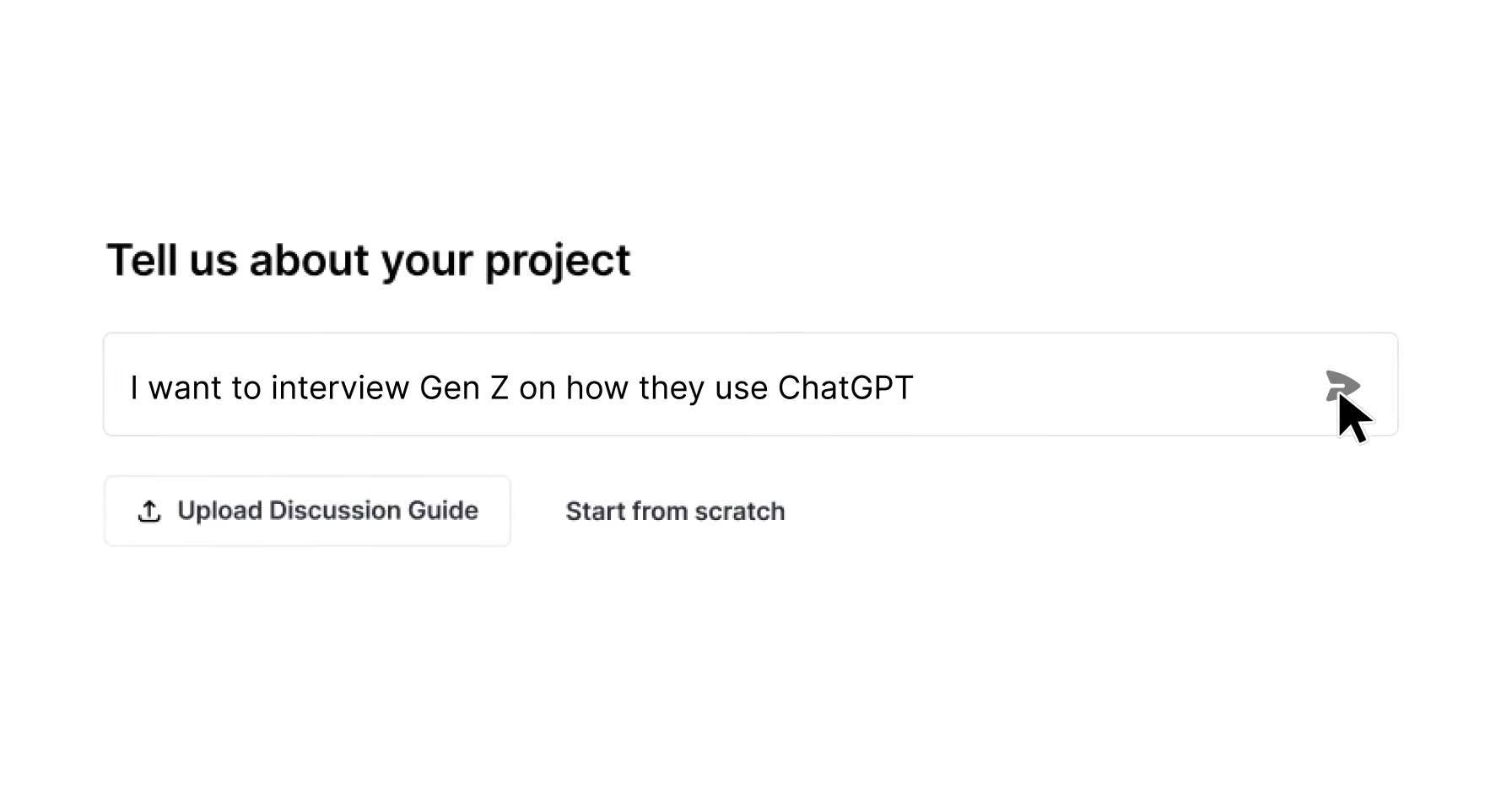
These two jobs require fundamentally different platforms. A team evaluating packaging concepts for a CPG launch needs different infrastructure than a UX team validating a software prototype before a sprint review. Conflating them is the single most common and most expensive mistake in enterprise platform selection.
See how AI-moderated interviews fit your research roadmap
Enterprise Buying Criteria For Concept Testing Software
Once you know which job you are hiring for, define what any platform must prove before it reaches your shortlist. Enterprise procurement adds requirements that sit alongside research method, not beneath it. Modern enterprises treat every RFP as a security and functionality decision, regardless of the tool’s primary purpose.
Security And Compliance Requirements
An enterprise research platform qualifies for procurement approval when it holds SOC 2 Type II certification, signs a Data Processing Agreement before any data is collected, stores participant data in compliant regions, and maintains a documented incident response process. The certification and feature stack enterprise procurement teams typically require starts with SOC 2 Type II as the baseline and ISO 27001 for EU or multinational programs. From there, expect a signed GDPR DPA, AES-256 encryption at rest and TLS 1.2+ in transit, enterprise SSO via SAML 2.0 or OIDC, role-based access control, and user provisioning and audit logging. ISO 27701 and ISO 42001 appear as additional privacy and AI-governance signals, even though they are not yet universal requirements.
Data residency considerations matter for multinational programs. Procurement teams should verify where participant data is physically stored and whether data residency can be restricted to specific regions such as EU-only or US-only.
Data Policy For AI And Customer Content
Does the vendor train AI models on customer data? If the answer is yes, your unreleased concepts and proprietary consumer insights become training material for a model you do not control. That risk makes the question mandatory in every enterprise procurement evaluation. Listen Labs never trains its AI models on customer data, which protects organizations handling proprietary consumer insights, unreleased product concepts, or competitive research.
Methodological Coverage And Flexibility
Confirm support for the full range of methods your team requires. That list often includes monadic and sequential monadic designs, MaxDiff, conjoint, Hierarchical Bayes, AI-moderated in-depth interviews, prototype testing, and emotional signal capture. Platforms that cover only one side of the two-jobs framework create gaps as your research program matures.
Panel Quality And Fraud Controls
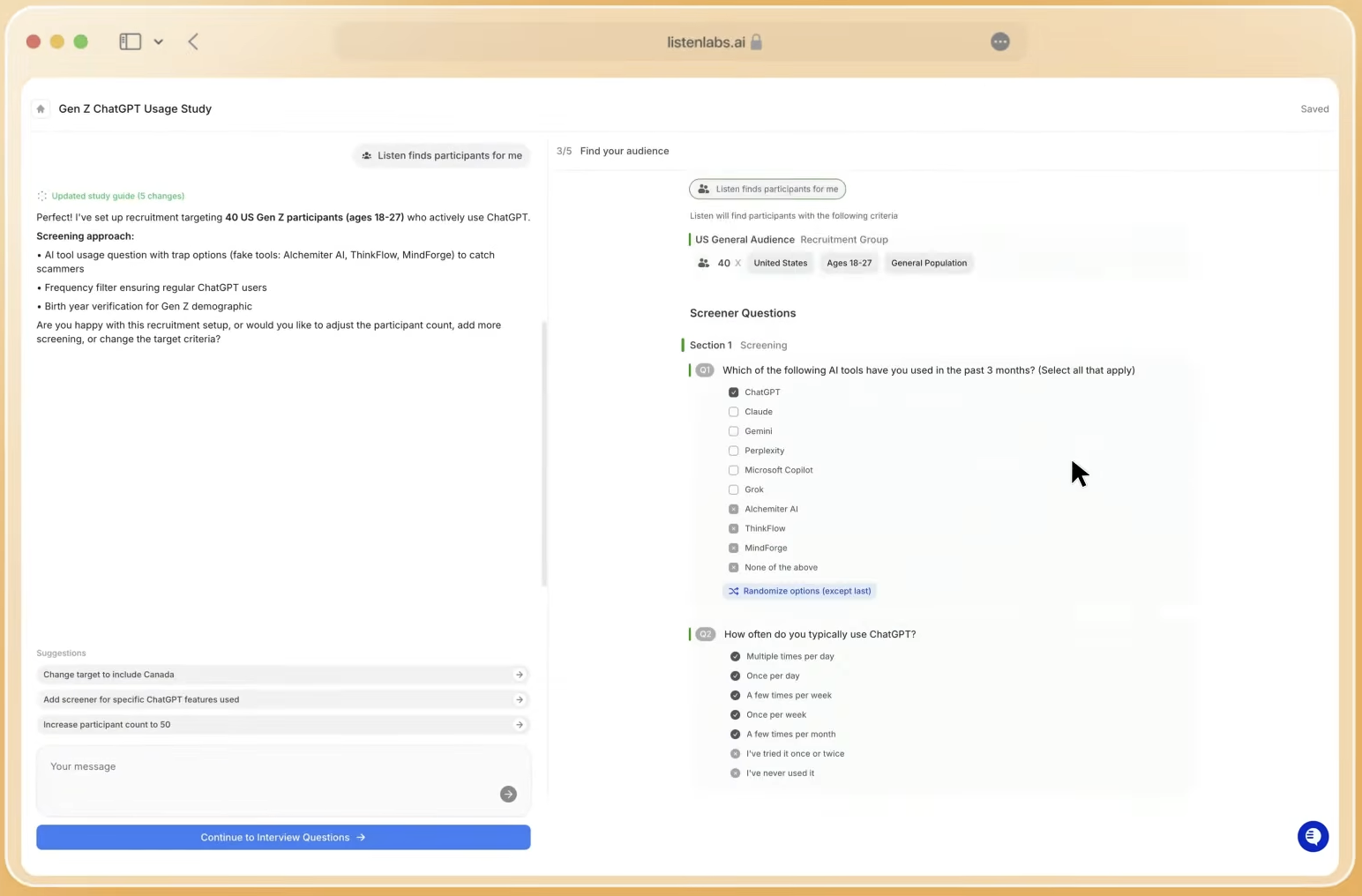
A 2023 Quirks Market Research report estimated that between 10 and 30 percent of responses in unmanaged online panels contain some form of fraudulent or low-quality data, with higher risk for B2B studies targeting senior decision-makers. That fraud rate is why procurement should require controls at every stage of a study. Behavioral matching on intent and past actions filters participants at intake. Real-time monitoring across video, voice, content, and device signals catches fraud during fieldwork. Frequency limits stop professional survey-takers from skewing results, and dedicated recruitment operations reach segments that general panels cannot fill. Frequency of survey participation is a risk indicator, not a verdict, so the combination of frequency limits and multi-layer behavioral verification defines the current standard for quality-focused platforms.
Integrations And Time-To-Insight
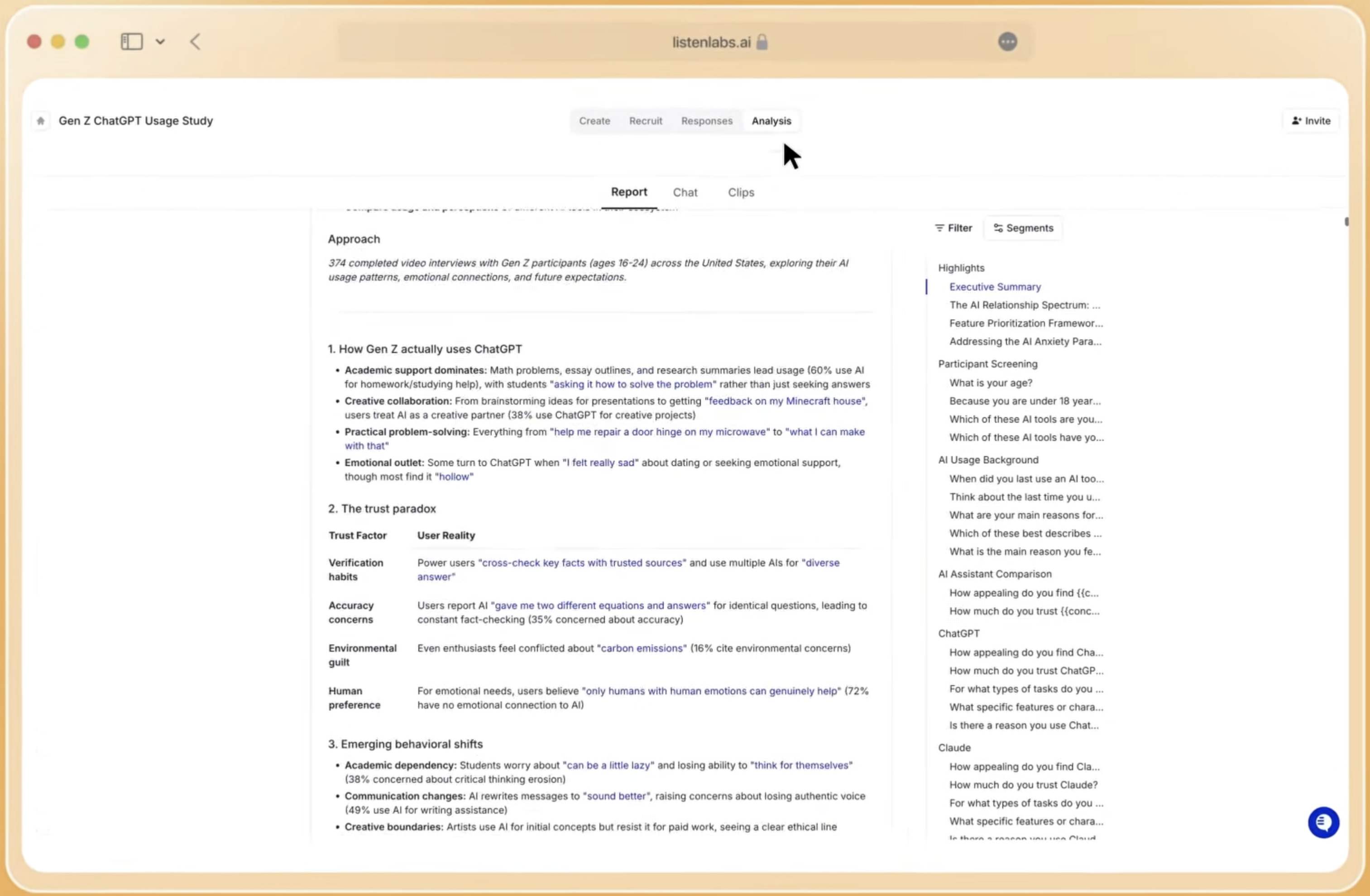
Confirm connections with existing trackers like Qualtrics and Decipher, the ability to bring your own participants, and API access. On turnaround, traditional focus groups take 3–5 weeks and $4,000–$12,000 per 90-minute session. AI-moderated research platforms deliver results in under 24 hours. That compression expands what research teams can deliver within a single product cycle.
Platform Shortlist Organized By Research Job
The platforms below are grouped by the job they are built to do. Use this shortlist to focus on the vendors that match the research job you identified earlier.
Quantitative-First Platforms
Qualtrics is built for large-scale quantitative research and governance, with robust statistical analysis and enterprise security controls, unifying market, product & innovation, UX, and brand research in a single platform that is FedRAMP, HIPAA, SOC 2 Type II, and ISO 27001 certified. It suits organizations that need survey-based concept testing at scale with deep integration into existing enterprise data infrastructure. Toluna offers Concept Test Express, an automated DIY concept testing solution on Toluna Start, with results benchmarked against its norms database of more than 225 norms across countries and categories. Zappi provides CPG brands with agile research systems for concept and ad testing, including normative benchmarks, AI-powered concept iteration, and results in as little as 4 hours, which supports high-volume, fast innovation pipelines.
Qualitative And UX-First Platforms
UserTesting delivers qualitative video feedback through human-moderated sessions and suits teams that need observed usability data with a human moderator in the loop. Maze specializes in prototype testing with design-tool integrations, supporting Figma and Axure prototypes as well as AI-generated prototypes from Figma Make, Lovable, Bolt, and Replit. This focus makes it a natural fit for product teams running unmoderated usability studies on Figma prototypes. Great Question is a UX research platform that provides research operations infrastructure for qualitative teams, combining participant recruitment, a research CRM, mixed-method studies, and an AI-powered repository in one place. Teams can recruit from their own customer database through CRM integrations like Salesforce, Snowflake, or API.
AI-Moderated End-To-End Platforms
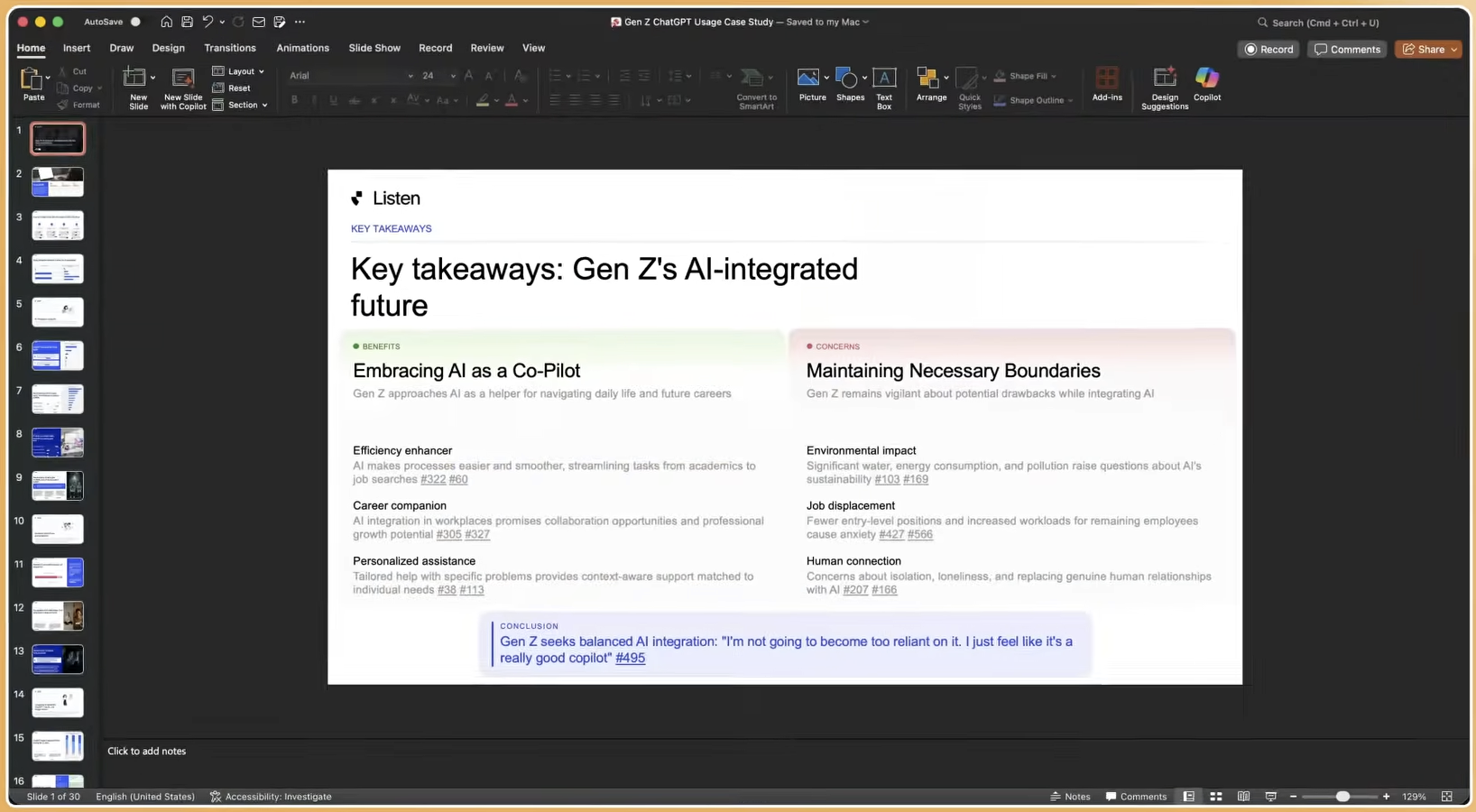
Listen Labs has run over 1 million AI-powered customer interviews for companies including Microsoft, Perplexity, and Sweetgreen. The platform conducts AI-moderated in-depth interviews with adaptive follow-up questions. It captures emotional signals through tone of voice, word choice, and subconscious micro expressions and delivers results in under 24 hours. Listen Labs maintains a global panel of 50M+ verified respondents across 45+ countries and 120+ languages, limits participants to no more than 3 studies per month, and holds SOC 2 Type II, ISO 27001, ISO 27701, and ISO 42001 certifications. Listen Labs raised $69 million in a Series B funding round led by Ribbit Capital, with participation from Evantic, Sequoia Capital, Conviction, and Pear VC, reaching a valuation over $500 million as of January 2026. The company serves enterprise customers including Microsoft, Google, Anthropic, P&G, Sweetgreen, and roughly 15% of the Fortune 100.
See Listen Labs in a live walkthrough
How To Evaluate: Platform Strengths Matched To Research Jobs
The shortlist above groups vendors by category. This section condenses each vendor to the single strength that should drive your decision, so you can map a platform to the job before you book a call.
- Qualtrics: Best for large-scale quantitative research and governance, with built-in guardrails, advanced survey logic with 23 question types, and SOC 2 Type II certification.
- UserTesting: Best for qualitative video feedback and human-moderated sessions across distributed teams.
- Maze: Best for prototype testing with working digital prototypes, supporting imports from design tools like Figma and Axure, as well as AI-generated prototypes from Figma Make, Lovable, Bolt, and Replit.
- Zappi: Best for CPG brands seeking an agile research system for advertising and innovation, offering concept testing with real-time norms and benchmarks at category, sub-category, and market level.
- Listen Labs: Best for AI-moderated qualitative depth at scale, with monadic and sequential monadic designs, MaxDiff, conjoint, Hierarchical Bayes, emotional signal capture, and results in under 24 hours.
Compare Enterprise User Research Platforms
Procurement-Ready Evaluation Checklist
The criteria above translate into a short checklist you can hand to procurement and legal. A vendor that cannot answer every line is not ready for contract negotiation.
- Security certifications verified: SOC 2 Type II, ISO 27001, ISO 27701, ISO 42001
- Data policy reviewed: Does the vendor train AI models on your data?
- Panel fraud controls documented: behavioral matching, real-time monitoring, frequency limits
- Participant frequency limits confirmed: no more than 3 studies per month per participant
- Integration requirements mapped: Qualtrics, Decipher, SSO/SCIM
- Time-to-insight validated with a pilot: confirm results in under 24 hours
- Methodological flexibility confirmed for your concept type: packaging, ad creative, messaging, software prototype
- Total cost of ownership compared against traditional research
Conclusion
Concept testing covers two different jobs, and enterprise research teams need a platform that matches the job they are actually hiring for. The procurement criteria, including security certifications, panel fraud controls, data policy, methodological flexibility, and integration requirements, stay consistent across both jobs. The difference lies in which platform can execute the specific research job with the least friction.
Listen Labs serves enterprise teams that need AI-moderated qualitative depth at scale. The platform delivers the qualitative depth described above at enterprise scale, with the security posture and data policy procurement teams require. It already supports enterprise customers including Microsoft, Google, Anthropic, P&G, and roughly 15% of the Fortune 100.
Book a demo with Listen Labs today